Um sistema de câmara quente1 é uma das melhorias de maior impacto em uma operação de moldagem por injeção. Em vez de deixar o plástico esfriar nos canais de alimentação entre os ciclos, a câmara quente mantém esse material fundido e pronto para a próxima injeção. O resultado? Menos desperdício, ciclos mais rápidos e peças mais consistentes.
Na nossa fábrica de Xangai, operamos moldes de canal quente há mais de 20 anos, ao longo de milhares de séries de produção. Este guia partilha o que aprendemos — o bom, o mau e as lições dispendiosas — para que possa decidir se um canal quente é adequado ao seu projeto.
- Um canal quente mantém o plástico fundido dentro dos canais de alimentação do molde, eliminando os resíduos dos canais.
- Dois tipos principais: sistemas de ponto de injeção aberto e de válvula, cada um adequado a diferentes geometrias de peças e materiais.
- Os canais quentes reduzem o desperdício de material em 10–30% e diminuem os tempos de ciclo em comparação com os canais frios.
- Custo inicial do molde mais elevado ($3,000–$15,000 adicionais), mas menor custo por peça em séries de grande volume.
- A manutenção regular dos aquecedores, termopares e coletores é essencial para evitar períodos de paragem dispendiosos.
O Que É um Sistema de Canal Quente na Moldagem por Injeção?
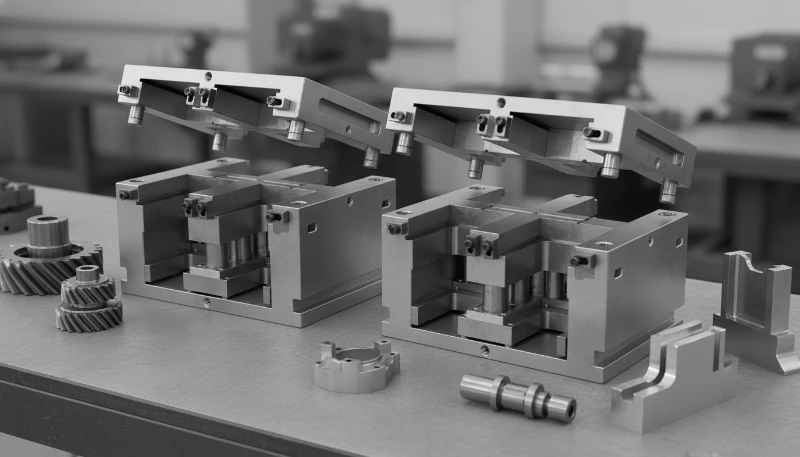
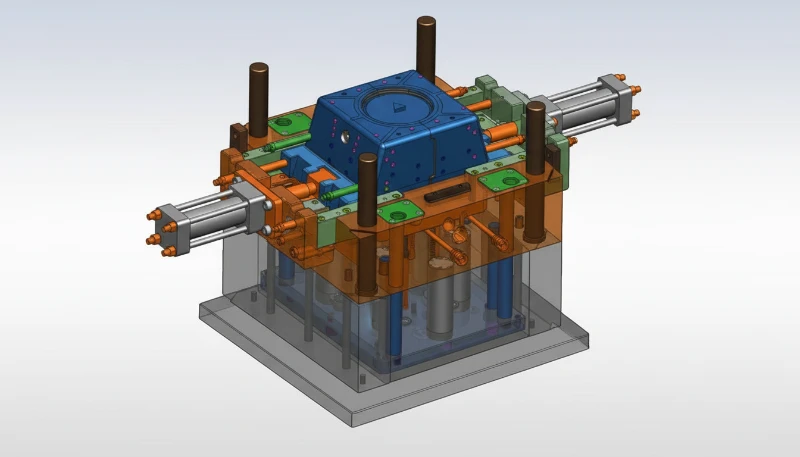
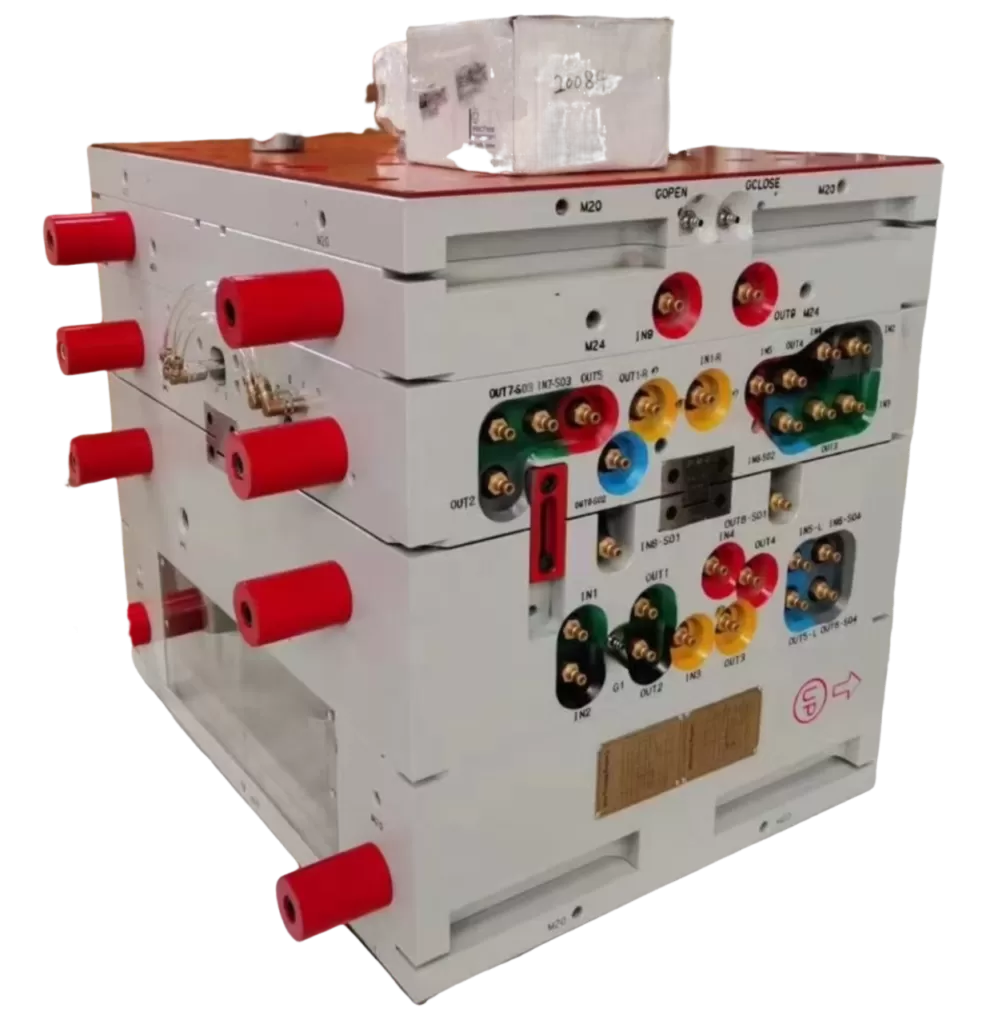
Um sistema de câmara quente na moldagem por injeção é definido pela função, pelas limitações e pelas compensações explicadas nesta seção. Trata-se de um conjunto de canais de alimentação aquecidos dentro de um molde de injeção que mantém o plástico fundido desde o bico da máquina até o ponto de injeção da cavidade. Ao contrário de um canal frio, no qual o plástico nos canais de alimentação solidifica e precisa ser descartado ou moído novamente, os canais quentes são aquecidos ativamente por resistências tipo cartucho, helicoidais ou de cinta, mantendo o polímero na temperatura de processamento durante todo o ciclo.¹
Pense da seguinte forma: o cilindro da máquina aquece e injeta o plástico, e o canal quente é essencialmente uma extensão desse cilindro, transportando o fundido até ao ponto de injeção sem o deixar arrefecer. Isto significa que cada grama de material injetado acaba na peça final e não num canal descartável que é necessário eliminar ou reprocessar.
A tecnologia de canais quentes tornou-se comercialmente viável na década de 1960 e, desde então, passou a ser padrão na produção em grande volume de peças para automóveis, dispositivos médicos, caixas de equipamentos eletrónicos e produtos de consumo. Atualmente, estima-se que 40–50% de todos os moldes de injeção para produção em todo o mundo utilizem algum tipo de sistema de canais quentes.²
Como funciona um sistema de canal quente?
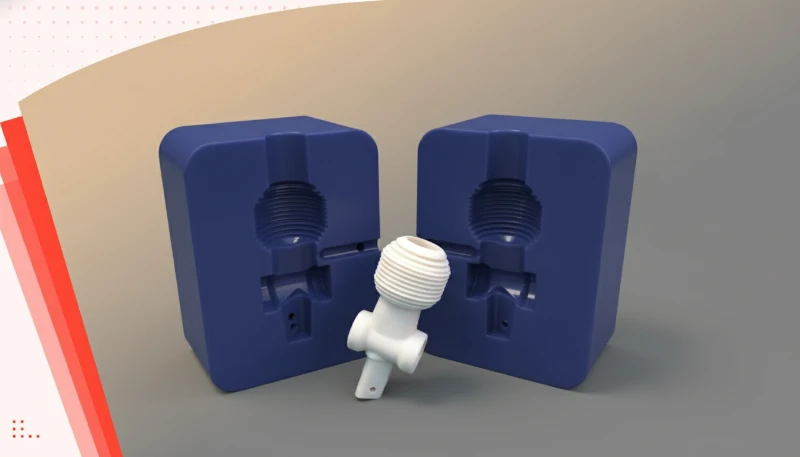
O princípio de funcionamento é simples: o fuso da máquina de injeção empurra o plástico fundido através do bico para o coletor de canais quentes. O coletor distribui o fundido por bicos individuais, cada um dos quais alimenta um ponto de injeção da cavidade. As resistências incorporadas no coletor e nos bicos mantêm o plástico a uma temperatura precisa — normalmente dentro de ±2 °C do valor de referência — controlada por termopares que fornecem retroação a um controlador de temperatura.
Durante a fase de arrefecimento do ciclo, enquanto a peça no interior da cavidade solidifica, o plástico no interior dos canais quentes permanece fundido devido ao aquecimento contínuo. Quando o molde abre e a peça é ejetada, o plástico fundido no sistema de canais já se encontra posicionado e pronto para a injeção seguinte. Isto elimina a necessidade de injetar uma nova carga através de canais frios, reduzindo tanto o desperdício de material como o tempo de ciclo.
O sistema de controlo da temperatura é o coração de qualquer canal quente. Os controladores modernos conseguem gerir de forma independente entre 1 e 128 zonas, cada uma com controlo PID (proporcional-integral-derivativo) em malha fechada. Uma única zona pode controlar o distribuidor, enquanto zonas individuais gerem cada bico. Se uma zona se desviar do seu valor de referência em mais de alguns graus, é acionado um alarme — porque a inconsistência da temperatura causa diretamente defeitos nas peças, como enchimento incompleto, rebarbas ou descoloração.
Quais são os tipos de sistemas de canal quente?
Os tipos de sistemas de câmara quente são as principais categorias ou opções explicadas nesta seção. Esses sistemas se dividem em duas grandes categorias conforme o mecanismo do ponto de injeção: sistemas de ponto aberto, também chamados de ponto térmico, e sistemas com válvula de agulha2. A escolha do tipo correto depende da geometria da peça, do material, dos requisitos estéticos e do volume de produção.
Sistemas de ponto de injeção aberto (ponto de injeção térmico)
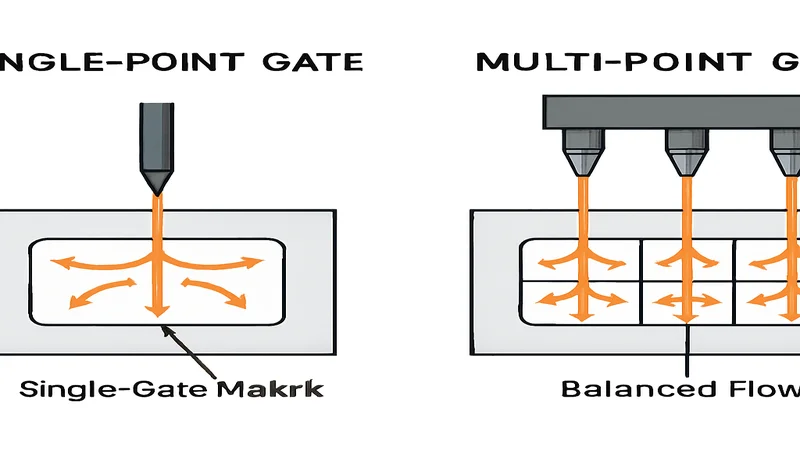
Num sistema de ponto de injeção aberto, o plástico fundido flui diretamente para a cavidade através de um pequeno orifício. A solidificação do ponto de injeção — quando o plástico solidifica no ponto de injeção e veda a cavidade — é controlada exclusivamente pela dinâmica térmica: o sistema de arrefecimento do molde arrefece a zona do ponto de injeção, enquanto o bico do canal quente mantém líquida a massa fundida a montante. Os pontos de injeção abertos são mais simples e menos dispendiosos, e têm menos peças móveis. Contudo, deixam um pequeno vestígio (uma marca saliente) na superfície da peça e, com algumas resinas técnicas, pode ser mais difícil controlar o momento de solidificação do ponto de injeção.
Sistemas de pontos de injeção valvulados
Um sistema de ponto de injeção valvulado utiliza um pino mecânico (o pino da válvula) que abre e fecha fisicamente o ponto de injeção. Durante a injeção, o pino recua para permitir o fluxo do plástico; após a compactação, o pino avança para vedar mecanicamente o ponto de injeção. Isto proporciona um controlo preciso do momento de solidificação do ponto de injeção, elimina a formação de fios e deixa uma marca muito limpa, muitas vezes invisível na peça acabada. Os pontos de injeção valvulados são preferidos para peças estéticas, moldes de várias cavidades que exigem um enchimento equilibrado e aplicações com materiais sensíveis ao corte, como LSR (borracha de silicone líquida) ou PEEK. A contrapartida é um custo superior e mais pontos de manutenção.³
"Um sistema de canais quentes pode reduzir o desperdício de material ao manter os canais fundidos entre ciclos."True
Correto. Como os canais nunca solidificam, não existe qualquer canal residual para eliminar ou triturar novamente — cada grama de material injetado é incorporado nas peças acabadas.
"Os sistemas de canal quente são sempre mais económicos do que os canais frios, independentemente do volume de produção."False
Falso. Os moldes de canal quente têm custos de ferramentas significativamente superiores (mais $3,000–$15,000 por molde). Para séries de baixo volume (menos de 10,000 peças), um canal frio pode ser mais rentável, apesar do desperdício de material.
Quais São os Principais Componentes de um Sistema de Canal Quente?
Os componentes essenciais de um sistema de canais quentes são as principais categorias ou opções explicadas nesta secção. Um sistema completo de canais quentes é composto por vários subsistemas críticos que devem funcionar em conjunto com precisão. Compreender cada componente ajuda a diagnosticar problemas e a especificar o sistema adequado para a sua aplicação.
| Componente | Função | Consideração principal |
|---|---|---|
| Coletor | Distribui a massa fundida do bico da máquina pelos bicos de descida individuais | Deve ser termicamente equilibrado; configurações X, H e I para diferentes disposições das cavidades |
| Bicos (quentes) | Alimentar plástico fundido do coletor até à entrada de cada cavidade | Ponto de injeção aberto vs. ponto de injeção valvulado; o tipo de ponteira afeta o vestígio do ponto de injeção |
| Aquecedores | Manter a temperatura da massa fundida no coletor e nos bicos | Tipos de cartucho, bobina ou banda; vida útil típica de 1–3 anos |
| Termopares | Medir a temperatura em cada zona para controlo em circuito fechado | Tipo J ou K; deve estar corretamente instalado para obter leituras exatas |
| Controlador de temperatura | Controlo PID de todas as zonas de aquecimento | A contagem de zonas deve corresponder à contagem do coletor + dos bicos; o arranque suave prolonga a vida útil dos aquecedores |
| Agulhas de válvula (se aplicável) | Abrir/fechar mecanicamente os pontos de injeção em sistemas com válvula | Acionamento pneumático, hidráulico ou elétrico; a sincronização é crítica |
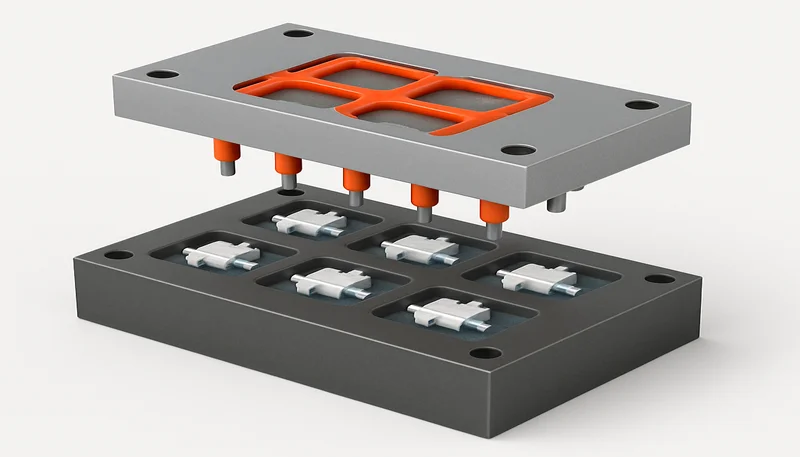
O coletor é a espinha dorsal do sistema. Fica alojado no interior da base do molde e conduz o fundido desde a entrada central (onde o bico da máquina encontra o molde) até à posição de cada bico. O projeto do coletor afeta diretamente o equilíbrio do enchimento: se um percurso de fluxo for mais longo ou tiver mais curvas do que outro, as cavidades enchem de forma desigual, causando variações dimensionais e rebarbas. Os projetos modernos de coletores utilizam software de simulação de fluxo para uniformizar a queda de pressão em todos os percursos.
Aquecedores e termopares são os componentes de qualquer câmara quente que mais exigem manutenção. Em nossa experiência com 47 máquinas de moldagem por injeção3, a falha do aquecedor é o problema mais comum que encontramos. Uma única resistência tipo cartucho queimada pode interromper toda a produção. Por isso, recomendamos manter aquecedores e termopares sobressalentes para cada molde de câmara quente e substituí-los preventivamente a cada 12–18 meses.
Na nossa fábrica de Xangai, operamos 47 máquinas de moldação por injeção entre 90T e 1850T, muitas equipadas com sistemas de canais quentes. Ao longo de 20+ anos de produção, aprendemos que a manutenção dos aquecedores é o fator mais importante para a fiabilidade dos canais quentes — a substituição preventiva dos aquecedores a cada 12–18 meses evita 80% das paragens não planeadas. Nas nossas análises de produção, os engenheiros comparam o equilíbrio das cavidades com uma tolerância de inspeção de 0.02 mm, a resposta dos aquecedores ao longo de 8 horas de ensaio e a percentagem de desperdício no arranque antes de recomendarmos a aprovação da produção. Utilizamos estes dados para decidir se o canal quente é suficientemente estável para encomendas repetidas.
Quais são as vantagens da tecnologia de canais quentes?
Os benefícios dos sistemas de canais quentes estão bem documentados e são significativos nas aplicações adequadas. Estas são as principais vantagens que observámos em ambientes de produção reais:
Poupança de material
Um molde de canal frio gera canais de plástico solidificado em cada ciclo, que têm de ser separados da peça e eliminados ou novamente granulados. Num molde multicavidade, os desperdícios dos canais podem representar 10–30% do peso total da injeção. Num molde de 32 cavidades a funcionar 24/7, isto pode perfazer milhares de quilogramas de material desperdiçado por mês. Os canais quentes eliminam totalmente este desperdício.
Tempos de ciclo mais curtos
Como os canais de alimentação não precisam de solidificar e ser depois extraídos, os tempos de ciclo são mais curtos. O molde só precisa de arrefecer a própria peça, não os canais. Na prática, isto reduz normalmente 10–20% do tempo de ciclo em comparação com um molde de três placas com canais frios. Ao longo de milhões de ciclos, esta poupança de tempo acumula-se e traduz-se em aumentos de capacidade significativos.
Melhor qualidade das peças
Os canais quentes proporcionam um fornecimento mais consistente de fundido a cada cavidade. Sem a queda de pressão causada pelos canais frios, o equilíbrio do enchimento melhora, originando um peso, dimensões e acabamento superficial mais uniformes entre todas as cavidades. Em particular, os sistemas de pontos de injeção com válvula permitem controlar com precisão a pressão de compactação, o que reduz as marcas de rechupe, os vazios e o empeno.
Flexibilidade de conceção
Os canais quentes permitem colocar os pontos de injeção nas posições ideais da peça—independentemente da geometria das placas do molde—porque os canais aquecidos podem conduzir o fundido a qualquer posição. Isto permite injetar pelo centro de uma peça plana de grandes dimensões sem um molde de três placas ou posicionar os pontos de injeção nos melhores locais estruturais para minimizar linhas de soldadura e marcas de fluxo.
Quando deve escolher um canal quente em vez de um canal frio?
Um sistema de canal quente, em vez de um canal frio, é a escolha certa quando o volume, a tolerância, o orçamento do molde ou a flexibilidade do projeto são mais importantes do que a produção máxima. Nem todos os projetos beneficiam de um canal quente. A decisão depende do volume de produção, da complexidade da peça, do custo do material e dos requisitos estéticos. Eis um quadro prático que utilizamos ao aconselhar os clientes:
| Fator | Escolha canal quente | Escolher canal frio |
|---|---|---|
| Volume de produção | >50,000 peças | <10,000 peças |
| Custo do material | >$3/kg (o desperdício é dispendioso) | <$2/kg (o desperdício é tolerável) |
| Aspeto da peça | Marcas visíveis do ponto de injeção inaceitáveis | Vestígio do ponto de injeção tolerável |
| Número de cavidades | 8+ cavidades | 1–4 cavidades |
| Prioridade do tempo de ciclo | Automação de alta velocidade | Baixa velocidade / prototipagem |
| Tipo de material | Resinas de engenharia, LSR, PEEK | Resinas de uso geral (PP, PE) |
O ponto de equilíbrio costuma ficar em torno de 30.000–50.000 peças. Abaixo desse limite, o custo adicional do ferramental de um sistema de câmara quente geralmente supera a economia de material e de tempo de ciclo. Em programas com mais de 100.000 peças, a câmara quente quase sempre proporciona retorno positivo sobre o investimento. Você pode usar nosso guia de seleção de fornecedores para planejar a estratégia de ferramental conforme o volume de produção.
"Os sistemas de canais quentes com válvula de obturação praticamente não deixam marcas visíveis do ponto de injeção na peça acabada."True
Correto. O pino mecânico cisalha o ponto de injeção de forma limpa, deixando uma marca suave e praticamente invisível—ideal para peças estéticas, como acabamentos interiores de automóveis.
"Os moldes de canal quente não necessitam de manutenção porque têm menos peças móveis do que os sistemas de canal frio."False
Incorreto. Os moldes de canais quentes exigem manutenção regular dos aquecedores, termopares e componentes de vedação. A avaria dos aquecedores é a causa mais comum de paragem na produção com canais quentes.
Quais são as desvantagens da tecnologia de canais quentes?
Os canais quentes não são uma solução universal. As desvantagens são reais e ignorá-las conduz a erros dispendiosos:
Custo de ferramental mais elevado: um molde de canal quente custa normalmente mais $3,000–$15,000 do que um molde de canal frio equivalente, dependendo do número de bicos e do tipo de ponto de injeção. Os sistemas de válvula no ponto de injeção situam-se no extremo superior desse intervalo devido aos atuadores pneumáticos ou hidráulicos e aos pinos de válvula adicionais.
Manutenção mais complexa: o sistema de aquecimento exige inspeção regular e substituição de componentes. As resistências queimam, os termopares desviam-se e os vedantes do coletor degradam-se. A falha de um único componente pode interromper a produção durante horas enquanto o molde é desmontado para reparação.
Resíduos no arranque: quando um molde de canal quente arranca a frio, são necessários 15–45 minutos para que todas as zonas atinjam a temperatura de processamento. Durante esse aquecimento, as primeiras 5–20 injeções são normalmente rejeitadas porque a massa fundida ainda não estabilizou totalmente. Em séries de produção curtas, estes resíduos do arranque podem anular a poupança de material.
Sensibilidade dos materiais: alguns materiais — em especial resinas sensíveis ao calor, como PVC e POM — são propensos à degradação térmica em sistemas de canais quentes. Um tempo de residência prolongado a temperaturas elevadas pode provocar amarelecimento, formação de gases ou perda de propriedades mecânicas. Se estiver a moldar estes materiais, um canal frio poderá ser a opção mais segura.
Dificuldade de mudança de cor: Mudar de cor num sistema de canal quente exige a purga de todo o coletor e de todos os bicos, o que desperdiça material e tempo. Num canal frio, basta começar a moldar a nova cor — o refugo do canal anterior seria descartado de qualquer forma. Se o seu calendário de produção envolver mudanças de cor frequentes, tenha este fator em conta na sua decisão.
Como diagnosticar problemas comuns de canal quente?
O diagnóstico de problemas em canais quentes consiste numa verificação passo a passo da temperatura, do estado do ponto de injeção, do tempo de residência do material, da cablagem e do equilíbrio das cavidades. Mesmo os sistemas de canais quentes bem mantidos desenvolvem problemas. Eis os problemas mais comuns que encontramos e as suas causas de raiz:
Flutuação da temperatura
Se a temperatura de uma zona oscilar mais de ±5 °C em relação ao valor definido, verifique primeiro o encaixe do termopar. Um termopar solto ou parcialmente inserido faz leituras incorretas, levando o controlador a compensar em excesso. Verifique também se existem aquecedores queimados: meça a resistência com um multímetro e compare-a com a especificação do fabricante. Nas nossas instalações, constatamos que 60% dos problemas de temperatura têm origem nos termopares, não em falhas dos aquecedores.
Fuga de fundido
A fuga de plástico entre o distribuidor e as placas do molde indica geralmente vedantes gastos ou uma instalação incorreta do distribuidor. Desligue o sistema, limpe todas as superfícies de vedação e substitua os O-rings ou as juntas. Volte a apertar os parafusos do distribuidor ao binário especificado pelo fabricante — o aperto excessivo danifica os vedantes tanto quanto o aperto insuficiente.
Vestígio do ponto de injeção ou formação de fios
Marcas excessivas do ponto de injeção ou formação de fios (fios finos de plástico que se esticam a partir do ponto de injeção quando o molde abre) resultam frequentemente de uma temperatura incorreta da ponta do ponto de injeção ou de tempo de solidificação insuficiente. Experimente reduzir a temperatura da ponta da ponteira em 5–10 °C e aumentar o tempo de arrefecimento em 0.5–1 segundo. Se o problema persistir num sistema com ponto de injeção valvulado, verifique a temporização e o curso do pino da válvula.
Enchimento Desigual Entre Cavidades
Quando algumas cavidades enchem antes de outras, o equilíbrio do fluxo do coletor está desajustado. Verifique se todas as temperaturas das pontas das biqueiras estão dentro de 2 °C umas das outras, depois verifique se há bloqueios parciais nos canais do coletor. Se o sistema estava a funcionar corretamente antes, um canal bloqueado por material degradado é o culpado provável.
Perguntas mais frequentes
Qual é a diferença entre um hot runner e um cold runner?
Um canal quente utiliza canais aquecidos para manter o plástico fundido entre a biqueira da máquina e o canal de entrada da cavidade, pelo que há pouco ou nenhum desperdício de canal sólido. Um canal frio deixa os canais de alimentação solidificarem a cada ciclo, pelo que o canal deve ser separado, retriturado ou descartado. Os canais quentes geralmente custam mais para construir e manter, mas podem poupar resina, tempo de ciclo e custos de manuseio na produção de alto volume. A melhor escolha depende do peso do canal, do custo da resina, do número anual de peças, da frequência de mudança de cor e da capacidade de manutenção.
Quanto custa um molde de canais quentes em comparação com um de canais frios?
Um molde de canais quentes normalmente custa mais do que um molde de canais frios semelhante porque adiciona um coletor aquecido, biqueiras, fiação, zonas de controlador, isolamento, trabalho de montagem e validação extra de ensaio. O prémio depende do número de cavidades, do tipo de canal de entrada, da marca do canal quente, da resina e do tamanho da peça. Os compradores não devem julgar apenas o preço do molde. Devem comparar o custo da ferramenta com a resina poupada por peça, a redução do tempo de ciclo, o desperdício de arranque, as peças sobressalentes e o risco de tempo de paragem. Um molde de alto volume pode recuperar o prémio; um molde de curta série pode não.
Os sistemas de canais quentes podem lidar com todos os materiais plásticos?
Muitos termoplásticos podem funcionar em sistemas de canais quentes, incluindo ABS, PP, PC, nylon, PEEK e muitas resinas de engenharia, mas o sistema deve corresponder ao material. Materiais sensíveis ao calor necessitam de um controlo cuidadoso do tempo de residência e da temperatura porque a resina degradada pode criar pontos negros, estrias ou peças frágeis. Materiais abrasivos com carga de vidro podem desgastar as biqueiras e os canais de entrada. Graus corrosivos ou retardadores de chama podem exigir aço especial ou revestimentos. O fornecedor deve rever a ficha técnica da resina, o calor de cisalhamento, o método de limpeza e o plano de ensaio antes de aprovar o projeto.
Com que frequência devem ser substituídos os aquecedores dos canais quentes?
Os aquecedores dos canais quentes devem ser inspecionados regularmente e substituídos com base na carga de produção, não apenas após uma falha visível. Na produção de alto volume, muitas fábricas planeiam a substituição por volta dos doze a dezoito meses, especialmente para moldes críticos que não podem suportar tempos de paragem inesperados. Moldes de volume mais baixo podem funcionar durante mais tempo se as verificações de resistência, a estabilidade da temperatura, a fiação e a resposta do termopar permanecerem normais. Os compradores devem solicitar uma lista de aquecedores e termopares sobressalentes, um diagrama de fiação e um plano de acesso para manutenção. A manutenção preventiva é mais barata do que parar a produção após a falha de um aquecedor dentro do molde.
O que causa freeze-off do nozzle do hot runner?
O congelamento da biqueira do canal quente ocorre quando o fundido no canal de entrada arrefece demasiado antes de o enchimento estar completo. As causas comuns incluem temperatura baixa na ponta, mau contacto do aquecedor, arrefecimento excessivo perto do canal de entrada, tamanho errado do canal de entrada, interrupção longa do ciclo ou um material com uma janela de processamento estreita. O sintoma pode parecer peças incompletas ou peso da peça instável, mas a causa raiz é frequentemente a perda de calor local na ponta da biqueira. A resolução de problemas deve verificar a temperatura da zona, a posição do termopar, a resistência do aquecedor, o desgaste do canal de entrada, o arrefecimento do molde e a temperatura real do fundido.
Vale a pena usar canais quentes para produção de baixo volume?
Um hot runner geralmente não vale a pena para produção de volume muito baixo porque o custo adicional de tooling e controller necessita de shots suficientes para pagar através de savings de resin e cycle-time. Para runs de protótipo ou pilot, um cold runner é frequentemente mais simples, mais barato e mais fácil de modificar. Um hot runner torna-se mais atraente quando o runner é pesado, a resin é cara, a qualidade cosmética do gate importa, ou o volume anual é estável. Os compradores devem calcular o payback usando shots esperados, peso do runner, custo da resin, cycle time, custo de manutenção e risco de scrap.
Quanto tempo demora um molde de canais quentes a arrancar?
Um molde de canais quentes normalmente necessita de tempo para aquecer todas as zonas antes de começar a moldagem estável. Uma arranque típico pode demorar quinze a quarenta e cinco minutos, dependendo do tamanho do coletor, do número de biqueiras, da potência do controlador, da resina e da temperatura do molde. As primeiras peças podem ser desperdício enquanto a temperatura do fundido, o fluxo no canal de entrada e o equilíbrio da cavidade se estabilizam. Um bom registo de ensaio deve anotar o tempo de aquecimento, os pontos de ajuste das zonas, a contagem das primeiras peças aceitáveis, o comportamento da pressão e a estabilidade do peso da peça. Estes dados ajudam os compradores a compreender a eficiência real da produção, não apenas o tempo de ciclo citado.
Que manutenção necessita um sistema de canais quentes?
A manutenção do hot runner inclui verificar heaters, termopares, wiring, conexões de plug, seals do manifold, tips dos nozzles, wear do gate, pins da válvula e calibração do controller. O molde deve ser inspecionado para leakage, acumulação de carbono, isolamento danificado, wires soltos e resposta de temperatura desigual. Para sistemas de válvula-gate, pins e bushings também necessitam de checks de wear. Os compradores devem manter heaters, termopares, seals e pins da válvula de reserva disponíveis antes do início da produção. Os registos de manutenção devem mostrar o que foi substituído, quando foi substituído e se a reparação alterou os settings do processo ou a qualidade da peça.
Pronto para Otimizar o Seu Design de Molde?A equipa de engenharia da ZetarMold pode ajudá-lo a avaliar se um sistema de canais quentes é a opção certa para o seu projeto. Com 20+ anos de experiência, fabrico interno de moldes e 47 máquinas de 90T a 1850T, fornecemos soluções de ferramentas otimizadas que equilibram qualidade, custo e eficiência de produção.
Solicite uma cotação gratuita →
sistema de câmara quente: sistema de canais aquecidos em um molde de injeção que mantém o plástico fundido desde o bico da máquina até o ponto de injeção da cavidade. ↩
sistemas com válvula de agulha: sistemas de câmara quente que usam uma agulha mecânica para abrir e fechar o ponto de injeção, oferecendo controle preciso do momento de congelamento e deixando uma marca mínima na superfície da peça. ↩
máquina de moldagem por injeção: máquina que aquece, pressuriza e injeta plástico fundido na cavidade de um molde. Em nossa fábrica, a tonelagem das máquinas varia de 90T a 1850T. ↩