Een hotrunnersysteem1 is een van de meest impactvolle verbeteringen voor een spuitgietproces. In plaats van de kunststof tussen cycli te laten afkoelen in de toevoerkanalen — de runners — houdt een hotrunner het materiaal gesmolten en gereed voor de volgende injectie. Het resultaat? Minder afval, kortere cyclustijden en consistentere onderdelen.
In onze fabriek in Shanghai gebruiken we al meer dan 20 jaar hotrunnermatrijzen in duizenden productieruns. Deze gids deelt wat we hebben geleerd—het goede, het slechte en de dure lessen—zodat u kunt bepalen of een hotrunner geschikt is voor uw project.
- Een hotrunner houdt de kunststof gesmolten in de toevoerkanalen van de matrijs, waardoor aanspuitkanaalafval wordt geëlimineerd.
- Twee hoofdtypen: open-gate- en valve-gate-systemen, elk geschikt voor andere onderdeelgeometrieën en materialen.
- Hotrunners verminderen materiaalafval met 10–30% en verkorten cyclustijden ten opzichte van koudlopers.
- Hogere initiële matrijskosten ($3,000–$15,000 extra), maar lagere kosten per onderdeel bij grote series.
- Regelmatig onderhoud van verwarmingselementen, thermokoppels en verdeelblokken is essentieel om kostbare stilstand te voorkomen.
Wat is een hotrunnersysteem bij spuitgieten?
Een hotrunnersysteem bij spuitgieten wordt bepaald door de functie, beperkingen en afwegingen die in dit gedeelte worden uitgelegd. Het is een verwarmd toevoerkanaalsysteem in een spuitgietmatrijs dat de kunststof vanaf de machinespuitmond tot aan de aanspuiting van de caviteit gesmolten houdt. Anders dan bij een coldrunner — waarbij de kunststof in de toevoerkanalen stolt en moet worden weggegooid of opnieuw vermalen — worden hotrunnerkanalen actief verwarmd met patroon-, spiraal- of bandverwarmingselementen, zodat het polymeer gedurende de hele cyclus op verwerkingstemperatuur blijft.¹
Zie het zo: de machinecilinder verwarmt en injecteert de kunststof, en de hotrunner is in feite een verlengstuk van die cilinder dat de smelt tot aan de aanspuiting voert zonder deze te laten afkoelen. Daardoor komt elke gram geïnjecteerd materiaal in het eindproduct terecht en niet in een afvalaanspuitkanaal dat moet worden weggegooid of herverwerkt.
Hotrunnertechnologie werd in de jaren 1960 commercieel levensvatbaar en is sindsdien de standaard geworden voor de massaproductie van auto-onderdelen, medische hulpmiddelen, elektronicabehuizingen en consumentenproducten. Naar schatting maakt tegenwoordig 40–50% van alle productiespuitgietmatrijzen wereldwijd gebruik van een vorm van hotrunnersysteem.²
Hoe werkt een hotrunnersysteem?
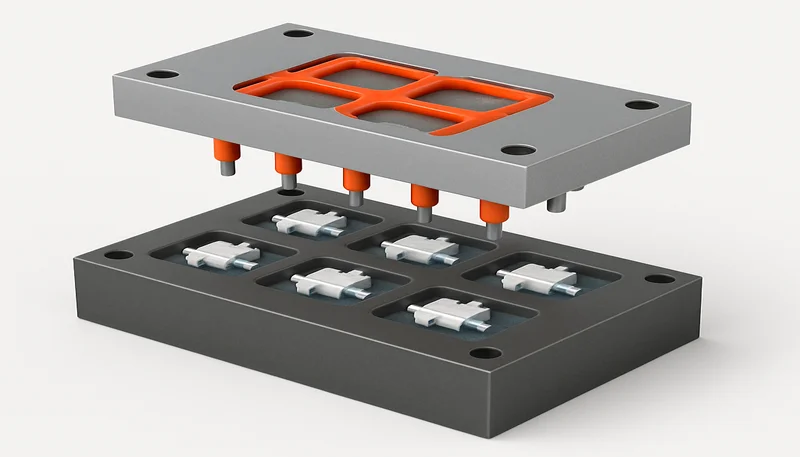
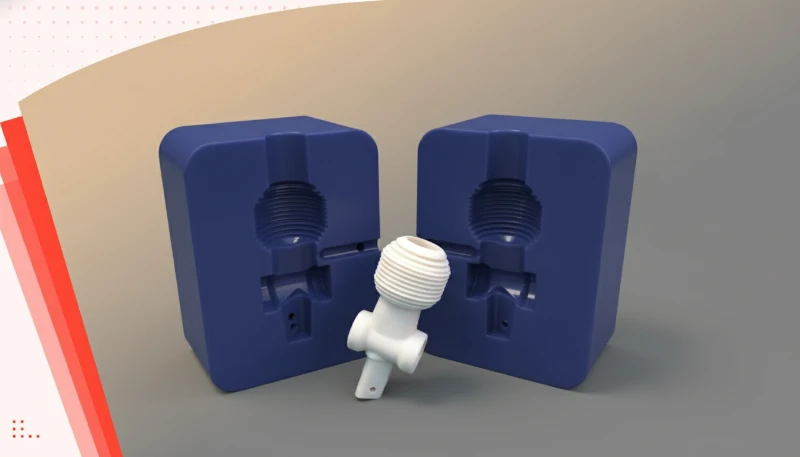
Het werkingsprincipe is eenvoudig: de schroef van de spuitgietmachine duwt gesmolten kunststof via de spuitmond in het hotrunnerverdeelblok. Het verdeelblok verdeelt de smelt over afzonderlijke spuitmonden, die elk een aanspuiting van een matrijsholte voeden. Verwarmingselementen in het verdeelblok en de spuitmonden houden de kunststof op een nauwkeurige temperatuur — doorgaans binnen ±2 °C van het instelpunt — geregeld door thermokoppels die terugkoppelen naar een temperatuurregelaar.
Tijdens de koelfase van de cyclus stolt het onderdeel in de holte, terwijl de kunststof in de hotrunnerkanalen door continue verwarming gesmolten blijft. Wanneer de matrijs opent en het onderdeel wordt uitgeworpen, bevindt de gesmolten kunststof in het runnersysteem zich al op zijn plaats voor de volgende injectieshot. Daardoor hoeft geen nieuwe materiaalvulling door koude kanalen te worden geïnjecteerd, wat zowel materiaalafval als cyclustijd vermindert.
Het temperatuurregelsysteem is het hart van elke hotrunner. Moderne regelaars kunnen 1 tot 128 zones onafhankelijk beheren, elk met PID-regeling (proportioneel-integraal-differentieel) in gesloten lus. Eén zone kan het verdeelblok regelen, terwijl afzonderlijke zones elke spuitmond beheren. Als een zone meer dan enkele graden van het instelpunt afwijkt, gaat een alarm af—want temperatuurvariatie veroorzaakt rechtstreeks defecten zoals onvolledige vulling, braamvorming of verkleuring.
Welke typen hotrunnersystemen bestaan er?
De typen hotrunnersystemen zijn de belangrijkste categorieën of opties die in dit gedeelte worden besproken. Op basis van het aanspuitmechanisme vallen hotrunnersystemen uiteen in twee hoofdcategorieën: open aanspuitingen, ook wel thermische aanspuitingen genoemd, en naaldafsluitsystemen2. De juiste keuze hangt af van de geometrie en het materiaal van uw onderdeel, de cosmetische eisen en het productievolume.
Open-nozzlesystemen (thermische aanspuiting)
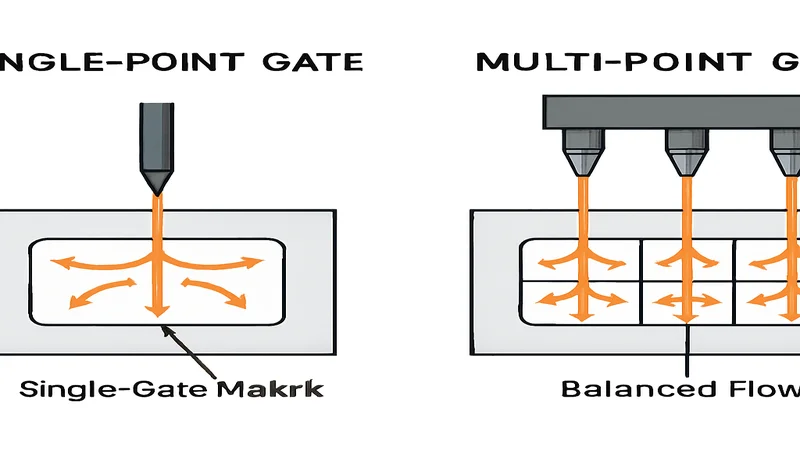
In een systeem met open aanspuitpunt stroomt de kunststofsmelt door een kleine opening rechtstreeks de matrijsholte in. Het dichtvriezen van het aanspuitpunt — waarbij de kunststof bij het aanspuitpunt stolt en de matrijsholte afsluit — wordt volledig door thermische dynamiek beheerst: het koelsysteem van de matrijs koelt het gebied rond het aanspuitpunt, terwijl het hotrunner-mondstuk de smelt vóór het mondstuk vloeibaar houdt. Open aanspuitpunten zijn eenvoudiger, goedkoper en hebben minder bewegende delen. Ze laten echter een kleine aanspuitrest (een verhoogde afdruk) op het onderdeeloppervlak achter en bij sommige technische harsen is het tijdstip van dichtvriezen moeilijker te beheersen.
Naaldafsluitsystemen
Een naaldafsluitsysteem gebruikt een mechanische pen (de afsluitnaald) die de aanspuiting fysiek opent en sluit. Tijdens injectie trekt de pen terug om kunststof door te laten; na nadrukken schuift hij vooruit om de aanspuiting mechanisch af te dichten. Dit regelt het dichtvriezen nauwkeurig, voorkomt draadvorming en laat een zeer nette, vaak onzichtbare aanspuitmarkering achter. Naaldafsluiters hebben de voorkeur voor cosmetische onderdelen, meervoudige matrijzen met gebalanceerde vulling en schuifgevoelige materialen zoals LSR (vloeibaar siliconenrubber) of PEEK. Nadelen zijn hogere kosten en meer onderhoudspunten.³
"Een hotrunnersysteem kan materiaalverlies verminderen door runners tussen cycli gesmolten te houden."True
Correct. Omdat de runners nooit stollen, ontstaat geen runnerafval voor verwijdering of vermaling: elke gram geïnjecteerd materiaal komt in het eindproduct terecht.
"Hotrunnersystemen zijn bij elk productievolume altijd voordeliger dan koudlopersystemen."False
Onjuist. Hotrunner-matrijzen hebben aanzienlijk hogere gereedschapskosten ($3,000–$15,000 extra per matrijs). Voor kleine series (minder dan 10,000 onderdelen) kan een koudloper ondanks het materiaalverlies kosteneffectiever zijn.
Wat zijn de belangrijkste componenten van een hotrunnersysteem?
De belangrijkste componenten van een hotrunnersysteem zijn de hoofdcategorieën of opties die in dit deel worden toegelicht. Een compleet hotrunnersysteem bestaat uit meerdere kritieke subsystemen die nauwkeurig moeten samenwerken. Inzicht in elke component helpt bij probleemdiagnose en het specificeren van het juiste systeem voor uw toepassing.
| Onderdeel | Functie | Belangrijk aandachtspunt |
|---|---|---|
| Spruitstuk | Verdeelt de smelt van de machinemondstuk naar afzonderlijke valmondstukken | Moet thermisch gebalanceerd zijn; X-, H- en I-indelingen voor verschillende holteconfiguraties |
| Spuitmonden (verwarmd) | Voer gesmolten kunststof vanuit het verdeelblok naar de aanspuiting van elke caviteit | Open nozzle versus naaldafsluiter; het tiptype beïnvloedt het aanspuitrestant |
| Verwarmingselementen | Handhaaf de smelttemperatuur in verdeelblok en spuitmonden | Patroon-, spiraal- of bandtypen; levensduur doorgaans 1–3 jaar |
| Thermokoppels | Meet de temperatuur in elke zone voor gesloten-lusregeling | Type J of K; moet correct geplaatst zijn voor nauwkeurige metingen |
| Temperatuurregelaar | PID-regeling van alle verwarmingszones | Het aantal zones moet overeenkomen met het aantal van verdeelblok + spuitmonden; softstart verlengt de levensduur van de verwarmingselementen |
| Naaldafsluiters (indien van toepassing) | Aanspuitingen mechanisch openen/sluiten in naaldafsluitsystemen | Pneumatische, hydraulische of elektrische aandrijving; timing is cruciaal |
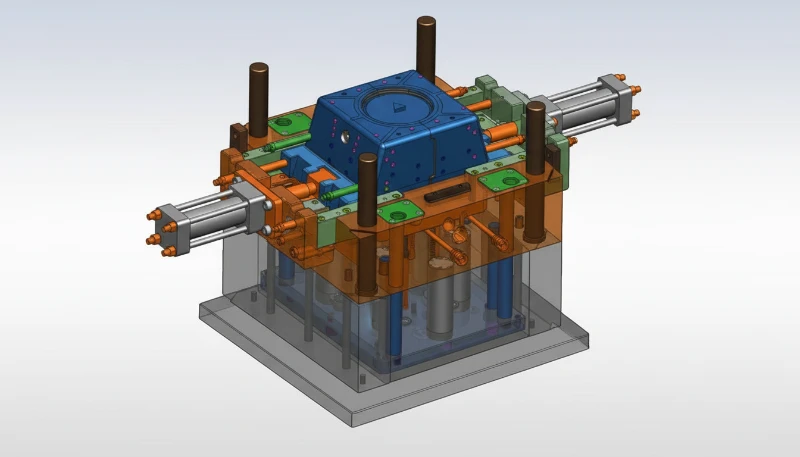
Het verdeelblok is de ruggengraat van het systeem. Het bevindt zich in de matrijsbasis en voert de smelt van de centrale inlaat (waar de machinespuitmond op de matrijs aansluit) naar elke spuitmondpositie. Het ontwerp van het verdeelblok beïnvloedt de vulbalans rechtstreeks—als één stromingspad langer is of meer bochten heeft dan een ander, vullen holten ongelijkmatig, wat maatvariatie en braamvorming veroorzaakt. Moderne verdeelblokken gebruiken stromingssimulatiesoftware om het drukverlies over alle paden gelijk te maken.
Verwarmingselementen en thermokoppels zijn de onderhoudsintensiefste onderdelen van elke hotrunner. Uit onze ervaring met 47 spuitgietmachines3 blijkt dat een defect verwarmingselement het meest voorkomende hotrunnerprobleem is. Eén doorgebrand patroonverwarmingselement kan een volledige productierun stilleggen. Daarom adviseren wij voor elke hotrunnermatrijs reserveverwarmingselementen en -thermokoppels op voorraad te houden en deze preventief elke 12–18 maanden te vervangen.
In onze fabriek in Shanghai gebruiken we 47 spuitgietmachines van 90T tot 1850T, waarvan vele met hotrunnersystemen zijn uitgerust. In 20+ jaar productie hebben we geleerd dat onderhoud aan de verwarmingselementen de belangrijkste factor is voor de betrouwbaarheid van hotrunners: door verwarmingselementen preventief elke 12–18 maanden te vervangen, wordt 80% van de ongeplande stilstand voorkomen. Tijdens onze productiebeoordelingen vergelijken onze engineers de balans tussen de matrijsholten binnen een inspectietolerantie van 0.02 mm, de respons van de verwarmingselementen tijdens 8 uur proefdraaien en het uitvalpercentage bij het opstarten, voordat we productiegoedkeuring adviseren. Op basis van dit bewijs bepalen we of de hotrunner stabiel genoeg is voor herhaalorders.
Wat zijn de voordelen van hotrunnertechnologie?
De voordelen van hotrunnersystemen zijn goed gedocumenteerd en aanzienlijk voor geschikte toepassingen. Dit zijn de belangrijkste voordelen die we in echte productieomgevingen hebben waargenomen:
Materiaalbesparingen
Een coldrunnermatrijs produceert bij elke cyclus gestolde kunststofkanalen die van het onderdeel moeten worden gescheiden en vervolgens worden weggegooid of opnieuw vermalen. In een matrijs met meerdere holtes kan kanaalafval 10–30% van het totale injectiegewicht uitmaken. Bij een matrijs met 32 holtes die 24/7 draait, kan dit oplopen tot duizenden kilo’s materiaalverspilling per maand. Hotrunners elimineren dit afval volledig.
Kortere cyclustijden
Omdat de kanalen niet hoeven te stollen en vervolgens te worden uitgeworpen, zijn de cyclustijden korter. De matrijs hoeft alleen het onderdeel zelf te koelen, niet de kanalen. In de praktijk verkort dit de cyclustijd doorgaans met 10–20% ten opzichte van een drievoudige plaatmatrijs met koud kanaal. Over miljoenen cycli stapelt die tijdsbesparing zich op tot aanzienlijke capaciteitswinst.
Betere onderdeelkwaliteit
Hete kanalen voeren de smelt consistenter naar elke caviteit. Zonder het drukverlies van koude runners verbetert de vulbalans, wat zorgt voor gelijkmatigere productgewichten, afmetingen en oppervlakteafwerking over alle caviteiten. Vooral naaldafsluitsystemen maken nauwkeurige regeling van de nadruk mogelijk, waardoor inval, holten en kromtrekken afnemen.
Ontwerpflexibiliteit
Hotrunners maken plaatsing van aanspuitingen op optimale locaties van het onderdeel mogelijk—ongeacht de geometrie van de matrijsplaat—omdat de verwarmde kanalen de smelt naar elke positie kunnen leiden. Zo kunt u vanuit het midden van een groot vlak onderdeel aanspuiten zonder drieplatenmatrijs, of aanspuitingen op de beste constructieve locaties plaatsen om lasnaden en vloeisporen te minimaliseren.
Wanneer kiest u een hotrunner boven een coldrunner?
Een hotrunner in plaats van een coldrunner is de juiste keuze wanneer volume, tolerantie, gereedschapsbudget of ontwerpflexibiliteit belangrijker zijn dan maximale output. Niet elk project profiteert van een hotrunner. De beslissing hangt af van productievolume, onderdeelcomplexiteit, materiaalkosten en cosmetische eisen. Dit is het praktische kader dat wij bij klantadvies gebruiken:
| Invloedsfactor | Kies een heetkanaal | Kies een koudloper |
|---|---|---|
| Productievolume | >50,000 onderdelen | <10,000 onderdelen |
| Materiaalkosten | >$3/kg (afval is duur) | <$2/kg (afval is aanvaardbaar) |
| Visuele kwaliteit van onderdelen | Zichtbare aanspuitmarkeringen zijn onaanvaardbaar | Aanspuitrest toegestaan |
| Aantal caviteiten | 8+ holten | 1–4 caviteiten |
| Prioriteit voor cyclustijd | Hogesnelheidsautomatisering | Lage snelheid / prototyping |
| Materiaaltype | Technische harsen, LSR, PEEK | Standaardharsen (PP, PE) |
Het break-evenpunt ligt doorgaans rond 30.000–50.000 onderdelen. Onder die grens zijn de extra gereedschapskosten van een hotrunnersysteem meestal hoger dan de besparing op materiaal en cyclustijd. Bij programma’s van meer dan 100.000 onderdelen levert een hotrunner vrijwel altijd een positief rendement op. Gebruik onze inkoopgids om uw gereedschapsstrategie af te stemmen op het productievolume.
"Hotrunnersystemen met naaldafsluiter laten vrijwel geen zichtbare aanspuitmarkering op het afgewerkte onderdeel achter."True
Juist. De mechanische pen snijdt het aanspuitpunt netjes af en laat een gladde, vrijwel onzichtbare markering achter—ideaal voor cosmetische onderdelen zoals interieurafwerking voor auto's.
"Hotrunnermatrijzen vereisen geen onderhoud omdat ze minder bewegende delen hebben dan coldrunners."False
Onjuist. Hotrunner-matrijzen vereisen regelmatig onderhoud van verwarmingselementen, thermokoppels en afdichtingscomponenten. Een defect verwarmingselement is de meest voorkomende oorzaak van stilstand bij hotrunnerproductie.
Wat zijn de nadelen van heetlopertechnologie?
Hete kanalen zijn geen universele oplossing. De nadelen zijn reëel en negeren ervan leidt tot kostbare fouten:
Hogere gereedschapskosten: een hotrunnermatrijs kost doorgaans $3,000–$15,000 meer dan een vergelijkbare coldrunnermatrijs, afhankelijk van het aantal druppunten en het type aanspuiting. Naaldafsluitsystemen bevinden zich aan de bovenkant van dat bereik vanwege de extra pneumatische of hydraulische actuatoren en afsluitnaalden.
Complexer onderhoud: het verwarmingssysteem vereist regelmatige inspectie en vervanging van componenten. Verwarmingselementen branden door, thermokoppels verlopen en spruitstukafdichtingen degraderen. Uitval van één component kan de productie uren stilleggen terwijl de matrijs voor reparatie wordt gedemonteerd.
Opstartafval: wanneer een hotrunner-matrijs koud opstart, duurt het 15–45 minuten voordat alle zones de verwerkingstemperatuur bereiken. Tijdens deze opwarming zijn de eerste 5–20 shots doorgaans afkeur omdat de smelt nog niet volledig stabiel is. Bij korte productieseries kan dit opstartafval de materiaalbesparing tenietdoen.
Materiaalgevoeligheid: Sommige materialen — met name warmtegevoelige harsen zoals PVC en POM — zijn in hotrunnersystemen gevoelig voor thermische degradatie. Een lange verblijftijd bij hoge temperaturen kan vergeling, gasvorming of verlies van mechanische eigenschappen veroorzaken. Als u deze materialen spuitgiet, kan een koudkanaalsysteem de veiligere keuze zijn.
Moeilijkheid van kleurwissels: bij een hotrunnersysteem moet voor een kleurwissel het volledige verdeelblok met alle spuitmonden worden gespoeld, wat materiaal en tijd kost. Bij een koudloper begint u eenvoudig met het vormen van de nieuwe kleur—het oude aanspuitafval zou toch worden weggegooid. Houd hiermee rekening als uw productieplanning veel kleurwissels omvat.
Hoe lost u veelvoorkomende heetkanaalproblemen op?
Probleemoplossing bij hotrunners is een stapsgewijze controle van temperatuur, toestand van de aanspuiting, verblijftijd van het materiaal, bedrading en caviteitsbalans. Zelfs goed onderhouden hotrunnersystemen ontwikkelen problemen. Dit zijn de meest voorkomende problemen die wij tegenkomen en hun hoofdoorzaken:
Temperatuurschommeling
Als de temperatuur van een zone meer dan ±5 °C rond de ingestelde waarde schommelt, controleer dan eerst de plaatsing van het thermokoppel. Een los of gedeeltelijk ingestoken thermokoppel meet onjuist, waardoor de regelaar overcompenseert. Controleer ook op doorgebrande verwarmingselementen — meet de weerstand met een multimeter en vergelijk deze met de specificatie van de fabrikant. In onze faciliteit blijkt 60% van de temperatuurproblemen terug te voeren op thermokoppelproblemen, niet op defecte verwarmingselementen.
Smeltlekkage
Kunststoflekkage tussen het verdeelblok en de matrijsplaten duidt meestal op versleten afdichtingen of onjuiste montage van het verdeelblok. Schakel het systeem uit, reinig alle afdichtingsvlakken en vervang O-ringen of pakkingen. Draai de bouten van het verdeelblok opnieuw aan volgens de specificatie van de fabrikant—te strak aandraaien beschadigt afdichtingen evenzeer als te los aandraaien.
Poortrest of draadvorming
Overmatige poortmarkeringen of draadvorming (dunne kunststofdraden die uit de poort trekken wanneer de matrijs opent) zijn vaak het gevolg van een onjuiste poorttip-temperatuur of onvoldoende bevriestijd. Probeer de temperatuur van de spuitmondtip met 5–10 °C te verlagen en de koeltijd met 0,5–1 seconde te verlengen. Als het probleem aanhoudt bij een klepsysteem, controleer dan de timing en slag van de kleppen.
Ongelijke vulling over de holtes
Wanneer sommige holtes eerder vullen dan andere, is de stromingsbalans van het verdeelblok verstoord. Controleer of alle tuitpijptemperaturen binnen 2 °C van elkaar liggen, en controleer vervolgens op gedeeltelijke verstoppingen in de verdeelblokkanalen. Als het systeem eerder correct werkte, is een geblokkeerd kanaal door afgebroken materiaal de waarschijnlijke oorzaak.
Veelgestelde vragen
Wat is het verschil tussen een heetkanaal- en een koudkanaalsysteem?
Een heetkanaalsysteem gebruikt verwarmde kanalen om plastic gesmolten te houden tussen de machine-tuit en de holte-ingang, zodat er weinig of geen vast kanaalafval is. Een koudkanaalsysteem laat de voedingskanalen elke cyclus stollen, zodat het kanaal gescheiden, opnieuw gemalen of weggegooid moet worden. Heetkanaalsystemen zijn meestal duurder om te bouwen en te onderhouden, maar ze kunnen kunststof, cyclustijd en handlingskosten besparen bij grootschalige productie. De beste keuze hangt af van het kanaalgewicht, de kunststofkosten, het jaarlijkse aantal schoten, de frequentie van kleurwisselingen en de onderhoudscapaciteit.
Hoeveel kost een heetkanaalmatrijs in vergelijking met een koudkanaalmatrijs?
Een heetkanaalmatrijs kost meestal meer dan een vergelijkbare koudkanaalmatrijs omdat er een verwarmd verdeelblok, tuiten, bedrading, controllerzones, isolatie, afwerkwerk en extra proefvalidatie aan worden toegevoegd. Het prijsverschil hangt af van het aantal holtes, het poorttype, het heetkanaalmerk, de kunststof en de onderdeelgrootte. Kopers moeten niet alleen naar de matrijsprijs kijken. Ze moeten de matrijskosten vergelijken met de bespaarde kunststof per schot, de verminderde cyclustijd, het opstartafval, de reserveonderdelen en het risico op stilstand. Een grootschalige matrijs kan het prijsverschil terugverdienen; een matrijs voor korte series mogelijk niet.
Kunnen hete kanaalsystemen alle kunststofmaterialen verwerken?
Veel thermoplasten kunnen in hete kanaalsystemen worden verwerkt, waaronder ABS, PP, PC, nylon, PEEK en veel technische kunststoffen, maar het systeem moet bij het materiaal passen. Warmtegevoelige materialen hebben een zorgvuldige controle van verblijftijd en temperatuur nodig, omdat afgebroken kunststof zwarte spikkels, strepen of zwakke onderdelen kan veroorzaken. Slijtende glasgevulde materialen kunnen tuiten en poorten verslijten. Corrosieve of vlamvertragende kwaliteiten kunnen speciaal staal of coatings vereisen. De leverancier moet het kunststofdatablad, schuifwarmte, reinigingsmethode en proefplan beoordelen voordat het ontwerp wordt goedgekeurd.
Hoe vaak moeten verwarmingselementen voor hete kanalen worden vervangen?
Heetkanaalverwarmers moeten regelmatig worden gecontroleerd en worden vervangen op basis van de productiebelasting, niet alleen na zichtbare storing. Bij grootschalige productie plannen veel fabrieken vervanging na ongeveer twaalf tot achttien maanden, vooral voor kritieke matrijzen die zich geen onverwachte stilstand kunnen veroorloven. Matrijzen met een lagere productie kunnen langer meegaan als de weerstandscontroles, temperatuurstabiliteit, bedrading en thermokoppelrespons normaal blijven. Kopers moeten vragen om een lijst met reserveverwarmers en thermokoppels, een bedradingsschema en een onderhoudstoegangsplan. Preventief onderhoud is goedkoper dan het stoppen van de productie nadat een verwarming in de matrijs is uitgevallen.
Wat veroorzaakt bevriezing van de heetkanaaltuit?
Bevriezing van de heetkanaaltuit treedt op wanneer de smelt bij de poort te veel afkoelt voordat het pakken is voltooid. Veelvoorkomende oorzaken zijn lage tiptemperatuur, slecht contact van de verwarming, overmatige koeling nabij de poort, verkeerde poortgrootte, lange cyclusonderbreking of een materiaal met een smal verwerkingsvenster. Het symptoom kan eruitzien als onvolledige vulling of onstabiel onderdeelgewicht, maar de oorzaak is vaak lokaal warmteverlies aan de tuitpunt. Probleemoplossing moet de zonetemperatuur, thermokoppelpositie, verwarmingsweerstand, poortslijtage, matrijskoeling en werkelijke smelttemperatuur controleren.
Is een heetkanaalsysteem de moeite waard voor kleinschalige productie?
Een heet kanaalsysteem is meestal niet rendabel voor zeer lage productievolumes omdat de extra gereedschaps- en besturingskosten voldoende schoten nodig hebben om zich terug te verdienen via besparingen op kunststof en cyclustijd. Voor prototypes of proefseries is een koud kanaalsysteem vaak eenvoudiger, goedkoper en gemakkelijker aan te passen. Een heet kanaalsysteem wordt aantrekkelijker wanneer het kanaal zwaar is, de kunststof duur is, de cosmetische poortkwaliteit belangrijk is of het jaarlijkse volume stabiel is. Kopers moeten de terugverdientijd berekenen op basis van verwachte schoten, kanaalgewicht, kunststofkosten, cyclustijd, onderhoudskosten en risico op afval.
Hoe lang duurt het opstarten van een matrijs met hete kanalen?
Een heetkanaalmatrijs heeft meestal tijd nodig om alle zones te verwarmen voordat stabiel spuitgieten begint. Een typische opstart kan vijftien tot vijfenveertig minuten duren, afhankelijk van de grootte van het verdeelblok, het aantal tuiten, het vermogen van de controller, de kunststof en de matrijstemperatuur. De eerste schoten kunnen afval zijn terwijl de smelttemperatuur, de poortstroming en de holtebalans zich stabiliseren. Een goede proefregistratie moet de opwarmtijd, zone-instelpunten, eerste acceptabele schotaantal, drukgedrag en gewichtsstabiliteit van het onderdeel noteren. Deze gegevens helpen kopers de werkelijke productie-efficiëntie te begrijpen, niet alleen de geciteerde cyclustijd.
Welk onderhoud heeft een heetkanaalsysteem nodig?
Onderhoud van heetkanaalsystemen omvat het controleren van verwarmers, thermokoppels, bedrading, stekkerverbindingen, verdeelblokafdichtingen, tuitpunten, poortslijtage, kleppennen en controllerkalibratie. De matrijs moet worden geïnspecteerd op lekkage, koolstofophoping, beschadigde isolatie, losse draden en ongelijke temperatuurrespons. Voor kleppoortsystemen moeten ook pennen en busringen op slijtage worden gecontroleerd. Kopers moeten reserveverwarmers, thermokoppels, afdichtingen en kleppennen beschikbaar hebben voordat de productie begint. Onderhoudsregistraties moeten aangeven wat is vervangen, wanneer het is vervangen en of de reparatie procesinstellingen of onderdeelkwaliteit heeft veranderd.
Klaar om uw matrijsontwerp te optimaliseren?Het engineeringteam van ZetarMold kan u helpen beoordelen of een hotrunnersysteem de juiste keuze is voor uw project. Met 20+ jaar ervaring, eigen matrijsproductie en 47 machines van 90T tot 1850T leveren wij geoptimaliseerde gereedschapsoplossingen die kwaliteit, kosten en productie-efficiëntie in balans brengen.
Vraag een gratis offerte aan →
hotrunnersysteem: Een hotrunnersysteem is een verwarmd kanaalsysteem in een spuitgietmatrijs dat de kunststof vanaf de machinespuitmond tot aan de aanspuiting van de caviteit gesmolten houdt. ↩
naaldafsluitsystemen: Hotrunnersystemen met naaldafsluiting gebruiken een mechanische pen om de aanspuiting te openen en te sluiten. Dit biedt nauwkeurige controle over het moment waarop de aanspuiting bevriest en laat slechts een minimale afdruk op het onderdeel achter. ↩
spuitgietmachine: Een spuitgietmachine verwarmt kunststof, brengt deze onder druk en injecteert het gesmolten materiaal in een matrijsholte. In onze fabriek varieert de machinegrootte van 90T tot 1850T. ↩