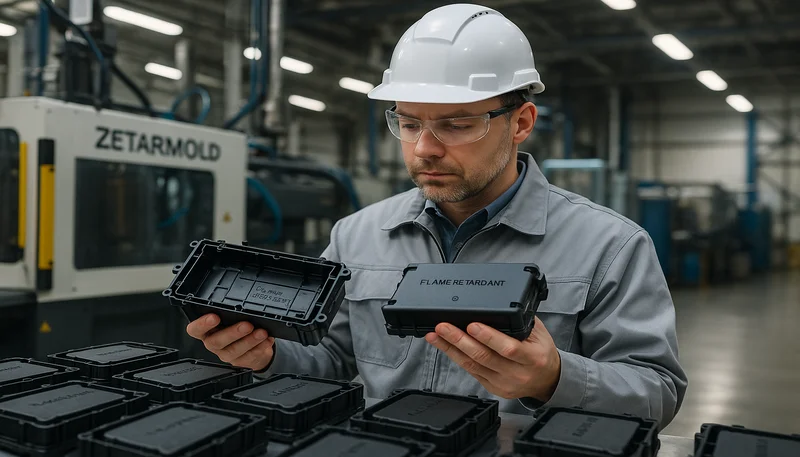
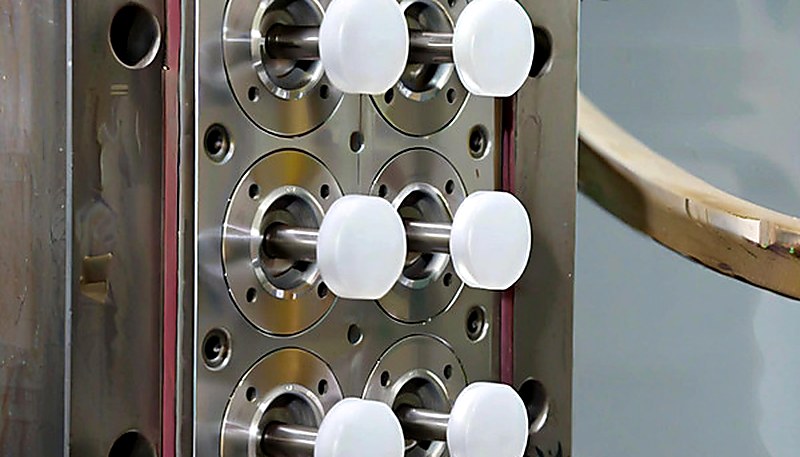
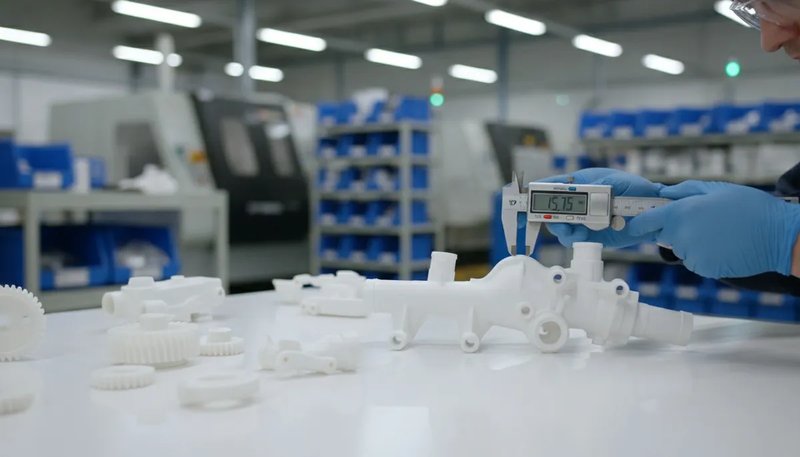
Een spuitgietmachine is het werkpaard van de moderne kunststofproductie: zij smelt ruw polymeer, perst het in een nauwkeurig verspaande spuitgietmatrijs en werpt om de paar seconden een afgewerkt onderdeel uit. Of u nu behuizingen voor medische hulpmiddelen of autoclips vormt, inzicht in de werking van de machine maakt het verschil tussen een stabiel proces en weken met kostbare defecten. Deze gids behandelt elk belangrijk subsysteem, de vormcyclus stap voor stap, veelvoorkomende storingen en wat werkelijk belangrijk is bij het kiezen van de sluitkracht voor een nieuw project.
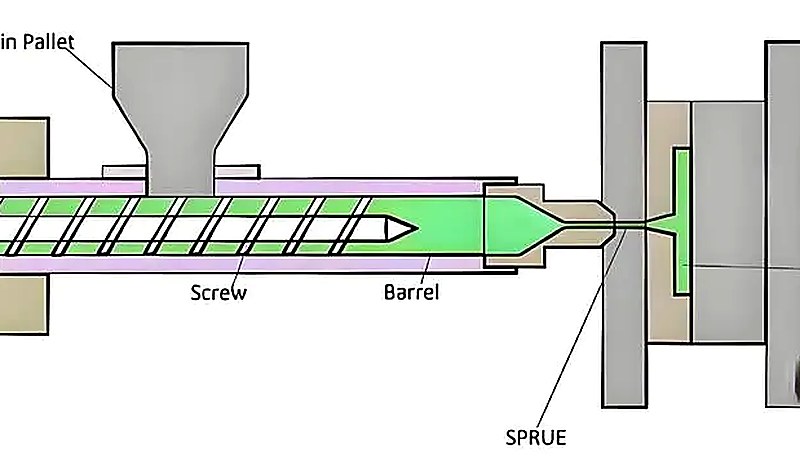
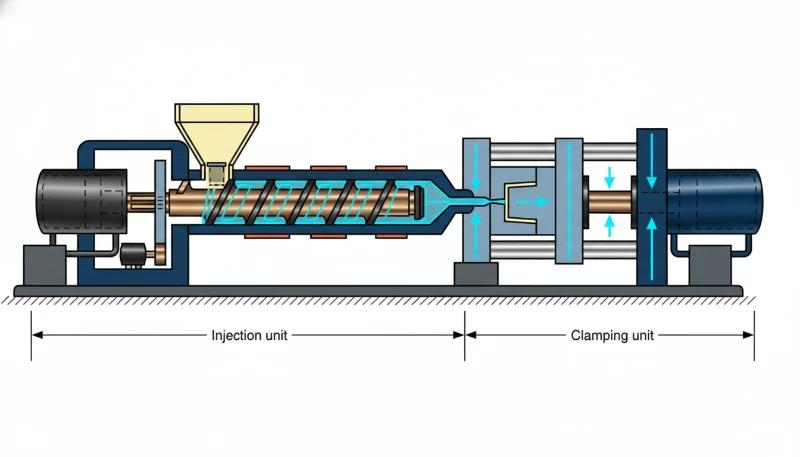
- Een spuitgietmachine heeft twee kerneenheden: de injectie-eenheid (smelt en verplaatst de kunststof) en de sluiteenheid (houdt de matrijs gesloten en opent deze).
- De heen-en-weergaande schroef is het belangrijkste onderdeel — deze plastificeert, doseert en injecteert het materiaal in één cyclus.
- De sluitkracht moet groter zijn dan het geprojecteerde caviteitsoppervlak × de maximale smeltdruk, anders ontstaat braamvorming bij de matrijs.
- Moderne volledig elektrische machines besparen 30–50% energie ten opzichte van hydraulische equivalenten en bieden een betere reproduceerbaarheid van shot tot shot.
- Inzicht in machinespecificaties (schotvolume, afstand tussen trekstangen, plaatgrootte) is cruciaal voordat in gereedschap wordt geïnvesteerd.
Wat zijn de belangrijkste onderdelen van een spuitgietmachine?
Elke spuitgietmachine bestaat, ongeacht merk of bouwjaar, uit twee hoofdeenheden die op een gemeenschappelijk basisframe zijn bevestigd. De injectie-eenheid verzorgt alles rond het smelten en toevoeren van kunststof: de trechter, cilinder, heen-en-weer bewegende schroef1, verwarmingsbanden en spuitmond. De sluiteenheid verzorgt alles rond de mal: de vaste en bewegende opspanplaten, het kniehefboom- of hydraulische sluitmechanisme, het uitwerpsysteem en de trekstangen. De machinebesturing verbindt beide: een PLC of speciale regelaar die temperatuurzones, injectiedruk, schroefsnelheid, nadruk en timing coördineert.
Wanneer er op een productievloer iets misgaat, is de eerste vraag van een ervaren procesengineer in de praktijk welke eenheid het probleem veroorzaakt—en daarvoor moeten deze componenten door en door bekend zijn.
Hoe werkt de injectie-eenheid?
In de injectie-eenheid wordt de grondstof omgezet. Kunststofkorrels vallen vanuit de trechter in de cilinder, waar de heen-en-weer bewegende schroef draait en vóór de schroefpunt een buffer van gesmolten polymeer opbouwt. Rond de cilinder zitten verwarmingsbanden — doorgaans verdeeld over drie tot vijf temperatuurzones — die het materiaal op de beoogde smelttemperatuur brengen. Ondertussen levert de schroefrotatie via schuifwrijving het grootste deel van de feitelijke verwarming. Bij semikristallijne materialen zoals nylon of POM is dit doorgaans 60–80% van de totale warmtetoevoer.
Zodra voldoende smelt is verzameld, de injectiehoeveelheid, stopt de schroef met draaien en werkt zij als een plunjer. Onder hoge druk, vaak 1.000 tot 2.000 bar, beweegt zij naar voren en perst de smelt door de spuitmond, het aanspuitkanaal en de runners naar de matrijsholten. Direct daarna volgt de nadrukfase, waarin extra materiaal in de holte wordt geperst om volumetrische krimp tijdens het afkoelen te compenseren. In deze fase wordt een groot deel van de onderdeelkwaliteit bepaald: bij te weinig druk ontstaan invalplekken en holten; bij te veel druk ontstaat braamvorming2 aan de mal of overvulling, met maatafwijkingen en hoge restspanningen als gevolg.
Wat is de sluiteenheid en waarom is het tonnage belangrijk?
De functie, beperkingen en afwegingen in dit gedeelte verklaren waarom de sluiteenheid en haar tonnage belangrijk zijn. De sluiteenheid houdt de matrijshelften met voldoende kracht gesloten om weerstand te bieden aan de injectiedruk die ze uit elkaar probeert te drukken. Als de sluitkracht3 onvoldoende is, wijkt de mal iets open en ontsnapt gesmolten kunststof. Dat veroorzaakt braamvorming en maakt onderdelen onbruikbaar. De sluitkracht wordt gemeten in ton of kilonewton.
Een grove vuistregel: neem het geprojecteerde oppervlak van alle caviteiten in cm², vermenigvuldig dit met de injectiedruk in kg/cm² en voeg vervolgens een veiligheidsmarge van 10–20% toe. Een onderdeel met een geprojecteerd oppervlak van 200 cm² bij 600 kg/cm² heeft bijvoorbeeld minimaal een machine van 120 ton nodig — de meeste engineers zouden voor de zekerheid 150 ton specificeren.
Er zijn drie belangrijke sluitmechanismen. Kniehefboomsystemen gebruiken een mechanische koppeling met een zelfvergrendelend voordeel: snel openen en sluiten en een efficiënt energiegebruik, maar de sluitkracht varieert enigszins met de matrijshoogte. Direct hydraulische sluitingen gebruiken een cilinder met grote boring voor een constante kracht ongeacht de matrijsdikte, waardoor ze populair zijn voor dieptrek- of uiterst nauwkeurige mallen. Tweeplatenmachines scheiden de sluit- en vergrendelfuncties en verkleinen zo de machine aanzienlijk. U ziet ze bij machines met een grote sluitkracht van 1.000+ ton, waar vloeroppervlak een echte beperking vormt. In onze fabriek gebruiken we machines van 90T tot 1.850T; de keuze tussen kniehefboom en hydrauliek hangt af van de onderdeelgeometrie en tolerantie-eisen.
"Kniehefsluitingen hebben bij hetzelfde tonnagebereik doorgaans een kortere cyclustijd dan direct hydraulische sluitingen."True
Kniehefboommechanismen bereiken de volledige sluitkracht door mechanisch voordeel, waardoor snelle openings- en sluitbewegingen mogelijk zijn. Hydraulische klemmen moeten druk opbouwen in een grote cilinder, wat per beweging meer tijd kost.
"Een spuitgietmachine van 100 ton kan elk onderdeel dat binnen de plaatmaten past veilig vormen."False
Tonnage verwijst naar sluitkracht, niet naar de afmetingen van de opspanplaat. Een dunwandig onderdeel met een groot oppervlak kan veel meer sluitkracht vereisen dan een klein, dikwandig onderdeel — u moet rekenen op basis van het geprojecteerde oppervlak van de matrijsholte × de maximale matrijsholtedruk.
Hoe verloopt de volledige vormcyclus stap voor stap?
In dit gedeelte wordt de volledige spuitgietcyclus stap voor stap beschreven, evenals de invloed ervan op kosten, kwaliteit, planning en inkooprisico. De stappen van het spuitgieten omvatten vier hoofdfasen, die elk de productkwaliteit beïnvloeden. Dit gebeurt er in de machine, in de juiste volgorde:
1. Opspannen en sluiten van de matrijs. De sluiteenheid beweegt de beweegbare opspanplaat naar voren totdat de matrijshelften elkaar raken. De machine bouwt de volledige sluitkracht op — afhankelijk van de machinegrootte en het mechanisme duurt dit 0,5 tot 3 seconden. De matrijs moet volledig gesloten en vergrendeld zijn voordat het inspuiten begint; veiligheidsvergrendelingen verhinderen anders het inspuiten.
2. Inspuiten en vullen. De schroef beweegt als een plunjer naar voren en perst de gesmolten kunststof door de spuitmond, aanspuitbus en het runnersysteem de vormholten in. De vulsnelheid is cruciaal: te snel leidt tot ingesloten lucht (verbrandingen, jetting); te langzaam zorgt ervoor dat het smeltfront stolt voordat de vormholte volledig gevuld is (onvolledige vulling). Voor een typische behuizing van consumentenelektronica kan de vultijd 0,3 tot 1,5 seconde bedragen.
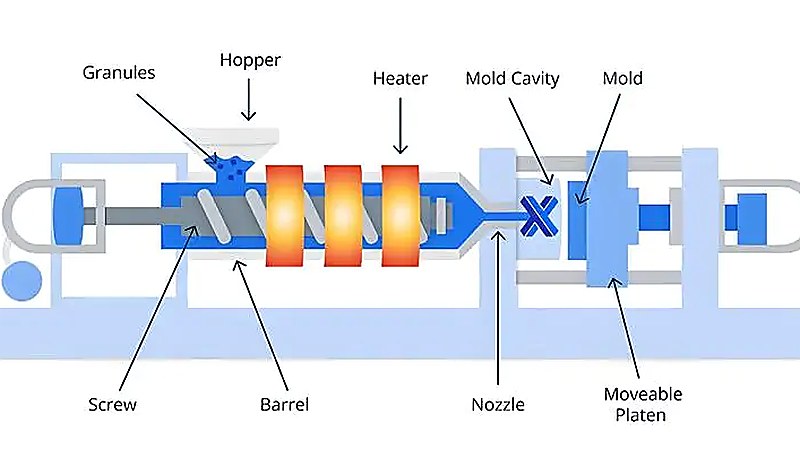
3. Nadrukken en vasthouden. Zodra de vormholte volumetrisch gevuld is, schakelt de machine over op nadruk. De schroef blijft voorwaartse druk uitoefenen en duwt extra materiaal in de vormholte terwijl de kunststof afkoelt en krimpt. Deze fase duurt doorgaans 2–15 seconden en bepaalt rechtstreeks het productgewicht, de maatnauwkeurigheid en de ernst van inval. De aanspuiting moet gedurende deze hele fase openblijven; zodra deze bevriest, heeft extra druk geen effect meer.
4. Koelen en uitwerpen. Het product koelt in de matrijs verder af totdat het stijf genoeg is om zonder vervorming te worden uitgeworpen. De koeltijd bepaalt het grootste deel van de totale cyclus — bij dikwandige producten vaak 50–70%. Ondertussen trekt de schroef zich terug en begint deze te draaien om materiaal voor de volgende injectie te plastificeren. Wanneer de ingestelde tijd verstreken is, opent de matrijs, duwen de uitwerppennen het product van de kern en begint de cyclus opnieuw. Een goed geoptimaliseerde cyclus voor een eenvoudige PP-dop kan 8–12 seconden duren; voor een groot interieurpaneel voor auto’s kan dit 45–60 seconden zijn.
Welke typen spuitgietmachines bestaan er?
Machines worden ingedeeld naar zowel aandrijftype als opstelling. Hydraulische machines zijn al tientallen jaren de industriestandaard: ze gebruiken hydraulische olie voor de aandrijving van de sluiting, injectie en schroef. Ze zijn robuust, relatief voordelig per ton en geschikt voor toepassingen met hoge sluitkrachten. Nadelen zijn een hoger energieverbruik, gevoeligheid voor de olietemperatuur en een minder nauwkeurige herhaalbaarheid van injectie tot injectie dan bij elektrische machines.
Volledig elektrische machines gebruiken servomotoren voor elke as: injectie, sluiting, schroefrotatie en uitwerping. Ze verbruiken 30–50% minder energie (er draait niet continu een hydraulische pomp), bieden een uitstekende positioneringsnauwkeurigheid (een herhaalbaarheid van de schroefpositie van ±0,01 mm is gebruikelijk), werken schoner (zonder olie) en zijn stiller. Daartegenover staan hogere aanschafkosten en een beperkt sluitkrachtbereik: de meeste gaan tot ongeveer 800 ton, hoewel sommige fabrikanten inmiddels elektrische machines tot 1.500 ton aanbieden.
Hybride machines combineren het beste van beide: servo-elektrische aandrijvingen voor injectie en plastificering door de schroef (waar precisie het belangrijkst is) met hydraulische sluiting (waar grote kracht tegen lagere kosten telt). In onze fabriek gebruiken we alle drie de typen: hydraulisch voor grote constructiedelen tot 1.850T, volledig elektrisch voor medische precisieonderdelen en elektronicacomponenten, en hybride voor middensegmenttoepassingen waar de economische balans gunstig is.
"Hybride machines kunnen de injectienauwkeurigheid van elektrische machines realiseren en tegelijk het kostenvoordeel van hydraulische sluiting behouden."True
Door servomotoren te gebruiken voor injectie en plastificering, waar precisie van shot tot shot belangrijk is, en hydraulische systemen voor het sluiten, waar kracht per bestede dollar doorslaggevend is, verdelen hybride machines de optimalisatie effectief.
"Volledig elektrische machines produceren altijd onderdelen van betere kwaliteit dan hydraulische machines."False
Volledig elektrische machines bieden een betere herhaalbaarheid en energie-efficiëntie, maar de onderdeelkwaliteit wordt vooral bepaald door het matrijsontwerp, de materiaalkeuze en de procesparameters. Een goed afgestelde hydraulische machine kan voor veel toepassingen dezelfde kwaliteit produceren.
Hoe selecteert u de juiste machine voor een project?
Dit gedeelte gaat over de keuze van de juiste machine voor een project en de invloed daarvan op kosten, kwaliteit, planning en inkooprisico. Om de juiste spuitgietmachine te kiezen, moet u vijf parameters aan uw producteisen toetsen: klemkracht, shotvolume, plaatmaat en afstand tussen trekstangen, openingsslag en injectiesnelheid. Als één parameter niet klopt, kan de matrijs onbruikbaar zijn op de gekozen machine.
Bereken ten eerste de sluitkracht op basis van het geprojecteerde oppervlak en de materiaalspecifieke caviteitsdruk. Ten tweede het injectievolume: de nominale injectiecapaciteit van de machine moet het totale productgewicht plus het runnersysteem dekken en idealiter op 30-70% van de nominale capaciteit werken. Ten derde de grootte van de opspanplaten en afstand tussen de trekstangen: de matrijs moet fysiek tussen de trekstangen en op de opspanplaat passen. Ten vierde de openingsslag: er moet voldoende vrije ruimte zijn om het diepste deel van de matrijs uit te werpen. Ten vijfde injectiesnelheid en -druk: dunwandige producten vereisen een hoge injectiesnelheid (200-500 mm/s), terwijl dikwandige producten langdurige nadruk nodig hebben.
Uit onze ervaring met DFM-beoordelingen in fabrieken blijkt dat veel inkoopteams alleen naar het tonnage kijken en het injectievolume en de afstand tussen trekstangen over het hoofd zien. Vervolgens ontdekken ze dat hun matrijs niet past of dat de machine geen volledige injectie kan leveren. Daarom is een DFM-beoordeling met de spuitgieter vóór de definitieve gereedschapsopdracht onmisbaar. Bij ZetarMold beoordeelt ons team elk project op alle vijf parameters voordat het staal wordt verspaand. Met 47 machines van 90T tot 1.850T en ervaring met meer dan 400 materialen koppelen we de juiste machine aan het product — niet andersom.
Wat zijn veelvoorkomende machinestoringen en hoe lost u ze op?
Gangbare machinestoringen en hoe u deze oplost, zijn de belangrijkste categorieën of opties die in dit gedeelte worden toegelicht. Zelfs goed onderhouden machines krijgen problemen. Dit zijn de problemen die we het vaakst op de productievloer zien en de werkelijke oorzaken ervan.
| Storing | Waarschijnlijke hoofdoorzaak | Corrigerende maatregel |
|---|---|---|
| Temperatuurinstabiliteit | Degradatie van het thermokoppel of een losse aansluiting van de verwarmingsband | Thermokoppel vervangen; weerstand en vastzitten van de verwarmingsband controleren |
| Onvolledige vullingen (onvolledige vulling) | Onvoldoende injectiedruk, geblokkeerde aanspuiting of versleten schroef/terugslagklep | Verhoog de injectiedruk; inspecteer de aanspuiting en de schroefpuntconstructie |
| Braam op de deellijn | Sluitkracht te laag of matrijsvlakken versleten/beschadigd | Controleer de sluitkracht; plaats de matrijs opnieuw; inspecteer de toestand van de deellijn |
| Schroefslip (kan geen tegendruk opbouwen) | Versleten cilinder/schroef of materiaalverontreiniging bij de invoeropening | Meet de speling tussen cilinder en schroef; reinig de invoeropening; controleer het materiaal |
| Inconsistent onderdeelgewicht | Versleten terugslagklep waardoor smelt teruglekt | Vervang de terugstroomring — dit is oorzaak nr. 1 van variatie van shot tot shot |
| Brugvorming in de trechter | Materiaalkorrels die door vocht of statische elektriciteit aan elkaar kleven | Installeer een trechterroerder; zorg dat het materiaal goed is gedroogd |
De terugslagklep aan de schroefpunt van een schroefspuitgietmachine is een slijtagedeel; deze voorkomt dat smelt tijdens het inspuiten terugstroomt. Bij slijtage wordt het injectievolume inconsistent en heeft elk product een ander gewicht. Als u maatafwijkingen onderzoekt en problemen met temperatuur en materiaal al hebt uitgesloten, verwijder dan de schroef en meet de speling van de terugslagring. In onze fabriek inspecteren we terugslagringen als onderdeel van preventief onderhoud. Zo elimineren we een grote categorie kwaliteitsproblemen voordat ze de productie bereiken.
Hoe ontwikkelen spuitgietmachines zich?
Het machinelandschap verandert snel, aangedreven door drie factoren: energiekosten, Industry 4.0-connectiviteit en de vraag naar mogelijkheden voor meerdere materialen.
Servogestuurde systemen. Wereldwijd versnelt de overstap van hydraulische naar volledig elektrische en hybride aandrijvingen. Servomotoren bieden positieregeling met gesloten lus, zodat de machine op elke milliseconde van de injectieslag exact weet waar de schroef zich bevindt. Dit maakt wetenschappelijk spuitgieten mogelijk: u kunt een snelheidsprofiel in 5–10 segmenten instellen en bij elke injectie dezelfde curve volgen. Bij grootschalige productie voor de medische en elektronicasector is deze herhaalbaarheid geen extraatje, maar een wettelijke vereiste.
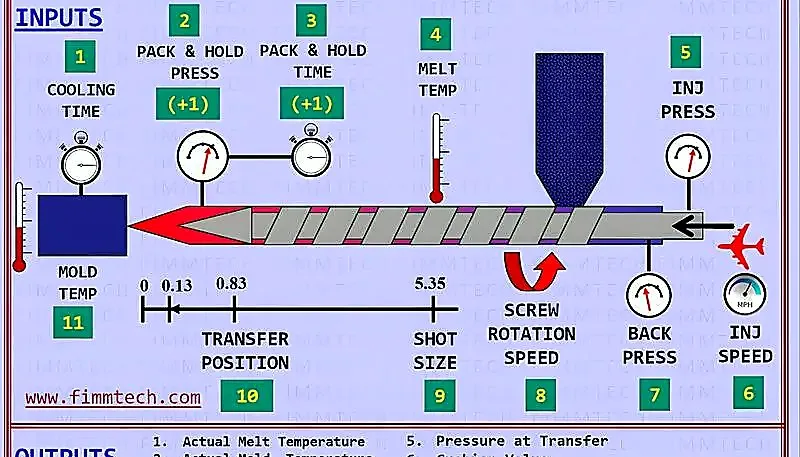
Integratie van Industrie 4.0. Moderne machines stellen via OPC-UA- of MQTT-protocollen realtimegegevens beschikbaar, zoals caviteitsdrukcurven, schroefpositie, cilindertemperaturen en cyclustellingen. Deze gegevens voeden SPC-dashboards en systemen voor voorspellend onderhoud. In plaats van pas op defecten te reageren, ontvangt u waarschuwingen zodra een procesparameter begint af te wijken, nog voordat slechte producten zijn gemaakt. We zijn begonnen met inline kwaliteitsbewaking bij kritieke productieruns en hebben daarmee het uitvalpercentage aanzienlijk verlaagd.
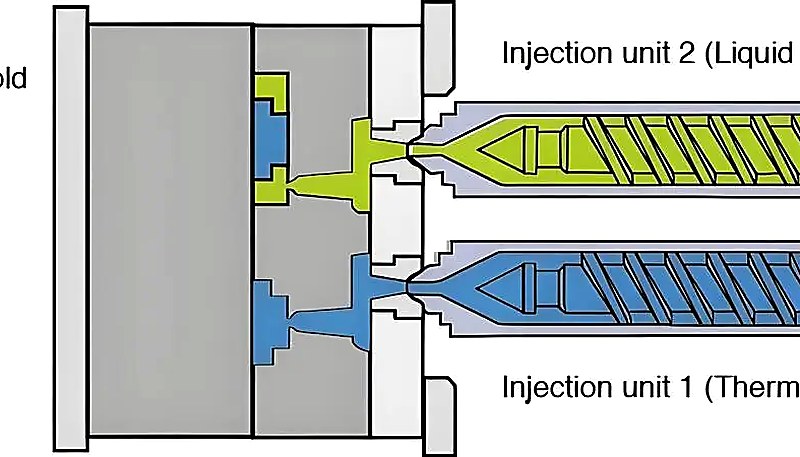
Spuitgieten met meerdere materialen en componenten. Machines met twee of meer injectie-eenheden (zoals onze drie nieuwe 2K-machines uit 2024) kunnen harde en zachte materialen in één cyclus samen spuitgieten — denk aan het handvat van elektrisch gereedschap met een stijve PP-kern en een omspoten TPE-greep. Hierdoor vervallen secundaire montagehandelingen en dalen de totale productiekosten. De machinecoördinatie is complex (draaitafels, kerntreksequenties en onafhankelijke cilindertemperaturen), maar de winst in productie-efficiëntie is aanzienlijk.
Bij ZetarMold gebruiken we 47 spuitgietmachines van 90T tot 1,850T op hydraulische, volledig elektrische en hybride platforms. Ons engineeringteam beoordeelt regelmatig machineprestatiegegevens om cyclusparameters te optimaliseren — in 2025 verkortte procesoptimalisatie voor ons machinepark de gemiddelde cyclustijd met 12% voor automobielprogramma's met grote volumes.
Conclusie
Begrijpen hoe een spuitgietmachine werkt is geen academische kwestie — het heeft rechtstreeks invloed op de onderdeelkwaliteit, levensduur van het gereedschap en productiekosten. De machine is een systeem van onderling verbonden subsystemen: de injectie-eenheid moet een consistente smelttemperatuur en een consistent shotvolume leveren, de sluiteenheid moet de matrijs met voldoende kracht gesloten houden en de besturing moet elke parameter met een precisie van minder dan een seconde coördineren. Wanneer een van deze elementen afwijkt, ontstaan defecten.
Voor engineers en inkoopteams die nieuwe spuitgietprojecten specificeren, is dit de praktische conclusie: betrek het engineeringteam van uw spuitgieter vroegtijdig, controleer of de geselecteerde machine aan alle vijf kritieke parameters voldoet (sluitkracht, schotvolume, plaatgrootte, openingsslag en injectieprestaties) en investeer in preventief onderhoud — met name inspectie van de terugslagklep en meting van cilinder en schroef — als basis voor constante kwaliteit.
Veelgestelde vragen
Wat is de typische cyclustijd van een spuitgietmachine?
De cyclustijd hangt sterk af van onderdeeldikte, materiaal en matrijsontwerp. Een dunwandige PP-sluiting kan op een snelle verpakkingsmachine in 5–8 seconden draaien. Een standaardbehuizing voor consumentenelektronica draait met voldoende koeling doorgaans in 15–25 seconden. Een groot interieurpaneel voor auto’s met diepe ribben kan 45–60 seconden of langer vergen. Koeling vormt meestal 50–70% van de totale cyclus; wanddikte verminderen en koelkanalen optimaliseren zijn daarom het doeltreffendst. Ook het machinetype telt: volledig elektrische machines halen vaak kortere cycli door snellere sluitbewegingen en nauwkeuriger uitschakeling van de nadruk.
Hoeveel sluitkracht heeft mijn onderdeel nodig?
Een praktische formule voor het ramen van de sluitkracht: vermenigvuldig het geprojecteerde holteoppervlak in cm² met de holtedruk in kg/cm², voeg een veiligheidsmarge van 15% toe en deel door 1.000 om tonnen te krijgen. De holtedruk verschilt sterk per materiaal: doorgaans 200–400 kg/cm² voor goed vloeiende materialen zoals PP en PE en 600–800 kg/cm² voor technische harsen zoals PC, POM of glasgevuld nylon. Bij matrijzen met meerdere holten moet het geprojecteerde oppervlak van alle holten worden opgeteld. Rond altijd naar boven af op de dichtstbijzijnde standaardmachinegrootte en bedenk dat de werkelijke holtedruk wordt beïnvloed door aanspuitgrootte, vulsnelheid, smelttemperatuur en onderdeelgeometrie.
Wat is het verschil tussen hydraulische en volledig elektrische spuitgietmachines?
Hydraulische machines gebruiken oliegedreven pompen en cilinders voor de sluiting, injectie en schroefaandrijving — ze zijn kosteneffectief per ton en geschikt voor toepassingen met een hoog tonnage, doorgaans tot meer dan 4.000 ton. Volledig elektrische machines gebruiken servomotoren voor elke as en bieden 30–50% energiebesparing, een hogere herhaalbaarheid van shot tot shot met een schroefpositionering van ±0,01 mm, schoner bedrijf zonder hydraulische olie en minder geluid. Daar staan hogere initiële aanschafkosten en beperkte beschikbaarheid boven 800–1.000 ton tegenover. Hybride machines combineren servo-injectie met hydraulische sluiting tot een evenwichtige oplossing.
Wat veroorzaakt braamvorming bij spuitgieten?
Braamvorming ontstaat wanneer de sluitkracht onvoldoende is om de matrijshelften volledig gesloten te houden tegen de injectiedruk die ze uit elkaar duwt. Andere oorzaken zijn versleten of beschadigde deelvlakken van de matrijs, een te hoge injectiedruk of -snelheid waardoor de caviteitsdruk boven de sluitcapaciteit piekt, doorbuiging van de matrijs onder belasting (vooral bij matrijzen met een groot oppervlak) en ongelijkmatige positionering van de matrijs op de opspanplaten. De corrigerende aanpak begint met verificatie van de werkelijke sluitkracht ten opzichte van de berekende vereiste, gevolgd door inspectie van het deelvlak op slijtage en ten slotte optimalisatie van de injectiedruk- en snelheidsprofielen om de piekdruk in de caviteit te verlagen.
Hoe onderhoudt u een spuitgietmachine?
Kritieke onderhoudspunten voor spuitgietmachines zijn onder meer: keerringen en schroefpunten inspecteren en vervangen, omdat deze slijtdelen de shotconsistentie rechtstreeks beïnvloeden; jaarlijks de speling tussen cilinder en schroef controleren om slijtage vast te stellen voordat die de smeltkwaliteit aantast; thermokoppels en drukopnemers kalibreren om nauwkeurige procesgegevens te waarborgen; hydrauliekolie en filters volgens het aanbevolen schema van de fabrikant vervangen; kniehefboompennen en trekstangen smeren om vreten te voorkomen en een soepele sluitwerking te waarborgen; en verwarmingsbanden inspecteren op weerstandsverloop of fysieke schade waardoor temperatuurzones kunnen afwijken.
Wat is een heen-en-weer bewegende schroef bij spuitgieten?
De heen-en-weer bewegende schroef is het centrale onderdeel van de injectie-eenheid en vervult in elke spuitgietcyclus twee functies. Tijdens het plastificeren draait hij in de verwarmde cilinder om de ruwe polymeerkorrels te mengen, comprimeren en smelten door een combinatie van externe warmte van verwarmingsbanden en interne afschuivingswrijving. Bij semikristallijne materialen levert die wrijving doorgaans 60–80% van de totale warmte. Tijdens het injecteren stopt de schroef met draaien en beweegt hij als een plunjer naar voren, waarbij de verzamelde smelt door de spuitmond in de matrijs wordt geduwd. Een terugslagklep aan de schroefpunt voorkomt dat de smelt tijdens deze voorwaartse slag terugstroomt.
Wat is wetenschappelijk spuitgieten?
Wetenschappelijk spuitgieten is een systematische, datagestuurde methodologie die gebruikmaakt van caviteitsdruksensoren, bewaking van de schroefpositie en ontkoppelde procesfasen — waarbij vullen, nadrukken en vasthouden in onafhankelijk geregelde fasen worden gescheiden — om een robuust en herhaalbaar productieproces vast te leggen. In plaats van machine-instellingen intuïtief aan te passen, gebruikt wetenschappelijk spuitgieten drukcurven en statistische analyses om optimale parameters te bepalen die consistente producten opleveren, ongeacht variaties in machine, operator of omgeving. Het vereist machines met servoregeling met gesloten lus en wordt steeds meer de norm in de productie voor de medische, automobiel- en elektronicasector, waar naleving van regelgeving gedocumenteerde processtabiliteit vereist.
Kunnen spuitgietmachines alle soorten kunststof verwerken?
De meeste thermoplastische materialen kunnen op standaardspuitgietmachines worden verwerkt, van gangbare harsen zoals PP, PE en PS en technische kunststoffen zoals PA, PC, POM en PBT tot hoogwaardige polymeren zoals PEEK, PPS en LCP. Elke materiaalcategorie stelt echter specifieke eisen aan het temperatuurbereik van de cilinder, de geometrie van het schroefontwerp, waaronder de compressieverhouding en L/D-verhouding, en het type spuitmond. Thermoharders en rubberelastomeren vereisen gespecialiseerde machines met andere cilinderontwerpen en temperatuurprofielen. Zeer vochtgevoelige materialen kunnen bovendien machines vereisen met ontluchte cilinders of speciale droogsystemen die in de invoerhals zijn geïntegreerd.
reciprocerende schroef: Een reciprocerende schroef is een component die afwisselt tussen een draaiende beweging om materiaal te plastificeren en een lineaire voorwaartse beweging om de smelt in de vormholte te injecteren. ↩
braamvorming: Braamvorming is overtollige kunststof die tijdens het inspuiten langs de deelnaad van de matrijs ontsnapt, doorgaans door onvoldoende sluitkracht of matrijsslijtage. ↩
sluitkracht: Sluitkracht is de door de machine uitgeoefende kracht om de matrijs tijdens het inspuiten gesloten te houden. Deze wordt gemeten in ton of kilonewton en moet groter zijn dan de totale caviteitsdruk vermenigvuldigd met het geprojecteerde productoppervlak. ↩