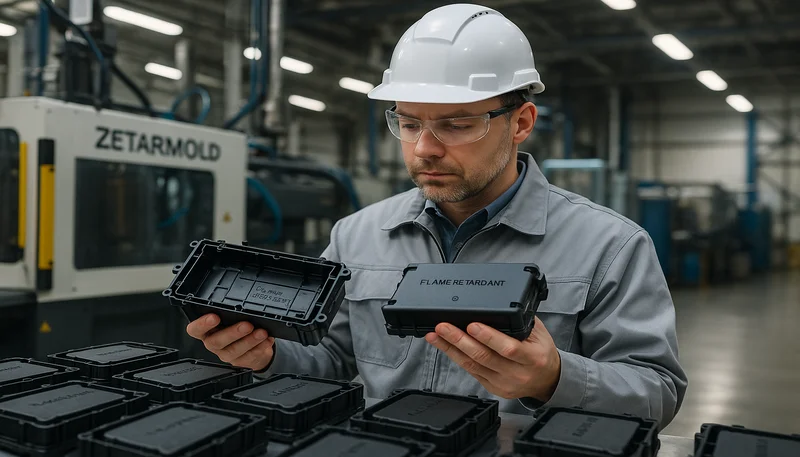
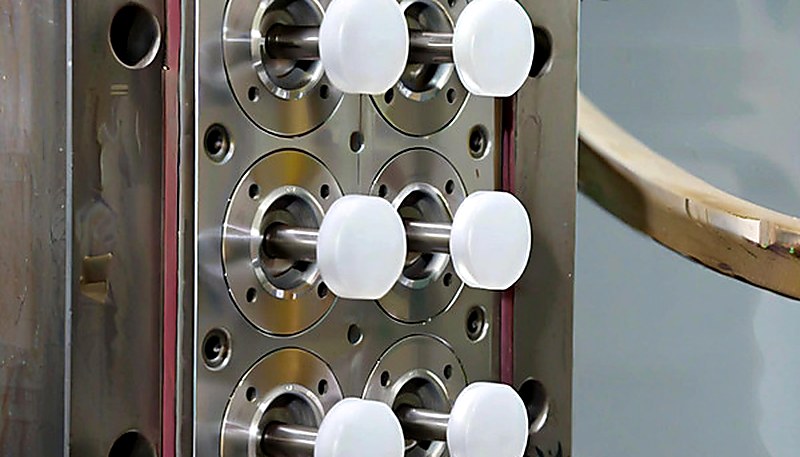
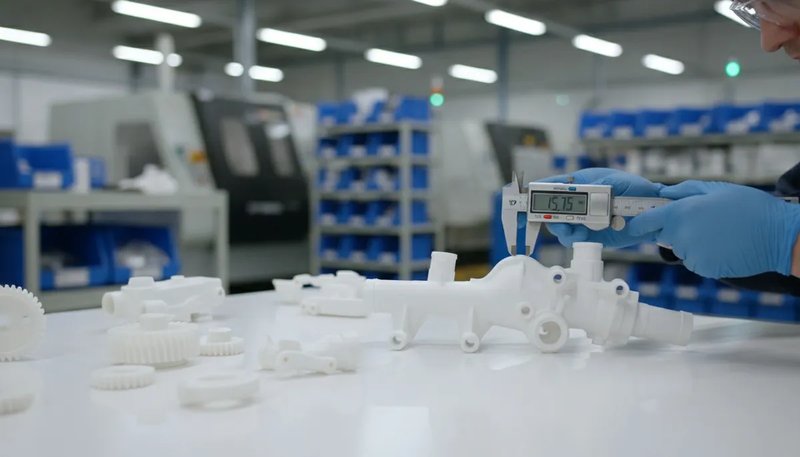
Uma máquina de moldagem por injeção é o coração da fabricação moderna de plásticos: derrete o polímero bruto, força-o para dentro de um molde de injeção usinado com precisão e ejeta uma peça acabada a cada poucos segundos. Seja na produção de carcaças de dispositivos médicos ou presilhas automotivas, compreender seu funcionamento separa um processo estável de semanas de defeitos dispendiosos. Este guia explica cada subsistema principal, o ciclo passo a passo, as falhas comuns e o que realmente importa ao selecionar a tonelagem da máquina para um novo projeto.
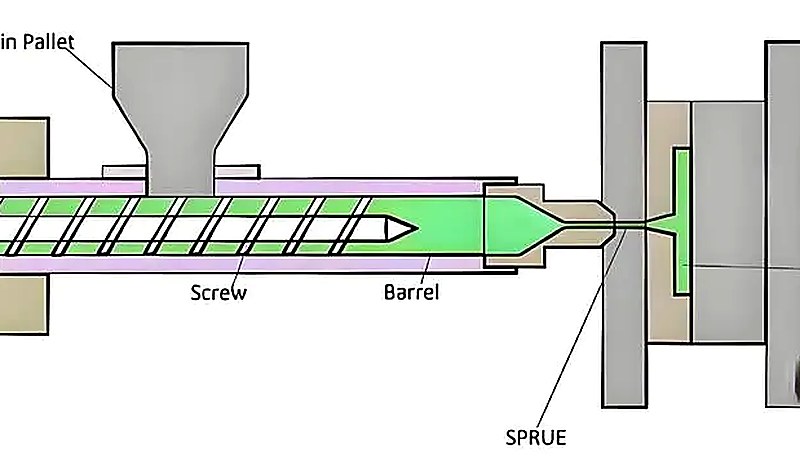
- Uma injetora possui duas unidades principais: a de injeção (funde e impulsiona o plástico) e a de fechamento (mantém e abre o molde).
- A rosca reciprocante é o componente mais importante — ela plastifica, dosa e injeta o material em um único ciclo.
- A força de fechamento deve exceder a área projetada da cavidade × a pressão máxima do material fundido; caso contrário, o molde formará rebarbas.
- As modernas máquinas totalmente elétricas oferecem economia de energia de 30–50% em relação às equivalentes hidráulicas, além de melhor repetibilidade entre injeções.
- Compreender as especificações da máquina (volume de injeção, espaçamento entre colunas e tamanho da placa) é fundamental antes de investir em ferramentas.
Quais são os principais componentes de uma máquina de moldagem por injeção?
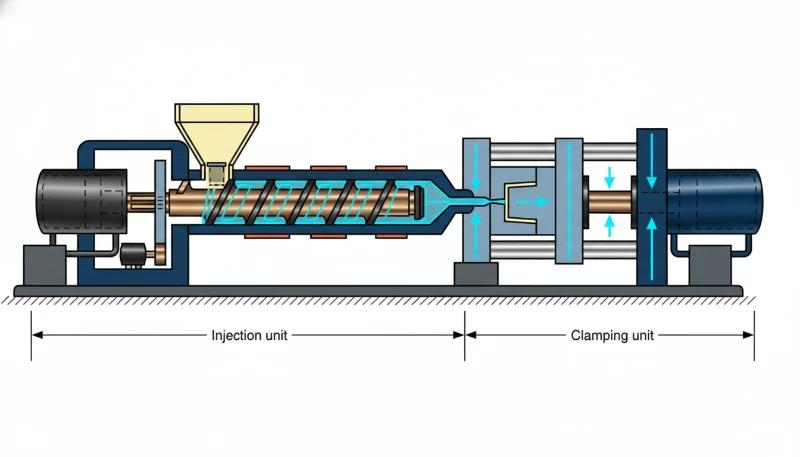
Toda máquina de moldagem por injeção, independentemente da marca ou idade, tem duas unidades principais fixadas a uma base comum. A unidade de injeção cuida da fusão e do fornecimento do plástico: tremonha, cilindro, rosca reciprocante1, resistências e bico. A unidade de fechamento cuida do molde: placas fixa e móvel, mecanismo de fechamento por joelheira ou hidráulico, sistema ejetor e colunas. Entre ambas estão os controles da máquina — um PLC ou controlador dedicado que coordena zonas de temperatura, pressão de injeção, velocidade da rosca, pressão de recalque e tempos.
Na prática, quando algo corre mal no chão de fábrica, a primeira pergunta de um engenheiro de processo experiente é qual unidade está a causar o problema — e isso depende de conhecer profundamente estes componentes.
Como funciona a unidade de injeção?
A unidade de injeção é onde ocorre a transformação da matéria-prima. Os grânulos de plástico descem da tremonha para o cilindro, onde o fuso alternativo roda e acumula uma almofada de polímero fundido à frente da ponta. O cilindro está envolvido por cintas de aquecimento — normalmente três a cinco zonas de temperatura — que levam o material à temperatura de fusão pretendida. Em simultâneo, a rotação do fuso gera a maior parte do aquecimento efetivo por fricção de corte, contribuindo normalmente com 60–80% do calor total em materiais semicristalinos como nylon ou POM.
Quando se acumula material fundido suficiente, correspondente ao volume da injeção, a rosca para de girar e atua como êmbolo. Ela avança sob alta pressão — geralmente de 1.000 a 2.000 bar — e força o material pelo bico, canal de injeção, canais de distribuição e cavidades. Em seguida começa a pressão de recalque, que compacta material adicional para compensar a contração volumétrica durante o resfriamento. Essa fase define grande parte da qualidade: pressão insuficiente causa rechupes e vazios; pressão excessiva provoca rebarba2 no molde ou sobrecompactação, causando problemas dimensionais e alta tensão residual.
O que é a unidade de fecho e por que é importante a tonelagem?
A unidade de fechamento e a importância da tonelagem são definidas pela função, pelas restrições e pelos compromissos explicados nesta seção. Ela mantém as metades do molde travadas com força suficiente para resistir à pressão de injeção que tenta separá-las. Se a força de fechamento3 for insuficiente, o molde se abre ligeiramente e o plástico fundido escapa — isso é rebarba e inutiliza as peças. A força de fechamento é medida em toneladas ou quilonewtons.
Uma regra prática aproximada: calcule a área projetada de todas as cavidades em cm², multiplique-a pela pressão de injeção em kg/cm² e acrescente uma margem de segurança de 10–20%. Por exemplo, uma peça com uma área projetada de 200 cm² a 600 kg/cm² necessita, no mínimo, de uma máquina de 120 toneladas — a maioria dos engenheiros especificaria uma de 150 toneladas por segurança.
Existem três mecanismos principais de fechamento. Sistemas por joelheira usam uma articulação mecânica com vantagem de autotravamento: abrem e fecham rapidamente e são eficientes em energia, mas a força varia um pouco com a altura do molde. Fechamentos hidráulicos diretos usam um cilindro de grande diâmetro para aplicar força constante, independentemente da espessura do molde, e são comuns em moldes de estampagem profunda ou alta precisão. Máquinas de duas placas separam as funções de fechamento e travamento, reduzindo muito a área ocupada; são usadas em máquinas de grande tonelagem, acima de 1.000 toneladas, onde o espaço é uma restrição real. Em nossa fábrica, operamos máquinas de 90T a 1.850T, e a escolha entre joelheira e sistema hidráulico depende da geometria e das tolerâncias da peça.
"Os sistemas de fecho por joelheira têm geralmente tempos de ciclo mais rápidos do que os sistemas de fecho hidráulico direto para a mesma gama de tonelagem."True
Os mecanismos de joelheira alcançam a força de fecho total através de vantagem mecânica, permitindo movimentos rápidos de abertura e fecho. Os fechos hidráulicos têm de acumular pressão num cilindro de grandes dimensões, o que demora mais tempo em cada movimento.
"Uma máquina de moldação por injeção de 100 toneladas pode moldar em segurança qualquer peça que caiba nas dimensões dos seus pratos."False
A tonelagem se refere à força de fechamento, não ao tamanho da placa. Uma peça de parede fina com grande área pode exigir muito mais força de fechamento que uma peça pequena de parede espessa; o cálculo deve se basear na área projetada da cavidade × pressão máxima da cavidade.
Como funciona o ciclo completo de moldação passo a passo?
Esta seção explica passo a passo como funciona o ciclo completo de moldagem e seu impacto no custo, na qualidade, no prazo e no risco de fornecimento. As etapas da moldagem por injeção incluem quatro fases principais, e cada uma afeta a qualidade da peça. Veja, em ordem, o que realmente acontece dentro da máquina:
1. Fechamento do molde. A unidade de fechamento move a placa móvel para a frente até que as metades do molde se encontrem. A máquina aplica toda a força de fechamento; isso pode levar de 0,5 a 3 segundos, dependendo do tamanho e do mecanismo. O molde precisa estar totalmente fechado e travado antes da injeção; intertravamentos de segurança impedem a injeção caso contrário.
2. Injeção e enchimento. A rosca avança como um êmbolo, forçando o plástico fundido pelo bico, canal de injeção, sistema de canais e cavidades. A velocidade de enchimento é crucial: se for alta demais, aprisiona ar e causa queimaduras ou jateamento; se for baixa demais, a frente de fluxo congela antes de completar a cavidade, causando injeções incompletas. Uma carcaça típica de eletrônico de consumo pode levar de 0,3 a 1,5 segundo para encher.
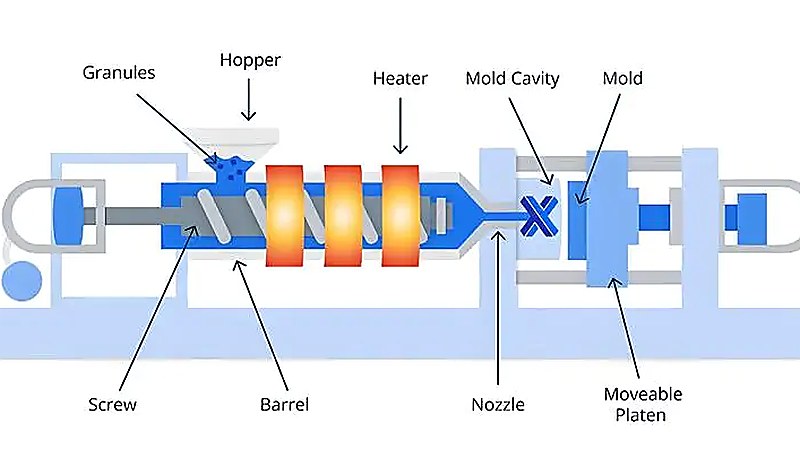
3. Compactação e recalque. Quando a cavidade está volumetricamente cheia, a máquina passa à pressão de recalque. A rosca mantém a pressão para a frente e empurra mais material à medida que o plástico esfria e contrai. Essa fase costuma durar de 2 a 15 segundos e controla diretamente o peso, a precisão dimensional e a gravidade dos rechupes. O ponto de injeção deve permanecer aberto durante toda a fase; depois que congela, pressão adicional não produz efeito.
4. Resfriamento e ejeção. A peça continua resfriando no molde até ficar rígida o bastante para ser ejetada sem deformação. O resfriamento domina o ciclo total, frequentemente 50–70% em peças de parede espessa. Enquanto isso, a rosca recua e começa a girar para plastificar o material da próxima injeção. Ao fim do tempo programado, o molde abre, os pinos ejetores retiram a peça do núcleo e o ciclo recomeça. Um ciclo bem otimizado para uma tampa simples de PP pode durar de 8 a 12 segundos; um grande painel interno automotivo pode exigir de 45 a 60 segundos.
Quais tipos de máquinas de moldagem por injeção existem?
As máquinas são classificadas pelo tipo de acionamento e pela orientação. As hidráulicas são o padrão do setor há décadas: usam óleo hidráulico para acionar o fechamento, a injeção e a rosca. São robustas, relativamente baratas por tonelada e adequadas a aplicações de alta tonelagem. Como desvantagens, consomem mais energia, são sensíveis à temperatura do óleo e repetem cada injeção com menos precisão que as elétricas.
Máquinas totalmente elétricas usam servomotores em todos os eixos: injeção, fechamento, rotação da rosca e ejeção. Consomem 30–50% menos energia, pois não há bomba hidráulica funcionando continuamente, oferecem precisão superior de posicionamento — repetibilidade de ±0,01 mm na posição da rosca é comum —, operam de forma mais limpa, sem óleo, e são mais silenciosas. Em contrapartida, custam mais inicialmente e têm faixa de tonelagem limitada: a maioria chega a cerca de 800 toneladas, embora alguns fabricantes já ofereçam modelos elétricos de até 1.500 toneladas.
Máquinas híbridas combinam o melhor dos dois sistemas: acionamentos servoelétricos para injeção e plastificação da rosca, onde a precisão é mais importante, e fechamento hidráulico, onde se busca força bruta a menor custo. Em nossa fábrica operamos os três tipos: hidráulicas para grandes peças estruturais de até 1.850T, totalmente elétricas para componentes médicos e eletrônicos de precisão e híbridas para aplicações intermediárias em que os custos se equilibram.
"As máquinas híbridas conseguem alcançar uma precisão de injeção equivalente à das máquinas elétricas, mantendo simultaneamente as vantagens de custo do fecho hidráulico."True
Ao usar servomotores na injeção e plastificação, onde a precisão entre ciclos é importante, e sistemas hidráulicos no fechamento, onde a força por dólar é essencial, as máquinas híbridas dividem a otimização de forma eficaz.
"As máquinas totalmente elétricas produzem sempre peças de melhor qualidade do que as máquinas hidráulicas."False
Máquinas totalmente elétricas oferecem melhor repetibilidade e eficiência energética, mas a qualidade da peça é determinada principalmente pelo projeto do molde, seleção do material e parâmetros do processo. Uma máquina hidráulica bem ajustada pode produzir qualidade idêntica em muitas aplicações.
Como selecionar a máquina certa para um projeto?
Esta secção trata de como selecionar a máquina certa para um projeto e o seu impacto no custo, qualidade, tempo ou risco de aprovisionamento. Para selecionar a máquina de moldagem por injeção correta, deve verificar cinco parâmetros em relação aos requisitos da sua peça: força de fecho, tamanho do tiro, tamanho da placa e espaçamento das barras de ligação, curso de abertura e velocidade de injeção. A falta de qualquer um destes pode tornar um molde inutilizável na prensa selecionada.
Primeiro, calcule a força de fechamento com base na área projetada e na pressão da cavidade específica do material. Segundo, verifique o volume de injeção: a capacidade nominal deve cobrir o peso total da peça e dos canais, de preferência operando entre 30% e 70% da capacidade. Terceiro, confira o tamanho da placa e o espaçamento entre colunas: o molde precisa caber fisicamente entre as colunas e sobre a placa. Quarto, avalie o curso de abertura: deve haver espaço suficiente para ejetar a parte mais profunda do molde. Quinto, considere velocidade e pressão de injeção: peças de parede fina exigem alta velocidade, de 200 a 500 mm/s, enquanto as de parede espessa precisam de pressão de recalque prolongada.
Em nossa experiência com análises DFM de fábrica, muitas equipes de sourcing consideram apenas a tonelagem e ignoram o volume de injeção e o espaçamento entre colunas; depois descobrem que o molde não cabe ou que a máquina não consegue fornecer uma injeção completa. Por isso, a análise DFM com o moldador antes de encomendar o ferramental é indispensável. Na ZetarMold, nossa equipe avalia todos os projetos segundo os cinco parâmetros antes de cortar o aço. Com 47 máquinas de 90T a 1.850T e experiência com mais de 400 materiais, associamos a máquina certa à peça, e não o contrário.
Quais são as avarias comuns das máquinas e como resolvê-las?
As falhas comuns de máquinas e como solucioná-las são as principais categorias ou opções explicadas nesta seção. Mesmo máquinas bem conservadas apresentam problemas. Estes são os problemas que vemos com mais frequência na área de produção e suas causas reais.
| Falha | Causa principal provável | Ação corretiva |
|---|---|---|
| Instabilidade de temperatura | Degradação do termopar ou conexão solta da cinta de aquecimento | Substituir o termopar; verificar a resistência e o aperto da cinta de aquecimento |
| Injeções incompletas | Pressão de injeção insuficiente, ponto de injeção bloqueado ou rosca/anel de retenção desgastado | Aumentar a pressão de injeção; inspecionar o ponto de injeção e o conjunto da ponta da rosca |
| Rebarba na linha de separação | Força de fecho demasiado baixa ou faces do molde desgastadas/danificadas | Verificar a tonelagem; reassentar o molde; inspecionar a condição da linha de partição |
| Deslizamento do fuso (não consegue criar contrapressão) | Cilindro/rosca desgastados ou contaminação do material no gargalo de alimentação | Meça a folga entre cilindro e rosca; limpe o gargalo de alimentação; verifique o material |
| Peso inconsistente da peça | Anel de retenção desgastado (válvula antirretorno), permitindo o refluxo do material fundido | Substituir o anel de retenção — esta é a causa n.º 1 de variação entre ciclos |
| Formação de ponte na tremonha | Grânulos de material aderindo entre si devido à umidade ou eletricidade estática | Instale um agitador na tremonha; assegure que o material esteja devidamente seco |
A válvula antirretorno na ponta da rosca de uma máquina de moldagem por injeção com rosca é um item de desgaste: impede que o material fundido retorne durante a injeção. Quando se desgasta, o volume injetado fica irregular e cada peça passa a ter um peso diferente. Se você investiga variações dimensionais e já descartou problemas de temperatura e material, retire a rosca e meça a folga do anel de retenção. Em nossa fábrica, inspecionamos esses anéis no ciclo de manutenção preventiva, eliminando uma ampla classe de problemas de qualidade antes de chegarem à produção.
Como as máquinas de moldagem por injeção estão evoluindo?
O cenário das máquinas está mudando rapidamente, impulsionado por três fatores: custos de energia, conectividade da Indústria 4.0 e demanda por capacidade multimaterial.
Sistemas acionados por servomotores. A transição de acionamentos hidráulicos para sistemas totalmente elétricos e híbridos acelera em todo o mundo. Os servomotores fornecem controle de posição em malha fechada, de modo que a máquina sabe exatamente onde está a rosca em cada milissegundo do curso de injeção. Isso permite a moldagem científica: é possível definir um perfil de velocidade em 5–10 segmentos e repetir a mesma curva injeção após injeção. Na produção em grande volume de itens médicos e eletrônicos, essa repetibilidade não é apenas desejável; é uma exigência regulatória.
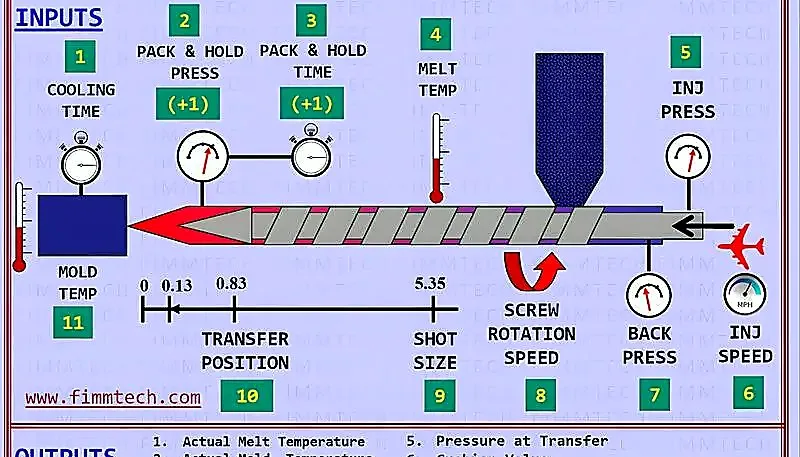
Integração com a Indústria 4.0. Máquinas modernas disponibilizam dados em tempo real — curvas de pressão da cavidade, posição da rosca, temperaturas do cilindro e contagem de ciclos — por protocolos OPC-UA ou MQTT. Esses dados alimentam painéis de SPC e sistemas de manutenção preditiva. Em vez de reagir aos defeitos, você recebe alertas quando um parâmetro começa a se desviar, antes que sejam produzidas peças ruins. Começamos a implantar monitoramento de qualidade em linha em lotes críticos, com redução significativa das taxas de refugo.
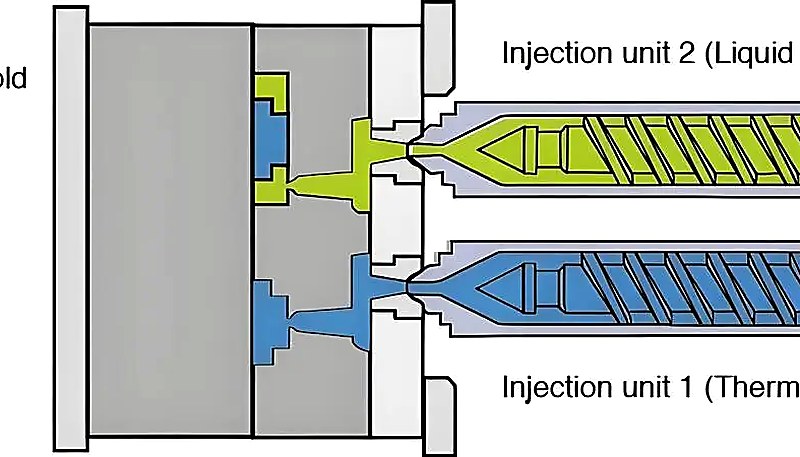
Moldagem multimaterial e multicomponente. Máquinas com duas ou mais unidades de injeção, como as três novas máquinas de dupla injeção que acrescentamos em 2024, podem moldar materiais rígidos e macios juntos em um único ciclo — por exemplo, um cabo de ferramenta elétrica com núcleo rígido de PP e empunhadura sobremoldada de TPE. Isso elimina operações de montagem secundárias e reduz o custo total. A coordenação é complexa, com mesas rotativas, sequências de extração de núcleos e temperaturas independentes dos cilindros, mas o ganho de eficiência é substancial.
Na ZetarMold operamos 47 máquinas de moldagem por injeção que vão desde 90T até 1.850T, em plataformas hidráulicas, totalmente elétricas e híbridas. A nossa equipa de engenharia avalia regularmente os dados de desempenho das máquinas para otimizar os parâmetros do ciclo — em 2025, a otimização de processos em toda a nossa frota de máquinas reduziu o tempo médio do ciclo em 12% para programas automóveis de alto volume.
Conclusão
Compreender o funcionamento de uma máquina não é académico: afeta diretamente a qualidade, a longevidade das ferramentas e o custo. A máquina é um sistema de subsistemas interligados: a unidade de injeção deve fornecer temperatura e volume consistentes, o fecho deve manter o molde com força suficiente e os controlos devem coordenar todos os parâmetros com precisão inferior a um segundo. Quando qualquer elemento se desvia, surgem defeitos.
Para os engenheiros e as equipas de aprovisionamento que especificam novos projetos de moldação, a conclusão prática é esta: envolva desde cedo a equipa de engenharia da empresa de moldação, confirme que a máquina selecionada corresponde aos cinco parâmetros críticos (tonelagem, volume de injeção, dimensão das placas, curso de abertura e desempenho de injeção) e invista em manutenção preventiva — sobretudo na inspeção do anel antirretorno e na medição do cilindro e do parafuso — como base de uma qualidade consistente.
Perguntas mais frequentes
Qual é o tempo de ciclo típico para uma máquina de moldagem por injeção?
O tempo de ciclo depende muito da espessura, do material e do projeto do molde. Uma tampa de PP de parede fina pode rodar em 5–8 segundos em máquina de alta velocidade otimizada para embalagens. Uma carcaça padrão de eletrônico de consumo costuma rodar em 15–25 segundos com resfriamento adequado. Um painel interno automotivo grande com nervuras profundas pode levar 45–60 segundos ou mais. O resfriamento normalmente representa 50–70% do ciclo total, portanto reduzir a espessura e otimizar os canais são as formas mais eficazes de encurtá-lo. O tipo de máquina também importa — máquinas totalmente elétricas costumam obter ciclos menores graças a movimentos de fechamento mais rápidos e corte mais preciso da pressão de recalque.
Quanta força de fixação a minha peça precisa?
Uma fórmula prática para estimar a força de fechamento: multiplique a área projetada da cavidade em cm² pela pressão da cavidade em kg/cm², acrescente uma margem de segurança de 15% e divida por 1.000 para obter toneladas. A pressão da cavidade varia significativamente conforme o material — normalmente 200–400 kg/cm² para materiais de fácil fluxo, como PP e PE, e 600–800 kg/cm² para resinas de engenharia, como PC, POM ou náilon reforçado com fibra de vidro. Moldes multicavidades exigem a soma da área projetada de todas as cavidades. Sempre arredonde para cima até o tamanho de máquina padrão mais próximo e lembre-se de que a pressão real da cavidade é influenciada pelo tamanho do ponto de injeção, pela velocidade de preenchimento, pela temperatura do material fundido e pela geometria da peça.
Qual é a diferença entre máquinas de moldagem por injeção hidráulicas e totalmente elétricas?
Máquinas hidráulicas usam bombas e cilindros acionados por óleo para movimentar o fechamento, a injeção e a rosca — têm baixo custo por tonelada e atendem bem a aplicações de alta tonelagem, normalmente acima de 4.000 toneladas. Máquinas totalmente elétricas usam servomotores em todos os eixos, oferecendo economia de energia de 30–50%, repetibilidade superior entre ciclos com posicionamento da rosca de ±0,01 mm, operação mais limpa sem óleo hidráulico e menor ruído. A contrapartida é o maior custo inicial de compra e a disponibilidade limitada acima de 800–1.000 toneladas. Máquinas híbridas combinam injeção servoacionada e fechamento hidráulico em uma solução equilibrada.
O que causa o flash na moldagem por injeção?
A rebarba ocorre quando a força de fechamento é insuficiente para manter as metades do molde totalmente vedadas contra a pressão de injeção que as força a se separar. Outras causas incluem superfícies da linha de partição desgastadas ou danificadas, pressão ou velocidade de injeção excessiva que eleva a pressão da cavidade além da capacidade de fechamento, deflexão do molde sob carga (especialmente em moldes de grande área) e assentamento irregular do molde nas placas. A correção começa pela verificação da força de fechamento real em relação ao requisito calculado, seguida da inspeção da linha de partição quanto a desgaste e, por fim, da otimização dos perfis de pressão e velocidade de injeção para reduzir o pico de pressão na cavidade.
Como se mantém uma máquina de moldagem por injeção?
Itens críticos de manutenção das máquinas de moldagem por injeção incluem inspecionar e substituir anéis de retenção e pontas de rosca (itens de desgaste que afetam diretamente a consistência da injeção), verificar anualmente a folga entre cilindro e rosca para detectar desgaste antes que afete a qualidade do material fundido, calibrar termopares e transdutores de pressão para garantir dados precisos do processo, trocar óleo hidráulico e filtros conforme o cronograma do fabricante, lubrificar pinos de joelheira e tirantes para evitar gripagem e garantir operação suave do fechamento, e inspecionar cintas aquecedoras quanto a variação de resistência ou danos físicos que possam desviar as zonas de temperatura.
O que é um parafuso alternativo na moldagem por injeção?
A rosca reciprocante é o componente central da unidade de injeção e cumpre duas funções em cada ciclo. Durante a plastificação, ela gira dentro do cilindro aquecido para misturar, comprimir e fundir os grânulos de polímero por uma combinação do calor externo das cintas e do atrito de cisalhamento interno — normalmente fornecendo 60–80% do calor total para materiais semicristalinos. Durante a injeção, a rosca para de girar e avança como um êmbolo, empurrando o material fundido acumulado pelo bico até o molde. Uma válvula de retenção na ponta impede o refluxo durante esse avanço.
O que é moldagem científica?
A moldagem científica é uma metodologia sistemática e orientada por dados que se baseia em sensores de pressão da cavidade, monitorização da posição do fuso e etapas de processo desacopladas — separando o enchimento, a compactação e a manutenção em fases controladas de forma independente — para estabelecer um processo de fabrico robusto e repetível. Em vez de ajustar as definições da máquina por intuição, a moldagem científica utiliza curvas de pressão e análise estatística para definir parâmetros ideais que produzam peças consistentes, independentemente das variações da máquina, do operador ou do ambiente. Exige máquinas com servocontrolo em circuito fechado e é cada vez mais comum na produção médica, automóvel e eletrónica, onde a conformidade regulamentar exige uma estabilidade do processo documentada.
As máquinas de moldagem por injeção podem processar todos os tipos de plásticos?
A maioria dos materiais termoplásticos pode ser processada em máquinas de moldagem por injeção padrão, desde resinas commodities como PP, PE e PS, passando por plásticos de engenharia como PA, PC, POM e PBT, até polímeros de alto desempenho como PEEK, PPS e LCP. No entanto, cada categoria de material tem requisitos específicos quanto à faixa de temperatura do cilindro, à geometria de projeto da rosca, incluindo taxa de compressão e relação L/D, e ao tipo de bico. Termofixos e elastômeros de borracha exigem máquinas especializadas com projetos de cilindro e perfis de temperatura diferentes. Materiais altamente sensíveis à umidade também podem exigir máquinas equipadas com cilindros ventilados ou sistemas de secagem dedicados integrados à garganta de alimentação.
rosca reciprocante: componente que alterna entre movimento rotativo para plastificar o material e movimento linear para a frente a fim de injetar o material fundido na cavidade do molde. ↩
rebarba: excesso de plástico que escapa pela linha de partição do molde durante a injeção, geralmente devido a força de fechamento insuficiente ou desgaste do molde. ↩
força de fechamento: pressão aplicada pela máquina para manter o molde fechado durante a injeção, medida em toneladas ou quilonewtons; deve superar a pressão total da cavidade multiplicada pela área projetada da peça. ↩