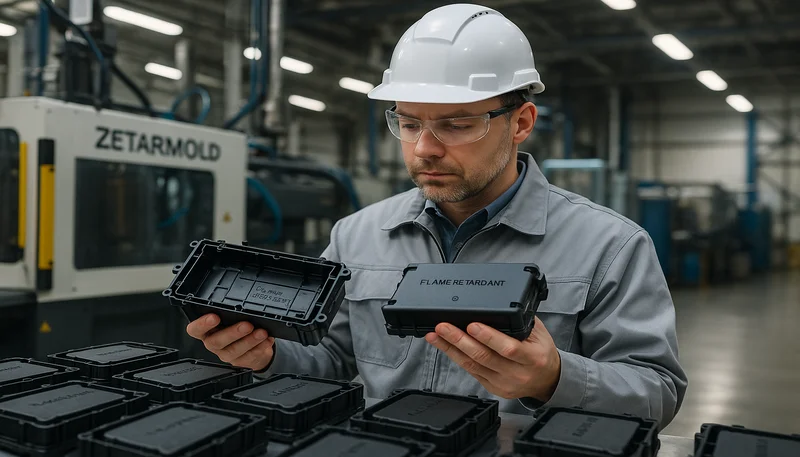
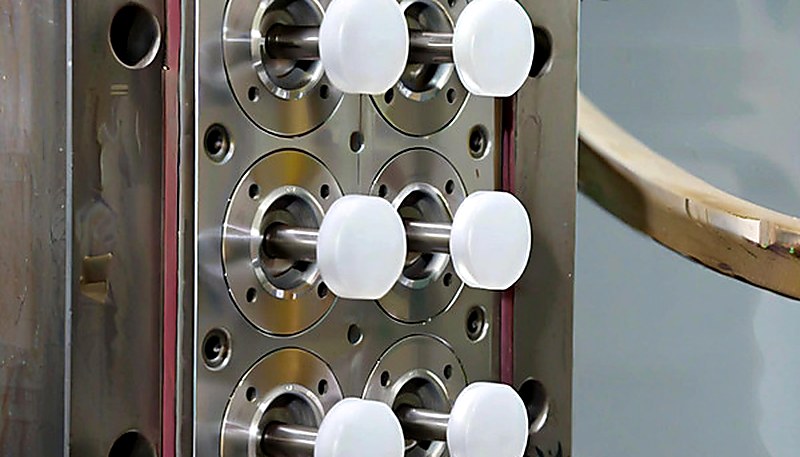
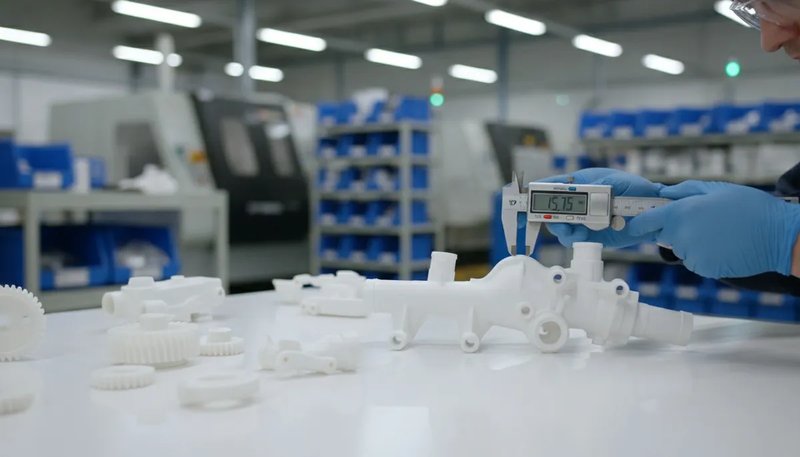
Une presse de moulage par injection est la cheville ouvrière de la fabrication moderne des plastiques : elle fait fondre le polymère brut, le force dans un moule d’injection usiné avec précision et éjecte une pièce finie toutes les quelques secondes. Qu’il s’agisse de boîtiers de dispositifs médicaux ou d’agrafes automobiles, comprendre son fonctionnement fait la différence entre un procédé stable et des semaines de défauts coûteux. Ce guide présente chaque sous-système majeur, le cycle de moulage étape par étape, les défaillances courantes et les critères réellement importants pour choisir le tonnage d’une machine destinée à un nouveau projet.
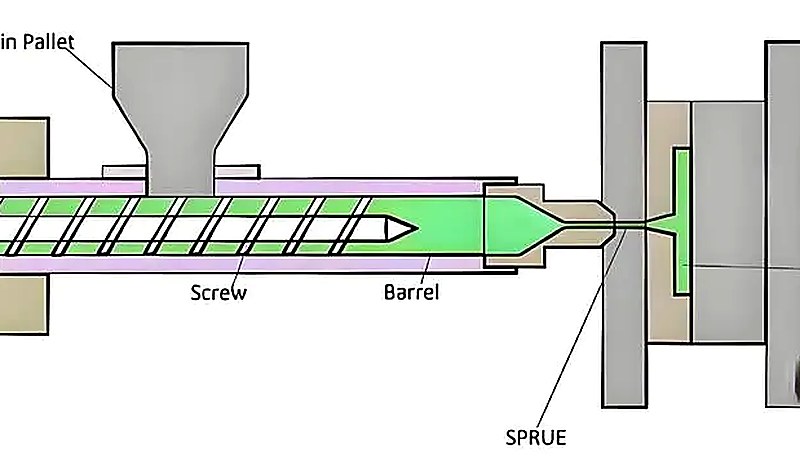
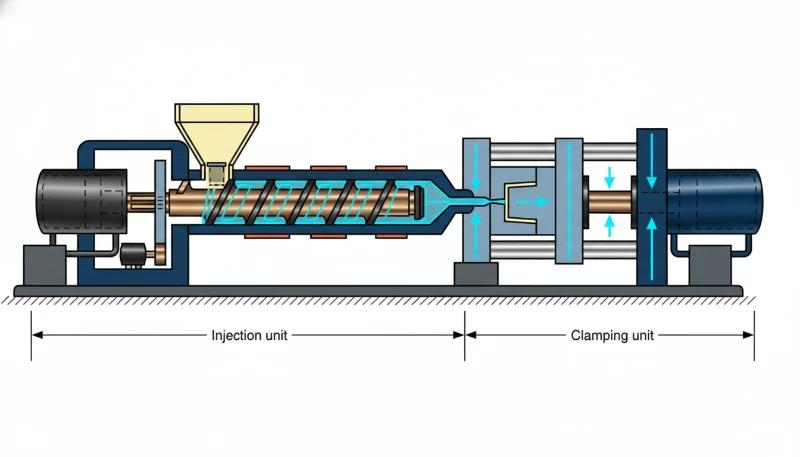
- Une presse à injecter comporte deux unités principales : l’injection (qui fait fondre et pousse le plastique) et la fermeture (qui maintient et ouvre le moule).
- La vis alternative est le composant le plus important — elle plastifie, dose et injecte la matière au cours d’un même cycle.
- La force de fermeture doit dépasser la surface projetée de l’empreinte × la pression maximale de la matière fondue, sinon le moule produira des bavures.
- Les machines entièrement électriques modernes économisent de 30 à 50 % d’énergie par rapport à leurs équivalents hydrauliques et offrent une meilleure répétabilité d’une injection à l’autre.
- Il est essentiel de comprendre les caractéristiques de la machine (volume injectable, espacement des colonnes, dimensions des plateaux) avant d’investir dans l’outillage.
Quels sont les principaux composants d’une presse à injecter ?
Toute presse à injecter, quels que soient sa marque et son âge, comprend deux unités principales fixées sur un bâti commun. L’unité d’injection assure la fusion et l’acheminement du plastique : trémie, fourreau, vis alternative1, colliers chauffants et buse. L’unité de fermeture prend en charge le moule : plateaux fixe et mobile, mécanisme de fermeture à genouillère ou hydraulique, système d’éjection et colonnes. Les commandes de la machine relient ces deux ensembles : un automate PLC ou un contrôleur dédié coordonne les zones de température, la pression d’injection, la vitesse de la vis, la pression de maintien et les temporisations.
En pratique, lorsqu’un problème survient dans un atelier de production, la première question qu’un ingénieur procédés expérimenté se pose est de savoir quelle unité en est la cause — et pour cela, il faut connaître parfaitement ces composants.
Comment fonctionne l’unité d’injection ?
L’unité d’injection est le lieu où s’opère la transformation de la matière première. Les granulés plastiques tombent de la trémie dans le fourreau, où la vis alternative tourne et accumule un matelas de polymère fondu devant sa pointe. Le fourreau est entouré de colliers chauffants — généralement trois à cinq zones de température — qui portent la matière à sa température de fusion cible. Parallèlement, la rotation de la vis produit l’essentiel de la chaleur réelle par frottement de cisaillement, soit généralement 60–80% de l’apport thermique total pour les matières semi-cristallines comme le nylon ou le POM.
Lorsque suffisamment de matière fondue s’est accumulée, c’est-à-dire le volume injecté, la vis cesse de tourner et agit comme un piston. Elle avance sous haute pression, souvent de 1 000 à 2 000 bar, et pousse la matière à travers la buse, la carotte, les canaux puis les empreintes. La phase de maintien en pression commence immédiatement : de la matière supplémentaire est comprimée dans l’empreinte pour compenser le retrait volumique pendant le refroidissement. Cette phase détermine largement la qualité de la pièce : une pression insuffisante provoque retassures et vides ; une pression excessive crée des bavures2 ou un surcompactage, avec des écarts dimensionnels et de fortes contraintes résiduelles.
Qu’est-ce que l’unité de fermeture et pourquoi le tonnage est-il important ?
L’unité de fermeture et l’importance du tonnage se comprennent à travers la fonction, les contraintes et les compromis décrits ici. L’unité maintient les deux moitiés du moule verrouillées avec une force suffisante pour résister à la pression d’injection qui tend à les écarter. Si la force de fermeture3 est insuffisante, le moule s’entrouvre et du plastique fondu s’échappe : une bavure apparaît et rend les pièces défectueuses. La force de fermeture se mesure en tonnes ou en kilonewtons.
Règle empirique : prenez la surface projetée de toutes les empreintes en cm², multipliez-la par la pression d’injection en kg/cm², puis ajoutez une marge de sécurité de 10–20%. Par exemple, une pièce présentant une surface projetée de 200 cm² à 600 kg/cm² nécessite au minimum une presse de 120 tonnes — la plupart des ingénieurs spécifieraient 150 tonnes par sécurité.
Il existe trois principaux mécanismes de fermeture. Les systèmes à genouillère utilisent une liaison mécanique auto-bloquante : ils offrent des ouvertures et fermetures rapides ainsi qu’une bonne efficacité énergétique, mais leur force varie légèrement avec la hauteur du moule. Les fermetures hydrauliques directes emploient un vérin de grand diamètre qui fournit une force constante quelle que soit l’épaisseur du moule ; elles conviennent donc aux moules profonds ou de haute précision. Les machines à deux plateaux séparent les fonctions de fermeture et de verrouillage, ce qui réduit fortement leur encombrement. On les rencontre sur les presses de fort tonnage, à partir de 1 000 tonnes, où l’espace au sol est une contrainte réelle. Dans notre atelier, nos machines vont de 90T à 1 850T ; le choix entre genouillère et hydraulique dépend de la géométrie et des tolérances de la pièce.
"À plage de tonnage égale, les systèmes de fermeture à genouillère offrent généralement un cycle plus rapide que les fermetures hydrauliques directes."True
Les genouillères atteignent la force de fermeture maximale grâce à un avantage mécanique, ce qui permet des courses d’ouverture et de fermeture rapides. Les dispositifs de fermeture hydrauliques doivent mettre sous pression un grand vérin, ce qui prend plus de temps à chaque course.
"Une presse à injecter de 100-ton peut mouler en toute sécurité toute pièce tenant entre les dimensions de ses plateaux."False
Le tonnage désigne la force de fermeture, et non la taille du plateau. Une pièce à paroi mince de grande surface peut nécessiter une force de fermeture bien supérieure à celle d’une petite pièce à paroi épaisse — le calcul doit se fonder sur la surface projetée de l’empreinte × la pression maximale dans l’empreinte.
Comment se déroule le cycle complet de moulage, étape par étape ?
Cette section décrit le cycle de moulage complet, étape par étape, ainsi que son incidence sur les coûts, la qualité, les délais et les risques d’approvisionnement. Les étapes du moulage par injection comprennent quatre phases principales, chacune influençant la qualité de la pièce. Voici ce qui se passe réellement dans la machine, dans l’ordre :
1. Fermeture et verrouillage du moule. L’unité de fermeture pousse le plateau mobile vers l’avant jusqu’à ce que les deux moitiés du moule se rejoignent. La machine applique alors toute la force de fermeture, opération qui peut durer de 0,5 à 3 secondes selon sa taille et son mécanisme. Le moule doit être complètement fermé et verrouillé avant le début de l’injection ; des dispositifs de sécurité empêchent sinon son démarrage.
2. Injection et remplissage. La vis avance comme un piston et force le plastique fondu à travers la buse, la carotte, le réseau de canaux, puis dans les empreintes. La vitesse de remplissage est déterminante : trop élevée, elle emprisonne de l’air et provoque brûlures ou jet libre ; trop faible, le front de matière se fige avant le remplissage complet de l’empreinte, causant une pièce incomplète. Pour un boîtier courant d’électronique grand public, le remplissage peut durer de 0,3 à 1,5 seconde.
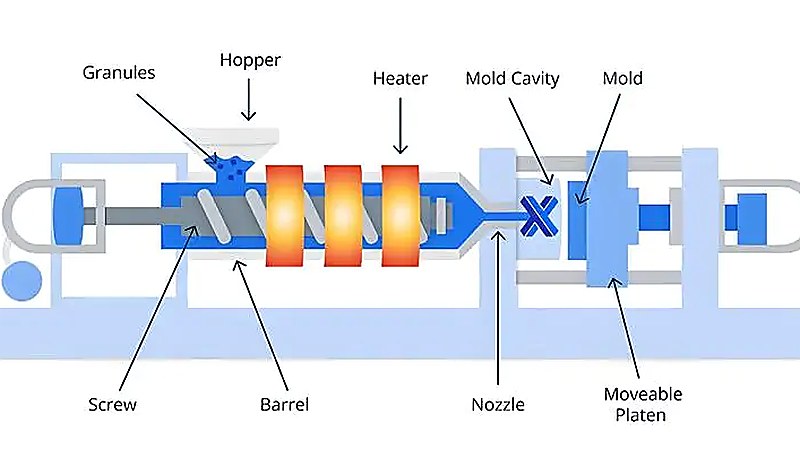
3. Compactage et maintien. Lorsque l’empreinte est remplie en volume, la machine passe à la pression de maintien. La vis maintient sa poussée et introduit davantage de matière tandis que le plastique refroidit et se rétracte. Cette phase dure généralement de 2 à 15 secondes et contrôle directement le poids de la pièce, sa précision dimensionnelle et l’importance des retassures. Le seuil doit rester ouvert pendant toute la phase ; une fois figé, toute pression supplémentaire devient sans effet.
4. Refroidissement et éjection. La pièce continue de refroidir dans le moule jusqu’à être assez rigide pour être éjectée sans déformation. Le refroidissement domine le cycle global et représente souvent 50 à 70 % de sa durée pour les pièces à parois épaisses. Pendant ce temps, la vis recule et recommence à tourner afin de plastifier la matière du cycle suivant. À l’expiration de la temporisation, le moule s’ouvre, les broches d’éjection dégagent la pièce du noyau et le cycle recommence. Un cycle bien optimisé pour un simple bouchon en PP peut durer de 8 à 12 secondes ; un grand panneau intérieur automobile peut demander de 45 à 60 secondes.
Quels types de presses à injecter existent ?
Les machines sont classées selon leur type d’entraînement et leur orientation. Les presses hydrauliques constituent la norme du secteur depuis des décennies : l’huile hydraulique actionne la fermeture, l’injection et la vis. Robustes et relativement peu coûteuses par tonne, elles conviennent bien aux applications de fort tonnage. Leurs inconvénients sont une consommation d’énergie supérieure, une sensibilité à la température de l’huile et une répétabilité d’un cycle à l’autre moins précise que celle des machines électriques.
Les machines tout électriques utilisent des servomoteurs pour chaque axe : injection, fermeture, rotation de la vis et éjection. Elles consomment 30 à 50 % d’énergie en moins, puisqu’aucune pompe hydraulique ne tourne en continu, offrent une précision de positionnement supérieure — une répétabilité de ±0,01 mm de la position de la vis est courante —, fonctionnent plus proprement, sans huile, et sont plus silencieuses. En contrepartie, leur coût initial est plus élevé et leur plage de tonnage limitée : la plupart plafonnent autour de 800 tonnes, même si certains fabricants proposent désormais des modèles électriques allant jusqu’à 1 500 tonnes.
Les machines hybrides combinent les atouts des deux technologies : entraînements servoélectriques pour l’injection et la plastification par vis, où la précision est primordiale, et fermeture hydraulique, qui fournit une force brute à moindre coût. Notre usine utilise les trois types : hydraulique pour les grandes pièces structurelles jusqu’à 1 850T, tout électrique pour les composants médicaux et électroniques de précision, et hybride pour les applications intermédiaires offrant le meilleur équilibre économique.
"Les machines hybrides peuvent atteindre la précision d’injection électrique tout en conservant l’avantage de coût de la fermeture hydraulique."True
En utilisant des servomoteurs pour l'injection et la plastification, où la précision d'un cycle à l'autre est déterminante, et des systèmes hydrauliques pour la fermeture, où le rapport force-coût est essentiel, les machines hybrides répartissent efficacement l'optimisation.
"Les machines entièrement électriques produisent toujours des pièces de meilleure qualité que les machines hydrauliques."False
Les machines tout électriques offrent une meilleure répétabilité et une meilleure efficacité énergétique, mais la qualité des pièces dépend principalement de la conception du moule, du choix du matériau et des paramètres du procédé. Pour de nombreuses applications, une machine hydraulique bien réglée peut produire une qualité identique.
Comment sélectionner la machine adaptée à un projet ?
Cette section explique comment choisir la machine adaptée à un projet et son incidence sur les coûts, la qualité, les délais ou les risques d’approvisionnement. Pour choisir la bonne presse à injecter, cinq paramètres doivent être vérifiés par rapport aux exigences de la pièce : force de fermeture, capacité d’injection, dimensions des plateaux et espacement des colonnes, course d’ouverture et vitesse d’injection. Omettre un seul de ces paramètres peut rendre le moule inutilisable sur la presse choisie.
Premièrement, calculez la force de fermeture d’après la surface projetée et la pression d’empreinte propre au matériau. Deuxièmement, vérifiez le volume d’injection : la capacité nominale de la machine doit couvrir le poids total de la pièce et des canaux, idéalement en utilisant 30 à 70 % de cette capacité. Troisièmement, contrôlez les dimensions des plateaux et l’espacement entre colonnes : le moule doit physiquement tenir entre les colonnes et sur le plateau. Quatrièmement, vérifiez la course d’ouverture : l’espace libre doit permettre d’éjecter la partie la plus profonde du moule. Cinquièmement, examinez vitesse et pression d’injection : les pièces à parois minces exigent une vitesse élevée, de 200 à 500 mm/s, tandis que les pièces épaisses nécessitent une pression de maintien prolongée.
D’après notre expérience des analyses DFM en usine, de nombreuses équipes d’approvisionnement se concentrent uniquement sur le tonnage et négligent le volume d’injection ainsi que l’espacement entre colonnes ; elles découvrent ensuite que leur moule ne rentre pas ou que la machine ne peut pas fournir une dose complète. C’est pourquoi une analyse DFM avec le mouleur avant tout engagement sur l’outillage est indispensable. Chez ZetarMold, notre équipe évalue chaque projet selon ces cinq paramètres avant l’usinage de l’acier. Avec 47 machines allant de 90T à 1 850T et une expérience couvrant plus de 400 matériaux, nous adaptons la machine à la pièce, et non l’inverse.
Quels sont les défauts courants des machines et comment les diagnostiquer ?
Les pannes courantes des machines et leur dépannage constituent les principales catégories ou possibilités présentées dans cette section. Même les machines bien entretenues rencontrent des problèmes. Voici ceux que nous observons le plus souvent dans l’atelier de production, ainsi que leurs causes réelles.
| Défaut | Cause racine probable | Action corrective |
|---|---|---|
| Instabilité de la température | Dégradation du thermocouple ou connexion desserrée de la bande chauffante | Remplacer le thermocouple ; vérifier la résistance et le serrage du collier chauffant |
| Remplissages incomplets | Pression d’injection insuffisante, seuil obstrué ou vis/clapet anti-retour usé | Augmenter la pression d’injection ; inspecter le seuil et l’ensemble de pointe de vis |
| Bavure sur le plan de joint | Force de fermeture insuffisante, ou faces du moule usées/endommagées | Vérifier le tonnage ; repositionner le moule ; inspecter l’état du plan de joint |
| Patinage de la vis (impossible d’établir la contre-pression) | Fourreau ou vis usés, ou contamination de la matière au niveau de la gorge d’alimentation | Mesurer le jeu entre le fourreau et la vis ; nettoyer la gorge d’alimentation ; vérifier le matériau |
| Poids irrégulier des pièces | Bague d’arrêt usée (clapet anti-retour) laissant refluer la matière fondue | Remplacer le clapet anti-retour — c’est la première cause de variation d’une injection à l’autre |
| Formation d’une voûte dans la trémie | Granulés de matériau agglomérés sous l’effet de l’humidité ou de l’électricité statique | Installer un agitateur de trémie ; vérifier que le matériau est correctement séché |
Le clapet antiretour situé à l’extrémité de la vis d’une presse à injecter à vis est une pièce d’usure : il empêche la matière fondue de refluer pendant l’injection. Lorsqu’il est usé, le volume injecté devient irrégulier et chaque pièce présente un poids différent. Si vous recherchez la cause de variations dimensionnelles après avoir écarté les problèmes de température et de matière, retirez la vis et mesurez le jeu de la bague antiretour. Dans notre usine, nous inspectons ces bagues lors de la maintenance préventive, ce qui élimine toute une catégorie de problèmes de qualité avant la production.
Comment les machines de moulage par injection évoluent-elles ?
Le paysage des machines évolue rapidement sous l’effet de trois forces : les coûts énergétiques, la connectivité de l’Industrie 4.0 et la demande de capacités multimatériaux.
Systèmes à servomoteurs. La transition des entraînements hydrauliques vers les solutions tout électriques et hybrides s’accélère dans le monde entier. Les servomoteurs assurent une régulation en boucle fermée de la position : la machine connaît donc exactement la position de la vis à chaque milliseconde de la course d’injection. Cela permet un moulage scientifique : vous pouvez définir un profil de vitesse en 5 à 10 segments et reproduire la même courbe cycle après cycle. Pour la production médicale et électronique en grande série, cette répétabilité n’est pas seulement souhaitable ; elle constitue une exigence réglementaire.
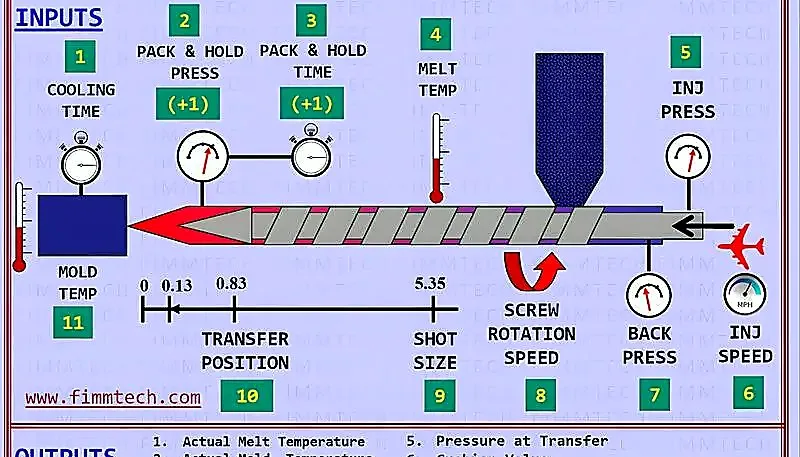
Intégration à l’Industrie 4.0. Les machines modernes exposent des données en temps réel — courbes de pression d’empreinte, position de la vis, températures du fourreau, nombre de cycles — au moyen des protocoles OPC-UA ou MQTT. Ces données alimentent des tableaux de bord SPC et des systèmes de maintenance prédictive. Au lieu de réagir aux défauts, vous recevez une alerte dès qu’un paramètre du procédé commence à dériver, avant la fabrication de pièces non conformes. Nous avons commencé à déployer un contrôle qualité en ligne sur les productions critiques, avec une réduction sensible du taux de rebut.
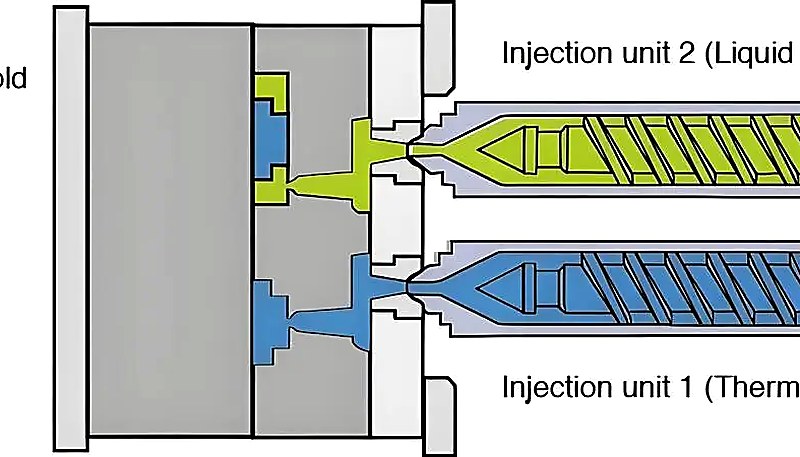
Moulage multimatériau et multicomposant. Les machines dotées de deux unités d’injection ou plus, comme nos trois nouvelles presses bi-injection ajoutées en 2024, peuvent mouler ensemble des matières dures et souples au cours d’un seul cycle. Pensez à une poignée d’outil électrique avec un noyau rigide en PP et un revêtement surmoulé en TPE. Cette méthode supprime les opérations d’assemblage secondaires et réduit le coût total de fabrication. La coordination de la machine est complexe — plateaux rotatifs, séquences de noyaux mobiles, températures indépendantes des fourreaux — mais le gain d’efficacité est considérable.
Chez ZetarMold, nous exploitons 47 presses à injecter de 90T à 1,850T, sur plateformes hydrauliques, tout électriques et hybrides. Notre équipe d’ingénierie évalue régulièrement les données de performance des machines afin d’optimiser les paramètres de cycle — en 2025, l’optimisation des procédés sur notre parc a réduit le temps de cycle moyen de 12% pour les programmes automobiles à grand volume.
Conclusion
Comprendre le fonctionnement d’une presse à injecter n’est pas une question théorique : cela influe directement sur la qualité des pièces, la longévité de l’outillage et le coût de production. La machine forme un ensemble de sous-systèmes interconnectés : l’unité d’injection doit fournir une température de matière fondue et un volume injecté constants, l’unité de fermeture doit maintenir le moule avec une force suffisante, et le système de commande doit coordonner chaque paramètre avec une précision inférieure à la seconde. Dès que l’un de ces éléments dérive, des défauts apparaissent.
Pour les ingénieurs et acheteurs, la conclusion est claire : impliquez tôt l’équipe technique du mouleur, vérifiez que la machine satisfait les cinq paramètres critiques (tonnage, volume injecté, dimensions des plateaux, course d’ouverture, performances d’injection) et investissez dans la maintenance préventive, notamment le clapet anti-retour et la mesure fourreau/vis.
Questions fréquemment posées
Quel est le temps de cycle typique d’une presse à injecter ?
Le temps de cycle dépend fortement de l’épaisseur de la pièce, du matériau et de la conception du moule. Un bouchon en PP à paroi mince peut avoir un cycle de 5–8 secondes sur une machine à grande vitesse optimisée pour l’emballage. Un boîtier standard d’électronique grand public présente généralement un cycle de 15–25 secondes avec un refroidissement adéquat. Un grand panneau intérieur automobile doté de nervures profondes peut nécessiter 45–60 secondes ou plus. Le refroidissement représente généralement 50–70% du cycle total ; réduire l’épaisseur des parois et optimiser la disposition des canaux de refroidissement sont donc les moyens les plus efficaces de raccourcir le cycle. Le type de machine compte également : les machines tout électriques offrent souvent des cycles plus rapides grâce à des mouvements de fermeture plus rapides et à une coupure plus précise de la pression de maintien.
De quelle force de fermeture ma pièce a-t-elle besoin ?
Formule pratique pour estimer la force de fermeture : multipliez la surface projetée de l’empreinte en cm² par la pression dans l’empreinte en kg/cm², ajoutez une marge de sécurité de 15 %, puis divisez par 1 000 pour obtenir des tonnes. La pression dans l’empreinte varie considérablement selon le matériau — généralement 200 à 400 kg/cm² pour les matériaux à écoulement facile comme le PP et le PE, et 600 à 800 kg/cm² pour les résines techniques comme le PC, le POM ou le nylon chargé de verre. Pour les moules multi-empreintes, il faut additionner la surface projetée de toutes les empreintes. Arrondissez toujours à la taille de machine standard supérieure et n’oubliez pas que la pression réelle dans l’empreinte dépend de la taille du seuil, de la vitesse de remplissage, de la température de la matière fondue et de la géométrie de la pièce.
Quelle est la différence entre les presses à injecter hydrauliques et tout électriques ?
Les machines hydrauliques utilisent des pompes et des vérins actionnés par huile pour entraîner la fermeture, l’injection et la vis. Elles sont économiques par tonne et conviennent bien aux applications à fort tonnage, généralement jusqu’à plus de 4 000 tonnes. Les machines tout électriques utilisent des servomoteurs sur chaque axe et offrent de 30 à 50 % d’économies d’énergie, une répétabilité supérieure entre les injections grâce à un positionnement de la vis à ±0,01 mm, un fonctionnement plus propre sans huile hydraulique et un niveau sonore inférieur. En contrepartie, leur coût d’achat initial est plus élevé et leur disponibilité limitée au-delà de 800 à 1 000 tonnes. Les machines hybrides associent une injection par servomoteur à une fermeture hydraulique pour offrir une solution équilibrée.
Quelles sont les causes des bavures en moulage par injection ?
Les bavures apparaissent lorsque la force de fermeture ne suffit pas à maintenir les demi-moules parfaitement étanches face à la pression d’injection qui les écarte. Les autres causes comprennent des plans de joint usés ou endommagés, une pression ou une vitesse d’injection excessive provoquant un pic de pression supérieur à la capacité de fermeture, la flexion du moule sous charge, surtout pour les grandes surfaces, et un appui irrégulier du moule sur les plateaux. La correction commence par la vérification de la force de fermeture réelle par rapport au besoin calculé, puis le contrôle de l’usure du plan de joint et enfin l’optimisation des profils de pression et de vitesse d’injection pour réduire le pic de pression dans la cavité.
Comment entretenir une presse à injecter ?
Les points critiques de maintenance des presses à injecter comprennent le contrôle et le remplacement des clapets anti-retour et des pointes de vis (pièces d’usure influant directement sur la régularité des injections), le contrôle annuel du jeu fourreau-vis pour détecter l’usure avant qu’elle n’altère la qualité de la matière fondue, l’étalonnage des thermocouples et capteurs de pression, le remplacement de l’huile hydraulique et des filtres selon le calendrier du fabricant, la lubrification des axes de genouillère et colonnes pour éviter le grippage et garantir une fermeture fluide, ainsi que le contrôle de la dérive de résistance ou des dommages physiques des colliers chauffants susceptibles de dérégler les zones de température.
Qu’est-ce qu’une vis alternative en moulage par injection ?
La vis alternative est le composant central de l’unité d’injection et remplit deux fonctions dans chaque cycle. Pendant la plastification, elle tourne dans le fourreau chauffé pour mélanger, comprimer et fondre les granulés grâce aux colliers chauffants externes et au cisaillement interne — qui fournit généralement 60–80% de la chaleur totale des matériaux semi-cristallins. Pendant l’injection, la vis cesse de tourner et avance comme un piston, poussant la matière accumulée à travers la buse dans le moule. Un clapet anti-retour en pointe empêche le reflux pendant cette course.
Qu’est-ce que le moulage scientifique ?
Le moulage scientifique est une méthodologie systématique, fondée sur les données, qui s’appuie sur des capteurs de pression dans l’empreinte, le suivi de la position de la vis et des étapes de procédé découplées — séparant le remplissage, le compactage et le maintien en phases contrôlées indépendamment — afin d’établir un procédé de fabrication robuste et reproductible. Au lieu de régler la machine de manière intuitive, le moulage scientifique utilise des courbes de pression et des analyses statistiques pour définir les paramètres optimaux produisant des pièces constantes malgré les variations de machine, d’opérateur ou d’environnement. Il exige des machines dotées d’une servocommande en boucle fermée et devient une norme dans les productions médicale, automobile et électronique, où la conformité réglementaire impose une stabilité documentée du procédé.
Les presses à injecter peuvent-elles transformer tous les types de plastiques ?
La plupart des thermoplastiques peuvent être transformés sur des presses à injecter standard, depuis les résines courantes comme le PP, le PE et le PS jusqu’aux plastiques techniques tels que le PA, le PC, le POM et le PBT, ainsi qu’aux polymères hautes performances comme le PEEK, le PPS et le LCP. Toutefois, chaque catégorie de matériau impose des exigences particulières concernant la plage de température du fourreau, la géométrie de conception de la vis, notamment le taux de compression et le rapport L/D, ainsi que le type de buse. Les thermodurcissables et les élastomères caoutchouc exigent des machines spécialisées dotées de conceptions de fourreau et de profils de température différents. Les matériaux très sensibles à l’humidité peuvent également nécessiter des machines équipées de fourreaux dégazés ou de systèmes de séchage dédiés intégrés à la gorge d’alimentation.
Vis alternative : composant qui alterne entre un mouvement rotatif pour plastifier la matière et un déplacement linéaire vers l’avant pour injecter la matière fondue dans l’empreinte du moule. ↩
Bavure : excès de plastique qui s’échappe au niveau du plan de joint du moule pendant l’injection, généralement à cause d’une force de fermeture insuffisante ou de l’usure du moule. ↩
Force de fermeture : pression appliquée par la machine afin de maintenir le moule fermé pendant l’injection. Mesurée en tonnes ou en kilonewtons, elle doit dépasser la pression totale des empreintes multipliée par la surface projetée de la pièce. ↩