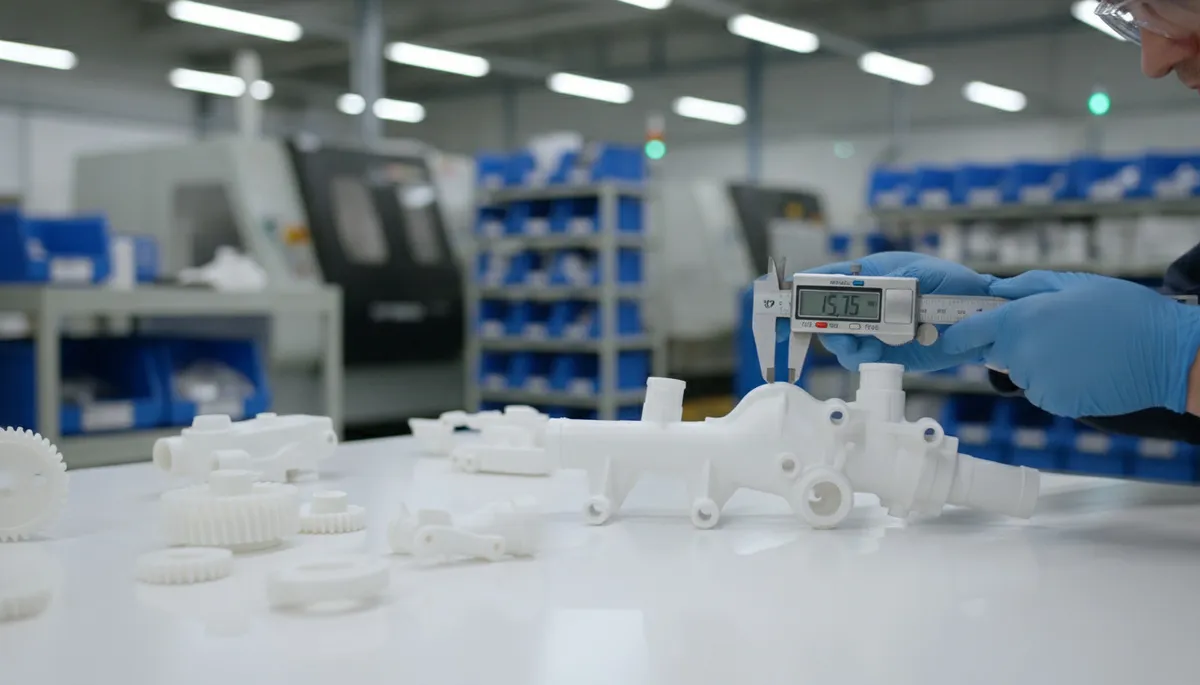
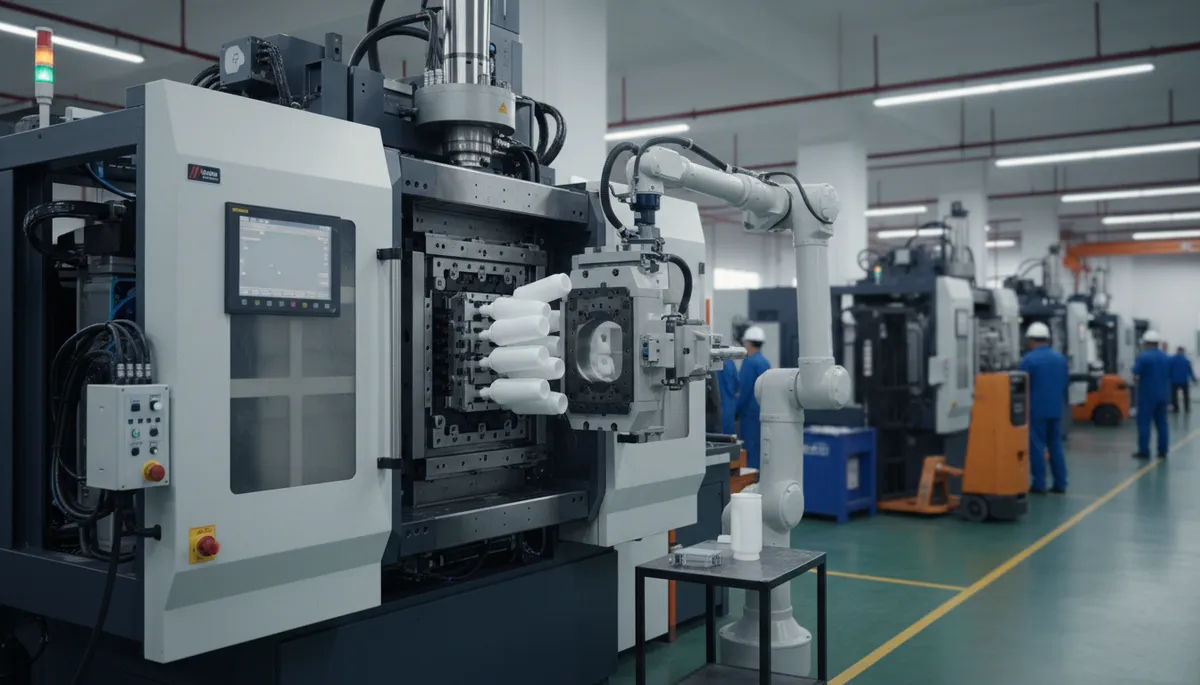
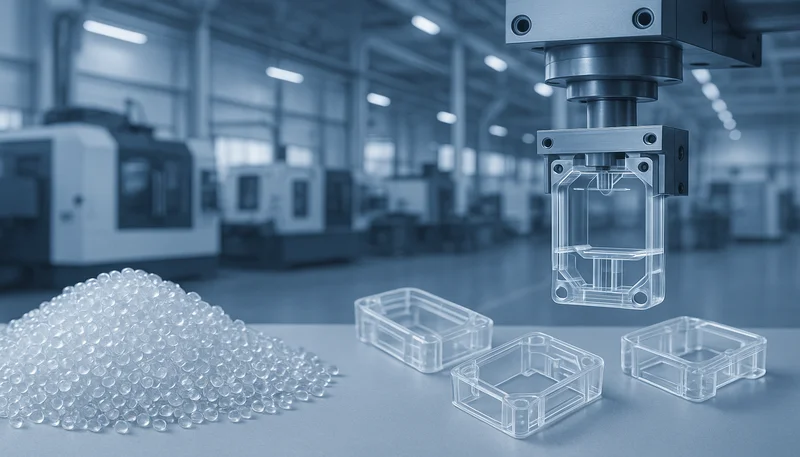
Problemen met kromgetrokken HDPE-onderdelen of wisselende kwaliteit? U bent niet de enige. HDPE-spuitgieten kent unieke uitdagingen, zelfs voor ervaren fabrikanten. De hoge krimp, het kristallisatiegedrag en de temperatuurgevoeligheid vereisen nauwkeurige beheersing van elke stap. Eén verkeerde parameterinstelling kan winstgevende runs veranderen in kostbaar afval. Bij correcte verwerking biedt HDPE echter ongeëvenaarde chemische bestendigheid en duurzaamheid voor veeleisende toepassingen.
- HDPE vereist smelttemperaturen van 180-280°C en zorgvuldige koelregeling om krimppercentages van 1.5-3.0% te beheersen
- Een materiaaldichtheid van 0.93-0.97 g/cm³ biedt uitstekende chemische bestendigheid en voldoet tegelijk aan de FDA-eisen voor voedselcontact
- De wanddikte moet tussen 1.0-6.0mm blijven en uniform zijn verdeeld om kromtrekken en inval te voorkomen
- Lossingshoeken van minimaal 1-2° zijn essentieel vanwege de hoge krimp en semikristallijne structuur van HDPE
- Veelvoorkomende defecten zijn kromtrekken door ongelijkmatige koeling en inval bij dikke gedeelten; beide kunnen met een correcte verwerking worden voorkomen
Wat is HDPE-spuitgieten?
HDPE-spuitgieten1 is een productieproces waarbij hogedichtheidpolyetheenhars wordt gesmolten en in gesloten matrijzen wordt geïnjecteerd om nauwkeurige kunststof onderdelen te maken. Dit proces benut de thermoplastische eigenschappen van HDPE om het materiaal herhaaldelijk te smelten, vormen en stollen zonder chemische degradatie.
Hogedichtheidpolyetheen (HDPE) is een semikristallijn thermoplastisch polymeer met een lineaire moleculaire structuur. Anders dan vertakte polyetheenvarianten heeft HDPE een dichte moleculaire pakking, waardoor de dichtheid 0.93-0.97 g/cm³ bedraagt. Deze structuur biedt een hogere sterkte en chemische bestendigheid dan alternatieven met een lagere dichtheid.
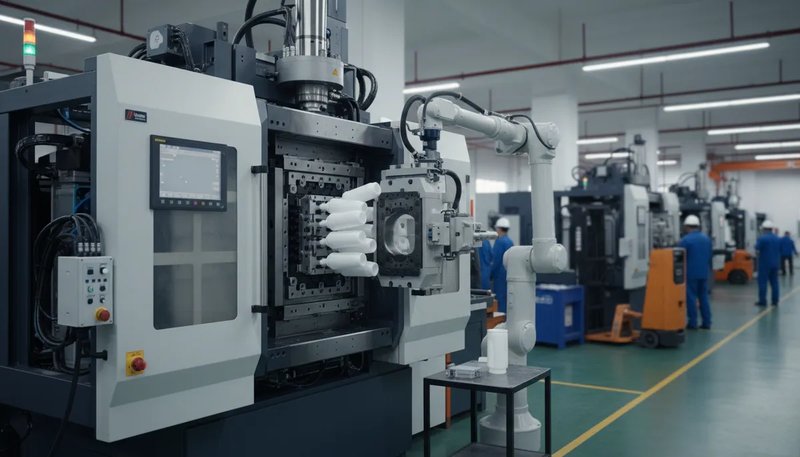
Bij de verwerking van HDPE moeten schroeftoerental en tegendruk zorgvuldig worden ingesteld. Een schroeftoerental van 40-80 RPM werkt goed voor de meeste HDPE-kwaliteiten, terwijl een tegendruk van 0.5-1.5 MPa een consistente smelthomogeniteit waarborgt zonder overmatige schuifverwarming die de polymeerketens kan aantasten.
Door de hoge kristalliniteit van HDPE beïnvloedt de koeltijd rechtstreeks de afmetingen en mechanische eigenschappen. Sneller koelen levert kleinere sferulieten en een hogere slagvastheid op; langzamer koelen verhoogt de stijfheid maar verlaagt de taaiheid. Deze afweging tussen slagvastheid en stijfheid is een kernbeslissing bij HDPE-procesoptimalisatie.
Het materiaal smelt bij 130-180°C en is goed verwerkbaar bij injectietemperaturen van 180-280°C. HDPE is uitstekend bestand tegen zuren, basen en organische oplosmiddelen. FDA-conforme kwaliteiten zijn ideaal voor voedselcontact. De semikristallijne structuur veroorzaakt echter meer krimp dan amorfe kunststoffen.
Voor spuitgiettoepassingen biedt HDPE een unieke combinatie van verwerkbaarheid en prestaties. Bij de juiste temperaturen vloeit het materiaal goed, vult het complexe geometrieën en levert het consistente eigenschappen tussen onderdelen wanneer de procesparameters correct worden beheerst.
Welke eigenschappen maken HDPE uniek voor spuitgieten?
Het eigenschappenprofiel van HDPE biedt zowel kansen als uitdagingen voor spuitgieters. Inzicht in deze eigenschappen helpt de procesparameters te optimaliseren en veelvoorkomende fouten te voorkomen die bij HDPE-productieseries optreden.
| Eigendom | Waarde | Invloed op het spuitgieten |
|---|---|---|
| Dichtheid | 0.93-0.97 g/cm³ | Hogere sterkte, grotere krimp |
| Treksterkte | 20-37 MPa | Uitstekende mechanische prestaties |
| Smeltvloei-index | 0.1-20 g/10min | Verwerkbaarheid verschilt per kwaliteit |
| Krimppercentage | 1.5-3.0% | Vereist zorgvuldig matrijsontwerp |
| Kristalliniteit | 60-80% | Langzamere koeling, maatvastheid |
Chemische bestendigheid is de grootste troef van HDPE. Het materiaal is bij kamertemperatuur bestand tegen de meeste zuren, basen, alcoholen en oliën. Deze bestendigheid vloeit voort uit de apolaire structuur en hoge kristalliniteit van het polymeer. Sterke oxidatiemiddelen en bepaalde koolwaterstoffen kunnen echter spanningsscheuren of zwelling veroorzaken.
De kristalliniteit van HDPE varieert van 60% tot 80%, afhankelijk van de verwerkingsomstandigheden en de koelsnelheid. Een hogere kristalliniteit verhoogt de treksterkte en chemische bestendigheid, maar verlaagt de slagvastheid. Deze fundamentele relatie tussen structuur en eigenschappen bepaalt elke verwerkings- en ontwerpbeslissing voor HDPE.
Het semikristallijne karakter van HDPE betekent ook dat uitgloeien na het spuitgieten de maatvastheid verder kan verbeteren. Voor precisietoepassingen met nauwe toleranties verlicht uitgloeien na het spuitgieten bij 80-100 graden Celsius gedurende 30-60 minuten de restspanningen en stabiliseert het de kristalstructuur.
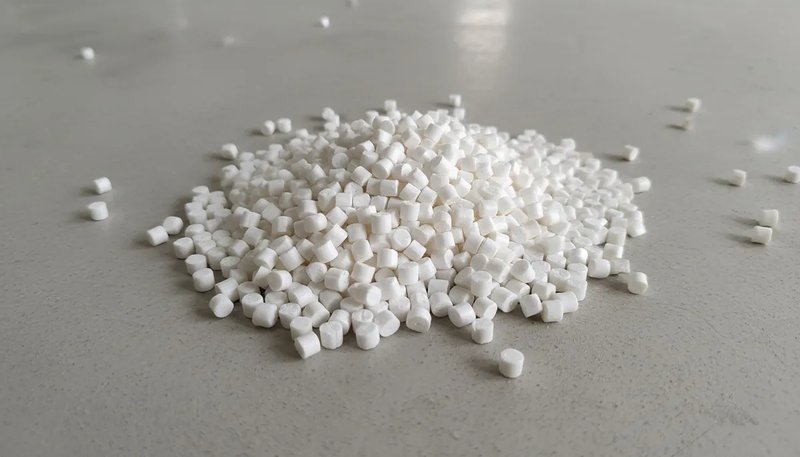
De vochtopname blijft met minder dan 0.01% verwaarloosbaar, waardoor voordrogen voor de meeste kwaliteiten niet nodig is. Deze lage opname waarborgt de maatvastheid in vochtige omgevingen. Voor UV-bestendigheid zijn stabiliserende additieven nodig, omdat onbeschermd HDPE bij langdurige blootstelling aan zonlicht degradeert.
“HDPE hoeft onder normale opslagomstandigheden vóór het spuitgieten niet te worden voorgedroogd”True
Met een vochtopname van minder dan 0.01% kan HDPE rechtstreeks uit verzegelde zakken worden verwerkt zonder droogcyclus, wat 2-4 uur productie-inrichttijd bespaart.
“HDPE-krimp is verwaarloosbaar en heeft geen invloed op de maatnauwkeurigheid”False
HDPE heeft met 1.5-3.0% een van de hoogste krimppercentages onder standaardkunststoffen, waardoor zorgvuldige compensatie van de matrijsholte en een ontwerp met uniforme wanddikte vereist zijn.
Wat zijn de belangrijkste HDPE-spuitgietparameters?
Succesvol spuitgieten van HDPE hangt af van een nauwkeurige regeling van temperatuur, druk en timingparameters. Elke instelling beïnvloedt materiaalstroming, onderdeelkwaliteit en cyclusefficiëntie op onderling verbonden manieren die systematische optimalisatie vereisen.
De smelttemperatuur ligt doorgaans tussen 180-280°C, afhankelijk van de HDPE-kwaliteit en de complexiteit van het onderdeel. Hogere temperaturen verbeteren de vloei, maar verhogen het risico op thermische degradatie. Lagere temperaturen kunnen onvolledige vulling of een gebrekkige oppervlakteafwerking veroorzaken. Begin bij 220°C en stel bij op basis van het stromingsgedrag en de vulling van het onderdeel.
De matrijstemperatuur beïnvloedt de kristallisatie en krimpbeheersing. Instellingen van 20-70°C zijn geschikt voor de meeste toepassingen; hogere temperaturen bevorderen de kristalliniteit en verminderen interne spanningen. Koude matrijzen (20-40°C) verkorten de cyclustijd, maar kunnen de kromtrekking vergroten. Warme matrijzen (50-70°C) verbeteren de oppervlakteafwerking, maar verlengen de koeltijd.
De vereiste injectiedruk ligt tussen 70-120 MPa, afhankelijk van onderdeelgeometrie en wanddikte. Door de goede vloei-eigenschappen van HDPE zijn vaak lagere drukken mogelijk dan bij technische kunststoffen. Overmatige druk veroorzaakt braam en interne spanning. Onvoldoende druk veroorzaakt onvolledige vulling.
“HDPE kan bij lagere injectiedrukken worden verwerkt dan de meeste technische kunststoffen”True
De lage smeltviscositeit van HDPE bij verwerkingstemperaturen betekent dat injectiedrukken van 70-120 MPa voldoende zijn, wat machineslijtage en energiekosten verlaagt.
“Elke instelling van de matrijstemperatuur levert aanvaardbare HDPE-onderdelen op”False
De matrijstemperatuur regelt rechtstreeks de kristallisatiesnelheid. Een te lage temperatuur veroorzaakt kromtrekken door ongelijkmatige kristallisatie. Een te hoge temperatuur verlengt de cyclustijd. Het optimale bereik is 40-60C.
Koeltijd domineert de cycluslengte door HDPE’s kristallisatievereisten. Sta 10-30 seconden per millimeter wanddikte toe voor correcte koeling. Houddruk houdt dimensionale precisie tijdens initiële koelingsfasen. Pas 40-60% van injectiedruk aan voor 50-80% van totale koeltijd.
Welke ontwerpregels gelden voor vormdelen van HDPE?
HDPE-onderdeelontwerp moet rekening houden met de hoge krimp, semi-kristallijne aard en vloeieigenschappen van het materiaal. Het volgen van bewezen ontwerprichtlijnen voorkomt kostbare matrijsaanpassingen en kwaliteitsproblemen tijdens productie.
Raadpleeg voor meer informatie over de principes van spuitgietmatrijsontwerp2 onze technische referentie.
Wanddikte moet variëren van 1,0-6,0 mm met uniforme verdeling over het onderdeel. Dikke secties veroorzaken zinkmarkeringen en langere koeltijden. Dunne secties vullen mogelijk niet volledig of vertonen zwakke laslijnen. Houd diktevariaties binnen 25% waar mogelijk om gelijkmatige koeling te bevorderen en kromtrekken te minimaliseren.
Richtlijnen voor onttrekking en stralen
Bij evaluatie van HDPE suppliers, altijd request melt flow index (MFI) certificates voor elke batch. MFI variatie van meer dan 10% van specification indicates inconsistent materiaal dat procesproblemen en dimensionale variatie in je molded onderwerpen veroorzaakt.
Onttrekkingshoeken van minimaal 1-2° accommoderen de hoge krimp van HDPE en voorkomen uitstootschade. Diepere trekken of getextureerde oppervlakken vereisen verhoogde onttrekking. De flexibiliteit van het materiaal laat enige vervorming tijdens uitstoot toe, maar herhaalde spanning veroorzaakt na verloop van tijd scheuren of dimensionale instabiliteit.
Corner radii van 0.5mm minimum voorkomen stressconcentratie en verbeteren materiaalflow. HDPE behandelt scherpe corners slecht door zijn semi-crystalline structuur. Generous radii verminderen ook injectiedrukvereisten en verbeteren onderwerpsterkte. Rib design moet dikte beperken tot 40-60% van adjacent walls.
Poortselectie beïnvloedt het vulpatroon en de plaatsing van laslijnen. Randpoorten en onderwaterpoorten werken goed voor de meeste HDPE-toepassingen. Vermijd speldenpoorten op dikke secties omdat ze de stroming beperken en jetten veroorzaken. De poortgrootte moet rekening houden met de krimp van HDPE zonder overmatige schuifverhitting te veroorzaken.
Wat zijn veelvoorkomende gebreken en oplossingen bij het spuitgieten van HDPE?
HDPE-spuitgieten kent voorspelbare defectpatronen gerelateerd aan de kristallijne structuur en thermisch gedrag van het materiaal. Vroegtijdige herkenning van deze problemen en systematische correcties besparen tijd en materiaalkosten tijdens productieprobleemoplossing.
Kromtrekken komt vaak voor door ongelijke kristallisatiesnelheden over de onderdeelgeometrie. Dikke en dunne secties koelen met verschillende snelheden, wat interne spanningen creëert die het onderdeel na uitstoot vervormen. Dit defect treft vooral platte onderdelen met variërende wanddikte of onderdelen met metalen inserts.
| Defect | Hoofdoorzaak | Oplossing |
|---|---|---|
| Vervorming | Onregelmatige kristallisatie | Uniforme wanddikte, gecontroleerde koeling |
| Als het materiaal bevriest voordat het vult, verhoog dan de injectiesnelheid (vulsnelheid). | Dikke secties, inadequate vuling | Verminder dikte, verhoog houddruk |
| Onvolledige vulling | Lage smelttemperatuur, onvoldoende druk | Verhoog temperatuur en injectiedruk |
| Braamvorming | Overmatige druk, slechte matrijspassing | Verminder druk, controleer matrijsconditie |
| Laslijnen | Slechte laslijnsterkte | Verhoog smeltemperatuur, optimaliseer gateplaatsing |
Procesbewaking via holtedruksensoren biedt real-time feedback over vulconsistentie. Voor HDPE helpt het volgen van piekholtedruk bij het identificeren van viscositeitsveranderingen die materiaalverontreiniging of onjuiste temperatuurinstellingen aangeven voordat defecte onderdelen zich in de productie ophopen.
Kleurconsistentie in HDPE-onderdelen hangt af van een goede dispersie van masterbatch tijdens de schroefplasticeringsfase. Het gebruik van een schroef met een mengsectie en het waarborgen van een adequate tegendruk van 0,5-1,5 MPa zorgt voor een uniforme pigmentverdeling door de smelt.
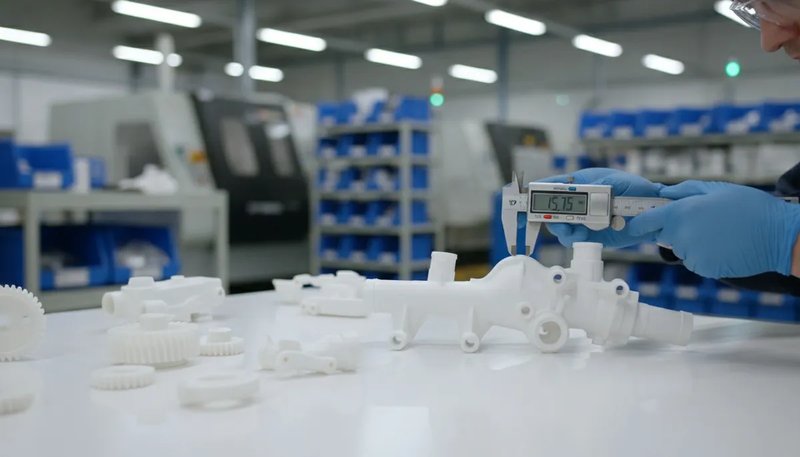
Zinkmarkeringen verschijnen op dikke secties waar inadequate vuldruk niet kan compenseren voor materiaalverkleining. Het oppervlak van het onderwerp ontwikkelt zichtbare depressies tegenover dikke ribben of bosses. Preventie vereist een gebalanceerd onderwerpdesign en geoptimaliseerde vuldrukprofielen.
Korte shots ontstaan door onvoldoende materiaal dat de uiteinden van onderdelen bereikt. Lage smelttemperatuur, onvoldoende injectiedruk of beperkte poorten veroorzaken dit defect. Flash treedt op wanneer overmatige druk materiaal in de scheidingslijnen van de matrijs of spuitpenopeningen forceert, waardoor dunne vinnen ontstaan die secundaire afwerking vereisen.
Welke industrieën gebruiken HDPE-spuitgietonderdelen?
De combinatie van chemische bestendigheid, FDA-conformiteit en kosteneffectiviteit van HDPE stimuleert adoptie in diverse industrieën. Elke toepassing benut specifieke materiaaleigenschappen binnen de verwerkingsbeperkingen van HDPE.
Verpakkingsapplicaties domineren het HDPE-verbruik, inclusief flessendoppen, sluitingen en stijve containers. De chemische bestendigheid van het materiaal voorkomt productverontreiniging, terwijl FDA-goedgekeurde kwaliteiten voedselveiligheidsconformiteit garanderen. Uitstekende vochtbarrière-eigenschappen verlengen de houdbaarheid voor gevoelige producten.
| Industrie | Gangbare onderdelen | Laagdikte |
|---|---|---|
| Verpakking | Doppen, afsluitingen, flessen | FDA-conformiteit, chemische bestendigheid |
| Auto-industrie | Brandstoftanks, vloeistofreservoirs | Lichtgewicht, slagvast |
| Consument | Speelgoed, containers, huishoudelijke artikelen | Lage kosten, duurzaam |
| Medisch | Farmaceutische flessen, laboratoriumbenodigdheden | Sterilisabel, niet-giftig |
Automobielcomponenten gebruiken HDPE voor brandstoftanks, ruitenwisservloeistofreservoirs en diverse vloeistofcontainers. Het materiaal is bestand tegen auto-chemicaliën en behoudt flexibiliteit bij lage temperaturen. Kostvoordelen ten opzichte van technische kunststoffen maken HDPE aantrekkelijk voor hoogvolume-applicaties met gematigde prestatie-eisen.
Consumentengoederen profiteren van HDPE’s duurzaamheid en veiligheidprofiel in toys, storage containers en household items. Het materiaal’s toughness withstands repeated use en abuse. Medische applicaties includeren pharmaceutical bottles, laboratory consumables en disposable medical devices waar chemische compatibiliteit en sterilisation resistentie meest belangrijk zijn.
Constructiemarkten gebruiken HDPE voor pipe fittings, elektrische enclosures en geosynthetische componenten. Het materiaal’s weerbestendigheid en chemische stabiliteit passen outdoor applicaties. UV stabilisatie wordt echter kritisch voor langdurige zonlichtexpositie in deze strenge omgevingen.
HDPE versus andere polyetheengraden — Wanneer wint HDPE?
Polyethylene grade selectie affecteert onderwerpperformantie, procesvereisten en kostenstructuren. Begrip van de trade-offs tussen HDPE, LDPE, MDPE en UHMWPE helpt materiaalkeuze optimaliseren voor specifieke injectiemolding applicaties.
De vergelijking tussen HDPE en LDPE valt in het voordeel van HDPE uit voor toepassingen die stijfheid en chemische bestendigheid vereisen. De lineaire structuur van HDPE zorgt voor een hogere dichtheid en sterkte, terwijl de vertakte ketens van LDPE flexibiliteit en helderheid bieden. De procesparameters verschillen aanzienlijk, waarbij HDPE hogere temperaturen en drukken vereist.
| Kwaliteit | Dichtheid (g/cm³) | Laagdikte | Injectiemolding Geschiktheid |
|---|---|---|---|
| LDPE | 0.91-0.93 | Flexibiliteit, helderheid | Gemakkelijk proces, lage verkleining |
| MDPE | 0.93-0.94 | Gebalanceerde eigenschappen | Goede vloeibaarheid, matige krimp |
| HDPE | 0.94-0.97 | Sterkte, chemische bestendigheid | Uitdagend maar veelzijdig |
| UHMWPE | >0.93 | Extreme slijtvastheid | Moeilijk, gespecialiseerde verwerking |
MDPE biedt eigenschappen tussen LDPE en HDPE in: het is eenvoudiger te verwerken dan HDPE, maar presteert beter dan LDPE. Bij spuitgieten vloeit MDPE gemakkelijker en krimpt het minder dan HDPE. Voor veeleisende toepassingen rechtvaardigen de hogere sterkte en chemische bestendigheid van HDPE echter de extra procescomplexiteit.
UHMWPE biedt uitzonderlijke slijtvastheid en slagvastheid, maar brengt aanzienlijke uitdagingen voor spuitgieten met zich mee. Het extreem hoge molecuulgewicht beperkt de vloeibaarheid en vereist gespecialiseerde verwerkingsapparatuur. HDPE biedt de beste balans tussen prestaties en verwerkbaarheid voor conventionele spuitgietoperaties.
Veelgestelde vragen over HDPE-spuitgieten
Welke smelttemperatuur moet ik gebruiken voor HDPE-spuitgieten?
HDPE-smelttemperaturen liggen doorgaans tussen 180-280°C, afhankelijk van de graad en onderdeelcomplexiteit. Begin met 220°C voor de meeste toepassingen en pas aan op basis van vulgedrag. Hogere temperaturen verbeteren de vloeibaarheid maar riskeren thermische degradatie, terwijl lagere temperaturen onvolledige vulling of slechte oppervlakteafwerking kunnen veroorzaken. Houd de smelttemperatuurstabiliteit binnen ±5°C voor consistente onderdeelkwaliteit. Houd rekening met de smeltstroomindex van uw specifieke HDPE-graad bij het instellen van de begintemperaturen. Voor de meeste HDPE-graden biedt beginnen bij 220°C aan de lage kant een veiligheidsmarge tegen thermische degradatie, terwijl nog steeds volledige smelthomogeniteit wordt geboden voor consistente onderdeelkwaliteit over productieruns heen.
Waarom blijven mijn HDPE-onderdelen vervormen na het uitwerpen?
Vervorming in HDPE-onderdelen is typisch het gevolg van ongelijke kristallisatie tijdens afkoeling. Dikke en dunne secties koelen met verschillende snelheden af, wat interne spanningen creëert die het onderdeel vervormen. Oplossingen zijn onder meer het handhaven van uniforme wanddikte, het optimaliseren van koelleidingontwerp voor gelijkmatige warmteafvoer en het aanpassen van de matrijstemperatuur om de kristallisatiesnelheid te regelen. Houddruk en -tijd beïnvloeden ook vervorming door compensatie voor krimp tijdens initiële afkoelfasen. Het gebruik van matrijstemperatuurregelaars ingesteld op 40-50°C en het waarborgen van uniforme wanddikte in het gehele onderdeelontwerp vermindert vervorming aanzienlijk. Langzamere afkoelsnelheden bevorderen ook gelijkmatige kristallisatie, wat de primaire mechanische factor is achter dimensionale stabiliteit in HDPE-componenten.
Kan HDPE zonder voorafgaande droging worden gespuitgiet?
Ja, HDPE vereist doorgaans geen voorafdrogen vanwege de extreem lage vochtopname van minder dan 0,01%. In tegenstelling tot hygroscopische materialen zoals nylon of PET neemt HDPE geen significant atmosferisch vocht op onder normale opslagomstandigheden. Controleer echter materiaalcertificaten voor specifieke aanbevelingen en overweeg drogen als het materiaal aan ongebruikelijke vochtigheid of verontreiniging is blootgesteld. Juiste opslag in afgesloten containers voorkomt de meeste vochtgerelateerde problemen. Als het materiaal echter in vochtige omstandigheden is opgeslagen of de verpakking langdurig open is geweest, elimineert een korte droogcyclus van 2-3 uur bij 80°C oppervlaktevocht dat anders sproeimarkeringen of verminderde mechanische eigenschappen in de voltooide onderdelen zou kunnen veroorzaken.
Wat veroorzaakt zinkmerken in dikke HDPE-secties?
Invalplekken ontstaan wanneer de materiaalkrimp in dikke secties groter is dan de nadruk kan compenseren. De krimp van HDPE van 1.5-3.0% treft vooral secties dikker dan 4mm. Oplossingen zijn waar mogelijk de wanddikte verminderen, de nadruk en nadruktijd verhogen, de grootte en positie van het aanspuitpunt optimaliseren voor betere nadruk, en dikke secties uithollen. Ontwerp ribben op 40-60% van de aangrenzende wanddikte om dit probleem te beperken. Een uniforme wanddikte en het gebruik van uitgeholde of geribde constructies in plaats van massieve dikke secties voorkomen de volumetrische krimp die invalplekken veroorzaakt. Wanneer dikke secties onvermijdelijk zijn, helpen een langere nadruktijd en hogere nadruk om materiaalcontractie tijdens kristallisatie te compenseren.
Hoe beïnvloedt HDPE-krimp het matrijsontwerp?
De hoge krimp van HDPE van 1.5-3.0% vereist zorgvuldige berekening van de matrijsafmetingen om de beoogde onderdeelafmetingen te bereiken. Krimp varieert met de wanddikte, procesomstandigheden en kristallisatiesnelheid. Ontwerp matrijzen 2-3% groter dan de doelafmetingen, met aanpassingen op basis van de onderdeelgeometrie en procesparameters. Door moleculaire oriëntatie beïnvloedt de stroomrichting de krimp anders dan de richting dwars op de stroming. Houd rekening met nakrimp die 24-48 uur na het uitwerpen doorgaat. Gereedschapsontwerpers maken matrijsholten doorgaans 1.5-3.0% groter, afhankelijk van de HDPE-kwaliteit en onderdeelgeometrie. Door matrijsstroomsimulaties uit te voeren voordat staal wordt verspaand, kunt u de werkelijke krimpwaarden voor uw specifieke onderdeel voorspellen en het aantal gereedschapsiteraties voor maatnauwkeurigheid verminderen.
Welke ontwerphellingen werken het beste voor HDPE spuitgietonderdelen?
HDPE-onderdelen vereisen minimale ontluchtingshoeken van 1-2° vanwege de hoge krimp en de semi-kristallijne structuur die zich aan matrijsoppervlakken vastgrijpt. Diepere trekken, complexe geometrieën of gestructureerde oppervlakken hebben een verhoogde ontluchting nodig tot 3-5°. Hoewel de flexibiliteit van HDPE enige vervorming tijdens uitstoting toestaat, veroorzaakt onvoldoende ontluchting oppervlaktekrassen, dimensionale vervorming of vastzittende onderdelen. Bereken de ontluchting op basis van onderdeeldiepte, oppervlakteafwerkingsvereisten en ontwerp van het uitstootsysteem voor optimale resultaten. Voor HDPE specifiek wordt 1,5 tot 2 graden per zijde aanbevolen vanwege de hoge wrijvingscoëfficiënt van het materiaal en de neiging om op kernpennen te krimpen. Gestructureerde oppervlakken vereisen extra ontluchting — typisch 1 extra graad per 0,025 mm textuurdiepte — om cosmetische schade tijdens uitstoting te voorkomen.
Waarom kiezen voor ZetarMold voor HDPE-spuitgieten?
In 2025 produceerden we meer dan 2 miljoen HDPE-componenten voor verpakkings- en automobieltoepassingen. Onze vestiging in Shanghai heeft 45 machines van 90T tot 1850T in bedrijf en ons technisch team heeft meer dan 10 jaar ervaring met HDPE-specifieke verwerking.
De vestiging van ZetarMold in Shanghai is gespecialiseerd in uitdagende HDPE-toepassingen die precieze dimensionale controle en productie zonder defecten vereisen. Ons technisch team optimaliseert de verwerkingsparameters voor elk project en elimineert veelvoorkomende problemen zoals vervorming en zinkmerken door een systematische aanpak en geavanceerde procescontrole.
Klaar om uw uitdagingen bij HDPE-spuitgieten op te lossen? Onze ervaren ingenieurs bieden uitgebreide ondersteuning, van ontwerpoptimalisatie tot opschaling van de productie. Kies deskundig spuitgieten3 voor HDPE-verwerkingsoplossingen die consistente kwaliteit en kosteneffectieve productie leveren voor uw meest veeleisende toepassingen.
Bronnen
- Richtlijnen voor de verwerking van hogedichtheidpolyetheen. Technische dienst van LyondellBasell. lyondellbasell.com
- FDA-regelgeving voor voedselcontact met polyetheen. U.S. Food and Drug Administration, 21 CFR §177.1520. fda.gov
- Spuitgieten: technologie en grondbeginselen. Rosato, D.V. & Rosato, M.G. Hanser Publications. ISBN 978-1569903995.
spuitgieten: Dit is een productieproces waarbij gesmolten thermoplast onder druk in een matrijsholte wordt geïnjecteerd en daar afkoelt en stolt tot een afgewerkt onderdeel. ↩
spuitgietmatrijsontwerp: Technische uitwerking van de gereedschapsgeometrie, koeling, aanspuiting en uitwerping voor nauwkeurige kunststof onderdelen. ↩
spuitgieten: Dit is een vormproces voor polymeren waarbij verwarmd thermoplastisch materiaal onder druk in een gesloten matrijs wordt geperst en daar afkoelt en stolt tot de uiteindelijke onderdeelgeometrie. ↩