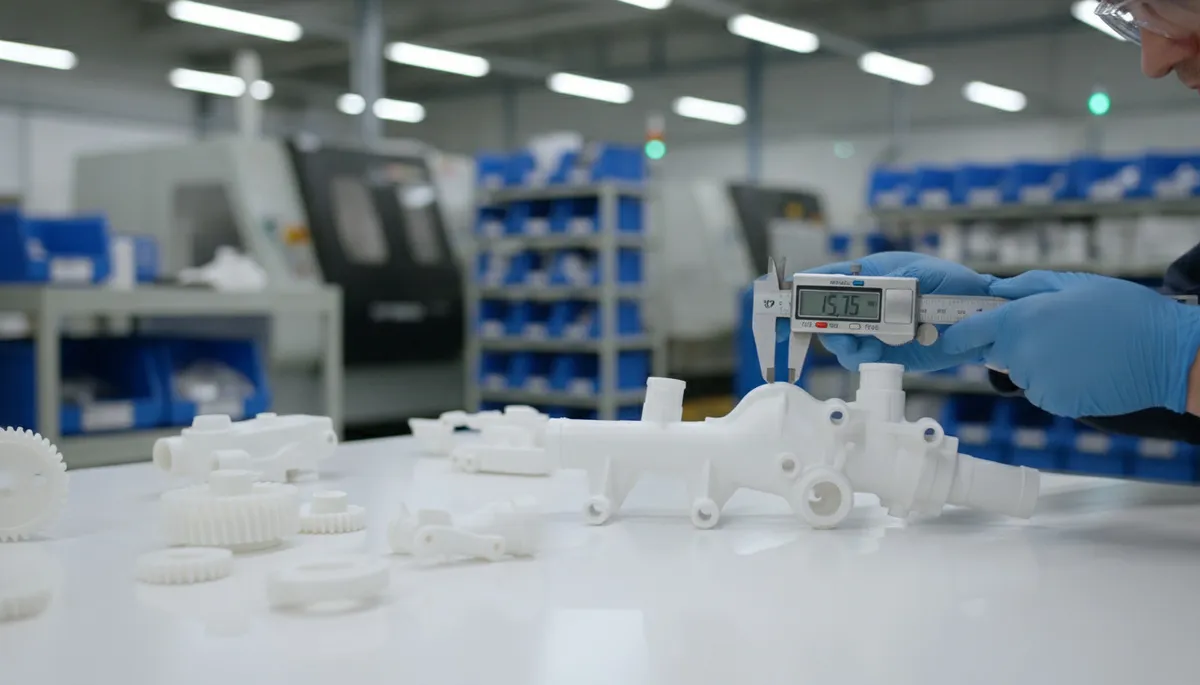
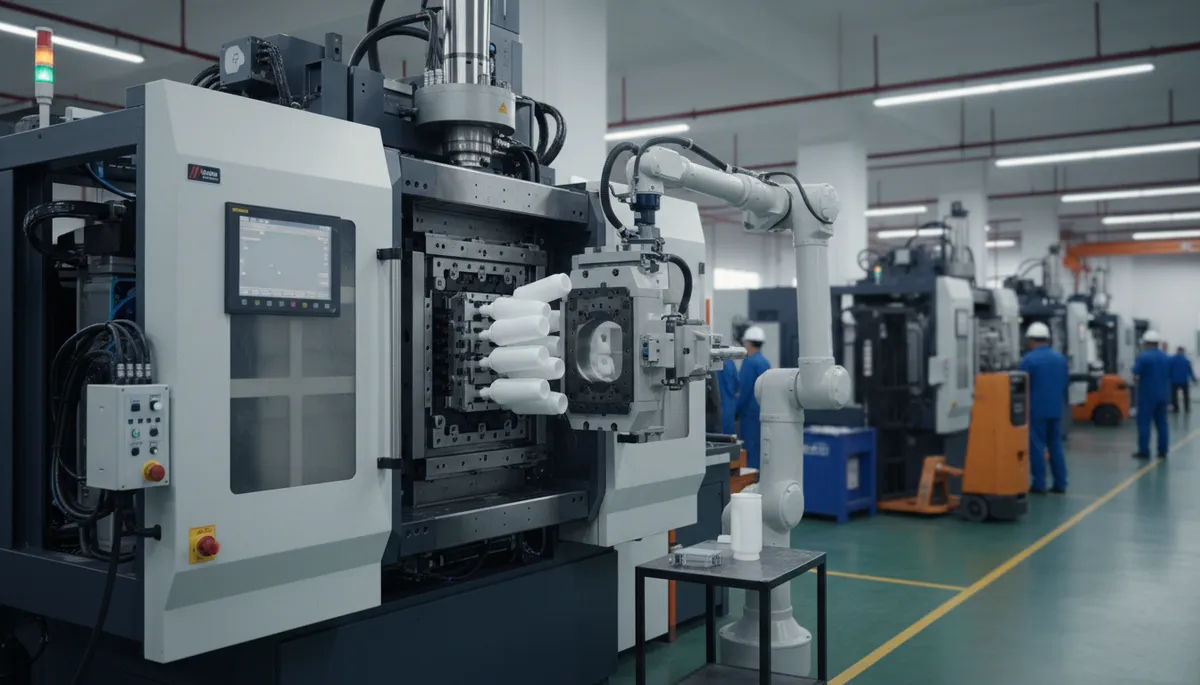
Kämpfen Sie mit verzogenen HDPE-Teilen oder inkonsistenter Qualität? Sie sind nicht allein. Das HDPE-Spritzgießen stellt einzigartige Herausforderungen dar, die selbst erfahrene Hersteller ins Stolpern bringen. Das hohe Schwindungsverhalten, das Kristallisationsverhalten und die Temperaturempfindlichkeit des Materials erfordern eine präzise Kontrolle in jedem Schritt. Eine falsche Parametereinstellung kann profitable Produktionsläufe in kostspieligen Ausschuss verwandeln. Doch wenn es richtig gemacht wird, bietet HDPE für anspruchsvolle Anwendungen einen unübertroffenen Chemikalienwiderstand und Haltbarkeit.
- HDPE erfordert Schmelztemperaturen von 180-280 °C und eine sorgfältige Kühlungsregelung, um die Schwindungsraten von 1,5-3,0 % zu beherrschen
- Die Materialdichte von 0,93-0,97 g/cm³ bietet ausgezeichnete chemische Beständigkeit bei gleichzeitiger FDA-Konformität für Lebensmittelkontakt
- Die Wandstärke sollte zur Vermeidung von Verzug und Einfallstellen zwischen 1,0 und 6,0 mm liegen und gleichmäßig verteilt sein.
- Schrägungswinkel von mindestens 1–2° sind aufgrund der hohen Schwindung und teilkristallinen Struktur von HDPE unerlässlich.
- Häufige Fehler sind Verzug durch ungleichmäßige Abkühlung und Einfallstellen in dicken Bereichen, beides vermeidbar durch richtige Verarbeitung
Was ist HDPE-Spritzgießen?
Beim HDPE-Spritzgießen1 wird Polyethylenharz hoher Dichte aufgeschmolzen und in geschlossene Formen gespritzt, um präzise Kunststoffteile herzustellen. Das Verfahren nutzt die thermoplastischen Eigenschaften von HDPE, sodass der Werkstoff wiederholt ohne chemischen Abbau geschmolzen, geformt und verfestigt werden kann.
Polyethylen hoher Dichte (HDPE) ist ein teilkristalliner thermoplastischer Kunststoff mit linearer Molekularstruktur. Im Gegensatz zu verzweigten Polyethylenvarianten erzeugt die dichte Molekularpackung von HDPE eine Dichte von 0,93–0,97 g/cm³. Diese Struktur bietet im Vergleich zu Alternativen mit geringerer Dichte eine überlegene Festigkeit und Chemikalienbeständigkeit.
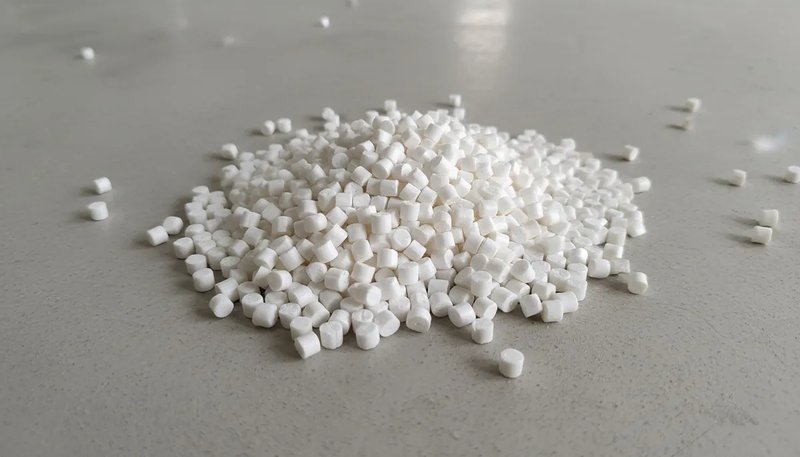
Die Verarbeitung von HDPE erfordert sorgfältige Aufmerksamkeit auf Schneckendrehzahl und Gegendruckeinstellungen. Eine Schneckendrehzahl von 40-80 U/min eignet sich gut für die meisten HDPE-Typen, während ein Gegendruck von 0,5-1,5 MPa eine gleichmäßige Schmelzhomogenität gewährleistet, ohne übermäßige Schererwärmung, die die Polymerketten abbauen könnte.
Die hohe Kristallinität von HDPE bedeutet, dass die Abkühlzeit direkt die Bauteilabmessungen und mechanischen Eigenschaften beeinflusst. Schnelleres Abkühlen erzeugt kleinere Sphärolithe und höhere Schlagzähigkeit, während langsameres Abkühlen die Steifigkeit erhöht, aber die Zähigkeit verringert. Dieser Kompromiss zwischen Schlagfestigkeit und Steifigkeit ist eine der Schlüsselentscheidungen bei der HDPE-Prozessoptimierung.
Das Material schmilzt bei 130-180°C und lässt sich bei Einspritztemperaturen von 180-280°C gut verarbeiten. HDPE weist eine ausgezeichnete chemische Beständigkeit gegenüber Säuren, Basen und organischen Lösungsmitteln auf. FDA-konforme Typen machen es ideal für Lebensmittelkontaktanwendungen. Aufgrund seiner teilkristallinen Natur weist es jedoch höhere Schrumpfungsraten auf als amorphe Kunststoffe.
Für Spritzgießanwendungen bietet HDPE eine besondere Kombination aus Verarbeitbarkeit und Leistung. Bei geeigneten Temperaturen fließt der Werkstoff gut, füllt komplexe Geometrien und liefert bei korrekt geregelten Prozessparametern gleichbleibende Eigenschaften von Teil zu Teil.
Welche Eigenschaften machen HDPE im Spritzgießen einzigartig?
Das Eigenschaftsprofil von HDPE bietet sowohl Chancen als auch Herausforderungen für Spritzgießer. Das Verständnis dieser Eigenschaften hilft, Prozessparameter zu optimieren und häufige Fehler zu vermeiden, die HDPE-Produktionsläufe beeinträchtigen.
| Eigentum | Wert | Auswirkung auf das Spritzgießen |
|---|---|---|
| Dichte | 0.93-0.97 g/cm³ | Höhere Festigkeit, erhöhte Schrumpfung |
| Zugfestigkeit | 20-37 MPa | Ausgezeichnete mechanische Leistungsfähigkeit |
| Schmelzflussindex | 0.1-20 g/10min | Die Verarbeitungsleichtigkeit variiert je nach Typ |
| Schrumpfungsrate | 1.5-3.0% | Erfordert eine sorgfältige Werkzeugauslegung |
| Kristallinität | 60-80% | Langsamere Abkühlung, Maßstabilität |
Die chemische Beständigkeit ist die größte Stärke von HDPE. Das Material widersteht den meisten Säuren, Basen, Alkoholen und Ölen bei Raumtemperatur. Diese Beständigkeit rührt von der unpolaren Struktur und der hohen Kristallinität des Polymers her. Starke Oxidationsmittel und bestimmte Kohlenwasserstoffe können jedoch Spannungsrissbildung oder Quellung verursachen.
Die HDPE-Kristallinität liegt je nach Verarbeitungsbedingungen und Abkühlrate zwischen 60 % und 80 %. Höhere Kristallinität erhöht die Zugfestigkeit und Chemikalienbeständigkeit, verringert aber die Schlagzähigkeit. Diese grundlegende Struktur-Eigenschafts-Beziehung beeinflusst jede Verarbeitungs- und Designentscheidung, die Sie mit HDPE treffen.
Die teilkristalline Natur von HDPE bedeutet auch, dass ein Tempern nach dem Spritzgießen die Maßstabilität weiter verbessern kann. Für Präzisionsanwendungen mit engen Toleranzen sorgt ein nachträgliches Tempern bei 80–100 Grad Celsius für 30–60 Minuten für den Abbau von Eigenspannungen und stabilisiert die Kristallstruktur.
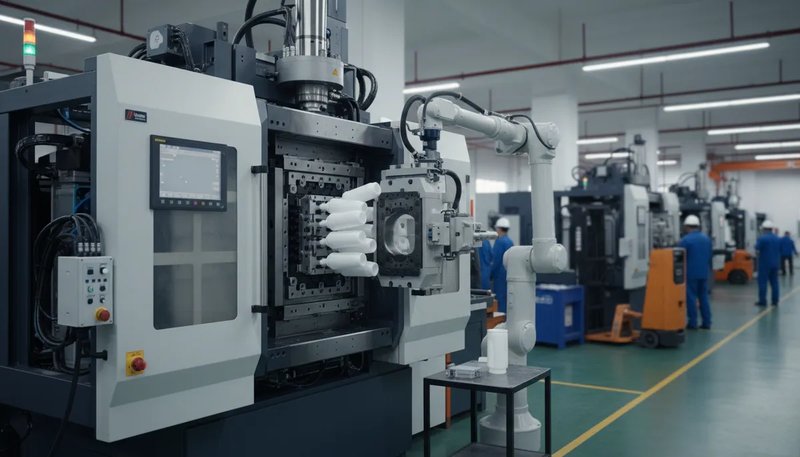
Die Feuchtigkeitsaufnahme bleibt mit weniger als 0,01 % vernachlässigbar, wodurch Vortrocknungsanforderungen für die meisten Sorten entfallen. Diese geringe Aufnahme gewährleistet Maßstabilität in feuchter Umgebung. UV-Beständigkeit erfordert Stabilisatorzusätze, da ungeschütztes HDPE bei längerer Sonneneinstrahlung abbaut.
„HDPE erfordert unter normalen Lagerbedingungen keine Vortrocknung vor dem Spritzgießen.“True
Mit einer Feuchtigkeitsaufnahme unter 0,01 % kann HDPE direkt aus versiegelten Säcken ohne Trocknungszyklus verarbeitet werden, was 2-4 Stunden Rüstzeit einspart.
„Die Schwindung von HDPE ist vernachlässigbar und beeinträchtigt die Maßgenauigkeit nicht“False
HDPE hat mit 1,5-3,0 % eine der höchsten Schwindungsraten unter den Standardkunststoffen und erfordert daher einen sorgfältigen Formhohlraumausgleich und eine gleichmäßige Wandstärkenauslegung.
Was sind die wichtigsten HDPE-Spritzgießparameter?
Erfolgreiches HDPE-Spritzgießen hängt von der präzisen Kontrolle von Temperatur-, Druck- und Zeitparametern ab. Jede Einstellung beeinflusst den Materialfluss, die Teilqualität und die Zykleneffizienz auf miteinander verbundene Weise, die eine systematische Optimierung erfordert.
Die Schmelztemperatur liegt typischerweise zwischen 180 und 280 °C, je nach HDPE-Sorte und Teilkomplexität. Höhere Temperaturen verbessern das Fließverhalten, bergen aber das Risiko von thermischer Degradation. Niedrigere Temperaturen können zu Kurzschüssen oder schlechter Oberflächengüte führen. Beginnen Sie mit 220 °C und passen Sie basierend auf dem Fließverhalten und der Teilefüllung an.
Die Werkzeugtemperatur beeinflusst die Kristallisation und Schwindungskontrolle. Einstellungen von 20–70 °C funktionieren für die meisten Anwendungen, wobei höhere Temperaturen die Kristallinität fördern und innere Spannungen reduzieren. Kalte Werkzeuge (20–40 °C) beschleunigen den Zyklus, können aber den Verzug erhöhen. Heiße Werkzeuge (50–70 °C) verbessern die Oberflächengüte, verlängern aber die Abkühlzeit.
Der erforderliche Einspritzdruck liegt je nach Teilgeometrie und Wandstärke zwischen 70 und 120 MPa. Die guten Fließeigenschaften von HDPE erlauben oft niedrigere Drücke als bei technischen Kunststoffen. Übermäßiger Druck verursacht Gratbildung und innere Spannungen. Unzureichender Druck führt zu unvollständiger Füllung oder Kurzschüssen.
„HDPE kann mit niedrigeren Einspritzdrucken als die meisten technischen Kunststoffe verarbeitet werden“True
Die niedrige Schmelzviskosität von HDPE bei Verarbeitungstemperaturen bedeutet, dass Einspritzdrucke von 70-120 MPa ausreichen, was den Maschinenverschleiß und Energieaufwand reduziert.
„Jede Werkzeugtemperatur-Einstellung führt zu akzeptablen HDPE-Teilen“False
Die Werkzeugtemperatur steuert direkt die Kristallisationsrate. Zu kalt führt zu Verzug durch ungleichmäßige Kristallisation. Zu heiß verlängert die Zykluszeit. Der optimale Bereich liegt bei 40–60 °C.
Die Abkühlzeit dominiert die Zykluslänge aufgrund der Kristallisationsanforderungen von HDPE. Planen Sie 10–30 Sekunden pro Millimeter Wandstärke für eine ordnungsgemäße Abkühlung ein. Der Nachdruck sorgt für Maßhaltigkeit während der ersten Abkühlphasen. Wenden Sie 40–60 % des Einspritzdrucks für 50–80 % der gesamten Abkühlzeit an.
Welche Konstruktionsregeln gelten für HDPE-Spritzgussteile?
Das HDPE-Teiledesign muss das hohe Schwindungsverhalten, das teilkristalline Verhalten und die Fließeigenschaften des Materials berücksichtigen. Die Einhaltung bewährter Designrichtlinien verhindert kostspielige Formenänderungen und Qualitätsprobleme während der Produktion.
Weitere Informationen zu den Grundsätzen der Spritzgießformkonstruktion2 finden Sie in unserer technischen Referenz.
Die Wandstärke sollte zwischen 1,0 und 6,0 mm liegen und im gesamten Teil gleichmäßig verteilt sein. Dicke Bereiche verursachen Einfallstellen und längere Abkühlzeiten. Dünne Bereiche füllen möglicherweise nicht vollständig aus oder weisen schwache Nahtlinien auf. Halten Sie Dickenschwankungen nach Möglichkeit innerhalb von 25 %, um eine gleichmäßige Abkühlung zu fördern und Verzug zu minimieren.
Richtlinien für Ansatzwinkel und Radien
Bei der Bewertung von HDPE-Lieferanten sollten Sie stets Melt-Flow-Index (MFI)-Zertifikate für jede Charge anfordern. Eine MFI-Abweichung von mehr als 10 % von der Spezifikation deutet auf ein inkonsistentes Material hin, das zu Verarbeitungsproblemen und Maßabweichungen in Ihren Spritzgussteilen führen wird.
Schrägen von mindestens 1-2° berücksichtigen die hohe Schrumpfung von HDPE und verhindern Auswerfschäden. Tiefere Züge oder strukturierte Oberflächen erfordern erhöhte Schrägen. Die Flexibilität des Materials ermöglicht einige Verformungen während des Auswerfens, aber wiederholte Belastung führt mit der Zeit zu Rissen oder Maßinstabilität.
Mindestinnenradien von 0,5mm verhindern Spannungskonzentration und verbessern den Materialfluss. HDPE verträgt scharfe Kanten aufgrund seiner teilkristallinen Struktur schlecht. Großzügige Radien reduzieren auch den benötigten Einspritzdruck und erhöhen die Bauteilfestigkeit. Die Rippendicke sollte 40-60% der angrenzenden Wandstärke nicht überschreiten.
Die Angussauswahl beeinflusst Füllverhalten und Schweißnahtposition. Rand- und Tunnelangüsse eignen sich für die meisten HDPE-Anwendungen. Stiftangüsse bei dicken Wandstärken vermeiden, da sie den Fluss behindern und Strahlen verursachen. Die Angussgröße sollte die Schwindung von HDPE ausgleichen, ohne übermäßige Schererwärmung zu erzeugen.
Was sind häufige HDPE-Spritzgussfehler und Lösungen?
Beim HDPE-Spritzguss treten vorhersehbare Fehlermuster auf, die mit der kristallinen Struktur und dem thermischen Verhalten des Materials zusammenhängen. Eine frühzeitige Erkennung dieser Probleme und die Anwendung systematischer Korrekturen sparen Zeit und Materialkosten bei der Fehlerbehebung in der Produktion.
Verzug tritt häufig aufgrund ungleichmäßiger Kristallisationsraten über die Bauteilgeometrie hinweg auf. Dicke und dünne Abschnitte kühlen mit unterschiedlicher Geschwindigkeit ab, was innere Spannungen erzeugt, die das Bauteil nach dem Auswerfen verziehen. Dieser Fehler betrifft besonders flache Teile mit variierenden Wandstärken oder Teile mit Metalleinsätzen.
| Defekt | Hauptursache | Lösung |
|---|---|---|
| Verzug | Ungleichmäßige Kristallisation | Gleichmäßige Wandstärke, kontrollierte Kühlung |
| Einfallstellen | Dicke Abschnitte, unzureichender Nachdruck | Wandstärke reduzieren, Haltedruck erhöhen |
| Kurzschüsse | Niedrige Schmelztemperatur, unzureichender Druck | Temperatur und Einspritzdruck erhöhen |
| Blitzlicht | Übermäßiger Druck, schlechter Formschluss | Druck reduzieren, Werkzeugzustand prüfen |
| Schweißlinien | Schwache Schweißnahtfestigkeit | Schmelztemperatur erhöhen, Angussplatzierung optimieren |
Die Prozessüberwachung mit Hohlraumdrucksensoren liefert Echtzeit-Feedback zur Füllkonsistenz. Bei HDPE hilft die Überwachung des Spitzenhohlraumdrucks dabei, Viskositätsänderungen zu erkennen, die auf Materialverunreinigung oder falsche Temperatureinstellungen hinweisen, bevor sich fehlerhafte Teile in der Produktion ansammeln.
Die Farbkonstanz in HDPE-Teilen hängt von einer ordnungsgemäßen Masterbatch-Dispersion während der Schneckenplastifizierungsphase ab. Die Verwendung einer Schnecke mit einem Mischabschnitt und die Sicherstellung eines ausreichenden Gegendrucks von 0,5-1,5 MPa sorgt für eine gleichmäßige Pigmentverteilung in der Schmelze.
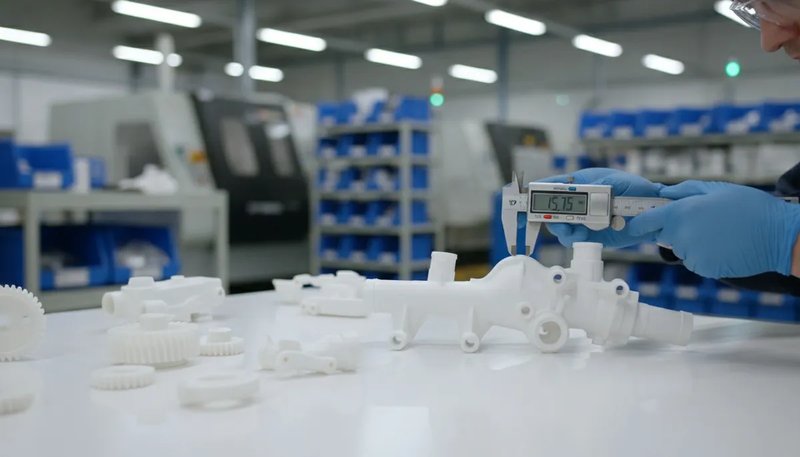
Sinkstellen treten an dicken Abschnitten auf, wo unzureichender Nachdruck die Materialschrumpfung nicht ausgleichen kann. Die Bauteiloberfläche bildet sichtbare Vertiefungen gegenüber dicken Rippen oder Nocken aus. Die Vermeidung erfordert eine ausgewogene Bauteilgestaltung und optimierte Nachdruckprofile.
Unvollständige Formteile entstehen bei unzureichendem Materialfluss in Partiebereiche. Niedrige Schmelztemperatur, ungenügender Einspritzdruck oder verengte Angüsse verursachen diesen Fehler. Gratbildung tritt auf, wenn übermäßiger Druck Material in Trennflächen oder Auswerferdurchbrüche presst, wodurch dünne Grate entstehen, die nachbearbeitet werden müssen.
Welche Branchen verwenden HDPE-Spritzgussteile?
Die Kombination aus chemischer Beständigkeit, FDA-Konformität und Wirtschaftlichkeit treibt die Verbreitung von HDPE in verschiedenen Branchen voran. Jede Anwendung nutzt spezifische Materialeigenschaften, während sie innerhalb der Verarbeitungsgrenzen von HDPE bleibt.
Verpackungsanwendungen dominieren den HDPE-Verbrauch, einschließlich Flaschenverschlüsse, Deckel und starre Behälter. Die Chemikalienbeständigkeit des Materials verhindert Produktkontamination, während FDA-zugelassene Typen die Einhaltung der Lebensmittelsicherheit gewährleisten. Hervorragende Feuchtigkeitsbarriereeigenschaften verlängern die Haltbarkeit empfindlicher Produkte.
| Industrie | Typische Bauteile | Hauptvorteil |
|---|---|---|
| Verpackung | Kappen, Verschlüsse, Flaschen | FDA-Konformität, chemische Beständigkeit |
| Automobilindustrie | Kraftstofftanks, Flüssigkeitsbehälter | Leicht, schlagfest |
| Verbraucher | Spielzeug, Behälter, Haushaltswaren | Geringe Kosten, langlebig |
| Medizinische | Pharmazieflaschen, Laborgeräte | Sterilisierbar, ungiftig |
Automobilkomponenten nutzen HDPE für Kraftstofftanks, Scheibenwaschwasserbehälter und verschiedene Flüssigkeitsbehälter. Das Material widersteht Automobilchemikalien und behält gleichzeitig seine Flexibilität bei niedrigen Temperaturen. Kostenvorteile gegenüber technischen Kunststoffen machen HDPE für Hochvolumenanwendungen mit moderaten Leistungsanforderungen attraktiv.
Konsumgüter profitieren von der Haltbarkeit und Sicherheit von HDPE bei Spielzeug, Aufbewahrungsbehältern und Haushaltsgegenständen. Die Zähigkeit des Materials hält wiederholter Nutzung und Beanspruchung stand. Medizinische Anwendungen umfassen Pharmazieflaschen, Laborverbrauchsmaterialien und Einwegmedizinprodukte, bei denen chemische Kompatibilität und Sterilisationsbeständigkeit am wichtigsten sind.
Der Baumarkt verwendet HDPE für Rohrformteile, Elektroverteilerschränke und geosynthetische Komponenten. Die Wetterbeständigkeit und chemische Stabilität des Materials eignen sich für Außenanwendungen. Allerdings wird der UV-Schutz bei längerer Sonneneinstrahlung in diesen anspruchsvollen Umgebungen entscheidend.
HDPE vs. andere Polyethylen-Typen — Wann hat HDPE die Nase vorn?
Die Wahl des Polyethylen-Typs beeinflusst die Bauteilleistung, die Verarbeitungsanforderungen und die Kostenstruktur. Das Verständnis der Kompromisse zwischen HDPE, LDPE, MDPE und UHMWPE hilft bei der Optimierung der Materialwahl für bestimmte Spritzgussanwendungen.
Beim Vergleich von HDPE und LDPE ist HDPE für Anwendungen mit hohen Anforderungen an Steifigkeit und Chemikalienbeständigkeit vorteilhafter. Die lineare Struktur von HDPE bewirkt höhere Dichte und Festigkeit, während die verzweigten Ketten von LDPE Flexibilität und Transparenz bieten. Die Verarbeitungsparameter unterscheiden sich deutlich; HDPE erfordert höhere Temperaturen und Drücke.
| Werkstofftyp | Dichte (g/cm³) | Hauptvorteil | Eignung für Spritzguss |
|---|---|---|---|
| LDPE | 0.91-0.93 | Flexibilität, Klarheit | Einfache Verarbeitung, geringe Schwindung |
| MDPE | 0.93-0.94 | Ausgewogene Eigenschaften | Guter Fluss, mäßige Schwindung |
| HDPE | 0.94-0.97 | Festigkeit, Chemikalienbeständigkeit | Anspruchsvoll, aber vielseitig |
| UHMWPE | >0.93 | Extreme Verschleißfestigkeit | Schwierige, spezialisierte Verarbeitung |
MDPE bietet Eigenschaften zwischen LDPE und HDPE, ist einfacher zu verarbeiten als HDPE, hat aber bessere Leistungswerte als LDPE. Beim Spritzgießen fließt MDPE leichter und zeigt ein geringeres Schwindmaß als HDPE. Die überlegene Festigkeit und Chemikalienbeständigkeit von HDPE rechtfertigt jedoch den zusätzlichen Verarbeitungsaufwand für anspruchsvolle Anwendungen.
UHMWPE bietet außergewöhnliche Verschleißfestigkeit und Schlagzähigkeit, stellt jedoch erhebliche Herausforderungen beim Spritzgießen dar. Das extrem hohe Molekulargewicht schränkt den Fluss ein und erfordert spezielle Verarbeitungsanlagen. HDPE bietet die beste Balance aus Leistung und Verarbeitbarkeit für konventionelle Spritzgießverfahren.
Häufig gestellte Fragen zum Spritzgießen von HDPE
Welche Schmelztemperatur sollte ich für die HDPE-Spritzgussverarbeitung verwenden?
Die Schmelztemperaturen von HDPE liegen typischerweise je nach Typ und Bauteilkomplexität zwischen 180 und 280°C. Beginnen Sie für die meisten Anwendungen bei 220°C und passen Sie diese basierend auf dem Füllverhalten an. Höhere Temperaturen verbessern den Fluss, bergen aber das Risiko thermischer Zersetzung, während niedrigere Temperaturen zu unvollständigen Einspritzungen oder schlechter Oberflächenqualität führen können. Überwachen Sie die Stabilität der Schmelztemperatur innerhalb von ±5°C für eine gleichbleibende Bauteilqualität. Berücksichtigen Sie den Schmelzflussindex Ihres spezifischen HDPE-Typs bei der Einstellung der Anfangstemperaturen. Für die meisten HDPE-Typen bietet ein Start bei 220°C auf der unteren Seite einen Sicherheitsspielraum gegen thermischen Abbau und gewährleistet dennoch eine vollständige Schmelzhomogenität für eine konsistente Bauteilqualität über alle Produktionsläufe hinweg.
Warum verziehen sich meine HDPE-Teile nach dem Auswerfen immer wieder?
Verzug in HDPE-Teilen entsteht typischerweise durch ungleichmäßige Kristallisation während der Abkühlung. Dicke und dünne Bereiche kühlen mit unterschiedlichen Geschwindigkeiten ab, wodurch innere Spannungen entstehen, die das Teil verziehen. Lösungen umfassen die Beibehaltung einer gleichmäßigen Wandstärke, die Optimierung des Kühlkanaldesigns für eine gleichmäßige Wärmeabfuhr und die Anpassung der Werkzeugtemperatur zur Steuerung der Kristallisationsrate. Der Nachdruck und die Nachdruckzeit beeinflussen den Verzug ebenfalls, indem sie das Schwinden in den ersten Abkühlphasen ausgleichen. Die Verwendung von Werkzeugtemperaturreglern, die auf 40-50°C eingestellt sind, und eine durchgängig gleichmäßige Wandstärke im Teiledesign reduzieren den Verzug erheblich. Langsamere Abkühlraten fördern ebenfalls eine gleichmäßige Kristallisation, was der primäre mechanische Faktor für die Maßhaltigkeit von HDPE-Komponenten ist.
Kann HDPE ohne Vortrocknung spritzgegossen werden?
Ja, HDPE benötigt typischerweise keine Vortrocknung aufgrund seiner extrem niedrigen Feuchtigkeitsaufnahmerate von weniger als 0,01%. Im Gegensatz zu hygroskopischen Materialien wie Nylon oder PET nimmt HDPE unter normalen Lagerbedingungen keine signifikante atmosphärische Feuchtigkeit auf. Überprüfen Sie jedoch Materialzertifikate auf spezifische Empfehlungen und erwägen Sie eine Trocknung, wenn das Material ungewöhnlicher Feuchtigkeit oder Kontamination ausgesetzt war. Eine ordnungsgemäße Lagerung in verschlossenen Behältern verhindert die meisten feuchtigkeitsbedingten Probleme. Wenn das Material jedoch unter feuchten Bedingungen gelagert wurde oder die Verpackung über längere Zeit geöffnet war, beseitigt ein kurzer Trocknungszyklus von 2-3 Stunden bei 80°C Oberflächenfeuchtigkeit, die ansonsten Sprühmarkierungen oder reduzierte mechanische Eigenschaften in den fertigen Teilen verursachen könnte.
Was verursacht Einfallstellen in dicken HDPE-Bereichen?
Einfallstellen entstehen, wenn die Materialschwindung in dicken Bereichen die Fähigkeit des Nachdruckdrucks zur Kompensation übersteigt. Die Schwindungsrate von HDPE von 1,5-3,0% betrifft besonders Bereiche über 4 mm Dicke. Lösungen umfassen die Reduzierung der Wandstärke wo möglich, die Erhöhung von Nachdruck und -zeit, die Optimierung von Angussgröße und -platzierung für besseren Nachdruck und das Aushöhlen dicker Bereiche. Konstruieren Sie Rippen mit 40-60% der angrenzenden Wandstärke, um dieses Problem zu minimieren. Eine Konstruktion mit gleichmäßiger Wandstärke und die Verwendung von Hohlräumen oder Rippenstrukturen anstelle massiver dicker Bereiche verhindert die volumetrische Schwindung, die Einfallstellen verursacht. Wenn dicke Bereiche unvermeidbar sind, hilft die Verlängerung der Nachdruckzeit und die Verwendung eines höheren Nachdruckdrucks, die Materialkontraktion während der Kristallisation auszugleichen.
Wie beeinflusst das Schrumpfen von HDPE die Formgestaltung?
Die hohe Schwindungsrate von HDPE von 1,5-3,0% erfordert sorgfältige Berechnungen der Formabmessungen, um die Zielbauteilgrößen zu erreichen. Die Schwindung variiert mit Wandstärke, Verarbeitungsbedingungen und Kristallisationsrate. Konstruieren Sie Formen 2-3% größer als die Zielmaße, mit Anpassungen basierend auf Bauteilgeometrie und Prozessparametern. Die Flussrichtung beeinflusst die Schwindung aufgrund der Molekülorientierung anders als die Querflussrichtung. Berücksichtigen Sie die Nachschwindung, die noch 24-48 Stunden nach dem Auswerfen fortdauert. Werkzeugkonstrukteure vergrößern Kavitäten typischerweise um 1,5-3,0%, abhängig vom HDPE-Typ und der Bauteilgeometrie. Das Durchführen von Flusssimulationen vor dem Stahlschneiden ermöglicht es Ihnen, die tatsächlichen Schwindungswerte für Ihr spezifisches Bauteil vorherzusagen und reduziert die Anzahl der Werkzeugiterationen, die zur Erreichung der Maßgenauigkeit benötigt werden.
Welche Schrägungswinkel eignen sich am besten für spritzgegossene HDPE-Teile?
HDPE-Bauteile benötigen aufgrund der hohen Schwindung und der halbkristallinen Struktur, die Formoberflächen festhält, minimale Schrägungswinkel von 1-2°. Tiefere Züge, komplexe Geometrien oder texturierte Oberflächen benötigen erhöhte Schrägung bis zu 3-5°. Während die Flexibilität von HDPE eine gewisse Verformung beim Auswerfen erlaubt, führt unzureichende Schrägung zu Oberflächenkratzern, Maßverzug oder Haften des Bauteils. Berechnen Sie die Schrägung basierend auf der Bauteiltiefe, den Anforderungen an die Oberflächengüte und dem Auswurfsystemdesign für optimale Ergebnisse. Für HDPE speziell werden 1,5 bis 2 Grad pro Seite empfohlen, aufgrund des hohen Reibungskoeffizienten des Materials und der Tendenz, sich auf Kernstifte zusammenzuziehen. Texturierte Oberflächen benötigen zusätzliche Schrägung – typischerweise 1 zusätzliches Grad pro 0,025 mm Texturtiefe – um kosmetische Schäden während des Auswerfens zu verhindern.
Warum ZetarMold für das Spritzgießen von HDPE wählen?
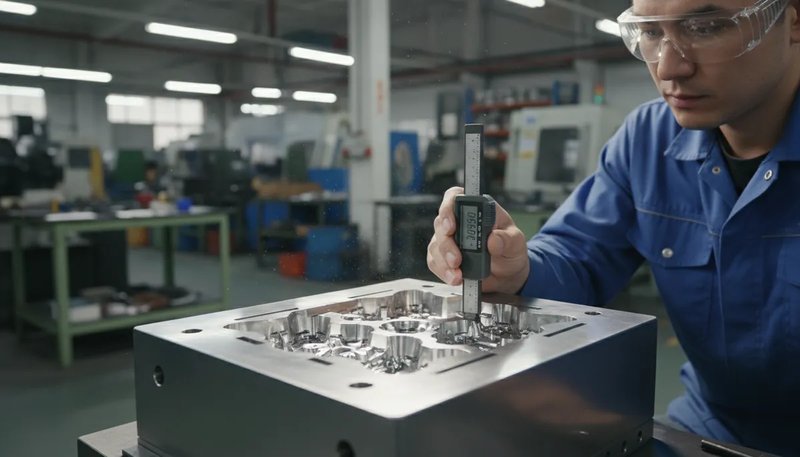
Im Jahr 2025 produzierten wir über 2 Millionen HDPE-Komponenten für Verpackungs- und Automobilanwendungen. Unsere Anlage in Shanghai betreibt 45 Maschinen von 90T bis 1850T, und unser Ingenieursteam verfügt über mehr als 10 Jahre Erfahrung in der HDPE-spezifischen Verarbeitung.
Die ZetarMold-Anlage in Shanghai ist auf anspruchsvolle HDPE-Anwendungen spezialisiert, die präzise Maßkontrolle und fehlerfreie Produktion erfordern. Unser Ingenieursteam optimiert die Prozessparameter für jedes Projekt und beseitigt häufige Probleme wie Verzug und Einfallstellen durch einen systematischen Ansatz und fortschrittliche Prozesssteuerung.
Möchten Sie Ihre Herausforderungen beim HDPE-Spritzgießen lösen? Unsere erfahrenen Ingenieure unterstützen Sie umfassend von der Konstruktionsoptimierung bis zur Skalierung der Produktion. Nutzen Sie unser Spritzgießangebot3 für fachkundige HDPE-Verarbeitungslösungen, die selbst bei anspruchsvollsten Anwendungen gleichbleibende Qualität und eine kostengünstige Fertigung gewährleisten.
Quellen
- Verarbeitungsrichtlinien für Polyethylen hoher Dichte. Technischer Service von LyondellBasell. lyondellbasell.com
- FDA-Vorschriften für den Lebensmittelkontakt von Polyethylen. US Food and Drug Administration, 21 CFR §177.1520. fda.gov
- Spritzgießen: Technologie und Grundlagen. Rosato, D.V. & Rosato, M.G. Hanser Publications. ISBN 978-1569903995.
Spritzgießen: Dies ist ein Fertigungsverfahren, bei dem geschmolzener Thermoplast unter Druck in eine Formkavität gespritzt wird, dort abkühlt und zu einem fertigen Teil erstarrt. ↩
Spritzgießformkonstruktion: Technische Auslegung von Werkzeuggeometrie, Kühlung, Anguss und Auswerfung für präzise Kunststoffteile. ↩
Spritzgießen: Dies ist ein Polymerformverfahren, bei dem erwärmter Thermoplast unter Druck in eine geschlossene Form gepresst wird, dort abkühlt und zur endgültigen Bauteilgeometrie erstarrt. ↩