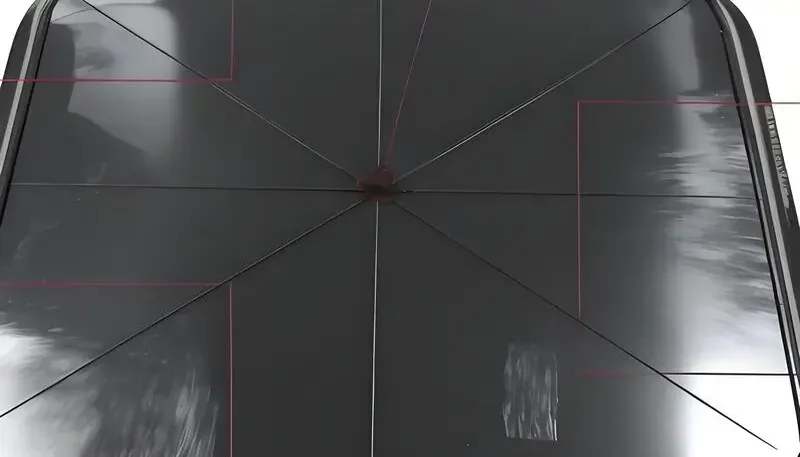
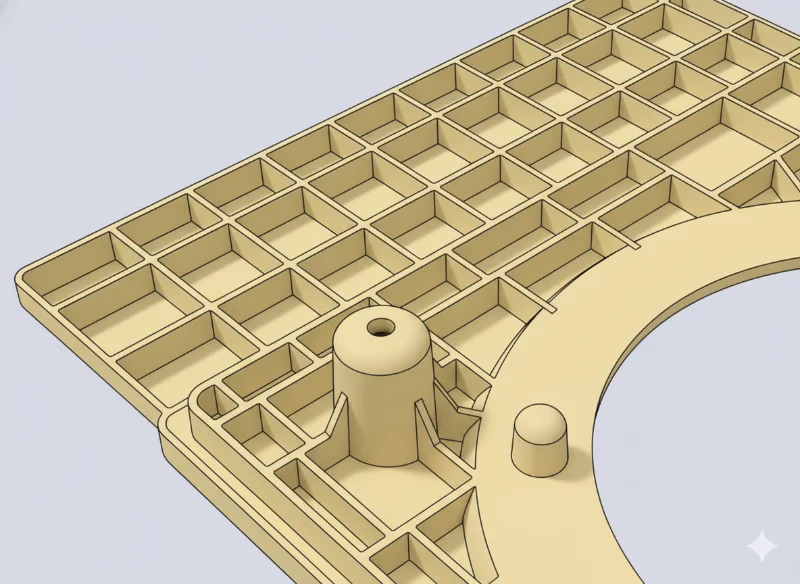
Einfallstellen — diese störenden Vertiefungen auf der Oberfläche eines ansonsten perfekten Spritzgussteils — gehören zu den häufigsten und sichtbarsten Fehlern beim Spritzgießen. Sie treten direkt gegenüber von dicken Bereichen, Rippen und Domen auf und sind das Erste, was jedem Kunden an einer Sichtfläche auffällt.
In diesem Leitfaden erkläre ich, wodurch Einfallstellen beim Spritzgießen entstehen, wie Sie sie durch Konstruktion und Prozessführung vermeiden und was Sie tun können, wenn sie bereits an Ihren Teilen aufgetreten sind. Dieser Leitfaden stützt sich auf jahrzehntelange Produktionserfahrung mit Tausenden von Werkzeugsätzen.
Wichtige Erkenntnisse
- Einfallstellen sind Oberflächenvertiefungen, die durch ungleichmäßige Abkühlschwindung in dicken Bereichen entstehen
- Halten Sie die Rippendicke bei 50–60% der Nennwanddicke — dies ist die wirksamste einzelne Vorbeugungsmaßnahme
- Konstruktive Korrekturen sind 5–10× günstiger als nachträgliche Werkzeugkorrekturen
- Glasfasergefüllte Materialien verringern Einfallstellen erheblich; ziehen Sie einen Wechsel der Materialtype in Betracht, sofern dies zulässig ist
- Prozessanpassungen können Einfallstellen um 30–50% verringern, beseitigen konstruktionsbedingte Einfallstellen jedoch nur selten
Was sind Einfallstellen beim Spritzgießen?
Einfallstellen sind örtlich begrenzte Vertiefungen oder Dellen auf der Oberfläche eines Spritzgussteils, die typischerweise gegenüber von Merkmalen wie Rippen, Domen, dicken Wandbereichen oder Geometrieänderungen auftreten. Sie entstehen, wenn das innere Material beim Abkühlen stärker schwindet als die äußere Haut und dadurch die Oberfläche nach innen zieht.
„Eine Rippendicke am Fuß von 50–60% der Nennwanddicke verhindert sichtbare Einfallstellen wirksam.“Richtig
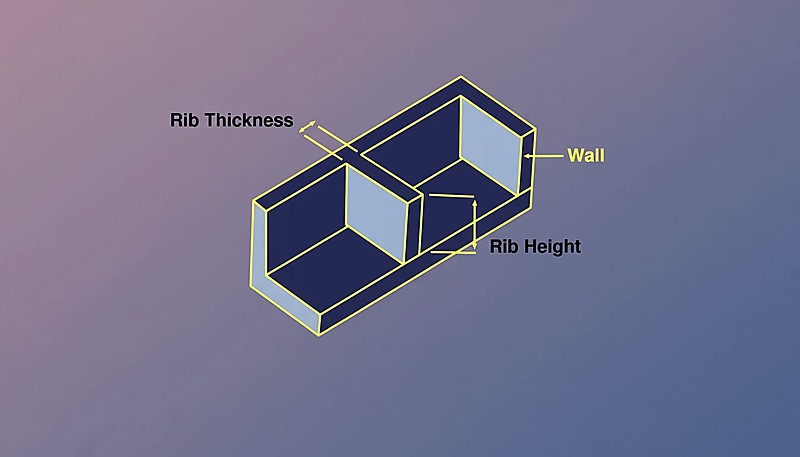
Bei einem Verhältnis von 50–60% sind Einfallstellen auf den meisten Oberflächen kaum sichtbar. Oberhalb von 70% werden sie erkennbar, und bei 100% sind tiefe Einfallstellen praktisch garantiert.
„Allein durch eine Erhöhung des Nachdrucks lassen sich Einfallstellen beseitigen, die von Rippen mit 100% der Wanddicke verursacht werden.“Falsch
Prozessanpassungen können konstruktionsbedingte Einfallstellen verringern, aber nicht beseitigen. Rippen mit 100% der Wanddicke bilden Wärmemassen, die unabhängig vom Nachdruck sichtbare Einfallstellen garantieren.
Der Mechanismus ist einfach: Wenn ein dicker Kunststoffbereich abkühlt, erstarrt zunächst die äußere Haut, während das Innere geschmolzen bleibt. Wenn das innere Material abkühlt und sich zusammenzieht, zieht es die bereits erstarrte Haut nach innen und erzeugt einen sichtbaren Spritzgießfehler[1]. Je größer der Dickenunterschied zwischen dem Merkmal und der umgebenden Wand ist, desto ausgeprägter ist die Einfallstelle.
Wodurch entstehen Einfallstellen beim Spritzgießen?
Einfallstellen haben sowohl konstruktionsbedingte als auch prozessbedingte Ursachen. Der erste Schritt zu ihrer Beseitigung besteht darin, zu verstehen, welche Ursache in Ihrem konkreten Fall verantwortlich ist.
Konstruktionsbedingte Ursachen
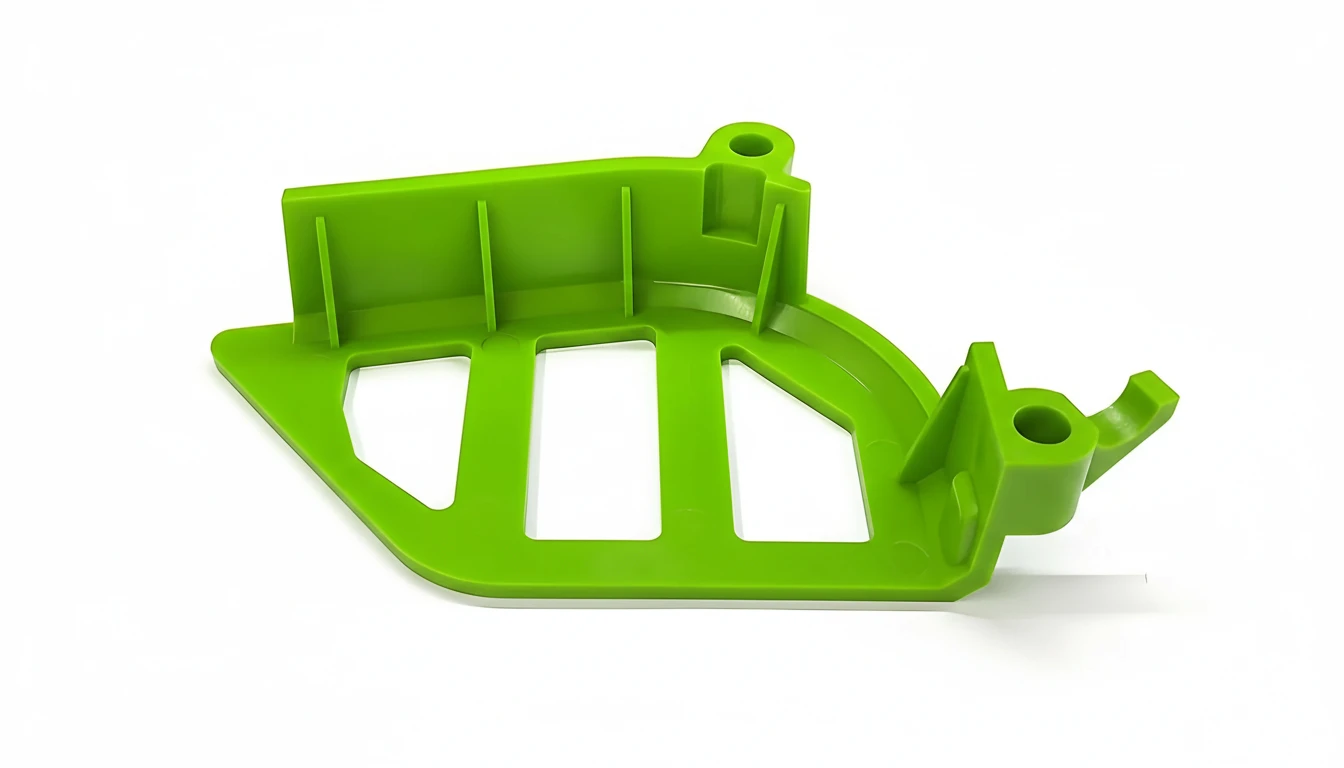
Die häufigste konstruktionsbedingte Ursache ist eine übermäßige Materialdicke an Rippen, Domen oder Wandübergängen. Wenn eine Rippe im Verhältnis zur Nennwand zu dick ist, bildet sie eine Wärmemasse, die wesentlich langsamer abkühlt als der umgebende Bereich. Das Rippenmaterial schwindet beim Abkühlen und zieht die gegenüberliegende Oberfläche nach innen.
„Glasfasergefüllte Materialien weisen deutlich weniger Einfallstellen auf als ungefüllte Typen.“Richtig
Füllstoffe (Glasfaser, Mineral, Talkum) verringern die Volumenschwindung. Der Wechsel von ungefüllten zu mit 10–20% Glasfaser gefüllten Typen beseitigt Einfallstellen häufig vollständig und erhöht zugleich die Steifigkeit.
„Einfallstellen und Lunker sind unterschiedliche Fehler mit unterschiedlichen Grundursachen.“Falsch
Sie haben dieselbe Grundursache — unterschiedliche Abkühlschwindung in dicken Bereichen. Der Unterschied liegt in der Ausprägung: Einfallstellen erscheinen an der Oberfläche, Lunker im Inneren, abhängig von der Wandsteifigkeit.
Weitere konstruktionsbedingte Ursachen sind abrupte Übergänge der Wanddicke (ohne fließende Verjüngung), überdimensionierte Dome, die nicht ausgehöhlt sind, und dicke Versteifungsplatten an Befestigungspunkten. Jedes Merkmal, das gegenüber der Nennwand eine erhebliche örtliche Dicke hinzufügt, kommt als Ursache einer Einfallstelle infrage.
Prozessbedingte Ursachen
Unzureichender Nachdruck ist die wichtigste prozessbedingte Ursache für Einfallstellen. Während der Nachdruckphase wird zusätzliches Material in die Kavität gedrückt, um die Schwindung auszugleichen. Ist der Nachdruck[2] zu niedrig oder die Nachdruckzeit zu kurz, schwindet das Material in dicken Bereichen ohne Ausgleich weiter, wodurch Einfallstellen entstehen.
Weitere Prozessfaktoren sind eine übermäßige Schmelzetemperatur (die die Gesamtschwindung erhöht), eine unzureichende Kühlzeit (Auswerfen, bevor dicke Bereiche vollständig erstarrt sind) und eine langsame Einspritzgeschwindigkeit (die ein vorzeitiges Erstarren an den Anschnitten verursachen und damit die wirksame Nachdruckreichweite verringern kann).

Wie lassen sich Einfallstellen durch die Konstruktion vermeiden?
Eine konstruktive Vorbeugung ist stets wirksamer als Prozesskorrekturen, weil sie die Grundursache statt des Symptoms angeht. Im Folgenden finden Sie die wichtigsten Konstruktionsstrategien, geordnet nach ihrer Wirkung.
Rippendicke begrenzen
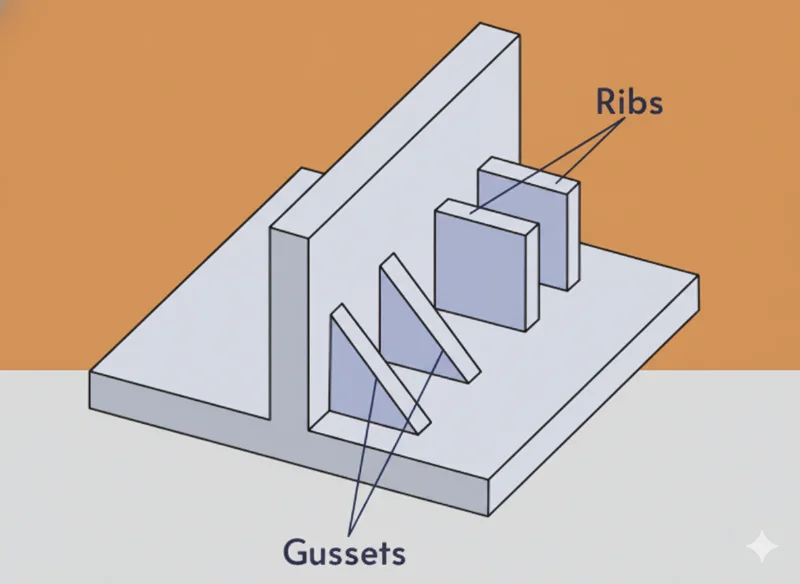
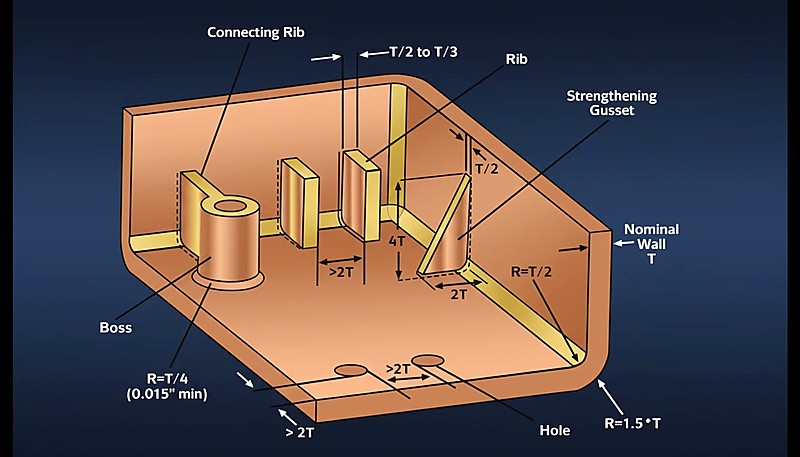
Dies ist die wirksamste einzelne Konstruktionsmaßnahme. Rippen sollten an ihrem Fuß 50–60% der Nennwanddicke aufweisen. Bei 50% sind Einfallstellen auf den meisten Oberflächen kaum sichtbar. Oberhalb von 70% werden sie erkennbar. Bei 100% (wenn die Rippe so dick wie die Wand ist) sind tiefe Einfallstellen auf der gegenüberliegenden Oberfläche praktisch garantiert.
Konstrukteure gestalten Rippen oft zu dick, weil sie an die strukturelle Steifigkeit und nicht an die Herstellbarkeit denken. Die Lösung: Verwenden Sie mehrere dünne Rippen anstelle einer dicken Rippe. Sie erzielen die gleiche oder eine höhere Steifigkeit bei einem Bruchteil des Einfallstellenrisikos.
Dicke Bereiche aushöhlen
Höhlen Sie dicke Bereiche nach Möglichkeit aus, um eine gleichmäßige Wanddicke beizubehalten. Dies gilt insbesondere für Dome (die Mitte mit einem Stift aushöhlen), dicke Befestigungsflächen (auf der Nicht-Sichtseite eine Aussparung vorsehen) und strukturelle Versteifungen (einen dreieckigen Querschnitt mit ausgehöhlter Mitte verwenden).
Fließende Übergänge verwenden
Wenn sich die Wanddicke ändern muss, verwenden Sie ein Verjüngungsverhältnis von 3:1. Sehen Sie je 1 mm Dickenänderung mindestens 3 mm fließenden Übergang vor. Dadurch verteilt sich der Schwindungsunterschied auf eine größere Fläche, sodass jede Oberflächenvertiefung flacher und weniger sichtbar wird.
Oberflächentextur gezielt einsetzen
Eine Textur auf der Sichtfläche kann kleinere Einfallstellen wirksam verbergen. Eine mittlere bis tiefe Textur (VDI 21–27) unterbricht das visuelle Muster so stark, dass eine Vertiefung von 0.05–0.10 mm nicht mehr wahrnehmbar ist. Dies ist keine Behebung — es ist eine Kaschierungstechnik, die funktioniert, wenn konstruktive Einschränkungen eine vollständige Beseitigung verhindern.
Wie verringern Prozessanpassungen Einfallstellen?
Wenn Konstruktionsänderungen nicht möglich sind — vielleicht ist das Werkzeug bereits gebaut oder die Merkmalsdicke kann nicht verringert werden, ohne die Funktion zu beeinträchtigen — werden Prozessanpassungen zum wichtigsten Mittel zur Verringerung von Einfallstellen.
Nachdruck erhöhen
Dies ist die direkteste prozessseitige Korrektur. Durch Erhöhen des Nachdrucks wird während der Ausgleichsphase mehr Material in die dicken Bereiche gedrückt, wodurch die Volumenschwindung abnimmt, die Einfallstellen verursacht. Die Einschränkung: Ein zu hoher Nachdruck kann Gratbildung, höhere Eigenspannungen und ein Maßwachstum über die Toleranz hinaus verursachen.
Nachdruckzeit verlängern
Der Nachdruck muss anliegen, bis der Anschnitt erstarrt ist. Wird der Nachdruck vor dem Erstarren des Anschnitts beendet, fließt Material rückwärts aus der Kavität, und der dicke Bereich schwindet unkontrolliert. Überwachen Sie die Erstarrungszeit des Anschnitts mit Drucksensoren und stellen Sie die Nachdruckzeit mindestens auf denselben Wert ein.
Schmelzetemperatur senken
Niedrigere Schmelzetemperaturen bedeuten eine geringere Gesamtschwindung. Dies muss jedoch gegen die Füllqualität abgewogen werden — ist die Temperatur zu niedrig, treten Kurzschüsse, hoher Einspritzdruck und eine schlechte Oberflächengüte auf. Eine Verringerung um 5–10°C gegenüber der üblichen Schmelzetemperatur ist normalerweise der sichere Bereich zur Verringerung von Einfallstellen.
Kühlung optimieren
Eine schnellere, gleichmäßigere Kühlung verkürzt das Zeitfenster, in dem Einfallstellen entstehen. Dazu müssen die Kühlkanäle in der Nähe dicker Bereiche optimal angeordnet, Berylliumkupfereinsätze für die örtliche Wärmeabfuhr eingesetzt und ausreichende Kühlmitteldurchflüsse sichergestellt werden. Erfahrene Spritzgießer ergänzen bei der Werkzeugabnahme regelmäßig örtliche Kühllösungen, um Schwerpunkte der Einfallstellenbildung zu beseitigen.
| Anpassung | Wirkung | Risiko |
|---|---|---|
| Nachdruck erhöhen | Hoch | Gratbildung, Eigenspannung |
| Nachdruckzeit verlängern | Mittel bis hoch | Längere Zykluszeit |
| Schmelzetemperatur senken | Mittel | Kurzschüsse, schlechte Oberflächengüte |
| Werkzeugtemperatur senken | Mittel | Sichtbare Bindenähte, Fließmarken |
| Einspritzgeschwindigkeit verringern | Niedrig bis mittel | Längerer Zyklus, Fließstockung |
Welche Materialien sind am anfälligsten für Einfallstellen?
Die Materialwahl beeinflusst die Sichtbarkeit von Einfallstellen erheblich. Amorphe Materialien (ABS, PC, PMMA, PS) zeigen Einfallstellen leichter, weil sie in den Übergangszonen von dick zu dünn eine höhere Werkzeugschwindung aufweisen und weil selbst kleine Vertiefungen auf ihren transparenten oder glänzenden Oberflächen sichtbar werden.
Teilkristalline Materialien (PP, PE, Nylon, POM) sind etwas toleranter, weil sie tendenziell gleichmäßiger schwinden und ihre typischen Oberflächengüten weniger erkennen lassen. Auf polierten Oberflächen zeigen sie jedoch ebenfalls Einfallstellen.
Gefüllte Materialien — also solche mit Glasfaser-, Mineral- oder Talkumfüllstoffen — weisen deutlich weniger Einfallstellen auf, weil die Füllstoffe die Volumenschwindung verringern[3]. Wenn Ihre Anwendung einen gefüllten Typ zulässt, ist dies eine der wirksamsten Möglichkeiten, Einfallstellen ohne Änderung der Bauteilkonstruktion zu minimieren.
| Materialart | Sichtbarkeit von Einfallstellen | Konstruktionsempfehlung |
|---|---|---|
| Amorph (ABS, PC, PMMA) | Hoch | Strikte 50–60%-Rippenregel |
| Teilkristallin (PP, Nylon, POM) | Mittel | Standardmäßige 60%-Rippenregel |
| Glasfasergefüllte Typen | Niedrig | Bis zu 70% zulässig |
Wenn Einfallstellen problematisch sind, beseitigt der Wechsel von einem ungefüllten zu einem mit 10–20% Glasfaser gefüllten Typ die Einfallstellen häufig vollständig und verbessert zugleich die Maßhaltigkeit und Steifigkeit.
Lassen sich Einfallstellen beheben, nachdem das Werkzeug gebaut wurde?
Ja, aber die Möglichkeiten werden deutlich eingeschränkt und die Kosten steigen. Im Folgenden finden Sie die Hierarchie der Korrekturen von der günstigsten bis zur teuersten.
- Prozessoptimierung: Passen Sie Nachdruck, Nachdruckzeit, Schmelzetemperatur und Kühlung an. Kosten: Maschinenzeit für Versuche. Wirksamkeit: mittel bei kleineren Einfallstellen.
- Gasunterstütztes Spritzgießen oder Schaumspritzgießen: Bei dicken Bereichen führt das gasunterstützte Spritzgießen Stickstoff in das dicke Merkmal ein, wodurch die Oberflächenqualität erhalten und zugleich das Innere ausgehöhlt wird. Erfordert eine Werkzeugänderung für Gasnadeln. Kosten: mittel. Wirksamkeit: hoch bei örtlich begrenzten dicken Bereichen.
- Werkzeugänderung — Stahlabtrag: Verringern Sie die Rippendicke oder höhlen Sie dicke Bereiche aus, indem Sie Stahl aus der Kavität entfernen. Dies ist die wirksamste Korrektur, erfordert jedoch eine erneute Bearbeitung. Kosten: mittel bis hoch, abhängig von der Komplexität der Kavität.
- Werkzeugänderung — Stahlauftrag: Wenn Sie die Wanddicke an einer Stelle zum Ausgleich erhöhen müssen, sind Schweißen und erneutes Bearbeiten erforderlich. Kosten: hoch. Risiko: Integrität der Schweißnaht bei Serienwerkzeugen.
Die wichtigste Erkenntnis aus allen diesen Ansätzen: Es ist immer günstiger, Einfallstellen in der Konstruktionsphase zu vermeiden, als sie zu beheben, nachdem das Werkzeug gebaut wurde.
Wie lassen sich Einfallstellen messen und beurteilen?
Die Quantifizierung von Einfallstellen ist wichtig, um Abnahmekriterien festzulegen und Prozessverbesserungen zu verfolgen. Es gibt drei gängige Methoden.
Sichtprüfung ist die einfachste Methode. Halten Sie das Teil unter schräg einfallendem Licht auf Armlänge und suchen Sie nach Vertiefungen. Wenn Sie sie bei 30 cm Entfernung unter Standardbeleuchtung erkennen können, sind sie auch für Ihre Kunden sichtbar. Dies ist eine Gut-/Schlecht-Methode, keine quantitative Methode.
Oberflächenprofilometrie verwendet ein taktiles oder optisches Profilometer, um die genaue Tiefe und Breite der Vertiefung zu messen. Typische Abnahmekriterien sind eine maximale Tiefe von 0.05 mm für Sichtflächen und 0.10 mm für Nicht-Sichtflächen.
Ultraschall-Wanddickenmessung an der Einfallstelle zeigt, ob die Wand über die Toleranz hinaus ausgedünnt ist. Dies ist bei der Qualitätsprüfung[4] zur Unterscheidung zwischen einer Einfallstelle (Oberflächenvertiefung bei erhaltener Wanddicke) und einem Lunker (tatsächlich fehlendes Material innerhalb der Wand) nützlich.
Was sollten Sie prüfen, um Einfallstellen zu vermeiden?
Verwenden Sie diese Checkliste vor und während der Werkzeugabnahme, um Einfallstellen unter Kontrolle zu halten.
| Prüfpunkt | Bestehenskriterium |
|---|---|
| Alle Rippen ≤60% der Nennwanddicke | ✓ |
| Dome für gleichmäßige Wanddicke ausgehöhlt | ✓ |
| Wandübergänge mit Verjüngung von 3:1 | ✓ |
| Nachdruck optimiert | ✓ |
| Nachdruckzeit ≥ Erstarrungszeit des Anschnitts | ✓ |
| Textur der Sichtfläche festgelegt | ✓ oder N/A |
| Materialauswahl im Hinblick auf Schwindung geprüft | ✓ |
Eine gründliche DFM-Prüfung, die jeden der oben genannten Punkte kontrolliert, ist die kostengünstigste Möglichkeit, Einfallstellen zu beseitigen, bevor sie auftreten — denn die günstigste Korrektur einer Einfallstelle ist diejenige, die Sie nie benötigen.
Häufig gestellte Fragen zu Einfallstellen?
Sind Einfallstellen immer sichtbar?
Nicht immer. Einfallstellen unter 0.02 mm sind selbst auf glänzenden Oberflächen im Allgemeinen nicht wahrnehmbar. Auf texturierten Oberflächen (VDI 21+) lassen sich Einfallstellen bis 0.05 mm verbergen. Entscheidend ist die Kombination aus Tiefe und Oberflächengüte — auf polierten, glänzenden Oberflächen sind selbst Vertiefungen von 0.02 mm deutlich sichtbar.
Lassen sich Einfallstellen nach dem Spritzgießen entfernen?
Nicht wirtschaftlich. Im Gegensatz zu Grat oder Graten sind Einfallstellen volumetrisch — das Material ist unter das vorgesehene Oberflächenniveau geschwunden. Eine Lackierung kann kleinere Einfallstellen teilweise kaschieren, beseitigt sie aber nicht. Die einzige zuverlässige Korrektur besteht darin, die Grundursache durch Konstruktions- oder Prozessänderungen zu beheben.
Was ist der Unterschied zwischen Einfallstellen und Lunkern?
Einfallstellen sind Oberflächenvertiefungen; Lunker sind innere Hohlräume. Sie haben dieselbe Grundursache (unterschiedliche Abkühlschwindung in dicken Bereichen), treten jedoch unterschiedlich in Erscheinung. Bei dünnwandigen Teilen sind eher Einfallstellen zu sehen, weil die dünne äußere Haut nach innen gezogen wird. Bei sehr dicken Teilen erzeugt die Schwindung stattdessen innere Lunker, weil die äußere Haut steif genug ist, um dem Zug zu widerstehen.
Beeinflusst die Anschnittposition Einfallstellen?
Ja. Die Anschnittposition bestimmt den Fließweg und die Wirksamkeit des Nachdrucks. Bei einem weit von einem dicken Bereich entfernten Anschnitt fällt der Nachdruck ab, bevor er diesen erreicht, wodurch das Risiko von Einfallstellen steigt. Idealerweise sollten Anschnitte in der Nähe des dicksten Querschnitts liegen, damit der Nachdruckausgleich genau dort maximiert wird, wo er am dringendsten benötigt wird.
Wie beeinflusst die Wanddicke die Tiefe von Einfallstellen?
Dickere Nennwände erzeugen bei demselben Verhältnis der Rippendicke flachere Einfallstellen, weil mehr Material vorhanden ist, das den Schwindungsunterschied aufnehmen kann. Umgekehrt reagieren dünnwandige Teile (unter 1.5 mm) äußerst empfindlich auf selbst geringe Erhöhungen der Rippendicke — eine Rippe von 1.0 mm an einer Wand von 1.5 mm wird sichtbar einfallen.
Verhindert gasunterstütztes Spritzgießen Einfallstellen wirksam?
Sehr wirksam, insbesondere bei dicken Bereichen, die nicht umkonstruiert werden können. Die Gasunterstützung höhlt das Innere dicker Merkmale aus und erhält zugleich die Oberflächenqualität. Sie erhöht die Kosten und die Komplexität sowohl des Werkzeugs als auch des Prozesses, ist jedoch die zuverlässigste Möglichkeit, Einfallstellen in strukturellen Rippen und großen Domen zu beseitigen, ohne deren Abmessungen zu verringern.
Fazit: Halten Sie Rippen bei 50–60% der Nennwanddicke, sorgen Sie für eine gleichmäßige Dicke und beheben Sie das Einfallstellenrisiko in der Konstruktionsphase — nicht erst, nachdem das Werkzeug gebaut wurde. Konstruktive Vorbeugung ist immer günstiger als Prozesskorrekturen oder Werkzeugänderungen.
{
“@context”: “https://schema.org”,
“@type”: “FAQPage”,
“mainEntity”: [
{
“@type”: “Question”,
“name”: “Sind Einfallstellen immer sichtbar?”,
“acceptedAnswer”: {
“@type”: “Answer”,
“text”: “Nicht immer. Einfallstellen unter 0.02 mm sind selbst auf glänzenden Oberflächen im Allgemeinen nicht wahrnehmbar. Auf texturierten Oberflächen (VDI 21+) lassen sich Einfallstellen bis 0.05 mm verbergen. Entscheidend ist die Kombination aus Tiefe und Oberflächengüte — auf polierten, glänzenden Oberflächen sind selbst Vertiefungen von 0.02 mm deutlich sichtbar.”
}
},
{
“@type”: “Question”,
“name”: “Lassen sich Einfallstellen nach dem Spritzgießen entfernen?”,
“acceptedAnswer”: {
“@type”: “Answer”,
“text”: “Nicht wirtschaftlich. Im Gegensatz zu Grat oder Graten sind Einfallstellen volumetrisch — das Material ist unter das vorgesehene Oberflächenniveau geschwunden.
Eine Lackierung kann kleinere Einfallstellen teilweise kaschieren, beseitigt sie aber nicht. Die einzige zuverlässige Korrektur besteht darin, die Grundursache durch Konstruktions- oder Prozessänderungen zu beheben.”
}
},
{
“@type”: “Question”,
“name”: “Was ist der Unterschied zwischen Einfallstellen und Lunkern?”,
“acceptedAnswer”: {
“@type”: “Answer”,
“text”: “Einfallstellen sind Oberflächenvertiefungen; Lunker sind innere Hohlräume. Sie haben dieselbe Grundursache (unterschiedliche Abkühlschwindung in dicken Bereichen), treten jedoch unterschiedlich in Erscheinung. Bei dünnwandigen Teilen sind eher Einfallstellen zu sehen, weil die dünne äußere Haut nach innen gezogen wird. Bei sehr dicken Teilen erzeugt die Schwindung stattdessen innere Lunker, weil die äußere Haut steif genug ist, um dem Zug zu widerstehen.
”
}
},
{
“@type”: “Question”,
“name”: “Beeinflusst die Anschnittposition Einfallstellen?”,
“acceptedAnswer”: {
“@type”: “Answer”,
“text”: “Ja. Die Anschnittposition bestimmt den Fließweg und die Wirksamkeit des Nachdrucks. Bei einem weit von einem dicken Bereich entfernten Anschnitt fällt der Nachdruck ab, bevor er diesen erreicht, wodurch das Risiko von Einfallstellen steigt.
Idealerweise sollten Anschnitte in der Nähe des dicksten Querschnitts liegen, damit der Nachdruckausgleich genau dort maximiert wird, wo er am dringendsten benötigt wird.”
}
},
{
“@type”: “Question”,
“name”: “Wie beeinflusst die Wanddicke die Tiefe von Einfallstellen?”,
“acceptedAnswer”: {
“@type”: “Answer”,
“text”: “Dickere Nennwände erzeugen bei demselben Verhältnis der Rippendicke flachere Einfallstellen, weil mehr Material vorhanden ist, das den Schwindungsunterschied aufnehmen kann. Umgekehrt reagieren dünnwandige Teile (unter 1.5 mm) äußerst empfindlich auf selbst geringe Erhöhungen der Rippendicke — eine Rippe von 1.0 mm an einer Wand von 1.5 mm wird sichtbar einfallen.”
}
},
{
“@type”: “Question”,
“name”: “Verhindert gasunterstütztes Spritzgießen Einfallstellen wirksam?”,
“acceptedAnswer”: {
“@type”: “Answer”,
“text”: “Sehr wirksam, insbesondere bei dicken Bereichen, die nicht umkonstruiert werden können.
Die Gasunterstützung höhlt das Innere dicker Merkmale aus und erhält zugleich die Oberflächenqualität. Sie erhöht die Kosten und die Komplexität sowohl des Werkzeugs als auch des Prozesses, ist jedoch die zuverlässigste Möglichkeit, Einfallstellen in strukturellen Rippen und großen Domen zu beseitigen, ohne deren Abmessungen zu verringern.”
}
}
]
}
Einfallstellen lassen sich vermeiden, wenn Konstruktion und Prozessführung zusammenspielen. Wenn Sie mit hartnäckigen Einfallstellen an Ihren Spritzgussteilen zu tun haben, wenden Sie sich an unser Entwicklungsteam bei ZetarMold. Wir betreiben 45 Maschinen (90T–1850T) in Shanghai und beschäftigen 8 erfahrene Ingenieure, die auf die Beseitigung von Fehlern spezialisiert sind. Unsere DFM-Prüfung erkennt einfallstellengefährdete Merkmale, bevor der Stahl bearbeitet wird.
-
Entstehung von Einfallstellen — BASF, „Bauteil- und Werkzeugkonstruktion“, Plastics Technology Handbook, 2023. ↩
-
Auswirkungen des Nachdrucks — Autodesk, „Moldflow Design Guide“, 2024. ↩
-
Daten zur Materialschwindung — „Auswahl von Kunststoffmaterialien“, Society of Plastics Engineers, 2025. ↩
-
Fehlermessung — „Qualitätskontrolle beim Spritzgießen“, Plastics Technology, 2024. ↩