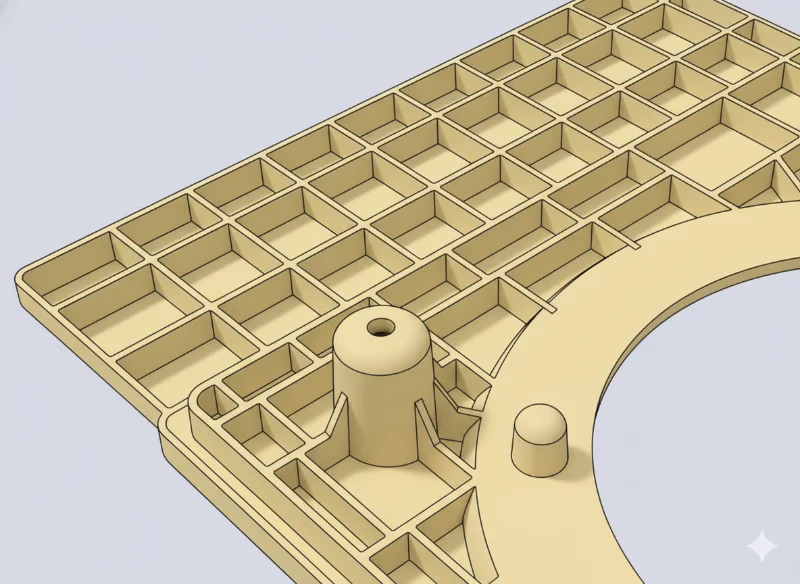
Rechupes — aquelas depressões incômodas na superfície de uma peça moldada que, fora isso, estaria perfeita — estão entre os defeitos mais comuns e visíveis da moldagem por injeção. Eles aparecem diretamente no lado oposto de seções espessas, nervuras e torres, e são a primeira coisa que qualquer cliente percebe em uma superfície estética.
Neste guia, explicarei o que causa rechupes na moldagem por injeção, como preveni-los por meio do projeto e do processamento e o que fazer quando eles já apareceram em suas peças. Este guia reúne décadas de experiência em produção com milhares de conjuntos de moldes.
Principais conclusões
- Rechupes são depressões superficiais causadas pela contração desigual durante o resfriamento em seções espessas
- Mantenha a espessura das nervuras em 50–60% da parede nominal — a medida preventiva mais eficaz
- Correções de projeto são 5–10× mais baratas do que correções após a construção do molde
- Materiais reforçados com fibra de vidro reduzem significativamente os rechupes; considere trocar o grau se isso for permitido
- Ajustes de processamento podem reduzir os rechupes em 30–50%, mas raramente eliminam marcas causadas pelo projeto
O que são rechupes na moldagem por injeção?
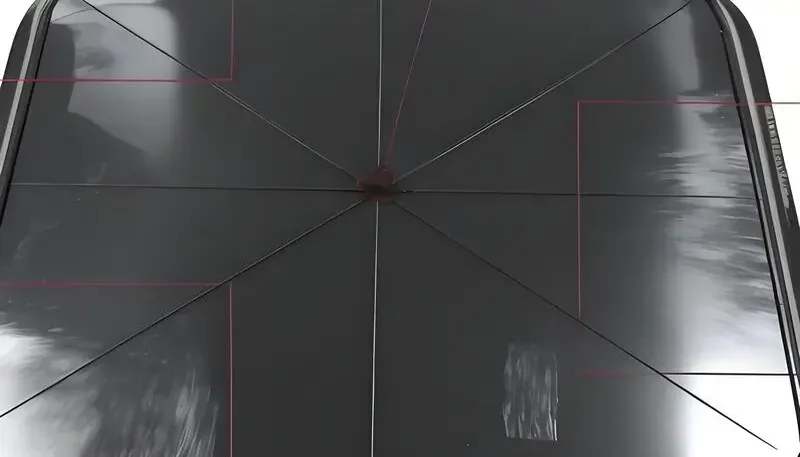
Rechupes são depressões localizadas ou covinhas na superfície de uma peça moldada, que normalmente aparecem no lado oposto de elementos como nervuras, torres, seções de parede espessas ou mudanças de geometria. Eles ocorrem quando o material interno se contrai mais do que a camada externa durante o resfriamento, puxando a superfície para dentro.
“Manter a espessura da base da nervura em 50–60% da espessura nominal da parede previne com eficácia rechupes visíveis.”Verdadeiro
Com uma proporção de 50–60%, os rechupes quase não são visíveis na maioria das superfícies. Acima de 70%, eles se tornam perceptíveis e, em 100%, rechupes profundos são praticamente inevitáveis.
“Aumentar apenas a pressão de recalque pode eliminar rechupes causados por nervuras com 100% da espessura da parede.”Falso
Ajustes de processamento podem reduzir, mas não eliminar, rechupes causados pelo projeto. Nervuras com 100% da espessura da parede criam massas térmicas que tornam os rechupes visíveis inevitáveis, independentemente da pressão de recalque.
O mecanismo é simples: quando uma seção espessa de plástico esfria, a camada externa solidifica primeiro, enquanto o interior permanece fundido. À medida que o material interno esfria e se contrai, ele puxa a camada já solidificada para dentro, criando um defeito de moldagem por injeção[1]. Quanto maior a diferença de espessura entre o elemento e a parede ao redor, mais acentuado será o rechupe.
O que causa rechupes durante a moldagem?
Os rechupes têm causas relacionadas tanto ao projeto quanto ao processamento. Entender qual delas é responsável em seu caso específico é o primeiro passo para eliminá-los.
Causas de projeto
A causa de projeto mais comum é o excesso de espessura de material em nervuras, torres ou transições de parede. Quando uma nervura é espessa demais em relação à parede nominal, ela cria uma massa térmica que esfria muito mais lentamente do que a área ao redor. O material da nervura se contrai ao esfriar, puxando a superfície oposta para dentro.
“Materiais reforçados com fibra de vidro apresentam significativamente menos rechupes do que os graus sem carga.”Verdadeiro
Cargas (fibra de vidro, mineral, talco) reduzem a contração volumétrica. Trocar um grau sem carga por um grau com 10–20% de fibra de vidro muitas vezes elimina completamente os rechupes e ainda melhora a rigidez.
“Rechupes e vazios são defeitos diferentes, com causas-raiz diferentes.”Falso
Eles têm a mesma causa-raiz — contração diferencial durante o resfriamento em seções espessas. A diferença está na manifestação: os rechupes aparecem na superfície, enquanto os vazios surgem internamente, dependendo da rigidez da parede.
Outras causas de projeto incluem transições abruptas de espessura de parede (sem inclinações graduais), torres superdimensionadas que não foram esvaziadas e reforços espessos nos pontos de montagem. Qualquer elemento que acrescente uma espessura local significativa em relação à parede nominal pode gerar rechupes.
Causas de processamento
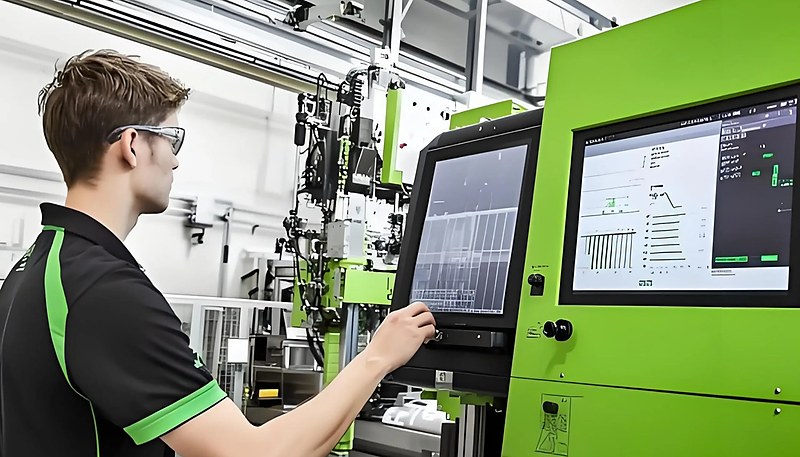
A pressão de recalque insuficiente é a principal causa de processamento dos rechupes. Durante a fase de recalque, material adicional é forçado para dentro da cavidade para compensar a contração. Se a pressão de recalque[2] for muito baixa ou o tempo de recalque for muito curto, o material nas seções espessas continuará se contraindo sem compensação, produzindo rechupes.
Outros fatores de processamento incluem temperatura excessiva do material fundido (que aumenta a contração total), tempo de resfriamento insuficiente (com ejeção antes que as seções espessas estejam totalmente solidificadas) e baixa velocidade de injeção (que pode causar congelamento prematuro nos pontos de injeção, reduzindo a distância efetiva de recalque).
Como prevenir rechupes por meio do projeto?
A prevenção pelo projeto é sempre mais eficaz do que as correções de processamento, pois trata a causa-raiz em vez do sintoma. Estas são as principais estratégias de projeto, ordenadas por impacto.
Controlar a espessura das nervuras
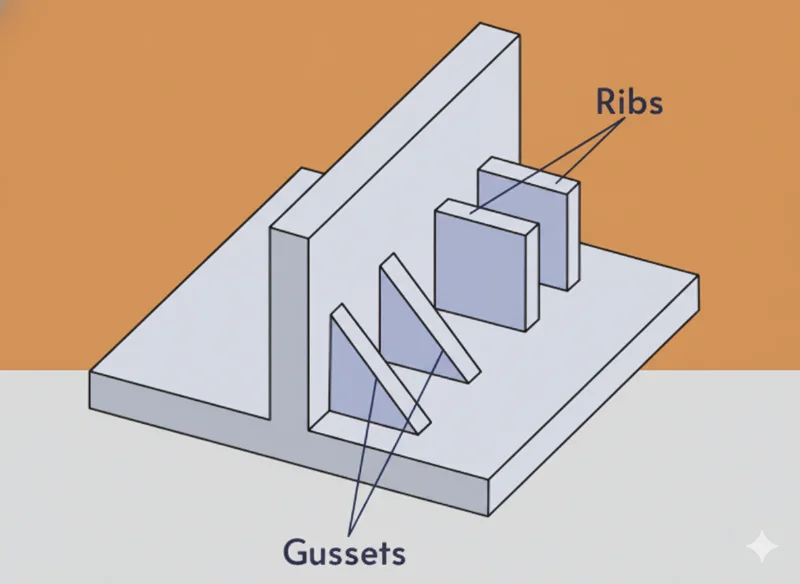
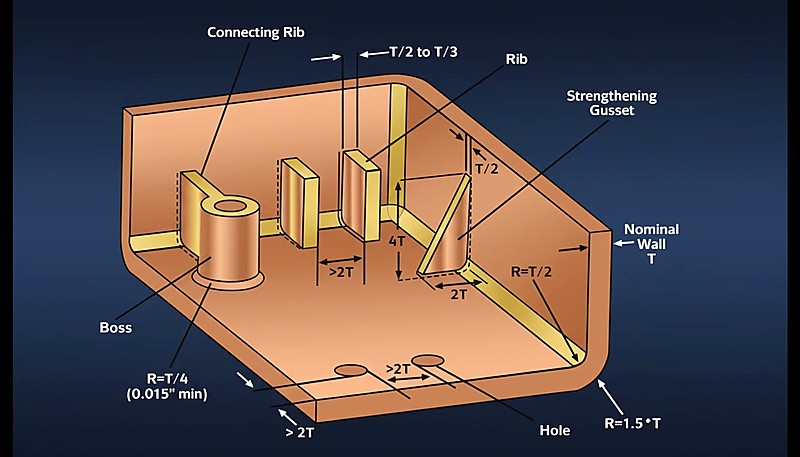
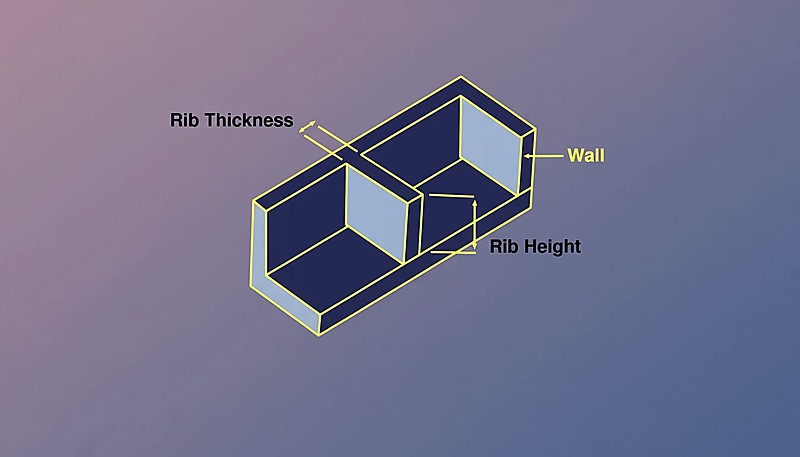
Esta é a medida de projeto mais eficaz. As nervuras devem ter 50–60% da espessura nominal da parede em sua base. Em 50%, os rechupes quase não são visíveis na maioria das superfícies. Acima de 70%, tornam-se perceptíveis. Em 100% (quando a nervura tem a mesma espessura da parede), rechupes profundos são praticamente inevitáveis na superfície oposta.
Os projetistas muitas vezes tornam as nervuras espessas demais porque pensam na rigidez estrutural, não na fabricabilidade. A solução: use várias nervuras finas em vez de uma única nervura espessa. Assim, você obtém rigidez equivalente ou superior com uma fração do risco de rechupes.
Esvaziar seções espessas
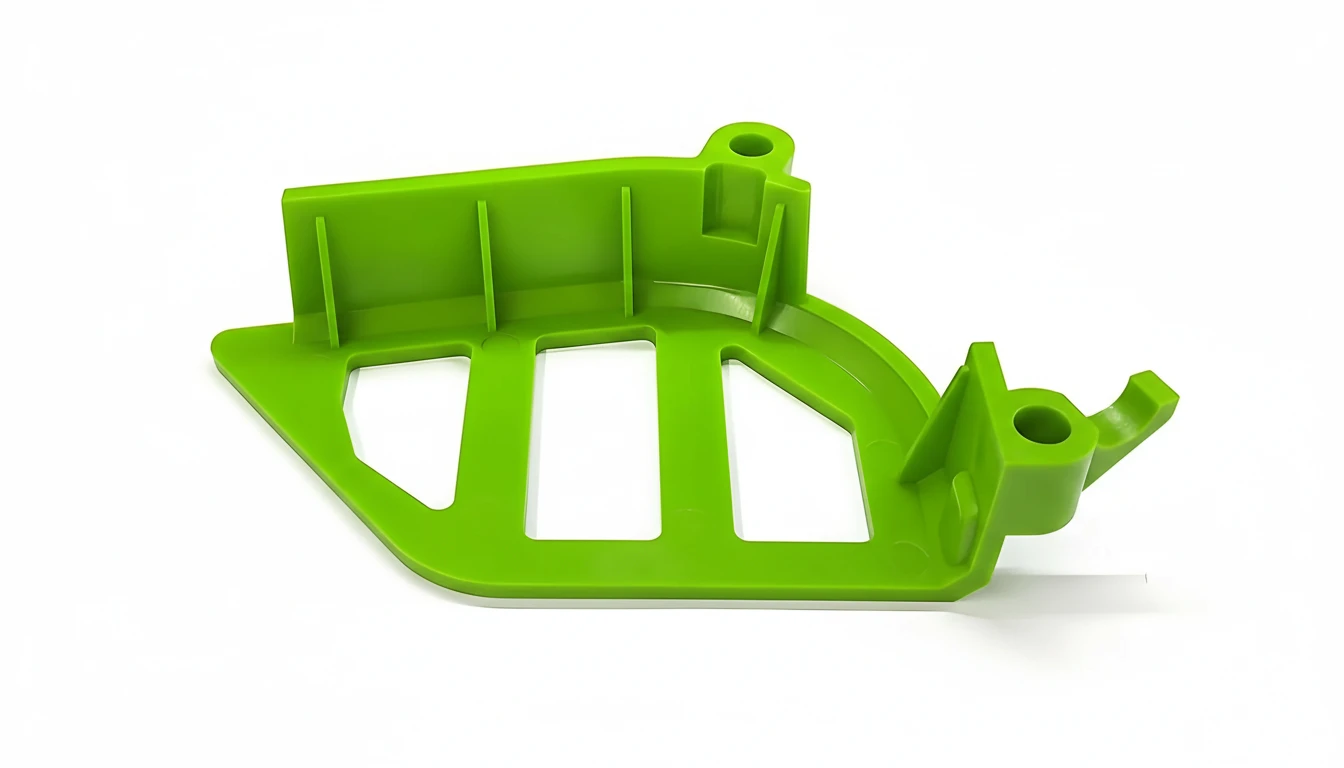
Sempre que possível, esvazie as seções espessas para manter a espessura de parede uniforme. Isso se aplica especialmente a torres (esvazie o centro com um pino), bases de montagem espessas (adicione um rebaixo no lado não estético) e reforços estruturais (use uma seção transversal triangular com o centro vazado).
Usar transições graduais
Quando a espessura de parede precisar mudar, use uma proporção de inclinação de 3:1. Para cada 1 mm de mudança na espessura, crie pelo menos 3 mm de transição gradual. Isso distribui a diferença de contração por uma área maior, deixando qualquer depressão superficial mais rasa e menos visível.
Adicionar textura superficial estrategicamente
A textura na superfície estética pode ocultar com eficácia rechupes menores. Uma textura média a profunda (VDI 21–27) interrompe o padrão visual o suficiente para tornar imperceptível uma depressão de 0.05–0.10 mm. Isso não é uma correção — é uma técnica de camuflagem que funciona quando as restrições de projeto impedem a eliminação completa.
Como os ajustes de processamento reduzem os rechupes?
Quando alterações de projeto não são possíveis — talvez o molde já esteja construído ou a espessura do elemento não possa ser reduzida sem comprometer a função — os ajustes de processamento se tornam a principal ferramenta para reduzir rechupes.
Aumentar a pressão de recalque
Esta é a correção de processamento mais direta. Aumentar a pressão de recalque força mais material para dentro das seções espessas durante a fase de compensação, reduzindo a contração volumétrica que causa rechupes. A limitação: pressão de recalque excessiva pode causar rebarba, aumento da tensão residual e crescimento dimensional além da tolerância.
Prolongar o tempo de recalque
O recalque deve continuar até o ponto de injeção congelar. Se o recalque parar antes do congelamento do ponto de injeção, o material fluirá para trás e sairá da cavidade, e a seção espessa se contrairá sem controle. Monitore o tempo de congelamento do ponto de injeção com sensores de pressão e defina o tempo de recalque para que seja, no mínimo, igual a ele.
Reduzir a temperatura do material fundido
Temperaturas mais baixas do material fundido significam menor contração total. No entanto, isso deve ser equilibrado com a qualidade do preenchimento — se a temperatura for baixa demais, haverá preenchimento incompleto, alta pressão de injeção e acabamento superficial ruim. Uma redução de 5–10°C em relação à temperatura padrão do material fundido costuma ser a faixa segura para reduzir rechupes.
Otimizar o resfriamento
Um resfriamento mais rápido e uniforme reduz o intervalo em que os rechupes se desenvolvem. Isso significa otimizar a posição dos canais de resfriamento próximos às seções espessas, usar insertos de cobre-berílio para extração localizada de calor e garantir vazões adequadas do fluido de resfriamento. Moldadores experientes adicionam regularmente soluções de resfriamento localizado durante o comissionamento do molde para tratar pontos críticos de rechupes.
| Ajuste | Impacto | Risco |
|---|---|---|
| Aumentar a pressão de recalque | Alto | Rebarba, tensão residual |
| Prolongar o tempo de recalque | Médio-alto | Tempo de ciclo mais longo |
| Reduzir a temperatura do material fundido | Médio | Preenchimento incompleto, acabamento ruim |
| Reduzir a temperatura do molde | Médio | Visibilidade da linha de solda, marcas de fluxo |
| Velocidade de injeção mais baixa | Baixo-médio | Ciclo mais longo, hesitação do fluxo |
Quais materiais são mais suscetíveis a rechupes?
A escolha do material afeta significativamente a visibilidade dos rechupes. Materiais amorfos (ABS, PC, PMMA, PS) apresentam rechupes com mais facilidade porque têm maior contração no molde nas zonas de transição entre seções espessas e finas e porque suas superfícies transparentes ou brilhantes tornam visíveis até mesmo pequenas depressões.
Materiais semicristalinos (PP, PE, Nylon, POM) são um pouco mais tolerantes porque tendem a se contrair de maneira mais uniforme e seus acabamentos superficiais típicos revelam menos os defeitos. No entanto, eles ainda apresentam rechupes em superfícies polidas.
Materiais com carga — aqueles com fibra de vidro, mineral ou talco — apresentam significativamente menos rechupes porque as cargas reduzem a contração volumétrica[3]. Se a sua aplicação permitir um grau com carga, essa será uma das maneiras mais eficazes de minimizar rechupes sem alterar o projeto da peça.
| Tipo de material | Visibilidade dos rechupes | Recomendação de projeto |
|---|---|---|
| Amorfos (ABS, PC, PMMA) | Alto | Regra estrita de 50–60% para nervuras |
| Semicristalinos (PP, Nylon, POM) | Médio | Regra padrão de 60% para nervuras |
| Graus reforçados com fibra de vidro | Baixo | Até 70% aceitável |
Quando os rechupes são uma preocupação, trocar um grau sem carga por um grau com 10–20% de fibra de vidro muitas vezes os elimina por completo e também melhora a estabilidade dimensional e a rigidez.
É possível corrigir rechupes depois que o molde já foi construído?
Sim, mas as opções ficam muito mais limitadas e os custos aumentam. Esta é a hierarquia das correções, da mais barata à mais cara.
- Otimização do processo: Ajuste a pressão de recalque, o tempo de recalque, a temperatura do material fundido e o resfriamento. Custo: tempo de máquina para testes. Eficácia: moderada para rechupes menores.
- Moldagem assistida por gás ou com espuma: Em seções espessas, a moldagem por injeção assistida por gás introduz nitrogênio no elemento espesso, mantendo a qualidade superficial enquanto esvazia o interior. Exige modificação do molde para os pinos de gás. Custo: moderado. Eficácia: alta para seções espessas localizadas.
- Modificação do molde — remoção de aço: Reduza a espessura das nervuras ou esvazie seções espessas removendo aço da cavidade. Esta é a correção mais eficaz, mas exige nova usinagem. Custo: moderado a alto, dependendo da complexidade da cavidade.
- Modificação do molde — adição de aço: Se você precisar aumentar a espessura de parede em algum ponto para compensar, isso exigirá soldagem e novo corte. Custo: alto. Risco: integridade da solda em moldes de produção.
A principal conclusão em todas essas abordagens: sempre é mais barato prevenir rechupes na fase de projeto do que corrigi-los depois que o molde já foi construído.
Como medir e avaliar rechupes?
Quantificar os rechupes é importante para estabelecer critérios de aceitação e acompanhar melhorias do processo. Há três métodos comuns.
Inspeção visual é o método mais simples. Segure a peça à distância de um braço, sob luz inclinada, e procure depressões. Se você conseguir vê-las a 30 cm sob iluminação padrão, elas estarão visíveis para seus clientes. Este é um método de aprovação ou reprovação, não quantitativo.
Perfilometria de superfície usa um perfilômetro de contato ou óptico para medir a profundidade e a largura exatas da depressão. Os critérios de aceitação típicos são profundidade máxima de 0.05 mm para superfícies estéticas e 0.10 mm para superfícies não estéticas.
Medição ultrassônica da espessura da parede no local do rechupe revela se a parede ficou mais fina além da tolerância. Isso é útil para a inspeção de qualidade[4] entre rechupe (depressão superficial com manutenção da espessura de parede) e vazio (ausência real de material dentro da parede).
O que verificar para prevenir rechupes?
Use esta lista de verificação antes e durante o comissionamento do molde para manter os rechupes sob controle.
| Item de verificação | Critério de aprovação |
|---|---|
| Todas as nervuras ≤60% da parede nominal | ✓ |
| Torres esvaziadas para manter a parede uniforme | ✓ |
| Transições de parede usam inclinação de 3:1 | ✓ |
| Pressão de recalque otimizada | ✓ |
| Tempo de recalque ≥ tempo de congelamento do ponto de injeção | ✓ |
| Textura da superfície estética especificada | ✓ ou N/A |
| Seleção do material revisada quanto à contração | ✓ |
Uma análise DFM completa que verifique todos os itens acima é a maneira mais econômica de eliminar rechupes antes que apareçam — porque a correção de rechupe mais barata é aquela de que você nunca precisará.
Perguntas frequentes sobre rechupes?
Os rechupes são sempre visíveis?
Nem sempre. Rechupes com menos de 0.02 mm geralmente são imperceptíveis, mesmo em superfícies brilhantes. Em superfícies texturizadas (VDI 21+), rechupes de até 0.05 mm podem ficar ocultos. O fator principal é a combinação entre profundidade e acabamento superficial — superfícies polidas e brilhantes mostram claramente até depressões de 0.02 mm.
É possível remover rechupes após a moldagem?
Não de forma econômica. Ao contrário de rebarbas, os rechupes são volumétricos — o material se contraiu abaixo do nível pretendido da superfície. A pintura pode camuflar parcialmente rechupes menores, mas não os eliminará. A única correção confiável é tratar a causa-raiz por meio de mudanças no projeto ou no processamento.
Qual é a diferença entre rechupes e vazios?
Rechupes são depressões superficiais; vazios são cavidades internas. Eles têm a mesma causa-raiz (contração diferencial durante o resfriamento em seções espessas), mas se manifestam de maneiras diferentes. Em peças de parede fina, é mais comum haver rechupes porque a camada externa fina é puxada para dentro. Em peças muito espessas, a contração cria vazios internos porque a camada externa é rígida o suficiente para resistir à força de tração.
A localização do ponto de injeção afeta os rechupes?
Sim. A localização do ponto de injeção determina o caminho do fluxo e a eficiência do recalque. Um ponto de injeção distante de uma seção espessa faz com que a pressão de recalque caia antes de alcançá-la, aumentando o risco de rechupes. O ideal é posicionar os pontos de injeção perto da seção transversal mais espessa para maximizar a compensação do recalque exatamente onde ela é mais necessária.
Como a espessura de parede afeta a profundidade do rechupe?
Paredes nominais mais espessas produzem rechupes mais rasos para a mesma proporção de espessura da nervura, pois há mais material para absorver a diferença de contração. Por outro lado, peças de parede fina (com menos de 1.5 mm) são extremamente sensíveis até mesmo a pequenos aumentos na espessura das nervuras — uma nervura de 1.0 mm em uma parede de 1.5 mm produzirá um rechupe perceptível.
A moldagem por injeção assistida por gás é eficaz na prevenção de rechupes?
Muito eficaz, especialmente para seções espessas que não podem ser reprojetadas. A assistência por gás esvazia o interior de elementos espessos enquanto mantém a qualidade superficial. Ela acrescenta custo e complexidade tanto ao molde quanto ao processo, mas é a maneira mais confiável de eliminar rechupes em nervuras estruturais e torres grandes sem reduzir suas dimensões.
Em resumo: Mantenha as nervuras em 50–60% da parede nominal, conserve a espessura uniforme e trate os rechupes na fase de projeto — não depois que o molde já foi construído. A prevenção pelo projeto é sempre mais barata do que correções de processamento ou modificações do molde.
{
“@contexto”: “https://schema.org”,
“@tipo”: “PáginaFAQ”,
“entidadePrincipal”: [
{
“@tipo”: “Pergunta”,
“nome”: “Os rechupes são sempre visíveis?”,
“respostaAceita”: {
“@tipo”: “Resposta”,
“texto”: “Nem sempre. Rechupes com menos de 0.02 mm geralmente são imperceptíveis, mesmo em superfícies brilhantes. Em superfícies texturizadas (VDI 21+), rechupes de até 0.05 mm podem ficar ocultos. O fator principal é a combinação entre profundidade e acabamento superficial — superfícies polidas e brilhantes mostram claramente até depressões de 0.02 mm.”
}
},
{
“@tipo”: “Pergunta”,
“nome”: “É possível remover rechupes após a moldagem?”,
“respostaAceita”: {
“@tipo”: “Resposta”,
“texto”: “Não de forma econômica. Ao contrário de rebarbas, os rechupes são volumétricos — o material se contraiu abaixo do nível pretendido da superfície.
A pintura pode camuflar parcialmente rechupes menores, mas não os eliminará. A única correção confiável é tratar a causa-raiz por meio de mudanças no projeto ou no processamento.”
}
},
{
“@tipo”: “Pergunta”,
“nome”: “Qual é a diferença entre rechupes e vazios?”,
“respostaAceita”: {
“@tipo”: “Resposta”,
“texto”: “Rechupes são depressões superficiais; vazios são cavidades internas. Eles têm a mesma causa-raiz (contração diferencial durante o resfriamento em seções espessas), mas se manifestam de maneiras diferentes. Em peças de parede fina, é mais comum haver rechupes porque a camada externa fina é puxada para dentro. Em peças muito espessas, a contração cria vazios internos porque a camada externa é rígida o suficiente para resistir à força de tração.
”
}
},
{
“@tipo”: “Pergunta”,
“nome”: “A localização do ponto de injeção afeta os rechupes?”,
“respostaAceita”: {
“@tipo”: “Resposta”,
“texto”: “Sim. A localização do ponto de injeção determina o caminho do fluxo e a eficiência do recalque. Um ponto de injeção distante de uma seção espessa faz com que a pressão de recalque caia antes de alcançá-la, aumentando o risco de rechupes.
O ideal é posicionar os pontos de injeção perto da seção transversal mais espessa para maximizar a compensação do recalque exatamente onde ela é mais necessária.”
}
},
{
“@tipo”: “Pergunta”,
“nome”: “Como a espessura de parede afeta a profundidade do rechupe?”,
“respostaAceita”: {
“@tipo”: “Resposta”,
“texto”: “Paredes nominais mais espessas produzem rechupes mais rasos para a mesma proporção de espessura da nervura, pois há mais material para absorver a diferença de contração. Por outro lado, peças de parede fina (com menos de 1.5 mm) são extremamente sensíveis até mesmo a pequenos aumentos na espessura das nervuras — uma nervura de 1.0 mm em uma parede de 1.5 mm produzirá um rechupe perceptível.”
}
},
{
“@tipo”: “Pergunta”,
“nome”: “A moldagem por injeção assistida por gás é eficaz na prevenção de rechupes?”,
“respostaAceita”: {
“@tipo”: “Resposta”,
“texto”: “Muito eficaz, especialmente para seções espessas que não podem ser reprojetadas.
A assistência por gás esvazia o interior de elementos espessos enquanto mantém a qualidade superficial. Ela acrescenta custo e complexidade tanto ao molde quanto ao processo, mas é a maneira mais confiável de eliminar rechupes em nervuras estruturais e torres grandes sem reduzir suas dimensões.”
}
}
]
}
Rechupes podem ser prevenidos quando o projeto e o processamento trabalham em conjunto. Se você estiver lidando com rechupes persistentes em suas peças moldadas por injeção, entre em contato com nossa equipe de engenharia da ZetarMold. Operamos 45 máquinas (90T–1850T) em Xangai, com 8 engenheiros seniores especializados na eliminação de defeitos. Nossa análise DFM identifica elementos propensos a rechupes antes do corte do aço.
-
Formação de rechupes — BASF, “Projeto de peças e moldes”, Manual de tecnologia de plásticos, 2023. ↩
-
Efeitos da pressão de recalque — Autodesk, “Guia de projeto Moldflow”, 2024. ↩
-
Dados de contração dos materiais — “Seleção de materiais plásticos”, Sociedade de Engenheiros de Plásticos, 2025. ↩
-
Medição de defeitos — “Controle de qualidade na moldagem por injeção”, Tecnologia de Plásticos, 2024. ↩