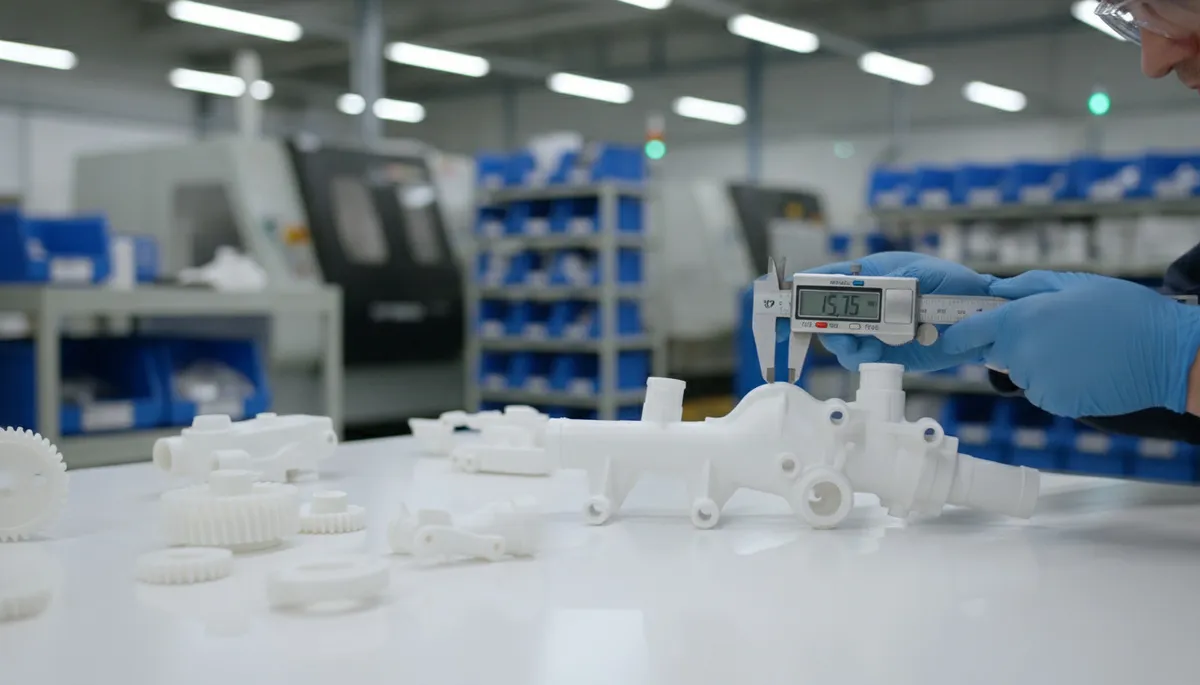
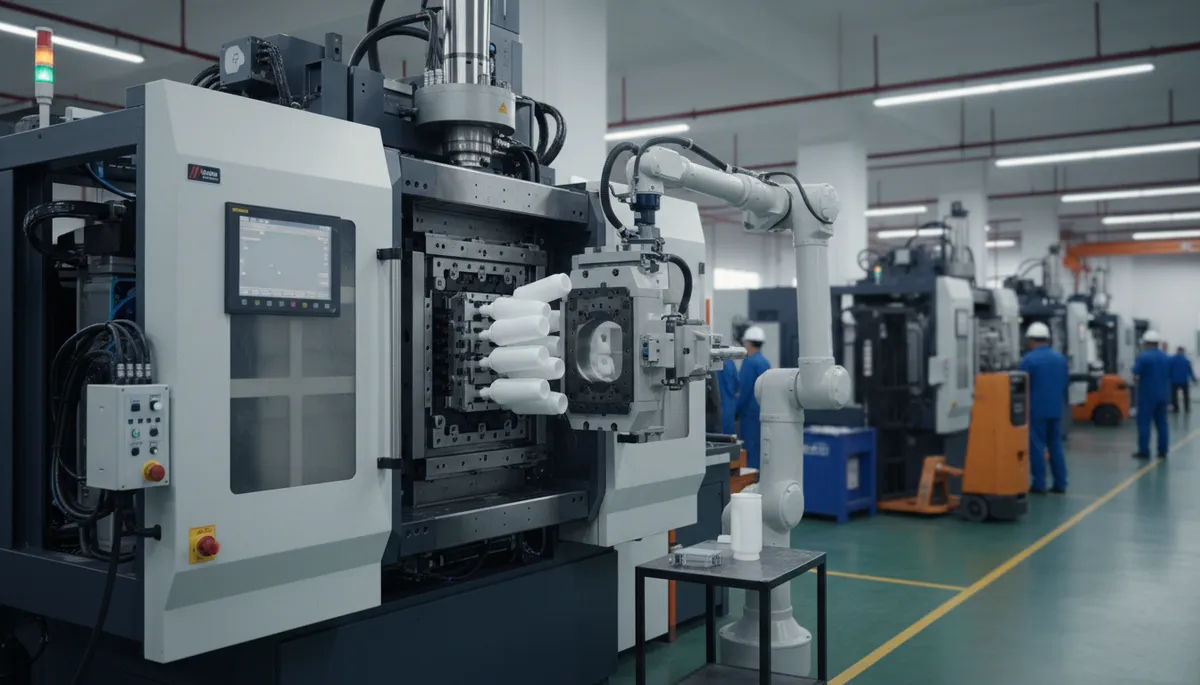
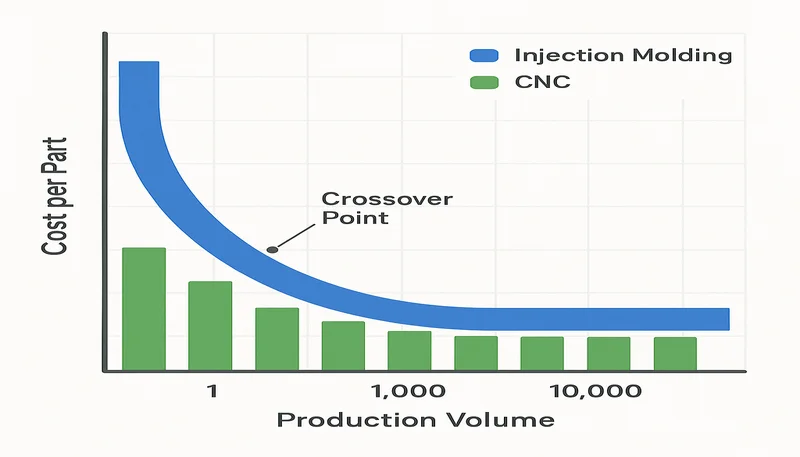
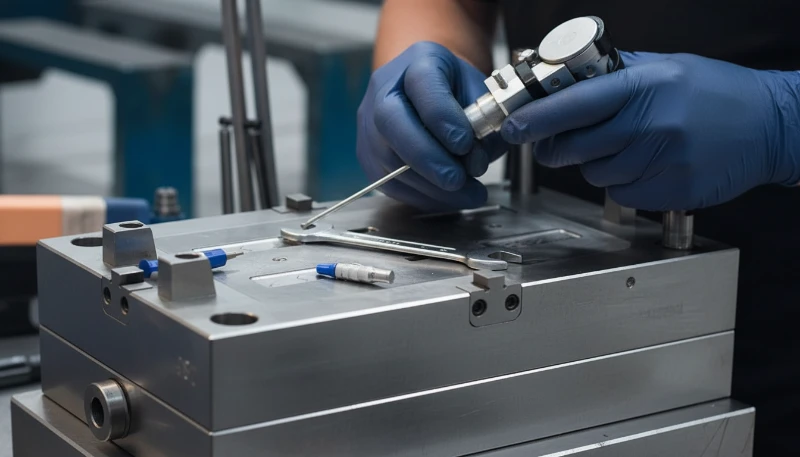
¿Luchando con piezas de HDPE deformadas o calidad inconsistente? No estás solo. El moldeo por inyección de HDPE presenta desafíos únicos que confunden incluso a fabricantes experimentados. Las altas tasas de contracción, el comportamiento de cristalización y la sensibilidad a la temperatura del material exigen un control preciso en cada paso. Un parámetro incorrecto puede convertir series rentables en desperdicio costoso. Sin embargo, cuando se hace correctamente, el HDPE ofrece una resistencia química y durabilidad inigualables para aplicaciones exigentes.
- El HDPE requiere temperaturas de fusión de 180-280°C y un control cuidadoso del enfriamiento para gestionar tasas de contracción del 1,5-3,0%
- Una densidad de material de 0,93-0,97 g/cm³ proporciona una excelente resistencia química mientras mantiene el cumplimiento de la FDA para contacto con alimentos
- El espesor de pared debe mantenerse entre 1.0-6.0mm con distribución uniforme para prevenir deformación y marcas de hundimiento
- Ángulos de desmoldeo de mínimo 1-2° son esenciales debido a la alta contracción y estructura semicristalina del HDPE
- Los defectos comunes incluyen deformación por enfriamiento desigual y marcas de hundimiento en secciones gruesas, ambos prevenibles con un procesamiento adecuado
¿Qué es el moldeo por inyección de HDPE?
El HDPE se procesa mediante moldeo por inyección1 es un proceso de fabricación que funde resina de polietileno de alta densidad y la inyecta en moldes cerrados para crear piezas de plástico precisas. Este proceso aprovecha las propiedades termoplásticas del HDPE para fundir, dar forma y solidificar repetidamente el material sin degradación química.
El polietileno de alta densidad (HDPE) es un polímero termoplástico semicristalino con una estructura molecular lineal. A diferencia de las variantes de polietileno ramificado, el empaquetamiento molecular compacto del HDPE crea un rango de densidad de 0,93-0,97 g/cm³. Esta estructura ofrece una resistencia superior y una mayor resistencia química en comparación con las alternativas de menor densidad.
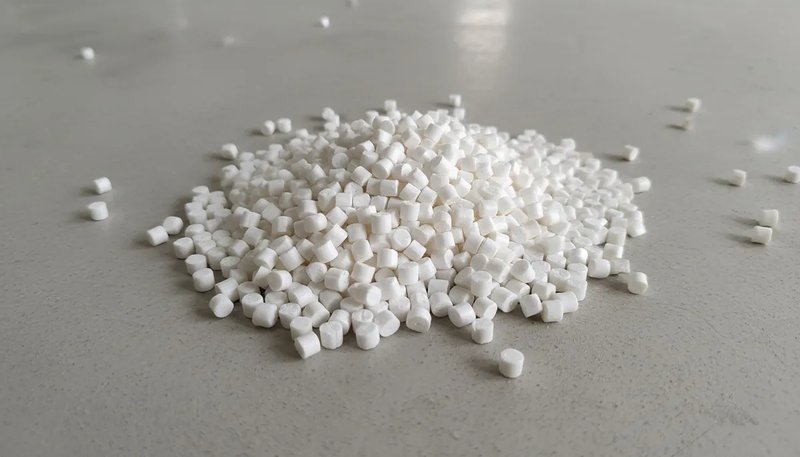
Procesar HDPE requiere atención cuidadosa a la velocidad del husillo y los ajustes de contrapresión. Una velocidad de husillo de 40-80 RPM funciona bien para la mayoría de los grados de HDPE, mientras que una contrapresión de 0,5-1,5 MPa asegura una homogeneidad de fusión consistente sin un calentamiento por cizallamiento excesivo que pueda degradar las cadenas poliméricas.
La alta cristalinidad del HDPE significa que el tiempo de enfriamiento impacta directamente en las dimensiones de la pieza y sus propiedades mecánicas. Un enfriamiento más rápido produce esferulitas más pequeñas y una mayor resistencia al impacto, mientras que un enfriamiento más lento aumenta la rigidez pero reduce la tenacidad. Esta compensación entre la resistencia al impacto y la rigidez es una de las decisiones clave en la optimización del proceso de HDPE.
El material se funde a 130-180°C y se procesa bien a temperaturas de inyección de 180-280°C. El HDPE exhibe una excelente resistencia química a ácidos, bases y disolventes orgánicos. Los grados que cumplen con la FDA lo hacen ideal para aplicaciones de contacto con alimentos. Sin embargo, su naturaleza semicristalina crea tasas de contracción más altas que los plásticos amorfos.
Para aplicaciones de moldeo por inyección, el HDPE ofrece una combinación única de procesabilidad y rendimiento. El material fluye bien a temperaturas adecuadas, llena geometrías complejas y ofrece propiedades consistentes entre piezas cuando los parámetros de procesamiento se controlan correctamente.
¿Qué propiedades hacen único al HDPE para el moldeo por inyección?
El perfil de propiedades del HDPE crea tanto oportunidades como desafíos para los moldeadores por inyección. Comprender estas características ayuda a optimizar los parámetros de procesamiento y evitar defectos comunes que afectan las series de producción de HDPE.
| Propiedad | Valor | Impacto en el moldeo |
|---|---|---|
| Densidad | 0.93-0.97 g/cm³ | Mayor resistencia, mayor contracción |
| Resistencia a la tracción | 20-37 MPa | Excelente rendimiento mecánico |
| Índice de Fluidez | 0.1-20 g/10min | La facilidad de procesamiento varía según el grado |
| Índice de contracción | 1.5-3.0% | Requiere un diseño de molde cuidadoso |
| Cristalinidad | 60-80% | Enfriamiento más lento, estabilidad dimensional |
La resistencia química es el activo más fuerte del HDPE. El material resiste la mayoría de ácidos, bases, alcoholes y aceites a temperatura ambiente. Esta resistencia proviene de la estructura no polar y alta cristalinidad del polímero. Sin embargo, agentes oxidantes fuertes y ciertos hidrocarburos pueden causar agrietamiento por tensión o hinchazón.
La cristalinidad del HDPE varía del 60% al 80% dependiendo de las condiciones de procesamiento y la tasa de enfriamiento. Una mayor cristalinidad aumenta la resistencia a la tracción y la resistencia química pero reduce la resistencia al impacto. Esta relación fundamental estructura-propiedad impulsa cada decisión de procesamiento y diseño que tomas con el HDPE.
La naturaleza semicristalina del HDPE también significa que el recocido después del moldeo puede mejorar aún más la estabilidad dimensional. Para aplicaciones de precisión que requieren tolerancias estrechas, un recocido post-moldeo a 80-100 grados Celsius durante 30-60 minutos alivia las tensiones residuales y estabiliza la estructura cristalina.
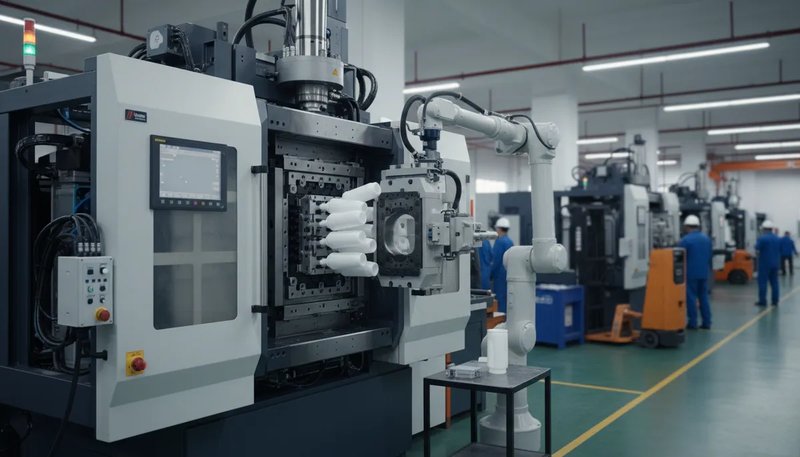
La absorción de humedad sigue siendo insignificante en menos del 0,01%, eliminando los requisitos de pre-secado para la mayoría de los grados. Esta baja absorción mantiene la estabilidad dimensional en entornos húmedos. La resistencia a los UV requiere aditivos estabilizadores, ya que el HDPE sin protección se degrada bajo una exposición prolongada a la luz solar.
“El HDPE no requiere pre-secado antes del moldeo por inyección en condiciones normales de almacenamiento”True
Con una absorción de humedad inferior al 0,01%, el HDPE puede procesarse directamente desde bolsas selladas sin un ciclo de secado, ahorrando de 2 a 4 horas de tiempo de preparación de la producción.
"La contracción del HDPE es insignificante y no afecta la precisión dimensional"False
El HDPE tiene una de las tasas de contracción más altas entre los plásticos comunes, del 1.5-3.0%, lo que requiere una cuidadosa compensación de la cavidad del molde y un diseño de espesor de pared uniforme.
¿Cuáles son los parámetros clave del moldeo por inyección de HDPE?
El moldeo por inyección exitoso de HDPE depende del control preciso de los parámetros de temperatura, presión y tiempo. Cada configuración afecta el flujo del material, la calidad de la pieza y la eficiencia del ciclo de manera interconectada que requiere una optimización sistemática.
La temperatura de fusión típicamente varía de 180-280°C, dependiendo del grado de HDPE y la complejidad de la pieza. Temperaturas más altas mejoran el flujo pero arriesgan degradación térmica. Temperaturas más bajas pueden causar llenados incompletos o mal acabado superficial. Comienza con 220°C y ajusta según el comportamiento de flujo y el llenado de la pieza.
La temperatura del molde afecta la cristalización y el control de contracción. Configuraciones de 20-70°C funcionan para la mayoría de las aplicaciones, con temperaturas más altas promoviendo la cristalinidad y reduciendo las tensiones internas. Los moldes fríos (20-40°C) aceleran los ciclos pero pueden aumentar la deformación. Los moldes calientes (50-70°C) mejoran el acabado superficial pero extienden el tiempo de enfriamiento.
Los requisitos de presión de inyección abarcan 70-120 MPa dependiendo de la geometría de la pieza y el espesor de la pared. Las buenas características de flujo del HDPE a menudo permiten presiones más bajas que los plásticos de ingeniería. Una presión excesiva causa rebabas y tensiones internas. Una presión insuficiente crea piezas incompletas o un llenado deficiente.
"El HDPE puede procesarse a presiones de inyección más bajas que la mayoría de los plásticos de ingeniería"True
La baja viscosidad de fusión del HDPE a temperaturas de procesamiento significa que presiones de inyección de 70-120 MPa son suficientes, reduciendo el desgaste de la máquina y los costos de energía.
"Cualquier configuración de temperatura del molde produce piezas de HDPE aceptables"False
La temperatura del molde controla directamente la tasa de cristalización. Demasiado fría causa deformación por cristalización desigual. Demasiado caliente extiende el tiempo de ciclo. El rango óptimo es 40-60°C.
El tiempo de enfriamiento domina la longitud del ciclo debido a los requisitos de cristalización del HDPE. Permitir 10-30 segundos por milímetro de espesor de pared para enfriamiento adecuado. La presión de mantenimiento mantiene precisión dimensional durante las fases iniciales de enfriamiento. Aplicar 40-60% de presión de inyección durante 50-80% del tiempo total de enfriamiento.
¿Qué reglas de diseño se aplican a las piezas moldeadas en HDPE?
El diseño de piezas de HDPE debe tener en cuenta la alta contracción del material, su comportamiento semicristalino y sus características de flujo. Seguir las pautas de diseño probadas evita costosas modificaciones del molde y problemas de calidad durante la producción.
Para obtener más información sobre los principios del diseño de moldes de inyección2, consulte nuestra referencia de ingeniería.
El espesor de pared debe oscilar entre 1,0 y 6,0 mm con una distribución uniforme en toda la pieza. Las secciones gruesas causan marcas de hundimiento y tiempos de enfriamiento más largos. Las secciones delgadas pueden no llenarse completamente o presentar líneas de soldadura débiles. Mantenga las variaciones de espesor dentro de 25% cuando sea posible para promover un enfriamiento uniforme y minimizar la deformación.
Pautas de Desmoldeo y Radios
Cuando evalúe proveedores de HDPE, siempre solicite certificados de índice de fluidez (MFI) para cada lote. Una variación del MFI de más de 10% respecto a la especificación indica material inconsistente que causará problemas de procesamiento y variación dimensional en sus piezas moldeadas.
Los ángulos de desmoldeo mínimos de 1-2° se adaptan a la alta contracción del HDPE y evitan daños en la expulsión. Los dibujos más profundos o las superficies texturizadas requieren un mayor desmoldeo. La flexibilidad del material permite cierta deformación durante la expulsión, pero el estrés repetido causa grietas o inestabilidad dimensional con el tiempo.
Radios de esquina de mínimo 0.5mm previenen concentración de estrés y mejoran el flujo del material. El HDPE maneja esquinas pronunciadas pobremente debido a su estructura semicristalina. Radios generosos también reducen requisitos de presión de inyección y mejoran la resistencia de la pieza. El diseño de nervios debe limitar el espesor a 40-60% de las paredes adyacentes.
La selección de la entrada afecta el patrón de llenado y la ubicación de las líneas de soldadura. Las entradas de borde y las entradas submarinas funcionan bien para la mayoría de las aplicaciones de HDPE. Evite las entradas de aguja en secciones gruesas, ya que restringen el flujo y causan chorro. El tamaño de la entrada debe acomodar la contracción del HDPE sin crear un calentamiento por cizalladura excesivo.
¿Cuáles son los defectos comunes del moldeo por inyección de HDPE y sus soluciones?
El moldeo por inyección de HDPE enfrenta patrones de defectos predecibles relacionados con la estructura cristalina y comportamiento térmico del material. Reconocer estos problemas temprano y aplicar correcciones sistemáticas ahorra tiempo y costos de material durante la solución de problemas de producción.
La deformación ocurre frecuentemente debido a velocidades de cristalización desiguales en la geometría de la pieza. Las secciones gruesas y finas se enfrían a diferentes velocidades, creando tensiones internas que distorsionan la pieza después de la expulsión. Este defecto afecta particularmente a piezas planas con variación en el grosor de pared o piezas con insertos metálicos.
| Defecto | Causa principal | Solución |
|---|---|---|
| Alabeo | Cristalización desigual | Espesor uniforme de pared, enfriamiento controlado |
| Rechupes | Secciones gruesas, empacado insuficiente | Reducir espesor, aumentar presión de mantenimiento |
| Llenados incompletos | Temperatura de fusión baja, presión insuficiente | Aumentar temperatura y presión de inyección |
| Rebaba | Presión excesiva, ajuste pobre del molde | Reducir presión, verificar condición del molde |
| Líneas de soldadura | Resistencia pobre en líneas de soldadura | Aumentar temperatura de fusión, optimizar ubicación de la entrada |
El monitoreo del proceso mediante sensores de presión en la cavidad proporciona retroalimentación en tiempo real sobre la consistencia del llenado. Para el HDPE, el seguimiento de la presión máxima en la cavidad ayuda identificar cambios de viscosidad que indican contaminación del material o configuraciones incorrectas de temperatura antes que las piezas defectuosas se acumulen en la producción.
La consistencia del color en piezas de HDPE depende de la dispersión adecuada del masterbatch durante la fase de plastificación del husillo. Usar un husillo con una sección de mezcla y asegurar una presión de retorno adecuada de 0.5-1.5 MPa logra una distribución uniforme del pigmento en toda la masa fundida.
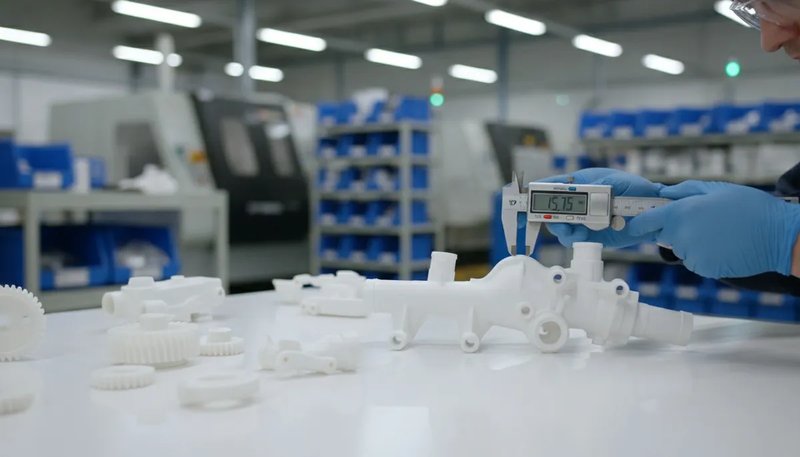
Las marcas de hundimiento aparecen en secciones gruesas donde una presión de empaquetado insuficiente no compensa la contracción del material. La superficie de la pieza desarrolla depresiones visibles opuestas a nervaduras o refuerzos gruesos. La prevención requiere un diseño de pieza equilibrado y perfiles de presión de empaquetado optimizados.
Las piezas incompletas resultan de material insuficiente llegando a las extremidades de la pieza. Una temperatura de masa fundida baja, presión de inyección insuficiente o entradas restringidas causan este defecto. El rebaba ocurre cuando una presión excesiva fuerza material hacia las líneas de separación del molde o los espacios de los pasadores de expulsión, creando finas rebabas que requieren un desbarbado secundario.
¿Qué industrias utilizan piezas moldeadas por inyección de HDPE?
La combinación de resistencia química, cumplimiento FDA y rentabilidad del HDPE impulsa su adopción en diversas industrias. Cada aplicación aprovecha propiedades específicas del material mientras trabaja dentro de las limitaciones de procesamiento del HDPE.
Las aplicaciones de embalaje dominan el consumo de HDPE, incluyendo tapas de botellas, cierres y contenedores rígidos. La resistencia química del material previene la contaminación del producto, mientras que los grados aprobados por la FDA garantizan el cumplimiento de la seguridad alimentaria. Las excelentes propiedades de barrera contra la humedad extienden la vida útil de productos sensibles.
| Industria | Piezas Comunes | Grosor de la Capa |
|---|---|---|
| Embalaje | Tapas, cierres, botellas | Cumplimiento FDA, resistencia química |
| Automoción | Tanques de combustible, depósitos de fluidos | Ligero, resistente a impactos |
| Consumidor | Juguetes, contenedores, utensilios domésticos | Bajo costo, duradero |
| Médico | Botellas farmacéuticas, utensilios de laboratorio | Esterilizable, no tóxico |
Los componentes automotrices utilizan HDPE para tanques de combustible, depósitos de líquido para lavado de parabrisas y diversos contenedores de fluidos. El material resiste los químicos automotrices mientras mantiene flexibilidad a bajas temperaturas. Las ventajas de costo sobre los plásticos de ingeniería hacen que el HDPE sea atractivo para aplicaciones de alto volumen con requisitos de rendimiento moderados.
Los bienes de consumo se benefician de la durabilidad y el perfil de seguridad del HDPE en juguetes, contenedores de almacenamiento y artículos domésticos. La resistencia del material soporta el uso y abuso repetidos. Las aplicaciones médicas incluyen frascos farmacéuticos, consumibles de laboratorio y dispositivos médicos desechables donde la compatibilidad química y la resistencia a la esterilización son más importantes.
Los mercados de construcción utilizan HDPE para accesorios de tuberías, envolventes eléctricos y componentes geosintéticos. La resistencia al clima y estabilidad química del material son adecuadas para aplicaciones exteriores. Sin embargo, la estabilización UV se vuelve crítica para exposición prolongada a la luz solar en estos ambientes exigentes.
HDPE frente a otros grados de polietileno — ¿Cuándo gana el HDPE?
La selección del grado de polietileno afecta el rendimiento de la pieza, los requisitos de procesamiento y las estructuras de costos. Comprender las compensaciones entre HDPE, LDPE, MDPE y UHMWPE ayuda a optimizar la elección del material para aplicaciones específicas de moldeo por inyección.
La comparación entre HDPE y LDPE favorece al HDPE para aplicaciones que requieren rigidez y resistencia química. La estructura lineal del HDPE crea mayor densidad y resistencia, mientras que las cadenas ramificadas del LDPE brindan flexibilidad y claridad. Los parámetros de procesamiento difieren significativamente, y el HDPE requiere temperaturas y presiones más altas.
| Grado | Densidad (g/cm³) | Grosor de la Capa | Adecuación para Moldeo por Inyección |
|---|---|---|---|
| LDPE | 0.91-0.93 | Flexibilidad, claridad | Procesamiento fácil, baja contracción |
| MDPE | 0.93-0.94 | Propiedades equilibradas | Buen flujo, contracción moderada |
| HDPE | 0.94-0.97 | Resistencia mecánica, resistencia química | Exigente, pero versátil |
| UHMWPE | >0.93 | Resistencia extrema al desgaste | Procesamiento difícil y especializado |
El MDPE ofrece propiedades intermedias entre el LDPE y el HDPE, con un procesamiento más sencillo que el HDPE pero mejor rendimiento que el LDPE. Para el moldeo por inyección, el MDPE fluye con mayor facilidad y presenta una contracción menor que el HDPE. Sin embargo, la resistencia mecánica y química superiores del HDPE justifican la complejidad adicional de procesamiento en aplicaciones exigentes.
El UHMWPE proporciona una resistencia excepcional al desgaste y a los impactos, pero plantea importantes retos para el moldeo por inyección. Su peso molecular extremadamente alto restringe el flujo y requiere equipos de procesamiento especializados. El HDPE ofrece el mejor equilibrio entre rendimiento y procesabilidad para las operaciones convencionales de moldeo por inyección.
Preguntas frecuentes sobre el moldeo por inyección de HDPE
¿Qué temperatura de fusión debo usar para el moldeo por inyección de HDPE?
Las temperaturas de fusión del HDPE suelen oscilar entre 180-280°C según el grado y la complejidad de la pieza. Empiece con 220°C para la mayoría de las aplicaciones y ajuste la temperatura según el comportamiento de llenado. Las temperaturas más altas mejoran el flujo, pero conllevan riesgo de degradación térmica, mientras que las más bajas pueden causar inyecciones incompletas o un acabado superficial deficiente. Controle la estabilidad de la temperatura de fusión dentro de ±5°C para mantener una calidad uniforme de las piezas. Tenga en cuenta el índice de fluidez de su grado específico de HDPE al establecer las temperaturas iniciales. Para la mayoría de los grados de HDPE, comenzar por el extremo bajo, a 220°C, proporciona un margen de seguridad frente a la degradación térmica y, a la vez, una homogeneidad completa del material fundido para mantener una calidad uniforme de las piezas entre tiradas de producción.
¿Por qué mis piezas de HDPE siguen deformándose después de la expulsión?
El alabeo de las piezas de HDPE suele deberse a una cristalización desigual durante la refrigeración. Las secciones gruesas y delgadas se enfrían a velocidades distintas, lo que crea tensiones internas que deforman la pieza. Las soluciones incluyen mantener un espesor de pared uniforme, optimizar el diseño de las líneas de refrigeración para extraer el calor de manera uniforme y ajustar la temperatura del molde para controlar la velocidad de cristalización. La presión y el tiempo de mantenimiento también afectan al alabeo al compensar la contracción durante las fases iniciales de refrigeración. El uso de controladores de temperatura del molde ajustados a 40-50°C y la garantía de un espesor de pared uniforme en todo el diseño de la pieza reducen considerablemente el alabeo. Las velocidades de refrigeración más lentas también favorecen una cristalización uniforme, que es el principal factor mecánico de la estabilidad dimensional de los componentes de HDPE.
¿Se puede moldear por inyección el HDPE sin predeshidratación?
Sí, el HDPE normalmente no requiere presecado debido a su tasa extremadamente baja de absorción de humedad, inferior al 0.01%. A diferencia de materiales higroscópicos como el nylon o el PET, el HDPE no absorbe una cantidad significativa de humedad atmosférica en condiciones normales de almacenamiento. No obstante, consulte los certificados del material para conocer las recomendaciones específicas y considere secarlo si ha estado expuesto a humedad inusual o contaminación. Un almacenamiento adecuado en recipientes sellados evita la mayoría de los problemas relacionados con la humedad. Sin embargo, si el material se ha almacenado en condiciones húmedas o el envase ha permanecido abierto durante períodos prolongados, un breve ciclo de secado de 2-3 horas a 80°C elimina la humedad superficial que, de otro modo, podría causar ráfagas plateadas o reducir las propiedades mecánicas de las piezas terminadas.
¿Qué causa las marcas de hundimiento en secciones gruesas de HDPE?
Los rechupes se producen cuando la contracción del material en secciones gruesas supera la capacidad de compensación de la presión de compactación. La tasa de contracción del HDPE, del 1.5-3.0%, afecta especialmente a las secciones de más de 4mm de espesor. Las soluciones incluyen reducir el espesor de pared cuando sea posible, aumentar la presión y el tiempo de mantenimiento, optimizar el tamaño y la ubicación de la entrada para mejorar la compactación y ahuecar las secciones gruesas. Diseñe nervios con un 40-60% del espesor de la pared adyacente para minimizar este problema. Diseñar con un espesor de pared uniforme y utilizar vaciados o estructuras nervadas en lugar de secciones macizas gruesas evita la contracción volumétrica que causa los rechupes. Cuando no puedan evitarse las secciones gruesas, prolongar el tiempo de la presión de mantenimiento y utilizar una presión de compactación mayor ayuda a compensar la contracción del material durante la cristalización.
¿Cómo afecta la contracción del HDPE al diseño del molde?
La elevada tasa de contracción del HDPE, del 1.5-3.0%, exige calcular cuidadosamente las dimensiones del molde para obtener las dimensiones objetivo de la pieza. La contracción varía con el espesor de pared, las condiciones de procesamiento y la velocidad de cristalización. Diseñe los moldes un 2-3% más grandes que las dimensiones objetivo, con ajustes basados en la geometría de la pieza y los parámetros de procesamiento. La dirección del flujo afecta a la contracción de forma distinta que la dirección transversal al flujo debido a la orientación molecular. Tenga en cuenta la contracción posterior al moldeo, que continúa durante 24-48 horas después de la expulsión. Los diseñadores de utillajes suelen sobredimensionar las cavidades un 1.5-3.0% según el grado de HDPE y la geometría de la pieza. Realizar simulaciones de flujo del molde antes de cortar el acero permite predecir los valores reales de contracción de la pieza específica y reducir el número de iteraciones del utillaje necesarias para lograr la precisión dimensional.
¿Qué ángulos de desmoldeo funcionan mejor para piezas moldeadas por inyección de HDPE?
Las piezas de HDPE requieren ángulos de desmoldeo mínimos de 1-2° debido a su alta contracción y a la estructura semicristalina que se aferra a las superficies del molde. Las embuticiones más profundas, las geometrías complejas o las superficies texturizadas necesitan un ángulo mayor, de hasta 3-5°. Aunque la flexibilidad del HDPE permite cierta deformación durante la expulsión, un ángulo insuficiente provoca arañazos superficiales, deformación dimensional o adherencia de la pieza. Para obtener resultados óptimos, calcule el ángulo según la profundidad de la pieza, los requisitos de acabado superficial y el diseño del sistema de expulsión. Específicamente para el HDPE, se recomiendan de 1.5 a 2 grados por lado debido al alto coeficiente de fricción del material y a su tendencia a contraerse sobre los pasadores del núcleo. Las superficies texturizadas requieren un ángulo adicional, normalmente 1 grado adicional por cada 0.025mm de profundidad de textura, para evitar daños estéticos durante la expulsión.
¿Por qué elegir a ZetarMold para el moldeo por inyección de HDPE?
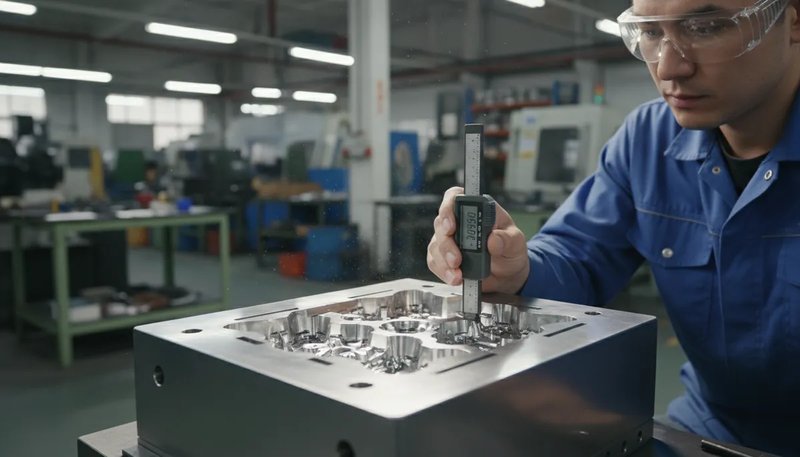
En 2025, produjimos más de 2 millones de componentes de HDPE para aplicaciones de envases y automoción. Nuestra planta de Shanghái opera 45 máquinas de 90T a 1850T, y nuestro equipo de ingeniería cuenta con 10+ años de experiencia específica en el procesamiento de HDPE.
Las instalaciones de ZetarMold en Shanghái están especializadas en aplicaciones exigentes de HDPE que requieren un control dimensional preciso y una producción sin defectos. Nuestro equipo de ingeniería optimiza los parámetros de procesamiento para cada proyecto y elimina problemas habituales, como el alabeo y los rechupes, mediante un enfoque sistemático y un control avanzado del proceso.
¿Listo para resolver sus desafíos del procesamiento por inyección de HDPE? Nuestros ingenieros experimentados brindan soporte integral desde la optimización del diseño hasta el escalamiento de la producción. Conozca nuestro servicio de moldeo por inyección3 para obtener soluciones expertas de procesamiento de HDPE que brindan calidad constante y producción rentable para sus aplicaciones más exigentes.
Fuentes
- Directrices de procesamiento de polietileno de alta densidad. Servicio Técnico LyondellBasell. lyondellbasell.com
- Regulaciones de la FDA sobre contacto con alimentos para polietileno. Administración de Alimentos y Medicamentos de EE. UU., 21 CFR §177.1520. fda.gov
- Moldeo por inyección: tecnología y fundamentos. Rosato, D.V. y Rosato, M.G. Publicaciones Hanser. ISBN 978-1569903995.
Moldeo por inyección: este es un proceso de fabricación en el que el termoplástico fundido se inyecta bajo presión en la cavidad de un molde, donde se enfría y solidifica en una pieza terminada. ↩
Diseño de moldes de inyección: Ingeniería de geometría de herramientas, enfriamiento, entrada y expulsión de piezas de plástico de precisión. ↩
Moldeo por inyección: se trata de un proceso de conformación de polímeros en el que el material termoplástico calentado se introduce bajo presión en un molde cerrado, donde se enfría y solidifica en la geometría de la pieza final. ↩