Ein Heißkanalsystem1 ist eine der wirkungsvollsten Verbesserungen für einen Spritzgießprozess2. Statt den Kunststoff zwischen den Zyklen in den Zuführkanälen – den Angüssen – abkühlen zu lassen, hält ein Heißkanal das Material geschmolzen und für den nächsten Schuss bereit. Das Ergebnis: weniger Abfall, kürzere Zykluszeiten und gleichmäßigere Bauteile.
In unserem Werk in Shanghai setzen wir seit über 20 Jahren Heißkanalwerkzeuge in Tausenden von Produktionsläufen ein. Dieser Leitfaden vermittelt unsere Erfahrungen — die guten, die schlechten und die kostspieligen Lektionen — damit Sie entscheiden können, ob ein Heißkanal für Ihr Projekt geeignet ist.
- Ein Heißkanal hält den Kunststoff in den Zuführkanälen des Werkzeugs geschmolzen und vermeidet Angussabfall.
- Zwei Haupttypen: offene Düsensysteme und Nadelverschlusssysteme, jeweils für unterschiedliche Bauteilgeometrien und Werkstoffe geeignet.
- Heißkanalsysteme reduzieren den Materialabfall um 10–30% und verkürzen gegenüber Kaltkanalsystemen die Zykluszeiten.
- Höhere anfängliche Werkzeugkosten ($3,000–$15,000 zusätzlich), aber niedrigere Stückkosten bei Großserien.
- Die regelmäßige Wartung von Heizelementen, Thermoelementen und Verteilern ist entscheidend, um kostspielige Stillstandszeiten zu vermeiden.
Was ist ein Heißkanalsystem beim Spritzgießen?
Ein Heißkanalsystem beim Spritzgießen wird durch die in diesem Abschnitt erläuterten Funktionen, Einschränkungen und Abwägungen definiert. Ein Heißkanalsystem ist eine beheizte Zuführkanalbaugruppe in einem Spritzgießwerkzeug, die den Kunststoff von der Maschinendüse bis zum Anschnitt der Kavität geschmolzen hält. Anders als bei einem Kaltkanal, in dem der Kunststoff in den Zuführkanälen erstarrt und entsorgt oder erneut gemahlen werden muss, werden Heißkanäle aktiv durch Patronen-, Wendel- oder Bandheizungen erwärmt. Dadurch bleibt das Polymer während des gesamten Zyklus auf Verarbeitungstemperatur.¹
Stellen Sie es sich so vor: Der Maschinenzylinder erwärmt und spritzt den Kunststoff ein. Der Heißkanal ist im Wesentlichen eine Verlängerung dieses Zylinders und führt die Schmelze bis zum Anschnitt, ohne sie abkühlen zu lassen. Dadurch gelangt jedes Gramm des eingespritzten Materials in das Fertigteil statt in einen Abfallanguss, der entsorgt oder wiederaufbereitet werden muss.
Die Heißkanaltechnik wurde in den 1960er-Jahren kommerziell einsetzbar und ist seither Standard bei der Großserienfertigung von Automobilteilen, Medizinprodukten, Elektronikgehäusen und Konsumgütern. Heute verwenden schätzungsweise 40–50% aller Produktionsspritzgießwerkzeuge weltweit eine Form von Heißkanalsystem.²
Wie funktioniert ein Heißkanalsystem?
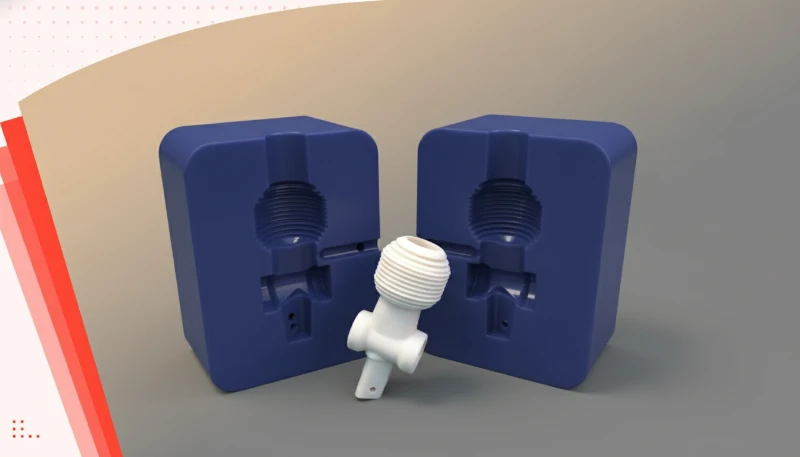
Das Funktionsprinzip ist einfach: Die Schnecke der Spritzgießmaschine drückt den geschmolzenen Kunststoff durch die Düse in den Heißkanalverteiler. Der Verteiler verteilt die Schmelze auf einzelne Düsen, die jeweils den Anschnitt einer Kavität speisen. Im Verteiler und in den Düsen integrierte Heizungen halten den Kunststoff auf einer präzisen Temperatur – typischerweise innerhalb von ±2 °C um den Sollwert – und werden über Thermoelemente geregelt, die Rückmeldung an einen Temperaturregler geben.
Während der Abkühlphase des Zyklus erstarrt das Teil in der Kavität, während der Kunststoff in den Heißkanälen durch kontinuierliche Beheizung geschmolzen bleibt. Beim Öffnen der Form und Auswerfen des Teils befindet sich die Schmelze im Kanalsystem bereits in Position für den nächsten Schuss. Dadurch muss keine neue Materialmenge durch kalte Kanäle eingespritzt werden, was Materialabfall und Zykluszeit reduziert.
Das Temperaturregelsystem ist das Herz jedes Heißkanals. Moderne Regler können 1 bis 128 Zonen unabhängig voneinander steuern, jeweils mit einer geschlossenen PID-Regelung (proportional-integral-derivative). Eine einzelne Zone kann den Verteiler regeln, während separate Zonen jede Düse steuern. Weicht eine Zone um mehr als wenige Grad von ihrem Sollwert ab, wird ein Alarm ausgelöst — denn ungleichmäßige Temperaturen verursachen direkt Bauteilfehler wie unvollständige Füllung, Gratbildung oder Verfärbung.
Welche Arten von Heißkanalsystemen gibt es?
Die Arten von Heißkanalsystemen sind die wichtigsten Kategorien beziehungsweise Optionen, die in diesem Abschnitt erläutert werden. Nach dem Anschnittmechanismus lassen sie sich in zwei Hauptkategorien unterteilen: offene Anschnitte, auch thermische Anschnitte genannt, und Nadelverschlusssysteme2. Die richtige Wahl hängt von Bauteilgeometrie, Material, optischen Anforderungen und Produktionsvolumen ab.
Offene Heißkanalsysteme (thermischer Anschnitt)
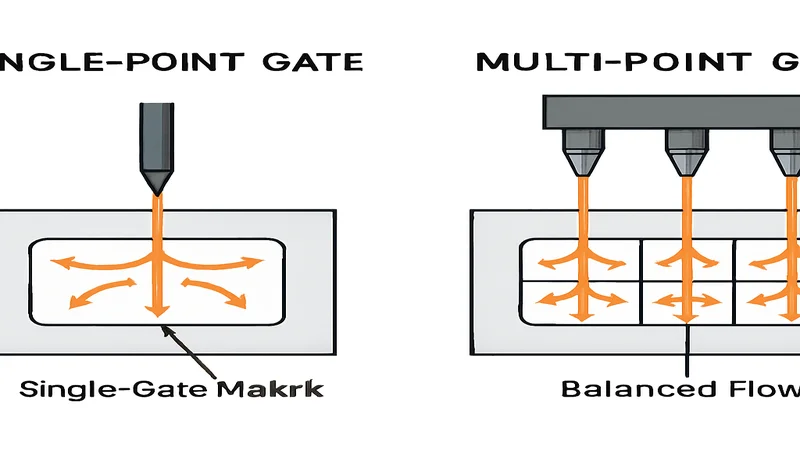
Bei einem offenen Anschnittsystem fließt die Kunststoffschmelze durch eine kleine Öffnung direkt in die Kavität. Das Zufrieren des Anschnitts — bei dem der Kunststoff am Anschnitt erstarrt und die Kavität abdichtet — wird ausschließlich thermisch gesteuert: Das Kühlsystem des Werkzeugs kühlt den Anschnittbereich, während die Heißkanaldüse die vorgelagerte Schmelze flüssig hält. Offene Anschnitte sind einfacher, kostengünstiger und haben weniger bewegliche Teile. Sie hinterlassen jedoch einen kleinen Anschnittrest (eine erhabene Markierung) auf der Teileoberfläche; zudem lässt sich der Zeitpunkt des Zufrierens bei manchen technischen Kunststoffen schwerer steuern.
Nadelverschlusssysteme
Ein Nadelverschlusssystem verwendet einen mechanischen Stift (die Verschlussnadel), der den Anschnitt physisch öffnet und schließt. Beim Einspritzen zieht sich die Nadel zurück und gibt den Kunststofffluss frei; nach dem Nachdruck fährt sie vor und verschließt den Anschnitt mechanisch. Dies ermöglicht eine präzise Steuerung des Anschnitt-Erstarrungszeitpunkts, verhindert Fadenziehen und hinterlässt eine sehr saubere, am Fertigteil oft unsichtbare Anschnittmarke. Nadelverschlüsse werden für Sichtteile, Mehrkavitätenwerkzeuge mit ausbalancierter Füllung und Anwendungen mit scherempfindlichen Materialien wie LSR (Flüssigsilikon) oder PEEK bevorzugt. Dem stehen höhere Kosten und mehr Wartungsstellen gegenüber.³
"Ein Heißkanalsystem kann den Materialabfall reduzieren, indem es die Verteiler zwischen den Zyklen aufgeschmolzen hält."True
Richtig. Da die Angusskanäle nie erstarren, fällt kein Angusskanal zum Entsorgen oder Regranulieren an – jedes Gramm des eingespritzten Materials gelangt in die Fertigteile.
"Heißkanalsysteme sind bei jedem Produktionsvolumen stets wirtschaftlicher als Kaltkanalsysteme."False
Nicht richtig. Heißkanalwerkzeuge verursachen deutlich höhere Werkzeugkosten ($3,000–$15,000 zusätzlich pro Werkzeug). Bei kleinen Serien (unter 10,000 Teilen) kann ein Kaltkanal trotz des Materialabfalls wirtschaftlicher sein.
Was sind die Hauptkomponenten eines Heißkanalsystems?
Die wesentlichen Komponenten eines Heißkanalsystems bilden die in diesem Abschnitt erläuterten Hauptkategorien oder Optionen. Ein vollständiges Heißkanalsystem besteht aus mehreren kritischen Teilsystemen, die präzise zusammenarbeiten müssen. Das Verständnis jeder Komponente hilft Ihnen bei der Fehlersuche und bei der Spezifikation des richtigen Systems für Ihre Anwendung.
| Komponente | Funktion | Wichtiger Aspekt |
|---|---|---|
| Verteiler | Verteilt die Schmelze von der Maschinendüse auf die einzelnen Heißkanaldüsen | Muss thermisch ausbalanciert sein; X-, H- und I-Anordnungen für unterschiedliche Kavitätenkonfigurationen |
| Düsen (heiß) | Kunststoffschmelze vom Verteiler zu jedem Kavitätsanschnitt führen | Offener Anschnitt vs. Nadelverschluss; die Düsenspitzenausführung beeinflusst den Angussrest |
| Heizelemente | Schmelzetemperatur in Verteiler und Düsen aufrechterhalten | Patronen-, Wendel- oder Bandheizer; Lebensdauer üblicherweise 1–3 Jahre |
| Thermoelemente | Temperatur in jeder Zone für die Regelung im geschlossenen Kreis messen | Typ J oder K; muss für genaue Messwerte korrekt eingesetzt sein |
| Temperaturregler | PID-Regelung aller Heizzonen | Die Anzahl der Zonen muss der Anzahl aus Verteiler + Düsen entsprechen; ein Softstart verlängert die Lebensdauer der Heizelemente |
| Ventilnadeln (falls zutreffend) | Anschnitte in Nadelverschlusssystemen mechanisch öffnen/schließen | Pneumatische, hydraulische oder elektrische Betätigung; die zeitliche Abstimmung ist entscheidend |
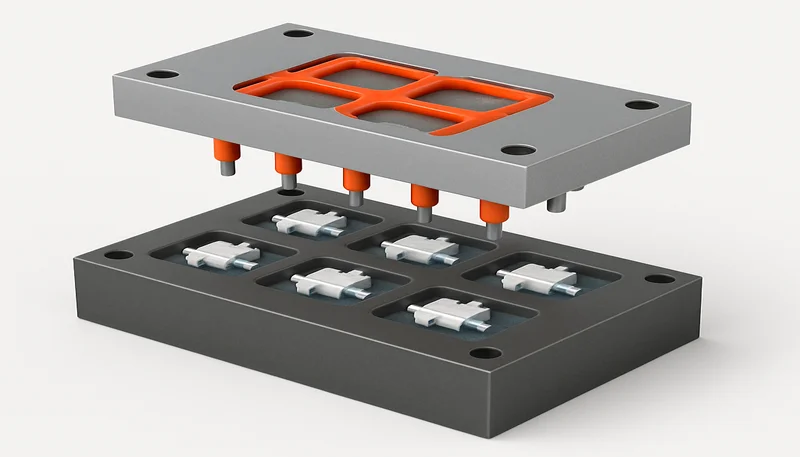
Der Verteiler ist das Rückgrat des Systems. Er sitzt im Werkzeuggrundaufbau und leitet die Schmelze vom zentralen Einlass, an dem die Maschinendüse auf das Werkzeug trifft, zu jeder Düsenposition. Die Verteilerauslegung wirkt sich direkt auf die Füllbalance aus — ist ein Fließweg länger oder weist er mehr Umlenkungen als ein anderer auf, werden die Kavitäten ungleichmäßig gefüllt, was Maßabweichungen und Gratbildung verursacht. Moderne Verteilerauslegungen gleichen mithilfe von Strömungssimulationssoftware den Druckverlust über alle Fließwege an.
Heizungen und Thermoelemente sind die wartungsintensivsten Komponenten jedes Heißkanals. Nach unserer Erfahrung mit 47 Spritzgießmaschinen3 ist ein Heizungsausfall das häufigste Heißkanalproblem. Schon eine einzige durchgebrannte Patronenheizung kann einen gesamten Produktionslauf zum Stillstand bringen. Deshalb empfehlen wir, für jedes Heißkanalwerkzeug Ersatzheizungen und -thermoelemente vorzuhalten und diese vorbeugend alle 12–18 Monate auszutauschen.
In unserem Werk in Shanghai betreiben wir 47 Spritzgießmaschinen von 90T bis 1850T, viele davon mit Heißkanalsystemen. In über 20+ Produktionsjahren haben wir gelernt, dass die Heizelementwartung der wichtigste Einzelfaktor für die Heißkanalzuverlässigkeit ist—der vorbeugende Austausch der Heizelemente alle 12–18 Monate verhindert 80% der ungeplanten Stillstandszeiten. Bei unseren Produktionsprüfungen vergleichen unsere Ingenieure die Kavitätenbalance innerhalb einer Prüftoleranz von 0.02 mm, das Ansprechverhalten der Heizelemente über 8 Stunden Probelauf und den Anfahrausschuss, bevor wir die Produktionsfreigabe empfehlen. Anhand dieser Nachweise entscheiden wir, ob der Heißkanal für Wiederholaufträge stabil genug ist.
Was sind die Vorteile der Heißkanaltechnologie?
Die Vorteile von Heißkanalsystemen sind gut dokumentiert und bei geeigneten Anwendungen erheblich. Im Folgenden finden Sie die wichtigsten Vorteile, die wir in realen Produktionsumgebungen beobachtet haben:
Materialeinsparungen
Eine Kaltkanalform erzeugt mit jedem Zyklus feste Kunststoffkanäle, die vom Teil getrennt und entweder entsorgt oder wiederverwendet werden müssen. Bei einer Mehrfachkavitätenform kann der Angussabfall 10–30 % des gesamten Schussgewichts ausmachen. Bei einer 32-fach-Form, die rund um die Uhr läuft, können das pro Monat Tausende Kilogramm verschwendeten Materials sein. Heißkanäle eliminieren diesen Abfall vollständig.
Schnellere Zykluszeiten
Da die Angusskanäle weder erstarren noch ausgeworfen werden müssen, sind die Zykluszeiten kürzer. Das Werkzeug muss nur das Teil selbst und nicht die Angüsse kühlen. Gegenüber einem Dreiplatten-Kaltkanalwerkzeug verkürzt dies die Zykluszeit in der Praxis typischerweise um 10–20%. Über Millionen Zyklen summiert sich diese Zeitersparnis zu erheblichen Kapazitätsgewinnen.
Bessere Teilequalität
Heißkanalsysteme sorgen für eine gleichmäßigere Schmelzeinbringung in jede Kavität. Ohne den Druckabfall, der durch Kaltkanäle verursacht wird, verbessert sich die Füllbalance, was zu gleichmäßigerem Teilegewicht, Abmessungen und Oberflächengüte über alle Kavitäten hinweg führt. Ventilverschlusssysteme ermöglichen insbesondere eine präzise Steuerung des Nachdruckes, was Einfallstellen, Lunker und Verzug reduziert.
Flexibilität bei der Gestaltung
Heißkanäle ermöglichen die Platzierung des Angusses an optimalen Stellen am Teil – unabhängig von der Geometrie der Formplatten – da die beheizten Kanäle die Schmelze an jede Position leiten können. Das bedeutet, Sie können von der Mitte eines großen, flachen Teils aus angießen, ohne eine Dreifachform zu benötigen, oder die Angüsse an den besten strukturellen Positionen platzieren, um Nahtstellen und Fließmarken zu minimieren.
Wann sollten Sie ein Heißkanalsystem gegenüber einem Kaltkanalsystem wählen?
Ein Heißkanal ist gegenüber einem Kaltkanal die richtige Wahl, wenn Stückzahl, Toleranz, Werkzeugbudget oder Konstruktionsflexibilität wichtiger sind als die maximale Ausbringung. Nicht jedes Projekt profitiert von einem Heißkanal. Die Entscheidung hängt von Produktionsvolumen, Bauteilkomplexität, Materialkosten und optischen Anforderungen ab. Bei der Kundenberatung verwenden wir den folgenden praxisorientierten Entscheidungsrahmen:
| Faktor | Heißkanal wählen | Kaltkanal wählen |
|---|---|---|
| Produktionsvolumen | >50.000 Teile | <10,000 Teile |
| Materialkosten | >1 €/kg (Abfall ist teuer) | <$2/kg (Abfall ist vertretbar) |
| Teilekosmetik | Sichtbare Angussmarkierungen inakzeptabel | Angussnarbe tolerierbar |
| Kavitätenzahl | 8+ Kavitäten | 1–4 Kavitäten |
| Zykluszeitpriorität | Hochgeschwindigkeitsautomatisierung | Niedriggeschwindigkeit / Prototypenbau |
| Materialtyp | Technische Kunststoffe, LSR, PEEK | Standardkunststoffe (PP, PE) |
Der Break-even-Punkt liegt in der Regel bei etwa 30.000–50.000 Teilen. Unterhalb dieser Schwelle übersteigen die zusätzlichen Werkzeugkosten eines Heißkanalsystems meist die Material- und Zykluszeiteinsparungen. Bei Programmen mit mehr als 100.000 Teilen erzielt ein Heißkanal fast immer einen positiven ROI. Mit unserem Beschaffungsleitfaden können Sie Ihre Werkzeugstrategie am Produktionsvolumen ausrichten.
„Heißkanalsysteme mit Nadelverschluss hinterlassen auf dem fertigen Bauteil nahezu keine sichtbare Anschnittmarke.“True
Richtig. Der mechanische Stift schneidet das Anguss sauber ab und hinterlässt eine glatte, fast unsichtbare Markierung – ideal für kosmetische Teile wie Automobilinnenverkleidungen.
"Heißkanalwerkzeuge erfordern keine Wartung, weil sie weniger bewegliche Teile als Kaltkanalwerkzeuge haben."False
Falsch. Heißkanalformen erfordern regelmäßige Wartung der Heizungen, Thermoelemente und Dichtungskomponenten. Heizungsausfall ist die häufigste Ursache für Stillstandszeiten in der Heißkanalproduktion.
Was sind die Nachteile der Heißkanaltechnologie?
Heißkanalsysteme sind keine universelle Lösung. Die Nachteile sind real, und sie zu ignorieren führt zu teuren Fehlern:
Höhere Werkzeugkosten: Eine Heißkanalform kostet typischerweise $3.000–$15.000 € mehr als eine vergleichbare Kaltkanalform, abhängig von der Anzahl der Angussstellen und dem Angusstyp. Ventilverschlusssysteme liegen aufgrund der zusätzlichen pneumatischen oder hydraulischen Aktuatoren und Ventilstifte am oberen Ende dieser Spanne.
Komplexere Wartung: Das Heizsystem erfordert regelmäßige Inspektion und Komponentenaustausch. Heizungen brennen durch, Thermoelemente weichen ab, und Verteilerblockdichtungen verschleißen. Der Ausfall einer einzigen Komponente kann die Produktion für Stunden stilllegen, während die Form zur Reparatur zerlegt wird.
Anfahrausschuss: Wenn ein Heißkanalwerkzeug kalt angefahren wird, dauert es 15–45 Minuten, bis alle Zonen ihre Verarbeitungstemperatur erreicht haben. Während dieser Aufheizphase sind die ersten 5–20 Schüsse normalerweise Ausschuss, weil sich die Schmelze noch nicht vollständig stabilisiert hat. Bei kurzen Produktionsläufen kann dieser Anfahrausschuss die Materialeinsparungen aufzehren.
Materialempfindlichkeit: Einige Materialien — insbesondere wärmeempfindliche Harze wie PVC und POM — neigen in Heißkanalsystemen zum thermischen Abbau. Eine längere Verweilzeit bei erhöhten Temperaturen kann Vergilbung, Gasbildung oder den Verlust mechanischer Eigenschaften verursachen. Wenn Sie diese Materialien verarbeiten, ist ein Kaltkanal möglicherweise die sicherere Wahl.
Schwierigkeiten beim Farbwechsel: Das Wechseln der Farbe in einem Heißkanalsystem erfordert das Spülen des gesamten Verteilerblocks und aller Düsen, was Material und Zeit verschwendet. Bei einem Kaltkanal beginnen Sie einfach mit dem Spritzgießen der neuen Farbe – der alte Angussabfall wurde ohnehin entsorgt. Wenn Ihr Produktionsplan häufige Farbwechsel vorsieht, berücksichtigen Sie dies bei Ihrer Entscheidung.
Wie behebt man häufige Heißkanalprobleme?
Die Fehlerbehebung bei Heißkanälen ist eine schrittweise Überprüfung von Temperatur, Angusszustand, Materialverweilzeit, Verkabelung und Kavitätenausgleich. Selbst gut gewartete Heißkanalsysteme entwickeln Probleme. Hier sind die häufigsten Probleme, auf die wir stoßen, und ihre Ursachen:
Temperaturschwankung
Wenn die Temperatur einer Zone um mehr als ±5 °C vom Sollwert schwankt, prüfen Sie zuerst den Sitz des Thermoelements. Ein lockeres oder nur teilweise eingeführtes Thermoelement liefert falsche Messwerte, sodass der Regler übersteuert. Prüfen Sie außerdem auf ausgefallene Heizelemente — messen Sie den Widerstand mit einem Multimeter und vergleichen Sie ihn mit der Herstellerspezifikation. In unserem Betrieb sind 60% der Temperaturprobleme auf Thermoelemente und nicht auf Ausfälle der Heizelemente zurückzuführen.
Schmelzleckage
Kunststoffaustritt zwischen Verteiler und Werkzeugplatten weist in der Regel auf verschlissene Dichtungen oder eine fehlerhafte Montage des Verteilers hin. Fahren Sie das System herunter, reinigen Sie alle Dichtflächen und ersetzen Sie O-Ringe oder Dichtungen. Ziehen Sie die Verteilerschrauben erneut mit dem vom Hersteller vorgegebenen Drehmoment an — zu starkes Anziehen beschädigt die Dichtungen ebenso wie zu schwaches Anziehen.
Angussnarbe oder Fadenbildung
Übermäßige Angussmarkierungen oder Fädenbildung (dünne Kunststofffäden, die sich beim Öffnen der Form vom Anguss ziehen) resultieren oft aus falscher Angussspitzen-Temperatur oder unzureichender Erstarrungszeit. Versuchen Sie, die Düsenspitzentemperatur um 5–10 °C zu senken und die Kühlzeit um 0,5–1 Sekunde zu erhöhen. Besteht das Problem bei einem Ventilanguss-System weiter, prüfen Sie die Ventilstift-Timing und den Hub.
Ungleichmäßige Füllung über Kavitäten hinweg
Wenn sich einige Kavitäten vor anderen füllen, ist der Verteilerfluss unausgeglichen. Stellen Sie sicher, dass alle Düsenspitzentemperaturen innerhalb von 2 °C voneinander liegen, und prüfen Sie dann auf teilweise Blockaden in den Verteilerkanälen. Wenn das System zuvor korrekt funktioniert hat, ist ein verstopfter Kanal durch abgebautes Material die wahrscheinliche Ursache.
Häufig gestellte Fragen
Was ist der Unterschied zwischen einem Heißkanal und einem Kaltkanal?
Ein Heißkanal nutzt beheizte Kanäle, um Kunststoff zwischen der Maschinendüse und dem Anguss geschmolzen zu halten, sodass wenig oder kein festes Angussmaterial anfällt. Ein Kaltkanal lässt die Zuführkanäle in jedem Zyklus erstarren, sodass der Anguss getrennt, wiedervermahlen oder entsorgt werden muss. Heißkanäle sind in der Regel teurer in Bau und Wartung, können aber bei hohen Stückzahlen Material, Zykluszeit und Handhabungskosten sparen. Die beste Wahl hängt vom Angussgewicht, Materialkosten, jährlichen Schusszahlen, Farbwechselhäufigkeit und Wartungsfähigkeit ab.
Wie viel kostet eine Heißkanalform im Vergleich zu einer Kaltkanalform?
Eine Heißkanalform kostet typischerweise mehr als eine ähnliche Kaltkanalform, da sie einen beheizten Verteiler, Düsen, Verkabelung, Controller-Zonen, Isolierung, Anpassungsarbeiten und zusätzliche Versuchsvalidierung hinzufügt. Der Aufpreis hängt von der Kavitätenanzahl, Angusstyp, Heißkanalmarke, Material und Teilgröße ab. Käufer sollten nicht nur den Formenpreis betrachten. Sie sollten die Werkzeugkosten mit dem pro Schuss gesparten Material, der Zykluszeitreduktion, Anlaufausschuss, Ersatzteilen und Ausfallrisiko vergleichen. Eine Hochvolumenform kann den Aufpreis amortisieren; eine Kurzläuferform möglicherweise nicht.
Können Heißkanalsysteme alle Kunststoffmaterialien verarbeiten?
Viele Thermoplaste können in Heißkanalsystemen verarbeitet werden, einschließlich ABS, PP, PC, Nylon, PEEK und vielen technischen Kunststoffen, aber das System muss zum Material passen. Wärmeempfindliche Materialien benötigen eine sorgfältige Kontrolle von Verweilzeit und Temperatur, da abgebautes Material schwarze Flecken, Streifen oder schwache Teile verursachen kann. Abrasive glasgefüllte Materialien können Düsen und Angüsse verschleißen. Korrosive oder flammhemmende Typen erfordern möglicherweise speziellen Stahl oder Beschichtungen. Der Lieferant sollte das Material-Datenblatt, Scherwärme, Reinigungsmethode und Versuchsplan prüfen, bevor er das Design freigibt.
Wie oft sollten Heizungen für Heißkanäle ausgetauscht werden?
Heizungen für Heißkanäle sollten regelmäßig überprüft und basierend auf der Produktionslast ausgetauscht werden, nicht erst nach sichtbarem Ausfall. In der Hochvolumenproduktion planen viele Werke den Austausch nach etwa zwölf bis achtzehn Monaten, insbesondere für kritische Werkzeuge, die sich unerwartete Stillstandszeiten nicht leisten können. Werkzeuge mit geringerem Volumen können länger laufen, wenn Widerstandsmessungen, Temperaturstabilität, Verkabelung und Thermoelementreaktion normal bleiben. Käufer sollten eine Liste mit Ersatzheizungen und Thermoelementen, einen Schaltplan und einen Wartungszugangsplan anfordern. Vorbeugende Wartung ist kostengünstiger, als die Produktion zu stoppen, nachdem eine Heizung im Werkzeug ausgefallen ist.
Was verursacht das Einfrieren der Heißkanaldüse?
Das Einfrieren der Heißkanaldüse tritt auf, wenn das Schmelzgut am Anguss vor Abschluss des Nachdrucks zu stark abkühlt. Häufige Ursachen sind niedrige Spitzentemperatur, schlechter Heizkontakt, übermäßige Kühlung nahe dem Anguss, falsche Angussgröße, lange Zyklusunterbrechung oder ein Material mit einem engen Verarbeitungsfenster. Das Symptom kann wie unvollständige Teile oder instabiles Teilgewicht aussehen, aber die Ursache ist oft lokaler Wärmeverlust an der Düsenspitze. Die Fehlerbehebung sollte Zonentemperatur, Thermoelementposition, Heizwiderstand, Angussverschleiß, Werkzeugkühlung und tatsächliche Schmelztemperatur prüfen.
Lohnt sich ein Heißkanal für geringe Stückzahlen?
Ein Heißkanal lohnt sich in der Regel nicht für sehr geringe Stückzahlen, da die zusätzlichen Werkzeug- und Controller-Kosten genügend Schusszahlen benötigen, um sich durch Material- und Zykluszeiteinsparungen zu amortisieren. Für Prototypen oder Pilotläufe ist ein Kaltkanal oft einfacher, günstiger und leichter anzupassen. Ein Heißkanal wird attraktiver, wenn der Anguss schwer ist, das Material teuer ist, die kosmetische Angussqualität wichtig ist oder das jährliche Volumen stabil ist. Käufer sollten die Amortisation anhand erwarteter Schusszahlen, Angussgewicht, Materialkosten, Zykluszeit, Wartungskosten und Ausschussrisiko berechnen.
Wie lange dauert es, eine Heißkanalform in Betrieb zu nehmen?
Eine Heißkanalform benötigt in der Regel Zeit, um alle Zonen aufzuheizen, bevor stabiler Spritzguss beginnt. Ein typischer Anlauf kann fünfzehn bis fünfundvierzig Minuten dauern, abhängig von der Verteiler-Größe, Düsenanzahl, Controller-Leistung, Material und Formtemperatur. Die ersten Schüsse können Ausschuss sein, während Schmelztemperatur, Angussfließverhalten und Kavitätenausgleich sich stabilisieren. Ein guter Versuchsbericht sollte Aufheizzeit, Zonen-Sollwerte, Anzahl der ersten akzeptablen Schüsse, Druckverhalten und Gewichtsstabilität des Teils dokumentieren. Diese Daten helfen Käufern, die tatsächliche Produktionseffizienz zu verstehen, nicht nur die angegebene Zykluszeit.
Welche Wartung benötigt ein Heißkanalsystem?
Die Wartung von Heißkanälen umfasst die Überprüfung von Heizungen, Thermoelementen, Verkabelung, Steckverbindungen, Verteilerdichtungen, Düsenspitzen, Angussverschleiß, Ventilstiften und der Controller-Kalibrierung. Das Werkzeug sollte auf Undichtigkeiten, Kohlenstoffablagerungen, beschädigte Isolierung, lockere Kabel und ungleichmäßige Temperaturreaktion geprüft werden. Bei Ventilangusssystemen müssen auch Stifte und Buchsen auf Verschleiß kontrolliert werden. Käufer sollten Ersatzheizungen, Thermoelemente, Dichtungen und Ventilstifte vor Produktionsstart verfügbar halten. Wartungsprotokolle sollten zeigen, was ausgetauscht wurde, wann es ausgetauscht wurde und ob die Reparatur Prozesseinstellungen oder Teilequalität verändert hat.
Bereit, Ihr Formendesign zu optimieren?Das Engineering-Team von ZetarMold unterstützt Sie bei der Bewertung, ob ein Heißkanalsystem für Ihr Projekt geeignet ist. Mit 20+ Jahren Erfahrung, eigenem Werkzeugbau und 47 Maschinen von 90T bis 1850T liefern wir optimierte Werkzeuglösungen, die Qualität, Kosten und Produktionseffizienz ausbalancieren.
Kostenloses Angebot anfordern →
Heißkanalsystem: Ein Heißkanalsystem ist ein beheiztes Kanalsystem in einem Spritzgießwerkzeug, das den Kunststoff von der Maschinendüse bis zum Anschnitt der Kavität geschmolzen hält. ↩
Nadelverschlusssysteme: Bei Heißkanalsystemen mit Nadelverschluss öffnet und schließt ein mechanischer Stift den Anschnitt. Dies ermöglicht eine präzise Kontrolle des Erstarrungszeitpunkts am Anschnitt und hinterlässt nur minimale Anschnittreste auf der Bauteiloberfläche. ↩
Spritzgießmaschine: Eine Spritzgießmaschine erwärmt und verdichtet geschmolzenen Kunststoff und spritzt ihn in eine Werkzeugkavität ein. Der Schließkraftbereich unserer Maschinen reicht von 90 T bis 1850 T. ↩