Bij het ontwerpen van een spuitgietmatrijs zijn enkele belangrijke stappen nodig, zoals materiaalkeuze, indeling van de holten en aandacht voor de onderdeelgeometrie, om optimale resultaten en een hoge productie-efficiëntie te behalen.
Inzicht in de principes van matrijsontwerp is essentieel voor efficiënte productie en hoogwaardige output. Of u nu een nieuwe matrijs ontwerpt of bestaand gereedschap optimaliseert, deze factoren beïnvloeden rechtstreeks de matrijsprestaties, cyclustijd en totale kostenbesparing voor fabrikanten.
- De materiaalkeuze voor de matrijs (staal versus aluminium) heeft direct invloed op de standtijd en onderdeelkwaliteit
- Een juiste indeling van koelkanalen kan de cyclustijd met maximaal 70% verkorten
- Gelijkmatige wanddikte is de belangrijkste afzonderlijke ontwerpfactor
- Een ontluchtingsgroef van 0.01–0.03 mm diep voorkomt braamvorming en laat gas ontsnappen
- Regelmatig matrijsonderhoud verlengt de standtijd en handhaaft de maatnauwkeurigheid
Wat zijn de basisprincipes van spuitgieten?
Spuitgietmatrijzen zijn essentieel voor de productie van zeer nauwkeurige onderdelen, waarbij gesmolten materiaal in een matrijsholte wordt gespoten. Deze technologie ondersteunt veel industrieën en zorgt voor een snelle en consistente productie.
Als u leveranciers vergelijkt of inkoop plant, behandelt onze inkoopgids voor spuitgietleveranciers de voorbereiding van offerteaanvragen, kwalificatie en controles op commerciële risico’s.
Bij het spuitgietproces wordt gesmolten materiaal onder hoge druk in een matrijsholte geïnjecteerd, waar het stolt tot het gewenste product. Het matrijsontwerp zorgt ervoor dat het product gemakkelijk kan worden verwijderd en nauwkeurig aan de verwachte afmetingen voldoet.
De materialen, constructie en indeling van spuitgietmatrijzen houden rechtstreeks verband met de kwaliteit, efficiëntie en kosten van het eindproduct.
De basisprincipes van het ontwerpen van spuitgietmatrijzen omvatten verschillende belangrijke stappen
De bereiding van de kunststofsmelt is de eerste fase. De kunststofgrondstof wordt gesmolten door de afschuivende werking van de schroef en het verwarmingselement.
Injectie: de gesmolten kunststof wordt via de nozzle in de matrijsholte geperst door de druk die de schroef uitoefent.
Met meer dan 20 jaar ervaring in het ontwerpen van spuitgietmatrijzen beschikt ZetarMold in onze fabriek in Shanghai over 47 spuitgietmachines (90T–1850T) en ontwerpen wij matrijzen voor onderdelen van vrijwel elke omvang en complexiteit.
Nadruk en koeling: de spuitgietmachine houdt deze druk enige tijd aan om volledige vulling van de holte te waarborgen. Vervolgens begint de koeling terwijl de kunststof uithardt.
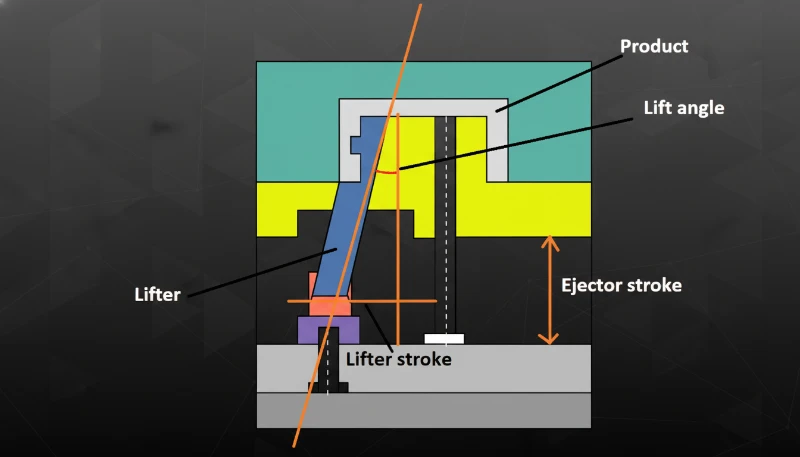
Nadat de kunststof is gestold, gaat de matrijs open en duwt het uitwerpsysteem — doorgaans pennen, platen of hulzen — het afgewerkte onderdeel uit de matrijsholte. Een goed ontworpen uitwerpsysteem zorgt ervoor dat het onderdeel probleemloos loskomt, zonder vervorming of beschadiging van kritieke oppervlakken.
"Een goed matrijsontwerp vermindert defecten en verbetert de productie-efficiëntie."True
Goed ontworpen spuitgietmatrijzen leveren tijdens productieruns een consistente onderdeelkwaliteit, minder uitval en kortere cyclustijden.
"Spuitgietmatrijsontwerp gaat alleen over de productvorm."False
Matrijsontwerp omvat ook materiaalkeuze, de indeling van het koelsysteem, uitwerpmechanismen en procesoptimalisatie voor efficiënte productie.
Wat zijn de schimmelmaterialen?
Matrijsmaterialen zijn essentieel in productieprocessen zoals spuitgieten en waarborgen duurzaamheid, precisie en kwaliteit. De materiaalkeuze beïnvloedt de productie-efficiëntie en de eigenschappen van het eindproduct.
De keuze van het matrijsmateriaal heeft een grote invloed op de levensduur van de matrijs en de kwaliteit van het eindproduct. Gangbare matrijsmaterialen zijn staal en aluminium.
Staal
Stalen matrijzen bieden een hogere hardheid, slijtvastheid en betere warmtebehandeling, met een aanzienlijk langere levensduur dan aluminium — ideaal voor grote volumes waarbij maatvastheid cruciaal is.
De belangrijkste nadelen van stalen matrijzen zijn langere bewerkingstijden en hogere materiaalkosten dan aluminium. Staal is ook veel zwaarder, wat hantering bemoeilijkt en matrijswisselapparatuur sneller doet slijten. Bij grote series compenseert de langere levensduur deze nadelen doorgaans.
Gebruikelijke staalsoorten:
P20-staal1 is een veelzijdig, voorgehard matrijsstaal (28–36 HRC) dat veel wordt gebruikt voor matrijsbasissen en grote holten. Het biedt een uitstekende bewerkbaarheid en polijstbaarheid tegen een gunstige prijs voor productiematrijzen met middelgrote oplagen.
H13 is warmwerkgereedschapsstaal voor matrijzen die bij verhoogde temperaturen werken. Het behoudt zijn hardheid en thermische stabiliteit na langdurige blootstelling aan warmte, met een gebruikelijke hardheid van 44–52 HRC na behandeling.
S136 is roestvast gereedschapsstaal met uitstekende corrosiebestendigheid en polijstbaarheid. Het is de voorkeurskeuze voor optische lenzen, transparante onderdelen en medische matrijzen waarbij de oppervlaktekwaliteit doorslaggevend is.
Aluminium
Aluminium matrijzen leveren een aanzienlijke gewichtsbesparing en een ongeveer 4–5x betere thermische geleidbaarheid dan staal, waardoor sneller kan worden gekoeld en cyclustijden korter zijn. De goede verspaanbaarheid verkort de doorlooptijd en verlaagt de kosten van de matrijs, waardoor aluminium ideaal is voor prototypes en productie in kleine volumes.
Het belangrijkste nadeel is de lagere hardheid en slijtvastheid, waardoor aluminium matrijzen bij abrasieve harsen gevoelig zijn voor oppervlakteschade. Het meest geschikt voor series onder 10.000–50.000 onderdelen, waarbij een korte gereedschapsdoorlooptijd belangrijker is dan de levensduur.
Gewoon aluminium:
7075 is een van de sterkste aluminiumkwaliteiten (treksterkte ~570 MPa). Toch blijft de hardheid veel lager dan die van gereedschapsstaal, waardoor het vooral geschikt is voor prototypematrijzen en korte productieseries.
Wat houdt het ontwerp van de gietvormstructuur hoofdzakelijk in?
Het ontwerp van de matrijsstructuur is essentieel voor het maken van hoogwaardige spuitgietmatrijzen en zorgt voor efficiëntie en consistentie tijdens het spuitgietproces. Het gaat om kritieke aspecten zoals matrijsstroming, koeling en materiaalcompatibiliteit.
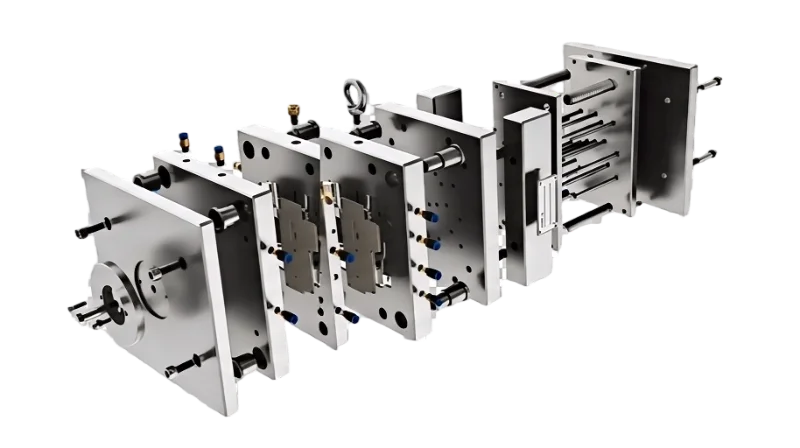
Het matrijsconstructieontwerp omvat de holte, kern, het frame, de poort, geleiding en het uittreksysteem. Alle onderdelen moeten zorgvuldig worden ontworpen voor een goede efficiëntie, robuustheid en eenvoudig onderhoud.
Holte en kern
De holte creëert de buitenafmetingen van het product, terwijl de kern de binnenafmetingen geeft die samengevoegd worden om de uiteindelijke en gewenste productvorm en -grootte te verkrijgen.
Materiaalkeuze: Vaak wordt staal met een hoge hardheid en slijtvastheid gebruikt, zoals P20- of H13-staal.
Ontwerppunten: de afgewerkte oppervlakken van de matrijsholte en kern moeten glad zijn, zodat een hoge maatnauwkeurigheid van de productafwerking behouden blijft.
Vorm Basis
De malbasis is ook het skelet van het gereedschap en heeft als taak alle onderdelen vast te maken en te verbinden. Het heeft meestal een standaard vorm om mallen te assembleren en indien nodig te vervangen.
Materiaalkeuze: doorgaans wordt 45-staal of Q235-staal gebruikt voor de matrijsbasis om de stabiliteit ervan te garanderen.
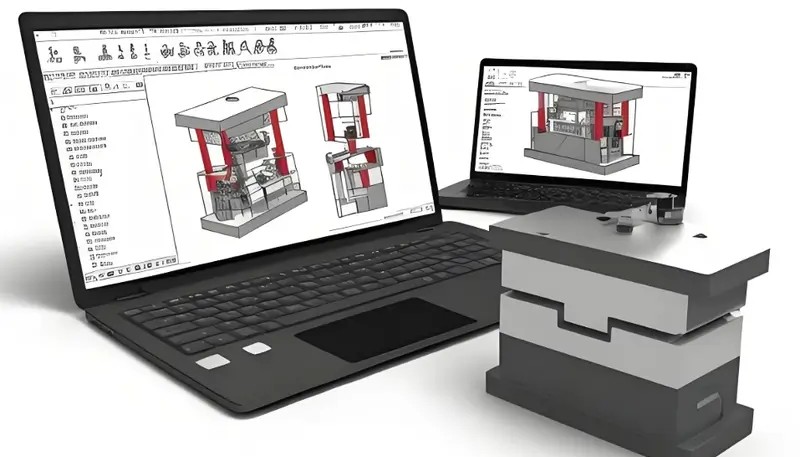
Bij ZetarMold produceert onze interne matrijzenbouw meer dan 100 matrijssets per maand en gebruikt UG, SOLIDWORKS, MOLDFLOW en CAD om matrijsvulling te simuleren en koelontwerpen vóór verspaning te valideren.
"Het ontwerp van de matrijsconstructie beïnvloedt rechtstreeks de onderdeelkwaliteit en productie-efficiëntie."True
Een juiste indeling van de vormholten, plaatsing van koelkanalen en ontwerp van het uitwerpsysteem bepalen maatnauwkeurigheid, cyclustijd en foutpercentages.
"Alle matrijsconstructies zijn hetzelfde, ongeacht de toepassing."False
Matrijsconstructies verschillen sterk afhankelijk van onderdeelgeometrie, materiaaleigenschappen, productievolume en branchespecifieke eisen.
Ontwerppunten: het matrijsframe moet voldoende robuust en stijf zijn om de inspuitdruk, inspuittemperatuur en algemene heen-en-weergaande druk tijdens het inspuiten te weerstaan.
Gatesysteem
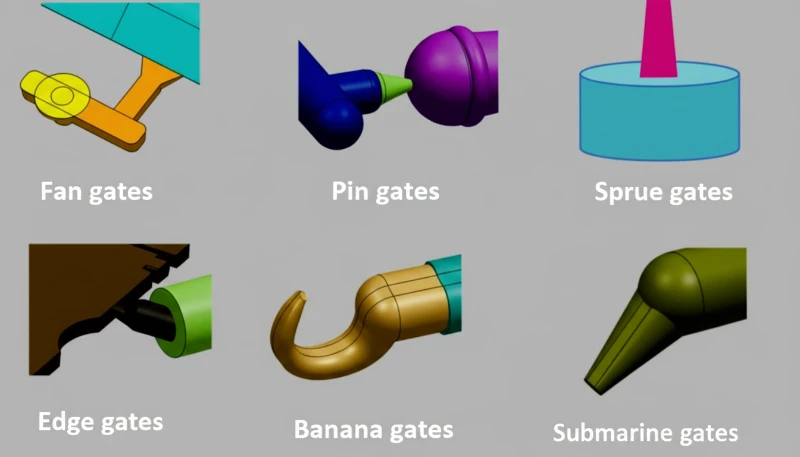
Het afsluitsysteem bestaat uit de primaire runner, de subrunners en de poorten waardoor de gesmolten kunststof in de holte wordt geleid. Een effectief afsluitsysteem is nuttig om de kwaliteit van het gieten te verhogen en de hoeveelheid gebruikt materiaal te verminderen.
Ontwerppunten: Het hoofdkanaal moet zo kort en recht mogelijk zijn om drukverlies en versmallingen zoveel mogelijk te beperken.
Ontwerppunten: verdeelkanalen moeten zo worden geplaatst dat elke holte evenveel materiaal ontvangt.
Ontwerppunten: de aard van de aanspuiting mag het uiterlijk van het product op geen enkele manier beïnvloeden of de sterkte ervan aantasten. De gebruikte aanspuiting moet de juiste afmetingen hebben.
Leidend mechanisme
Het geleidingsmechanisme omvat geleidepennen en bussen die helpen bij het uitlijnen van de bewegende en vaste mallen.
Materiaalkeuze: doorgaans wordt staal met een hoge hardheid gebruikt, zoals GCr15.
Ontwerppunten: het geleidingsmechanisme moet zeer nauwkeurig zijn uitgelijnd om langdurige uitlijnfouten te voorkomen en moet bovendien zeer slijtvast zijn.
Uitwerpmechanisme
Het uitwerpgedeelte wordt gebruikt om het gegoten product uit de matrijs te halen en normaal gesproken worden hiervoor uitwerppennen, -platen en -hulzen gebruikt.
Ontwerppunten: Een andere eis voor deze kracht is dat deze constant of gelijkmatig moet zijn, omdat een plotselinge kracht het product negatief kan beïnvloeden. Ook de beweging van het uitwerpmechanisme moet soepel zijn om vastlopen te voorkomen.
Wat is het ontwerp van stromingskanalen?
Het ontwerp van stroomkanalen omvat de technische uitwerking van aanspuiting, runners en poorten die de gesmolten kunststof van de machinenozzle naar de matrijsholte leiden.
Het ontwerp van de verdeler heeft een grote invloed op de productkwaliteit en productie-efficiëntie. De afmetingen en vorm van de verdeler moeten aansluiten bij het materiaal en de geometrie van het onderdeel.
Hoofdrunner
De hoofdstroomgeleider verbindt het spuitstuk van de injectiemachine met de substroomgeleiders en moet zo kort en recht mogelijk zijn om drukverlies en materiaalverspilling te beperken.
Ontwerppunten: de diameter van het hoofdkanaal moet geschikt zijn om voldoende doorstroming te bevorderen en tegelijkertijd materiaalverspilling te beperken.
Secundaire aanspuitkanalen
De sub-runners verdelen de plastic smelt naar elke holte van de mal en balans moet hier een belangrijke overweging zijn.
Ontwerppunten: de doorsnede van secundaire aanspuitkanalen is bij voorkeur rond of halfrond om de stromingsweerstand te verlagen. De lengtes moeten zoveel mogelijk gelijk zijn, zodat alle vormholtes vrijwel gelijktijdig worden gevuld.
Poorten
Poorten zijn de manier waarop gesmolten kunststof die in de caviteit wordt gebracht de productkwaliteit beïnvloedt.
Ontwerppunten: plaats de aanspuitingen op plekken die uiterlijk of sterkte niet beïnvloeden. De afmetingen moeten voldoende vulling mogelijk maken en de aanspuitingen moeten eenvoudig te verwijderen zijn. Verschillende typen aanspuiting voldoen aan verschillende producteisen.
Daarnaast moet het ontwerp van de loper rekening houden met:
Kanaalbalans: zorg bij meerdere caviteiten dat kanaallengten en dwarsdoorsneden correct zijn, aangezien deze hoofdzakelijk de vultijd van de matrijzen bepalen.
Koeling van het runnersysteem: zorg voor voldoende koelkanalen2 in het runnergedeelte, zodat de hoge temperatuur de stroming van de smelt niet beïnvloedt.
Precisie van het toevoerkanaal: de bewerkingsprecisie is hoog en het oppervlak glad, om de weerstand tegen de smeltstroom en het drukverlies te verlagen.
Wat is koelsysteemontwerp?
Het ontwerp van koelsystemen is van cruciaal belang bij het optimaliseren van productieprocessen, het waarborgen van een consistente productkwaliteit en efficiëntie in productiecycli.
"Het ontwerp van stromingskanalen heeft grote invloed op de spuitgietefficiëntie en onderdeelkwaliteit."True
Geoptimaliseerde kanaal- en aanspuitgeometrie vermindert materiaalafval, verkort de cyclustijd en verbetert de vulconsistentie tussen caviteiten.
"Het ontwerp van het stromingskanaal is identiek voor alle matrijstypen en materialen."False
De geometrie van het stroomkanaal moet op basis van materiaalviscositeit, onderdeeldikte, aanspuittype en holte-indeling worden aangepast voor optimale vulpatronen.
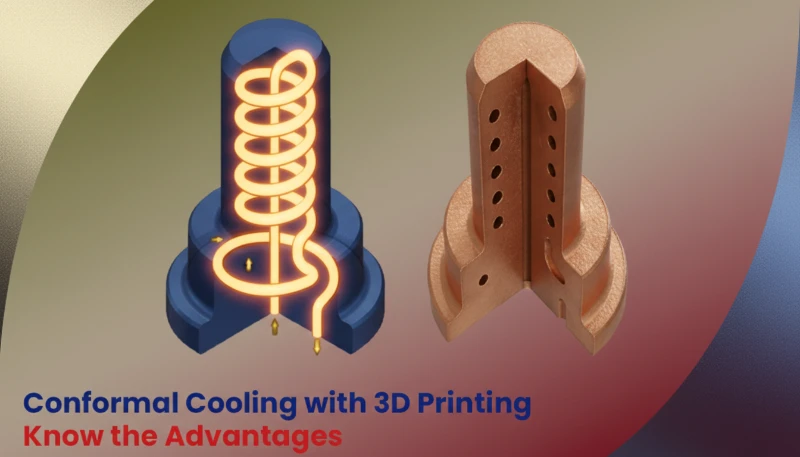
Het koelsysteem speelt een zeer belangrijke rol in het ontwerp van de spuitgietmatrijs omdat het de cyclustijd van het spuitgieten en de kwaliteit van de matrijs vermindert. Het koelsysteem bestaat voornamelijk uit de koelkanalen en de fasen van de koeltijd.
Koelkanalen
Koelkanalen leiden koelwater door verschillende matrijsonderdelen om overtollige warmte te verwijderen.
Koelkanalen moeten zo dicht mogelijk bij het caviteitsoppervlak liggen voor maximale warmteafvoer. Een afstand tussen kanaal en caviteit van 1.5–2.5 maal de kanaaldiameter biedt een balans tussen koelprestaties en constructieve integriteit van het matrijsstaal.
De koelmiddelstroom moet gelijkmatig over alle kanalen worden verdeeld om plaatselijke hotspots te voorkomen. Ongelijkmatige koeling leidt tot verschillende krimp, inwendige spanningen en kromtrekken van het eindonderdeel. Schotten of spiraalinzetstukken kunnen de stroming omleiden naar onvoldoende bediende delen van de matrijs.
De kanaaldiameter moet groot genoeg zijn om voldoende stroomsnelheid van het koelmiddel — doorgaans 1.5–3 m/s — te handhaven zonder een buitensporige drukval te veroorzaken. Te kleine diameters kunnen verstopt raken door aanslag of vuil; te grote kanalen verminderen de stromingsturbulentie en efficiëntie van de warmteoverdracht.
Koeltijd
De koeltijd hangt ook af van de wanddiktes van het product, het gebruikte materiaaltype en de matrijstemperaturen.
Voldoende koeltijd voorkomt kromtrekken en krimp en waarborgt tegelijk de maatvastheid. De optimale duur houdt de integriteit van het onderdeel in balans met de doorvoer—doorgaans 60–80% van de totale cyclustijd bij de meeste spuitgietprocessen.
Andere overwegingen voor koelsystemen zijn onder andere:
De stroomsnelheid van het koelmiddel moet zorgvuldig worden geregeld. Een lage snelheid kan de koelefficiëntie verminderen, terwijl een hoge snelheid tot verstopping en slijtage van de matrijs kan leiden.
Koelmiddeltemperatuur: de optimale temperatuur, aangezien een hoge temperatuur de koelsnelheid verlaagt, terwijl een lage temperatuur condensatie op het matrijsoppervlak veroorzaakt en de productkwaliteit kan beïnvloeden.
Koelmiddelkwaliteit: houd het koelmiddel schoon om verstoppingen en matrijsschade te voorkomen.
Wat is het ontwerp van een uitlaatsysteem?
Ontwerp van het ontluchtingssysteem is de engineering van ontluchtingsgroeven en -gaten waardoor opgesloten lucht en gassen tijdens injectie uit de vormholte kunnen ontsnappen.
Het ontluchtingssysteem drijft gas uit de matrijsholte om defecten zoals bellen en verbrandingen te voorkomen, wat een directe invloed heeft op de productkwaliteit en de levensduur van de matrijs.
Ontluchtingsgroeven
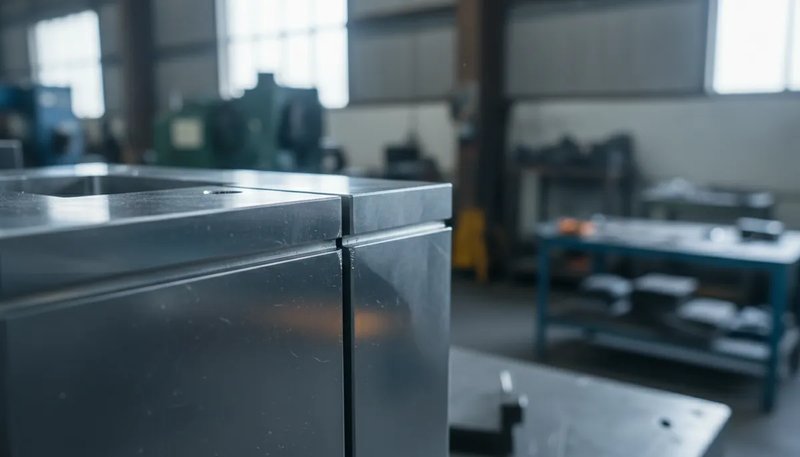
Een ontluchtingsgroef3 is een kanaal waarlangs gas kan ontsnappen en bevindt zich meestal in de deelnaad.
Ontwerppunten: plaats positioneringsgroeven waar/wanneer gas zich vrij kan ophopen.
Ontwerppunten: Breedte en diepte moeten het dwarsdoorsnedeoppervlak voor de vereiste ontluchting optimaliseren, zodat er geen problemen ontstaan bij het uitwerpen van de kunststof.
Ontwerppunten: gelijkmatige verdeling om lokale ontluchtingsproblemen te voorkomen.
Ontluchtingsgaten
De ontluchtingsgaten behoren tot de onderdelen van het ontluchtingssysteem die zich gewoonlijk in dunne delen van een product bevinden.
Ontwerppunten: Een geschikte diameter die de afvoer van opgehoopt gas niet belemmert en tegelijk een goede ontluchting waarborgt.
Ontwerppunten: de positionering mag noch het uiterlijk, noch de sterkte van het product beïnvloeden.
Ontwerppunten: het aantal en de positie moeten passen bij de matrijsconstructie en de vorm van het product.
Bij het ontwerp van het ventilatiesysteem moet ook rekening worden gehouden met:
Systeemonderhoud: Reinig ze regelmatig om een vrije, onbelemmerde doorstroming te waarborgen en controleer ze periodiek om verstoppingen te voorkomen die kwaliteitsproblemen kunnen veroorzaken.
Systeemkoeling: Gebruik bij matrijzen met hoge temperatuur geschikte koeling om condensatie van gassen tijdens het ontluchten te voorkomen.
Bewerkingsprecisie: hoge precisie met gladde oppervlakken om gasstroomweerstand en drukverlies te verminderen.
ZetarMold verwerkt meer dan 400 kunststofmaterialen. Onze 8 senior ingenieurs bewaken de kwaliteit van de matrijsbewerking binnen volgens ISO 9001, ISO 13485, ISO 14001 en ISO 45001 gecertificeerde managementsystemen.
Wat zijn de schimmelbewerkingen?
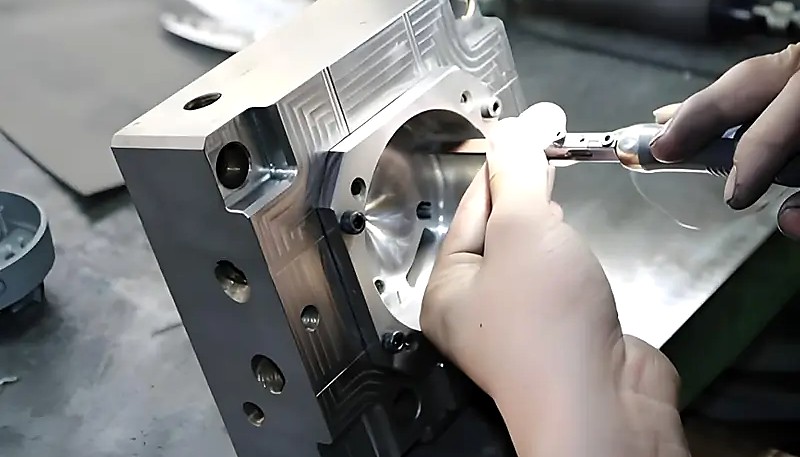
Matrijsbewerking is de reeks CNC-bewerkingen, EDM, slijp- en oppervlaktebehandelingen die ruw staal omzetten in een precisiespuitgietmatrijs.
"Correcte matrijsbewerking waarborgt maatnauwkeurigheid en oppervlaktekwaliteit."True
CNC-bewerking, EDM en oppervlaktebehandeling van matrijscomponenten creëren nauwkeurige toleranties en gladde oppervlakken voor consistente onderdeelproductie.
‘Matrijsbewerking is alleen nodig voor productiematrijzen voor grote volumes.’False
Alle matrijzen vereisen, ongeacht het productievolume, correcte bewerking, warmtebehandeling en oppervlakteafwerking om de vereiste toleranties te behalen.
Vormverwerking is het proces van het omzetten van de ontwerptekening in de werkelijke mal door middel van ruwe verwerking, fijne verwerking, oppervlaktebehandeling, enz. Uit analyse blijkt dat de verwerkingsnauwkeurigheid en -kwaliteit direct van invloed zijn op de functie en duurzaamheid van de mal.
Ruw verspanen
De ruwe bewerking wordt gedaan op de mal van het ruwe materiaal en de meest gebruikte apparatuur is CNC frezen en draaien.
Kernpunten: Laat voldoende nabewerkingstoeslag over.
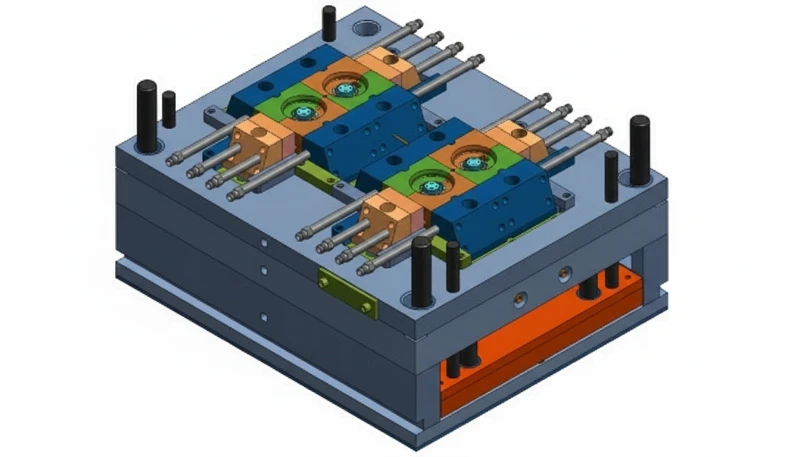
Kernpunten: de optimale snelheid en voedingssnelheden helpen vervorming van het materiaal en geleidelijke slijtage van gereedschappen en machines te voorkomen.
Belangrijkste punten: voorbewerken om bramen te verminderen en een gladder oppervlak te verkrijgen.
Afwerking
De afwerking wordt gedaan om de afmetingen en specificaties van de mal te bereiken en maakt gebruik van het slijpproces, EDM en polijsten.
Kernpunten: nauwkeurigheid waarborgt dat vorm en afmetingen voor de matrijs correct zijn.
Belangrijkste punten: vermijd overmatig polijsten om maatafwijkingen te voorkomen.
Kernpunten: bewerk het oppervlak met de beste en meest geschikte apparatuur om een gladde en correcte afwerking te verkrijgen.
Oppervlaktebehandeling
Oppervlaktebehandeling van de gietvorm verbetert de hardheid en slijtvastheid van de gietvorm waarbij de processen afschrikken, nitreren en het gebruik van een oppervlaktecoating worden toegepast.
Kernpunten: selecteer geschikte behandelingsmethoden op basis van het matrijsmateriaal en de toepassing.
Kernpunten: om vervorming en scheuren van de matrijs te verminderen, moeten behandeltijd en temperatuur worden beheerst.
Belangrijk: grondig reinigen vóór behandeling verbetert hechting en prestaties.
Hoe onderhoud je de schimmel?
Het juiste onderhoud van matrijzen is cruciaal voor een constante kwaliteit en een lange levensduur bij het spuitgieten. Regelmatig onderhoud kan stilstand en dure reparaties voorkomen.
Dagelijks en periodiek matrijsonderhoud verlengt door consistent onderhoud de levensduur en verlaagt de productiekosten.
Routinematig onderhoud
Belangrijkste punten: zorg dat het matrijsoppervlak zo schoon mogelijk is om te voorkomen dat hitte en stof de matrijs binnendringen.
Belangrijk: smeer de geleidepen en geleidebus regelmatig om een soepele werking van het geleidingsmechanisme te waarborgen.
Kernpunten: mogelijk moeten de overige matrijscomponenten regelmatig worden geïnspecteerd en tijdig worden gerepareerd of vervangen.
Kernpunten: controleer of het koelkanaal en ontluchtingssysteem normaal open en niet geblokkeerd zijn; verwijder eventuele blokkades tijdig.
Regelmatig onderhoud
Onderhoud betekent de algemene controle en reparatie van de mal nadat deze enige tijd is gebruikt.
Kernpunten: Inspecteer de vormholte en kern, zoek het sterk versleten deel van de holte en repareer of vervang dit.
Belangrijkste punten: controleer of geleiding, ontvormmechanisme en andere matrijsdelen normaal functioneren en voer noodzakelijke aanpassingen of vervangingen uit.
Belangrijkste punten: controleer of het koelsysteem en het ontluchtingssysteem van de matrijs normaal functioneren en voer de noodzakelijke reiniging en vrijmaking uit.
Kernpunten: Reinig en smeer de matrijs grondig om te waarborgen dat deze in goede staat verkeert.
Wat zijn de meest voorkomende problemen bij het ontwerpen van schimmels en hun oplossingen?
Veelvoorkomende problemen in matrijsontwerpen zijn gebrekkige koeling, ongelijkmatige materiaalstroming en een onjuiste plaatsing van de aanspuiting, die de onderdeelkwaliteit beïnvloeden.
"Regelmatige reiniging verlengt de levensduur van de matrijs en houdt de onderdeelkwaliteit op peil."True
Gepland onderhoud, waaronder reiniging, smering en inspectie, voorkomt slijtage, corrosie en maatverloop gedurende productiecycli.
"Matrijsonderhoud is overbodig als de matrijs goed is ontworpen."False
Alle matrijzen moeten ongeacht de ontwerpkwaliteit regelmatig worden gereinigd en geïnspecteerd om de maatnauwkeurigheid te behouden en voortschrijdende slijtage te voorkomen.
Verschillende veelvoorkomende problemen kunnen de onderdeelkwaliteit en de productiesnelheid beïnvloeden als ze tijdens het matrijsontwerp niet goed worden aangepakt.
Gootsteentekens
Probleembeschrijving: het productoppervlak is ingedeukt, wat het uiterlijk aantast.
Oplossing: kies positie en grootte van het aanspuitpunt zodanig dat de smelt de caviteit gelijkmatig kan vullen.
Oplossing: Optimaliseer het ontwerp en de indeling van het koelcircuit om de koeling gelijkmatig over de producten te verdelen.
Oplossing: pas de nadruktijd en -druk aan om smeltkrimp te verminderen.
Braamvorming
Probleembeschrijving: aan de rand van het product ontstaat overtollig materiaal, waardoor het er slecht uitziet en mogelijk onnauwkeurige afmetingen heeft.
Oplossing: probeer bij het ontwerp van het deelvlak van de matrijs de matrijs met minimale opening te laten sluiten.
Oplossing: verhoog de sluitkracht van de matrijs om te voorkomen dat deze tijdens het spuitgietproces opengaat.
Oplossing: controleer voor inspectie van de matrijs eerst het geleidingsmechanisme en het sluitmechanisme van de matrijs.
Bubbel
Probleembeschrijving: In of op het product zijn zichtbare poriën in de vorm van luchtbellen aanwezig, wat het uiterlijk en de duurzaamheid beïnvloedt.
Oplossing: minimaliseer het ontwerp van het ontluchtingssysteem zodanig dat het gas in de matrijsholte effectief kan ontsnappen.
Oplossing: pas de bij het spuitgieten gebruikte parameters aan, zoals de injectiesnelheid, injectiedruk en temperatuur van de spuitgietmaterialen, om gasvorming tot een minimum te beperken.
Oplossing: controleer het drogen van de grondstoffen om te waarborgen dat het vochtgehalte op het juiste niveau ligt.
Vervorming en kromtrekken
Probleembeschrijving: het spuitgietonderdeel krimpt of vervormt gedeeltelijk na afkoeling, waardoor maatvastheid en oppervlakteafwerking worden aangetast.
Oplossing: verbeter het koelsysteem zodat alle spuitgegoten onderdelen een zo gelijkmatig mogelijke temperatuur krijgen.
Oplossing: pas de nadruktijd en de in de injectieparameters ingestelde nadruk aan om interne spanning te verminderen.
Oplossing: versterk het ontwerp van de matrijsstructuur, bijvoorbeeld door verstevigingsribben toe te voegen, zodat het product een gelijkmatige en consistente wanddikte heeft.
Dimensionale instabiliteit
Probleembeschrijving: De geometrie wijkt af van de vereiste afmetingen en normen, waardoor montage en gebruik van het product worden beïnvloed.
Oplossing: Onderzoek of de matrijs correct is bewerkt en of de producten correct zijn geassembleerd om te verifiëren of de matrijsafmetingen aan de ontwerpspecificaties voor spuitgieten voldoen.
Oplossing: beheers procesparameters zoals injectiedruk, houddruktijd en koeltijd om stabiele productafmetingen te verkrijgen.
Oplossing: bevestig de productiestabiliteit van de spuitgietmachines om de variatie in het spuitgietproces te kunnen bepalen.
Veelgestelde vragen
Wat is de belangrijkste factor bij het ontwerpen van een spuitgietmatrijs?
De meest kritieke factor bij het ontwerpen van een spuitgietmatrijs is het bereiken van een uniforme wanddikte in het hele onderdeel. Ongelijke wanden veroorzaken verschillen in afkoeling, die rechtstreeks leiden tot inval, vervorming en maatafwijkingen in het eindproduct. Uit onze ervaring bij ZetarMold met meer dan 400 materialen blijkt dat onderdelen met wanddiktevariaties van meer dan 15 procent vrijwel altijd kostbare nabewerking van de matrijs vereisen om een aanvaardbare kwaliteit te bereiken. Naast de wanddikte zijn een juiste aanspuitlocatie en een efficiënte configuratie van het koelsysteem even belangrijk voor de cyclustijd en de duurzaamheid van de matrijs op lange termijn.
Hoe lang duurt het ontwerpen van een spuitgietmatrijs?
Een typisch spuitgietmatrijsontwerp duurt afhankelijk van de onderdeelcomplexiteit 2 tot 4 weken. Eenvoudige enkelvoudige matrijzen voor ongecompliceerde geometrieën kunnen binnen 5 tot 7 dagen van concept tot voltooide tekeningen gereed zijn. Complexe meervoudige matrijzen met zijwaartse bewegingen, schuine uitwerpers of uitschroefmechanismen kunnen 4 tot 6 weken engineering vergen. De ontwerpfase omvat 3D CAD-modellering, matrijsstroomsimulatie om vulpatronen te valideren en meerdere ontwerpbeoordelingen. Bij ZetarMold volgen onze 8 senior engineers een gestructureerd beoordelingsproces dat problemen vroegtijdig signaleert.
Welke software wordt gebruikt voor het ontwerpen van spuitgietmatrijzen?
De industriestandaardsoftware voor het ontwerpen van spuitgietmatrijzen omvat SOLIDWORKS en UG, ook bekend als NX, voor 3D CAD-modellering, en Autodesk Moldflow voor stromingssimulatie en thermische analyse. Met deze tools kunnen engineers de caviteitsindeling visualiseren, vulpatronen van kunststof simuleren en de plaatsing van koelkanalen optimaliseren voordat er staal wordt verspaand. Bij ZetarMold gebruikt ons ontwerpteam SOLIDWORKS, MOLDFLOW en CAD in combinatie om de plaatsing van aanspuitpunten te valideren, de posities van laslijnen te voorspellen en de koelefficiëntie te analyseren. Daarmee verminderen we defecten bij de eerste proefproducten met maximaal 60 procent ten opzichte van traditionele methoden op basis van vallen en opstaan.
Wat zijn de typische kosten van een spuitgietmatrijs?
De kosten van spuitgietmatrijzen lopen sterk uiteen, afhankelijk van de complexiteit en productie-eisen. Eenvoudige aluminium prototypematrijzen met één holte beginnen rond 1,000 tot 3,000 dollar, terwijl stalen productiematrijzen met meerdere holtes en hotrunnersystemen doorgaans tussen 10,000 en 50,000 dollar kosten. Zeer complexe matrijzen met zijschuiven, uitschroefkernen of speciale oppervlakteafwerkingen kunnen meer dan 100,000 dollar kosten. Belangrijke kostenbepalers zijn het aantal holtes, de keuze van het matrijsmateriaal, het verwachte productievolume, de vereiste kwaliteit van de oppervlakteafwerking en de tolerantiespecificaties voor de toepassing.
Hoe voorkomt u braamvorming bij het ontwerp van een spuitgietmatrijs?
Het voorkomen van braamvorming begint met een nauwkeurig ontworpen deelvlak en een correcte berekening van de sluitkracht. De matrijsdeellijn moet binnen vlakheidstoleranties van 0.01 millimeters worden bewerkt om volledige sluiting onder injectiedruk te garanderen. Ontluchtingsgroeven moeten correct worden gedimensioneerd op een diepte van 0.01 tot 0.03 millimeters, zodat opgesloten gas kan ontsnappen zonder dat gesmolten materiaal doorsijpelt. De spuitgietmachine moet voldoende tonnage hebben. Bij ZetarMold variëren onze 47 persen van 90T tot 1850T, zodat de machinecapaciteit nauwkeurig op elke matrijs kan worden afgestemd.
Wat is het verschil tussen een coldrunner- en een hotrunnermatrijs?
Een koudlopermatrijs voert gesmolten kunststof door onverwarmde kanalen, waardoor gestold runnerafval ontstaat dat moet worden gescheiden, vermalen en gerecycled of afgevoerd. Een hotrunnermatrijs houdt kunststof met elektrisch verwarmde verdeelsystemen gesmolten in de kanalen, elimineert runnerafval en verkort de cyclustijd. Hotrunnermatrijzen kosten vooraf 20 tot 40 procent meer door het verwarmde verdeelblok en de temperatuurregelaars, maar besparen bij grote series 15 tot 30 procent op materiaalkosten en verbeteren de consistentie.
Welke tolerantie kan spuitgieten bereiken?
Standaardspuitgieten haalt toleranties van plus of min 0.1 millimeter voor maten onder 25 millimeter. Precisiespuitgieten met optimale procesregeling, strakke temperatuurregeling en hoogwaardige matrijzen haalt plus of min 0.05 millimeter of nauwer. De haalbaarheid hangt sterk af van materiaalkrimp; semikristallijne materialen variëren meer dan amorfe. Voor nauwe toleranties gebruiken engineers van ZetarMold tijdens het ontwerp Moldflow-simulatie om krimp vóór de matrijsbouw te voorspellen en compenseren.
Waarom is het ontwerp van een spuitgietmatrijs belangrijk voor productiesucces?
Het ontwerp van de spuitgietmatrijs is de belangrijkste factor voor onderdeelkwaliteit, productie-efficiëntie en kostenbeheersing bij kunststofproductie.
Dit artikel biedt praktische referenties voor ontwerpers van spuitgietmatrijzen. Neem voor ondersteuning bij een matrijsontwerp op maat contact op met ZetarMold voor deskundige hulp.
Meer informatie over spuitgieten: een uitgebreide gids: spuitgieten is een productieproces waarbij gesmolten kunststof in een matrijs wordt geïnjecteerd om onderdelen met hoge nauwkeurigheid en herhaalbaarheid te maken. ↩
Lees meer over: wat zijn kern en caviteit bij het spuitgieten? De caviteit en kern van een spuitgietmatrijs in een typische kunststofspuitgietmachine zijn de vormende delen van de matrijs. ↩
Lees meer over typen aanspuitingen voor spuitgieten: een complete ontwerpgids: Een spuitgietaanspuiting is een ontworpen, doorgaans kleine opening die de stroom van gesmolten kunststof naar de matrijsholte regelt. ↩
Meer informatie over H13 Tool Steel: H13 is warmwerkgereedschapsstaal met goede weerstand tegen thermische vermoeiing, erosie en slijtage, en wordt breed gebruikt voor matrijzen en stempels. ↩
Meer informatie over vier belangrijke principes voor het ontwerpen van wanddiktes: de wanddikte van kunststof producten is een kritieke constructieve eigenschap die bij het ontwerp van kunststof productconstructies vaak wordt besproken en afgewogen. ↩
Lees hoe u nadruk en nadruktijd bij spuitgieten bepaalt. Injectiedruk omvat zowel druk als snelheid. ↩
Ontvang concurrerende prijzen, DFM-feedback en een productieplanning van het engineeringteam van ZetarMold.
Vraag een gratis offerte aan →
P20-staal: ASTM A681 specificeert gelegeerd gereedschapsstaal, waaronder P20 met een typische hardheid van 28-36 HRC voor toepassingen in matrijsbasissen. ↩
koelkanalen: volgens onderzoek in de polymeertechniek kan de koeling tot 70% van de totale spuitgietcyclustijd beslaan. ↩
groef: de standaarddiepte van ontluchtingsgroeven ligt voor de meeste thermoplasten tussen 0.01 en 0.03 mm, zodat gas kan ontsnappen zonder braamvorming. ↩