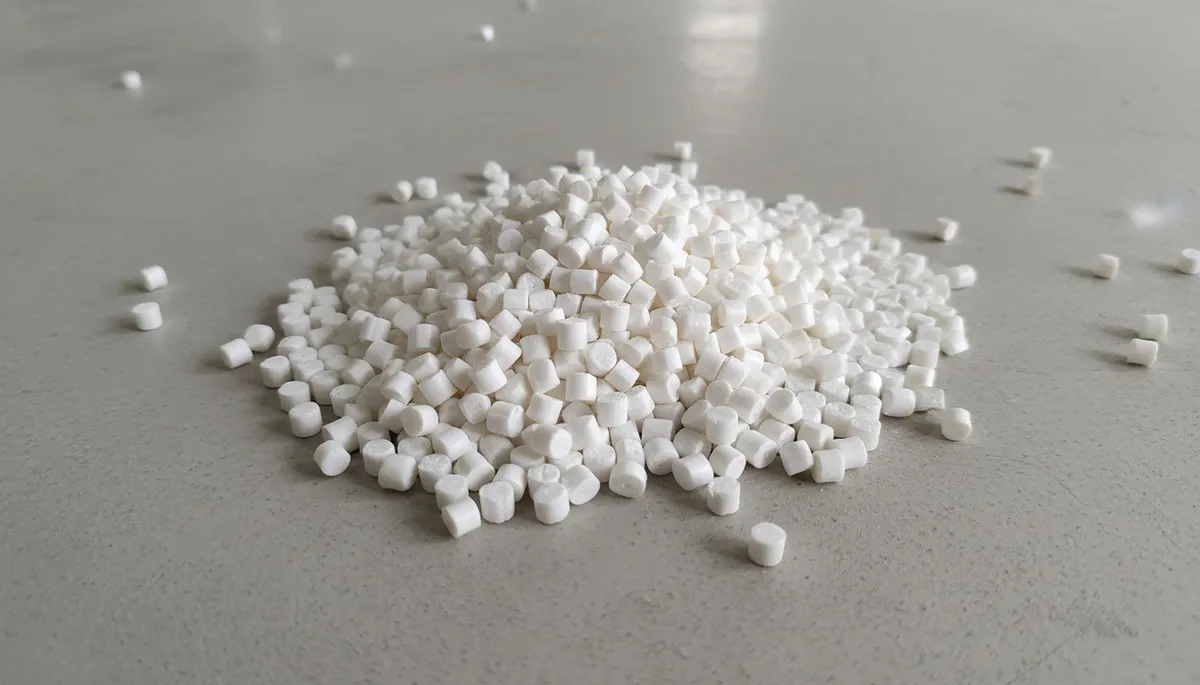
Designing an injection mold involves several key steps like material selection, cavity layout, and part geometry considerations for optimal results and high production efficiency.
Understanding mold design principles is essential for efficient production and high-quality output. Whether you are designing a new mold or optimizing an existing tool, these factors directly influence mold performance, cycle time, and overall cost savings for manufacturers.
- Mold material choice (steel vs aluminum) directly impacts tool life and part quality
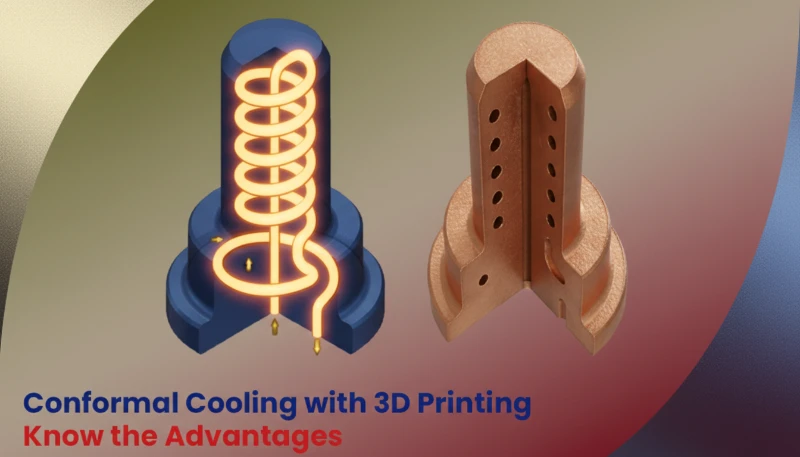
- Proper cooling channel layout can reduce cycle time by up to 70%
- Uniform wall thickness is the single most critical design factor
- Vent groove depth of 0.01–0.03 mm prevents flash while allowing gas escape
- Regular mold maintenance extends tool life and maintains dimensional accuracy
What are the Basic Principles of Injection Molds?
Injection molds are essential for producing high-precision parts, using a process where molten material is injected into a mold cavity. This technology underpins many industries, ensuring fast and consistent production.
If you are comparing vendors or planning procurement, our injection molding supplier sourcing guide covers RFQ prep, qualification, and commercial risk checks.
Injection molding process injects molten material into a mold cavity under high pressure, where it solidifies to form the desired product. Mold design ensures the product can be easily removed and closely matches the expected dimensions.
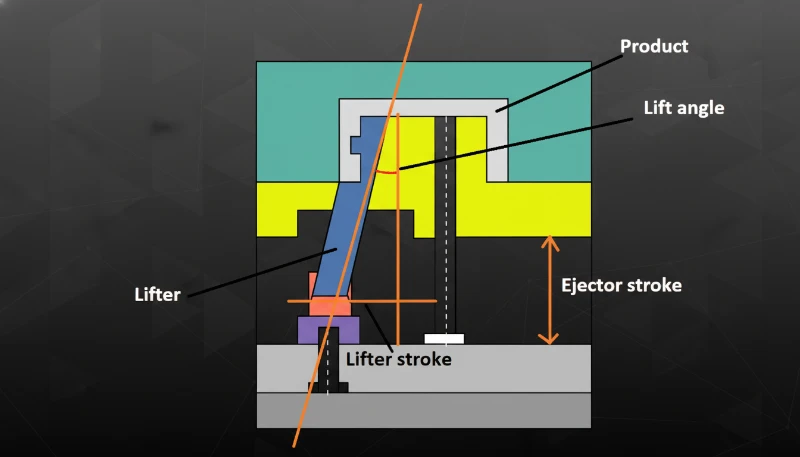
The materials, structure, and layout of injection molds directly relate to the quality, efficiency, and cost of the final product.
The basic principles of injection mold design include several key stages
Preparation of molten plastic is the first stage. The plastic raw material is melted by the shearing action of the screw and the heater.
Injection: The molten plastic is forced into the mold cavity through the nozzle with help of pressure exerted by the screw.
With over 20 years of injection mold design experience, ZetarMold operates 47 injection molding machines (90T–1850T) at our Shanghai factory, handling mold designs for parts of virtually any size and complexity.
Holding Pressure and Cooling: The injection molding machine keeps this pressure for some time to ensure that the cavity is filled and then starts cooling process as the plastic starts to set.
After the plastic solidifies, the mold opens and the ejection system — typically pins, plates, or sleeves — pushes the finished part out of the cavity. Proper ejection design ensures the part releases cleanly without deformation or damage to critical surfaces.
"Proper mold design reduces defects and improves production efficiency."True
Well-designed injection molds achieve consistent part quality, lower scrap rates, and shorter cycle times across production runs.
"Injection mold design is only about the product shape."False
Mold design also includes material selection, cooling system layout, ejection mechanisms, and process optimization for efficient production.
What are the Mold Materials?
Mold materials are essential in manufacturing processes like injection molding, ensuring durability, precision, and quality. The choice of material affects production efficiency and the final product’s characteristics.
The choice of mold material has a great impact on the service life of the mold and the quality of the finished product. Common mold materials are steel and aluminum.
Steel
Steel molds offer superior hardness, wear resistance, and heat treatment properties with significantly longer working life than aluminum — ideal for high-volume production where dimensional consistency is critical.
The main drawbacks of steel molds are longer machining times and higher material costs compared to aluminum. Steel is also significantly heavier, which increases handling difficulty and wear on mold-change equipment. However, the longer tool life usually offsets these disadvantages in high-volume applications.
Common Steels:
P20 Steel1 is a versatile pre-hardened mold steel (28–36 HRC) widely used for mold bases and large cavities. It offers excellent machinability and polishability at a cost-effective price point for medium-volume production molds.
H13 is a hot-work tool steel for molds operating at elevated temperatures. It maintains hardness and thermal stability after prolonged heat exposure, with typical hardness of 44–52 HRC after treatment.
S136 is a stainless tool steel with excellent corrosion resistance and polishability. It is the preferred choice for optical lenses, transparent parts, and medical molds where surface finish quality is paramount.
Aluminum
Aluminum molds offer significant weight savings and roughly 4–5x better thermal conductivity than steel, enabling faster cooling and shorter cycle times. Easy machinability reduces tooling lead time and cost, making aluminum ideal for prototyping and low-volume production.
The main drawback is lower hardness and wear resistance, making aluminum molds susceptible to surface damage with abrasive resins. Best suited for production runs under 10,000–50,000 parts where tooling speed matters more than longevity.
Common Aluminum:
7075 is one of the strongest aluminum grades (tensile strength ~570 MPa). Despite this, its hardness remains far below tool steel, making it best suited for prototype molds and short production runs.
What Does Mold Structure Design Mainly Include?
Mold structure design is key to creating high-quality injection molds, ensuring efficiency and consistency during the molding process. It involves critical aspects such as mold flow, cooling, and material compatibility.
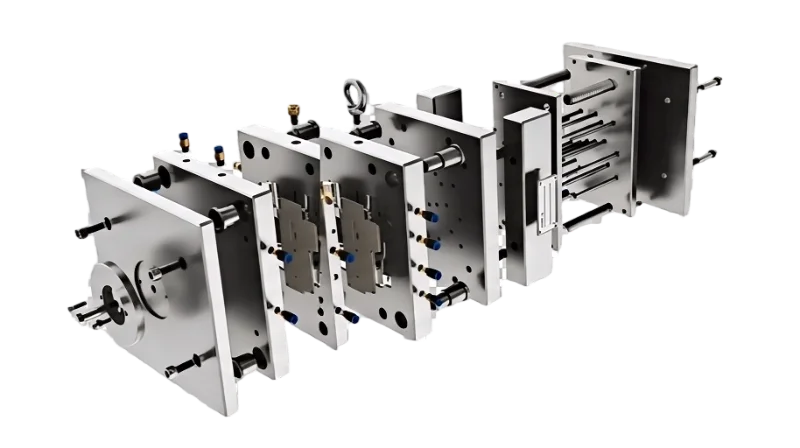
Mold structure design refers to the cavity, core, frame, gate, guide, and withdrawal system. All must be carefully engineered for proper efficiency, sturdiness, and easy maintenance.
Cavity and Core
The cavity creates the outer dimensions of the product while the core gives the inner dimensions bonded together to provide the final and desired product shape and size.
Material Selection: Often employ high-hardness, wear-resistant steel, such as P20 or H13 steel.
Design Points: The finished surfaces of cavity & core should be smooth so that high dimensional accuracy should be maintained for the surface finish of the product.
Mold Base
The mold base is also the tool’s skeletal framework and has the task of fastening and linking all the components. It usually has a standard form to allow assembly of molds and their replacement when necessary.
Material Selection: Usually, 45 steel or Q235 steel is adopted for the mold base to guarantee the stability of the mold base.
At ZetarMold, our in-house mold manufacturing facility produces over 100 mold sets per month using UG, SOLIDWORKS, MOLDFLOW, and CAD to simulate mold flow and validate cooling designs before machining begins.
"Mold structure design directly impacts part quality and production efficiency."True
Proper cavity layout, cooling channel placement, and ejection system design determine dimensional accuracy, cycle time, and defect rates.
"All mold structures are the same regardless of the application."False
Mold structures vary significantly depending on part geometry, material properties, production volume, and industry-specific requirements.
Design Points: The mold base should possess enough robustness and sturdiness to be able to cope with injection pressure, injection temperature and the general to and fro pressure during injection.
Gating System
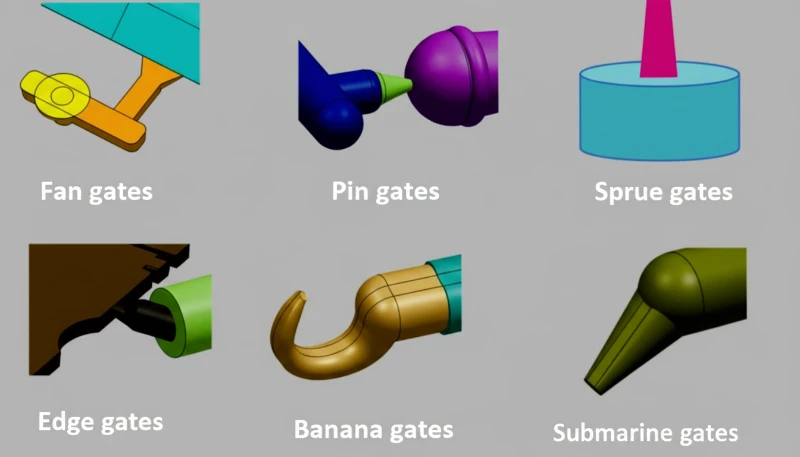
The gating system comprises the primary runner, the sub-runners and the gates by which the molten plastic is led into the cavity. An effective gating system is helpful for increasing the quality of molding and decreasing the amount of material used.
Design Points: The main runner should be as short and as straight as can be in order to minimize the pressure loss as well as cuts as much as is possible.
Design Points: Sub-runners should be properly arranged so that it would apply equal mass to the cavity.
Design Points: The nature of the gate should not in any way influence the look of the product or compromise on its strength The size of the gate used should be good.
Guiding Mechanism
The guiding mechanism includes guide pins and bushings, which helps in the alignment between the moving and the fixed molds.
Material Selection: Typically uses high-hardness steel, such as GCr15.
Design Points: The guiding mechanism should be very accurate in term of the alignment to prevent misalignment over a long period of time besides being very resistant to wear.
Ejection Mechanism
The ejection part is applied to take out the molded product from the mold and normally the ejection pins, plates and sleeves are used.
Design Points: Another requirement of this force is that it should be constant or smooth since a sudden force may affect the product in a negative way. The movement of the ejection mechanism should also be smooth to avoid sticking.
What is Flow Channel Design?
Flow channel design is the engineering of the sprue, runners, and gates that guide molten plastic from the machine nozzle into the mold cavity.
Runner design significantly influences product quality and production efficiency. The size and shape of the runner must match the material and part geometry.
Main Runner
The main runner links the injection machine nozzle to the sub-runners and should be the shortest and a straight as possible to reduce pressure loss and material waste.
Design Points: The main runner diameter should be right to promote adequate flow all the same reduce wasteful use of the materials.
Sub-Runners
The sub-runners distribute the plastic melt to each cavity of the mold and balance should be a major consideration here.
Design Points: Sub-runner cross-sectional shapes should be best circular or semicircular to lower the resistance offered by flows. The length should ideally be as equal as possible, so that the cavity filling time is almost equal for all the lengths.
Gates
Gates are the means by which molten plastic introduced to the cavity impact product quality.
Design Points: The gates should be placed in areas that do not affect appearance or strength. Their sizes must provide adequate fill rates while being easy to remove. Different gate types serve different product requirements.
Additionally, runner design should consider:
Runner Balance: For multiple cavities make sure that the runners lengths and their cross sectional area as they are the primary determinet of the time taken to fill the molds.
Runner Cooling: Sufficient provision for cooling channels2 for the runner section so that high temperature does not influence the melt flow.
Runner Precision: Machining precision is high and the surface smooth to lower the restriction to melt flow and pressure drop.
What is Cooling System Design?
Cooling system design is crucial in optimizing manufacturing processes, ensuring consistent product quality and efficiency in production cycles.
"Flow channel design significantly affects molding efficiency and part quality."True
Optimized runner and gate geometry reduces material waste, shortens cycle time, and improves fill consistency across cavities.
"Flow channel design is identical for all mold types and materials."False
Flow channel geometry must be customized based on material viscosity, part thickness, gate type, and cavity layout for optimal fill patterns.
The cooling system plays a very important role in the injection mould design since it reduces injection molding cycle time and mould quality. The cooling system majorly involves the cooling channels and the stages of cooling time.
Cooling Channels
Cooling channels guide cooling water through various mold parts to remove excess heat.
Cooling channels should be positioned as close to the cavity surface as possible to maximize heat dissipation. A channel-to-cavity distance of 1.5–2.5 times the channel diameter balances cooling performance with structural integrity of the mold steel.
Coolant flow should be distributed evenly across all channels to prevent localized hot spots. Uneven cooling leads to differential shrinkage, internal stresses, and warpage in the finished part. Baffles or spiral inserts can help redirect flow to underserved areas of the mold.
Channel diameter must be large enough to maintain adequate coolant flow velocity — typically 1.5–3 m/s — without creating excessive pressure drop. Too-small diameters risk blockages from scale or debris, while overly large channels reduce flow turbulence and heat transfer efficiency.
Cooling Time
Cooling time also depends with the wall thicknesses of the product, the type of material used, and the temperatures of the mold.
Sufficient cooling time prevents warpage and shrinkage while ensuring dimensional stability. The optimal duration balances part integrity against throughput — typically 60–80% of total cycle time in most injection molding operations.
Other considerations for cooling systems include:
Coolant flow speed requires careful control. Low speed can reduce cooling efficiency, while high speed might lead to blockage and wearing of the mold.
Coolant Temperature: Optimal temperature, as high temperature decrease the cooling rate while low temperature will cause condensation on the mould surface and may affect the quality of the product.
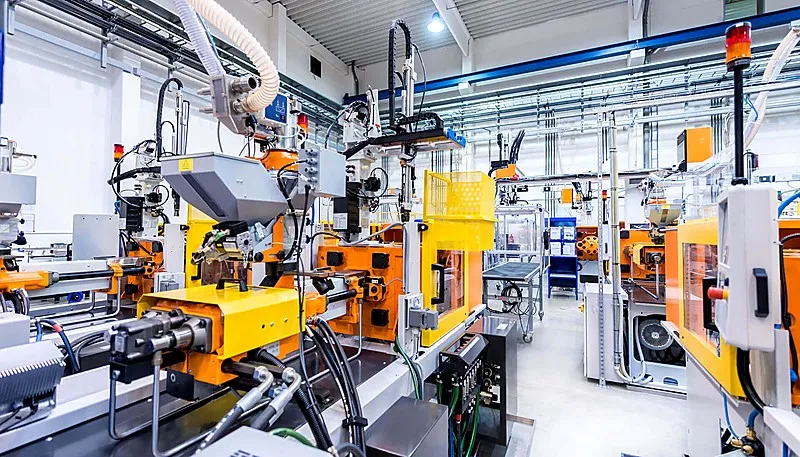
Coolant Quality: Keep coolant clean to avoid blockages and mold damage.
What is Exhaust System Design?
Exhaust system design is the engineering of vent grooves and holes that allow trapped air and gases to escape the mold cavity during injection.
The venting system expels gas from the mold cavity to prevent defects such as bubbles and burns, directly affecting product quality and mold longevity.
Venting Grooves
Relief groove3 is a channel for the escape of gas and it is mostly in the parting line.
Design Points: Put location grooves where/when gas can freely build up.
Design Points: Width and depth should optimise cross-sectional area for the required venting so that there will not be any issues on the side of plastic ejection.
Design Points: Even distribution to prevent localized venting issues.
Venting Holes
The venting holes are among the components of the venting system which are normally located in thin regions of a product.
Design Points: Appropriate diameter in order not to hinder the release of gas build up while at the same time guaranteeing proper exhaust.
Design Points: Positioning should not in any way influence the look of the product and neither its strength.
Design Points: Quantity and location should be reasonable with the structure of mould and the shape of product.
Venting system design should also consider:
System Maintenance: They should be cleaned now and then to ensure unrestricted and unhindered flow but be checked at times to avoid tools to avoid blockages that may cause quality issues.
System Cooling: In the case of using high-temperature molds, make use of cooling means to avoid condensation of the gases during the time of venting.
Processing Precision: High precision with smooth surfaces to reduce gas flow resistance and pressure loss.
ZetarMold processes over 400 plastic materials. Our 8 senior engineers oversee mold processing quality under ISO 9001, ISO 13485, ISO 14001, and ISO 45001 certified management systems.
What are the Mold Processing?
Mold processing is the series of CNC machining, EDM, grinding, and surface treatment steps that transform raw steel into a precision injection mold.
"Proper mold processing ensures dimensional accuracy and surface quality."True
CNC machining, EDM, and surface treatment of mold components create precise tolerances and smooth surfaces for consistent part production.
"Mold processing is only necessary for high-volume production molds."False
All molds require proper machining, heat treatment, and surface finishing regardless of production volume to achieve required tolerances.
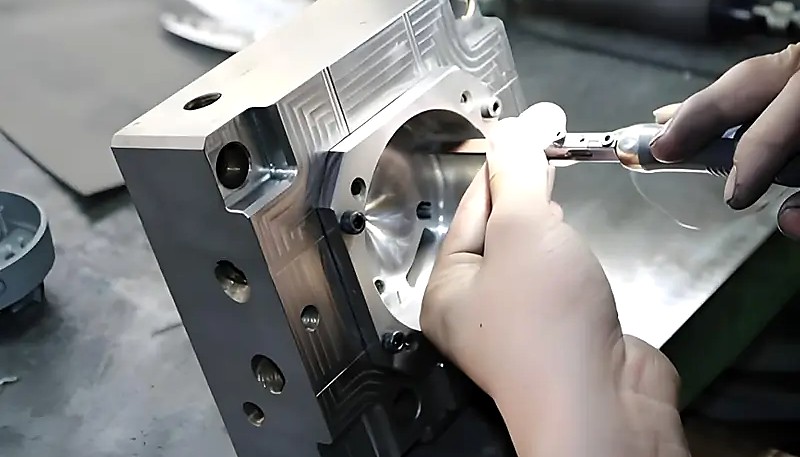
Mold processing is the process of converting the design drawing into the actual mold through rough processing, fine processing, surface treatment, etc. Through analysis, it can be seen that the processing accuracy and quality directly affect the function and durability of the mold.
Rough Machining
Rough machining is done on the mold from the raw material and common equipment used is CNC milling and lathe.
Key Points: Leave sufficient allowance for finishing.
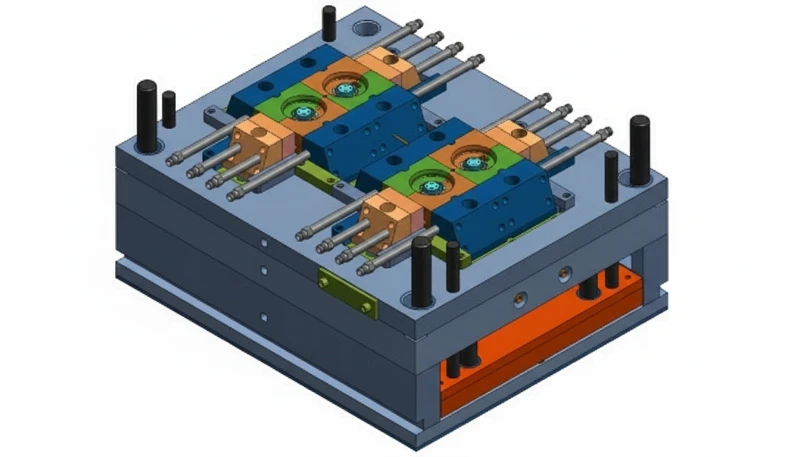
Key Points: The optimum speed and feed rates that help in avoiding deformation of the material and gradual wearing of the tools and machinery.
Key Points: Rough machining to decrease the burr and bringing the smoother surface.
Finishing
Finishing achieves the mold\’s are done to reach the size and specifications of the mold and uses the grinding process, EDM, and polishing.
Key Points: Accuracy ensure that the shape and size is correct for the mold.
Key Points: Avoid over-polishing to prevent dimensional deviations.
Key Points: Finishing the surface with the best and most appropriate equipment in order to obtain a smooth and proper finish.
Surface Treatment
Mold surface treatment enhances the mold hardness and wear resistance in which the processes of quenching, nitriding, and the use of a surface coating are employed.
Key Points: Select appropriate treatment methods based on mold material and application.
Key Points: To reduce mold deformation and cracks the amount of time for treatment and temperature should be controlled.
Key Points: Clean thoroughly before treatment for better adhesion and performance.
How to Maintain the Mold?
Proper mold maintenance is crucial for ensuring consistent quality and longevity in injection molding. Regular care can prevent downtime and costly repairs.
Mold maintenance, both daily and periodic, extends service life and reduces production costs through consistent upkeep.
Routine Maintenance
Key Points: Ensure the mold surface is as clean to avert temperatures and dust from penetrating the mold.
Key Points: Lubricate the guide pillar and guide bushing regularly to ensure the flexibility of the guide mechanism.
Key Points: It may be necessary to often inspect the other components of the mold, and repair or replace them in time.
Key Points: It is necessary to confirm whether the cooling channel and exhaust system are normally opened and whether they are blocked, if they are blocked, they should be cleared up in time.
Regular Maintenance
Maintenance implies the general check-up and repair of the mold after it has been used for some time.
Key Points: Inspect the mold cavity and core and look for the part of the cavity which has severely worn and repair or replace them.
Key Points: Check whether the guiding mechanism, demoulding mechanism and other parts of the mold are normal, and make necessary adjustments or replacements.
Key Points: Check whether the cooling system of the mold and the exhaust system of the mold are normal and perform the need for cleaning and clearing.
Key Points: Thoroughly clean and lubricate the mold to ensure that the mold is in good working condition.
What are the Common Problems in Mold Design and Their Solutions?
Common mold design problems include poor cooling, uneven material flow, and improper gate placement that affect part quality.
"Regular cleaning extends mold lifespan and maintains part quality."True
Scheduled maintenance including cleaning, lubrication, and inspection prevents wear, corrosion, and dimensional drift over production cycles.
"Mold maintenance is unnecessary if the mold is properly designed."False
All molds require regular cleaning and inspection regardless of design quality to maintain dimensional accuracy and prevent progressive wear.
Several common issues can affect part quality and production rate if not properly addressed during mold design.
Sink Marks
Problem Description: The surface of the product is dented, which affects the appearance.
Solution: It is advised to the position as well as the size of the gate to be such that it can accommodate melt and fill up the cavity uniformly.
Solution: Maximize the cooling circuit design and layout in order to allow equal distribution of the cooling to the products.
Solution: Adjust the holding time and pressure to reduce melt shrinkage.
Flash
Problem Description: Scrap forms on the peripheral region of the product giving it a poor appearance and may not be of accurate dimension.
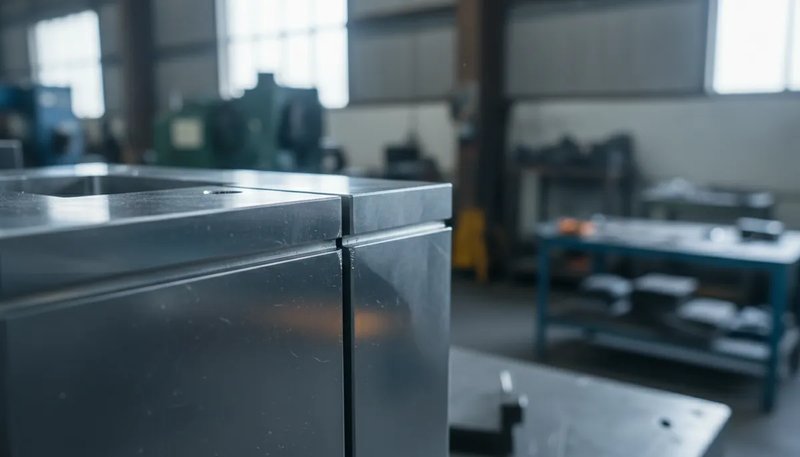
Solution: About the parting surface design of the mold, try to make the mold closed to the minimum.
Solution: Enhance the clamping force of the mold to prevent the mold from separating during the injection molding manufacturing process.
Solution: To check the mold, first it is required to check the guiding mechanism of the mold and the clamping mechanism of the mold.
Bubble
Problem Description: There are visible pores on the body of the product or in the product itself in the form of bubbles which influences the looks and the durability.
Solution: Minimize the design of the exhaust system so as to allow the gas in the mold cavity to be released effectively.
Solution: Adjust the parameters used in injection like the speed of injection, injection force and temperature of injection molding materials in a bid to minimize generation of gases.
Solution: Check the drying of raw materials to ensure that the moisture content of raw materials is at an appropriate level.
Deformation and Warping
Problem Description: The injection molded part becomes partly shrunken or distorted after cooling and the dimensional stability and surface finish of the product are compromised.
Solution: Improve on the cooling system so as to give as equal temperatures to all the injection molded parts.
Solution: Adjust the holding time and holding pressureset in the injection parameters to reduce internal stress.
Solution: Strengthen the changes in mold structure design, such as adding reinforcing ribs to make the product have uniform wall thickness and consistent wall thickness.
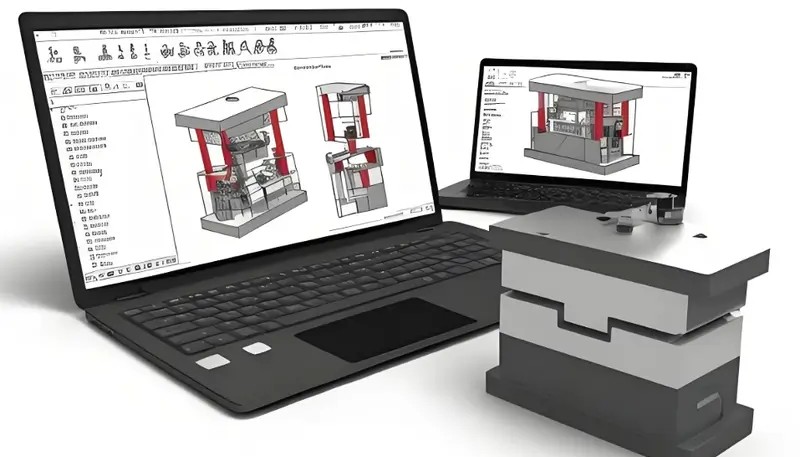
Dimensional Instability
Problem Description: The geometry is out of the required sizes and standards to affect the assembly and usage of the product.
Solution: Examine the correctness of machining on the mold and assembly realization of products to verify whether or not the sizes of the mold conform with the injection molding design specifications.
Solution: Control the process parameters as injection pressure, holding pressure time and cooling time should be controlled in order to have stable size of the product.
Solution: Confirm the manufacture stability of the injection molding machines in order to have ability to determine the variation of the injection molding.
Frequently Asked Questions
What is the most important factor in injection mold design?
The most critical factor in injection mold design is achieving uniform wall thickness throughout the part. Uneven walls cause differential cooling, which directly leads to sink marks, warpage, and dimensional inconsistency in the finished product. In our experience at ZetarMold working with over 400 materials, parts with wall thickness variations exceeding 15 percent almost always require costly mold rework to achieve acceptable quality. Beyond wall thickness, proper gate placement and an efficient cooling system layout are equally important for determining cycle time and long-term mold durability.
How long does it take to design an injection mold?
A typical injection mold design takes 2 to 4 weeks depending on part complexity. Simple single-cavity molds for straightforward geometries may take as little as 5 to 7 days from concept to completed drawings. Complex multi-cavity molds with side actions, lifters, or unscrewing mechanisms can require 4 to 6 weeks of engineering time. The design phase includes 3D CAD modeling, mold flow simulation to validate fill patterns, and multiple design review iterations. At ZetarMold, our 8 senior engineers follow a structured review process that catches issues early.
What software is used for injection mold design?
The industry standard software for injection mold design includes SOLIDWORKS and UG also known as NX for 3D CAD modeling, and Autodesk Moldflow for flow simulation and thermal analysis. These tools allow engineers to visualize cavity layout, simulate plastic fill patterns, and optimize cooling channel placement before any steel is cut. At ZetarMold, our design team uses SOLIDWORKS, MOLDFLOW, and CAD in combination to validate gate placement, predict weld line positions, and analyze cooling efficiency, reducing first-article defects by up to 60 percent compared to traditional trial-and-error methods.
What is the typical cost of an injection mold?
Injection mold costs range widely depending on complexity and production requirements. Simple single-cavity aluminum prototype molds start around 1,000 to 3,000 dollars, while production-grade steel molds with multiple cavities and hot runner systems typically cost between 10,000 and 50,000 dollars. Highly complex molds with side actions, unscrewing cores, or specialized surface finishes can exceed 100,000 dollars. Key cost drivers include the number of cavities, mold material choice, expected production volume, required surface finish quality, and tolerance specifications for the application.
How do you prevent flash in injection mold design?
Flash prevention starts with precision parting surface design and proper clamping force calculation. The mold parting line must be machined to flatness tolerances within 0.01 millimeters to ensure complete closure under injection pressure. Vent grooves should be sized correctly at 0.01 to 0.03 millimeters depth to allow trapped gas to escape without permitting molten material to seep through. The injection molding machine must have sufficient tonnage. At ZetarMold, our 47 presses range from 90T to 1850T, allowing precise matching of machine capacity to each mold.
What is the difference between a cold runner and a hot runner mold?
A cold runner mold channels molten plastic through unheated passages, resulting in solidified runner waste that must be separated, reground, and recycled or discarded. A hot runner mold uses electrically heated manifold systems to keep plastic in a molten state within the distribution channels, eliminating runner waste entirely and reducing cycle time. Hot runner molds cost 20 to 40 percent more upfront due to the heated manifold and temperature controllers, but they save 15 to 30 percent on material costs for high-volume production runs and improve consistency.
What tolerance can injection molding achieve?
Standard injection molding achieves tolerances of plus or minus 0.1 millimeters for dimensions under 25 millimeters. Precision molding with optimized process control, tight temperature regulation, and high-quality tooling can achieve plus or minus 0.05 millimeters or tighter for critical features. Tolerance capability depends heavily on material shrinkage characteristics, with semi-crystalline materials exhibiting higher variability than amorphous ones. For tight-tolerance applications, ZetarMold engineers use Moldflow simulation during the design phase to predict and compensate for shrinkage before the mold is built.
Why Does Injection Mold Design Matter for Manufacturing Success?
Injection mold design is the most important factor for part quality, production efficiency, and cost control in plastic manufacturing.
This article provides practical references for injection mold designers. For custom mold design support, contact ZetarMold for expert assistance.
Learn about Injection Molding: A Comprehensive Guide: Injection molding is a manufacturing process where molten plastic is injected into a mold to create parts with high accuracy and repeatability. ↩
Learn about What is core and cavity in injection molding? The cavity and core in a typical plastic injection molding machine of an injection mold are the molding parts of the mold . ↩
Learn about Types Of Gates for Injection Molding: A Complete Design Guide : An injection molding gate is a designed opening, usually small, that controls molten plastics flow into the mold cavity. ↩
Learn about H13 Tool Steel : H13 is a hot work tool steel that has good resistance to thermal fatigue, erosion and wear, and is widely used for making molds and dies. ↩
Learn about Four Important Principles Should Be Considered In The Design Of Wall Thickness : Plastic Product wall thickness is a critical structural feature frequently discussed and considered in the design of plastic product structures. ↩
Learn about How to Determine Holding Pressure and Holding Time In Injection Molding? injection pressure includes both pressure and speed . ↩
Get competitive pricing, DFM feedback, and production timeline from ZetarMold’s engineering team.
Request a Free Quote →
P20 Steel: P20 Steel refers to aSTM A681 specifies alloy tool steels including P20 with typical hardness of 28-36 HRC for mold base applications ↩
cooling channels: cooling channels refers to can account for up to 70% of the total injection molding cycle time according to polymer engineering research ↩
groove: groove refers to standard vent groove depth ranges from 0.01 to 0.03 mm for most thermoplastics to allow gas escape without flash ↩