 Zum Inhalt springen

What Is Precision Injection Molding and How Does It Differ from Ordinary Molding?
Präzision Spritzgießen1 ist eine hochgenaue Variante des Spritzgießen, die Toleranzen zehnmal enger als normale Spritzgießen behält. Der Kernunterschied liegt in Teilkonsistenz und Wiederholgenauigkeit. Wenn Sie Lieferanten evaluieren, unser injection molding supplier sourcing guide2 die Angebotsvorbereitung und Qualifikation ab.
Für einen breiteren Überblick deckt unser Spritzgießen Komplettleitfaden behandelt Prozessgrundlagen, Materialverhalten und Produktionsentscheidungen.
For a broader look at Spritzgussformdesign3, our pillar guide covers tooling structure, thermal control, and manufacturability tradeoffs.
Präzision Spritzgießen is a manufacturing process that produces plastic parts with extremely tight dimensional tolerances, typically ±0.01 to ±0.05 mm. Ordinary injection molding, by contrast, works within broader tolerances of ±0.1 to ±0.5 mm and is suitable for parts where exact dimensions are less critical.
In our factory at ZetarMold, we often get asked: “Do I really need precision molding?” The honest answer is—it depends on your application. If you’re making a medical device housing where components must snap together with micron-level accuracy, precision molding is non-negotiable. But if you’re producing a storage container lid, ordinary molding gets the job done at a fraction of the cost.
The difference isn’t just about tolerances. Precision molding demands a complete ecosystem: higher-grade mold steels, more sophisticated machine controls, engineered-grade resins, and tighter quality inspection protocols. Ordinary molding uses standard tooling and commodity plastics, making it faster and cheaper to set up.
- Precision injection molding is justified when tolerances, fit, or compliance risk directly affect product function.
- Ordinary injection molding remains the better choice for simple parts with wider tolerances and lower tooling budgets.
- The best supplier decision starts with tolerance analysis, mold steel selection, process control capability, and DFM review.
What Are the Key Technical Differences Between the Two Processes?
Der Hauptunterschied besteht darin, dass Präzisionsspritzguss eine strengere Kontrolle über Maschinenpräzision, Werkzeugtoleranzen und Prozessparameter erfordert. Hier ist ein detaillierter Vergleich basierend auf dem, was wir täglich in unserer Werkstatt sehen:
| Parameter | Precision Injection Molding | Ordinary Injection Molding |
|---|---|---|
| Abmessungstoleranz | ±0.01–0.05 mm | ±0.1–0.5 mm |
| Machine Clamping Repeatability | < 0.5% shot-to-shot variation | 1–3% shot-to-shot variation |
| Injection Pressure Control | Closed-loop servo control, ±1% accuracy | Standard hydraulic, ±5% accuracy |
| Formstahl | H13, S136 (hardened to 48–52 HRC) | P20, 718H (pre-hardened 28–34 HRC) |
| Mold Machining | CNC + EDM, surface finish Ra 0.2 µm or better | CNC, surface finish Ra 0.8–1.6 µm |
| Kühlsystem | Conformal or precision-drilled, ±1°C control | Standard straight-drilled channels |
| Material Klasse | Engineering resins (POM, PC, PA66-GF) | Commodity resins (PP, PE, ABS) |
| Typical Tooling Cost | $15,000–$100,000+ | $3,000–$30,000 |
| Zykluszeit | 15–60 seconds (longer cooling/packing) | 10–30 seconds |
| Qualitätskontrolle | CMM, optical measurement, 100% inspection possible | Go/no-go gauges, sampling inspection |
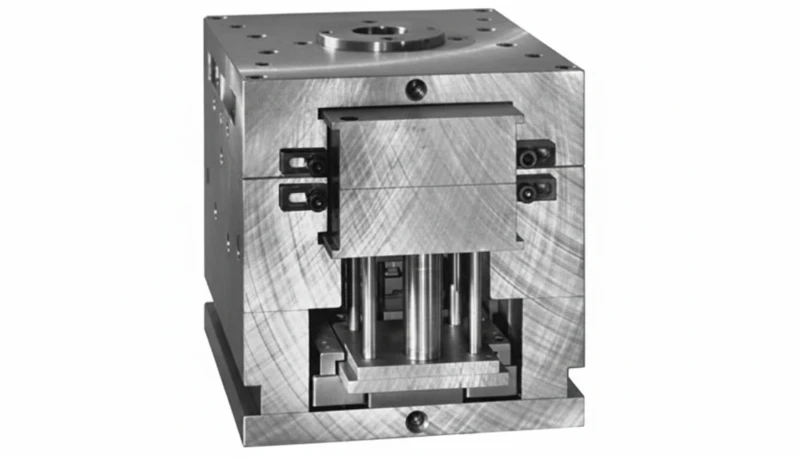
We’ve found that many customers initially request precision molding when ordinary molding would suffice. At ZetarMold, we always review the part design first and recommend the most cost-effective process. Sometimes, a small design change—like adding a draft angle or adjusting wall thickness—can move a part from precision to ordinary molding territory, saving thousands in tooling costs.
„„Präzisionsformmaschinen müssen geschlossene Regelkreissysteme mit einer Schuss-zu-Schuss-Repeatability unter 0,5% haben.““Wahr
Closed-loop servo-driven control is essential for precision molding. It continuously monitors and adjusts injection pressure, speed, and position in real time, keeping shot-to-shot variation below 0.5%—something open-loop hydraulic systems cannot guarantee.
„„Präzisionsspritzgießen benötigt immer eine komplett andere Maschine als normale Formung.““Falsch
Many modern injection molding machines can handle both precision and ordinary work. The key difference is in the machine’s control system quality, repeatability specifications, and how precisely it maintains process parameters—not necessarily a completely different machine type.
Why Does Mold Quality Matter So Much in Precision Molding?
Die Form ist das Herz der Präzisionsspritzgießtechnik. Bei Präzisionsarbeit muss die Form mit Toleranzen 3–5× enger als die Endteil-Toleranz bearbeitet werden, weil sie Schrumpfkompensation, thermische Expansion und Verschleiß über die Lebensdauer der Form berücksichtigen muss.
At ZetarMold, our precision molds use hardened steel like S136 (stainless, 48–52 HRC) or H13 for high-temperature resins. We machine cavities using a combination of high-speed CNC and wire EDM to achieve surface finishes of Ra 0.2 µm or better. The cooling channels are carefully designed—sometimes using conformal cooling—to ensure uniform temperature distribution within ±1°C across the cavity surface.
For ordinary molds, we typically use P20 pre-hardened steel (28–34 HRC), standard CNC machining with Ra 0.8–1.6 µm finishes, and conventional straight-drilled cooling channels. These molds cost significantly less and are faster to manufacture, but they can’t hold the tight tolerances precision applications demand.
One critical factor many people overlook is mold maintenance. Precision molds require regular inspection and polishing cycles—typically every 50,000–100,000 shots—while ordinary molds can often run 200,000+ shots between maintenance intervals.
Bei ZetarMold betreiben wir 47 Spritzgießmaschinen von 90T bis 1850T in unserem Shanghai-Werk. Mit über 20 Jahren Erfahrung haben wir direkt gesehen, wie die richtige Kombination von Maschinengenauigkeit, Formqualität und Prozesskontrolle bestimmt, ob ein Teil ±0,05 mm oder ±0,3 mm erreicht. Unsere vollelektrischen Pressen im 50–200T Bereich sind die Arbeitspferde für Präzisionsarbeit, liefern Schuss-zu-Schuss Konsistenz, die hydraulische Maschinen einfach nicht erreichen.
In unserem Shanghai-Werk werden Entscheidungen für Präzisionsspritzgießen nicht nur basierend auf Zeichnungstoleranzen gemacht. Wir passen das Teil an die Maschinenkapazität, Formstahl, Kühlkontrolle und Simulationsbeweise an. Unsere Produktionsfläche betreibt 47 Pressen von 90T bis 1850T, und unsere Ingenieure verwenden SOLIDWORKS und MOLDFLOW, um das Füllgleichgewicht zu prüfen, bevor ein Kunde unnötige Präzisionswerkzeuge bezahlt.
What Materials Work Best for Precision vs. Ordinary Molding?
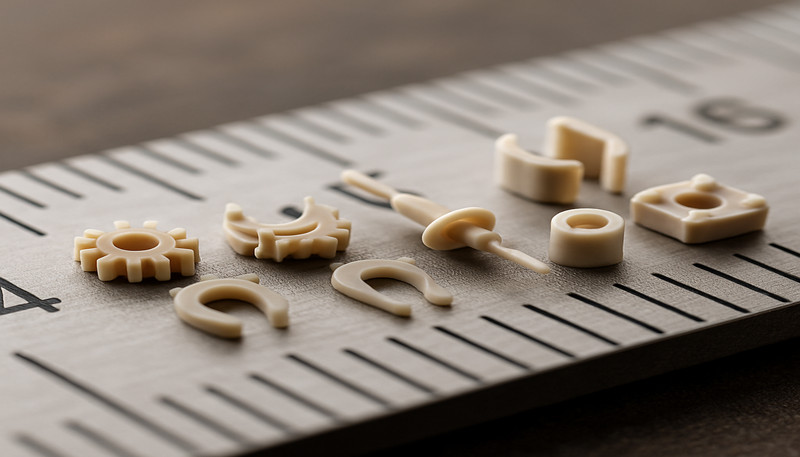
Material selection is where precision and ordinary molding diverge significantly. Precision molding typically uses engineering-grade resins with predictable and low shrinkage rates, while ordinary molding works well with commodity plastics.
For precision parts, we commonly use:
POM (Acetal/Delrin): Shrinkage 1.8–2.2%, excellent dimensional stability, ideal for gears and mechanical components
PC (Polycarbonat): Shrinkage 0.5–0.7%, great optical clarity, used in lenses and medical devices
PA66-GF (Glass-filled Nylon): Shrinkage 0.3–0.5% (with glass fill), high strength for structural precision parts
PBT-GF: Shrinkage 0.3–0.5%, excellent for electrical connectors requiring tight tolerances
For ordinary molding applications:
PP (Polypropylen): Shrinkage 1.0–2.5%, cost-effective for containers and packaging
ABS: Shrinkage 0.4–0.7%, good all-rounder for consumer products
PE (Polyethylen): Shrinkage 1.5–3.5%, used for simple parts with relaxed tolerances
The key point: materials with high or unpredictable shrinkage rates make precision molding much harder. That’s why glass-filled compounds are popular for precision work—the glass fibers dramatically reduce and stabilize shrinkage.
How Does Process Control Differ Between Precision and Ordinary Molding?
Process control is arguably the biggest operational difference between precision and ordinary injection molding. In precision molding, every parameter is monitored, recorded, and controlled within narrow bands.
Here’s what precision process control looks like in our ZetarMold facility:
Schmelztemperatur: Controlled within ±2°C across all barrel zones (ordinary: ±5–10°C)
Einspritzgeschwindigkeit: Multi-stage profiling with ±1% repeatability (ordinary: single-stage, ±5%)
„„Kavitäten-Drucksensoren sind ein Kennzeichen der Prozesskontrolle beim Präzisionsspritzgießen.““Wahr
Cavity pressure sensors provide direct, real-time measurement of what’s happening inside the mold. They enable automatic part sorting (good vs. suspect), process optimization, and are widely considered the gold standard for precision molding quality control.
„„Normales Spritzgießen benötigt keine Prozessüberwachung oder Qualitätskontrolle.““Falsch
Ordinary molding still requires process monitoring and quality control—just at a less granular level. Parameters like cycle time, part weight, and visual appearance are still tracked. The difference is that precision molding requires real-time cavity pressure monitoring and statistical process control (SPC) on critical dimensions.
Holding pressure: Precisely staged to compensate for shrinkage, monitored via cavity pressure sensors (ordinary: single-stage, time-based cutoff)
Temperatur der Form: Maintained within ±1°C using oil or water temperature controllers (ordinary: ±3–5°C)
Abkühlungszeit: Optimized through simulation and validated with in-mold temperature sensors (ordinary: estimated from experience)
We also use mold flow analysis software (Moldflow or Moldex3D) to simulate and optimize the filling pattern before cutting steel for precision molds. For ordinary molds, simulation is helpful but not always required—experienced toolmakers can often design adequate gating and cooling from experience alone.
Which Industries Require Precision Injection Molding?
Precision injection molding serves industries where part accuracy directly impacts product function, safety, or regulatory compliance. Based on our experience at ZetarMold, these are the primary sectors:
Medizinische Geräte: Surgical instrument housings, diagnostic cartridges, drug delivery systems—tolerances of ±0.02 mm are common, with full traceability required (ISO 13485)
Automotive electronics: Connector housings, sensor enclosures, and ECU casings where parts must mate precisely and withstand vibration
Optical components: Lenses, light guides, and reflectors requiring surface accuracy within fractions of a micron
Unterhaltungselektronik: Smartphone casings, wearable device housings, and connector components with tight snap-fit requirements
Luft- und Raumfahrt: Lightweight structural components meeting AS9100 standards
Ordinary injection molding, meanwhile, covers the majority of products made by injection molding by volume — from household containers to automotive trim panels.
Packaging (containers, caps, closures)
Präzisionsspritzguss vs. herkömmlicher Spritzguss: Wesentliche Unterschiede
Toys and recreational products
Non-critical automotive interior trim
General consumer products

How Do You Decide Which Process Is Right for Your Project?
Die richtige Wahl wird durch Ihre Zeichnungstoleranzen, Oberflächengüteanforderungen und geometrische Komplexität bestimmt. Hier ist das Entscheidungsframework, das wir bei ZetarMold verwenden, wenn wir mit neuen Kunden beraten:
What are the tightest tolerances on your drawing? If all dimensions are ±0.1 mm or wider, ordinary molding is likely sufficient.
Does the part interface with other precision components? Snap fits, gear meshes, and sealing surfaces often require precision molding.
What industry standards apply? Medical (ISO 13485), automotive (IATF 16949), and aerospace (AS9100) often mandate precision-level process controls.
What’s your production volume? Higher volumes help amortize the higher tooling cost of precision molds. For low volume injection molding, ordinary molds with aluminum tooling may be more practical.
What’s your budget? Precision tooling costs 2–5× more than ordinary tooling. Make sure the application justifies the investment.
Was sind die häufig gestellten Fragen zu Präzisions- vs. herkömmlichem Spritzguss?
Häufig gestellte Fragen
What tolerance can precision injection molding achieve?
Präzisionsspritzgießen erreicht typisch Toleranzen von ±0,01 bis ±0,05 mm auf kritischen Dimensionen, abhängig vom Material, Teilgeometrie und Angussposition. Zum Vergleich, normale Spritzgießen erreicht generell ±0,1 bis ±0,3 mm. Die engeren Toleranzen benötigen vollelektrische Maschinen mit Schuss-zu-Schuss Wiederholgenauigkeit innerhalb ±0,5%, gehärteten Formstahl (S136 oder H13) und geschlossenen Regelkreisen für jeden Schlüsselparameter. Diese engeren Toleranzen sind essentiell für medizinische Geräte, optische Linsen und elektronische Verbinder, wo dimensionale Genauigkeit direkt Funktion und Sicherheit beeinflusst.
Is precision injection molding always more expensive?
Ja, Präzisionsspritzgießen hat höhere Vorabkosten – typisch 2 bis 5 mal mehr für Werkzeuge und 10 bis 30 Prozent höhere Teilkosten. Doch die Gesamtkosten der Eigentümerschaft sind oft für Präzisionsspritzgießen besser, wenn man reduzierte Ausschussraten (oft unter 1 Prozent gegenüber 3 bis 5 Prozent für normale Spritzgießen), weniger sekundäre Bearbeitungsoperationen und besser Montageausbeute berücksichtigt. Bei ZetarMold führen wir für jedes Projekt eine ehrliche Kosten-Nutzen-Analyse, sodass Kunden nur in Präzisionsspritzgießen investieren, wenn ihre Anwendung es wirklich benötigt.
Can ordinary injection molds be upgraded to precision?
Generell nicht. Präzisionsformen benötigen härtere Stahlgrade wie S136 Edelstahl oder H13 Werkzeugstahl, enger Bearbeitungstoleranzen gemessen in Mikron statt hundertstel, konforme Kühlkanäle für thermale Uniformität und Mehrkavitätenbalance von der initialen Designphase. Retrofit einer normalen P20 Form erreicht selten die geometrische Präzision oder Zyklus-zu-Zyklus Konsistenz benötigt für sub-0,05 mm Toleranzarbeit. In fast jedem Fall, Bau einer neuen Präzisionsform spezifisch für das Teil ist weit kosteneffektiver und produziert zuverlässig superior Ergebnisse.
What machines are used for precision injection molding?
Präzisionsspritzguss verwendet vollelektrische oder hybride servohydraulische Maschinen mit geschlossener Regelung von Einspritzdruck, Geschwindigkeit, Nachdruck und Gesamtwerkzeugtemperatur. Bei ZetarMold liefern unsere vollelektrischen Pressen im Bereich von 50 bis 200 Tonnen eine Schuss-zu-Schuss-Wiederholgenauigkeit von ±0,5 Prozent, verglichen mit ±2 bis 3 Prozent bei konventionellen hydraulischen Maschinen. Dieses außergewöhnliche Maß an Konsistenz, kombiniert mit einer präzisen Werkzeugtemperaturregelung innerhalb von ±1 Grad Celsius und mehrstufiger Einspritzprofilierung, macht die Produktion mit Toleranzen unter 0,05 mm auf wiederholbarer Basis möglich.
How does ZetarMold handle precision molding projects?
Unsere Präzisionsspritzgießen Arbeitsablauf beginnt mit einer umfassenden DFM Analyse und Formfüllsimulation mit Moldflow oder Moldex3D. Wir designen dann die Form in SOLIDWORKS mit gehärteten Werkzeugstahl (S136 oder H13), bearbeiten sie auf 5-Achs CNC Zentren und validieren jede kritische Dimension mit CMM Reports während T0 Sampling. Produktion läuft auf vollelektrischen Maschinen mit SPC Monitoring für alle Schlüsselprozessparameter. Mit über 20 Jahren Erfahrung und 400+ Materialien in unserem Shanghai-Werk, bieten wir vollständige dimensionale Rückverfolgbarkeit vom ersten Schuss bis Volumenlieferung.
What is the minimum order quantity for precision injection molding?
Es gibt keine strikte universelle Mindestanzahl, aber Präzisionsspritzgießen bietet die beste Rendite bei Stückzahlen von 10.000 Teilen oder mehr aufgrund der höheren Werkzeuginvestition. Für kleinere Stückzahlen empfehlen wir manchmal Bridge-Tooling – eine mittelklassige Form, die mit engeren Toleranzen gebaut wird als normale Produktionswerkzeuge, aber ohne die vollständigen Kosten einer Präzisionsproduktionsform. Dieser Ansatz ermöglicht es Ihnen, sowohl das Design und die Marktnachfrage zu validieren, bevor Sie sich für Hochvolumen-Präzisionswerkzeuge entscheiden, wodurch das finanzielle Risiko reduziert wird, während eine akzeptable Teilqualität erreicht wird.
Welches Spritzgussverfahren sollten Sie für Ihr nächstes Projekt wählen?
Präzisions- und herkömmliche Spritzgussverfahren sind keine konkurrierenden Prozesse – sie sind komplementäre Werkzeuge im Werkzeugkasten eines Herstellers. Präzisionsspritzguss liefert Toleranzen von ±0,01–0,05 mm für kritische Anwendungen in der Medizin-, Optik- und Elektronikindustrie. Herkömmlicher Spritzguss bewältigt die überwiegende Mehrheit der Konsumgüter und Industrieprodukte kosteneffizient mit Toleranzen von ±0,1–0,3 mm.
Der Schlüssel liegt darin, den Prozess an Ihre tatsächlichen Anforderungen anzupassen. Übermäßige Präzisionsangaben verschwenden Geld für Werkzeuge und Prozesse, die Ihre Anwendung nicht benötigt. Unterdimensionierte Präzisionsangaben führen zu Qualitätsproblemen, Montagefehlern und Garantieansprüchen, die weit mehr kosten als es richtig zu machen.
Mit über 20 Jahren Erfahrung, 47 Maschinen von 90T bis 1850T und Expertise bei über 400 Materialien hilft Ihnen ZetarMold, diese Entscheidung sicher zu treffen. Wir führen ehrliche DFM-Analysen durch und sagen Ihnen klar: Präzision oder Standard, basierend auf dem, was Ihre Zeichnung tatsächlich erfordert – nicht auf dem, was einen teureren Service verkauft. Ob Ihr Projekt ±0,01 mm Präzision für ein Medizingerät oder ±0,3 mm Standardtoleranz für Verbraucherverpackungen erfordert, unser Ingenieurteam ist bereit, Sie durch den gesamten Prozess von der Designprüfung bis zur Serienproduktion zu führen.
Ready to discuss your project? Egal, ob Sie präzisionsgeformte medizinische Komponenten oder Massenware für Verbraucher benötigen, kontaktieren Sie ZetarMold noch heute für eine kostenlose DFM-Prüfung und ein Angebot. Unser Ingenieurteam hilft Ihnen bei der Auswahl des richtigen Verfahrens und liefert Teile, die Ihren Spezifikationen entsprechen – nicht mehr und nicht weniger.
-
Spritzgießen: Spritzgießen bezeichnet den Fertigungsprozess, der Kunststoffgranulat schmilzt und in eine Formkavität injiziert, um Teile zu formen. ↩
-
injection molding supplier sourcing guide: Spritzgießen Lieferantenauswahlguide bezeichnet eine Checkliste für RFQ Vorbereitung, Lieferantenqualifikation und kommerzielle Risikokontrolle. ↩
-
Spritzgussformdesign: Spritzgusswerkzeug-Design bezieht sich auf die Werkzeugstruktur, Kühllayout, Stahlauswahl und den Fertigungsplan für geformte Teile. ↩




 EN
EN  ES
ES  FR
FR  DE
DE  PT
PT  AR
AR  RU
RU  JA
JA  KO
KO  IT
IT  NL
NL  TR
TR  PL
PL 