PA6, PA66, PA12 und PA1010 sind die vier am häufigsten spritzgegossenen Nylonsorten. Ihre unterschiedliche Feuchtigkeitsaufnahme, Temperaturbeständigkeit und mechanischen Eigenschaften machen sie für verschiedene Anwendungen geeignet. Die falsche Sorte führt zu Maßinstabilität, Sprödbruch oder unnötigen Kosten. Dieser Leitfaden vergleicht alle vier Sorten direkt, damit Sie den richtigen Werkstoff für Ihr Spritzgießprojekt festlegen können.
Vergleichen Sie als Materialgrundlage externe Referenzen zu Polyamid, Nylon 6 und Nylon 66 mit dem Trocknungsdatenblatt Ihres Lieferanten. Diese Quellen sind für die Terminologie nützlich; das endgültige Prozessfenster muss jedoch weiterhin anhand von Harztype, Feuchtemessung, Formtemperatur und Ergebnissen der Probeschüsse bestätigt werden.
Die Prozessplanung sollte auch die Nylonauswahl mit dem Maschinen- und Formverhalten verknüpfen. Überprüfen Sie die Schneckenrückgewinnung und die Verweilzeit mit der Einrichtung für Schneckenrückgewinnung und Verweilzeit, vergleichen Sie die Kühlwirkung durch Produktionszeitanalyse und prüfen Sie das Maßrisiko durch Schrumpfungsanalyse der Form vor der Produktionsfreigabe.
- PA66 bietet unter den vier Typen die höchste Steifigkeit und Temperaturbeständigkeit und ist daher die Standardwahl für Automobil- und Elektroanwendungen
- PA6 nimmt mehr Feuchtigkeit auf als PA66, kostet aber 15-25% weniger und verarbeitet bei niedrigeren Temperaturen, ideal für Verbraucher- und Industrie-Teile
- PA12 hat die niedrigste Feuchtigkeitsaufnahme (0,25%), was eine enge Maßhaltung und dimensionale Stabilität in feuchter Umgebung ermöglicht
- PA1010 bietet die beste Chemikalienbeständigkeit und Flexibilität, abgeleitet aus nachwachsendem Rizinusöl als Rohstoff
- Alle vier Typen erfordern gründliche Trocknung (80-120°C, 4-8 Stunden) vor dem Spritzgießen, um Spritzer und hydrolytischen Abbau zu vermeiden
Was sind PA6-, PA66-, PA12- und PA1010-Nylonsorten?
PA6, PA66, PA12 und PA1010 sind vier teilkristalline Polyamidsorten, die für unterschiedliche thermische, mechanische und Feuchtigkeitsbedingungen entwickelt wurden. Für Lieferantenvergleich und Beschaffungsplanung behandelt unser Leitfaden zur Beschaffung von Spritzgießlieferanten die RFQ-Vorbereitung, Qualifizierung und Prüfung kaufmännischer Risiken.
Nylonsorten sind teilkristalline technische Thermoplaste. Polyamid (Nylon) zeichnet sich durch starke Wasserstoffbrückenbindungen zwischen Amidgruppen in benachbarten Polymerketten aus. Diese intermolekularen Bindungen verleihen Nylon seine charakteristische Kombination aus hoher Festigkeit, Zähigkeit und Abriebfestigkeit. Die Zahl in jedem Sortennamen gibt die Anzahl der Kohlenstoffatome im Monomer an, was sich direkt auf den Kristallinitätsgrad, den Schmelzpunkt und das Feuchtigkeitsaufnahmeverhalten auswirkt.
Verständnis der Polyamid-Thermoplast-Familien
PA6 (Polyamid 6) wird durch ringöffnende Polymerisation von Caprolactam, einem sechs Kohlenstoffatome umfassenden Monomer, hergestellt. Es schmilzt bei etwa 220°C und bietet gute mechanische Eigenschaften zu moderaten Kosten. PA6 kristallisiert langsamer als PA66, was etwas längere Zykluszeiten bedeutet, aber das Verzugrisiko bei komplexen Geometrien verringert. PA6 ist weltweit die mengenmäßig am häufigsten verarbeitete Nylonsorte und wird für alles von Kabelbindern bis hin zu Automobil-Ansaugkrümmern verwendet.
PA66: Hochsteifes Technisches Nylon
PA66 (Polyamid 6,6) wird durch Polykondensation von Hexamethylendiamin und Adipinsäure hergestellt, beides Sechskohlenstoff-Monomere. Die symmetrische Molekularstruktur führt zu einer höheren Kristallinität und einem höheren Schmelzpunkt von etwa 260°C. PA66 ist bei Raumtemperatur etwa 15 bis 20 Prozent steifer als PA6 und behält mechanische Eigenschaften bei erhöhten Temperaturen besser als jeder ungefüllte Nylon-Typ. Dies macht PA66 zur Standardwahl für Motorraumkomponenten in der Automobilindustrie und elektrische Steckverbinder, die über 120°C betrieben werden.
PA12: Präzisionsnylon mit geringer Feuchtigkeitsaufnahme
PA12 (Polyamid 12) wird aus Laurolactam, einem zwölf Kohlenstoffatome umfassenden Monomer, hergestellt. Die längere aliphatische Kette verringert die Dichte der Amidgruppen entlang der Polymerhauptkette, was die Feuchtigkeitsaufnahme im Vergleich zu 2,5 bis 3,0 % bei PA6 auf etwa 0,25 % drastisch senkt. PA12 schmilzt bei etwa 178°C, lässt sich leicht verarbeiten und bietet hervorragende Maßstabilität in feuchter Umgebung. Es hat einen erheblichen Preisaufschlag gegenüber PA6 und PA66, typischerweise das 3- bis 5-fache pro Kilogramm.
PA1010: Bio-basiertes flexibles Nylon
PA1010 (Polyamid 10,10) wird aus Sebacinsäure und Decamethylendiamin hergestellt, beide aus Rizinusöl gewonnen. Dieser nachwachsende Rohstoffursprung macht PA1010 attraktiv für Anwendungen, die eine Zertifizierung biobasierter Inhalte erfordern. PA1010 kombiniert niedrige Feuchtigkeitsaufnahme (etwa 1,0 bis 1,5 Prozent) mit guter Chemikalienbeständigkeit und Flexibilität und positioniert sich zwischen PA12 und PA6 sowohl in Leistung als auch Kosten. Es findet zunehmend Verwendung in Kraftstoffleitungen und Hydraulikschläuchen im Automobilbereich, wo nachwachsende Inhalte vorgeschrieben sind.
Was sind die wichtigsten Eigenschaftsunterschiede zwischen PA6, PA66, PA12 und PA1010?
PA66 ist am steifsten, PA12 nimmt am wenigsten Feuchtigkeit auf, PA6 ist am kostengünstigsten und PA1010 bietet die beste Chemikalienbeständigkeit. Diese Unterschiede beeinflussen Bauteilleistung, Maßhaltigkeit, Trocknungszeit und Verarbeitungstemperatur. Die Wahl des falschen Typs kann vermeidbare Verzugsspannungen, Sprödigkeit oder feuchtigkeitsbedingte Maßänderungen verursachen.
| Eigentum | PA6 | PA66 | PA12 | PA1010 |
|---|---|---|---|---|
| Schmelzpunkt | 220°C | 260°C | 178°C | 200°C |
| Feuchtigkeitsaufnahme (23°C/50% relative Luftfeuchtigkeit) | 2.8% | 2.5% | 0.25% | 1.2% |
| Zugfestigkeit (trocken) | 80 MPa | 85 MPa | 50 MPa | 55 MPa |
| Biege-E-Modul (trocken) | 2.8 GPa | 3.0 GPa | 1.5 GPa | 1.8 GPa |
| Izod-Schlagzähigkeit (trocken) | 45 J/m | 40 J/m | Hinweis* | Hinweis* |
| Kosten (relativ zu PA6) | 1.0x | 1.15x | 3.5x | 2.5x |
Die Feuchtigkeitsaufnahme ist das wichtigste Unterscheidungsmerkmal für Verarbeitung und Anwendungskonstruktion. PA6 und PA66 nehmen bei 50 % relativer Luftfeuchte im Gleichgewicht 2,5 bis 3,0 % Feuchtigkeit auf. Dadurch quellen die Maße um 0,5 bis 1,0 %, und die Steifigkeit sinkt gegenüber dem trockenen Zustand nach dem Formen um 50 bis 60 %. PA12 nimmt nur 0,25 % auf, sodass die Maßänderung vernachlässigbar ist. Eine geeignete Spritzgießformkonstruktion berücksichtigt diese werkstoffspezifischen Schwindungsunterschiede. Erfordert Ihre Anwendung enge Toleranzen in feuchter Umgebung, ist PA12 trotz höherer Rohstoffkosten eindeutig die richtige Wahl.
Die mit NB (no break) gekennzeichneten Kerbschlagzähigkeitswerte nach Izod für PA12 und PA1010 zeigen, dass diese Typen von Natur aus zäh sind und bei Standard-Schlagprüfungen keinen Sprödbruch aufweisen. Zusammen mit der geringen Feuchtigkeitsaufnahme macht diese Zähigkeit PA12 und PA1010 zur bevorzugten Wahl für Kraftstoffleitungen, Hydraulikschläuche und Pneumatikanschlüsse, deren Schlagfestigkeit über unterschiedliche Temperatur- und Feuchtigkeitsbereiche erhalten bleiben muss.
Was sind die kritischen Verarbeitungsparameter für jede Nylonsorte?
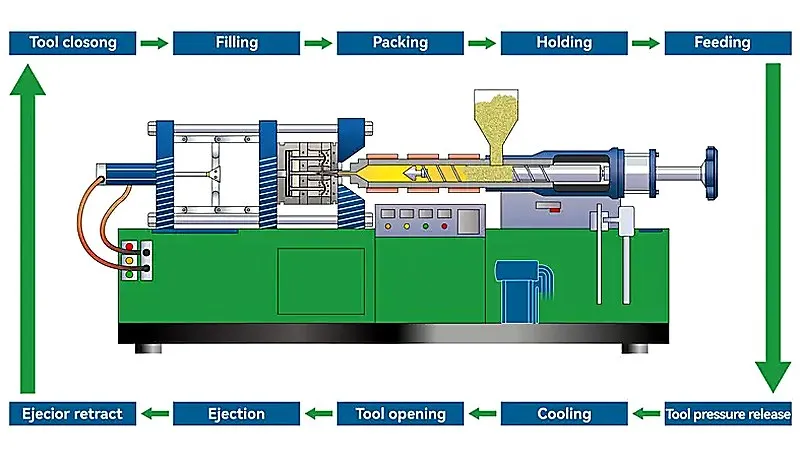
Die Verarbeitung von Nylon reagiert empfindlich auf Feuchtigkeit und Schmelzetemperatur. Die Parameter beim Nylon-Spritzgießen1 sind anspruchsvoller als bei Standardkunststoffen wie PP oder PE, weil der Werkstoff eine hohe Schmelztemperatur, ein enges Prozessfenster und Feuchtigkeitsempfindlichkeit aufweist. Falsche Trocknung und Schmelzetemperatur sind die häufigste Ursache fehlerhafter Nylonteile in der Produktion.
"Das Trocknen von Nylon auf einen Feuchtigkeitsgehalt unter 0.2 Prozent vor dem Spritzgießen ist die wirksamste einzelne Verarbeitungsentscheidung — unzureichende Trocknung verursacht Silberschlieren, eine Verringerung des Molekulargewichts durch Hydrolyse2 und Maßinstabilität, die sich durch keine nachgelagerte Parameteranpassung beheben lässt."True
Nylon ist hygroskopisch und nimmt schnell Feuchtigkeit aus der Umgebungsluft auf. Bei der Verarbeitung von feuchtem Nylon reagiert das Wasser mit den Amidbindungen der Polymerkette (Hydrolyse), wodurch Molekulargewicht und mechanische Eigenschaften dauerhaft sinken. Diese Schädigung ist irreversibel und allein am Erscheinungsbild nicht erkennbar.
"PA6 und PA66 können bei derselben Schmelzetemperatur verarbeitet werden, weil beide Polyamide mit ähnlichen Molekülstrukturen sind"False
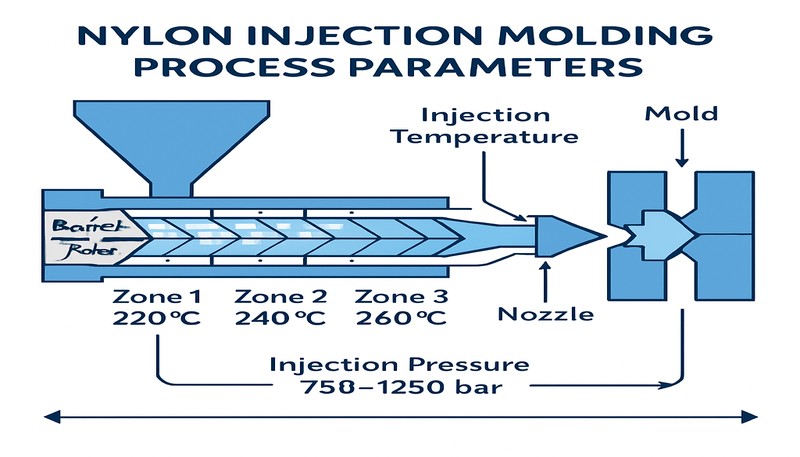
PA6 schmilzt bei etwa 220°C und wird bei 240-270°C verarbeitet, während PA66 bei 260°C schmilzt und eine Schmelzetemperatur von 270-300°C erfordert. Werden für PA66 die Temperaturen von PA6 verwendet, entstehen unvollständiges Aufschmelzen und hohe Viskosität. Temperaturen für PA66 führen bei PA6 zu thermischem Abbau.
Empfohlene Trocknungszeiten und -temperaturen nach Materialtyp
| Kenngröße | PA6 | PA66 | PA12 | PA1010 |
|---|---|---|---|---|
| Trocknungstemperatur | 80-100°C | 80-100°C | 70-80°C | 80-90°C |
| Trocknungszeit | 4-8 Stunden | 4-8 Stunden | 2-4 Stunden | 3-6 Stunden |
| Zielfeuchte | <0.2% | <0.2% | <0.1% | <0.15% |
| Schmelztemperatur | 240-270°C | 270-300°C | 190-230°C | 210-250°C |
| Temperatur der Form | 60-90°C | 70-100°C | 30-50°C | 40-70°C |
| Einspritzdruck | 80-130 MPa | 90-140 MPa | 70-110 MPa | Zugfestigkeit: 75-120 MPa |
Die Trocknungsanforderungen unterscheiden sich bei den vier Typen erheblich. PA6 und PA66 müssen 4 bis 8 Stunden bei 80 bis 100°C in einem Trockenlufttrichter getrocknet werden, um einen Feuchtigkeitsgehalt von unter 0.2 Prozent zu erreichen. PA12 benötigt aufgrund seiner geringen Feuchtigkeitsaufnahme lediglich 2 bis 4 Stunden bei 70 bis 80°C. PA1010 liegt mit 3 bis 6 Stunden bei 80 bis 90°C dazwischen. Prüfen Sie den Feuchtigkeitsgehalt vor dem Spritzgießen durch Karl-Fischer-Titration. Alle vier Typen sollten unmittelbar vor dem Spritzgießen getrocknet werden — wenn getrocknetes Granulat länger als 30 Minuten der Umgebungsluft ausgesetzt bleibt, wird der Trocknungseffekt zunichtegemacht.
Wie beeinflusst das Formendesign die Qualität von Nylonbauteilen?
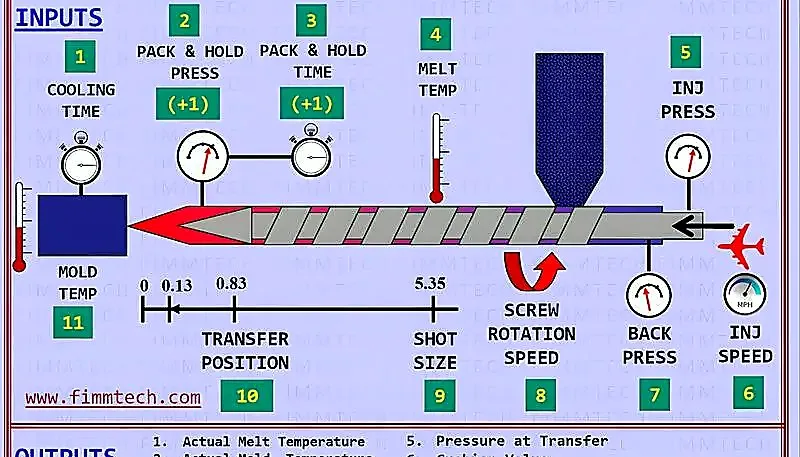
Die Formkonstruktion bestimmt die Qualität von Nylonteilen maßgeblich über Angussscherung, gleichmäßige Kühlung und wirksame Entlüftung. Eine geeignete Spritzgießformkonstruktion3 verhindert Grat, Bindenähte und Maßinstabilität, die durch die Hygroskopizität von Nylon verstärkt werden.
Bei der Anschnittauslegung für Nylonbauteile sollten ein ausgeglichener Fluss und eine möglichst geringe Schererwärmung im Vordergrund stehen. Kanten- und Tunnelanschnitte werden häufig für Bauteile aus PA6 und PA66 verwendet, während Heißkanalsysteme mit Nadelverschlussdüsen den Materialabfall bei der Großserienfertigung verringern. Die Anschnittgröße sollte an der Anschnittposition 50 bis 80 Prozent der Nennwanddicke betragen, um Freistrahlbildung zu minimieren und eine fortschreitende Kavitätsfüllung zu gewährleisten, ohne dass der Anschnitt vor Abschluss der Nachdruckphase erstarrt.
Die Auslegung der Kühlkanäle beeinflusst Zykluszeit und Maßkonstanz von Nylonteilen direkt. Da PA6 und PA66 relativ hohe Werkzeugtemperaturen (60 to 100°C) erfordern, liefern konturnahe Kühlkanäle das gleichmäßigste Temperaturprofil und verringern den Verzug komplexer Geometrien. In der Praxis reduziert eine Werkzeugtemperaturabweichung unter 5°C über die Kavitätsoberfläche die Maßstreuung bei eng tolerierten PA66-Teilen um 30 bis 40 Prozent. Dies ist besonders bei glasfaserverstärkten Typen kritisch, weil die Faserorientierung die unterschiedliche Schwindung verstärkt.
In unserem Werk in Shanghai betreiben wir 47 Spritzgießmaschinen mit Schließkräften von 90T bis 1850T. Damit können wir das gesamte Spektrum von Mikrozahnrädern aus Nylon auf kleinen Maschinen bis zu großen Strukturhaltern für die Automobilindustrie auf Maschinen mit hoher Schließkraft abdecken. Unser eigener Werkzeugbau ermöglicht es uns, bei der Optimierung neuer Nylon-Bauteilprogramme die Anschnittposition und Kühlung schnell zu überarbeiten.
Die Auslegung des Auswerfersystems erfordert bei Nylon besondere Sorgfalt, da der hohe Reibungskoeffizient des Werkstoffs und seine Schwindung um Kerne erhebliche Auswerferkräfte verursachen. Ein ausreichender Entformungswinkel (mindestens 1 Grad bei unverstärktem Nylon, 1.5 bis 2 Grad bei glasfaserverstärkten Typen) und eine ausreichende Auswerferstiftfläche verhindern Stiftabdrücke und Bauteilverformungen beim Auswerfen. Für zylindrische Nylonbauteile, bei denen es auf Konzentrizität ankommt, werden Abstreiferplatten bevorzugt.
Was sind häufige Fehler beim Nylon-Spritzgießen und wie werden sie vermieden?
Die häufigsten Fehler beim Nylonspritzgießen sind Feuchtigkeitsschäden (Silberschlieren, Hydrolyse), Temperaturfehler (Kurzschüsse, Gratbildung) und maßlicher Verzug. Die Zuordnung Ihres Fehlers zu einer dieser Kategorien ist der schnellste Weg zur Abhilfe.
"PA12 kostet pro Kilogramm 3- bis 5-mal so viel wie PA6 und ist daher für Anwendungen unwirtschaftlich, bei denen seine geringe Feuchtigkeitsaufnahme nicht erforderlich ist"True
PA12-Rohmaterial kostet üblicherweise $8-12/kg, gegenüber $2-3/kg für PA6. Dieser Aufpreis ist nur gerechtfertigt, wenn die Anwendung ausdrücklich Maßstabilität in feuchten Umgebungen, Kraftstoffbeständigkeit oder Tieftemperaturflexibilität verlangt, die PA6 nicht bieten kann.
"Die Zugabe von 30% Glasfaser zu PA6 beseitigt die Feuchtigkeitsaufnahme vollständig, sodass glasfasergefüllte Typen vor dem Spritzgießen nicht getrocknet werden müssen."False
Eine Glasfaserverstärkung reduziert die Feuchtigkeitsaufnahme, beseitigt sie aber nicht. Glasfaserverstärktes PA6 nimmt im Gleichgewicht weiterhin etwa 1.5% Feuchtigkeit auf und erfordert dasselbe Trocknungsprotokoll wie unverstärkte Typen. Die Verarbeitung von feuchtem glasfaserverstärktem Nylon verursacht dieselben Schlieren und Hydrolyseschäden sowie zusätzlich das Risiko einer Schädigung der Faser-Matrix-Grenzfläche.
Schlieren und Silberstreifen sind die sichtbarsten feuchtigkeitsbedingten Fehler. Sie erscheinen als fächerförmige Oberflächenmarken, wenn sich Wasserdampf beim Eintritt der Schmelze in die Kavität rasch ausdehnt. Abhilfe schaffen stets längere Trocknung oder eine höhere Trocknungstemperatur — niemals eine Parameteränderung an der Maschine. Prüfen Sie den Taupunkt des Trichtertrockners (Zielwert unter -30°C) und bestimmen Sie den tatsächlichen Materialfeuchtegehalt mit einer Karl-Fischer-Titration, bevor Sie andere Einstellungen ändern.
Verzug bei Nylonbauteilen wird durch die unterschiedliche Schwindung in Fließ- und Querfließrichtung verursacht und bei glasfaserverstärkten Typen durch die Faserausrichtung verstärkt. Die wirksamste Gegenmaßnahme ist eine gleichmäßige Werkzeugtemperatur über alle Kavitätsflächen, gefolgt von einer ausgewogenen Anschnittpositionierung, die gleiche Fließweglängen gewährleistet. Nach dem Formen eingesetzte Vorrichtungen, die die Bauteile während der ersten 24 Stunden der Abkühlung in der gewünschten Geometrie halten, können den Verzug bei flachen Bauteilen mit unterschiedlichen Wanddicken um 40 bis 60 Prozent reduzieren.
Wie wählen Sie die richtige Nylonsorte für Ihre Anwendung aus?
Der richtige Nylontyp wird durch drei Faktoren bestimmt: Einsatztemperatur, Toleranzanforderungen und Chemikalienexposition. Gleichen Sie diese Anforderungen mit dem nachstehenden Eigenschaftsprofil jedes Typs ab.
| Anwendungsanforderung | Empfohlene Güteklasse | Hauptgrund |
|---|---|---|
| Einsatztemperatur über 120°C | PA66 | Höchste Wärmeformbeständigkeit unter den vier Typen |
| Enge Toleranzen in feuchter Umgebung | PA12 | Niedrigste Feuchtigkeitsaufnahme (0.25%) minimiert Maßänderungen |
| Kostensensible Strukturbauteile unter 100°C | PA6 | 15-25% niedrigere Materialkosten als PA66 bei ausreichender Leistung |
| Kraftstoff- oder Chemikalienbeständigkeit erforderlich | PA12 oder PA1010 | Hervorragende Chemikalienbeständigkeit gegenüber Kohlenwasserstoffen und Lösungsmitteln |
| Zertifizierung des biobasierten Anteils erforderlich | PA1010 | Aus erneuerbarem Rizinusöl-Rohstoff gewonnen |
| Komponenten im Motorraum von Fahrzeugen | PA66 (glasfasergefüllt) | Behält mit Faserverstärkung bei erhöhten Temperaturen seine Steifigkeit |
| Medizinische Schläuche und Katheter | PA12 | Flexibilität, Biokompatibilität und chemische Inertheit |
| Elektrische Steckverbinder (UL94 V0) | PA66 (flammhemmend) | Erreicht V0 bei 0.4mm mit geeigneten FR-Additiven |
Automobilanwendungen verbrauchen über 40 Prozent der weltweiten PA66-Produktion. Komponenten im Motorraum wie Ansaugkrümmer, Motorabdeckungen und Kühlerendkästen arbeiten bei Temperaturen über 120°C, bei denen PA6 an Steifigkeit verliert. Elektrische Steckverbinder, Sensorgehäuse und Sicherungskästen verwenden flammgeschützte PA66-Typen (V0-Einstufung), die die Anforderungen der Brennbarkeitsnorm UL94 erfüllen. Innenverkleidungen und Strukturhalterungen verwenden aus Kostengründen PA6 oder glasfaserverstärktes PA6, wenn die Temperaturbelastung moderat ist.
Elektrische und elektronische Anwendungen nutzen die hervorragenden dielektrischen Eigenschaften und die Flammwidrigkeit von Nylon. PA66-Typen mit rotem Phosphor oder stickstoffbasierten Flammschutzmitteln erreichen bei 0.4mm Wanddicke die Klassifizierung V0 nach der Entflammbarkeitsnorm UL94 und eignen sich damit für Steckverbinder, Schalter und Leistungsschaltergehäuse. Der wachsende Markt für Elektrofahrzeuge steigert die Nachfrage nach PA66-Komponenten für Batteriemodule, die Flammschutz mit struktureller Leistungsfähigkeit verbinden.
Hersteller von Konsumgütern wählen Nylon wegen seines ausgewogenen Verhältnisses von Zähigkeit und Oberflächenqualität. Gehäuse von Elektrowerkzeugen verwenden glasfasergefülltes PA6 für Schlagfestigkeit zu vertretbaren Kosten. Sportartikel wie Skibindungen und Helmbeschläge beruhen auf der Ermüdungsbeständigkeit von PA66. Komponenten von Küchengeräten, die mit heißen Oberflächen in Kontakt kommen, benötigen hitzestabilisierte PA66-Typen, die für einen Dauereinsatz bei 130°C ausgelegt sind.
Medizinprodukte erfordern spezielle Nylonqualitäten mit dokumentierter Biokompatibilität. PA12 dominiert Katheter- und Schlauchanwendungen aufgrund seiner Flexibilität und chemischen Inertheit. PA6 wird für Griffe chirurgischer Instrumente eingesetzt, bei denen die Autoklavsterilisation Temperaturzyklen zwischen 121-134°C erfordert. Prüfungen nach ISO 10993 bestätigen die Biokompatibilität für Anwendungen mit Patientenkontakt; bei allen medizinischen Nylonprojekten ist die Werkstoffrückverfolgbarkeit vorgeschrieben.
Mit über 20 Jahren Erfahrung im Spritzgießen und einem Team aus 8 leitenden Ingenieuren haben wir in unserer Fertigung mehr als 400 Kunststoffmaterialien verarbeitet. Bei Produktionsfreigaben überwachen unsere Ingenieure Harzfeuchte, Schmelzetemperatur, Fehlerbilder des ersten Schusses und Maßabweichungen, bevor ein Nylonauftrag freigegeben wird. Unser Qualitätsablauf von der Wareneingangsprüfung (IQC) über die Prozessprüfung bis zur Ausgangsprüfung (OQC) erkennt nylonspezifische Fehler wie Silberschlieren und hydrolytischen Abbau, bevor die Teile Ihre Montagelinie erreichen.
Häufig gestellte Fragen
Wie lange sollte ich PA6 und PA66 vor dem Spritzgießen trocknen?
PA6 und PA66 müssen 4 bis 8 Stunden lang bei 80 bis 100 Grad Celsius in einem entfeuchtenden Trichtertrockner getrocknet werden, um einen Feuchtigkeitsgehalt unter 0.2 Prozent zu erreichen. Die genaue Dauer hängt von der anfänglichen Feuchte, der Granulatgröße und der Luftstromleistung des Trockners ab. PA66 ist aufgrund seines höheren Schmelzpunkts etwas empfindlicher gegenüber Restfeuchte als PA6. Wählen Sie im Zweifel daher das obere Ende des Trocknungszeitraums. Prüfen Sie die Feuchte vor Produktionsbeginn stets mit einem kalibrierten Feuchtemessgerät, um Silberschlieren und Hydrolyseschäden an Formteilen zu vermeiden.
Können PA6 und PA66 ohne Änderungen auf derselben Maschine verarbeitet werden?
Ja, PA6 und PA66 können auf derselben Maschine verarbeitet werden, benötigen jedoch unterschiedliche Temperaturprofile. PA66 erfordert Zylindertemperaturen von 270 bis 300 Grad Celsius, gegenüber 240 bis 270 Grad Celsius bei PA6. Auch die Werkzeugtemperatur unterscheidet sich: PA66 erzielt bei 70 bis 90 Grad Celsius die besten Ergebnisse, PA6 bei 60 bis 80 Grad Celsius. Beim Materialwechsel muss der Zylinder gründlich mit einem kompatiblen Übergangsmaterial gespült werden, um Kreuzkontamination und geschädigte Teile zu vermeiden. Planen Sie nach der Anpassung der Zylindereinstellungen zwischen den Typen 15 bis 20 Minuten für die Temperaturstabilisierung ein.
Was geschieht, wenn Nylon ohne ordnungsgemäße Trocknung verarbeitet wird?
Das Formen von ungetrocknetem Nylon verursacht drei fortschreitende Probleme. Erstens erzeugt Feuchtigkeit Oberflächenschlieren und Silberstreifen, die das Erscheinungsbild des Teils beeinträchtigen. Zweitens löst Wasser bei Verarbeitungstemperatur Hydrolyse aus, spaltet Amidbindungen und reduziert das Molekulargewicht dauerhaft. Dadurch sinken Schlagzähigkeit und Bruchdehnung um 30 bis 50 Prozent. Drittens verursacht eingeschlossene Feuchtigkeit Maßschwankungen, weil die Teile während der Abkühlung Feuchte ungleichmäßig aufnehmen und abgeben. Diese Fehler lassen sich nach dem Formen nicht beheben, da die Schädigung der Polymerkette irreversibel ist und betroffene Teile ausgesondert werden müssen.
Ist PA12 bei allgemeinen Anwendungen den erheblichen Preisaufschlag gegenüber PA6 wert?
Für universelle Anwendungen, bei denen Feuchtigkeitsaufnahme tolerierbar ist und die Betriebstemperaturen unter 80 Grad Celsius bleiben, ist PA6 mit etwa einem Drittel des Preises von PA12 kostengünstiger. Der Aufpreis für PA12 ist nur gerechtfertigt, wenn Sie dessen außergewöhnlich geringe Feuchtigkeitsaufnahme von 0.25 Prozent, die höhere Maßstabilität in feuchten Umgebungen, die Kraftstoff- und Chemikalienbeständigkeit für Kraftstoffleitungen im Automobilbereich oder die hervorragende Kälteflexibilität bis minus 40 Grad Celsius benötigen. Bewerten Sie die Gesamtkosten von Qualitätsmängeln und der Konditionierung nach dem Spritzgießen, bevor Sie sich bei Präzisionsanwendungen für PA6 anstelle von PA12 entscheiden.
Wie wirkt sich Glasfaserverstärkung auf die Verarbeitung von Nylon im Spritzguss aus?
Glasfaserverstärkte Nylon-Typen, üblicherweise mit 30 Prozent Kurzglasfaser, erfordern im Vergleich zu unverstärkten Typen um 10 bis 20 Grad Celsius höhere Zylindertemperaturen und 20 bis 30 Prozent höhere Einspritzdrücke. Die Glasfasern erhöhen die Schmelzeviskosität, reduzieren bei PA6 die Schwindung von 1.2 Prozent auf 0.3 Prozent und erhöhen die Steifigkeit um das Zwei- bis Dreifache. Der Werkzeugverschleiß nimmt durch die Faserabrasion erheblich zu; deshalb wird für Produktionsläufe von mehr als 100,000 Zyklen gehärteter Werkzeugstahl wie H13 oder S136 empfohlen. Die Schneckenauslegung sollte ein niedrigeres Verdichtungsverhältnis vorsehen, um Faserbruch während der Plastifizierung zu minimieren.
Worin unterscheiden sich die Eigenschaften von konditioniertem und spritztrockenem Nylon?
Die Eigenschaften im spritzfrischen, trockenen Zustand werden unmittelbar nach dem Formen gemessen, wenn der Feuchtigkeitsgehalt nahezu null beträgt. Konditionierte Eigenschaften spiegeln die Gleichgewichtsfeuchte wider, die üblicherweise nach 48 Stunden bei 50 bis 60 Prozent relativer Luftfeuchtigkeit erreicht wird. Konditioniertes PA6 weist gegenüber Daten im spritzfrischen, trockenen Zustand häufig eine um 40 bis 50 Prozent geringere Zugfestigkeit, jedoch eine 2- bis 3-fach höhere Schlagzähigkeit auf. Geben Sie bei Konstruktionsberechnungen, Toleranzprüfungen und Lieferanten-RFQs stets den verwendeten Konditionierungszustand an, damit Sicherheitsfaktoren nicht auf dem falschen Datensatz beruhen. Diese Unterscheidung ist für tragende Nylonbauteile entscheidend.
Welche Schwindungswerte sollte ich bei der Werkzeugkonstruktion für Nylon verwenden?
Ungefülltes PA6 schwindet je nach Wanddicke, Anschnittposition und Werkzeugtemperatureinstellung um etwa 0.8 bis 1.4 Prozent, ungefülltes PA66 um 1.0 bis 1.5 Prozent. Glasfasergefüllte Typen schwinden deutlich weniger: 0.3 bis 0.7 Prozent bei PA6-GF30 und 0.4 bis 0.8 Prozent bei PA66-GF30. Bei glasfasergefüllten Typen ist die Schwindung anisotrop; die Schwindung in Fließ- und Querrichtung unterscheidet sich um 0.2 bis 0.4 Prozent. Der Werkzeugkonstrukteur muss diese Anisotropie bei der Berechnung der Kavitätsmaße berücksichtigen, um enge Toleranzen über alle Produktionsläufe hinweg zuverlässig einzuhalten.
Kann Nylon vor dem Spritzgießen übertrocknet werden?
Ja, übermäßiges Trocknen bei über 110 Grad Celsius oder länger als 12 Stunden verursacht eine thermische Oxidation, durch die das Granulat vergilbt und die mechanischen Eigenschaften, insbesondere Schlagzähigkeit und Bruchdehnung, abnehmen. Bei Mahlgut oder recyceltem Polyamid ist das Risiko höher, weil sich die thermische Vorgeschichte über mehrere Verarbeitungszyklen kumuliert. Muss die Trocknung aufgrund von Verzögerungen in der Produktionsplanung länger als 8 Stunden dauern, senken Sie die Temperatur auf 70 bis 80 Grad Celsius, um das Material bis zum Produktionsbeginn sicher zu lagern. Überwachen Sie die Granulatfarbe als schnellen visuellen Indikator für Schäden durch Übertrocknung.
Warum ZetarMold für die Nylon-Spritzgussfertigung?
ZetarMold ist ein zuverlässiger Partner für den Nylonspritzguss mit 47 Maschinen (90T–1850T), separaten Trocknungssystemen für jeden Werkstofftyp und 20+ Jahren Polyamidkompetenz. Wir unterhalten für jeden Nylontyp eigene Trichtertrockner, um Kreuzkontamination zu verhindern, und führen vor jeder Produktionsschicht eine automatisierte Feuchteüberwachung durch. Bei komplexen Herausforderungen in der Spritzgusswerkzeugkonstruktion für glasfasergefülltes Nylon liefert unser Entwicklungsteam innerhalb von 48 Stunden DFM-Rückmeldungen.
ZetarMold ist ein leistungsfähiger Partner für das Nylonspritzgießen, weil wir 47 Pressen, spezielle Trocknungssysteme und 20+ Jahre Erfahrung in der Polyamidverarbeitung kombinieren. Für jede Nylonsorte setzen wir separate Trichtertrockner ein, um Kreuzkontamination zu verhindern, und führen vor Produktionsbeginn automatisierte Feuchtigkeitsprüfungen durch. Unser Engineering-Team unterstützt Sie vor Abschluss des Werkzeugbaus beim Vergleich von PA6, PA66, PA12 und PA1010 hinsichtlich Toleranz-, Wärme-, Chemikalien- und Kostenanforderungen.
Faustregel: Trocknen Sie PA6/PA66 vor dem Formen 4–8 Stunden bei 80–100 °C. Wählen Sie PA66 für Teile über 120 °C, PA6 für kostenkritische Strukturteile, PA12 für flexible oder chemikalienbeständige Anwendungen und PA1010, wenn biobasierter Anteil wichtig ist.
Nylon-Spritzgießen: Nylon-Spritzgießen bezeichnet das Fertigungsverfahren, bei dem thermoplastische Polyamidwerkstoffe auf Spritzgießmaschinen zu technischen Bauteilen mit hoher Festigkeit und Chemikalienbeständigkeit geformt werden. ↩
Hydrolyse: Hydrolyse ist eine chemische Reaktion, bei der Wassermoleküle die Amidbindungen in Polyamid-Polymerketten spalten. Dadurch sinkt das Molekulargewicht dauerhaft, und die mechanischen Eigenschaften des Nylonwerkstoffs verschlechtern sich. ↩
Spritzgießwerkzeugkonstruktion: Die Spritzgießwerkzeugkonstruktion ist die Ingenieurdisziplin, die Werkzeuggeometrie, Kühlkanalanordnung, Anschnittplatzierung und die Optimierung des Auswerfersystems umfasst, um maßgenaue Kunststoffteile herzustellen. ↩