PA6, PA66, PA12 en PA1010 zijn de vier meest gebruikte nylonsoorten voor spuitgieten, elk met een eigen vochtopname, temperatuurbestendigheid en mechanische eigenschappen voor verschillende toepassingen. De verkeerde soort kiezen leidt tot maatinstabiliteit, brosse breuk of onnodige kosten. Deze gids vergelijkt alle vier naast elkaar, zodat u het juiste materiaal voor uw spuitgietproject kunt specificeren.
Vergelijk voor materiaalachtergrond externe referenties voor polyamide, Nylon 6 en Nylon 66 met het drooggegevensblad van uw leverancier. Deze referenties zijn nuttig voor de terminologie, maar het definitieve procesvenster moet nog steeds worden bevestigd aan de hand van de harskwaliteit, vochtmeting, matrijstemperatuur en resultaten van proefspuitingen.
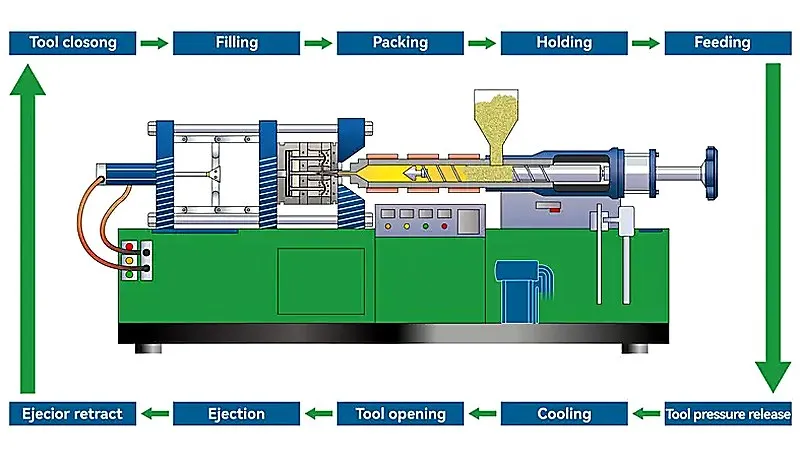
Procesplanning moet ook de nylonkeuze verbinden met machine- en matrijsgedrag. Controleer de schroefhersteltijd en verblijftijd met de instellingen voor schroefherstel en verblijftijd, vergelijk het koelingseffect via productietijdanalyse en controleer het dimensionale risico via krimpanalyse van de matrijs vóór productiegoedkeuring.
- PA66 biedt de hoogste stijfheid en temperatuurbestendigheid van de vier graden, waardoor het de standaardkeuze is voor automotive en elektrische toepassingen
- PA6 neemt meer vocht op dan PA66, maar kost 15-25% minder en verwerkt bij lagere temperaturen, ideaal voor consumenten- en industriële onderdelen
- PA12 heeft de laagste vochtopname (0,25%) waardoor dimensionale stabiliteit met nauwe toleranties mogelijk is in vochtige omgevingen
- PA1010 levert de beste chemische bestendigheid en flexibiliteit, afgeleid van hernieuwbare ricinusoliegrondstof
- Alle vier kwaliteiten vereisen grondige droging (80-120°C, 4-8 uur) voor het vormen om sproeien en hydrolytische degradatie te voorkomen
Wat zijn PA6, PA66, PA12 en PA1010 Nylon-graden?
PA6, PA66, PA12 en PA1010 zijn vier semikristallijne polyamidesoorten die zijn ontwikkeld voor verschillende thermische, mechanische en vochtomstandigheden. Voor leveranciersvergelijking en inkoopplanning behandelt onze sourcinggids voor leveranciers van spuitgietwerk de voorbereiding van RFQ’s, kwalificatie en controles van commerciële risico’s.
Nylon-graden zijn semi-kristallijne technische thermoplasten. Polyamide (nylon) wordt gekenmerkt door sterke waterstofbindingen tussen amidegroepen in aangrenzende polymeerketens. Deze intermoleculaire binding geeft nylon zijn kenmerkende combinatie van hoge sterkte, taaiheid en slijtvastheid. Het getal in elke graadnaam geeft het aantal koolstofatomen in het monomeer aan, wat direct van invloed is op de kristalliniteit, het smeltpunt en het vochtopnamegedrag.
Begrijpen van Polyamide Thermoplastfamilies
PA6 (polyamide 6) wordt geproduceerd door ringopeningspolymerisatie van caprolactam, een zes-koolstofmonomeer. Het smelt bij ongeveer 220°C en biedt goede mechanische eigenschappen tegen gematigde kosten. PA6 kristalliseert langzamer dan PA66, wat iets langere cyclustijden geeft maar het risico op vervorming bij complexe geometrieën vermindert. PA6 is wereldwijd de meest gespoten nylonkwaliteit qua volume, gebruikt in alles van kabelbinders tot inlaatspruitstukken voor auto’s.
PA66: Hoog-stijve technische nylon
PA66 (polyamide 6,6) wordt geproduceerd door polycondensatie van hexamethyleendiamine en adipinezuur, beide zes-koolstofmonomeren. De symmetrische moleculaire structuur resulteert in een hogere kristalliniteit en een hoger smeltpunt van ongeveer 260°C. PA66 is bij kamertemperatuur ongeveer 15 tot 20 procent stijver dan PA6 en behoudt mechanische eigenschappen bij verhoogde temperaturen beter dan elke ongevulde nylonkwaliteit. Dit maakt PA66 de standaardkeuze voor motorcompartimentonderdelen in auto’s en elektrische connectoren die boven 120°C werken.
PA12: Nauwkeurig nylon met laag vochtgehalte
PA12 (polyamide 12) wordt geproduceerd uit laurolactam, een twaalf-koolstofmonomeer. De langere alifatische keten vermindert de dichtheid van amidegroepen langs de polymeerketen, wat de vochtabsorptie drastisch verlaagt tot ongeveer 0,25 procent in vergelijking met 2,5 tot 3,0 procent voor PA6. PA12 smelt bij ongeveer 178°C, verwerkt gemakkelijk en biedt uitstekende dimensionale stabiliteit in vochtige omgevingen. Het heeft een aanzienlijke prijspremie ten opzichte van PA6 en PA66, typisch 3 tot 5 keer hoger per kilogram.
PA1010: Bio-Based Flexibel Nylon
PA1010 (polyamide 10,10) wordt geproduceerd uit sebaicazuur en decamethyleendiamine, beide afkomstig van ricinusolie. Deze hernieuwbare grondstofoorsprong maakt PA1010 aantrekkelijk voor toepassingen die bio-gebaseerde inhoudscertificering vereisen. PA1010 combineert lage vochtopname (ongeveer 1,0 tot 1,5 procent) met goede chemische bestendigheid en flexibiliteit, waardoor het zich positioneert tussen PA12 en PA6 in zowel prestaties als kosten. Het wordt steeds meer gebruikt in automotive brandstofleidingen en hydraulische slangen waar hernieuwbare inhoud is gespecificeerd.
Wat zijn de belangrijkste eigenschapsverschillen tussen PA6, PA66, PA12 en PA1010?
PA66 is het stijfst, PA12 neemt het minste vocht op, PA6 is het goedkoopst en PA1010 biedt de beste chemische bestendigheid. Deze verschillen beïnvloeden de onderdeelprestaties, tolerantie-stabiliteit, droogtijd en vormgevingstemperatuur. Het kiezen van de verkeerde graad kan vermijdbare vervorming, broosheid of vochtgerelateerde dimensionale drift veroorzaken.
| Eigendom | PA6 | PA66 | PA12 | PA1010 |
|---|---|---|---|---|
| Smeltpunt | 220°C | 260°C | 178°C | 200°C |
| Waterabsorptie (23°C/50%RH) | 2.8% | 2.5% | 0.25% | 1.2% |
| Trekkracht (droog) | 80 MPa | 85 MPa | 50 MPa | 55 MPa |
| Buigmodulus (droog) | 2.8 GPa | 3.0 GPa | 1.5 GPa | 1.8 GPa |
| Izod-impact (droog) | 45 J/m | 40 J/m | NB* | NB* |
| Kosten (relatief aan PA6) | 1.0x | 1.15x | 3.5x | 2.5x |
Vochtopname is de belangrijkste onderscheidende factor voor verwerking en toepassingsontwerp. PA6 en PA66 nemen bij evenwicht in een omgeving met 50 procent relatieve luchtvochtigheid 2.5 tot 3.0 procent vocht op, wat een maatuitzetting van 0.5 tot 1.0 procent veroorzaakt en de stijfheid met 50 tot 60 procent verlaagt ten opzichte van de droge toestand direct na het vormen. PA12 neemt slechts 0.25 procent op, waardoor de maatverandering verwaarloosbaar is. Een correct ontwerp van de spuitgietmatrijs houdt rekening met deze materiaalspecifieke krimpverschillen. Vereist uw toepassing nauwe toleranties in een vochtige omgeving, dan is PA12 ondanks de hogere grondstofkosten duidelijk de juiste keuze.
De gekerfde Izod-impactwaarden gemarkeerd met NB (geen breuk) voor PA12 en PA1010 geven aan dat deze kwaliteiten van nature taai zijn en geen brosse breuk vertonen in standaard impacttests. Deze taaiheid, gecombineerd met lage vochtabsorptie, maakt PA12 en PA1010 de voorkeurskeuzes voor brandstofleidingen, hydraulische slangen en pneumatische fittingen waar slagvastheid moet worden behouden over temperatuur- en vochtigheidsbereiken.
Wat zijn de Kritieke Procesparameters voor Elke Nylonkwaliteit?
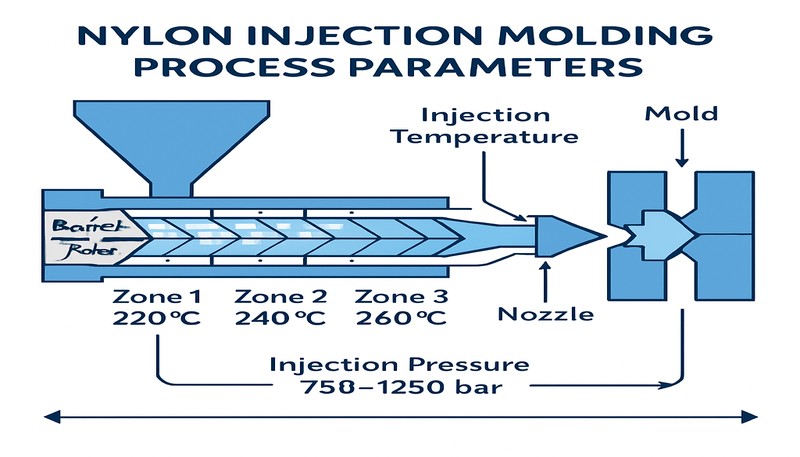
De verwerking van nylon is gevoelig voor vocht en smelttemperatuur. De parameters voor het spuitgieten van nylon1 stellen hogere eisen dan gangbare kunststoffen zoals PP of PE door de hoge smelttemperatuur, het smalle procesvenster en de vochtgevoeligheid van het materiaal. Een verkeerde droging en smelttemperatuur zijn de meest voorkomende oorzaak van defecte nylon onderdelen in productie.
"Nylon vóór het spuitgieten drogen tot een vochtgehalte onder 0.2 procent is de verwerkingsbeslissing met de grootste impact—onvoldoende droging veroorzaakt zilverstrepen, een lager molecuulgewicht door hydrolysis2 en maatinstabiliteit die met geen enkele latere parameterwijziging kan worden hersteld"True
Nylon is hygroscopisch en neemt snel vocht op uit de omgevingslucht. Het verwerken van nat nylon zorgt ervoor dat het water reageert met amidebindingen in de polymeerketen (hydrolyse), wat het molecuulgewicht en de mechanische eigenschappen permanent vermindert. Deze schade is onomkeerbaar en niet alleen door uiterlijk detecteerbaar.
"PA6 en PA66 kunnen bij dezelfde smelttemperatuur worden verwerkt omdat beide polyamiden met vergelijkbare moleculaire structuren zijn"False
PA6 smelt bij ongeveer 220°C en wordt verwerkt bij 240-270°C, terwijl PA66 smelt bij 260°C en een smelttemperatuur van 270-300°C vereist. Het gebruik van PA6-temperaturen voor PA66 leidt tot onvolledige smelting en een hoge viscositeit. Het gebruik van PA66-temperaturen voor PA6 veroorzaakt thermische degradatie.
Aanbevolen droogtijden en -temperaturen per kwaliteit
| Parameterwaarde | PA6 | PA66 | PA12 | PA1010 |
|---|---|---|---|---|
| Droogtemperatuur | 80-100°C | 80-100°C | 70-80°C | 80-90°C |
| Droogtijd | 4-8 uur | 4-8 uur | 2-4 uur | 3-6 uur |
| Streefwaarde Vochtigheid | <0.2% | <0.2% | <0.1% | <0.15% |
| Smelttemperatuur | 240-270°C | 270-300°C | 190-230°C | 210-250°C |
| Schimmel Temperatuur | 60-90°C | 70-100°C | 30-50°C | 40-70°C |
| Injectiedruk | 80-130 MPa | 90-140 MPa | 70-110 MPa | 75-120 MPa |
De droogeisen verschillen aanzienlijk tussen de vier kwaliteiten. PA6 en PA66 vereisen 4 tot 8 uur bij 80 tot 100°C in een ontvochtigende trechterdroger om onder 0,2 procent vochtgehalte te komen. PA12 heeft slechts 2 tot 4 uur bij 70 tot —80°C nodig vanwege de lage vochtopname. PA1010 zit daar tussenin met 3 tot 6 uur bij 80 tot 90°C. Controleer het vochtgehalte voor het spuitgieten met een Karl Fischer-titratietest. Alle vier kwaliteiten moeten direct voor het spuitgieten worden gedroogd — gedroogde korrels langer dan 30 minuten aan omgevingslucht blootstellen maakt het droogproces ongedaan.
Hoe Beïnvloedt Matrijzenontwerp de Nylonproductkwaliteit?
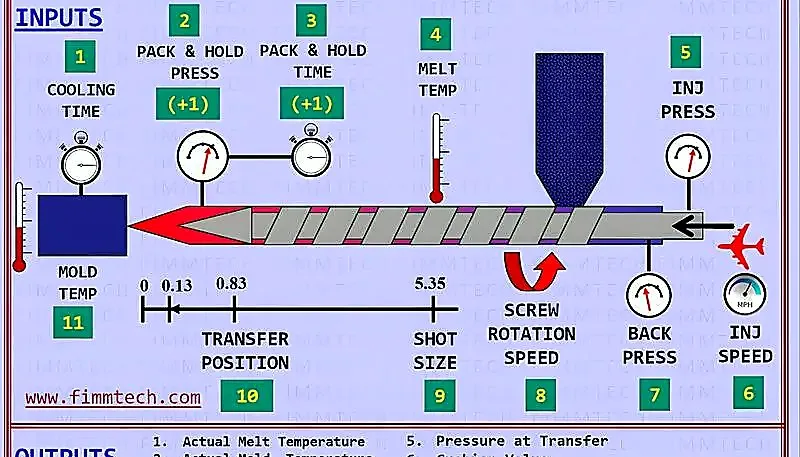
Het matrijsontwerp bepaalt de kwaliteit van nylon onderdelen vooral via schuif bij de aanspuiting, gelijkmatige koeling en doeltreffende ontluchting. Een correct spuitgietmatrijsontwerp3 voorkomt braamvorming, vloeinaden en maatinstabiliteit, die door de hygroscopische aard van nylon worden versterkt.
Het ontwerp van de inloop voor nylon onderdelen moet prioriteit geven aan stromingsbalans en afschuifverhitting minimaliseren. Randinlopen en onderwaterinlopen zijn gebruikelijk voor PA6- en PA66-onderdelen, terwijl heetkanaalsystemen met klepinlopen materiaalverspilling verminderen bij grootschalige productie. De inloopgrootte moet 50 tot 80 procent van de nominale wanddikte op de inloopplaats zijn om straalvorming te minimaliseren en een progressieve holtevulling te garanderen zonder bevriezing voordat het napersproces voltooid is.
Het ontwerp van koelkanalen heeft direct invloed op de cyclusduur en de dimensionale consistentie van nylon onderdelen. Omdat PA6 en PA66 relatief hoge matrijs-temperatuurvereisten hebben (60 tot 100°C), bieden conforme koelkanalen het meest uniforme thermische profiel en verminderen ze kromtrekken bij complexe geometrieën. In de praktijk hebben we vastgesteld dat het beperken van de matrijstemperatuurvariatie tot onder 5°C over het holtevlak de dimensionale spreiding met 30 tot 40 procent vermindert bij PA66-onderdelen met nauwe toleranties. Dit is vooral cruciaal voor glasgevulde kwaliteiten waarbij vezeloriëntatie differentiële krimp versterkt.
In onze fabriek in Shanghai hebben we 47 spuitgietmachines met een sluitkracht van 90T tot 1850T, wat ons het bereik geeft om alles aan te kunnen, van micro-nylon tandwielen op kleine machines tot grote auto-constructiebeugels op persen met hoog tonnage. Onze interne matrijsproductiefaciliteit stelt ons in staat snel te itereren op inloopplaatsing en koelontwerp bij het optimaliseren van nieuwe nylon onderdeelprogramma’s.
Het ontwerp van het uitwerpsysteem vereist bij nylon extra aandacht, omdat de hoge wrijvingscoëfficiënt en krimp rond kernen aanzienlijke uitwerpkrachten veroorzaken. Een toereikende lossingshoek (minimaal 1 graad voor ongevuld nylon, 1.5 tot 2 graden voor glasgevulde kwaliteiten) en voldoende oppervlak van de uitwerppennen voorkomen penafdrukken en vervorming tijdens het uitwerpen. Afstroopplaten hebben de voorkeur voor cilindrische nylon onderdelen waarbij concentriciteit belangrijk is.
Wat zijn veelvoorkomende spuitgietfouten bij nylon en hoe voorkom je ze?
De meest voorkomende spuitgietfouten bij nylon zijn vochtschade (sproei, hydrolyse), temperatuurfouten (korte stuks, uitstulpingen) en dimensionale vervorming. Het identificeren van de categorie waarin uw fout valt, is de snelste weg naar een oplossing.
"PA12 kost per kilogram 3 tot 5 keer meer dan PA6 en is daardoor onrendabel voor toepassingen waarin de lage vochtopname niet nodig is"True
PA12-grondstof kost typisch €4-8-12/kg versus €2-3/kg voor PA6. Deze premie is alleen gerechtvaardigd wanneer de toepassing specifiek dimensionale stabiliteit in vochtige omgevingen, brandstofbestendigheid of lage-temperatuurflexibiliteit vereist die PA6 niet kan bieden.
"Toevoeging van 30% glasvezel aan PA6 elimineert vochtopname volledig, zodat glasgevulde kwaliteiten vóór het spuitgieten niet hoeven te worden gedroogd"False
Glasvezelversterking vermindert de vochtopname, maar elimineert deze niet. Met glasgevuld PA6 neemt nog steeds ongeveer 1,5% vocht op bij evenwicht en vereist hetzelfde droogprotocol als ongevulde kwaliteiten. Het spuitgieten van nat glasgevuld nylon veroorzaakt dezelfde sproei- en hydrolyseschade, met het extra risico van degradatie van de vezel-matrix-interface.
Splay en zilverachtige strepen zijn de meest zichtbare vochtgerelateerde defecten. Deze verschijnen als waaiervormige oppervlaktemarkeringen op het onderdeel waar waterdamp zich snel uitbreidt wanneer het gesmolten materiaal de holte binnengaat. De oplossing is altijd meer droogtijd of een hogere droogtemperatuur — nooit een parameteraanpassing aan de machine. Controleer het dauwpunt van de trechterdroger (streefwaarde onder -30°C) en verifieer het werkelijke vochtgehalte van het materiaal met een Karl Fischer-test voordat u iets anders aanpast.
Vervorming in nylon onderdelen wordt veroorzaakt door verschillen in krimp tussen de stroom- en dwarsstroomrichtingen, versterkt door vezeloriëntatie in glasgevulde kwaliteiten. De meest effectieve tegenmaatregel is een uniforme matrixtemperatuur over alle holteoppervlakken, gevolgd door gebalanceerde plaatsing van de ingang die de stroomlengtes gelijk maakt. Nabewerkingsbevestigingen die onderdelen in de gewenste geometrie houden tijdens de eerste 24 uur van afkoeling, kunnen vervorming met 40 tot 60 procent verminderen voor platte onderdelen met variërende wanddiktes.
Hoe Selecteer Je de Juiste Nylonkwaliteit voor Je Applicatie?
De juiste nylonkwaliteit wordt bepaald door drie factoren: bedrijfstemperatuur, tolerantiebehoeften en blootstelling aan chemicaliën. Match deze vereisten met elk kwaliteitseigenschappenprofiel hieronder.
| Toepassingsvereiste | Aanbevolen Kwaliteit | Belangrijke Reden |
|---|---|---|
| Bedrijfstemperatuur boven 120°C | PA66 | Hoogste warmtevervormingstemperatuur van de vier kwaliteiten |
| Strakke toleranties in vochtige omgeving | PA12 | Laagste vochtopname (0,25%) minimaliseert dimensionale verandering |
| Kostengevoelige structurele onderdelen onder 100°C | PA6 | 15-25% lagere materiaalkosten dan PA66 met voldoende prestaties |
| Brandstof- of chemische bestendigheid vereist | PA12 of PA1010 | Superieure chemische bestendigheid tegen koolwaterstoffen en oplosmiddelen |
| Bio-gebaseerde inhoudscertificering nodig | PA1010 | Afgeleid van hernieuwbare castorolie grondstof |
| Automobiel onder de motorkap componenten | PA66 (glasgevuld) | Behoudt stijfheid bij verhoogde temperaturen door vezelversterking |
| Medische slangen en katheters | PA12 | Flexibiliteit, biocompatibiliteit en chemische inertie |
| Elektrische connectoren (UL94 V0) | PA66 (vlamvertragend) | Bereikt V0 bij 0,4 mm met de juiste vlamvertragende additieven |
Automobieltoepassingen verbruiken meer dan 40 procent van de wereldwijde PA66-productie. Onder de motorkapcomponenten zoals inlaatspruitstukken, motorafdekkingen en radiator-uiteinden functioneren bij temperaturen boven de 120°C, waarbij PA6 zijn stijfheid verliest. Elektrische connectoren, sensorgehuizen en zekeringkasten gebruiken vlamvertragende PA66-kwaliteiten (V0-geclassificeerd) die voldoen aan de brandveiligheidsnormen van UL94. Binnenafwerking en structurele beugels gebruiken PA6 of glasgevuld PA6 voor kostenefficiëntie waar de temperatuurblootstelling matig is.
Elektrische en elektronische toepassingen benutten de uitstekende diëlektrische eigenschappen en vlamvertraging van nylon. PA66-kwaliteiten met rode fosfor of stikstofhoudende vlamvertragers halen UL94-klasse V0 bij 0.4mm wanddikte en zijn geschikt voor connectoren, schakelaars en behuizingen van stroomonderbrekers. De groeiende EV-markt stimuleert de vraag naar PA66-componenten voor batterijmodules die vlamvertraging met constructieve prestaties combineren.
Fabrikanten van consumentengoederen kiezen nylon vanwege de balans tussen taaiheid en oppervlaktekwaliteit. Houders voor elektrisch gereedschap gebruiken glasgevuld PA6 voor slagvastheid tegen redelijke kosten. Sportartikelen zoals skibindingen en helmhardware vertrouwen op de vermoeiingsweerstand van PA66. Keukenapparaatcomponenten die in contact komen met hete oppervlakken vereinen warmtegestabiliseerde PA66-kwaliteiten die geschikt zijn voor continu gebruik bij 130°C.
Medische hulpmiddeltoepassingen vereisen specifieke nylonkwaliteiten met gedocumenteerde biocompatibiliteit. PA12 domineert katheter- en slangtoepassingen vanwege flexibiliteit en chemische inertie. PA6 wordt gebruikt in handvatten van chirurgische instrumenten waar autoclaafsterilisatie thermische cycli tussen 121-134°C vereist. ISO 10993-testing bevestigt biocompatibiliteit voor patiëntcontacttoepassingen en materiaaltraceerbaarheid is verplicht voor alle medische nylonprojecten.
Met meer dan 20 jaar ervaring in spuitgieten en een team van 8 senior engineers hebben we meer dan 400 kunststofmaterialen verwerkt op onze productievloer. In onze productiebeoordelingen volgen onze engineers harsvochtigheid, smelttemperatuur, eerste-shot defectpatronen en dimensionale afwijkingen voordat een nylonklus wordt vrijgegeven. Ons kwaliteitswerkproces van IQC via procesinspectie tot OQC vangt nylon-specifieke defecten zoals spetters en hydrolytische degradatie op voordat ze uw assemblagelijn bereiken.
Veelgestelde vragen
Hoe lang moet ik PA6 en PA66 drogen voor spuitgieten?
PA6 en PA66 vereisen 4 tot 8 uur drogen bij 80 tot 100 graden Celsius in een ontvochtigende trechterdroger om een vochtgehalte onder 0,2 procent te bereiken. De exacte tijd hangt af van het initiële vochtgehalte, de korrelgrootte en de luchtstroomcapaciteit van de droger. PA66, met zijn hoger smeltpunt, is iets gevoeliger voor restvocht dan PA6, dus kies bij twijfel het langere uiteinde van het droogbereik. Controleer altijd met een gekalibreerde vochtanalysator voor de productie start om spetters en hydrolysedefecten in gespoten onderdelen te vermijden.
Kunnen PA6 en PA66 op dezelfde machine worden gespoten zonder aanpassingen?
Ja, PA6 en PA66 kunnen op dezelfde machine worden verwerkt, maar vereisen verschillende temperatuurprofielen. PA66 heeft cilindertemperaturen nodig van 270 tot 300 graden Celsius versus 240 tot 270 graden Celsius voor PA6. De matrijs-temperatuur verschilt ook: PA66 presteert het beste bij 70 tot 90 graden Celsius, terwijl PA6 werkt bij 60 tot 80 graden Celsius. Omschakeling vereist het grondig doorspoelen van de cilinder met een compatibel overgangsmateriaal om kruisbesmetting en gedegradeerde onderdelen te voorkomen. Laat 15 tot 20 minuten voor temperatuur-stabilisatie na het aanpassen van de cilinderinstellingen tussen kwaliteiten.
Wat gebeurt er als nylon wordt gespoten zonder goed te drogen?
Het spuiten van ongedroogd nylon veroorzaakt drie progressieve problemen. Ten eerste veroorzaakt vocht oppervlaktespetters en zilverachtige strepen die het uiterlijk van het onderdeel bederven. Ten tweede triggert water hydrolyse bij verwerkingstemperaturen, waardoor amidebindingen breken en het molecuulgewicht permanent afneemt, wat de slagsterkte en rek bij breuk met 30 tot 50 procent vermindert. Ten derde veroorzaakt ingesloten vocht dimensionale variatie doordat onderdelen tijdens het koelen ongelijkmatig vocht opnemen en afgeven. Deze defecten kunnen na het spuiten niet worden gerepareerd omdat de schade aan de polymeerketen onomkeerbaar is en aangetaste onderdelen moeten worden afgekeurd.
Is PA12 de aanzienlijke prijspremie ten opzichte van PA6 waard voor algemene toepassingen?
Voor algemene toepassingen waarbij vochtopname aanvaardbaar is en de bedrijfstemperaturen onder 80 graden Celsius blijven, is PA6 kosteneffectiever met een prijs van ongeveer een derde van die van PA12. PA12 rechtvaardigt zijn premie alleen wanneer u de uitzonderlijk lage vochtopname van 0,25 procent nodig heeft, superieure dimensionale stabiliteit in vochtige omgevingen, brandstof- en chemische weerstand voor autobrandstofleidingen, of uitstekende lage-temperatuurflexibiliteit tot min 40 graden Celsius. Evalueer de totale kosten van kwaliteitsfouten en conditionering na het spuitgieten voordat u kiest voor PA6 in plaats van PA12 voor precisietoepassingen.
Hoe beïnvloedt glasvezelversterking de verwerking van nylon bij spuitgieten?
Met glasvezel gevulde nylon kwaliteiten, meestal 30 procent korte glasvezel, vereisen 10 tot 20 graden Celsius hogere cilindertemperaturen en 20 tot 30 procent hogere inspuitdrukken in vergelijking met niet-gevulde kwaliteiten. De glasvezels verhogen de smeltviscositeit, verminderen krimp van 1,2 procent naar 0,3 procent voor PA6 en verbeteren de stijfheid met twee tot drie keer. Gereedschapsslijtage neemt aanzienlijk toe door vezelslijtage, dus gehard matrijsstaal zoals H13 of S136 wordt aanbevolen voor productieseries van meer dan 100.000 cycli. Schroefontwerp moet een lagere compressieverhouding gebruiken om vezelbreuk tijdens plastificering te minimaliseren.
Wat is het verschil tussen geconditioneerde en droog-gespoten nylon eigenschappen?
Droog-als-gegoten eigenschappen worden direct na het gieten gemeten wanneer het vochtgehalte bijna nul is. Geconditioneerde eigenschappen weerspiegelen evenwichtige vochtopname, meestal bereikt bij 50 tot 60 procent relatieve luchtvochtigheid gedurende 48 uur. Geconditioneerd PA6 vertoont vaak 40 tot 50 procent lagere treksterkte maar 2 tot 3 keer hogere slagvastheid dan droog-als-gegoten gegevens. Specificeer altijd de gebruikte conditie in ontwerpberekeningen, tolerantiebeoordelingen en leveranciersaanvragen, zodat veiligheidsfactoren niet gebaseerd zijn op de verkeerde dataset. Dit onderscheid is cruciaal voor draagkrachtige nylon onderdelen.
Welke krimpwaarden moet ik gebruiken voor nylon matrijsontwerp?
Ongevuld PA6 krimpt ongeveer 0,8 tot 1,4 procent, terwijl ongevuld PA66 1,0 tot 1,5 procent krimpt, afhankelijk van wanddikte, poortlocatie en matrijs-temperatuurinstellingen. Glasgevulde kwaliteiten krimpen aanzienlijk minder: 0,3 tot 0,7 procent voor PA6-GF30 en 0,4 tot 0,8 procent voor PA66-GF30. Krimp is anisotroop in glasgevulde kwaliteiten, wat betekent dat krimp in stroomrichting en dwarsrichting 0,2 tot 0,4 procent verschillen. Uw matrijsontwerper moet rekening houden met deze anisotropie in de berekeningen van de holtedimensies om strakke toleranties consistent over productieruns te behalen.
Kan nylon overgedroogd worden vóór het gieten?
Ja, overmatig drogen boven 110 graden Celsius of langer dan 12 uur veroorzaakt thermische oxidatie die de korrels geel maakt en mechanische eigenschappen vermindert, met name slagvastheid en rek bij breuk. Voor hermalen of gerecycled nylon is het risico hoger omdat de thermische geschiedenis cumulatief is over meerdere verwerkingscycli. Als drogen langer dan 8 uur moet duren vanwege productieplanningvertragingen, verlaag dan de temperatuur naar 70 tot 80 graden Celsius om het materiaal veilig te houden tot de productie start. Monitor de korrelkleur als een snelle visuele indicator van schade door overmatig drogen.
Waarom ZetarMold voor nylon spuitgieten?
ZetarMold is een betrouwbare partner voor nylon spuitgieten met 47 persen (90T–1850T), toegewijde per-grade droogsystemen en meer dan 20 jaar polyamide-expertise. Wij behouden toegewijde trechterdroogers voor elke nylonkwaliteit om kruisbesmetting te voorkomen en voeren geautomatiseerde vochtbewaking uit vóór elke productieploeg. Voor complexe uitdagingen in het ontwerp van spuitgietmatrijzen voor glasgevuld nylon, geeft ons technische team DFM-feedback binnen 48 uur.
ZetarMold is een sterke nylon vormpartner omdat we 47 persen, speciale droogsystemen en 20+ jaar polyamide proceservaring combineren. We houden speciale hopperdrogers voor elke nylon kwaliteit om kruisbesmetting te voorkomen en voeren automatische vochtchecks uit voordat de productie start. Ons engineeringteam kan u helpen PA6, PA66, PA12 en PA1010 te vergelijken op tolerantie, warmte, chemische en kostvereisten voordat de tooling definitief is.
Vuistregel: droog PA6/PA66 vóór het vormen 4–8 uur bij 80–100°C. Kies PA66 voor onderdelen boven 120°C, PA6 voor kostengevoelige constructieonderdelen, PA12 voor flexibele of chemicaliënbestendige toepassingen en PA1010 wanneer biogebaseerde inhoud belangrijk is.
spuitgieten van nylon: Spuitgieten van nylon is het productieproces waarbij thermoplastische polyamidematerialen met spuitgietapparatuur worden gevormd tot technische componenten met hoge sterkte en chemische bestendigheid. ↩
hydrolyse: Hydrolyse is een chemische reactie waarbij watermoleculen de amidebindingen in polymeerketens van polyamide splitsen, waardoor het molecuulgewicht permanent afneemt en de mechanische eigenschappen van nylonmaterialen verslechteren. ↩
ontwerp van spuitgietmatrijzen: het ontwerp van spuitgietmatrijzen is de technische discipline die de gereedschapsgeometrie, de lay-out van koelkanalen, de plaatsing van aanspuitpunten en de optimalisatie van het uitwerpsysteem omvat om maatnauwkeurige kunststof onderdelen te produceren. ↩