PA6, PA66, PA12 ve PA1010 en yaygın dört enjeksiyon kalıplama naylon sınıfıdır; her birinin farklı uygulamalara uygun olmasını sağlayan farklı nem emilimi, sıcaklık direnci ve mekanik özellikleri vardır. Yanlış sınıf seçimi boyutsal kararsızlığa, gevrek kırılmaya veya gereksiz maliyete yol açar. Bu kılavuz, enjeksiyon kalıplama projeniz için doğru malzemeyi belirleyebilmeniz amacıyla dört sınıfı yan yana karşılaştırır.
Malzeme bilgisi için poliamid, Nylon 6 ve Nylon 66 hakkındaki harici kaynakları tedarikçinizin kurutma veri sayfasıyla karşılaştırın. Bu kaynaklar terminoloji için yararlıdır; ancak nihai işlem penceresi reçine sınıfı, nem testi, kalıp sıcaklığı ve deneme baskısı sonuçlarıyla doğrulanmalıdır.
İşlem planlaması ayrıca naylon seçimini makine ve kalıp davranışıyla bağlamalıdır. Vida geri kazanımı ve kalış süresi kurulumuyla vida geri kazanımı ve kalış süresini gözden geçirin, üretim süresi analiziyle soğutma etkisini karşılaştırın ve üretim onayından önce kalıp büzülme analiziyle boyutsal riski kontrol edin.
- PA66, dört sınıf arasında en yüksek sertlik ve sıcaklık direncini sunar, bu da onu otomotiv ve elektrik uygulamaları için varsayılan seçenek yapar
- PA6, PA66'dan daha fazla nem emer ancak -25 daha az maliyetlidir ve daha düşük sıcaklıklarda işlenir, tüketici ve endüstriyel parçalar için idealdir
- PA12 en düşük nem emilimine (%0.25) sahiptir, nemli ortamlarda sıkı toleranslı boyutsal kararlılık sağlar
- PA1010, yenilenebilir hint yağı hammaddesinden türetilen en iyi kimyasal direnci ve esnekliği sağlar
- Tüm dört sınıf, püskürtme ve hidrolitik bozulmayı önlemek için kalıplamadan önce kapsamlı kurutma (80-120°C, 4-8 saat) gerektirir
PA6, PA66, PA12 ve PA1010 Naylon Dereceleri Nedir?
PA6, PA66, PA12 ve PA1010; farklı termal, mekanik ve nem koşulları için geliştirilmiş dört yarı kristalin poliamid sınıfıdır. Tedarikçi karşılaştırması ve satın alma planlaması için enjeksiyon kalıplama tedarikçisi bulma kılavuzumuz RFQ hazırlığını, yeterlilik değerlendirmesini ve ticari risk kontrollerini ele alır.
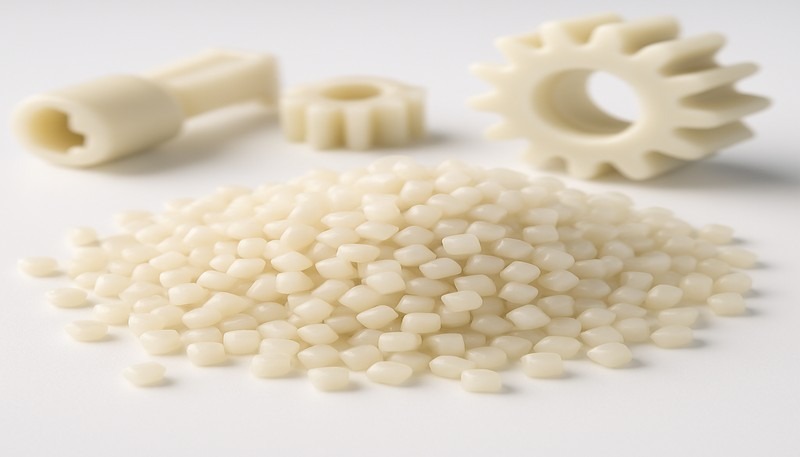
Naylon dereceleri yarı-kristal mühendislik termoplastikleridir. Poliamid (naylon), bitişik polimer zincirlerindeki amid grupları arasındaki güçlü hidrojen bağı ile karakterize edilir. Bu moleküller arası bağlanma, naylona yüksek mukavemet, tokluk ve aşınma direnci kombinasyonunu kazandırır. Her derece adındaki sayı, monomerdeki karbon atomu sayısını gösterir ve bu doğrudan kristallik, erime noktası ve nem emme davranışını etkiler.
Poliamid Termoplastik Ailelerini Anlamak
PA6 (poliamit 6), altı karbonlu bir monomer olan kaprolaktamın halka açılması polimerizasyonu ile üretilir. Yaklaşık 220°C’de erir ve makul maliyetle iyi mekanik özellikler sunar. PA6, PA66’dan daha yavaş bir hızda kristalleşir, bu da biraz daha uzun döngü sürelerine neden olur ancak karmaşık geometrilerde bükülme riskini azaltır. PA6, hacim olarak dünya çapında en yaygın kalıplanan naylon sınıfıdır; kablo bağlarından otomotiv emme manifoldlarına kadar her şeyde kullanılır.
PA66: Yüksek Sertlikli Mühendislik Naylonu
PA66 (poliamid 6,6), her ikisi de altı karbonlu monomer olan heksametilendiamin ve adipik asidin polikondenzasyonu ile üretilir. Simetrik moleküler yapı, daha yüksek kristallik ve yaklaşık 260°C’lik daha yüksek bir erime noktası üretir. PA66, oda sıcaklığında PA6’dan yaklaşık yüzde 15 ila 20 daha serttir ve yüksek sıcaklıklarda mekanik özelliklerini dolgusuz herhangi bir naylon sınıfından daha iyi korur. Bu, PA66’yı 120°C’nin üzerinde çalışan kaput altı otomotiv bileşenleri ve elektrik konnektörleri için standart seçim yapar.
PA12: Düşük Nem Hassas Naylon
PA12 (poliamid 12), on iki karbonlu bir monomer olan laurolaktamdan üretilir. Daha uzun alifatik zincir, polimer omurgası boyunca amid gruplarının yoğunluğunu azaltır, bu da nem emilimini PA6’nın %2,5 ila %3,0’ına kıyasla yaklaşık %0,25’e kadar önemli ölçüde düşürür. PA12 yaklaşık 178°C’de erir, kolay işlenir ve nemli ortamlarda mükemmel boyutsal stabilite sağlar. PA6 ve PA66’ya göre kilogram başına tipik olarak 3 ila 5 kat daha yüksek önemli bir fiyat primine sahiptir.
PA1010: Biyobazlı Esnek Naylon
PA1010 (poliamit 10,10), her ikisi de hint yağından elde edilen sebasiik asit ve dekametilendiaminden üretilir. Bu yenilenebilir hammadde kökeni, PA1010’u biyo-tabanlı içerik sertifikasyonu gerektiren uygulamalar için cazip kılar. PA1010, düşük nem emilimi (yaklaşık %1.0 ila %1.5) ile iyi kimyasal direnç ve esnekliği birleştirerek hem performans hem de maliyet açısından PA12 ile PA6 arasında bir konumdadır. Yenilenebilir içeriğin belirtildiği otomotiv yakıt hatları ve hidrolik borularda kullanımı artmaktadır.
PA6, PA66, PA12 ve PA1010 Arasındaki Temel Özellik Farkları Nelerdir?
PA66 en sert, PA12 en az nem emer, PA6 en düşük maliyetlidir ve PA1010 en iyi kimyasal direnci sunar. Bu farklılıklar parça performansını, tolerans stabilitesini, kurutma süresini ve kalıplama sıcaklığını etkiler. Yanlış dereceyi seçmek, kaçınılabilir eğrilme, kırılganlık veya nemle ilgili boyutsal sapma yaratabilir.
| Mülkiyet | PA6 | PA66 | PA12 | PA1010 |
|---|---|---|---|---|
| Erime Noktası | 220°C | 260°C | 178°C | 200°C |
| Nem Emilimi (23°C/ RH) | 2.8% | 2.5% | 0.25% | 1.2% |
| Çekme Mukavemeti (kuru) | 80 MPa | 85 MPa | 50 MPa | 55 MPa |
| Eğilme Modülü (kuru) | 2.8 GPa | 3.0 GPa | 1.5 GPa | 1.8 GPa |
| Izod Darbe (kuru) | 45 J/m | 40 J/m | NB* | NB* |
| Maliyet (PA6'ya göre) | 1.0x | 1.15x | 3.5x | 2.5x |
Nem emilimi, işleme ve uygulama tasarımı açısından en önemli ayırt edici özelliktir. PA6 ve PA66, %50 bağıl nemli ortamda denge hâlinde yüzde 2.5 ila 3.0 nem emer; bu, yüzde 0.5 ila 1.0 boyutsal şişmeye yol açar ve kalıptan kuru çıkmış duruma göre rijitliği yüzde 50 ila 60 azaltır. PA12 yalnızca yüzde 0.25 emer, bu nedenle boyutsal değişimi ihmal edilebilir düzeydedir. Doğru enjeksiyon kalıbı tasarımı, malzemeye özgü bu çekme farklarını hesaba katar. Uygulamanız nemli ortamda sıkı tolerans gerektiriyorsa yüksek hammadde maliyetine rağmen PA12 açıkça doğru seçimdir.
PA12 ve PA1010 için NB (no break) olarak işaretlenen çentikli Izod darbe değerleri, bu sınıfların doğası gereği tok olduğunu ve standart darbe testlerinde gevrek kırılma göstermediğini belirtir. Düşük nem emilimiyle birleşen bu tokluk, sıcaklık ve nem aralıklarında darbe dayanımının korunması gereken yakıt hatları, hidrolik borular ve pnömatik bağlantı parçaları için PA12 ve PA1010’u tercih edilen seçenekler hâline getirir.
Her Naylon Derecesi için Kritik İşleme Parametreleri Nelerdir?
Naylon işleme neme ve eriyik sıcaklığına duyarlıdır. Naylon enjeksiyon kalıplama1 parametreleri, malzemenin yüksek erime sıcaklığı, dar proses penceresi ve neme duyarlılığı nedeniyle PP veya PE gibi standart plastiklerden daha zorludur. Kurutma ve eriyik sıcaklığının yanlış ayarlanması, üretimde kusurlu naylon parçaların en yaygın nedenidir.
"Kalıplamadan önce naylonu 0.2 percent nem içeriğinin altına kadar kurutmak, proses üzerindeki en etkili karardır; yetersiz kurutma gümüşlenmeye, hydrolysis2 yoluyla moleküler ağırlığın azalmasına ve sonraki hiçbir parametre ayarının gideremeyeceği boyutsal kararsızlığa neden olur"True
Naylon higroskopiktir ve ortam havasındaki nemi hızla emer. Islak naylon işlendiğinde su, polimer zincirindeki amid bağlarıyla reaksiyona girer (hidroliz); molekül ağırlığını ve mekanik özellikleri kalıcı olarak düşürür. Bu hasar geri döndürülemez ve yalnızca görünüşten belirlenemez.
"PA6 ve PA66, benzer moleküler yapılara sahip poliamid malzemeler oldukları için aynı eriyik sıcaklığında işlenebilir"False
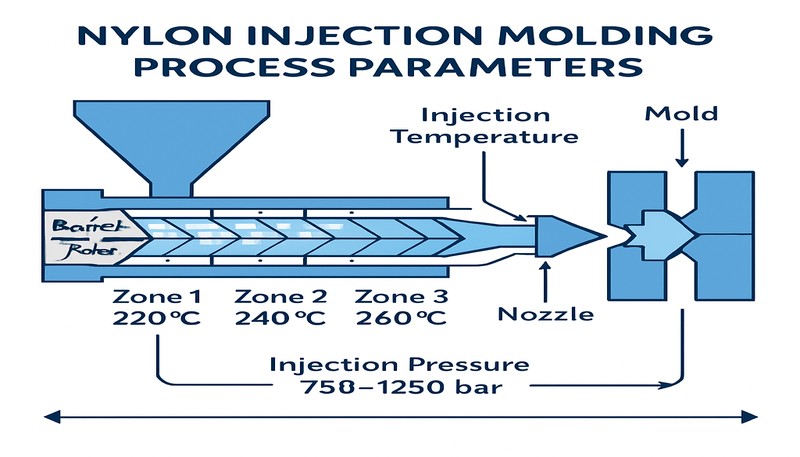
PA6 yaklaşık 220°C'de erir ve 240-270°C'de işlenir; PA66 ise 260°C'de erir ve 270-300°C eriyik sıcaklığı gerektirir. PA66 için PA6 sıcaklıklarının kullanılması eksik erimeye ve yüksek viskoziteye yol açar. PA6 için PA66 sıcaklıklarının kullanılması termal bozunmaya neden olur.
Sınıfa Göre Önerilen Kurutma Süreleri ve Sıcaklıkları
| Parametre | PA6 | PA66 | PA12 | PA1010 |
|---|---|---|---|---|
| Kurutma Sıcaklığı | 80-100°C | 80-100°C | 70-80°C | 80-90°C |
| Kuruma Süresi | 4-8 saat | 4-8 saat | 2-4 saat | 3-6 saat |
| Hedef Nem | <0.2% | <0.2% | <0.1% | <0.15% |
| Erime Sıcaklığı | 240-270°C | 270-300°C | 190-230°C | 210-250°C |
| Kalıp Sıcaklığı | 60-90°C | 70-100°C | 30-50°C | 40-70°C |
| Enjeksiyon Basıncı | 80-130 MPa | 90-140 MPa | 70-110 MPa | 75-120 MPa |
Kurutma gereksinimleri dört sınıf arasında önemli ölçüde değişir. PA6 ve PA66, nem alıcılı hazneli kurutucuda 80 ila 100°C’de 4 ila 8 saat kurutularak 0.2% nemin altına indirilmelidir. Düşük nem emilimi nedeniyle PA12 için 70 ila 80°C’de yalnızca 2 ila 4 saat yeterlidir. PA1010 ise 80 ila 90°C’de 3 ila 6 saat ile ikisinin arasında yer alır. Kalıplamadan önce nem içeriğini Karl Fischer titrasyon testiyle doğrulayın. Dört sınıf da kalıplamadan hemen önce kurutulmalıdır — kurutulmuş granüllerin 30 dakikadan uzun süre ortam havasına açık bırakılması kurutma işlemini geçersiz kılar.
Kalıp Tasarımı Naylon Parça Kalitesini Nasıl Etkiler?
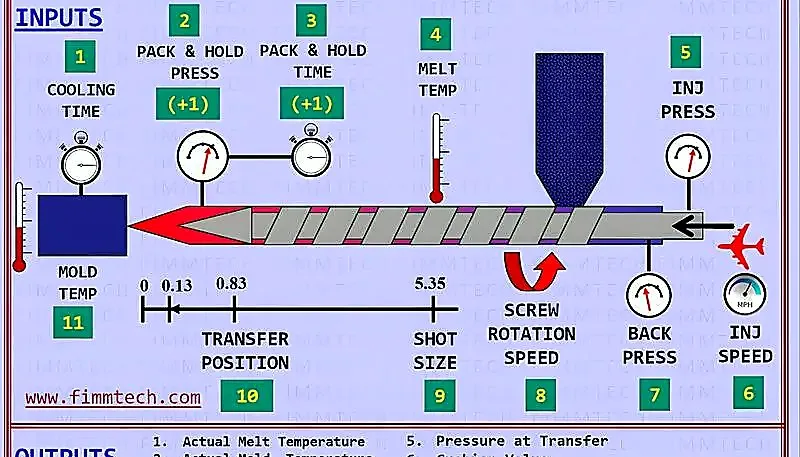
Kalıp tasarımı; girişteki kayma, soğutma homojenliği ve havalandırma etkinliği üzerinden naylon parça kalitesinin başlıca belirleyicisidir. Doğru enjeksiyon kalıbı tasarımı3, naylonun higroskopik yapısının büyüttüğü çapak, birleşme çizgisi ve boyutsal kararsızlık sorunlarını önler.
Naylon parçaların yolluk girişi tasarımında akış dengesi önceliklendirilmeli ve kesme ısınması en aza indirilmelidir. PA6 ve PA66 parçalarda kenar ve tünel girişler yaygındır; valf girişli sıcak yolluk sistemleri ise yüksek hacimli üretimde malzeme israfını azaltır. Püskürmeyi azaltmak, kademeli kalıp dolumunu sağlamak ve ütüleme tamamlanmadan donmayı önlemek için giriş boyutu, giriş konumundaki nominal et kalınlığının yüzde 50 ila 80’i olmalıdır.
Soğutma kanalı tasarımı, naylon parçaların çevrim süresini ve boyutsal tutarlılığını doğrudan etkiler. PA6 ve PA66 nispeten yüksek kalıp sıcaklıkları (60 ila 100°C) gerektirdiğinden konformal soğutma kanalları en eşit ısıl profili sağlar ve karmaşık geometrilerde çarpılmayı azaltır. Uygulamada, boşluk yüzeyindeki kalıp sıcaklığı değişimini 5°C altında tutmanın dar toleranslı PA66 parçalarda boyutsal dağılımı yüzde 30 ila 40 azalttığını gördük. Bu, elyaf yönlenmesinin farklı çekmeleri büyüttüğü cam elyaf dolgulu kalitelerde özellikle kritiktir.
Şanghay fabrikamızda 90T ile 1850T arasında kapatma kuvvetine sahip 47 enjeksiyon kalıplama makinesi işletiyoruz; bu aralık, küçük makinelerdeki mikro naylon dişlilerden yüksek tonajlı preslerdeki büyük otomotiv yapısal braketlerine kadar tüm işleri yürütmemizi sağlar. Şirket içi kalıp imalat tesisimiz, yeni naylon parça programlarını optimize ederken yolluk girişi konumu ve soğutma tasarımı üzerinde hızla yineleme yapmamıza olanak tanır.
Nylon malzemenin yüksek sürtünme katsayısı ve maçalar çevresindeki çekmesi önemli itme kuvvetleri oluşturduğundan itme sistemi tasarımı özel dikkat gerektirir. Yeterli kalıp açısı (dolgusuz nylon için minimum 1 derece, cam dolgulu sınıflar için 1.5 ila 2 derece) ve yeterli itici pim alanı, itme sırasında pim izlerini ve parça deformasyonunu önler. Eş merkezliliğin önemli olduğu silindirik nylon parçalarda sıyırıcı plakalar tercih edilir.
Yaygın Naylon Kalıplama Kusurları Nelerdir ve Nasıl Önlenir?
En yaygın nylon kalıplama kusurları nem hasarı (gümüş izi, hidroliz), sıcaklık hataları (eksik dolum, çapak) ve boyutsal çarpılmadır. Kusurunuzun hangi kategoriye girdiğini belirlemek, çözüme giden en hızlı yoldur.
"PA12'nin kilogram maliyeti PA6'dan 3 ila 5 kat daha yüksektir; bu nedenle düşük nem emiliminin gerekmediği uygulamalarda ekonomik değildir"True
PA12 ham maddesi, PA6 için $2-3/kg seviyesine karşılık genellikle $8-12/kg maliyetlidir. Bu fiyat farkı yalnızca uygulama, PA6'nın sağlayamadığı nemli ortamlarda boyutsal kararlılık, yakıt direnci veya düşük sıcaklık esnekliğini özellikle gerektiriyorsa haklıdır.
"PA6'ya 30% cam elyaf eklenmesi nem emilimini tamamen ortadan kaldırır; bu nedenle cam elyaf dolgulu sınıfların kalıplanmadan önce kurutulması gerekmez"False
Cam elyaf takviyesi nem emilimini azaltır ancak ortadan kaldırmaz. Cam elyaf dolgulu PA6, denge durumunda yine yaklaşık 1.5% oranında nem emer ve dolgusuz sınıflarla aynı kurutma protokolünü gerektirir. Islak cam elyaf dolgulu naylonun kalıplanması, elyaf-matris arayüzü bozunması riskine ek olarak aynı gümüşlenme ve hidroliz hasarına neden olur.
Gümüşlenme ve gümüş çizgiler, nemle ilgili en görünür kusurlardır. Bunlar, eriyik kalıp boşluğuna girerken su buharının hızla genleştiği bölgelerde parça üzerinde yelpaze biçimli yüzey izleri olarak görünür. Çözüm her zaman daha uzun kurutma süresi veya daha yüksek kurutma sıcaklığıdır; makinede parametre ayarı yapmak değildir. Başka bir ayar yapmadan önce huni kurutucunun çiy noktasını (hedef -30°C altı) kontrol edin ve gerçek malzeme nem içeriğini Karl Fischer testiyle doğrulayın.
Nylon parçalardaki çarpılma, akış ve akışa dik yönler arasındaki farklı çekmeden kaynaklanır; cam dolgulu sınıflarda lif yönlenmesi bunu artırır. En etkili önlem, tüm boşluk yüzeylerinde eşit kalıp sıcaklığı ve ardından akış uzunluklarını eşitleyen dengeli yolluk girişi yerleşimidir. Soğumanın ilk 24 saati boyunca parçaları istenen geometride tutan kalıplama sonrası fikstürler, cidar kalınlığı değişen düz parçalarda çarpılmayı yüzde 40 ila 60 azaltabilir.
Uygulamanız İçin Doğru Naylon Sınıfını Nasıl Seçersiniz?
Doğru naylon sınıfını üç faktör belirler: çalışma sıcaklığı, tolerans ihtiyaçları ve kimyasallara maruz kalma. Bu gereksinimleri aşağıdaki her sınıfın özellik profiliyle eşleştirin.
| Uygulama Gereksinimi | Önerilen Sınıf | Temel Neden |
|---|---|---|
| 120°C'nin üzerinde servis sıcaklığı | PA66 | Dört kalite arasında en yüksek ısıl eğilme sıcaklığı |
| Nemli ortamda dar toleranslar | PA12 | En düşük nem emilimi (0.25%) boyutsal değişimi en aza indirir |
| 100°C altındaki, maliyete duyarlı yapısal parçalar | PA6 | Yeterli performansla PA66'ya göre 15-25% daha düşük malzeme maliyeti |
| Yakıt veya kimyasal direnci gerekli | PA12 veya PA1010 | Hidrokarbonlara ve solventlere üstün kimyasal direnç |
| Biyo-bazlı içerik sertifikası gereklidir | PA1010 | Yenilenebilir hint yağı hammaddesinden türetilmiştir |
| Otomotiv motor bölmesi bileşenleri | PA66 (cam elyaf dolgulu) | Elyaf takviyesiyle yüksek sıcaklıklarda rijitliğini korur |
| Tıbbi hortumlar ve kateterler | PA12 | Esneklik, biyouyumluluk ve kimyasal inertlik |
| Elektrik konnektörleri (UL94 V0) | PA66 (alev geciktirici) | Uygun FR katkılarıyla 0.4mm'de V0 sağlar |
Otomotiv uygulamaları, küresel PA66 üretiminin yüzde 40’tan fazlasını tüketir. Emme manifoldları, motor kapakları ve radyatör yan depoları gibi kaput altı bileşenler, PA6’nın rijitliğini kaybettiği 120°C’nin üzerindeki sıcaklıklarda çalışır. Elektrik konnektörleri, sensör muhafazaları ve sigorta kutularında UL94 yanıcılık standardı gerekliliklerini karşılayan alev geciktirici PA66 sınıfları (V0 dereceli) kullanılır. İç trim parçaları ve yapısal braketlerde, sıcaklığa maruziyetin orta düzeyde olduğu durumlarda maliyet verimliliği için PA6 veya cam dolgulu PA6 kullanılır.
Elektrik ve elektronik uygulamaları, naylonun mükemmel dielektrik özelliklerinden ve alev geciktiriciliğinden yararlanır. Kırmızı fosfor veya azot bazlı alev geciktirici içeren PA66 kaliteleri, UL94 yanıcılık standardında V0 derecesine 0.4mm duvar kalınlığında ulaşarak konnektörler, anahtarlar ve devre kesici muhafazaları için uygun olur. Büyüyen elektrikli araç pazarı, alev geciktiriciliği yapısal performansla birleştiren PA66 batarya modülü bileşenlerine talebi artırır.
Tüketim malları üreticileri, tokluk ve yüzey kalitesi dengesi nedeniyle naylonu seçer. Elektrikli el aleti muhafazalarında makul maliyetle darbe direnci sağlamak için cam dolgulu PA6 kullanılır. Kayak bağlamaları ve kask donanımları gibi spor ürünleri PA66’nın yorulma direncine dayanır. Sıcak yüzeylerle temas eden mutfak cihazı bileşenleri, sürekli 130°C hizmet için derecelendirilmiş ısı stabilizeli PA66 sınıfları gerektirir.
Tıbbi cihaz uygulamaları, biyouyumluluğu belgelenmiş belirli naylon sınıfları gerektirir. Esnekliği ve kimyasal inertliği sayesinde kateter ve tüp uygulamalarında PA12 baskındır. PA6, otoklav sterilizasyonunun 121-134°C arasında ısıl çevrim gerektirdiği cerrahi alet saplarında kullanılır. ISO 10993 testi hasta temaslı uygulamalarda biyouyumluluğu doğrular ve tüm tıbbi naylon projelerinde malzeme izlenebilirliği zorunludur.
20 yılı aşkın enjeksiyon kalıplama deneyimimiz ve 8 kıdemli mühendisten oluşan ekibimizle üretim sahamızda 400’den fazla plastik malzeme işledik. Üretim değerlendirmelerinde mühendislerimiz bir naylon işini serbest bırakmadan önce reçine nemini, eriyik sıcaklığını, ilk baskı kusur örüntülerini ve ölçü sapmasını izler. IQC’den proses kontrolüne ve OQC’ye uzanan kalite iş akışımız, yayılma ve hidrolitik bozunma gibi naylona özgü kusurları montaj hattınıza ulaşmadan yakalar.
Sıkça Sorulan Sorular
Enjeksiyon kalıplamadan önce PA6 ve PA66’yı ne kadar süre kurutmalıyım?
PA6 ve PA66, nem oranını yüzde 0.2’nin altına düşürmek için nem alıcılı hazneli kurutucuda 80 to 100 degrees Celsius sıcaklıkta 4 ila 8 saat kurutulmalıdır. Kesin süre; başlangıçtaki nem düzeyine, granül boyutuna ve kurutucu hava akışı kapasitesine bağlıdır. Daha yüksek erime noktasına sahip PA66, kalıntı neme PA6’dan biraz daha duyarlıdır; bu nedenle şüphe durumunda kurutma aralığının uzun tarafını tercih edin. Kalıplanmış parçalarda gümüşlenme ve hidroliz kusurlarını önlemek için üretime başlamadan önce mutlaka kalibre edilmiş bir nem analizörüyle doğrulama yapın.
PA6 ve PA66 aynı makinede değişiklik yapılmadan kalıplanabilir mi?
Evet, PA6 ve PA66 aynı makinede işlenebilir ancak farklı sıcaklık profilleri gerektirir. PA66 için kovan sıcaklığı 270 ila 300 santigrat derece, PA6 için ise 240 ila 270 santigrat derece olmalıdır. Kalıp sıcaklıkları da farklıdır: PA66 en iyi 70 ila 90 santigrat derece, PA6 ise 60 ila 80 santigrat derece aralığında çalışır. Sınıflar arasında geçişte çapraz kontaminasyonu ve bozunmuş parçaları önlemek için kovan uyumlu bir geçiş malzemesiyle iyice temizlenmelidir. Kovan ayarlarını değiştirdikten sonra sıcaklığın kararlı hâle gelmesi için 15 ila 20 dakika bekleyin.
Naylon uygun biçimde kurutulmadan kalıplanırsa ne olur?
Kurutulmamış naylonun kalıplanması ilerleyen üç soruna yol açar. İlk olarak nem, parça görünümünü bozan yüzey gümüşlenmesi ve gümüş çizgiler oluşturur. İkinci olarak su, işleme sıcaklıklarında hidrolizi tetikleyerek amid bağlarını kırar ve molekül ağırlığını kalıcı biçimde düşürür; bu da darbe dayanımı ile kopma uzamasını yüzde 30 ila 50 azaltır. Üçüncü olarak hapsolmuş nem, parçalar soğuma sırasında nemi eşit olmayan biçimde alıp verdiği için boyutsal değişime yol açar. Polimer zinciri hasarı geri döndürülemez olduğundan bu kusurlar kalıplamadan sonra onarılamaz ve etkilenen parçalar hurdaya ayrılmalıdır.
Genel uygulamalarda PA12, PA6’ya göre önemli fiyat farkına değer mi?
Nem emmenin kabul edilebilir ve çalışma sıcaklığının 80 santigrat derecenin altında kaldığı genel amaçlı uygulamalarda PA6, PA12 fiyatının yaklaşık üçte biriyle daha ekonomiktir. PA12’nin yüksek fiyatı yalnızca 0.25 yüzde düzeyindeki olağanüstü düşük nem emme, nemli ortamda üstün ölçüsel kararlılık, otomotiv yakıt hatlarında yakıt ve kimyasal direnci veya eksi 40 santigrat dereceye kadar mükemmel düşük sıcaklık esnekliği gerektiğinde karşılığını verir. Hassas uygulamalarda PA12 yerine PA6 seçmeden önce kalite hatalarının toplam maliyetini ve kalıplama sonrası şartlandırmayı değerlendirin.
Cam elyaf takviyesi naylon enjeksiyon kalıplama prosesini nasıl etkiler?
Genellikle yüzde 30 kısa cam elyaf içeren cam elyaf dolgulu naylon sınıfları, dolgusuz sınıflara kıyasla 10 ila 20 santigrat derece daha yüksek kovan sıcaklıkları ve yüzde 20 ila 30 daha yüksek enjeksiyon basınçları gerektirir. Cam elyaf, eriyik viskozitesini artırır, PA6’nın çekmesini yüzde 1.2’den yüzde 0.3’e düşürür ve rijitliği iki ila üç kat iyileştirir. Elyaf aşındırması takım aşınmasını önemli ölçüde artırdığından 100,000 çevrimi aşan üretimler için H13 veya S136 gibi sertleştirilmiş kalıp çeliği önerilir. Vida tasarımında, plastikleştirme sırasında elyaf kırılmasını en aza indirmek için daha düşük bir sıkıştırma oranı kullanılmalıdır.
Şartlandırılmış naylon ile kalıptan çıktığı haliyle kuru naylonun özellikleri arasındaki fark nedir?
Kalıplandığı gibi kuru özellikler, nem içeriğinin sıfıra yakın olduğu kalıplama işleminden hemen sonra ölçülür. Koşullandırılmış özellikler, genellikle 48 saat boyunca yüzde 50 ila 60 bağıl nemde ulaşılan denge nemi emilimini yansıtır. Koşullandırılmış PA6, kalıplandığı gibi kuru verilere kıyasla çoğu zaman yüzde 40 ila 50 daha düşük çekme dayanımı, ancak 2 ila 3 kat daha yüksek darbe direnci gösterir. Güvenlik katsayılarının yanlış veri kümesine dayanmaması için tasarım hesaplamalarında, tolerans incelemelerinde ve tedarikçi RFQ’larında kullanılan koşulu her zaman belirtin. Bu ayrım, yük taşıyan naylon parçalar için kritik önemdedir.
Naylon kalıp tasarımında hangi çekme değerlerini kullanmalıyım?
Dolgu içermeyen PA6, et kalınlığına, giriş konumuna ve kalıp sıcaklığına göre yaklaşık %0.8–1.4; PA66 ise %1.0–1.5 çeker. Cam dolgulu sınıflar çok daha az çeker: PA6-GF30 için %0.3–0.7, PA66-GF30 için %0.4–0.8. Cam dolgulu sınıflarda çekme anizotropiktir; akış ve enine yön çekmesi %0.2–0.4 farklıdır. Kalıp tasarımcısı, üretim boyunca sıkı tolerans için göz boyutu hesaplarında bu anizotropiyi dikkate almalıdır.
Naylon, kalıplamadan önce aşırı kurutulabilir mi?
Evet, 110 santigrat derecenin üzerinde veya 12 saatten uzun süre aşırı kurutma, granülleri sarartan ve mekanik özellikleri, özellikle darbe dayanımını ve kopma uzamasını azaltan termal oksidasyona yol açar. Yeniden öğütülmüş veya geri dönüştürülmüş naylonda risk daha yüksektir; çünkü ısıl geçmiş birden fazla işlem çevrimi boyunca birikir. Üretim planındaki gecikmeler nedeniyle kurutmanın 8 saati aşması gerekiyorsa üretim başlayana kadar malzemeyi güvenle bekletmek için sıcaklığı 70 ila 80 santigrat dereceye düşürün. Aşırı kurutma hasarının hızlı bir görsel göstergesi olarak granül rengini izleyin.
Naylon Enjeksiyon Kalıplama için Neden ZetarMold?
ZetarMold; 47 presi (90T–1850T), her malzeme türüne özel kurutma sistemleri ve 20+ yıllık poliamid uzmanlığıyla güvenilir bir naylon kalıplama ortağıdır. Çapraz kontaminasyonu önlemek için her naylon türüne özel hazne kurutucuları bulundurur ve her üretim vardiyasından önce otomatik nem izleme yaparız. Cam elyaf takviyeli naylondaki karmaşık enjeksiyon kalıbı tasarımı sorunları için mühendislik ekibimiz 48 saat içinde DFM geri bildirimi sağlar.
ZetarMold; 47 presi, özel kurutma sistemleri ve 20 yılı aşkın poliamid işleme deneyimini bir araya getirdiği için güçlü bir naylon kalıplama ortağıdır. Çapraz bulaşmayı önlemek amacıyla her naylon sınıfı için özel hazne kurutucuları kullanıyoruz ve üretim başlamadan önce otomatik nem kontrolleri yapıyoruz. Mühendislik ekibimiz, kalıba son hâli verilmeden önce PA6, PA66, PA12 ve PA1010’u tolerans, ısı, kimyasal ve maliyet gereksinimlerinize göre karşılaştırmanıza yardımcı olabilir.
Hızlı kural: PA6/PA66’yı kalıplamadan önce 80–100°C’de 4–8 saat kurutun. 120°C üzerindeki parçalar için PA66’yı, maliyete duyarlı yapısal parçalar için PA6’yı, esnek veya kimyasallara dayanıklı uygulamalar için PA12’yi, biyolojik içerik önemli olduğunda ise PA1010’u seçin.
Naylon enjeksiyon kalıplama: Yüksek dayanım ve kimyasal dirençli mühendislik bileşenleri üretmek için poliamid termoplastik malzemelerin enjeksiyon kalıplama ekipmanıyla şekillendirildiği üretim prosesidir. ↩
Hidroliz: Su moleküllerinin poliamid polimer zincirlerindeki amid bağlarını kopardığı, molekül ağırlığını kalıcı olarak düşürüp naylon malzemelerin mekanik özelliklerini bozan kimyasal tepkimedir. ↩
enjeksiyon kalıbı tasarımı: Enjeksiyon kalıbı tasarımı, boyutsal olarak hassas plastik parçalar üretmek için takım geometrisi, soğutma kanalı yerleşimi, yolluk konumu ve itici sisteminin optimizasyonunu kapsayan mühendislik disiplinidir. ↩