Yük altında, yüksek sıcaklıkta ve zaman içinde biçimini koruması gereken yapısal bir parça için malzeme belirliyorsanız cam elyaf dolgulu naylon1 muhtemelen kısa listenizdedir. Nylona cam elyaf eklemek, onu dayanıklı fakat esnek bir mühendislik plastiğinden basınçlı döküm alüminyumla rekabet eden bir malzemeye dönüştürür.
Ancak cam elyaf dolgulu sınıfların enjeksiyon kalıplama prosesi, dolgusuz naylondan oldukça farklıdır. Daha yüksek eriyik viskozitesi, yoğun takım aşınması, anizotropik çekme2[^2] ve fiber uzunluğu hassasiyeti, parametreleri doğru ayarlamanızı gerektirir; aksi hâlde parçalarınız sorunu açıkça gösterecektir.
Bu kılavuz, gerçek üretim sahalarında bu malzemeleri yirmi yıl işleme deneyimine dayanarak cam elyaf dolgulu naylon kalıplamada gerçekten önemli olan noktaları açıklar. ZetarMold olarak Şanghay tesisimizde 400’den fazla malzemeyle 47 enjeksiyon kalıplama makinesi (90T-1850T) çalıştırıyoruz.
- Cam dolgulu naylon, dolgusuz sınıflara kıyasla –200% daha fazla sertlik sağlar
- İşlemeden önce nem %0.1% altında olmalıdır — 80°C'de 4–6 saat kurutun
- Ergime sıcaklıkları PA6 ve PA66'ya bağlı olarak 260–300°C arasında değişir
- Lif yönlenmesi anizotropik büzülmeye neden olur — buna göre girişler tasarlayın
- Kalıp aşınması, dolgusuz naylona göre 3–5 kat daha fazladır — sertleştirilmiş takım çeliği kullanın
Cam Dolgulu Naylon Nedir ve Neden Önemlidir?
Cam elyaf dolgulu naylon, kısa cam elyaflarla takviye edilmiş poliamiddir; %200’e kadar daha fazla rijitlik ve 250°C’nin üzerinde HDT sağlar. Tedarikçileri karşılaştırıyorsanız enjeksiyon kalıplama tedarikçisi kılavuzumuz RFQ hazırlığını ve yeterlilik değerlendirmesini kapsar.
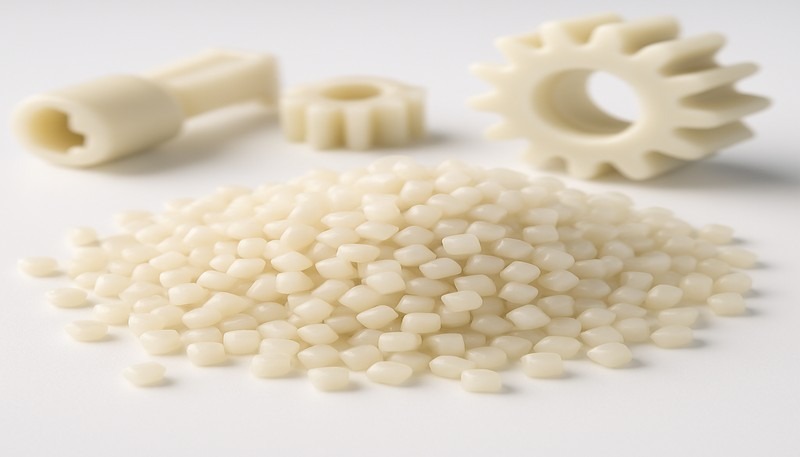
Cam elyaf dolgulu naylon[^1], ağırlıkça 10%, 20%, 30% veya 45% oranında kısa cam elyaflarla karıştırılmış standart poliamiddir (genellikle PA6 veya PA66). Ortaya çıkan kompozit termoplastik, dolgusuz ana malzemeye göre çok daha rijit, güçlü ve boyutsal olarak kararlıdır.
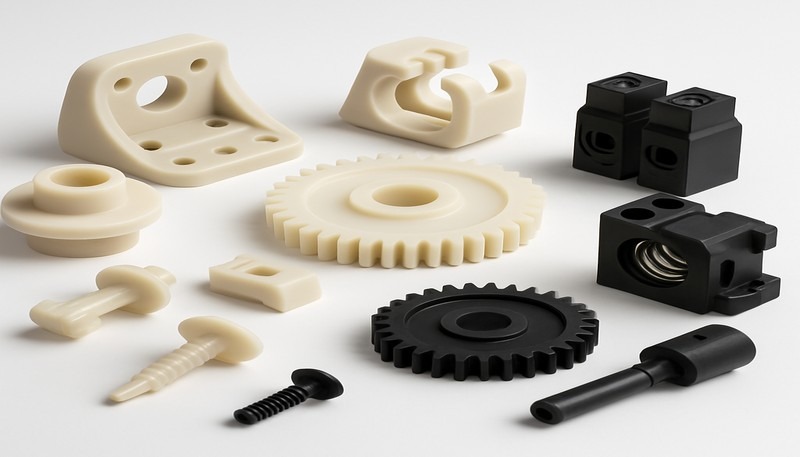
Atölyemizde PA6 GF303 ve PA66 GF30 en çok kalıpladığımız ilk beş malzeme arasındadır. Otomotiv motor bölmesi bileşenlerinde, elektrik muhafazalarında, elektrikli el aleti gövdelerinde, endüstriyel bağlantı parçalarında ve tüketici sınıfı yapısal braketlerde kullanılırlar.
Ekonomi açıktır: plastik işleme hızlarında metal benzeri rijitlik elde edersiniz ve hacimler 5.000 birim eşiğini geçtiğinde toplam parça maliyeti genellikle döküm veya CNC kütükten daha düşüktür.
ZetarMold'da 47 enjeksiyon kalıplama makinesi (90T–1850T) çalıştırıyoruz ve 400'den fazla malzeme üzerinde tecrübemiz var — PA6 GF30 ve PA66 GF30, Şangay tesisimizde en çok kalıplanan beş sınıf arasındadır.
Ancak veri sayfalarının belirtmediği nokta şudur: cam elyaflar enjeksiyon sırasında akış yönünde hizalanır. Bu, parçanızın akış yolu boyunca ve akış yoluna çapraz yönde farklı oranlarda büzüldüğü anlamına gelir; bu anizotropik büzülme, söz konusu malzemelerdeki en büyük proses zorluğudur.
Cam Dolgulu Naylonun Temel Malzeme Özellikleri Nelerdir?
PA66’ya 30% cam elyaf eklediğinizde, çekme mukavemeti yaklaşık 80 MPa’dan 185 MPa’ya sıçrar — 0%‘lik bir artış. Eğilme modülü yaklaşık 2.9 GPa’dan 9.0 GPa’ya çıkar, bu da malzemenin üç kat daha sert olduğu anlamına gelir.
1.8 MPa’da ısı sapma sıcaklığı (HDT) yaklaşık 75°C’den 250°C’nin üzerine çıkar, bu da motor kaputu altı otomotiv ve elektrik uygulamaları için oyun değiştiricidir.
Ancak bazı ödünler vardır. Cam elyaf gerilim yığılmaları oluşturduğu için darbe dayanımı düşer. Kopma uzaması 50%+ seviyesinden yaklaşık 3%‘e iner; dolayısıyla parça kırılmadan önce bükülmez. Yüzey kalitesi de belirgin biçimde daha pürüzlü olur.
| Mülkiyet | Dolgu İçermeyen PA6 | PA6 GF30 | PA66 GF30 |
|---|---|---|---|
| Çekme Dayanımı (MPa) | 79 | 170 | 185 |
| Eğilme Modülü (GPa) | 2.8 | 8.5 | 9.0 |
| 1.8 MPa'da HDT (°C) | 65 | 215 | 255 |
| Çentikli Izod (J/m) | 55 | 110 | 105 |
| Çekme - Akış (%) | 1.0–1.4 | 0.3–0.5 | 0.2–0.5 |
| Çekme - Enine (%) | 1.0–1.4 | 0.7–1.0 | 0.6–1.0 |
| Eriyik Sıcaklığı Aralığı (°C) | 230–260 | 260–290 | 275–300 |
| Yoğunluk (g/cm3) | 1.13 | 1.35 | 1.37 |
Akış ve enine yönler arasındaki büzülme farkına dikkat edin. PA6 GF30’da akış yönünde 0.3% büzülme görülürken, enine yönde 0.9% olabilir. Bu üç kat fark, cam dolgulu naylon için kalıp tasarımını uzmanlık gerektiren bir beceri haline getirir.
Cam Dolgulu Naylon Kalıplamayı Hangi İşlem Parametreleri Kontrol Eder?
Kurutma, ergime sıcaklığı, kalıp sıcaklığı ve enjeksiyon hızı, CF naylon kalitesini kontrol eden dört parametredir. Bu parametreler dolgusuz naylona kıyasla daha az hoşgörülüdür, bu nedenle sıkı proses kontrolü şarttır.
Kurutma: Pazarlıksız
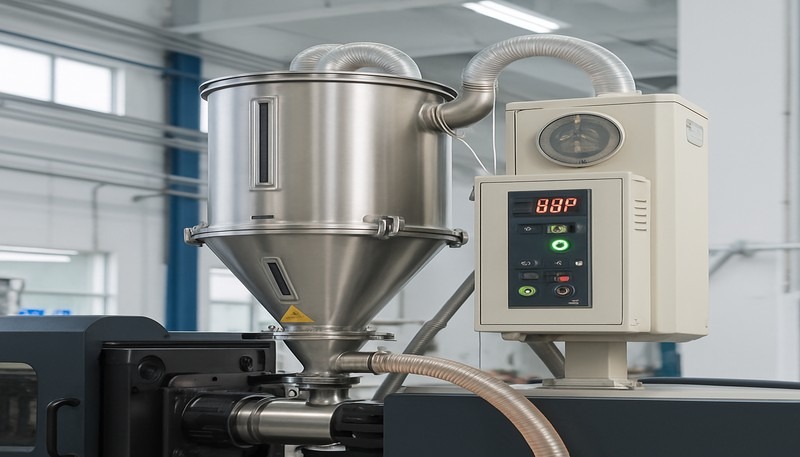
Naylon higroskopiktir; havadan nem emer. Cam elyaflar bunu değiştirmez. Nemi 0.1%‘in altına indirmek için nem alıcılı kurutucu kullanmalı ve malzemeyi 75–85°C’de 4–6 saat kurutmalısınız. Bu adımı atlarsanız hidroliz nedeniyle gümüş çizgiler, yayılma izleri ve düşük moleküler ağırlık oluşur.
Gelen malzemenin çıplak gözle kuru göründüğü hâlde 0.4% nem içerdiğini gördük; kuru değildi. Üretime başlamadan önce mutlaka bir nem analizörüyle doğrulayın.
Erime Sıcaklığı
PA6 GF30 için 260–285°C arasında enjeksiyon yapın. PA66 GF30 için 275–300°C gereklidir. Üst sınır daha iyi akış ve lif ıslanması sağlar ancak termal bozulma riskini artırır.
Şangay tesisimizde, genellikle PA66 GF30’u 285–295°C’de çalıştırırız — bu ideal nokta, cam lifler üzerindeki boyayı yakmadan iyi bir yüzey kalitesi sağlar.
Kalıp Sıcaklığı
Cam dolgulu sınıflar için kalıp sıcaklığını 80–100°C’de çalıştırın. Daha yüksek kalıp sıcaklıkları kristal yapıyı, yüzey kalitesini ve boyutsal stabiliteyi iyileştirir. Ancak döngü süresini uzatır.
Dar toleranslı parçalar için en az 90°C kullanırız. 70°C’nin altında kalıplama sonrası çarpılma ve tutarsız mekanik özellikler kaçınılmazdır; dış kabuk çekirdekten farklı kristalleşir.
Enjeksiyon Hızı ve Basıncı
Cam elyaf dolgulu naylon daha yüksek eriyik viskozitesine sahiptir; bu nedenle dolgusuz sınıflara göre 20–30% daha fazla enjeksiyon basıncı gerekir. Daha yüksek enjeksiyon hızları elyaf uzunluğunu korumaya ve kaynak çizgisi zayıflığını azaltmaya yardımcı olur.
Ancak hız aşırı yüksekse ince cidarlı parçalarda jetting veya çapak oluşur. Genellikle orta-yüksek bir hız profiliyle başlar, eksik dolum analizine göre ayarlarız.
Cam Lif İçeriği Büzülmeyi ve Boyutsal Kararlılığı Nasıl Etkiler?
Cam elyaf dolgulu nylon, yüksek fiyatının karşılığını burada gerçekten verir. Dolgusuz PA66 her yönde yaklaşık 1.0–1.4% çeker. 30% cam elyaf eklendiğinde akış yönündeki çekme 0.2–0.5%‘e düşer.
Dişli muhafazaları, sensör braketleri ve konektör ekleri gibi dar toleranslı parçalar için bu öngörülebilirlik, malzeme fiyat farkının her kuruşuna değer.
Ancak enine çekme yalnızca yaklaşık 0.6–1.0% seviyesine düşer. Bu nedenle kavite tasarımınız farklı yönlerdeki çekmeyi hesaba katmalı; takım çeliğine esasen asimetrik telafi işliyorsunuz.
Şirket içi enjeksiyon kalıbı üretim tesisimizdeki 8 kıdemli mühendisimiz, yıllar süren takım iyileştirmeleri sayesinde bu davranışı öngörmeyi öğrendi. Temel etkenler fiber yüzdesi, parça geometrisi, giriş konumu ve işleme koşullarıdır.
±0.05 mm tolerans gerektiren üretim parçaları için PA66 GF30 veya üzerini, 85°C’nin üzerindeki kalıp sıcaklığında işlenmesini ve CMM ölçümü kullanılarak ilk parça denetimiyle doğrulanmasını öneriyoruz.
Cam Dolgulu Naylon Parçalar İçin Hangi Tasarım Kılavuzlarını İzlemelisiniz?
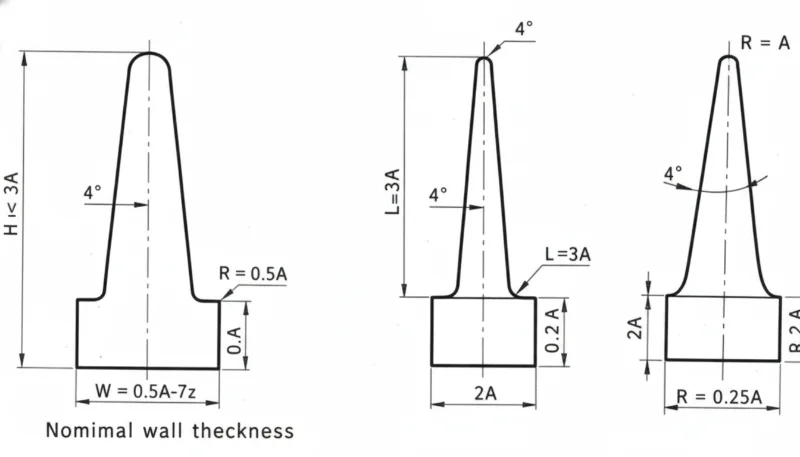
Et kalınlıklarını 2 ve 3 mm arasında tutun, 0.5 mm üzerindeki radyüsleri kullanın ve 1–3° kalıp çıkış açısı ekleyin; bunlar cam elyaf dolgulu naylon parçalar için temel tasarım kurallarıdır. Cam elyaflar büzülme anizotropisini ve takım aşınmasını artırdığından standart dolgusuz naylon kuralları geçerli değildir.
Et Kalınlığı: Eşit Tutun
Eşit duvar kalınlığı enjeksiyon kalıplamada her zaman önemlidir, ancak cam elyaf dolgulu naylonda kritik önemdedir. Kalınlık geçişleri farklı soğuma ve çekme oranları oluşturarak çarpılmaya yol açar. Elyaflar da kalın ve ince kesitlerde farklı yönlenir.
2.0–3.5 mm nominal duvar öneriyoruz. 1.5 mm altında dolum ve elyaf kırılması sorunları yaşarsınız. 4.0 mm üzerinde çökme izleri ve aşırı çevrim süreleri görülür.
Radyüsler: Daima Geniş
Cam elyaflar keskin iç köşelerde gerilim yığılması oluşturur. Minimum 0.5 mm iç radyüs gerekir; 1.0 mm tercih edilir. İç radyüsleri 0.3 mm’den 1.0 mm’ye çıkardığımızda hata oranlarının 40%+ düştüğünü gördük.
Elyaflar keskin köşelerden geçemez; yığılarak reçinece zengin ve elyafça zengin bölgeler oluşturur ve bunların ikisi de zayıf noktalardır.
Kalıp Çıkış Açıları: Düşündüğünüzden Fazlası
Cam elyaf dolgulu naylon aşındırıcıdır; bu, kalıptan çıkarma sırasında parçanın kavite yüzeyine tutunması anlamına gelir. Özellikle dokulu yüzeylerde minimum 1.5°, tercihen 2–3° kalıp çıkış açısı kullanın.
Birkaç derece daha fazla kalıp açısının maliyeti, parçaların itme sırasında yapışması, çizilmesi veya çatlamasının yanında önemsizdir.
Nervür ve Boss Tasarımı
Nervürler nominal cidar kalınlığının 50–75% kadarında olmalıdır. Cam elyaf dolgulu naylonda malzeme zaten rijit olduğu için daha ince nervürler (50–60%) daha güvenlidir. Bosslar da kütleyi azaltmak için maçalı tasarımla aynı oranı izlemelidir.
En Yaygın Kusurlar Nelerdir ve Nasıl Düzeltilir?
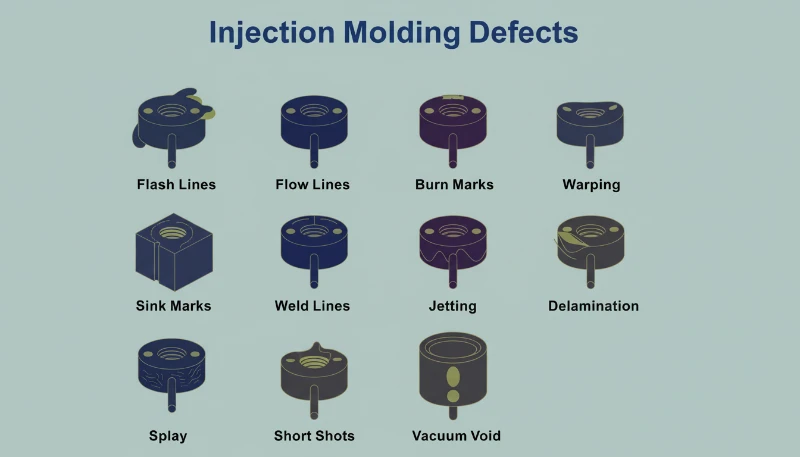
Elyaf açığa çıkması, çarpılma, birleşme izleri ve nem çizgileri en yaygın dört GF naylon kusurudur ve çoğu önlenebilir. Her birine neyin neden olduğu ve bunları üretimde nasıl giderdiğimiz aşağıda açıklanmıştır.
Elyaf Açığa Çıkması ve Kötü Yüzey Kalitesi
Yüzeyden dışarı çıkan bu cam elyaflar, reçinenin kalıp boşluğu duvarında elyafları tamamen kapsüllemediği anlamına gelir. Nedenleri: kalıp sıcaklığının çok düşük, enjeksiyon hızının çok yavaş veya ütüleme basıncının yetersiz olmasıdır.
Çözüm: kalıp sıcaklığını 90–100°C’ye çıkarın, enjeksiyon hızını artırın ve enjeksiyon basıncının %60–80’i düzeyinde yeterli tutma basıncı sağlayın. Kozmetik A yüzeyleri için parlatılmış kavite kalitesini ve elyaf desenini gizleyen hafif bir dokuyu değerlendirin.
Çarpılma ve Ölçüsel Değişim
Genellikle akış ve enine yönler arasındaki farklı büzülmeden kaynaklanır ve homojen olmayan et kalınlığı bu durumu ağırlaştırır.
Çözüm: eşit duvarlar için yeniden tasarlayın, dengeli akış için girişleri yeniden konumlandırın, kalıp sıcaklığını artırın ve iç gerilimleri gidermek için 150–170°C’de 30–60 dakika kalıplama sonrası tavlamayı değerlendirin.
Kaynak Hatları
Cam elyaflar kaynak çizgilerini geçmez — akış cephesine paralel yönlenir; bu nedenle kaynak çizgisi bölgesi esasen çok daha düşük mukavemetli, elyafla doldurulmamış naylondur.
Çözüm: Akıllı giriş ağzı yerleşimiyle birleşme izlerini en aza indirin, bunları kritik olmayan bölgelere konumlandırın ve birleşme dayanımını artırmak için daha yüksek eriyik ve kalıp sıcaklıkları kullanın.
Neme Bağlı Kusurlar
Gümüş izleri, yayılma izleri, kabarcıklar ve azalmış mekanik özellikler. Çözüm her zaman aynıdır: malzemeyi 0.1% nemin altına inene kadar doğru şekilde kurutun.
Tesisimizde IQC, her üretim çalışmasından önce malzemenin nem içeriğini doğrular. Çalışma boyunca kuru havayı koruyan kapalı devre huni yükleyicileri kullanıyoruz.
PA6 GF ve PA66 GF Sınıfları Arasında Nasıl Seçim Yaparsınız?
150°C altındaki maliyet duyarlı parçalar için PA6 GF30 kullanın; daha yüksek sıcaklıklar veya daha iyi kimyasal direnç için PA66 GF30 seçin. 30% cam elyaf yüklemeli her iki sınıf da mükemmel rijitlik sağlar — temel fark ısıl performanstır.
Maliyet başlıca etkense (PA6 reçine genellikle 10–15% daha ucuzdur), parça sürekli 150°C’nin altında çalışıyorsa veya biraz daha iyi darbe direnci gerekiyorsa PA6 GF30 seçin. PA6 GF30, tüketici elektroniği muhafazaları ve kritik olmayan yapısal parçalar için standart seçimimizdir.
Parça 150°C üzerinde çalışıyorsa (motor kaputu altı otomotiv parçaları, elektrik kontak taşıyıcıları), kimyasal dayanım önemliyse, yüksek sıcaklıkta ölçü kararlılığı kritikse veya daha yüksek çekme ve sürünme dayanımı gerekiyorsa PA66 GF30 seçin.
Her iki sınıf için de 30% cam elyaf ideal noktadır. 10–15% sınırlı iyileşme sağlar. 40–45% rijitliği en üst düzeye çıkarır; ancak kötü yüzey kalitesi, çok yüksek viskozite ve şiddetli kalıp aşınmasına yol açar.
Cam Dolgulu Naylon vs. Dolgusuz Naylon: Yükseltme Ne Zaman Karşılığını Verir?
Parça 80 MPa üzeri çekme dayanımı, 100°C üzeri çalışma sıcaklığı veya 0.4% altı büzülme gerektiriyorsa GF naylona geçiş karşılığını verir. Malzeme kilogram başına 20–40% daha pahalıdır; ancak toplam parça maliyeti çoğu zaman başa baş olur.
Yükseltme; parça, dolgusuz naylonun gerekli sehim sınırında taşıyamadığı yapısal yükleri taşıdığında, sıcaklık aralıklarında boyutsal kararlılık önemli olduğunda veya parça, dolgusuz naylonun 65–75°C’lik HDT değerinin yetersiz olduğu koşullarda çalıştığında karşılığını verir.
Parça yalnızca görsel amaçlıysa, dolgusuz naylon zaten spesifikasyonu karşılıyorsa veya hacim kalıp aşınması ek maliyetini haklı çıkarmayacak kadar düşükse bu yükseltme gereksizdir. Müşterileri birden fazla kez cam elyaf takviyeli naylondan vazgeçirdik — dürüst öneri budur.
Bir göz önünde bulundurulması gereken daha: kalıp ömrü. Cam dolgulu naylon aşındırıcıdır — bu lifler mikroskobik zımpara kağıdı gibi davranır. Oyuk aşınmasında 3–5 kat daha fazla bekleyin. Kalıp imalat tesisimizde, herhangi bir GF naylon kalıplama için sertleştirilmiş çeliği (H13 veya S7) varsayılan olarak kullanırız, bu nedenle kalıplarımız büyük bakımdan önce 500.000+ atış sağlar.
Tedarik açısından bakıldığında cam elyaf dolgulu naylon; DuPont (Zytel), BASF (Ultramid) ve EMS-Grivory dâhil başlıca tedarikçilerden yaygın olarak temin edilebilir. Standart PA6 GF30 ve PA66 GF30 sınıflarında teslim süresi genellikle 2–4 haftadır; ancak PA66 GF45 veya UV stabilizeli bileşikler gibi özel sınıflar 8–12 hafta sürebilir. Malzeme tedarikinizi erkenden planlayın; belirtilen GF sınıfı otomotiv sektörünün yoğun sezonunda tahsise tabi olduğu için projelerin geciktiğini gördük.
"Cam elyaf dolgulu naylon, dolgusuz naylonla aynı kurutma prosedürünü gerektirir."True
Doğru. Naylon matrisi, lif içeriğinden bağımsız olarak higroskopik kalır. Nem ayrıca lif-reçine ara yüzeyinde hapsolabilir. Her iki derece de işlenmeden önce %0,1'in altında neme kadar kurutulmalıdır.
"Cam elyaf dolgulu naylon parçaların yüzey kalitesi her zaman dolgusuz naylondan daha iyidir."False
Yanlış. Cam lifleri mat, pürüzlü bir yüzey oluşturur. Dolgusuz naylon daha pürüzsüz, parlak bir bitiş sağlar. Kozmetik önemliyse, dolgusuz dereceler veya yüzey işlemleri tercih edilir.
Cam dolgulu naylonun işleme sırasındaki davranışını anlamak, malzeme üzerinde farklı parça geometrileri ve duvar kalınlıklarında pratik deneyim gerektirir. Lif yönlenme desenleri, her bir kapı yer değiştirmesi, duvar kalınlığı ayarlaması veya işleme parametresi değişikliği ile değişir. Şangay tesisimizde mühendislerimiz, bu davranış kalıplarını binlerce üretim çalışmasında belgeleyerek, üretimde ortaya çıkmadan önce yaygın kusurları tahmin etmemize ve önlememize yardımcı olan deneysel bir veri tabanı oluşturmuştur.
"Cam elyaf dolgulu naylonun çekmesi, akış yönü ile enine yönde farklıdır."True
Doğru. Cam lifleri enjeksiyon sırasında akış yönünde yönlenir ve anizotropik büzülme yaratır — PA6 GF30 için tipik olarak akış yönünde %0,3'e karşılık enine yönde %0,8. Bu fark, bu malzemeler için kalıp tasarımındaki en büyük zorluktur.
"Daha yüksek cam elyaf oranı her zaman daha güçlü bir parça üretir."False
Yanlış. Lif içeriği arttıkça sertlik ve çekme mukavemeti artarken, darbe direnci bir platoya ulaşabilir veya azalabilir. oranında yüklemede, kırılganlık ve işleme zorluğu önemli ölçüde artar. Çoğu uygulama için oranı en dengeli seçim olmaya devam etmektedir.
Sıkça Sorulan Sorular
Sıkça Sorulan Sorular
Cam dolgulu naylon için enjeksiyon kalıplama sıcaklığı nedir?
PA6 GF30 için eriyik sıcaklık aralığı 260–285°C’dir. PA66 GF30 için 275–300°C kullanın. Optimum kristallik ve yüzey kalitesi için kalıp sıcaklığı 80–100°C’de tutulmalıdır. Üretici formülasyonları artı veya eksi 10°C değişebileceğinden daima ilgili sınıfın veri sayfasını doğrulayın. Fazla sıcak çalışma fiber haşılını bozar; fazla soğuk çalışma yetersiz fiber ıslatmasına ve yüzey kusurlarına yol açar. Şanghay tesisimizde genellikle her aralığın ortasını hedefler, eksik dolum testi ve ilk ürün kontrolü sonuçlarına göre ayarlarız.
Cam elyaf içeriği naylon büzülmesini nasıl etkiler?
Cam lifleri, akış yönündeki büzülmeyi önemli ölçüde azaltır — dolgusuz PA66 için yaklaşık %1,2’den PA66 GF30 için %0,3’e. Ancak, enine büzülme sadece yaklaşık %0,7–0,9’a düşer ve bu da kalıp tasarımında hesaba katılması gereken önemli bir anizotropik davranış yaratır. Daha yüksek lif içeriği genel büzülmeyi daha da azaltır ancak akış ve enine yönler arasındaki farkı artırır. Bu, bir PA66 GF45 parçasının akış yönünde sadece %0,2 büzülebileceği ancak enine yönde hala %0,6 büzülebileceği anlamına gelir; bu da kalıp tasarımcısı için boyutsal tahmini daha da karmaşık hale getirir.
Cam dolgulu naylon üzerine TPE veya TPU ile üzerine kalıplama yapılabilir mi?
Evet, cam dolgulu naylon (genellikle PA6 GF30), iki atışlı veya üzerine kalıplama uygulamalarında sert alt tabaka olarak yaygın şekilde kullanılır; yumuşak üzerine kalıplama malzemesi olarak TPE veya TPU tercih edilir. Yapışma, alt tabaka ile üzerine kalıplama malzemesi arasındaki kimyasal uyumluluğa, ayrıca uygun alt tabaka yüzey hazırlığına ve ikinci atış sırasındaki sıcaklık yönetimine bağlıdır. Cam elyaf içeriği, mekanik bağlantı mukavemetini dolu olmayan naylon alt tabakalara kıyasla azaltabilir, çünkü elyaflar TPE veya TPU katmanıyla kimyasal kilitlenme için mevcut yüzey alanını azaltır.
Cam dolgulu naylon parçaların yüzeyindeki lif görünürlüğüne ne sebep olur?
Elyaf açığa çıkması, ütüleme aşamasında reçine matrisinin kavite yüzeyindeki cam elyaflarını tamamen sarmamasıyla oluşur. Yaygın nedenler; 80°C altındaki düşük kalıp sıcaklığı, elyafları kavite duvarından uzağa itemeyen düşük enjeksiyon hızı, yetersiz ütüleme basıncı ve 30% üzerindeki yüksek elyaf oranıdır. En etkili çözümler kalıp sıcaklığını 90–100°C’ye yükseltmek ve enjeksiyon hızını artırmaktır. Estetik A-surface kalitesi gereken parçalarda, polisajlı kavite yüzeyinin hafif bir doku deseniyle birleştirilmesi cam dolgulu sınıfların oluşturduğu doğal elyaf görünümünü maskelemeye yardımcı olabilir.
Cam dolgulu naylon gıda teması uygulamaları için uygun mudur?
Cam elyaf dolgulu naylon, gıda sınıfı baz reçine ve uygun elyaf yüzey işlemi kullanıldığında FDA uyumlu olabilir; ancak tüm GF naylon sınıfları gıdayla temas sertifikasına sahip değildir. Cam elyafların kendisi inerttir — uygunluk tamamen naylon matrise ve bileşimde kullanılan katkı ya da renklendiricilere bağlıdır. Belirli sınıfın FDA veya EU 10/2011 uygunluk belgelerini daima malzeme tedarikçisinden kontrol edin. Gıda güvenliği gerekiyorsa bunu baştan belirtin; böylece kalıpçınız sertifikalı malzeme tedarik eder ve üretim süreci boyunca uygun izlenebilirlik belgelerini korur.
Cam dolgulu naylon enjeksiyon kalıplı parçalarda eğrilmeyi nasıl önlersiniz?
Burulmayı önlemek çok yönlü bir yaklaşım gerektirir: 2.0 ile 3.5 mm arasında tekdüze duvar kalınlığı için tasarım yapın, en az 1.0 mm iç yarıçap kullanın, dengeli akış desenleri oluşturmak için giriş noktalarını konumlandırın, döngü boyunca kalıp sıcaklığını 85°C’nin üzerinde tutun ve çıkarmadan önce yeterli soğutma süresi sağlayın. Üretimde halihazırda burulma gösteren parçalar için, 150–170°C’de 30 ila 60 dakika süreyle kalıplama sonrası tavlama işlemi iç gerilmeleri azaltabilir ve düzlüğü iyileştirebilir. En etkili strateji, burulmayı yalnızca işlem ayarlarıyla düzeltmeye çalışmak yerine, kalıp tasarım incelemesi sırasında ele almaktır.
Cam dolgulu naylon kalıplar için hangi takım çeliği önerilir?
Cam dolgulu naylon işleyen üretim kalıpları için 48–52 HRC’de H13 veya S7 gibi sertleştirilmiş takım çelikleri önerilir. Aşındırıcı cam lifler, dolgusuz naylona göre üç ila beş kat daha fazla aşınmaya neden olur; bu da standart P20 takım çeliğinin boşluk erozyonu ve boyut değişimini çok daha erken göstereceği anlamına gelir. 500.000 atışı aşan yüksek hacimli üretim için, takım ömrünü uzatmak amacıyla boşluk yüzeylerinde TiN veya TiCN gibi PVD kaplamaları düşünün. Sertleştirilmiş çeliğe yapılan ilk yatırım, azalan bakım duruş süreleri ve kalıbın ömrü boyunca daha tutarlı parça kalitesi sayesinde kendini amorti eder.
Cam dolgulu naylon için özel bir enjeksiyon kalıplama vidası gerektirir mi?
2.5:1 ila 3.0:1 sıkıştırma oranına sahip genel amaçlı bir vida, çoğu cam dolgulu naylon sınıfı için iyi çalışır. Aşırı lif kırılmasına neden olan ve elyafların sağladığı mekanik takviyeyi azaltan 3.5:1’in üzerindeki çok yüksek sıkıştırma oranlarından kaçının. Cam elyafların aşındırıcı doğası nedeniyle, uzun üretim serileri için bimetalik astarlar veya Xaloy kaplı bileşenler gibi aşınma dayanımlı vida ve namlu malzemeleri şiddetle önerilir. Üretim sırasında aşınmış bir vidayı değiştirmek, baştan aşınma dayanımlı bileşenler belirlemekten çok daha pahalıdır.
Cam elyaf dolgulu naylon enjeksiyon kalıplama projeniz için güvenilir bir ortağa mı ihtiyacınız var? ZetarMold, 2005’ten beri Şanghay tesisinde GF naylon sınıflarını işliyor. 47 makine (90T-1850T), şirket içi enjeksiyon kalıbı atölyesi ve 8 kıdemli mühendisle dünya genelindeki otomotiv, elektronik ve endüstriyel müşteriler için her gün PA6 GF30 ve PA66 GF30 parçalar kalıplıyoruz. Ücretsiz fiyat teklifi alın ve mühendislik ekibimizin tasarımınızı incelemesini sağlayın.
cam elyaf dolgulu naylon: Cam elyaf dolgulu naylon, rijitliği, mukavemeti ve ısı direncini artırmak için ağırlıkça genellikle %10-45 kısa cam elyafla takviye edilmiş naylonu (PA6 veya PA66) ifade eder. ↩
anizotropik çekme: Anizotropik çekme, enjeksiyon sırasında fiber yöneliminin yol açtığı akış ve enine yönlerdeki farklı çekmeyi ifade eder ve dikkatli kalıp tasarımı telafisi gerektirir. ↩
PA6 GF30: PA6 GF30, %30 cam elyaf içeren poliamid 6'yı ifade eder; yapısal uygulamalarda mekanik performans ile işlenebilirliği dengeleyen yaygın bir sınıftır. ↩