Jeśli określasz materiał na część konstrukcyjną, która musi zachować swój kształt pod obciążeniem, w temperaturze i w czasie — nylon wypełniony szkłem1 prawdopodobnie znajdzie się na Twojej krótkiej liście. Dodanie włókien szklanych do nylonu przekształca go z wytrzymałego, ale elastycznego tworzywa sztucznego konstrukcyjnego w coś, co może konkurować z odlewanym ciśnieniowo aluminium.
Jednak proces formowania wtryskowego gatunków wypełnionych szkłem to zupełnie inna sprawa w porównaniu z nylonem bez wypełnienia. Wyższa lepkość stopu, agresywne zużycie narzędzi, skurcz anizotropowy2[^2] i czułość na długość włókna oznaczają, że musisz ustawić odpowiednie parametry — w przeciwnym razie Twoje części powiedzą Ci to głośno i wyraźnie.
Ten przewodnik omawia, co tak naprawdę ma znaczenie podczas formowania nylonu wypełnionego włóknem szklanym, w oparciu o dwie dekady stosowania tych materiałów na rzeczywistych halach produkcyjnych. W ZetarMold w naszym zakładzie w Szanghaju obsługujemy 47 maszyn formowanie wtryskowe (90T–1850T) z ponad 400 materiałami.
- Nylon wypełniony szkłem dodaje 30–200% więcej sztywności w porównaniu z gatunkami niewypełnionymi
- Wilgotność musi być poniżej 0,1% przed przetwarzaniem — suszyć 4–6 godzin w 80°C
- Temperatury przetwarzania mieszczą się w zakresie 260–300°C w zależności od PA6 vs. PA66
- Orientacja włókien powoduje anizotropowy skurcz — odpowiednio projektuj bramy
- Zużycie formy jest 3–5× większe niż w przypadku nylonu niewypełnionego — należy stosować hartowaną stal narzędziową
Czym jest nylon wypełniony szkłem i dlaczego to ważne?
Nylon wypełniony włóknem szklanym to poliamid wzmocniony krótkimi włóknami szklanymi, zapewniający do 200% większą sztywność i HDT powyżej 250°C. Jeśli porównujesz dostawców, nasz przewodnik dotyczący pozyskiwania dostawca form wtryskowych obejmuje przygotowanie i kwalifikację zapytania ofertowego.
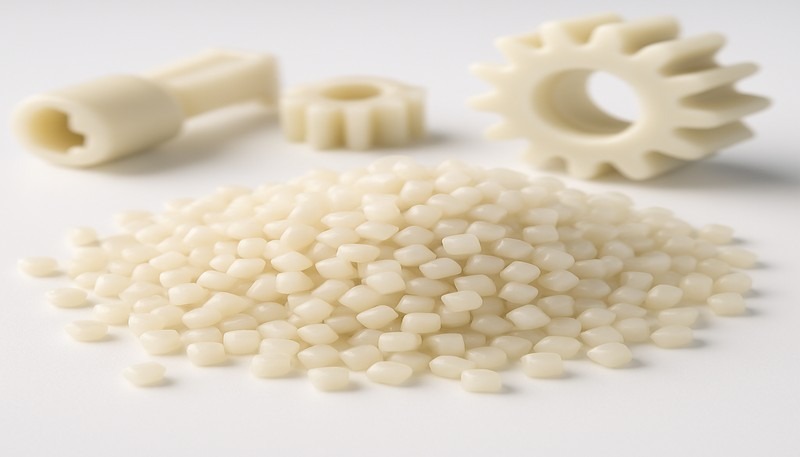
Nylon wzmacniany włóknem szklanym[^1] to standardowy poliamid (zwykle PA6 lub PA66) zmieszany z krótkimi włóknami szklanymi w ilości 10%, 20%, 30% lub 45% masy. Powstały kompozyt termoplastyczny jest znacznie sztywniejszy, wytrzymalszy i bardziej stabilny wymiarowo niż niewzmocniony materiał bazowy.
W naszym sklepie PA6GF303 i PA66 GF30 znajdują się w pierwszej piątce najczęściej formowanych materiałów. Występują w elementach pod maską samochodów, obudowach elektrycznych, obudowach elektronarzędzi, armaturze przemysłowej i wspornikach konstrukcyjnych klasy konsumenckiej.
Ekonomia jest jasna: uzyskuje się sztywność podobną do metalu przy prędkościach przetwórstwa tworzyw sztucznych, a całkowity koszt części często jest niższy niż w przypadku odlewania ciśnieniowego lub obróbki CNC z półwyrobu, gdy wolumen przekracza próg 5000 sztuk.
W ZetarMold obsługujemy 47 maszyn do wtrysku (90T–1850T) z doświadczeniem w ponad 400 materiałach — PA6 GF30 i PA66 GF30 należą do pięciu najczęściej przetwarzanych gatunków w naszym zakładzie w Szanghaju.
Jednak karty techniczne nie informują o tym, że podczas wtrysku włókna szklane orientują się zgodnie z kierunkiem przepływu. Oznacza to, że skurcz detalu wzdłuż drogi przepływu różni się od skurczu w kierunku poprzecznym, a ta anizotropia skurczu stanowi największe wyzwanie procesowe związane z tymi materiałami.
Jakie są kluczowe właściwości materiałowe nylonu wypełnionego szkłem?
Po dodaniu 30% włókna szklanego do PA66 wytrzymałość na rozciąganie wzrasta z około 80 MPa do 185 MPa — co stanowi wzrost o 130%. Moduł zginania wzrasta z około 2,9 GPa do 9,0 GPa, co oznacza, że materiał jest trzykrotnie sztywniejszy.
Temperatura ugięcia pod obciążeniem (HDT) przy 1,8 MPa wzrasta z około 75°C do ponad 250°C, co jest przełomem dla zastosowań motoryzacyjnych pod maską i elektrycznych.
Istnieją jednak kompromisy. Udarność spada, ponieważ włókna szklane tworzą koncentratory naprężeń. Wydłużenie przy zerwaniu zmniejsza się z ponad 50% do około 3%, co oznacza, że część nie ugnie się przed pęknięciem. Wykończenie powierzchni jest również wyraźnie bardziej szorstkie.
| Własność | PA6 bez wypełnienia | PA6 GF30 | PA66 GF30 |
|---|---|---|---|
| Wytrzymałość na rozciąganie (MPa) | 79 | 170 | 185 |
| Moduł sprężystości przy zginaniu (GPa) | 2.8 | 8.5 | 9.0 |
| Temperatura ugięcia pod obciążeniem (HDT) @ 1.8 MPa (°C) | 65 | 215 | 255 |
| Izod z karbem (J/m) | 55 | 110 | 105 |
| Skurcz — w kierunku przepływu (%) | 1.0–1.4 | 0.3–0.5 | 0.2–0.5 |
| Skurcz — poprzeczny (%) | 1.0–1.4 | 0.7–1.0 | 0.6–1.0 |
| Zakres temperatury stopionego tworzywa (°C) | 230–260 | 260–290 | 275–300 |
| Gęstość (g/cm3) | 1.13 | 1.35 | 1.37 |
Zwróć uwagę na różnicę w skurczu pomiędzy kierunkiem przepływu a kierunkiem poprzecznym. W przypadku PA6 GF30 możesz zaobserwować skurcz rzędu 0,3% w kierunku przepływu, ale aż 0,9% w kierunku poprzecznym. Ta trzykrotna różnica sprawia, że projektowanie form do wypełnionego szkłem nylonu jest specjalistyczną umiejętnością.
Jakie parametry przetwarzania kontrolują formowanie nylonu wypełnionego szkłem?
Suszenie, temperatura uplastycznienia, temperatura formy i prędkość wtrysku to cztery parametry decydujące o jakości nylonu GF. Są one mniej wyrozumiałe niż w przypadku nylonu niewypełnionego, dlatego ścisła kontrola procesu jest kluczowa.
Suszenie: bezwzględnie konieczne
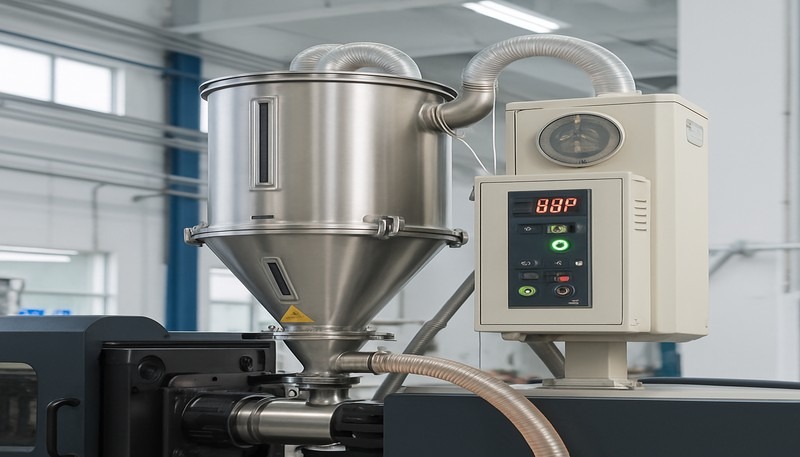
Nylon jest higroskopijny — pochłania wilgoć z powietrza. Włókna szklane tego nie zmieniają. Należy użyć osuszacza adsorpcyjnego i suszyć materiał w temperaturze 75–85°C przez 4–6 godzin, aby obniżyć wilgotność poniżej 0.1%. Pominięcie tego etapu powoduje srebrne smugi, rozwarstwienia powierzchni i spadek masy cząsteczkowej wskutek hydrolizy.
Spotykaliśmy materiał wejściowy o wilgotności 0.4%, który na pierwszy rzut oka wydawał się suchy — ale nie był. Przed rozpoczęciem produkcji zawsze weryfikuj wilgotność za pomocą analizatora.
Temperatura topnienia
Dla PA6 GF30 zalecana temperatura uplastycznienia to 260–285°C. Dla PA66 GF30 potrzeba 275–300°C. Wyższe wartości poprawiają płynność i zwilżanie włókien, ale zwiększają ryzyko degradacji termicznej.
W naszym zakładzie w Szanghaju zazwyczaj przetwarzamy PA66 GF30 w temperaturze 285–295°C — ten optymalny zakres zapewnia dobre wykończenie powierzchni bez wypalania apretury z włókien szklanych.
Temperatura formy
Utrzymuj temperaturę formy na poziomie 80–100°C dla gatunków wypełnionych szkłem. Wyższe temperatury formy poprawiają krystaliczność, wykończenie powierzchni i stabilność wymiarową. Ale wydłużają czas cyklu.
W przypadku detali o wąskich tolerancjach stosujemy co najmniej 90°C. Przy temperaturze poniżej 70°C należy liczyć się z odkształceniami po formowaniu i niestabilnymi właściwościami mechanicznymi — warstwa zewnętrzna krystalizuje inaczej niż rdzeń.
Prędkość i ciśnienie wtrysku
Nylon z włóknem szklanym ma większą lepkość, więc wymaga o 20–30% wyższego ciśnienia niż gatunki nienapełnione. Większa prędkość pomaga zachować długość włókien i ograniczyć osłabienie linii łączenia.
Jednak zbyt duża prędkość spowoduje strugowanie lub wypływki na częściach cienkościennych. Zazwyczaj zaczynamy od umiarkowanie szybkiego profilu prędkości i korygujemy go na podstawie analizy niepełnych wtrysków.
Jak zawartość włókna szklanego wpływa na skurcz i stabilność wymiarową?
To właśnie w tym zakresie nylon wzmacniany włóknem szklanym w pełni uzasadnia swoją wyższą cenę. Niewzmocniony PA66 kurczy się o około 1.0–1.4% we wszystkich kierunkach. Po dodaniu 30% włókna szklanego skurcz w kierunku przepływu spada do 0.2–0.5%.
W przypadku części o wąskich tolerancjach, takich jak obudowy przekładni, wsporniki czujników i wkładki złączy, ta przewidywalność jest warta każdej złotówki wyższej ceny materiału.
Jednak skurcz poprzeczny spada tylko do około 0,6–1,0%. Dlatego konstrukcja gniazda musi uwzględniać skurcz różnicowy — w praktyce oznacza to wprowadzenie asymetrycznej kompensacji w stalowym oprzyrządowaniu.
W naszym wewnętrznym zakładzie produkcyjnym forma wtryskowa naszych 8 starszych inżynierów nauczyło się przewidywać to zachowanie przez lata iteracji narzędzi. Kluczowymi czynnikami są procent włókien, geometria części, lokalizacja przewężki i warunki przetwarzania.
W przypadku detali produkcyjnych wymagających tolerancji ±0.05 mm zalecamy PA66 GF30 lub klasę wyższą, przetwarzaną przy temperaturze formy powyżej 85°C i zwalidowaną w ramach kontroli pierwszej sztuki z wykorzystaniem pomiarów CMM.
Jakich wytycznych projektowych należy przestrzegać w przypadku części z nylonu wypełnionego szkłem?
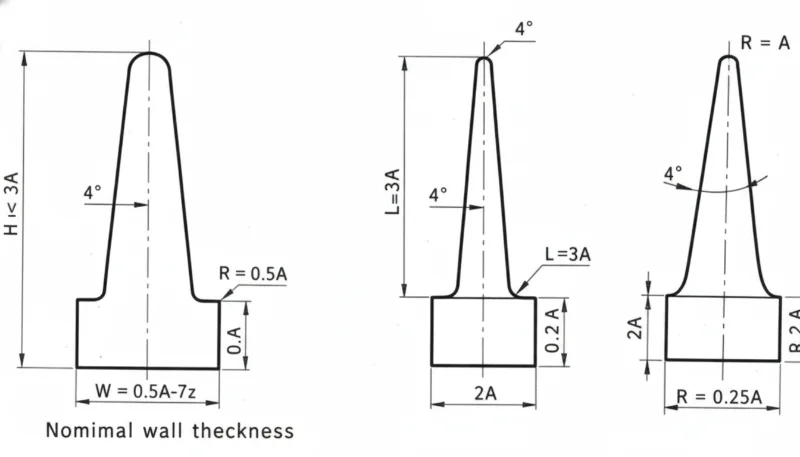
Utrzymuj grubość ścianek w zakresie od 2 do 3 mm, stosuj promienie powyżej 0,5 mm i pochylenie 1–3° — to podstawowe wytyczne projektowe dla detali z poliamidu wzmacnianego włóknem szklanym. Włókna szklane zwiększają anizotropię skurczu i zużycie narzędzia, dlatego standardowe zasady dotyczące niewzmocnionego poliamidu nie mają tu zastosowania.
Grubość ścianki: zachowaj jej równomierność
Równomierna grubość ścianek jest zawsze ważna we wtryskiwaniu, ale ma krytyczne znaczenie w przypadku poliamidu wzmacnianego włóknem szklanym. Zmiany grubości powodują różnice w szybkości chłodzenia i skurczu, a w konsekwencji odkształcenia. Włókna układają się również inaczej w przekrojach grubych niż w cienkich.
Zalecamy nominalną grubość ścianki 2,0–3,5 mm. Poniżej 1,5 mm pojawiają się trudności z wypełnianiem gniazda i łamaniem włókien. Powyżej 4,0 mm występują zapadnięcia i nadmiernie wydłużony czas cyklu.
Promienie: zawsze duże
Włókna szklane powodują koncentrację naprężeń w ostrych narożach wewnętrznych. Minimalny promień wewnętrzny wynosi 0.5 mm, a zalecany 1.0 mm. Zaobserwowaliśmy spadek odsetka uszkodzeń o ponad 40% po zwiększeniu promieni wewnętrznych z 0.3 mm do 1.0 mm.
Włókna nie są w stanie pokonywać ostrych naroży — gromadzą się, tworząc strefy bogate w żywicę i strefy bogate we włókna, z których obie stanowią słabe punkty.
Kąty pochylenia: większe, niż się wydaje
Poliamid z włóknem szklanym jest ścierny, przez co podczas wypychania detal mocno przylega do powierzchni gniazda. Minimalny kąt pochylenia wynosi 1,5°, a zalecany 2–3°, zwłaszcza na powierzchniach teksturowanych.
Koszt zwiększenia kąta pochylenia o kilka stopni jest znikomy w porównaniu ze skutkami zakleszczania, zarysowania lub pękania części podczas wypychania.
Projektowanie żeber i słupków
Grubość żeber powinna wynosić 50–75% nominalnej grubości ścianki. W przypadku nylonu wzmocnionego włóknem szklanym bezpieczniejsze są cieńsze żebra (50–60%), ponieważ sam materiał jest już sztywny. Występy montażowe powinny zachowywać ten sam stosunek, z wydrążeniem zmniejszającym masę.
Jakie są najczęstsze wady i jak je naprawić?
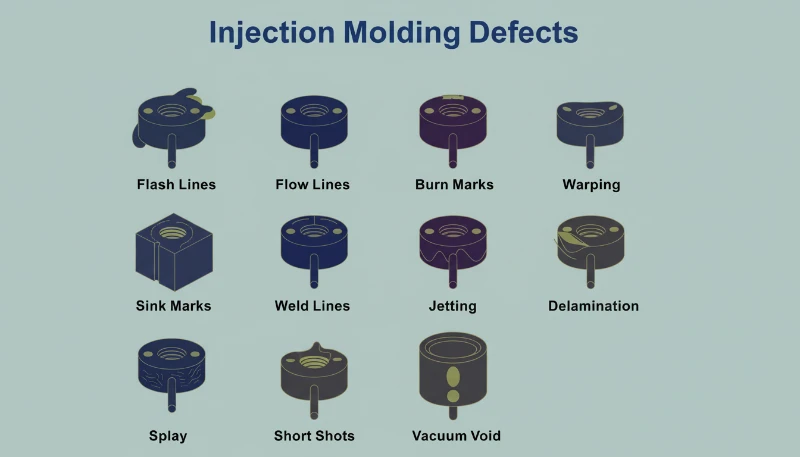
Odsłonięte włókna, wypaczenia, linie łączenia i smugi wilgoci to cztery najczęstsze wady nylonu GF — większości z nich można zapobiec. Poniżej opisano ich przyczyny oraz sposoby usuwania tych wad w produkcji.
Odsłonięcie włókien i niska jakość powierzchni
Włókna szklane wystające na powierzchni oznaczają, że żywica nie otoczyła ich całkowicie przy ściance gniazda. Przyczyny: zbyt niska temperatura formy, zbyt mała prędkość wtrysku lub niewystarczające ciśnienie docisku.
Rozwiązanie: podnieś temperaturę formy do 90–100°C, zwiększ prędkość wtrysku i zapewnij odpowiednie ciśnienie docisku na poziomie 60–80% ciśnienia wtrysku. W przypadku dekoracyjnych powierzchni klasy A rozważ polerowane wykończenie gniazda oraz delikatną fakturę maskującą układ włókien.
Odkształcenia i zmienność wymiarowa
Zwykle wynika to z różnego skurczu w kierunku przepływu i kierunku poprzecznym, spotęgowanego przez nierównomierną grubość ścianek.
Rozwiązanie: przeprojektować część tak, aby miała równomierną grubość ścianek, zmienić położenie punktów wtrysku w celu zrównoważenia przepływu, podnieść temperaturę formy oraz rozważyć wyżarzanie po formowaniu w temperaturze 150–170°C przez 30–60 minut, aby zredukować naprężenia wewnętrzne.
Linie spawania
Włókna szklane nie przechodzą przez linie łączenia — ustawiają się równolegle do czoła przepływu, dlatego obszar linii łączenia składa się zasadniczo z niewzmocnionego nylonu o znacznie mniejszej wytrzymałości.
Rozwiązanie: ogranicz linie łączenia dzięki przemyślanemu położeniu przewężek, umieść je w obszarach niekrytycznych oraz zwiększ temperaturę stopionego tworzywa i formy, aby poprawić wytrzymałość połączenia.
Wady spowodowane wilgocią
Srebrne smugi, rozwarstwienia powierzchniowe, pęcherze i pogorszone właściwości mechaniczne. Rozwiązanie jest zawsze takie samo: prawidłowo wysuszyć materiał do wilgotności poniżej 0.1%.
W naszym zakładzie kontrola IQC sprawdza zawartość wilgoci w materiale przed każdym uruchomieniem produkcji. Stosujemy podajniki zasypowe z obiegiem zamkniętym, które utrzymują dopływ suchego powietrza przez cały cykl produkcyjny.
Jak wybrać między gatunkami PA6 GF a PA66 GF?
Do części wrażliwych na koszt, pracujących w temperaturze poniżej 150°C, należy stosować PA6 GF30; do wyższych temperatur lub gdy wymagana jest lepsza odporność chemiczna, należy wybrać PA66 GF30. Oba gatunki z 30% zawartością włókna szklanego zapewniają doskonałą sztywność — kluczową różnicą są właściwości cieplne.
PA6 GF30 należy wybrać, gdy głównym kryterium jest koszt (żywica PA6 jest zazwyczaj tańsza o 10–15%), część pracuje stale w temperaturze poniżej 150°C lub wymagana jest nieco wyższa udarność. PA6 GF30 to nasz standardowy wybór na obudowy elektroniki użytkowej i niekrytyczne części konstrukcyjne.
Wybierz PA66 GF30, gdy część pracuje w temperaturze powyżej 150°C (pod maską samochodu, w nośnikach styków elektrycznych), istotna jest odporność chemiczna lub stabilność wymiarowa w podwyższonej temperaturze albo potrzebna jest większa wytrzymałość na rozciąganie i pełzanie.
Dla obu gatunków optymalnym wyborem jest 30% włókna szklanego. Zawartość 10–15% zapewnia umiarkowaną poprawę właściwości. Udział 40–45% maksymalizuje sztywność, lecz powoduje słabą jakość powierzchni, bardzo wysoką lepkość i intensywne zużycie formy.
Nylon wypełniony szkłem vs. nylon niewypełniony: kiedy modernizacja się opłaca?
Przejście na nylon GF jest opłacalne, gdy część wymaga wytrzymałości na rozciąganie powyżej 80 MPa, temperatury pracy powyżej 100°C lub skurczu poniżej 0.4%. Materiał kosztuje o 20–40% więcej za kilogram, lecz całkowity koszt części często pozostaje na porównywalnym poziomie.
Zastosowanie lepszego materiału jest opłacalne, gdy część przenosi obciążenia konstrukcyjne, którym niewzmocniony nylon nie może sprostać przy wymaganej granicy ugięcia, gdy istotna jest stabilność wymiarowa w różnych zakresach temperatur albo gdy część pracuje w warunkach, w których HDT niewzmocnionego nylonu wynosząca 65–75°C jest niewystarczająca.
Modernizacja jest nieopłacalna, gdy część jest wyłącznie dekoracyjna, niewypełniony nylon już spełnia specyfikację albo wolumen jest zbyt mały, by uzasadnić dodatkowe zużycie oprzyrządowania. Niejednokrotnie odradzaliśmy klientom nylon wzmacniany włóknem szklanym — to uczciwe zalecenie.
Jeszcze jedna kwestia to trwałość narzędzia. Nylon wzmocniony włóknem szklanym jest ścierny — włókna działają jak mikroskopijny papier ścierny. Należy oczekiwać 3–5× większego zużycia gniazda. W naszym zakładzie produkcji form standardowo stosujemy hartowaną stal (H13 lub S7) do każdego oprzyrządowania dla nylonu GF, dlatego nasze formy wykonują 500,000+ wtrysków przed poważną konserwacją.
Z perspektywy zaopatrzenia poliamid wzmacniany włóknem szklanym jest powszechnie dostępny u głównych dostawców, takich jak DuPont (Zytel), BASF (Ultramid) i EMS-Grivory. Termin dostawy standardowych gatunków PA6 GF30 i PA66 GF30 wynosi zwykle 2–4 tygodnie, natomiast na gatunki specjalistyczne, takie jak PA66 GF45 lub mieszanki stabilizowane promieniowaniem UV, można czekać 8–12 tygodni. Zakup materiału należy zaplanować z wyprzedzeniem — zdarzało się, że projekty były opóźnione, ponieważ w szczycie sezonu motoryzacyjnego określony gatunek tworzywa GF podlegał limitowanej alokacji.
"Nylon wzmacniany włóknem szklanym wymaga takiej samej procedury suszenia jak nylon niewzmocniony."True
Prawda. Osnowa nylonowa pozostaje higroskopijna niezależnie od zawartości włókien. Wilgoć może również zatrzymywać się na granicy włókno–żywica. Oba gatunki wymagają wysuszenia do zawartości wilgoci poniżej 0,1% przed przetwarzaniem.
"Części z nylonu wzmacnianego włóknem szklanym zawsze mają lepsze wykończenie powierzchni niż części z nylonu niewzmocnionego."False
Fałsz. Włókna szklane tworzą matową, chropowatą powierzchnię. Nylon bez wypełnienia zapewnia gładsze, bardziej błyszczące wykończenie. Gdy wygląd ma znaczenie, preferuje się gatunki niewypełnione lub obróbkę powierzchniową.
Zrozumienie zachowania nylonu wzmacnianego włóknem szklanym podczas przetwórstwa wymaga praktycznego doświadczenia z tym materiałem przy różnych geometriach części i grubościach ścianek. Układ orientacji włókien zmienia się przy każdej zmianie położenia punktu wtrysku, grubości ścianki lub parametrów procesu. W naszym zakładzie w Szanghaju inżynierowie udokumentowali te zależności podczas tysięcy serii produkcyjnych, tworząc empiryczną bazę danych, która pomaga przewidywać typowe wady i zapobiegać im przed rozpoczęciem produkcji.
"Skurcz nylonu wzmocnionego włóknem szklanym różni się w kierunku przepływu i poprzecznym."True
Prawda. Włókna szklane orientują się podczas wtrysku w kierunku przepływu, powodując anizotropowy skurcz — zwykle 0.3% wzdłuż przepływu wobec 0.8% w poprzek dla PA6 GF30. Ta różnica jest największym wyzwaniem przy projektowaniu form do tych materiałów.
"Większa zawartość włókna szklanego zawsze zapewnia wyższą wytrzymałość części."False
Fałsz. Sztywność i wytrzymałość na rozciąganie rosną wraz z udziałem włókien, lecz udarność może osiągnąć plateau lub spaść. Przy 45% napełnienia znacznie rosną kruchość i trudność przetwarzania. Dla większości zastosowań 30% pozostaje najlepiej wyważonym wyborem.
Często zadawane pytania
Często zadawane pytania
Jaka jest temperatura wtrysku nylonu wzmacnianego włóknem szklanym?
Dla PA6 GF30 zakres temperatury stopu wynosi 260–285°C. Dla PA66 GF30 należy stosować 275–300°C. Aby uzyskać optymalną krystaliczność i wykończenie powierzchni, temperaturę formy należy utrzymywać na poziomie 80–100°C. Zawsze należy sprawdzić kartę danych konkretnego gatunku, ponieważ receptury producentów mogą różnić się o plus lub minus 10°C. Zbyt wysoka temperatura powoduje degradację preparacji powierzchniowej włókien, natomiast zbyt niska prowadzi do niedostatecznego zwilżania włókien i wad powierzchni. W naszym zakładzie w Szanghaju zazwyczaj przyjmujemy środek każdego zakresu, a następnie korygujemy ustawienia na podstawie prób niepełnego wtrysku i wyników kontroli pierwszej sztuki.
Jak zawartość włókna szklanego wpływa na skurcz nylonu?
Włókna szklane znacząco zmniejszają skurcz w kierunku przepływu — z około 1.2% dla niewypełnionego PA66 do 0.3% dla PA66 GF30. Skurcz poprzeczny spada jednak tylko do około 0.7–0.9%, powodując znaczną anizotropię, którą trzeba uwzględnić w konstrukcji formy. Większa zawartość włókien dodatkowo zmniejsza skurcz całkowity, ale zwiększa różnicę między kierunkiem przepływu a kierunkiem poprzecznym. Oznacza to, że część z PA66 GF45 może kurczyć się zaledwie o 0.2% w kierunku przepływu, lecz nadal o 0.6% w poprzek, co jeszcze bardziej komplikuje przewidywanie wymiarów przez konstruktora oprzyrządowania.
Czy można nadlewać nylon z włóknem szklanym materiałem TPE lub TPU?
Tak, nylon wzmacniany włóknem szklanym (zwykle PA6 GF30) jest powszechnie stosowany jako sztywne podłoże w formowaniu dwukomponentowym lub obtrysku, przy czym miękkim materiałem warstwy wierzchniej jest TPE albo TPU. Adhezja zależy od zgodności chemicznej podłoża z materiałem obtrysku, a także od prawidłowego przygotowania powierzchni podłoża i kontroli temperatury podczas drugiego wtrysku. Zawartość włókna szklanego może obniżyć wytrzymałość połączenia mechanicznego w porównaniu z podłożem z niewzmacnianego nylonu, ponieważ włókna zmniejszają powierzchnię dostępną do chemicznego związania z warstwą TPE lub TPU.
Co powoduje widoczność włókien na powierzchni części z nylonu wzmacnianego szkłem?
Odsłonięcie włókien występuje, gdy osnowa żywicy nie otacza całkowicie włókien szklanych przy powierzchni gniazda podczas fazy docisku. Typowe przyczyny to temperatura formy poniżej 80°C, mała prędkość wtrysku, która nie odsuwa włókien od ściany gniazda, niewystarczające ciśnienie docisku i zawartość włókna powyżej 30%. Najskuteczniejsze rozwiązania to podniesienie temperatury formy do 90–100°C i zwiększenie prędkości wtrysku. Dla części wymagających ozdobnej powierzchni klasy A wypolerowane gniazdo połączone z delikatną teksturą może maskować prześwitywanie włókien typowe dla gatunków wzmacnianych szkłem.
Czy nylon wzmacniany włóknem szklanym nadaje się do zastosowań z kontaktem z żywnością?
Nylon z wypełnieniem szklanym może być zgodny z wymogami FDA, jeśli zastosowano bazową żywicę dopuszczoną do kontaktu z żywnością i odpowiedni preparat powierzchniowy włókien, jednak nie wszystkie gatunki nylonu GF mają certyfikat do kontaktu z żywnością. Same włókna szklane są obojętne — zgodność zależy wyłącznie od osnowy nylonowej oraz dodatków i barwników użytych w mieszance. Zawsze sprawdzaj w dokumentacji dostawcy materiału zgodność konkretnego gatunku z wymogami FDA lub EU 10/2011. Jeśli wymagane jest bezpieczeństwo żywności, określ to z góry, aby zakład formowania pozyskał certyfikowany materiał i prowadził odpowiednią dokumentację identyfikowalności w całym procesie produkcyjnym.
Jak zapobiegać paczeniu się części z nylonu zbrojonego włóknem szklanym podczas formowania wtryskowego?
Zapobieganie wypaczeniom wymaga wielotorowego podejścia: projektowania równomiernej grubości ścianek od 2.0 do 3.5 mm, stosowania dużych promieni wewnętrznych co najmniej 1.0 mm, rozmieszczenia wlewów zapewniającego zrównoważony przepływ, utrzymywania temperatury formy powyżej 85°C przez cały cykl oraz zapewnienia odpowiedniego czasu chłodzenia przed wypchnięciem. W przypadku części już wypaczających się w produkcji wyżarzanie po formowaniu w temperaturze 150–170°C przez 30 do 60 minut może zmniejszyć naprężenia wewnętrzne i poprawić płaskość. Najskuteczniej jest rozwiązać problem podczas przeglądu konstrukcji formy, zamiast próbować korygować go wyłącznie parametrami procesu.
Jaka stal narzędziowa jest zalecana do form przeznaczonych do nylonu wzmacnianego włóknem szklanym?
Do form produkcyjnych przetwarzających nylon wzmacniany włóknem szklanym zaleca się hartowane stale narzędziowe, takie jak H13 o twardości 48–52 HRC lub S7. Ścierne włókna szklane powodują od trzech do pięciu razy większe zużycie niż nylon bez wypełnienia, dlatego standardowa stal narzędziowa P20 znacznie wcześniej wykaże erozję gniazda i zmianę wymiarów. W produkcji wielkoseryjnej przekraczającej 500,000 wtrysków warto rozważyć powłoki PVD, takie jak TiN lub TiCN, nanoszone na powierzchnie gniazd w celu wydłużenia trwałości narzędzia. Początkowy koszt stali hartowanej zwraca się dzięki ograniczeniu przestojów konserwacyjnych i bardziej stabilnej jakości części w całym okresie eksploatacji formy.
Czy nylon wzmacniany włóknem szklanym wymaga specjalnego ślimaka wtryskowego?
Ślimak uniwersalny o stopniu sprężania od 2.5:1 do 3.0:1 sprawdza się w przypadku większości gatunków nylonu wzmacnianego włóknem szklanym. Należy unikać bardzo wysokich stopni sprężania, przekraczających 3.5:1, ponieważ powodują nadmierne łamanie włókien i osłabiają zapewniane przez nie wzmocnienie mechaniczne. Ze względu na ścierne działanie włókien szklanych w długich seriach produkcyjnych zdecydowanie zaleca się stosowanie odpornych na zużycie materiałów ślimaka i cylindra, takich jak wykładziny bimetaliczne lub elementy z powłoką Xaloy. Wymiana zużytego ślimaka w trakcie serii produkcyjnej jest znacznie droższa niż zastosowanie elementów odpornych na zużycie od samego początku.
Potrzebujesz niezawodnego partnera do swojego projektu forma wtryskowaing z nylonu wypełnionego szkłem? ZetarMold produkuje nylony GF od 2005 roku w naszym zakładzie w Szanghaju. Dysponując 47 maszynami (90T–1850T), własną wtryskownią i 8 starszymi inżynierami, codziennie formujemy części PA6 GF30 i PA66 GF30 dla klientów z branży motoryzacyjnej, elektronicznej i przemysłowej na całym świecie. Uzyskaj bezpłatną wycenę i pozwól naszemu zespołowi inżynieryjnemu sprawdzić Twój projekt.
nylon wypełniony włóknem szklanym: nylon wypełniony włóknem szklanym odnosi się do nylonu (PA6 lub PA66) wzmocnionego krótkimi włóknami szklanymi, zwykle w ilości 10–45% wagowych, w celu poprawy sztywności, wytrzymałości i odporności na ciepło. ↩
skurcz anizotropowy: skurcz anizotropowy odnosi się do zróżnicowanego skurczu w przepływie w stosunku do kierunków poprzecznych, spowodowanego orientacją włókien podczas wtrysku, wymagającym starannej kompensacji konstrukcji formy. ↩
PA6 GF30: PA6 GF30 oznacza poliamid 6 z 30% zawartością włókna szklanego — typowy gatunek równoważący właściwości mechaniczne i przetwarzalność w zastosowaniach konstrukcyjnych. ↩