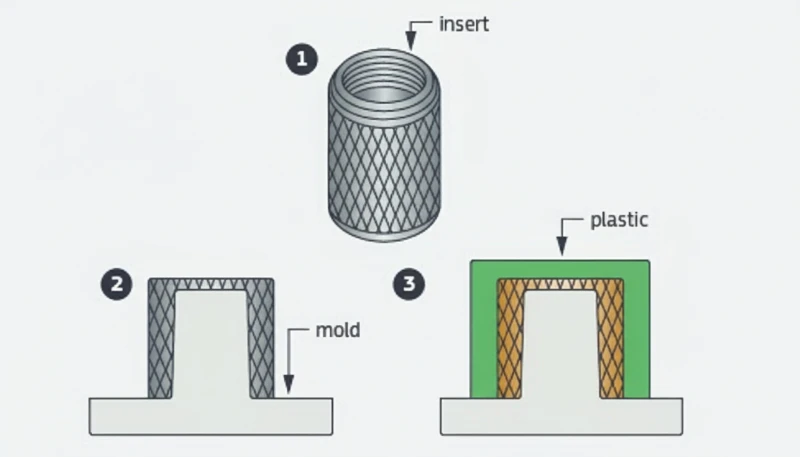
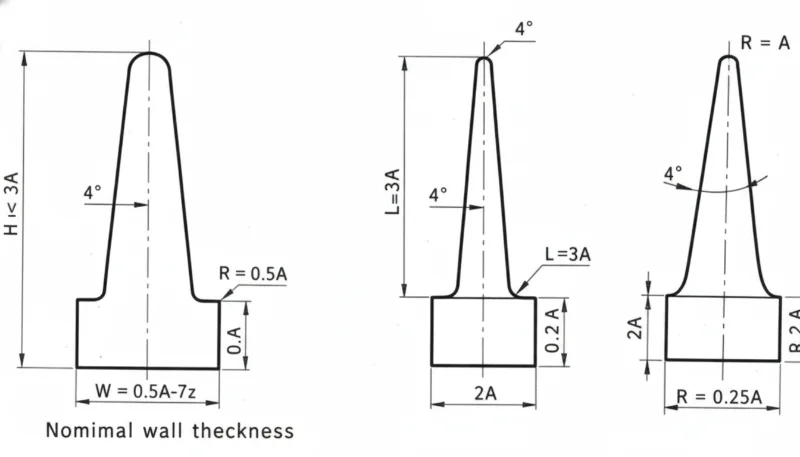
Specificeert u een materiaal voor een constructief onderdeel dat onder belasting, bij temperatuur en in de loop van de tijd zijn vorm moet behouden, dan staat glasgevuld nylon1 waarschijnlijk op uw shortlist. Door glasvezels aan nylon toe te voegen verandert het van een taaie maar flexibele technische kunststof in een materiaal dat met spuitgietaluminium kan concurreren.
Het spuitgietproces voor glasgevulde kwaliteiten is echter heel anders dan voor ongevuld nylon. Een hogere smeltviscositeit, sterke gereedschapsslijtage, anisotrope krimp2[^2] en gevoeligheid voor vezellengte betekenen dat de parameters correct moeten zijn — anders laten de onderdelen dat duidelijk merken.
Deze gids bespreekt wat bij het spuitgieten van glasgevuld nylon werkelijk van belang is, gebaseerd op twintig jaar productie-ervaring met deze materialen. Bij ZetarMold gebruiken we in onze fabriek in Shanghai 47 spuitgietmachines (90T–1850T) voor meer dan 400 materialen.
- Glasgevuld nylon voegt 30–200% meer stijfheid toe vergeleken met ongevulde kwaliteiten
- Vochtigheid moet onder 0,1% zijn voor verwerking — droog 4–6 uur bij 80°C
- Smelttemperaturen variëren van 260–300°C afhankelijk van PA6 versus PA66
- Vezeloriëntatie veroorzaakt anisotrope krimp — ontwerp de inloopkanalen dienovereenkomstig
- Matrijsslijtage is 3–5× hoger dan bij ongevuld nylon — gebruik gehard gereedschapsstaal
Wat Is Glasgevuld Nylon en Waarom Is Het Belangrijk?
Glasgevuld nylon is polyamide versterkt met korte glasvezels en biedt tot 200% meer stijfheid en een HDT boven 250°C. Vergelijkt u leveranciers, dan behandelt onze inkoopgids voor spuitgietleveranciers de voorbereiding en kwalificatie van offerteaanvragen.
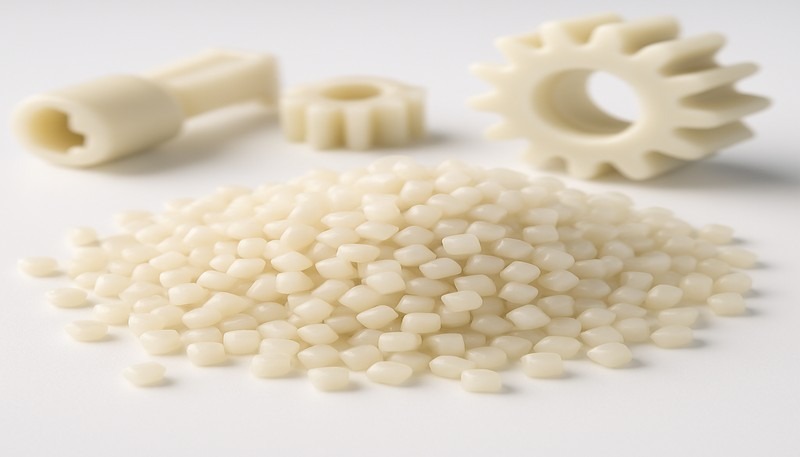
Glasvezelversterkt nylon[^1] is standaard polyamide, meestal PA6 of PA66, gemengd met korte glasvezels in gewichtspercentages van 10%, 20%, 30% of 45%. Het resulterende composietthermoplast is veel stijver, sterker en maatvaster dan het ongevulde basismateriaal.
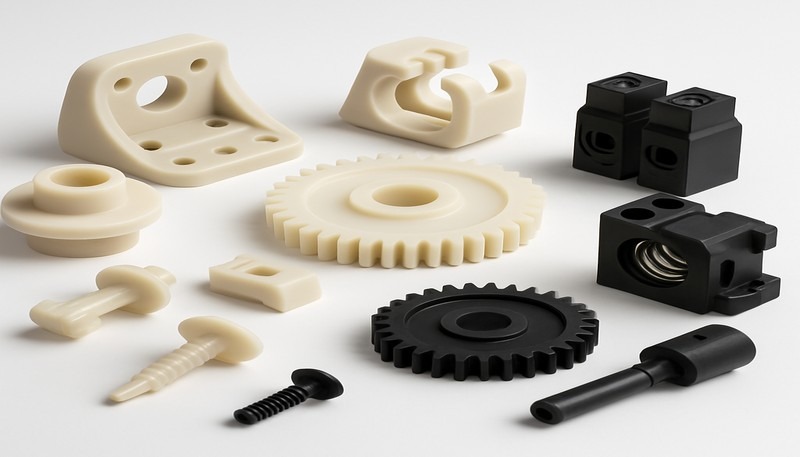
In onze fabriek behoren PA6 GF303 en PA66 GF30 tot de vijf meest verwerkte materialen. Ze worden gebruikt in onderdelen onder de motorkap, elektrische behuizingen, behuizingen voor elektrisch gereedschap, industriële fittingen en constructieve beugels voor consumentenproducten.
De economische aspecten zijn duidelijk: u krijgt metaalachtige stijfheid bij kunststofverwerkingssnelheden, en de totale onderdeelkosten zijn vaak lager dan bij gietwerk of CNC-brokkel wanneer de aantallen de drempel van 5.000 eenheden overschrijden.
Bij ZetarMold bedienen we 47 spuitgietmachines (90T–1850T) met ervaring in meer dan 400 materialen — PA6 GF30 en PA66 GF30 behoren tot de top vijf meest gespoten kwaliteiten in onze fabriek in Shanghai.
Maar dit vermelden datasheets niet: tijdens het injecteren richten de glasvezels zich in de stromingsrichting. Daardoor krimpt uw onderdeel anders langs de stromingsbaan dan dwars erop. Deze anisotrope krimp is de grootste verwerkingsuitdaging bij deze materialen.
Wat Zijn de Belangrijkste Materiaaleigenschappen van Glasgevuld Nylon?
Wanneer u 30% glasvezel aan PA66 toevoegt, stijgt de treksterkte van ongeveer 80 MPa naar 185 MPa — een toename van 130%. De buigmodulus gaat van ongeveer 2,9 GPa naar 9,0 GPa, wat betekent dat het materiaal drie keer zo stijf is.
De warmtevervormingstemperatuur (HDT) bij 1,8 MPa stijgt van ongeveer 75°C naar meer dan 250°C, wat een game-changer is voor toepassingen onder de motorkap in de auto-industrie en elektrische toepassingen.
Er zijn echter afwegingen. De slagvastheid daalt omdat glasvezels spanningsconcentraties veroorzaken. De rek bij breuk daalt van 50%+ naar ongeveer 3%, wat betekent dat het onderdeel niet buigt voordat het breekt. Ook de oppervlakteafwerking wordt merkbaar ruwer.
| Eigendom | PA6 Ongevuld | PA6 GF30 | PA66 GF30 |
|---|---|---|---|
| Treksterkte (MPa) | 79 | 170 | 185 |
| Buigmodulus (GPa) | 2.8 | 8.5 | 9.0 |
| HDT bij 1,8 MPa (°C) | 65 | 215 | 255 |
| Izod met kerf (J/m) | 55 | 110 | 105 |
| Krimp - stromingsrichting (%) | 1.0–1.4 | 0.3–0.5 | 0.2–0.5 |
| Krimp - dwarsrichting (%) | 1.0–1.4 | 0.7–1.0 | 0.6–1.0 |
| Smelttemperatuurbereik (°C) | 230–260 | 260–290 | 275–300 |
| Dichtheid (g/cm3) | 1.13 | 1.35 | 1.37 |
Let op het verschil in krimp tussen stroom- en dwarsrichtingen. In PA6 GF30 kunt u 0,3% krimp in de stroomrichting zien, maar 0,9% er dwars op. Dit drievoudige verschil maakt matrijsontwerp voor glasgevuld nylon een gespecialiseerde vaardigheid.
Welke verwerkingsparameters bepalen het vormen van glasgevuld nylon?
Drogen, smelttemperatuur, matrijs-temperatuur en inspuitsnelheid zijn de vier parameters die de kwaliteit van GF nylon bepalen. Deze parameters zijn minder vergevingsgezind dan bij ongevuld nylon, dus strikte procescontrole is essentieel.
Drogen: Niet Onderhandelbaar
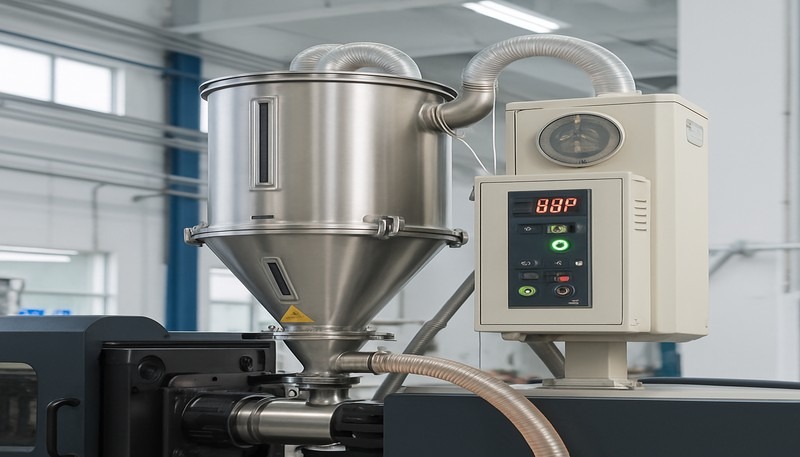
Nylon is hygroscopisch — het neemt vocht uit de lucht op. Glasvezels veranderen dat niet. U moet een droogmiddeldroger gebruiken en het materiaal 4–6 uur bij 75–85°C drogen om het vochtgehalte onder 0.1% te brengen. Als u dit overslaat, ontstaan zilverstrepen, spuitmarkeringen en een lager molecuulgewicht door hydrolyse.
We hebben binnenkomend materiaal gezien met 0.4% vocht dat er met het blote oog droog uitzag — dat was het niet. Controleer dit vóór verwerking altijd met een vochtanalysator.
Smelttemperatuur
Voor PA6 GF30, mik op 260–285°C. Voor PA66 GF30, heb je 275–300°C nodig. Het hogere uiteinde geeft betere stroming en vezelbevochtiging maar verhoogt het risico op thermische degradatie.
In onze faciliteit in Shanghai gebruiken we meestal PA66 GF30 bij 285–295°C — die optimale temperatuur geeft een goede oppervlakteafwerking zonder de coating op de glasvezels te verbranden.
Schimmel Temperatuur
Voer de matrijs-temperatuur uit op 80–100°C voor glasgevulde kwaliteiten. Hogere matrijstemperaturen verbeteren de kristalliniteit, oppervlakteafwerking en dimensionale stabiliteit. Maar ze verlengen de cyclusduur.
Voor onderdelen met nauwe toleranties gebruiken we minimaal 90°C. Onder 70°C ontstaan waarschijnlijk kromtrekken na het spuitgieten en inconsistente mechanische eigenschappen — de buitenhuid kristalliseert anders dan de kern.
Injectiesnelheid en -druk
Met glasvezel versterkt nylon heeft een hogere smeltviscositeit, dus je hebt 20–30% meer inspuitdruk nodig dan bij onversterkte kwaliteiten. Hogere inspuitsnelheden helpen de vezellengte te behouden en zwakte door laslijnen te verminderen.
Bij een te hoge snelheid ontstaan echter straalvorming of bramen op dunwandige onderdelen. We beginnen doorgaans met een matig snel snelheidsprofiel en stellen dit bij op basis van een analyse van onvolledig gevulde producten.
Hoe Beïnvloedt het Glasvezelgehalte Krimp en Dimensionale Stabiliteit?
Hier verdient met glasvezel versterkt nylon echt zijn hogere prijs. Ongevuld PA66 krimpt ongeveer 1,0–1,4% in alle richtingen. Voeg 30% glasvezel toe en de krimp in de stroomrichting daalt tot 0,2–0,5%.
Voor onderdelen met strakke toleranties zoals tandwielhuisvestingen, sensorbeugels en connectorinzetstukken is deze voorspelbaarheid elke cent van het materiaalmeerprijs waard.
De dwarse krimp daalt echter slechts tot circa 0.6–1.0%. Uw caviteitsontwerp moet dus rekening houden met differentiële krimp — u bouwt feitelijk asymmetrische compensatie in het gereedschapsstaal in.
In onze interne spuitgietmatrijzenfabriek hebben onze 8 senior engineers door jarenlange iteratie van gereedschappen geleerd dit gedrag te voorspellen. De belangrijkste factoren zijn het vezelpercentage, de onderdeelgeometrie, de positie van het aanspuitpunt en de procesomstandigheden.
Voor productieonderdelen die toleranties van ±0,05 mm vereisen, adviseren wij PA66 GF30 of hoger, verwerkt met een matrixtemperatuur boven 85°C, en gevalideerd via eerste-artikel inspectie met CMM-meting.
Welke ontwerprichtlijnen moet u volgen voor glasgevulde nylon onderdelen?
Houd wanden tussen 2 en 3 mm, gebruik radii boven 0,5 mm en voeg 1–3° ontlophoek toe — dit zijn de essentiële ontwerprichtlijnen voor glasgevulde nylon onderdelen. Glasvezels vergroten krimpanisotropie en gereedschapsslijtage, dus standaardregels voor ongevuld nylon gelden niet.
Wanddikte: Houd Deze Uniform
Uniforme wanddikte is altijd belangrijk bij spuitgieten, maar cruciaal bij glasgevuld nylon. Dikteovergangen veroorzaken verschillen in afkoeling en krimp, wat tot vervorming leidt. Ook oriënteren vezels zich anders in dikke versus dunne secties.
We adviseren een nominale wanddikte van 2.0–3.5 mm. Onder 1.5 mm ontstaan problemen met vullen en vezelbreuk. Boven 4.0 mm ontstaan inzinkingen en buitensporige cyclustijden.
Radii: Royaal, altijd
Glasvezels veroorzaken spanningsconcentraties bij scherpe binnenhoeken. Minimale binnenradius 0.5 mm, bij voorkeur 1.0 mm. Wij zagen uitval 40%+ dalen door radii van 0.3 mm naar 1.0 mm te vergroten.
De vezels kunnen geen scherpe hoeken volgen — ze hopen zich op en creëren harsrijke en vezelrijke zones, die beide zwakke punten vormen.
Ontlophoeken: Meer dan u denkt
Glasgevuld nylon is abrasief, wat betekent dat het onderdeel tijdens het uitwerpen aan het matrijs oppervlak blijft kleven. Minimaal 1,5° ontlophoek, bij voorkeur 2–3°, vooral op getextureerde oppervlakken.
De kosten van een paar extra graden ontlopen zijn niets vergeleken met onderdelen die blijven plakken, beschadigen of breken tijdens uitstoten.
Rib- en penontwerp
Ribben moeten 50–75% van de nominale wanddikte zijn. Met glasgevuld nylon zijn dunnere ribben (50–60%) veiliger omdat het materiaal al stijf is. Bussen moeten dezelfde verhouding volgen met uitkernen om massa te verminderen.
Wat zijn de meest voorkomende defecten en hoe kunt u ze oplossen?
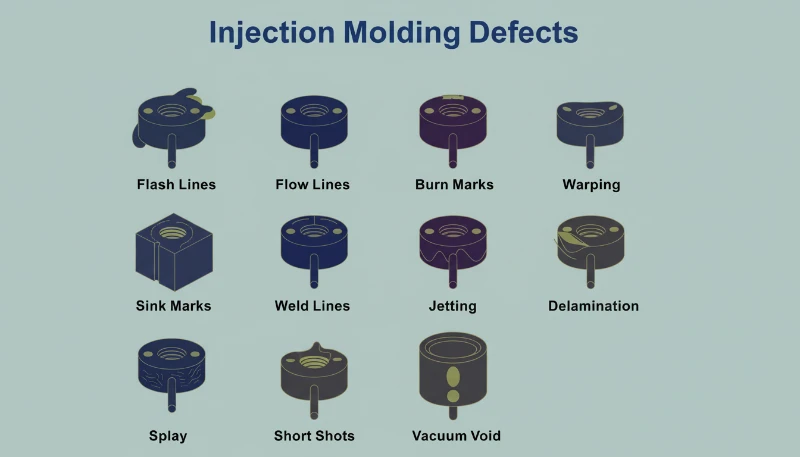
Vezelblootstelling, kromtrekken, laslijnen en vochtstrepen zijn de vier meest voorkomende GF nylon defecten — en de meeste zijn te voorkomen. Dit is wat elk veroorzaakt en hoe wij ze in productie oplossen.
Vezelblootstelling en slechte oppervlakteafwerking
Glasvezels die door het oppervlak steken betekenen dat de hars de vezels bij de matrijswand niet volledig heeft omsloten. Oorzaken: te lage matrijstemperatuur, te lage injectiesnelheid of onvoldoende nadruk.
Oplossing: verhoog matrixtemperatuur naar 90–100°C, verhoog injectiesnelheid en zorg voor voldoende naspuitdruk op 60–80% van de injectiedruk. Voor cosmetische A-oppervlakken, overweeg een gepolijste holte-afwerking en een lichte textuur die het vezelpatroon maskeert.
Kromtrekken en Dimensionale Variatie
Meestal veroorzaakt door differentiële krimp tussen stroom- en dwarsrichtingen, verergerd door niet-uniforme wanddikte.
Oplossing: herontwerp voor uniforme wanden, verplaats spuitkanalen voor gebalanceerde stroming, verhoog matrixtemperatuur en overweeg nabehandeling bij 150–170°C gedurende 30–60 minuten om interne spanningen te verlichten.
Laslijnen
Glasvezels kruisen lasnaden niet — ze richten zich parallel aan het stromingsfront, waardoor de lasnaadzone in feite ongevuld nylon met veel lagere sterkte is.
Oplossing: minimaliseer laslijnen door intelligente plaatsing van de instroompoort, positioneer ze in niet-kritieke gebieden en gebruik hogere smelt- en vormtemperatuur om de lassterkte te verbeteren.
Vochtgerelateerde Defecten
Zilverstrepen, spatten, luchtbellen en verminderde mechanische eigenschappen. De oplossing is altijd hetzelfde: droog het materiaal goed tot onder 0,1% vochtigheid.
In onze faciliteit verifieert IQC het vochtgehalte van het materiaal voor elke productierun. Wij gebruiken gesloten-lus trechterladers die droge lucht gedurende de hele run behouden.
Hoe Kies Je Tussen PA6 GF en PA66 GF Kwaliteiten?
Gebruik PA6 GF30 voor kostenbewuste onderdelen onder 150°C; kies PA66 GF30 voor hogere temperaturen of betere chemische bestendigheid. Beide kwaliteiten met 30% glasvezelvulling leveren uitstekende stijfheid — het belangrijkste verschil is thermische prestaties.
Kies PA6 GF30 wanneer kosten de belangrijkste drijfveer zijn (PA6-hars is typisch 10–15% goedkoper), het onderdeel continu onder 150°C werkt, of u iets betere slagvastheid nodig heeft. PA6 GF30 is onze voorkeur voor behuizingen van consumentenelektronica en niet-kritieke structurele onderdelen.
Kies PA66 GF30 wanneer het onderdeel werkt boven 150°C (automobiel onder de motorkap, elektrische contactdragers), chemische bestendigheid belangrijk is, dimensionale stabiliteit bij verhoogde temperatuur cruciaal is, of u hogere treksterkte en kruipweerstand nodig heeft.
Voor beide kwaliteiten is 30% glasvezel de optimale waarde. 10–15% geeft bescheiden verbeteringen. 40–45% maximaliseert stijfheid maar gaat gepaard met een slechte oppervlakteafwerking, zeer hoge viscositeit en agressieve gereedschapsslijtage.
Glasgevuld Nylon vs. Ongevuld Nylon: Wanneer Loont de Upgrade?
De GF nylon upgrade loont wanneer het onderdeel treksterkte boven 80 MPa nodig heeft, werktemperaturen boven 100°C, of krimp onder 0,4%. De materiaalkosten zijn 20–40% meer per kilogram, maar de totale onderdeelkost komt vaak quitte uit.
De upgrade loont wanneer het onderdeel structurele belastingen draagt die ongevuld nylon bij de vereiste doorbuigingslimiet niet aankan, maatvastheid over verschillende temperatuurbereiken belangrijk is of het onderdeel wordt gebruikt waar de HDT van ongevuld nylon van 65–75°C onvoldoende is.
De upgrade is verspilling als het onderdeel puur cosmetisch is, ongevuld nylon al aan de specificatie voldoet of het volume te laag is voor de extra gereedschapsslijtage. We hebben klanten meermaals glasgevuld nylon afgeraden: dat is het eerlijke advies.
Nog een overweging: gereedschapslevensduur. Glasgevuld nylon is abrasief — die vezels werken als microscopisch schuurpapier. Verwacht 3–5× meer slijtage van de holte. In onze matrijsproductiefaciliteit gebruiken we standaard gehard staal (H13 of S7) voor elk GF nylon gereedschap, waardoor onze matrijzen meer dan 500.000 schoten halen voordat groot onderhoud nodig is.
Vanuit inkoopperspectief is glasgevuld nylon breed verkrijgbaar bij grote leveranciers, waaronder DuPont (Zytel), BASF (Ultramid) en EMS-Grivory. De levertijden voor standaardkwaliteiten PA6 GF30 en PA66 GF30 bedragen doorgaans 2–4 weken, maar speciale kwaliteiten zoals PA66 GF45 of uv-gestabiliseerde compounds kunnen 8–12 weken vergen. Plan uw materiaalinkoop vroeg — we hebben projecten vertraging zien oplopen omdat de gespecificeerde GF-kwaliteit tijdens het hoogseizoen in de automobielsector op allocatie stond.
"Glasgevuld nylon vereist dezelfde droogprocedure als ongevuld nylon."True
Waar. De nylonmatrix blijft hygroscopisch ongeacht het vezelgehalte. Vocht kan ook vast komen te zitten op het grensvlak tussen vezel en hars. Beide kwaliteiten moeten worden gedroogd tot onder 0,1% vochtgehalte voor verwerking.
"Glasgevulde nylon onderdelen hebben altijd een betere oppervlakteafwerking dan ongevuld nylon."False
Onwaar. Glasvezels zorgen voor een mat, ruw oppervlak. Ongevuld nylon geeft een gladder, glanzender afwerking. Als uiterlijk belangrijk is, verdienen ongevulde kwaliteiten of oppervlaktebehandelingen de voorkeur.
Het begrijpen van hoe glasgevuld nylon zich gedraagt tijdens de verwerking vereist praktijkervaring met het materiaal voor verschillende onderdeelgeometrieën en wanddiktes. De vezeloriëntatiepatronen veranderen bij elke poortverplaatsing, aanpassing van de wanddikte of wijziging van de verwerkingsparameters. In onze faciliteit in Shanghai hebben onze ingenieurs deze gedragspatronen gedocumenteerd over duizenden productieruns, waardoor een empirische database is opgebouwd die ons helpt veelvoorkomende defecten te voorspellen en te voorkomen voordat ze in de productie optreden.
"De krimp van glasgevuld nylon verschilt in stromings- en dwarsrichting."True
Waar. Glasvezels oriënteren zich in de stroomrichting tijdens het inspuiten, wat anisotrope krimp creëert — typisch 0,3% in de stroomrichting versus 0,8% dwars voor PA6 GF30. Dit verschil is de grootste uitdaging in het matrijsontwerp voor deze materialen.
"Een hoger glasvezelgehalte levert altijd een sterker onderdeel op."False
Onjuist. Hoewel de stijfheid en treksterkte toenemen met het vezelgehalte, kan de slagvastheid stagneren of afnemen. Bij 45% belading nemen broosheid en verwerkingsmoeilijkheid aanzienlijk toe. 30% blijft voor de meeste toepassingen de meest gebalanceerde keuze.
Veelgestelde vragen
Veelgestelde vragen
Wat is de spuitgietemperatuur voor glasgevuld nylon?
Voor PA6 GF30 bedraagt het smelttemperatuurbereik 260–285°C. Gebruik voor PA66 GF30 275–300°C. De matrijstemperatuur moet op 80–100°C worden gehouden voor een optimale kristalliniteit en oppervlakteafwerking. Controleer altijd het datablad van de specifieke kwaliteit, omdat formuleringen van fabrikanten tot plus of min 10°C kunnen variëren. Een te hoge verwerkingstemperatuur tast de vezelcoating aan; een te lage temperatuur veroorzaakt een slechte vezelbevochtiging en oppervlaktedefecten. In onze vestiging in Shanghai richten we ons doorgaans op het midden van elk bereik en stellen we dit bij op basis van short-shot-tests en de resultaten van de first-article-inspectie.
Hoe beïnvloedt het glasvezelgehalte de krimp van nylon?
Glasvezels verminderen de krimp in de stroomrichting drastisch — van ongeveer 1,2% voor ongevulde PA66 tot 0,3% voor PA66 GF30. Dwarsrichtingskrimp daalt echter slechts tot ongeveer 0,7–0,9%, wat significant anisotroop gedrag creëert dat in het matrijsontwerp moet worden meegenomen. Een hoger vezelgehalte vermindert de totale krimp verder maar vergroot het verschil tussen stroom- en dwarsrichtingen. Dit betekent dat een PA66 GF45-onderdeel slechts 0,2% in de stroomrichting krimpt, maar nog steeds 0,6% in de dwarsrichting, wat dimensionale voorspelling nog complexer maakt voor de matrijsontwerper.
Kun je glasgevuld nylon overmatrijsen met TPE of TPU?
Ja, glasgevuld nylon (meestal PA6 GF30) wordt vaak gebruikt als het rigide substraat in tweecomponenten of overmatrijsapplicaties, met TPE of TPU als het zachte overmatrijsmateriaal. Hechting hangt af van de chemische compatibiliteit tussen het substraat en het overmatrijsmateriaal, evenals van een goede oppervlaktevoorbereiding van het substraat en temperatuurbeheer tijdens de tweede schot. Het glasvezelgehalte kan de mechanische hechtsterkte verminderen in vergelijking met ongevulde nylon substraten, omdat de vezels het beschikbare oppervlak voor chemische vergrendeling met de TPE- of TPU-laag verminderen.
Wat veroorzaakt vezelzichtbaarheid op het oppervlak van glasgevulde nylon onderdelen?
Blootliggende vezels ontstaan wanneer de harsmatrix de glasvezels tijdens de nadrukfase niet volledig omsluit aan het oppervlak van de matrijsholte. Veelvoorkomende oorzaken zijn een lage matrijstemperatuur onder 80°C, een lage injectiesnelheid die de vezels niet van de matrijswand wegduwt, onvoldoende nadruk en een hoog vezelgehalte boven 30%. De doeltreffendste oplossingen zijn verhoging van de matrijstemperatuur tot 90–100°C en van de injectiesnelheid. Voor onderdelen die een cosmetisch A-oppervlak vereisen, kan een gepolijste matrijsholte in combinatie met een subtiele textuur het doorschijnen van vezels bij glasvezelversterkte kwaliteiten helpen maskeren.
Is glasgevuld nylon geschikt voor voedselcontacttoepassingen?
Glasvezelversterkt nylon kan aan de FDA-eisen voldoen wanneer een basishars van voedselkwaliteit en een geschikte vezelcoating worden gebruikt, maar niet alle GF-nylonkwaliteiten zijn gecertificeerd voor voedselcontact. De glasvezels zelf zijn inert — naleving hangt volledig af van de nylonmatrix en eventuele additieven of kleurstoffen in de compound. Controleer altijd de documentatie van de materiaalleverancier over de naleving van FDA of EU 10/2011 voor de specifieke kwaliteit. Als voedselveiligheid vereist is, leg dit dan vooraf vast, zodat uw spuitgieter gecertificeerd materiaal inkoopt en gedurende het hele productieproces de juiste traceerbaarheidsdocumentatie bijhoudt.
Hoe voorkomt u kromtrekken in spuitgietonderdelen van glasgevuld nylon?
Het voorkomen van vervorming vereist een veelzijdige aanpak: ontwerp voor uniforme wanddikte tussen 2,0 en 3,5 mm, gebruik royale interne radii van minimaal 1,0 mm, positioneer inloopkanalen om gebalanceerde stroompatronen te creëren, handhaaf een matrijstemperatuur boven 85°C gedurende de hele cyclus en zorg voor voldoende koeltijd vóór uitstoting. Voor onderdelen die al vervorming vertonen in productie, kan nabehandeling bij 150–170°C gedurende 30 tot 60 minuten interne spanningen verlichten en de vlakheid verbeteren. De meest effectieve strategie is het aanpakken van vervorming tijdens de matrijsontwerpreview, in plaats van te proberen het alleen via procesaanpassingen op te lossen.
Welk gereedschapstaal wordt aanbevolen voor glasgevulde nylon matrijzen?
Voor productiematrijzen die met glasgevuld nylon werken, worden geharde gereedschapstalen zoals H13 met 48–52 HRC of S7 aanbevolen. De schurende glasvezels veroorzaken drie tot vijf keer meer slijtage dan ongevuld nylon, wat betekent dat standaard P20-gereedschapstaal veel sneller holte-erosie en dimensieverschuiving zal vertonen. Voor grootschalige productie van meer dan 500.000 schoten, overweeg PVD-coatings zoals TiN of TiCN op holteoppervlakken om de gereedschapslevensduur te verlengen. De initiële investering in gehard staal verdient zichzelf terug door verminderde onderhoudsstilstandtijd en consistentere onderdeelkwaliteit gedurende de levensduur van de matrijs.
Vereist glasgevuld nylon een speciale spuitgiet-schroef?
Een universele schroef met een compressieverhouding van 2,5:1 tot 3,0:1 werkt goed voor de meeste glasgevulde nylonkwaliteiten. Vermijd zeer hoge compressieverhoudingen boven 3,5:1, die overmatige vezelbreuk veroorzaken en de mechanische versterking die de vezels bieden verminderen. Slijtvaste schroef- en cilindermaterialen zoals bimetallische voeringen of Xaloy-gecoate componenten worden sterk aanbevolen voor lange productieseries vanwege de abrasieve aard van de glasvezels. Het vervangen van een versleten schroef halverwege een productieserie is veel duurder dan vanaf het begin slijtvaste componenten specificeren.
Een betrouwbare partner nodig voor uw project met glasgevuld nylon? ZetarMold verwerkt sinds 2005 GF-nylonkwaliteiten in onze fabriek in Shanghai. Met 47 machines (90T–1850T), een interne matrijzenmakerij en 8 senior engineers produceren we dagelijks PA6 GF30- en PA66 GF30-onderdelen voor klanten in de auto-industrie, elektronica en industrie wereldwijd. Vraag een gratis offerte aan en laat ons engineeringteam uw ontwerp beoordelen.
glasgevuld nylon: glasgevuld nylon is nylon (PA6 of PA66) versterkt met korte glasvezels, doorgaans 10–45 gewichtsprocent, om de stijfheid, sterkte en hittebestendigheid te verbeteren. ↩
anisotrope krimp: anisotrope krimp is het verschil in krimp tussen stroom- en dwarsrichting als gevolg van de vezeloriëntatie tijdens het inspuiten, waarvoor zorgvuldige compensatie in het matrijsontwerp nodig is. ↩
PA6 GF30: PA6 GF30 is polyamide 6 met 30% glasvezel — een gangbare kwaliteit die mechanische prestaties en verwerkbaarheid voor constructieve toepassingen combineert. ↩