Вы только что получили первые производственные образцы, и детали застревают в форме. Толкатели оставляют следы. На некоторых деталях даже есть задиры по боковой поверхности. Ваш инструментальщик говорит, что нужно увеличить угол уклона. Вы запрашивали нулевой уклон, потому что CAD-модель выглядела чистой. Теперь у вас есть форма $12,000, требующая доработки. Хорошая новость: эту проблему проще всего предотвратить, если разобраться в углах уклона до начала изготовления оснастки.
В этой статье рассматривается, что такое литейный уклон1, почему он важен, каковы стандартные значения для разных материалов и текстур и какие ошибки, по моему опыту, приводили к реальным расходам в серийном производстве.
- Стандартная конусность для большинства полированных поверхностей составляет от 1 до 2 градусов на сторону.
- Для текстурированных поверхностей требуется дополнительно от 1 до 1,5 градусов конусности на каждый класс текстуры.
- Нулевой уклон возможен, но рискован и почти никогда не оправдан в серийном производстве.
- Уклон должен быть задан до начала изготовления оснастки — доработка обходится дорого.
- Усадка, материал и толщина стенок влияют на минимальный необходимый угол уклона.
Правильный расчет угла уклона обеспечивает стабильность
Литейный уклон при литье под давлением — это намеренно заданный наклон каждой вертикальной поверхности полости пресс-формы. Представьте его как небольшой наклон стенки, благодаря которому деталь свободно выходит после охлаждения и усадки на сердечнике. Без уклона деталь присасывается к стали, и извлечение превращается в борьбу между выталкивателями и поверхностью формы.
Угол конусности измеряется в градусах от вертикальной оси направления раскрытия формы. Конусность в 1 градус означает, что стенка отклоняется наружу примерно на 0,0175 мм на каждый мм глубины. На кармане глубиной 50 мм это даёт около 0,87 мм зазора с каждой стороны вверху. Это кажется небольшим, но это разница между чистым извлечением и застрявшей деталью.
Каждая вертикальная поверхность вашей детали требует уклона. Это включает внешние стенки, внутренние ребра жёсткости, бобышки, карманы и даже сквозные отверстия. Если поверхность параллельна направлению раскрытия формы и не имеет конусности, деталь будет застревать при извлечении, оставляя царапины, задиры или деформации.
Почему угол конусности важен для качества детали?
В этом разделе объясняется, почему литейный уклон важен для качества детали и как он влияет на стоимость, качество, сроки и риски снабжения. Уклон напрямую воздействует на четыре аспекта: внешний вид детали, точность размеров, ресурс оснастки и длительность цикла. Когда деталь застревает, в литьевой форме система выталкивания2 вынуждена работать с большей нагрузкой. Выталкиватели оставляют следы, на поверхности появляются задиры, а в худшем случае деталь трескается или деформируется ещё до освобождения.
Недостаточный уклон также ускоряет износ формы. При каждом цикле деталь царапает стенку полости при извлечении. За 100 000 циклов постоянное трение полирует и повреждает стальную поверхность. Форма, рассчитанная на 500 000 циклов, может потребовать полировки или доработки уже на 200 000.
На стороне производства детали, которые трудно извлечь, замедляют цикл. Если ваш оператор должен вручную выбивать деталь или если робот с трудом её захватывает, вы теряете секунды на каждом цикле. В масштабе это складывается в реальные деньги. Задержка в 3 секунды на 30-секундном цикле означает потерю 10 процентов мощности.
"Угол уклона 1° может снизить усилие выталкивания до 50% по сравнению с нулевым уклоном."True
Конусность нарушает эффект вакуума между сжимающимся пластиком и сердечником формы. Даже небольшой угол значительно снижает коэффициент трения при извлечении, уменьшая усилие, необходимое для системы выталкивания.
"Если в пресс-форме достаточно выталкивающих штифтов, угол уклона не требуется."False
Большее количество толкателей лучше распределяет усилие, но они не могут преодолеть фундаментальное трение между параллельной стенкой и сжимающимся пластиком. Без уклона толкатели просто концентрируют усилие на меньших площадях, увеличивая риск следов от толкателей и деформации детали.
Каковы стандартные значения угла уклона?
Не существует единственно правильного угла уклона — он зависит от материала, качества поверхности, глубины и требований к допускам. Но вот значения, которые работают на практике в тысячах производственных форм.
| Отделка поверхности | Минимальный уклон | Рекомендуемый уклон | Примечания |
|---|---|---|---|
| Полированная (SPI A-1–A-3) | 0.5° | 1° | Гладкая поверхность легко отделяется |
| Стандартная (SPI B-1 до B-3) | 1° | 1.5° | Лёгкие следы механической обработки |
| Мелкая текстура (VDI 12-24) | 1° | от 1,5° до 2° | Добавьте 1° на каждый класс глубины текстуры |
| Средняя текстура (VDI 27-33) | 1.5° | 2° до 3° | Текстура фиксируется на поверхности детали |
| Сильная текстура (VDI 36-45) | 2° | 3° до 5° | Глубокая текстура действует как микро-поднутрения |
| Полированная поверхность, нулевой уклон | 0° | Не рекомендуется | Только для неглубоких элементов менее 10 мм |
Эмпирическое правило, которым я пользуюсь: начинайте с 1 градуса на сторону для полированных поверхностей, добавляйте 1 градус на каждое увеличение класса текстуры и никогда не опускайтесь ниже 0,5 градусов для чего-либо глубже 10 мм. Если ваш клиент возражает против конусности из-за ограничений по размерам, покажите ему расчёты стоимости переделки по сравнению с конусностью в 0,5 градуса.
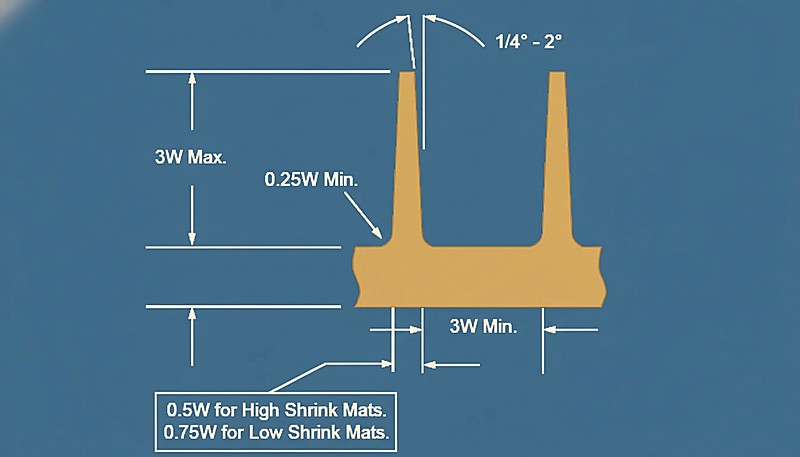
Для внутренних элементов, таких как ребра жёсткости и бобышки, ситуация с уклоном более критична. Пластик при охлаждении сжимается на сердечнике, создавая плотное сцепление. Для ребер жёсткости минимальный уклон должен составлять не менее 0,5 градуса с каждой стороны, но безопаснее использовать 1 градус. Бобышки требуют минимум 0,5 градуса снаружи, а внутреннее отверстие также должно иметь уклон, если оно формируется стержнем.
Как усадка материала влияет на требования к конусности?
Усадка3 — главная причина, по которой вообще необходим уклон. Охлаждаясь в форме, пластик уменьшается в размерах. Если деталь имеет форму чаши или коробки, усадка плотно прижимает стенки к сердечнику. Чем выше усадка, тем сильнее сцепление и тем больший уклон требуется.
| Материал | Скорость усадки | Мин. уклон (полированная поверхность) | Минимальный уклон (текстурированный) |
|---|---|---|---|
| ABS | 0.4–0.7% | 0.5° | 1.5° |
| Поликарбонат (PC) | 0.5–0.7% | 0.5° | 1.5° |
| Полиамид 6 (ПА6) | 0.5–1.5% | 1° | 2° |
| Полиамид 66 (ПА66) | 0.8–2.0% | 1° | 2.5° |
| Стеклонаполненный нейлон | 0.2–0.8% | 0.5° | 1.5° |
| PP (полипропилен) | 1.0–2.5% | 1° | 2.5° |
| ПЭ (полиэтилен) | 1.5–3.0% | 1.5° | 3° |
| POM (ацеталь) | 1.5–2.5% | 1° | 2.5° |
| PBT | 0.8–2.0% | 1° | 2° |
Кристаллические материалы, такие как нейлон, ПП и ПОМ, сжимаются больше, чем аморфные материалы, такие как ABS и ПК. Это означает, что они сильнее держат сердечник и требуют больше уклона. Нейлон с стекловолокном является исключением: стекловолокно уменьшает усадку, поэтому он фактически требует меньше уклона, чем нейлон без наполнителя, даже если волокна делают материал более абразивным для формы.
У нас был проект корпуса из PP, где клиент требовал уклона 0,5 градуса с средней текстурой. Детали застревали на каждом втором цикле. Мы перерезали сердечник, добавив ещё 1,5 градуса уклона — три недели потерянного производства. PP с усадкой 2,5 процента на текстурированной поверхности никогда бы не работал при уклоне 0,5 градуса.
Что происходит, когда конусности недостаточно?
Симптомы проявляются сразу на производственном участке. Вот что вы увидите, в порядке возрастания серьезности:
Во-первых, следы волочения. Поверхность изделия получает параллельные царапины вдоль направления выталкивания. На полированных изделиях это сразу заметно и бракует изделие по косметическому виду. На текстурированных изделиях текстура полируется полосами, создавая неравномерную отделку, которую никакая последующая обработка не исправит.
Во-вторых, следы от толкателей. Когда изделие сопротивляется выталкиванию, толкатели концентрируют усилие на небольших участках. На внутренней стороне появляются белые следы напряжения, видимые следы от толкателей или даже сквозные отверстия от толкателей, если стенка тонкая. В нашей мастерской мы считаем любой след от толкателя глубже 0,1 мм браком для видимых поверхностей.
В-третьих, искажение изделия. Если изделие все же высвобождается, но с большим усилием выталкивания, оно может покоробиться, прогнуться или треснуть. Тонкостенные изделия особенно уязвимы. Усилие, необходимое для выталкивания изделия с нулевым уклоном из глубокой полости, может превысить структурную прочность стенки, вызывая необратимую деформацию.
Четвертая — повреждение формы. Со временем постоянное выталкивание с высокой силой приводит к износу отверстий толкателей, повреждению поверхностей полости и может вызвать трещины в сердечниках. Форма с глубокими полостями без уклона может требовать замены толкателей каждые 50 000 циклов вместо каждых 200 000. Это в четыре раза больше затрат на обслуживание.
"Добавление уклона 1 градус на текстурированной поверхности может полностью устранить следы трения при выталкивании."True
Дополнительный уклон создаёт зазор между усаживающимся пластиком и текстурированной стальной поверхностью. Этот зазор разрушает механическое сцепление между текстурированным рисунком и затвердевшей поверхностью детали, обеспечивая чистое отделение.
"Угол уклона важен только для декоративных деталей — конструкционным деталям он не нужен."False
Уклон — это механическое требование, не только косметическое. Конструкционные детали испытывают те же силы усадки и трения при выталкивании. Фактически, конструкционные детали с жесткими допусками даже более чувствительны к деформации при выталкивании, вызванной недостаточным уклоном.
Как текстура и чистота поверхности влияют на требования к углам уклона?
Здесь возникает большинство проблем с уклоном. Полированная поверхность формы по сути гладкая — изделие выходит с минимальным трением. Но текстурированная поверхность имеет микроскопические пики и впадины, которые действуют как крошечные поднутрения. По мере усадки пластик обхватывает эти пики, создавая механическую блокировку, препятствующую выталкиванию.
Промышленный стандарт: добавляйте 1 градус уклона на каждые 0,01 мм глубины текстуры. Большинство поставщиков текстуры оценивают свои паттерны по шкале от мелкой до грубой. Мелкая текстура пескоструйной обработки может иметь глубину 0,01 мм и требовать всего 1 дополнительный градус. Глубокий кожанный рисунок может иметь глубину 0,05 мм и требовать 5 дополнительных градусов сверх базового уклона.
Если вы указываете текстуру на детали, всегда сообщайте изготовителю инструмента до изготовления формы. Изменение поверхности после изготовления инструмента часто означает перерезку полости для добавления уклона, что дорого и может повлиять на размеры детали. У нас был случай, когда клиент добавил текстуру VDI-33 к форме, которая была разработана для полированной поверхности с уклоном 1 градус. Форму нужно было вынуть, полость перерезать до уклона 3,5 градуса и повторно полировать. Шесть недель простоев.
Как рассчитать угол уклона для вашей детали?
Базовый расчет прост. Зазор от уклона равен тангенсу угла уклона, умноженному на глубину элемента:
Зазор на сторону = tan(угол уклона) × глубина
Например, уклон 1 градус на стенке глубиной 50 мм дает: tan(1°) x 50 = 0,0175 x 50 = 0,87 мм зазора на сторону. При 2 градусах это 1,75 мм на сторону. При 3 градусах — 2,62 мм на сторону.
Практический вопрос не в математике — он в том, может ли ваша деталь допускать такое большое изменение размера от основания к вершине. Для большинства корпусов и оболочек уклон от 1 до 2 мм на стенке толщиной 50 мм не заметен конечному пользователю. Но для точных компонентов, таких как шестерни, места посадки подшипников или сопрягаемые поверхности, вам может потребоваться более жесткий уклон или альтернативные стратегии выталкивания.
| Глубина (мм) | Уклон 0.5° | 1° Уклон | Уклон 1.5° | Уклон 2° | Уклон 3° |
|---|---|---|---|---|---|
| 10 | 0.09 | 0.17 | 0.26 | 0.35 | 0.52 |
| 25 | 0.22 | 0.44 | 0.65 | 0.87 | 1.31 |
| 50 | 0.44 | 0.87 | 1.31 | 1.75 | 2.62 |
| 75 | 0.65 | 1.31 | 1.96 | 2.62 | 3.93 |
| 100 | 0.87 | 1.75 | 2.62 | 3.49 | 5.24 |
Заметьте, что даже небольшая глубина 10 мм с углом 0,5 градуса дает всего 0,09 мм зазора. Это почти недостаточно для преодоления поверхностного трения, особенно если есть текстура. Именно поэтому большинство производителей инструментов сопротивляются любым значениям ниже 1 градуса — допустимая ошибка слишком мала.
Каковы распространённые ошибки с углами уклона?
Распространенные ошибки в угле уклона — это основные категории или варианты, объясненные в этом разделе. После 20 лет изготовления форм одни и те же ошибки возникают снова и снова. Вот те, которые стоят больше всего денег:
Ошибка 1: уклон только на наружных стенках. О внутренних элементах — рёбрах, бобышках и косынках — часто забывают. Они усаживаются на сердечник так же, как наружные стенки, но извлечь их сложнее, поскольку выталкиватели не могут воздействовать непосредственно на них. Каждому ребру нужен уклон не менее 0,5° с каждой стороны, а каждой бобышке — не менее 0,5° снаружи.
Ошибка 2: противоположные направления уклона. Если уклон на стороне полости направлен в одну сторону, а на стороне сердечника — в другую, деталь получается толще на одном конце и тоньше на другом. Неравномерная толщина стенки вызывает коробление и утяжины. Все уклоны одного элемента должны сходиться к линии разъёма, чтобы толщина оставалась постоянной.
Ошибка 3: отсутствие уклона на запорных поверхностях. Если сквозное отверстие или окно образуется при смыкании двух половин формы, запорной поверхности также нужен уклон. Без него зона контакта стали со сталью тормозит раскрытие формы. Мы встречали формы, где усилие смыкания пресса приходилось увеличивать на 20%, только чтобы преодолеть трение запорных горизонтальных поверхностей с нулевым уклоном.
Ошибка 4: не учитывать отделку после формования. Некоторые заказчики планируют после литья наносить текстуру окраской или тампонной печатью. Если уклон рассчитан для полированной поверхности, а последующая обработка увеличивает толщину, фактический зазор уменьшается. Всегда проектируйте под окончательное состояние поверхности, а не только под состояние после извлечения из формы.
Ошибка 5: нулевой уклон глубоких карманов. Это самая дорогая ошибка. Глубокие карманы без уклона почти всегда создают проблемы при извлечении. Если конструкция категорически не допускает уклон, с самого начала предусмотрите разъёмный или складной сердечник. Первоначальные затраты будут выше, зато удастся избежать последующей переделки.
Как работать с уклоном на сложных геометриях детали?
Не все детали представляют собой простые коробки с прямыми стенками. Реальные производственные детали имеют подрезы, боковые элементы, угловые отверстия и асимметричную геометрию. Вот как обращаться с уклоном в распространённых сложных случаях.
Наклонные поверхности. Если стенка уже наклонена сильнее требуемого уклона, добавлять его не нужно. Стенка, отклонённая от вертикали на 5°, уже имеет уклон 5°. Добавляйте уклон только тогда, когда поверхность ближе к вертикали, чем допускает минимальное требование.
Рёбра и косынки. Задавайте уклон рёбер от основания к вершине. Основание — самая толстая часть, где ребро соединяется со стенкой; вершина — самая тонкая. Типичное ребро имеет уклон 0,5–1° с каждой стороны, поэтому естественно сужается к вершине. Следите, чтобы вершина не стала тоньше 0,5 мм, иначе она не заполнится должным образом.
Резьбы и поднутрения. Наружным резьбам, формируемым в полости, нужен уклон на боковых поверхностях витков, что изменяет профиль резьбы. Поэтому в большинстве серийных резьбовых деталей применяют резьбовые вставки или вывинчиваемые сердечники, а не резьбу, непосредственно полученную в форме. Если резьбу всё же необходимо формовать, вместе с изготовителем оснастки убедитесь, что после добавления уклона резьбовой калибр по-прежнему подходит.
Жалюзи и вентиляционные решётки. У их тонких ламелей уклон нужен с обеих сторон. Из-за малой толщины и большой глубины такие элементы часто затрудняют извлечение. Задавайте не менее 1° с каждой стороны и указывайте полированную поверхность формы для этих элементов.
Какой угол конусности следует указать в вашем проекте формы?
Вот структура принятия решений, которую я использую при проверке конструкции формы на достаточность угла конусности. Она работает для 95 процентов серийных деталей:
Шаг 1: Определите все поверхности, параллельные направлению раскрытия формы. Отметьте их цветом в CAD-системе: красным — нулевой уклон, жёлтым — предельный уклон (0,5° или менее), зелёным — достаточный уклон (1° или более).
Шаг 2: Для каждой красной или жёлтой поверхности определите требуемую отделку. Полированные поверхности допускают меньший уклон, текстурированные требуют большего. Уточните у поставщика текстуры рекомендуемый уклон для выбранного рисунка.
Шаг 3: Проверьте усадку материала. Сопоставьте её величину с приведённой выше таблицей уклонов. Чем выше усадка, тем больший уклон нужен, чтобы преодолеть сцепление детали с сердечником.
Шаг 4: Убедитесь, что толщина стенки постоянна снизу доверху. Если добавление уклона делает стенку на одном конце слишком толстой или тонкой, скорректируйте геометрию детали. Обычно проще всего переместить линию разъёма или изменить профиль стенки.
Шаг 5: До резки стали проведите анализ с изготовителем оснастки. Тридцатиминутное обсуждение конструкции может сэкономить недели переделок. Благодаря опыту изготовитель знает, какие элементы чаще всего вызывают проблемы при извлечении.
На нашем заводе наши инженеры проверяют каждую конструкцию формы на достаточность угла конусности до начала механической обработки. Наша команда проверяет ребра, бобышки, текстурированные боковые стенки и направление извлечения в соответствии с записью DFM, поэтому доработки, связанные с конусностью, составляют менее 1% для более чем 100 комплектов форм, поставляемых ежемесячно с нашего завода в Шанхае.
Вот почему наша команда рассматривает угол уклона как пункт проверки производственного риска, а не как косметическое предпочтение CAD. Наши инженеры отмечают любую поверхность с нулевым или минимальным уклоном перед резкой стали, а затем подтверждают, что заказчик может принять небольшой конус, прежде чем начнется механическая обработка.
Часто задаваемые вопросы
Каков минимальный угол уклона при литье под давлением?
Минимальный угол конусности составляет 0,5 градуса на сторону для полированных поверхностей на материалах с низкой усадкой, таких как ABS или PC. Для текстурированных поверхностей или материалов с высокой усадкой, таких как PP или нейлон, практический минимум составляет от 1,5 до 2 градусов. Любое значение менее 0,5 градусов крайне рискованно и должно применяться только на неглубоких элементах глубиной менее 10 мм с полированными поверхностями формы и надежными системами выталкивания. В производственных условиях большинство опытных инструментальщиков не рекомендуют опускаться ниже 1 градуса на любой поверхности глубже 15 мм, независимо от отделки или материала.
Можно ли лить под давлением без угла уклона?
Технически да, но это почти никогда не рекомендуется для серийного производства. Нулевой уклон возможен на очень неглубоких элементах (менее 10 мм) с полированными поверхностями формы и материалами с низкой усадкой. Для всего более глубокого нулевой уклон вызовет следы выталкивания, продавливание толкателями, коробление детали и ускоренный износ формы, что резко сокращает срок службы оснастки. Если ваш дизайн абсолютно требует нулевого уклона, с самого начала планируйте альтернативные методы извлечения, такие как воздушные выдувы, съемные плиты или складывающиеся сердечники. Эти альтернативы увеличивают стоимость и сложность, но необходимы для избежания производственных проблем.
Сколько уклона нужно для текстурных литых под давлением деталей?
Стандартное правило – 1 градус уклона на 0,01 мм глубины текстуры. Мелкая текстура с рейтингом VDI 12–24 обычно требует дополнительно 1–1,5 градуса сверх базового 1 градуса. Средние текстуры требуют в сумме 2–3 градуса на сторону. Грубые текстуры, такие как кожаная зернистость, могут потребовать в сумме 3–5 градусов на сторону. Всегда уточняйте у своего поставщика текстуры, так как их конкретная глубина рисунка определяет точное требование. Недостаточный уклон для текстуры – одна из самых распространенных и дорогостоящих ошибок проектирования форм в отрасли.
Влияет ли угол конусности на допуски детали?
Да, угол конусности изменяет размеры детали от низа до верха конической поверхности, и этот эффект должен учитываться в спецификациях допусков. На стене глубиной 50 мм с конусностью 1 градус верх стены примерно на 0,87 мм шире с каждой стороны, чем низ. Для большинства декоративных деталей этот конус незаметен для пользователя. Для прецизионных деталей с сопрягаемыми поверхностями необходимо контролировать, какой конец конусности определяет критический размер, и четко сообщать об этом вашему инструментальщику в спецификации допусков, чтобы избежать проблем при сборке.
В чем разница между углом конусности и конусностью?
В контексте литья под давлением угол конусности и конусность относятся к одной и той же геометрической особенности, которая определяется как преднамеренный наклон, применяемый к вертикальным поверхностям для извлечения детали. Угол конусности — это стандартный термин, используемый в проектировании форм, и измеряется в градусах от направления раскрытия формы. Конусность иногда используется в контекстах механической обработки и может выражаться в виде соотношения, например, 1 к 50. Для практических целей в обсуждениях проектирования форм они взаимозаменяемы, но всегда лучше указывать значения в градусах, чтобы избежать путаницы между командами проектирования и производства.
Как добавить уклон на ребрах и бобышках?
Ребра должны иметь уклон от основания, где они встречаются со стенкой, до вершины. Используйте от 0,5 до 1 градуса на сторону и убедитесь, что вершина не становится тоньше 0,5 мм, чтобы избежать проблем с заполнением при формовании. Бобышки нуждаются в уклоне на внешней поверхности минимум 0,5 градуса, а внутреннее отверстие также требует уклона, если оно формируется сердечником. Для бобышек высотой более 15 мм рассмотрите увеличение уклона до 1 градуса на сторону, чтобы обеспечить надежное извлечение. Всегда проверяйте, чтобы направления уклона ребер и бобышек были согласованы с уклоном основной стенки, чтобы сохранить равномерную толщину стенки по всей детали.
Какой угол конусности нужен для стеклонаполненного нейлона?
Стеклонаполненный нейлон обычно требует от 0,5 до 1 градуса уклона на сторону для полированных поверхностей и от 1,5 до 2 градусов для текстурных поверхностей. Стекловолокно уменьшает усадку по сравнению с ненаполненным нейлоном, что фактически снижает требование к уклону со стороны усадки. Однако стеклонаполненный нейлон абразивен для поверхностей формы, поэтому достаточный уклон помогает уменьшить трение и значительно продлить срок службы формы. Волокна не меняют фундаментальный расчет уклона, но уменьшенная усадка означает, что деталь меньше сжимает сердечник, давая немного больше запаса по минимальным значениям уклона, чем позволил бы ненаполненный нейлон.
—text Как применить знания об уклонах в следующем проекте?
Угол конусности — это один из тех основополагающих факторов, который отделяет гладкий производственный процесс от дорогостоящего проекта доработки. Правила просты: минимум 1 градус на сторону для полированных поверхностей, добавьте 1 градус на каждый уровень текстуры, учитывайте усадку материала и никогда не обрабатывайте сталь, не проверив каждую вертикальную поверхность на достаточность угла конусности.
Если запомнить из этой статьи только одно, пусть это будет следующее: добавляйте уклон на раннем этапе, задавайте его с запасом и проверяйте вместе с изготовителем оснастки до резки формы. Полезно также соотносить решения по уклонам с этапами литья под давлением, поскольку уклон влияет не только на вид CAD-модели, но и на заполнение, охлаждение, извлечение и контроль. Дополнительный градус уклона на этапе проектирования ничего не стоит. Его добавление после изготовления формы измеряется неделями и тысячами долларов.
Нужна форма, которая сразу будет изготовлена правильно? Воспользуйтесь нашим руководством по поиску поставщика, чтобы до заказа оснастки проверить, способен ли изготовитель формы анализировать литейные уклоны, риски DFM и данные об извлечении деталей.
литейный уклон: измеряемый в градусах наклон вертикальных поверхностей полости формы, который позволяет извлечь отлитую деталь без трения и повреждений. ↩
система выталкивания: механический узел внутри формы, который выталкивает охлаждённую деталь из полости и обычно состоит из выталкивателей, втулок или съёмных плит. ↩
усадка: уменьшение размеров пластиковой детали при охлаждении от температуры расплава до комнатной температуры, обычно выражаемое в процентах от исходного размера формы. ↩