Acabas de recibir las primeras muestras de producción y las piezas se quedan pegadas en el molde. Los expulsores están dejando marcas. Algunas piezas incluso tienen arañazos de arrastre en el lateral. Tu fabricante de moldes dice que necesitas más desmoldeo. Pediste cero desmoldeo porque el CAD parecía limpio. Ahora tienes un molde de $12,000 que necesita retrabajo. La buena noticia: este es uno de los problemas más fácil de prevenir si comprendes los ángulos de desmoldeo antes de comenzar la fabricación del molde.
Este artículo explica qué es el ángulo de desmoldeo1, por qué importa, los valores estándar según el material y la textura, y los errores que he visto costar dinero real en series de producción reales.
- La conicidad estándar es de 1 a 2 grados por lado para la mayoría de las superficies pulidas.
- Las superficies texturizadas necesitan 1 a 1.5 grados extra de desmoldeo por grado de textura.
- Cero desmoldeo es posible pero arriesgado y casi nunca vale la pena en producción.
- El desmoldeo debe aplicarse antes de comenzar la herramienta — la reelaboración es costosa.
- La contracción, el material y el espesor de la pared afectan la conicidad mínima necesaria.
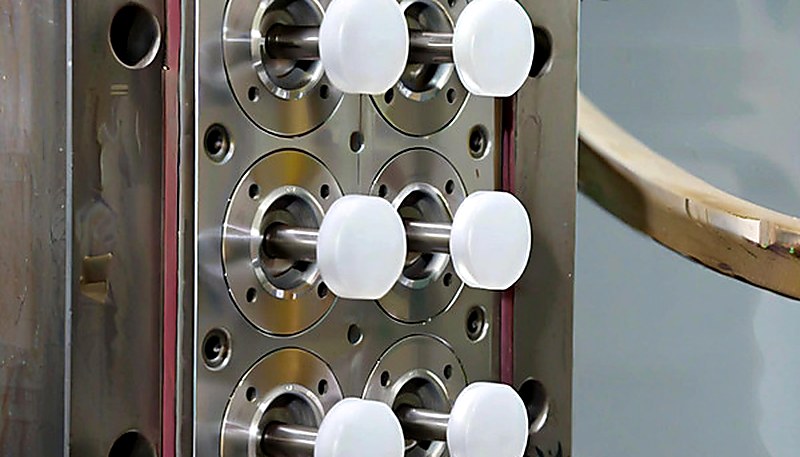
Micro Molded Parts Closeup
Un ángulo de desmoldeo en moldeo por inyección es la inclinación intencionada incorporada en cada superficie vertical de la cavidad del molde. Es la ligera pendiente que se añade a una pared para que la pieza pueda salir libremente una vez que se enfría y se contrae sobre el núcleo. Sin ella, la pieza se agarra al acero como una ventosa y la expulsión se convierte en una lucha entre los pasadores expulsores y la superficie del molde.
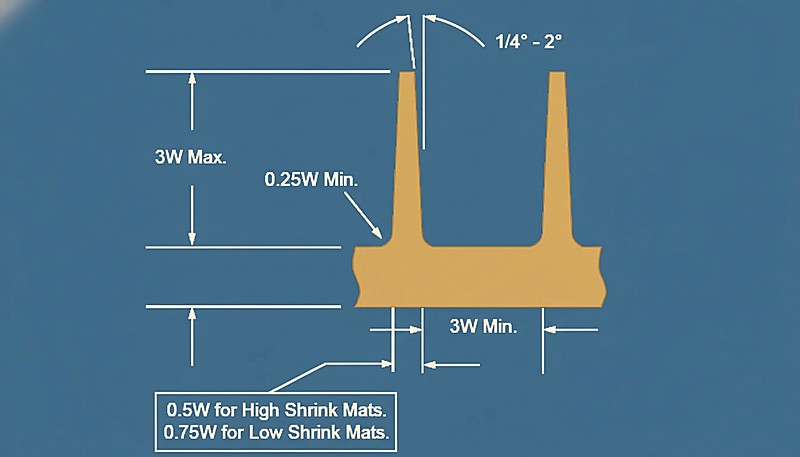
El ángulo de desmoldeo se mide en grados desde el eje vertical de la dirección de apertura del molde. Un desmoldeo de 1 grado significa que la pared se inclina hacia afuera aproximadamente 0.0175 mm por mm de profundidad. En un bolsillo de 50 mm de profundidad, eso te da unos 0.87 mm de holgura por lado en la parte superior. Suena pequeño, pero es la diferencia entre una expulsión limpia y una pieza atascada.
Cada superficie vertical en tu pieza necesita desmoldeo. Esto incluye paredes exteriores, nervios internos, columnas, cavidades y incluso perforaciones pasantes. Si una superficie es paralela a la dirección de apertura del molde y no tiene inclinación, la pieza se arrastrará durante la expulsión, dejando arañazos, marcas o deformaciones.
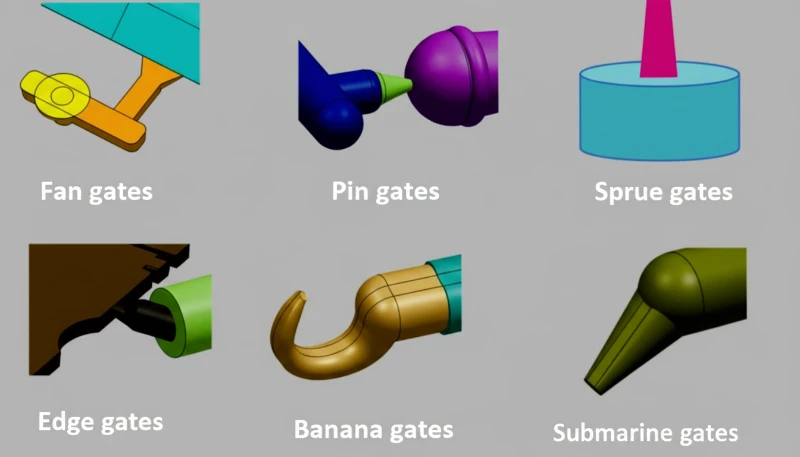
¿Por qué es importante el ángulo de desmoldeo para la calidad de la pieza?
Esta sección trata de la importancia del ángulo de desmoldeo para la calidad de la pieza y de su impacto en el coste, la calidad, los plazos o el riesgo de abastecimiento. El ángulo de desmoldeo afecta directamente a cuatro aspectos: la apariencia de la pieza, la precisión dimensional, la vida útil de la herramienta y el tiempo de ciclo. Cuando una pieza se atasca en el molde, el molde de inyección y su sistema de expulsión2 deben trabajar más. Los pasadores expulsores dejan marcas. La superficie de la pieza presenta líneas de arrastre. En el peor de los casos, la pieza se agrieta o se deforma antes de liberarse.
El desmoldeo insuficiente también acelera el desgaste del molde. Cada ciclo, la pieza raspa contra la pared de la cavidad durante la expulsión. En más de 100,000 ciclos, esa fricción constante pule y marca la superficie de acero. Un molde que debería durar 500,000 ciclos podría necesitar pulido o reelaboración a los 200,000.
En el lado de la producción, las piezas difíciles de expulsar ralentizan el ciclo. Si tu operador tiene que golpear la pieza manualmente, o si el robot lucha por agarrarla, pierdes segundos por ciclo. A escala, eso se traduce en dinero real. Un retraso de 3 segundos en un ciclo de 30 segundos es una pérdida de capacidad del 10 por ciento.
"Un ángulo de desmoldeo de 1 grado puede reducir la fuerza de expulsión hasta un 50% en comparación con un ángulo nulo."True
El cono rompe el efecto de vacío entre el plástico que se contrae y el núcleo del molde. Incluso un ángulo pequeño reduce drásticamente el coeficiente de fricción durante la expulsión, disminuyendo la fuerza necesaria del sistema eyector.
"Si el molde tiene suficientes pasadores expulsores, no se necesita ángulo de desmoldeo."False
Más pasadores eyectores distribuyen mejor la fuerza, pero no pueden superar la fricción fundamental entre una pared paralela y el plástico que se contrae. Sin conicidad, los pasadores solo concentran la fuerza en áreas más pequeñas, aumentando el riesgo de marcas de pasadores y deformación de la pieza.
¿Cuáles Son los Valores Estándar del Ángulo de Conicidad?
No hay un solo ángulo de desmoldeo correcto — depende del material, acabado superficial, profundidad y requisitos de tolerancia. Pero aquí están los valores que funcionan en la práctica en miles de moldes de producción.
| Acabado superficial | Conicidad Mínima | Ángulo de desmoldeo recomendado | Notas |
|---|---|---|---|
| Pulido (SPI A-1 a A-3) | 0.5° | 1° | La superficie lisa se libera fácilmente |
| Estándar (SPI B-1 a B-3) | 1° | 1.5° | Marcas de mecanizado ligero |
| Textura fina (VDI 12-24) | 1° | 1.5° a 2° | Añadir 1° por grado de profundidad de textura |
| Textura Media (VDI 27-33) | 1.5° | 2° a 3° | La textura se adhiere a la superficie de la pieza |
| Textura Pesada (VDI 36-45) | 2° | 3° a 5° | El grano profundo actúa como micro-subcortes |
| Pulido, sin desmoldeo | 0° | No recomendado | Solo para características poco profundas menores a 10 mm |
La regla general que uso: comienza con 1 grado por lado para superficies pulidas, añade 1 grado por cada aumento en el grado de textura, y nunca bajes de 0.5 grados en cualquier cosa más profunda que 10 mm. Si tu cliente se resiste a la conicidad por restricciones dimensionales, muéstrales los cálculos sobre el costo de retrabajo versus una conicidad de 0.5 grados.
Para características internas como nervaduras y columnas, la situación del desmoldeo es más crítica. El plástico se contrae sobre el núcleo durante el enfriamiento, creando un agarre fuerte. Las nervaduras deben tener un mínimo de 0.5 grados por lado, pero 1 grado es más seguro. Las columnas necesitan al menos 0.5 grados en el exterior, y el orificio interior también debe desmoldarse si está formado por un pasador de núcleo.
¿Cómo Afecta la Contracción del Material a los Requisitos de Desmoldeo?
La contracción3 es la razón por la que existe el ángulo de desmoldeo. Cuando el plástico se enfría en el molde, se contrae. Si la pieza tiene forma de vaso o caja, esa contracción aprieta las paredes contra el núcleo del molde. Cuanto mayor sea la tasa de contracción, más fuerte será el agarre y mayor ángulo de desmoldeo se necesitará.
| Tipo de material | Índice de contracción | Desmoldeo mínimo (pulido) | Desmoldeo Mín. (Texturizado) |
|---|---|---|---|
| ABS | 0.4–0.7% | 0.5° | 1.5° |
| Policarbonato (PC) | 0.5–0.7% | 0.5° | 1.5° |
| Nailon 6 (PA6) | 0.5–1.5% | 1° | 2° |
| Nailon 66 (PA66) | 0.8–2.0% | 1° | 2.5° |
| Nailon reforzado con vidrio | 0.2–0.8% | 0.5° | 1.5° |
| PP (polipropileno) | 1.0–2.5% | 1° | 2.5° |
| PE (polietileno) | 1.5–3.0% | 1.5° | 3° |
| POM (acetal) | 1.5–2.5% | 1° | 2.5° |
| PBT | 0.8–2.0% | 1° | 2° |
Los materiales cristalinos como el nailon, PP y POM se contraen más que los materiales amorfos como el ABS y el PC. Eso significa que se agarran al núcleo con más fuerza y necesitan más desmoldeo. El nailon con fibra de vidrio es una excepción: las fibras de vidrio reducen la contracción, por lo que en realidad necesita menos desmoldeo que el nailon sin relleno, aunque las fibras hacen que el material sea más abrasivo para el molde.
Una vez ejecutamos un proyecto de carcasa de PP donde el cliente insistió en un desmoldeo de 0.5 grados con una textura media. Las piezas se atascaban en cada otro ciclo. Terminamos re-cortando el núcleo para agregar 1.5 grados más de desmoldeo — tres semanas de producción perdida. El PP con un 2.5 por ciento de contracción en una superficie texturizada nunca iba a funcionar con 0.5 grados.
¿Qué Sucede Cuando el Desmoldeo es Insuficiente?
Los síntomas aparecen inmediatamente en el piso de producción. Esto es lo que verás, en orden de gravedad:
Primero, marcas de arrastre. La superficie de la pieza obtiene arañazos paralelos a lo largo de la dirección de eyección. En piezas pulidas, esto es inmediatamente visible y rechaza la pieza estéticamente. En piezas texturizadas, la textura se pule en rayas, creando un acabado desigual que ningún postprocesamiento puede corregir.
Segundo, marcas de expulsores. Cuando la pieza resiste la eyección, los expulsores concentran la fuerza en áreas pequeñas. Obtienes marcas de tensión blancas en el interior, marcas visibles de empuje del expulsor, o incluso agujeros por el expulsor si la pared es delgada. En nuestro taller, consideramos cualquier marca de expulsor más profunda de 0,1 mm como un rechazo para superficies visibles.
Tercero, distorsión de la pieza. Si la pieza se libera pero con una fuerza de eyección alta, puede deformarse, combarse o agrietarse. Las piezas de pared delgada son especialmente vulnerables. La fuerza necesaria para expulsar una pieza sin desmoldeo de una cavidad profunda puede superar la resistencia estructural de la pared, causando una deformación permanente.
Cuarto, daño al molde. Con el tiempo, la eyección constante de alta fuerza desgasta los orificios de los expulsores, raya las superficies de la cavidad y puede agrietar los núcleos. Un molde que trabaja con bolsillos profundos sin desmoldeo podría necesitar reemplazo de expulsores cada 50,000 ciclos en lugar de cada 200,000. Eso es cuatro veces el costo de mantenimiento.
"Añadir 1 grado de desmoldeo a una superficie texturizada puede eliminar por completo las marcas de arrastre durante la expulsión."True
El cono adicional crea despeje entre el plástico que se contrae y la superficie de acero texturizada. Este despeje rompe el bloqueo mecánico entre el patrón de textura y la superficie solidificada de la pieza, permitiendo una liberación limpia.
"El ángulo de desmoldeo solo importa en las piezas estéticas; las piezas estructurales no lo necesitan."False
El desmoldeo es un requisito mecánico, no solo cosmético. Las piezas estructurales enfrentan las mismas fuerzas de contracción y fricción durante la expulsión. De hecho, las piezas estructurales con tolerancias ajustadas son aún más sensibles a la deformación inducida por la expulsión causada por un desmoldeo insuficiente.
¿Cómo Cambian la Textura y el Acabado Superficial los Requisitos de Conicidad?
Aquí es donde se originan la mayoría de los problemas de desmoldeo. Una superficie de molde pulida es esencialmente lisa: la pieza se desliza con una fricción mínima. Pero una superficie texturizada tiene picos y valles microscópicos que actúan como pequeños subcortes. A medida que el plástico se contrae, se envuelve alrededor de esos picos, creando un bloqueo mecánico que resiste la eyección.
La regla estándar de la industria: añadir 1 grado de desmoldeo por cada 0.01 mm de profundidad de textura. La mayoría de los proveedores de texturas clasifican sus patrones en una escala de fino a grueso. Una textura fina por chorro de arena podría tener 0.01 mm de profundidad y solo necesitar 1 grado extra. Un grano de cuero profundo podría ser de 0.05 mm de profundidad y necesitar 5 grados extra además del desmoldeo base.
Si especificas una textura en tu pieza, siempre informa a tu fabricante de moldes antes de que se corte el molde. Cambiar el acabado superficial después del mecanizado a menudo significa volver a cortar la cavidad para añadir desmoldeo, lo cual es costoso y puede afectar las dimensiones de la pieza. Tuvimos un caso en el que un cliente añadió una textura VDI-33 a un molde diseñado para un acabado pulido con 1 grado de desmoldeo. El molde tuvo que ser extraído, la cavidad se volvió a cortar a 3.5 grados y se repulió. Seis semanas de tiempo de inactividad.
¿Cómo Calcular el Ángulo de Desmoldeo para tu Pieza?
El cálculo básico es sencillo. El despeje del ángulo de desmoldeo es igual a la tangente del ángulo de desmoldeo multiplicada por la profundidad de la característica:
Holgura por lado = tan(ángulo de desmoldeo) x profundidad
Por ejemplo, un desmoldeo de 1 grado en una pared de 50 mm de profundidad da: tan(1°) x 50 = 0,0175 x 50 = 0,87 mm de despeje por lado. A 2 grados, es 1,75 mm por lado. A 3 grados, 2,62 mm por lado.
La pregunta práctica no es la matemática — es si tu pieza puede tolerar esa variación de tamaño de abajo a arriba. Para la mayoría de las carcasas y envolventes, una conicidad de 1 a 2 mm en una pared de 50 mm es invisible para el usuario final. Pero para componentes de precisión como engranajes, asientos de rodamientos o interfaces de acoplamiento, es posible que necesites mantener un desmoldeo más ajustado o usar estrategias de expulsión alternativas.
| Profundidad (mm) | 0.5° Desmoldeo | Desmoldeo de 1° | Desmoldeo de 1,5° | 2° Desmoldeo | 3° Desmoldeo |
|---|---|---|---|---|---|
| 10 | 0.09 | 0.17 | 0.26 | 0.35 | 0.52 |
| 25 | 0.22 | 0.44 | 0.65 | 0.87 | 1.31 |
| 50 | 0.44 | 0.87 | 1.31 | 1.75 | 2.62 |
| 75 | 0.65 | 1.31 | 1.96 | 2.62 | 3.93 |
| 100 | 0.87 | 1.75 | 2.62 | 3.49 | 5.24 |
Observa que incluso una profundidad pequeña de 10 mm con 0.5 grados solo te da 0.09 mm de holgura. Eso apenas es suficiente para superar la fricción superficial, especialmente si hay alguna textura. Por eso la mayoría de los fabricantes de moldes rechazan cualquier valor por debajo de 1 grado — el margen de error es demasiado estrecho.
¿Cuáles son los errores comunes en el ángulo de desmoldeo?
Los errores comunes de ángulo de desmoldeo son las categorías u opciones principales explicadas en esta sección. Después de 20 años construyendo moldes, los mismos errores aparecen una y otra vez. Estos son los que cuestan más dinero:
Error 1: Aplicar ángulo de desmoldeo solo a las paredes exteriores. A menudo se olvidan elementos interiores como nervaduras, resaltes y cartelas. Estas superficies se contraen sobre el núcleo igual que las paredes exteriores, pero son más difíciles de expulsar porque los pasadores no pueden alcanzarlas directamente. Cada nervadura necesita al menos 0,5 grados por lado. Cada resalte necesita al menos 0,5 grados en el exterior.
Error 2: Direcciones de desmoldeo opuestas. Si se inclina el lado de la cavidad en una dirección y el del núcleo en la contraria, la pieza queda más gruesa en un extremo y más fina en el otro. Esto crea un espesor de pared desigual que provoca alabeo y rechupes. Todos los ángulos de una característica deben converger hacia la línea de partición para mantener constante el espesor de pared.
Error 3: Ignorar el ángulo en las superficies de cierre. Cuando un orificio pasante o una ventana se forma al unirse las dos mitades del molde, la superficie de cierre también necesita ángulo. Sin él, el contacto acero con acero actúa como freno al abrir el molde. Hemos visto moldes en los que hubo que aumentar un 20 % el tonelaje de la prensa solo para vencer la fricción de cierre de superficies horizontales sin ángulo.
Error 4: No tener en cuenta la textura posterior al moldeo. Algunos clientes prevén añadir textura después del moldeo mediante pintura o tampografía. Si el ángulo se calculó para una superficie pulida y el posproceso añade espesor, la holgura efectiva disminuye. Diseñe siempre para el estado final de la superficie, no para su estado recién moldeado.
Error 5: Cero ángulo en cavidades profundas. Este es el error más caro. Las cavidades profundas sin ángulo casi siempre causan problemas de expulsión. Si el diseño no puede admitir ningún ángulo, prevea desde el principio un núcleo dividido o colapsable. Cuesta más al inicio, pero evita después la factura de retrabajo.
¿Cómo Manejar el Desmoldeo en Geometrías de Pieza Complejas?
No todas las piezas son una caja simple con paredes rectas. Las piezas de producción real tienen contrabajos, características laterales, agujeros angulados y geometría asimétrica. Aquí se explica cómo manejar el desmoldeo en los escenarios complejos comunes.
Superficies inclinadas. Si una pared ya está inclinada más que el ángulo requerido, no es necesario añadir más. Una pared inclinada 5 grados respecto a la vertical ya tiene 5 grados de desmoldeo. Añada ángulo solo si la superficie está más cerca de la vertical que el requisito mínimo.
Nervaduras y cartelas. Incline las nervaduras desde la base hasta la punta. La base es la parte más gruesa y donde la nervadura se une a la pared; la punta es la más fina. Una nervadura típica tiene de 0,5 a 1 grado por lado, lo que hace naturalmente más fina la punta. Asegúrese de que la punta no quede por debajo de 0,5 mm o no se llenará correctamente.
Roscas y contrasalidas. Las roscas exteriores formadas en la cavidad necesitan ángulo en los flancos, lo que modifica el perfil de la rosca. Por eso la mayoría de las piezas roscadas de producción utilizan insertos roscados o núcleos desenroscables en vez de roscas moldeadas directamente. Si debe moldear roscas, trabaje con su fabricante de moldes para comprobar que el calibre seguirá ajustando tras aplicar el ángulo.
Patrones de lamas y ventilación. Estas características tienen aletas finas que necesitan ángulo por ambos lados. Al ser finas y profundas, presentan dificultades de expulsión. Utilice al menos 1 grado por lado y especifique superficies pulidas en el molde para estas características.
¿Qué Ángulo de Desmoldeo Debes Especificar en tu Diseño de Molde?
Aquí está el marco de decisión que uso al revisar un diseño de molde para la adecuación del desmoldeo. Funciona para el 95 por ciento de las piezas de producción:
Paso 1: Identifique todas las superficies paralelas a la dirección de apertura del molde. Márquelas en su sistema CAD con un código de colores: rojo para ángulo cero, amarillo para ángulo marginal (0,5 grados o menos) y verde para ángulo adecuado (1 grado o más).
Paso 2: Para cada superficie roja o amarilla, determine el acabado superficial. Las superficies pulidas admiten menos ángulo; las texturizadas necesitan más. Consulte a su proveedor de texturas el ángulo recomendado para cada patrón.
Paso 3: Compruebe la contracción del material. Compare la tasa de contracción con la tabla de ángulos anterior. Una mayor contracción exige más ángulo para vencer el agarre sobre el núcleo.
Paso 4: Verifique que el espesor de pared sea uniforme de abajo arriba. Si al añadir ángulo la pared queda demasiado gruesa o fina en un extremo, ajuste la geometría para compensarlo. Mover la línea de partición o cambiar el perfil de la pared suelen ser las soluciones más sencillas.
Paso 5: Revíselo con su fabricante de moldes antes de mecanizar el acero. Una revisión de diseño de 30 minutos puede ahorrar semanas de retrabajo. Su fabricante sabe por experiencia qué características plantean problemas de expulsión.
En nuestra fábrica, nuestros ingenieros revisan cada diseño de molde para verificar la adecuación del desmoldeo antes de que comience el mecanizado. Nuestro equipo verifica las nervaduras, los refuerzos, las paredes laterales texturizadas y la dirección de expulsión contra el registro de DFM, por lo que el retrabajo relacionado con el desmoldeo se mantiene por debajo del 1% en más de 100 juegos de moldes entregados por mes desde nuestra fábrica en Shanghái.
Es por eso que nuestro equipo trata el ángulo de desmoldeo como un elemento de revisión de riesgo de producción, no como una preferencia cosmética de CAD. Nuestros ingenieros marcan cualquier superficie con desmoldeo cero o marginal antes del corte del acero, luego confirman que el cliente puede aceptar la pequeña conicidad antes de que comience el mecanizado.
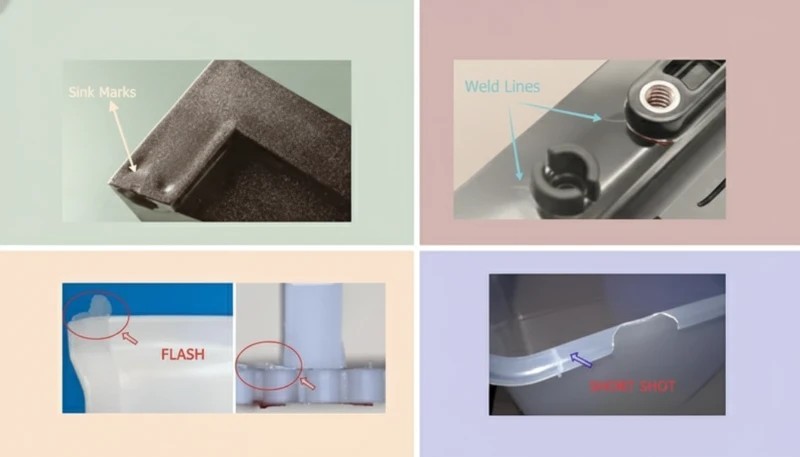
Preguntas frecuentes
¿Cuál es el ángulo de desmoldeo mínimo para el moldeo por inyección?
El ángulo de desmoldeo mínimo es de 0.5 grados por lado para superficies pulidas en materiales de baja contracción como ABS o PC. Para superficies texturizadas o materiales de alta contracción como PP o nailon, el mínimo práctico es de 1.5 a 2 grados. Cualquier valor inferior a 0.5 grados es extremadamente riesgoso y solo debe intentarse en características poco profundas con menos de 10 mm de profundidad, con superficies de molde pulidas y sistemas de eyección robustos. En entornos de producción, la mayoría de los fabricantes de moldes con experiencia no recomendarán bajar de 1 grado en cualquier superficie más profunda de 15 mm, independientemente del acabado o material.
¿Se puede moldear por inyección sin ángulo de desmoldeo?
Técnicamente sí, pero casi nunca se recomienda para series de producción. El desmoldeo cero es posible en características muy poco profundas de menos de 10 mm con superficies del molde pulidas y materiales de baja contracción. Para cualquier cosa más profunda, el desmoldeo cero causará marcas de arrastre en la expulsión, empuje de pasadores, deformación de la pieza y desgaste acelerado del molde que acorta drásticamente la vida útil de la herramientía. Si su diseño requiere absolutamente desmoldeo cero, planee desde el inicio métodos de expulsión alternativos como chorros de aire, placas expulsoras o núcleos colapsables. Estas alternativas añaden costo y complejidad, pero son necesarias para evitar problemas de producción.
¿Cuánto desmoldeo se necesita para piezas moldeadas por inyección texturizadas?
La regla estándar es 1 grado de desmoldeo por 0.01 mm de profundidad de textura. Una textura fina clasificada VDI 12 a 24 típicamente necesita de 1 a 1.5 grados de desmoldeo adicional además del grado base de 1 grado. Las texturas medias necesitan de 2 a 3 grados totales por lado. Las texturas pesadas como grano de cuero pueden requerir de 3 a 5 grados totales por lado. Confirme siempre con su proveedor de texturas, ya que su patrón específico de profundidad determina el requisito exacto. No añadir suficiente desmoldeo para la textura es uno de los errores de diseño de molde más comunes y costosos en la industria.
¿El ángulo de desmoldeo afecta las tolerancias de la pieza?
Sí, el ángulo de desmoldeo cambia las dimensiones de la pieza desde la base hasta la parte superior de la superficie con desmoldeo, y este efecto debe tenerse en cuenta en las especificaciones de tolerancia. En una pared de 50 mm de profundidad con 1 grado de desmoldeo, la parte superior de la pared es aproximadamente 0.87 mm más ancha por lado que la base. Para la mayoría de las piezas cosméticas, esta conicidad es invisible para el usuario. Para piezas de precisión con superficies de acoplamiento, necesita controlar qué extremo del desmoldeo mantiene la dimensión crítica y comunicar esto claramente a su fabricante de moldes en la especificación de tolerancia para evitar problemas de ensamblaje.
¿Cuál es la diferencia entre ángulo de desmoldeo y conicidad?
En el contexto del moldeo por inyección, ángulo de desmoldeo y conicidad se refieren a la misma característica geométrica, que se define como la inclinación intencional aplicada a las superficies verticales para la eyección de la pieza. Ángulo de desmoldeo es el término estándar utilizado en el diseño de moldes y se mide en grados desde la dirección de apertura del molde. Conicidad a veces se usa en contextos de mecanizado y puede expresarse como una relación como 1 a 50. Para fines prácticos en discusiones de diseño de moldes, son intercambiables, pero siempre es una mejor práctica especificar valores en grados para evitar confusiones entre los equipos de diseño y fabricación.
¿Cómo se añade desmoldeo a nervaduras y columnas?
Las nervaduras deben tener desmoldeo desde la base donde se encuentran con la pared hasta la punta. Use de 0.5 a 1 grado por lado, y asegúrese de que la punta no sea más delgada de 0.5 mm para evitar problemas de llenado durante el moldeo. Las columnas necesitan desmoldeo en la superficie exterior con un mínimo de 0.5 grados, y el agujero interior también necesita desmoldeo si está formado por un pasador de núcleo. Para columnas más altas de 15 mm, considere aumentar el desmoldeo a 1 grado por lado para garantizar una eyección confiable. Verifique siempre que las direcciones de desmoldeo de nervaduras y columnas sean consistentes con el desmoldeo de la pared principal para mantener un espesor de pared uniforme en toda la pieza.
¿Qué ángulo de desmoldeo necesita el nailon con fibra de vidrio?
El nailon con fibra de vidrio típicamente necesita de 0.5 a 1 grado de desmoldeo por lado para superficies pulidas, y de 1.5 a 2 grados para superficies texturizadas. Las fibras de vidrio reducen la contracción en comparación con el nailon sin rellenar, lo que en realidad disminuye el requisito de desmoldeo por el lado de la contracción. Sin embargo, el nailon con fibra de vidrio es abrasivo en las superficies del molde, por lo que un desmoldeo adecuado ayuda a reducir la fricción y extiende significativamente la vida útil del molde. Las fibras no cambian el cálculo fundamental del desmoldeo, pero la contracción reducida significa que la pieza se agarra al núcleo con menos fuerza, dándole un margen ligeramente mayor en los valores mínimos de desmoldeo de lo que permitiría el nailon sin rellenar.
—text ¿Cómo debe aplicar sus conocimientos sobre ángulos de desmoldeo a su próximo proyecto?
El ángulo de desmoldeo es uno de esos fundamentos que separa una producción fluida de un costoso proyecto de retrabajo. Las reglas son simples: mínimo 1 grado por lado para superficies pulidas, añada 1 grado por grado de textura, considere la contracción del material y nunca corte acero sin revisar cada superficie vertical para verificar un desmoldeo adecuado.
Si se queda con una sola idea de este artículo, que sea esta: añada el ángulo pronto, sea generoso y revíselo con su fabricante antes de mecanizar el molde. También conviene relacionar las decisiones sobre el ángulo con las etapas del moldeo por inyección, porque afecta al llenado, enfriamiento, expulsión e inspección, no solo al aspecto en CAD. Añadir un grado extra durante el diseño no cuesta nada. Añadirlo después de fabricar el molde cuesta semanas y miles de dólares.
¿Necesita un molde bien hecho desde el primer intento? Utilice nuestra guía de selección de proveedores para comprobar si un fabricante puede revisar los ángulos de desmoldeo, los riesgos de DFM y las pruebas de expulsión antes de comprometerse con el utillaje.
ángulo de desmoldeo: Es la inclinación aplicada a las superficies verticales de una cavidad, medida en grados, que permite expulsar la pieza moldeada sin fricción ni daños. ↩
sistema de expulsión: Conjunto mecánico dentro de un molde que empuja la pieza enfriada fuera de la cavidad, formado normalmente por pasadores expulsores, manguitos o placas extractoras. ↩
contracción: Reducción dimensional de una pieza de plástico al enfriarse desde la temperatura de fusión hasta la temperatura ambiente, normalmente expresada como porcentaje de la dimensión original del molde. ↩