 Saltar para o conteúdo

What Is Precision Injection Molding and How Does It Differ from Ordinary Molding?
Precisão moldagem por injeção1 é uma variante de alta precisão da moldagem por injeção que mantém tolerâncias dez vezes mais apertadas do que a moldagem ordinária. A diferença central reside na consistência e repetibilidade da peça. Se está a avaliar fornecedores, o nosso injection molding supplier sourcing guide2 abrange a preparação de RFQ e qualificação.
Para uma visão mais ampla, o nosso injection molding complete guide abrange os fundamentos do processo, o comportamento do material e as decisões de produção.
For a broader look at conceção de moldes de injeção3, our pillar guide covers tooling structure, thermal control, and manufacturability tradeoffs.
Precisão moldagem por injeção is a manufacturing process that produces plastic parts with extremely tight dimensional tolerances, typically ±0.01 to ±0.05 mm. Ordinary injection molding, by contrast, works within broader tolerances of ±0.1 to ±0.5 mm and is suitable for parts where exact dimensions are less critical.
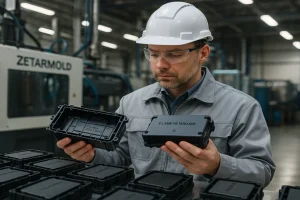
In our factory at ZetarMold, we often get asked: “Do I really need precision molding?” The honest answer is—it depends on your application. If you’re making a medical device housing where components must snap together with micron-level accuracy, precision molding is non-negotiable. But if you’re producing a storage container lid, ordinary molding gets the job done at a fraction of the cost.
The difference isn’t just about tolerances. Precision molding demands a complete ecosystem: higher-grade mold steels, more sophisticated machine controls, engineered-grade resins, and tighter quality inspection protocols. Ordinary molding uses standard tooling and commodity plastics, making it faster and cheaper to set up.
- Precision injection molding is justified when tolerances, fit, or compliance risk directly affect product function.
- Ordinary injection molding remains the better choice for simple parts with wider tolerances and lower tooling budgets.
- The best supplier decision starts with tolerance analysis, mold steel selection, process control capability, and DFM review.
What Are the Key Technical Differences Between the Two Processes?
A diferença fundamental é que a moldagem de precisão requer um controlo mais apertado em toda a precisão da máquina, tolerâncias do molde e parâmetros do processo. Aqui está uma comparação detalhada com base no que vemos diariamente na nossa oficina:
| Parâmetro | Precision Injection Molding | Ordinary Injection Molding |
|---|---|---|
| Tolerância dimensional | ±0.01–0.05 mm | ±0.1–0.5 mm |
| Machine Clamping Repeatability | < 0.5% shot-to-shot variation | 1–3% shot-to-shot variation |
| Injection Pressure Control | Closed-loop servo control, ±1% accuracy | Standard hydraulic, ±5% accuracy |
| Aço para moldes | H13, S136 (hardened to 48–52 HRC) | P20, 718H (pre-hardened 28–34 HRC) |
| Mold Machining | CNC + EDM, surface finish Ra 0.2 µm or better | CNC, surface finish Ra 0.8–1.6 µm |
| Sistema de arrefecimento | Conformal or precision-drilled, ±1°C control | Standard straight-drilled channels |
| Grau do material | Engineering resins (POM, PC, PA66-GF) | Commodity resins (PP, PE, ABS) |
| Typical Tooling Cost | $15,000–$100,000+ | $3,000–$30,000 |
| Tempo de ciclo | 15–60 seconds (longer cooling/packing) | 10–30 seconds |
| Inspeção da qualidade | CMM, optical measurement, 100% inspection possible | Go/no-go gauges, sampling inspection |
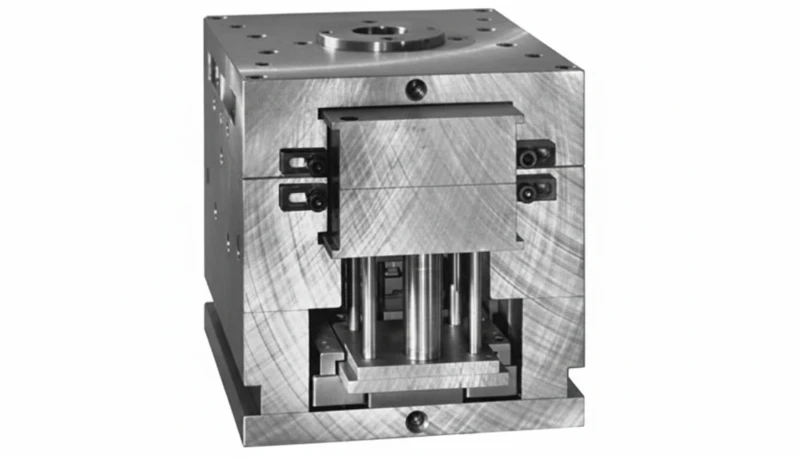
We’ve found that many customers initially request precision molding when ordinary molding would suffice. At ZetarMold, we always review the part design first and recommend the most cost-effective process. Sometimes, a small design change—like adding a draft angle or adjusting wall thickness—can move a part from precision to ordinary molding territory, saving thousands in tooling costs.
Qual é a Diferença Entre a Precisão e a Injeção OrdináriaVerdadeiro
Closed-loop servo-driven control is essential for precision molding. It continuously monitors and adjusts injection pressure, speed, and position in real time, keeping shot-to-shot variation below 0.5%—something open-loop hydraulic systems cannot guarantee.
““Precision injection molding always requires a completely different type of machine than ordinary molding.””Falso
Many modern injection molding machines can handle both precision and ordinary work. The key difference is in the machine’s control system quality, repeatability specifications, and how precisely it maintains process parameters—not necessarily a completely different machine type.
Why Does Mold Quality Matter So Much in Precision Molding?
The mold is the heart of precision injection molding. In precision work, the mold must be machined to tolerances 3–5× tighter than the final part tolerance because it must account for shrinkage compensation, thermal expansion, and wear over the mold’s lifetime.
At ZetarMold, our precision molds use hardened steel like S136 (stainless, 48–52 HRC) or H13 for high-temperature resins. We machine cavities using a combination of high-speed CNC and wire EDM to achieve surface finishes of Ra 0.2 µm or better. The cooling channels are carefully designed—sometimes using conformal cooling—to ensure uniform temperature distribution within ±1°C across the cavity surface.
For ordinary molds, we typically use P20 pre-hardened steel (28–34 HRC), standard CNC machining with Ra 0.8–1.6 µm finishes, and conventional straight-drilled cooling channels. These molds cost significantly less and are faster to manufacture, but they can’t hold the tight tolerances precision applications demand.
One critical factor many people overlook is mold maintenance. Precision molds require regular inspection and polishing cycles—typically every 50,000–100,000 shots—while ordinary molds can often run 200,000+ shots between maintenance intervals.
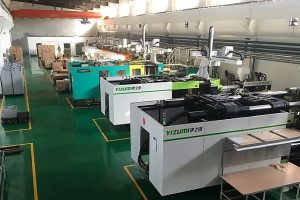
Na ZetarMold, operamos 47 máquinas de moldagem por injeção que variam de 90T a 1850T na nossa fábrica em Xangai. Com mais de 20 anos de experiência, vimos em primeira mão como a combinação certa de precisão da máquina, qualidade do molde e controlo do processo determina se uma peça fica em ±0,05 mm ou ±0,3 mm. As nossas prensas totalmente elétricas na gama de 50–200T são os cavalos de batalha para trabalhos de precisão, oferecendo consistência de tiro para tiro que as máquinas hidráulicas simplesmente não conseguem igualar.
Na nossa fábrica de Shanghai, decisões de moldagem de precisão não são baseadas apenas em tolerâncias de desenho. Combinamos a peça com capacidade da máquina, aço do molde, controlo de refrigeração e evidência de simulação. A nossa linha de produção opera 47 prensas de 90T a 1850T, e nossos engenheiros usam SOLIDWORKS e MOLDFLOW para verificar o equilíbrio de enchimento antes que um cliente pague por ferramentaria de precisão não necessária.
What Materials Work Best for Precision vs. Ordinary Molding?
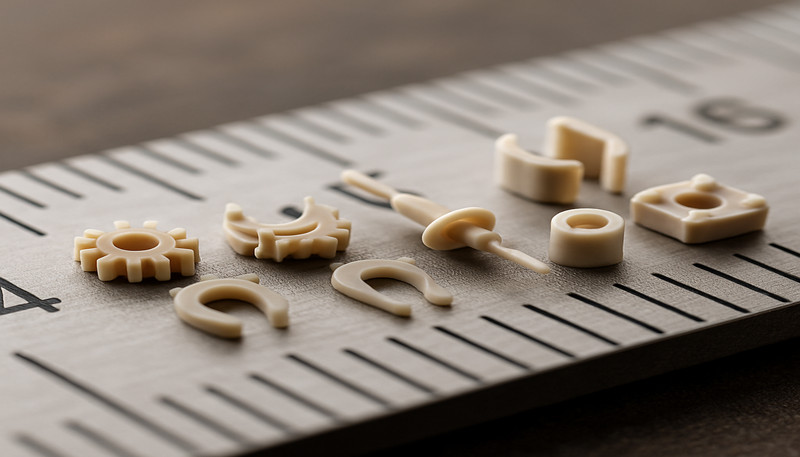
Material selection is where precision and ordinary molding diverge significantly. Precision molding typically uses engineering-grade resins with predictable and low shrinkage rates, while ordinary molding works well with commodity plastics.
For precision parts, we commonly use:
POM (Acetal/Delrin): Shrinkage 1.8–2.2%, excellent dimensional stability, ideal for gears and mechanical components
PC (Policarbonato): Shrinkage 0.5–0.7%, great optical clarity, used in lenses and medical devices
PA66-GF (Glass-filled Nylon): Shrinkage 0.3–0.5% (with glass fill), high strength for structural precision parts
PBT-GF: Shrinkage 0.3–0.5%, excellent for electrical connectors requiring tight tolerances
For ordinary molding applications:
PP (Polipropileno): Shrinkage 1.0–2.5%, cost-effective for containers and packaging
ABS: Shrinkage 0.4–0.7%, good all-rounder for consumer products
PE (Polietileno): Shrinkage 1.5–3.5%, used for simple parts with relaxed tolerances
The key point: materials with high or unpredictable shrinkage rates make precision molding much harder. That’s why glass-filled compounds are popular for precision work—the glass fibers dramatically reduce and stabilize shrinkage.
How Does Process Control Differ Between Precision and Ordinary Molding?
Process control is arguably the biggest operational difference between precision and ordinary injection molding. In precision molding, every parameter is monitored, recorded, and controlled within narrow bands.
Here’s what precision process control looks like in our ZetarMold facility:
Temperatura de fusão: Controlled within ±2°C across all barrel zones (ordinary: ±5–10°C)
Velocidade de injeção: Multi-stage profiling with ±1% repeatability (ordinary: single-stage, ±5%)
““Cavity pressure sensors are a hallmark of precision injection molding process control.””Verdadeiro
Cavity pressure sensors provide direct, real-time measurement of what’s happening inside the mold. They enable automatic part sorting (good vs. suspect), process optimization, and are widely considered the gold standard for precision molding quality control.
““Ordinary injection molding doesn’t require any process monitoring or quality control.””Falso
Ordinary molding still requires process monitoring and quality control—just at a less granular level. Parameters like cycle time, part weight, and visual appearance are still tracked. The difference is that precision molding requires real-time cavity pressure monitoring and statistical process control (SPC) on critical dimensions.
Holding pressure: Precisely staged to compensate for shrinkage, monitored via cavity pressure sensors (ordinary: single-stage, time-based cutoff)
Temperatura do molde: Maintained within ±1°C using oil or water temperature controllers (ordinary: ±3–5°C)
Tempo de arrefecimento: Optimized through simulation and validated with in-mold temperature sensors (ordinary: estimated from experience)
We also use mold flow analysis software (Moldflow or Moldex3D) to simulate and optimize the filling pattern before cutting steel for precision molds. For ordinary molds, simulation is helpful but not always required—experienced toolmakers can often design adequate gating and cooling from experience alone.
Which Industries Require Precision Injection Molding?
Precision injection molding serves industries where part accuracy directly impacts product function, safety, or regulatory compliance. Based on our experience at ZetarMold, these are the primary sectors:
Dispositivos médicos: Surgical instrument housings, diagnostic cartridges, drug delivery systems—tolerances of ±0.02 mm are common, with full traceability required (ISO 13485)
Automotive electronics: Connector housings, sensor enclosures, and ECU casings where parts must mate precisely and withstand vibration
Optical components: Lenses, light guides, and reflectors requiring surface accuracy within fractions of a micron
Eletrónica de consumo: Smartphone casings, wearable device housings, and connector components with tight snap-fit requirements
Aeroespacial: Lightweight structural components meeting AS9100 standards
Ordinary injection molding, meanwhile, covers the majority of products made by injection molding by volume — from household containers to automotive trim panels.
Packaging (containers, caps, closures)
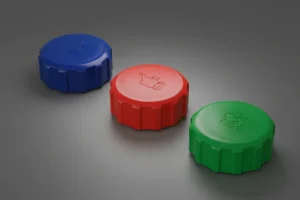
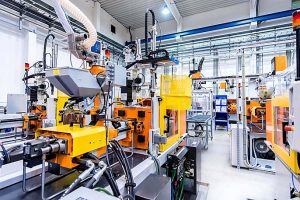
Peças plásticas moldadas na linha de produção da fábrica
Toys and recreational products
Non-critical automotive interior trim
General consumer products

How Do You Decide Which Process Is Right for Your Project?
A escolha certa é determinada pelas tolerâncias do seu desenho, requisitos de acabamento superficial e complexidade geométrica. Aqui está o quadro de decisão que utilizamos na ZetarMold ao consultar novos clientes:
What are the tightest tolerances on your drawing? If all dimensions are ±0.1 mm or wider, ordinary molding is likely sufficient.
Does the part interface with other precision components? Snap fits, gear meshes, and sealing surfaces often require precision molding.
What industry standards apply? Medical (ISO 13485), automotive (IATF 16949), and aerospace (AS9100) often mandate precision-level process controls.
What’s your production volume? Higher volumes help amortize the higher tooling cost of precision molds. For low volume injection molding, ordinary molds with aluminum tooling may be more practical.
What’s your budget? Precision tooling costs 2–5× more than ordinary tooling. Make sure the application justifies the investment.
Quais São as Perguntas Frequentes Sobre Moldagem de Precisão vs. Ordinária?
Perguntas mais frequentes
What tolerance can precision injection molding achieve?
A moldagem por injeção de precisão normalmente atinge tolerâncias de ±0,01 a ±0,05 mm em dimensões críticas, dependendo do material, geometria da peça e localização do ponto de injeção. Para comparação, a moldagem por injeção ordinária geralmente mantém ±0,1 a ±0,3 mm. Atingir a gama mais apertada requer máquinas totalmente elétricas com repetibilidade de tiro para tiro dentro de ±0,5%, aço de molde temperado (S136 ou H13) e controlo de processo em malha fechada em cada variável-chave. Estas tolerâncias mais apertadas são essenciais para dispositivos médicos, lentes óticas e conectores eletrónicos, onde a precisão dimensional impacta diretamente a função e a segurança.
Is precision injection molding always more expensive?
Sim, a moldagem de precisão tem custos iniciales mais elevados—tipicamente 2 a 5 vezes mais para ferramentaria e 10 a 30 por cento mais elevados por peça em custos de processamento. Contudo, o custo total de propriedade frequentemente favorece a precisão quando se considera taxas reduzidas de desperdício (frequentemente abaixo de 1 por cento versus 3 a 5 por cento para moldagem comum), menos operações secundárias de maquinagem e melhor rendimento de montagem. Na ZetarMold, realizamos análises honestas de custo-benefício para cada projeto para que os clientes investam apenas em precisão quando sua aplicação realmente necessita.
Can ordinary injection molds be upgraded to precision?
Geralmente não. Os moldes de precisão exigem graus de aço mais duros como o aço inoxidável S136 ou o aço ferramenta H13, tolerâncias de maquinagem mais apertadas medidas em micrómetros em vez de centésimos, canais de arrefecimento conformados para uniformidade térmica e equilíbrio de multi-cavidades projetado desde a fase inicial do design. A adaptação de um molde ordinário P20 raramente atinge a precisão geométrica ou a consistência de ciclo para ciclo necessária para trabalhos com tolerância inferior a 0,05 mm. Em quase todos os casos, construir um novo molde de precisão projetado especificamente para a peça específica é muito mais rentável e produz de forma fiável resultados superiores.
What machines are used for precision injection molding?
A moldagem por injeção de precisão utiliza máquinas totalmente eléctricas ou servo-hidráulicas híbridas com controlo de feedback em circuito fechado sobre pressão de injeção, velocidade, pressão de retenção e temperatura geral do molde. Na ZetarMold, nossas prensas totalmente eléctricas na faixa de 50 a 200 toneladas oferecem repetibilidade de disparo a disparo dentro de ±0,5 por cento, comparado com ±2 a 3 por cento em máquinas hidráulicas convencionais. Este nível excepcional de consistência, combinado com controlo de temperatura do molde de precisão dentro de ±1 grau Celsius e perfil de injeção multi-etapa, torna a produção com tolerância sub-0,05 mm alcançável numa base repetível.
How does ZetarMold handle precision molding projects?
O nosso fluxo de trabalho de moldagem de precisão começa com uma análise DFM abrangente e simulação de fluxo de moldagem utilizando Moldflow ou Moldex3D. Em seguida, projetamos o molde em SOLIDWORKS utilizando aço ferramenta temperado (S136 ou H13), maquinamo-lo em centros CNC de 5 eixos e validamos cada dimensão crítica com relatórios CMM durante a amostragem T0. A produção é executada em máquinas totalmente elétricas com monitorização SPC em todos os parâmetros-chave do processo. Com mais de 20 anos de experiência e mais de 400 materiais processados na nossa fábrica em Xangai, fornecemos rastreabilidade dimensional completa desde o primeiro tiro até à entrega em volume.
What is the minimum order quantity for precision injection molding?
Não existe um mínimo universal estrito, mas a moldagem de precisão oferece o melhor retorno do investimento em volumes de 10 000 peças ou mais devido ao maior investimento em ferramentas. Para volumes menores, por vezes recomendamos ferramentas de ponte — um molde de grau médio construído com tolerâncias mais apertadas do que as ferramentas de produção ordinárias, mas sem o custo total de um molde de produção de precisão. Esta abordagem permite validar tanto o design como a procura do mercado antes de se comprometer com ferramentas de precisão de alto volume, reduzindo o risco financeiro enquanto ainda atinge uma qualidade de peça aceitável.
Qual Processo de Moldagem Deve Escolher para o Seu Próximo Projeto?
A moldagem por injeção de precisão e comum não são processos concorrentes—são ferramentas complementares no kit de ferramentas de um fabricante. A moldagem de precisão oferece tolerâncias de ±0,01–0,05 mm para aplicações críticas em indústrias médicas, ópticas e electrónicas. A moldagem comum trata a vasta maioria de produtos de consumo e industriais de forma económica com tolerâncias de ±0,1–0,3 mm.
O ponto crucial é adequar o processo às suas necessidades reales. Especificar excessivamente a precisão desperdiça dinheiro em ferramentaria e processamento que sua aplicação não precisa. Especificar insuficientemente a precisão cria problemas de qualidade, falhas de montagem e reclamações de garantia que custam muito mais que fazer corretamente desde o início.
Com mais de 20 anos de experiência, 47 máquinas de 90T a 1850T e experiência em mais de 400 materiais, a ZetarMold ajuda-o a tomar esta decisão com confiança. Realizamos análises DFM honestas e dizemos-lhe diretamente: precisão ou ordinário, com base no que o seu desenho realmente exige — não no que vende um serviço de preço mais elevado. Seja o seu projeto a exigir uma precisão de ±0,01 mm para um dispositivo médico ou uma tolerância padrão de ±0,3 mm para embalagens de consumo, a nossa equipa de engenharia está pronta para o guiar por todo o processo, desde a revisão do design até à produção em volume.
Ready to discuss your project? Seja para precisão de componentes médicos moldados ou peças de consumo de alto volume, contacte a ZetarMold hoje para uma revisão DFM gratuita e um orçamento. A nossa equipa de engenharia ajudá-lo-á a escolher o processo certo e a entregar peças que cumpram as suas especificações — nem mais, nem menos.
-
moldagem por injeção: moldagem por injeção refere-se ao processo de fabricação que funde resina plástica e injeta-a numa cavidade do molde para formar peças. ↩
-
injection molding supplier sourcing guide: o guia de fornecimento de fornecedores de moldagem por injeção refere-se a uma lista de verificação do comprador para preparação de RFQ, qualificação de fornecedores e controlo de risco comercial. ↩
-
conceção de moldes de injeção: o design do molde de injeção refere-se à estrutura da ferramenta, disposição do arrefecimento, escolha do aço e plano de fabricabilidade para peças moldadas. ↩


 EN
EN  ES
ES  FR
FR  DE
DE  PT
PT  AR
AR  RU
RU  JA
JA  KO
KO  IT
IT  NL
NL  TR
TR  PL
PL 