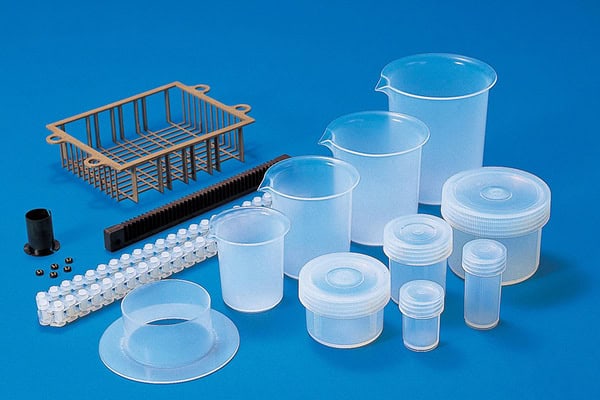
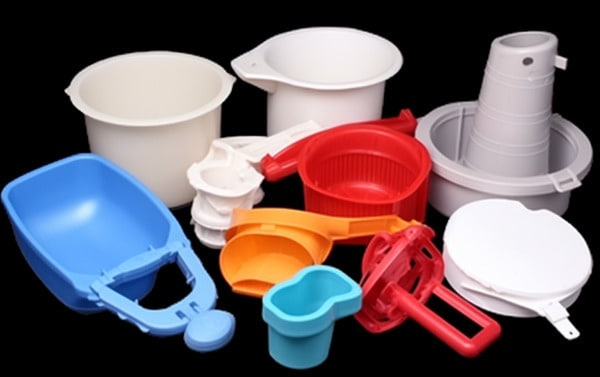
- Wanddikte en nekdetails moeten worden gecontroleerd.
- Spuitgieten is doorgaans de beste keuze voor driedimensionale kunststofonderdelen met nauwe toleranties, clips, behuizingen, ribben, nokken en herhaalproductie.
- Blaasvormen past bij holle onderdelen, extrusie bij doorlopende profielen, thermovormen bij ondiepe schalen en persvormen bij grotere onderdelen van thermoharders of rubberachtige materialen.
- Het juiste proces hangt af van de geometrie van het onderdeel, het jaarvolume, de tolerantie, het harsgedrag, de oppervlakteafwerking, het gereedschapsbudget en het kwaliteitsrisico.
- Kopers moeten vóór de RFQ de vormprocessen vergelijken, zodat de leverancier het juiste gereedschap, de juiste machine, het juiste materiaal en inspectieplan kan offreren.
Wat zijn de belangrijkste typen kunststofvormprocessen?
Typen kunststofvormen zijn procesfamilies voor het vormen van zachtgemaakte kunststof. Ze gebruiken een gereedschap, stempel, vormholte, druk, vacuüm, rotatie of trekkracht. De gangbaarste opties zijn spuitgieten, blaasvormen, persvormen, extrusievormen, rotatievormen, thermovormen, vacuümvormen en pultrusie.
Spuitgieten1 is vaak het belangrijkste proces voor technische kunststofonderdelen, omdat complexe geometrieën hiermee op schaal reproduceerbaar zijn. Begin voor een grondige procesbasis met onze complete gids voor spuitgieten en vergelijk vervolgens de matrijsvereisten in onze complete gids voor spuitgietmatrijzen.
Van een afstand lijken de processen op elkaar omdat ze allemaal kunststof vormgeven. In de fabrieksplanning verschillen ze sterk. Een fles, elektronicabehuizing, buis, tray en glasvezelstaaf mogen niet volgens dezelfde offertelogica worden behandeld. De geometrie bepaalt eerst het proces; vervolgens bepalen hars, toleranties, esthetiek en volume de details.
"De keuze van het kunststofvormproces moet beginnen bij de geometrie van het onderdeel."True
De geometrie bepaalt of het onderdeel hol, continu, plaatachtig of een gedetailleerde 3D-component is en moet daarom richting geven aan de eerste proceskeuze.
"Alle typen kunststofvormprocessen kunnen dezelfde toleranties aanhouden."False
De haalbare tolerantie verandert met het proces, het matrijsontwerp, de materiaalkrimp, de koelmethode, het trimmen en de nabewerkingen.
Welk type kunststofvormen is het meest geschikt voor precisieonderdelen?
Spuitgieten is het meest geschikt voor nauwkeurige driedimensionale kunststofonderdelen. Het wordt gekozen wanneer het ontwerp beheerste afmetingen, herhaalbare kenmerken, een ruime harskeuze en middelgrote tot grote productievolumes vereist.
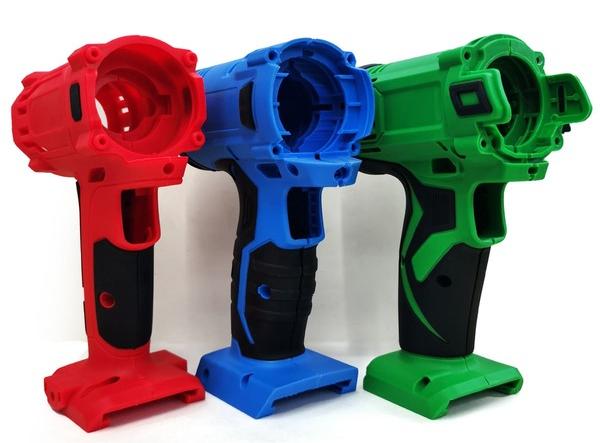
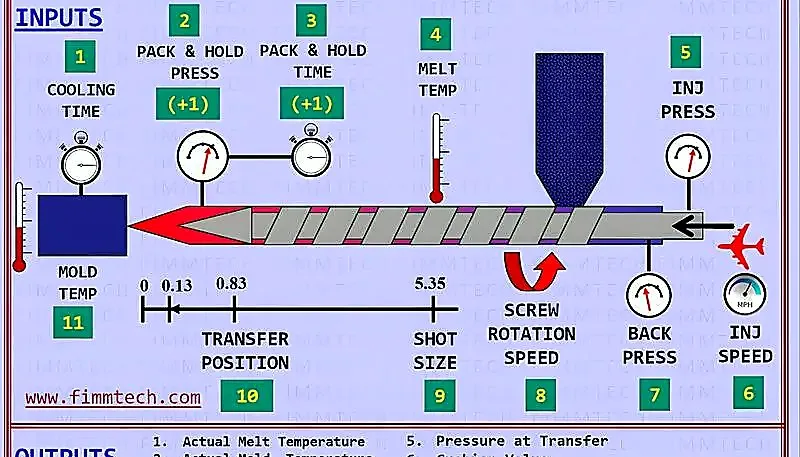
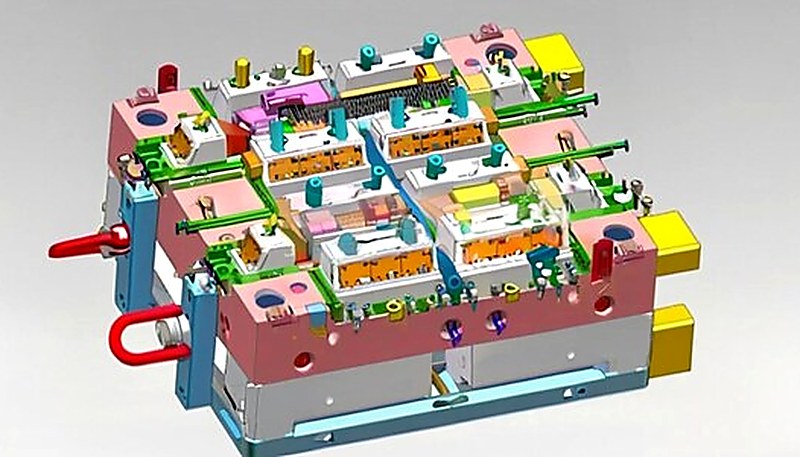
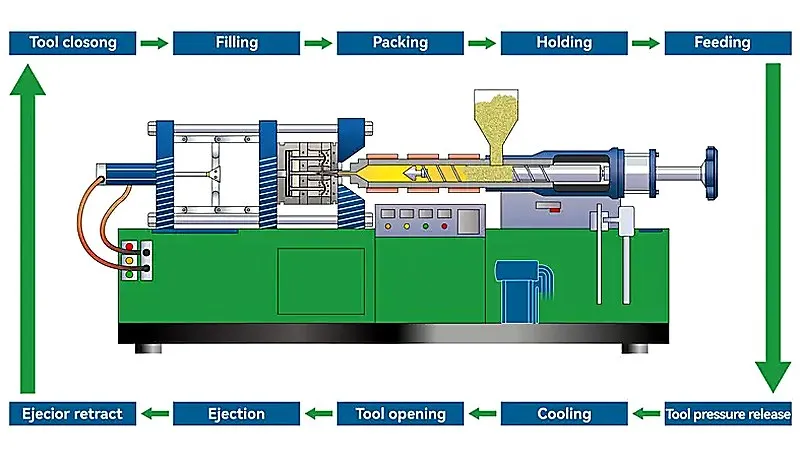
Spuitgieten gebruikt een gesloten matrijs, een plastificeerschroef, injectiedruk, nadruk, koeling en uitwerping. Hierdoor is het geschikt voor behuizingen, tandwielen, clips, connectoren, medische componenten, apparaatonderdelen en kunststof auto-onderdelen. Het proces draait niet alleen om een machine. Matrijsstaal, koellay-out, aanspuitpositie, ontluchting, krimptoeslag en uitwerpontwerp bepalen of het onderdeel goed reproduceerbaar is.
Een inkoper moet voor spuitgieten kiezen wanneer het onderdeel ribben, nokken, klikverbindingen, cosmetische oppervlakken, interne details of assemblages heeft die op andere onderdelen moeten passen. Als het onderdeel dikke wanden of een zeer laag jaarvolume heeft, kunnen prototypebewerking, 3D-printen, gieten of een goedkoper gereedschapstraject beter zijn tijdens de vroege validatie.
Waarvoor wordt blaasvormen gebruikt?
Blaasvormen wordt gebruikt voor holle kunststofproducten. Typische voorbeelden zijn flessen, houders, tanks, kanalen en andere onderdelen waarbij het interne luchtvolume deel uitmaakt van de productfunctie.
Blaasvormen2 blaast hete kunststof tegen de binnenzijde van een matrijs. Het belangrijkste voordeel is de efficiënte productie van holle vormen. De voornaamste beperking is dat wanddikte, halsafwerking, handgreepontwerp en afknelzones anders moeten worden beheerst dan bij spuitgegoten onderdelen.
Blaasvormen moet niet alleen worden gekozen omdat een onderdeel er groot uitziet. Als het onderdeel nauwkeurige ribben, nokken, schroefinzetstukken, strakke vlakheid of sterke lokale details nodig heeft, kunnen spuitgieten of secundaire assemblage betrouwbaarder zijn. Als het product hoofdzakelijk een holle schaal is, kan blaasvormen materiaalverlies en gereedschapscomplexiteit verminderen.
Waarvoor wordt persvormen gebruikt?
Persvormen wordt gebruikt voor afgemeten hoeveelheden materiaal die in verwarmde vormholten worden geperst. Het is vaak geschikt voor thermoharders, rubberachtige materialen en grotere onderdelen met eenvoudigere vloeipaden.
Persvormen3 kan nuttig zijn wanneer het materiaalgedrag, de vezelbelasting, onderdeelgrootte of gereedschapseconomie niet bij standaardspuitgieten past. Het is ook geschikt voor onderdelen waarbij druk, warmte en uithardingstijd belangrijker zijn dan snelle injectiecycli.
De zwakke punten zijn cyclussnelheid en detailbeheersing. Persvormen kan moeite hebben met fijne ribben, dunne wanden, complexe ondersnijdingen en zeer nauwe maatherhaalbaarheid. Inkopers moeten tolerantie en jaarvolume zorgvuldig vergelijken voordat ze aannemen dat persgereedschap in totaal goedkoper is.
Waarvoor wordt extrusievormen gebruikt?
Extrusievormen wordt gebruikt voor doorlopende kunststofvormen. Het is geschikt voor buizen, platen, afdichtingen, kanalen, profielen, staven en folies waarvan de dwarsdoorsnede grotendeels constant blijft.
Bij extrusie wordt gesmolten kunststof door een matrijs geperst. De matrijs bepaalt de doorsnede en de daaropvolgende koeling of kalibratie regelt de afmetingen. Dit proces is efficiënt wanneer het product lang, continu en uniform is. Het is minder geschikt wanneer het onderdeel een gesloten driedimensionale geometrie, inwendige nokken, klemfuncties of meerdere oppervlakken vereist die gelijktijdig moeten worden gevormd.
Sommige producten combineren extrusie met andere processen. Een profiel kan eerst worden geëxtrudeerd en daarna worden gesneden, geponst, gebogen, gelast of geassembleerd. Bij spuitgietassemblages kunnen geëxtrudeerde afdichtingen of buizen aangrenzende componenten zijn, maar ze mogen niet worden geoffreerd alsof het gevormde matrijsholten zijn.
Wanneer is thermovormen zinvol?
Thermovormen is nuttig voor onderdelen van verwarmde kunststofplaat. Het vormt trays, afdekkingen, verpakkingen, panelen, voeringen en ondiepe schaalonderdelen over of in een matrijs.
Thermovormen4 kan de gereedschapskosten voor grote, dunne onderdelen verlagen, omdat het proces uitgaat van plaatmateriaal in plaats van een volledige 3D-holte te injecteren. Vacuümvormen is een verwant proces waarbij vacuüm de verwarmde plaat tegen het matrijsoppervlak trekt.
De afweging betreft de detaildiepte en maatbeheersing. Thermogevormde onderdelen moeten vaak worden bijgesneden, kunnen in diepgetrokken zones dunner worden en houden soms niet dezelfde nauwe details als spuitgietwerk. Het proces is bruikbaar voor afdekkingen en trays, maar meestal niet de beste route voor een precisieclip, een bevestigingsnok met schroefdraad of een dragende behuizing.
Hoe moeten inkopers verschillende soorten kunststofspuitgieten vergelijken?
Inkopers moeten de verschillende kunststofvormprocessen vergelijken voordat de definitieve prijs wordt bepaald. De vergelijking moet geometrie, tolerantie, hars, jaarvolume, gereedschapsbudget, oppervlakteafwerking, nabewerkingen en inspectierisico omvatten.
Begin met de vorm. Holle producten wijzen op blaasvormen of rotatiegieten. Doorlopende dwarsdoorsneden wijzen op extrusie. Dunne schalen en trays wijzen op thermovormen of vacuümvormen. Nauwkeurige 3D-onderdelen wijzen meestal op spuitgieten. Beoordeel daarna de commerciële realiteit: productieaantal, materiaalkosten, matrijskosten, kwaliteitskosten en doorlooptijd.
Ook de cyclustijd is belangrijk. Bij spuitgieten wordt elke seconde gedurende de hele productieserie herhaald, zodat het aanspuitontwerp, de koeling, het uitwerpen en de machinegeschiktheid vroeg moeten worden beoordeeld. Ons artikel over de productietijd bij spuitgieten legt uit waarom processnelheid en koelbeheersing de stukkosten beïnvloeden. Voor de maatplanning moet matrijskrimp worden besproken voordat het staal wordt bewerkt.
In onze fabriek in Shanghai gebruiken we 47 spuitgietmachines van 90T tot 1850T en verwerken we maandelijks meer dan 100 matrijssets in onze eigen matrijzenmakerij. Onze engineers gebruiken dit bereik om spuitgegoten onderdelen te onderscheiden van blaasgevormde, thermogevormde en geëxtrudeerde onderdelen voordat in matrijzen wordt geïnvesteerd.
Voor inkoopteams moet deze vergelijking plaatsvinden voordat de formele offerteaanvraag definitief wordt. Een tekening kan eenvoudig lijken maar toch procesrisico verbergen: een diepe schaal kan tijdens het thermovormen dunner worden, een hol lichaam kan een afknijplijn van de blaasvormmatrijs nodig hebben en een precisiebehuizing kan spuitgieten vereisen omdat clips en bevestigingsnokken herhaalbaar moeten zijn. Wanneer onze fabriek vroege tekeningen beoordeelt, scheiden we deze vragen voordat we het staal offreren, zodat de klant niet betaalt voor een proces dat niet aan de onderdeeleisen kan voldoen.
Voor ingenieurs is de praktische test om elk kritisch kenmerk op de tekening te markeren. Vlakke zichtpanelen, klikhaken, afdichtingsvlakken, schroefbussen, ribben, scharnierzones en assemblagereferenties moeten worden gekoppeld aan het proces dat ze kan beheersen. Als de lijst met kenmerken hoofdzakelijk uit ondiep oppervlak bestaat, kan plaatvormen volstaan. Als de lijst veel 3D-details bevat, verdient spuitgieten doorgaans de eerste serieuze beoordeling.
| Proces | Beste toepassing | Belangrijkste aandachtspunt |
|---|---|---|
| Spuitgieten | Nauwkeurige 3D-onderdelen | Het gereedschap moet zijn afgestemd op krimp, aanspuitingen, koeling en uitwerping. |
| Blaasvormen | Holle producten | Wanddikte en halsdetails moeten worden beheerst. |
| Extrusie | Technisch advies voor het kiezen van kunststofvormgevingstypen | Complexe 3D-kenmerken zijn beperkt. |
| Thermovormen | Dunne schalen en trays | Dieptrekzones kunnen dunner worden en moeten mogelijk worden bijgesneden. |
"Gereedschapskosten moeten worden vergeleken met de totale productiekosten."True
Goedkoper gereedschap kan duur worden als het trage cycli, afval, handmatig ontbramen, instabiele afmetingen of herhaalde matrijsreparaties veroorzaakt.
"Een leverancier moet een offerte uitbrengen voordat materiaal en volume zijn gecontroleerd."False
Materiaal, jaarvolume, tolerantie, oppervlakteafwerking en inspectievereisten veranderen de procesroute en de werkelijke productiekosten.
Als u moet kiezen tussen spuitgieten en een ander kunststofvormproces, stuur dan het 3D-bestand, het gewenste materiaal, het jaarvolume, de oppervlakte-eisen en de tolerantienotities. ZetarMold kan het onderdeel beoordelen en uitleggen of een spuitgietmatrijs, een ontwerpwijziging of een andere procesroute het betere traject voor een offerteaanvraag is.
Leg voor een praktische koperschecklist de beoogde kunststof, het verwachte jaarvolume, de zichtoppervlakken, assemblage-interfaces, tolerantieketen en verwachte levensduur vast voordat u offertes vergelijkt. Zo voorkomt u dat een lage gereedschapsprijs latere kosten voor afbramen, opspanningen, herstelwerk of inspectie verbergt.
Deze vroege processcreening biedt inkoop ook een zuiverdere vergelijking van leveranciers, omdat elke offerte aan dezelfde set functionele eisen wordt getoetst.
Veelgestelde vragen over kunststofvormprocessen
Wat is het meest voorkomende type kunststofvormgeving?
Spuitgieten is een van de meest gebruikte kunststofvormprocessen voor technische onderdelen, omdat het complexe vormen met beheerste afmetingen en een stabiele productie-output reproduceerbaar kan maken.
Welk vormproces is het meest geschikt voor holle kunststofonderdelen?
Blaasvormen is doorgaans het geschiktst voor holle onderdelen, zoals flessen, tanks en houders, omdat luchtdruk de hete kunststof tegen de matrijswand vormt.
Is thermovormen goedkoper dan spuitgieten?
Thermovormen kan voor grote dunne schalen lagere gereedschapskosten hebben, maar vereist mogelijk bijsnijden en evenaart spuitgieten niet bij nauwkeurige driedimensionale kenmerken.
Wanneer moet ik extrusie kiezen in plaats van vormgieten?
Kies extrusie wanneer het product een continue doorsnede heeft, zoals een buis, plaat, afdichting, kanaal of profiel dat op lengte kan worden gesneden.
Hoe kies ik het juiste vormproces voor een nieuw onderdeel?
Begin met de geometrie en controleer vervolgens tolerantie, materiaal, volume, gereedschapsbudget, oppervlakteafwerking en kwaliteitsrisico. Een leverancier kan daarna de realistische procesopties vergelijken.
Kan één project meer dan één type kunststofvormproces gebruiken?
Ja. Een assemblage kan spuitgegoten behuizingen, geëxtrudeerde afdichtingen, thermogevormde trays of blaasgevormde verpakkingen combineren wanneer elk onderdeel een andere functie heeft.
spuitgieten: Een reproduceerbaar kunststofproces waarbij gesmolten materiaal in een gesloten holte wordt geïnjecteerd om een afgewerkt onderdeel te vormen. ↩
blaasvormen: Een proces voor holle onderdelen waarbij hete kunststof met interne luchtdruk tegen een matrijsoppervlak wordt gevormd. ↩
persvormen: Een proces waarbij een afgemeten hoeveelheid materiaal in een verwarmde matrijsholte wordt samengeperst totdat de onderdeelvorm is gevormd. ↩
thermovormen: Een plaatvormproces waarbij kunststofplaat wordt verwarmd en over of in een matrijs wordt gevormd. ↩