- Os principais tipos de moldação de plásticos são a moldação por injeção, moldação por sopro, moldação por compressão, moldação por extrusão, moldação rotacional, termoformação, moldação a vácuo e pultrusão.
- A moldação por injeção é geralmente a melhor opção para peças de plástico 3D com tolerâncias apertadas, clipes, carcaças, nervuras, ressaltos e produção repetitiva.
- A moldação por sopro é adequada para peças ocas, a extrusão para perfis contínuos, a termoformação para invólucros pouco profundos e a moldação por compressão para peças maiores em material termoendurecível ou semelhante a borracha.
- O processo adequado depende da geometria da peça, do volume anual, das tolerâncias, do comportamento da resina, do acabamento superficial, do orçamento para ferramentas e do risco de qualidade.
- Os compradores devem comparar os tipos de moldação antes do RFQ, para que o fornecedor possa apresentar uma proposta para a ferramenta, a máquina, o material e o plano de inspeção adequados.
Quais são os principais tipos de moldação de plástico?
Os tipos de moldação de plástico são famílias de processos para dar forma a plástico amolecido. Utilizam uma ferramenta, matriz, cavidade do molde, pressão, vácuo, rotação ou força de tração. As opções mais comuns são moldação por injeção, moldação por sopro, moldação por compressão, moldação por extrusão, moldação rotacional, termoformagem, moldação a vácuo e pultrusão.
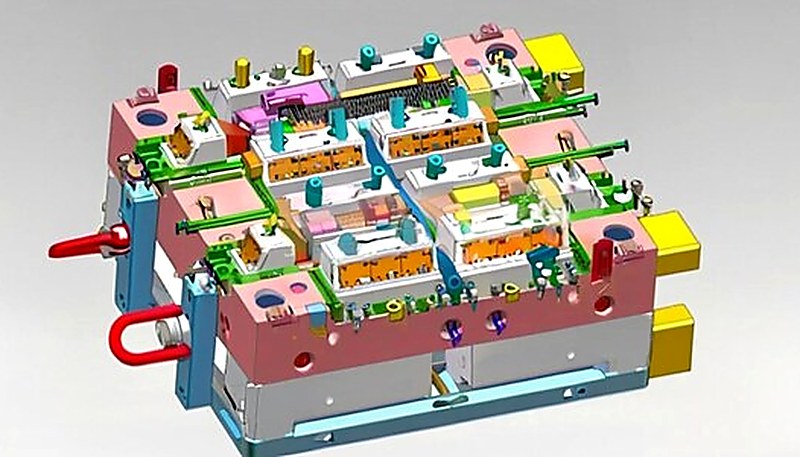
A moldagem por injeção1 é frequentemente o processo mais importante para peças plásticas de engenharia, pois permite repetir geometrias complexas em grande escala. Para obter uma base mais aprofundada sobre o processo, comece pelo nosso guia completo de moldagem por injeção e compare depois os requisitos do molde no nosso guia completo de moldes de injeção.
Os processos parecem semelhantes à distância porque todos dão forma ao plástico. No planeamento fabril, são muito diferentes. Uma garrafa, uma carcaça eletrónica, um tubo, um tabuleiro e uma vareta de fibra de vidro não devem ser submetidos à mesma lógica de cotação. A geometria determina primeiro o processo; a resina, a tolerância, a estética e o volume determinam os pormenores.
"A escolha do processo de moldação de plástico deve começar pela geometria da peça."True
A geometria determina se a peça é oca, contínua, semelhante a uma chapa ou um componente 3D detalhado, pelo que deve orientar a primeira decisão sobre o processo.
"Todos os tipos de moldação de plásticos conseguem manter as mesmas tolerâncias."False
A capacidade de cumprir tolerâncias varia consoante o processo, a conceção da ferramenta, a retração do material, o método de arrefecimento, o corte de acabamento e as operações secundárias.
Que tipo de moldagem de plástico é mais adequado para peças de precisão?
A moldagem por injeção é a opção mais indicada para peças plásticas 3D de precisão. É escolhida quando o projeto exige dimensões controladas, características repetíveis, uma seleção rigorosa da resina e um volume de produção médio a elevado.
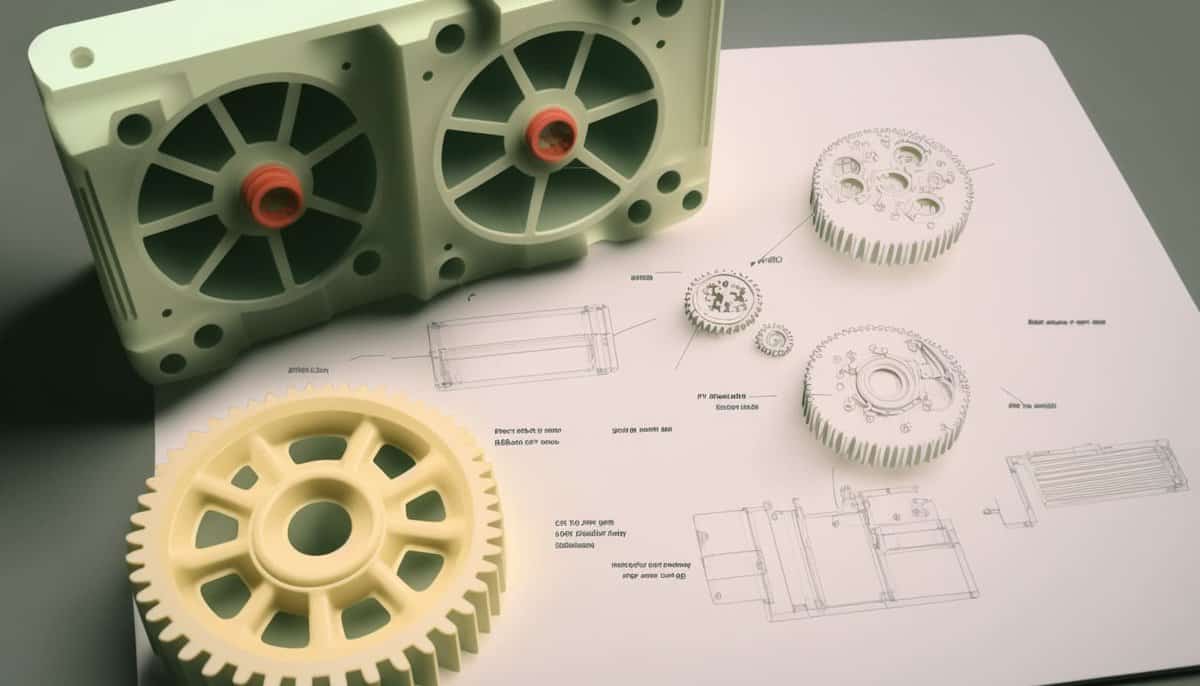
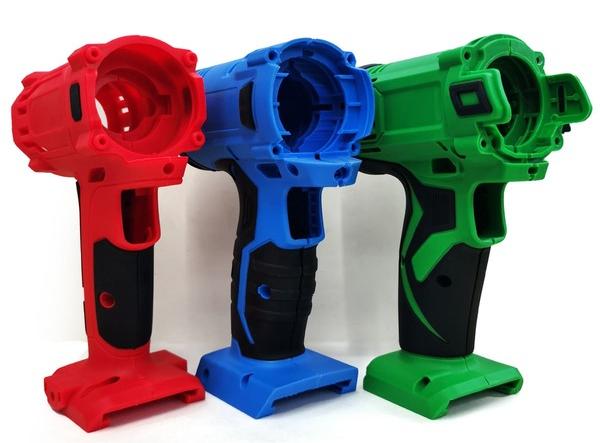
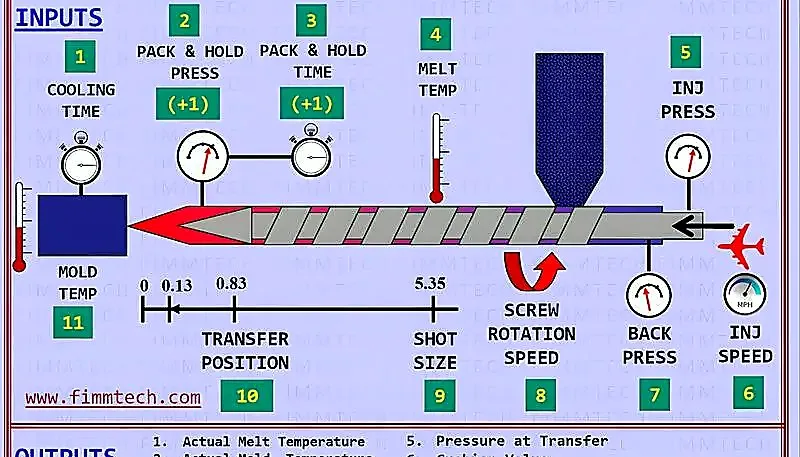
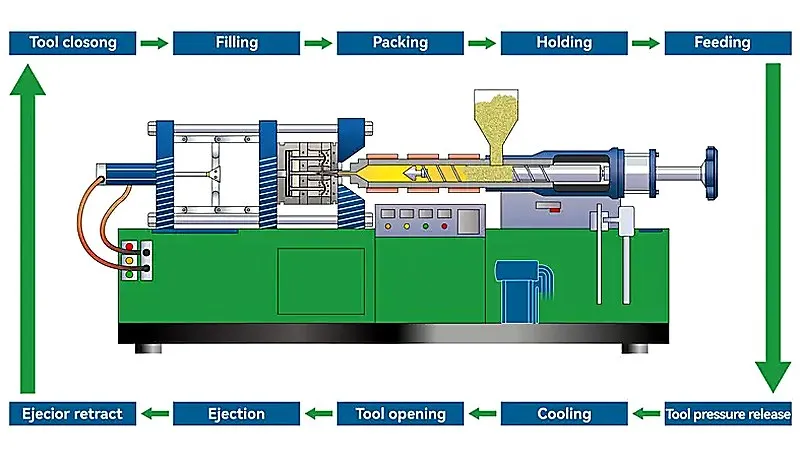
A moldação por injeção utiliza um molde fechado sob pressão, um fuso de plastificação, pressão de injeção, pressão de compactação, arrefecimento e ejeção. Isto torna-a adequada para caixas, engrenagens, clipes, conectores, componentes médicos, peças de eletrodomésticos e peças de plástico para automóveis. O processo não se resume a uma máquina. O aço do molde, a disposição do arrefecimento, a posição do ponto de injeção, a ventilação, a compensação da contração e o projeto de ejeção determinam se a peça é reproduzida de forma consistente.
Um comprador deve optar pela moldação por injeção quando a peça apresenta nervuras, ressaltos, encaixes de pressão, superfícies estéticas, detalhes internos ou conjuntos que têm de encaixar noutras peças. Se a peça tiver paredes espessas ou um volume anual muito baixo, a maquinação de protótipos, a impressão 3D, a fundição ou uma solução de molde mais económica podem ser preferíveis durante a validação inicial.
Para que é utilizada a moldagem por sopro?
A moldagem por sopro é utilizada em produtos de plástico ocos. Entre os exemplos típicos incluem-se garrafas, recipientes, depósitos, condutas e outras peças em que o volume de ar interno faz parte da função do produto.
A moldagem por sopro2 insufla plástico quente contra o interior de um molde. A principal vantagem é a produção eficiente de formas ocas. A principal limitação é que a espessura da parede, o acabamento do gargalo, o desenho das pegas e as zonas de corte exigem controlos diferentes dos utilizados em peças moldadas por injeção.
A moldagem por sopro não deve ser selecionada apenas porque a peça parece grande. Se a peça exigir nervuras precisas, ressaltos, insertos roscados, planicidade apertada ou detalhes locais robustos, a moldagem por injeção ou uma montagem secundária poderá ser mais fiável. Se o produto for essencialmente um invólucro oco, a moldagem por sopro pode reduzir o desperdício de material e a complexidade das ferramentas.
Para que é utilizada a moldação por compressão?
A moldação por compressão utiliza cargas de material prensadas em cavidades aquecidas. É frequentemente adequada para termoendurecíveis, materiais semelhantes à borracha e peças maiores com percursos de fluxo mais simples.
A moldagem por compressão3 pode ser útil quando o comportamento do material, o teor de fibras, as dimensões da peça ou a economia das ferramentas não se adequam à moldagem por injeção convencional. Também é indicada para peças em que a pressão, o calor e o tempo de cura são mais importantes do que ciclos de injeção rápidos.
Os seus pontos fracos são a velocidade do ciclo e o controlo dos pormenores. A moldação por compressão pode apresentar dificuldades com nervuras finas, paredes delgadas, rebaixos complexos ou uma repetibilidade dimensional muito rigorosa. Antes de pressuporem que as ferramentas de compressão são globalmente mais económicas, os compradores devem comparar cuidadosamente a tolerância das peças e o volume anual.
Para que é utilizada a moldação por extrusão?
A moldagem por extrusão é utilizada para formas contínuas de plástico. É adequada para tubos, chapas, vedantes, canais, perfis, varetas e filmes cuja secção transversal se mantém praticamente constante.
A extrusão força o plástico fundido através de uma matriz. A matriz define a secção transversal, e o arrefecimento ou a calibração a jusante controla as dimensões. Este processo é eficiente quando o produto é comprido, contínuo e uniforme. É menos adequado quando a peça requer uma geometria 3D fechada, bossagens internas, elementos de encaixe ou várias superfícies que têm de ser formadas simultaneamente.
Alguns produtos combinam a extrusão com outros processos. Um perfil pode ser primeiro extrudido e depois cortado, perfurado, dobrado, soldado ou montado. Nas montagens moldadas por injeção, os vedantes ou tubos extrudidos podem ser componentes adjacentes, mas não devem ser cotados como se fossem cavidades moldadas.
Quando é que a termoformagem faz sentido?
A termoformagem é útil para peças em chapa de plástico aquecida. Forma tabuleiros, coberturas, embalagens, painéis, revestimentos e peças de casca pouco profundas sobre um molde ou dentro dele.
A termoformagem4 pode reduzir o custo das ferramentas para peças grandes e finas, porque o processo parte de uma chapa em vez de injetar uma cavidade 3D completa. A moldagem a vácuo é um processo relacionado que utiliza vácuo para puxar a chapa aquecida contra a superfície do molde.
A contrapartida está na profundidade dos detalhes e no controlo dimensional. As peças termoformadas necessitam frequentemente de ser aparadas, podem apresentar redução da espessura da parede em zonas de estampagem profunda e podem não conseguir manter características tão rigorosas como a moldação por injeção. É útil para coberturas e tabuleiros, mas geralmente não é a melhor opção para uma mola de precisão, uma bossa roscada ou uma caixa de suporte de carga.
Como devem os compradores comparar os tipos de moldação de plástico?
Os compradores devem comparar os tipos de moldagem de plástico antes da definição do preço final. A comparação deve incluir a geometria, a tolerância, a resina, o volume anual, o orçamento para ferramentas, o acabamento superficial, as operações secundárias e o risco de inspeção.
Comece pela forma. Os produtos ocos apontam para a moldação por sopro ou rotacional. As secções transversais constantes apontam para a extrusão. As cascas finas e os tabuleiros apontam para a termoformação ou a moldação a vácuo. As peças 3D de precisão apontam normalmente para a moldação por injeção. Em seguida, avalie a realidade comercial: quantidade de produção, custo do material, custo do molde, custo da qualidade e prazo de entrega.
O tempo de ciclo também é importante. Na moldagem por injeção, cada segundo repete-se ao longo de toda a produção, pelo que o projeto do ponto de injeção, o arrefecimento, a ejeção e a adequação da máquina devem ser analisados logo no início. O nosso artigo sobre o tempo de produção da moldagem por injeção explica por que razão a velocidade do processo e o controlo do arrefecimento afetam o custo unitário. Para o planeamento dimensional, a contração do molde deve ser discutida antes da maquinação do aço.
Na nossa fábrica de Xangai, operamos 47 máquinas de moldação por injeção de 90T a 1850T e produzimos 100+ conjuntos de moldes por mês nas nossas instalações internas de fabrico de moldes. Os nossos engenheiros utilizam esta gama para distinguir peças moldadas por injeção de peças moldadas por sopro, termoformadas e extrudidas antes de se investir na ferramenta.
Para as equipas de aprovisionamento, esta comparação deve ocorrer antes de o pedido de proposta formal ficar fechado. Um desenho pode parecer simples, mas ocultar riscos de processo: uma carcaça profunda pode ficar mais fina durante a termoformação, um corpo oco pode exigir uma linha de corte na moldação por sopro e uma caixa de precisão pode exigir moldação por injeção porque os encaixes e ressaltos têm de ser repetíveis. Quando a nossa fábrica analisa desenhos preliminares, separa estas questões antes de apresentar uma proposta para a maquinação do aço, para que o cliente não pague por um processo incapaz de cumprir os requisitos da peça.
Para os engenheiros, o teste prático consiste em assinalar no desenho cada característica crítica. Painéis cosméticos planos, ganchos de encaixe, superfícies de vedação, ressaltos para parafusos, nervuras, zonas de dobradiça e referências de montagem devem ser associados ao processo capaz de os controlar. Se a lista de características consistir sobretudo em áreas superficiais pouco profundas, a conformação de chapa pode ser suficiente. Se incluir muitos pormenores 3D, a moldação por injeção costuma merecer a primeira avaliação séria.
| Processo | Melhor adequação | Principal precaução |
|---|---|---|
| Moldagem por injeção | Peças 3D de precisão | O molde deve corresponder à contração, aos pontos de injeção, ao arrefecimento e à extração. |
| Moldagem por sopro | Produtos ocos | A espessura da parede e os detalhes do gargalo precisam de controlo. |
| Extrusão | Perfis contínuos | Os elementos 3D complexos são limitados. |
| Termoformagem | Invólucros e tabuleiros finos | As zonas de embutimento profundo podem adelgaçar e necessitar de corte. |
"O custo das ferramentas deve ser comparado com o custo total de produção."True
Uma ferramenta mais barata pode tornar-se dispendiosa se provocar ciclos lentos, desperdício, rebarbagem manual, dimensões instáveis ou reparações repetidas do molde.
"Um fornecedor deve apresentar um orçamento antes de verificar o material e o volume."False
O material, o volume anual, a tolerância, o acabamento superficial e os requisitos de inspeção alteram o percurso do processo e o custo real de fabrico.
Se estiver a escolher entre a moldação por injeção e outro processo de moldação de plásticos, envie o ficheiro 3D, o material pretendido, o volume anual, os requisitos de superfície e as notas de tolerância. A ZetarMold pode analisar a peça e explicar se um molde de injeção, uma alteração ao projeto ou um processo diferente constitui o melhor caminho para o RFQ.
Para criar uma lista de verificação prática para o comprador, documente a resina pretendida, o volume anual previsto, as superfícies visíveis, as interfaces de montagem, o encadeamento de tolerâncias e a vida útil esperada antes de comparar propostas. Isto evita que um preço baixo do molde oculte custos posteriores de rebarbagem, dispositivos de fixação, retrabalho ou inspeção.
Esta avaliação preliminar do processo também permite ao departamento de compras comparar os fornecedores com maior rigor, pois todos os orçamentos são avaliados segundo o mesmo conjunto de requisitos funcionais.
FAQ sobre tipos de moldagem de plástico
Qual é o tipo mais comum de moldagem por plástico?
A moldação por injeção é um dos tipos mais comuns de moldagem de plástico para peças de engenharia, porque pode repetir formas complexas com dimensões controladas e uma produção estável.
Qual tipo de moldagem é melhor para peças plásticas ocas?
A moldagem por sopro é normalmente a mais adequada para peças ocas, como garrafas, depósitos e recipientes, porque a pressão do ar forma o plástico quente contra a parede do molde.
A termoformagem é mais económica do que a moldação por injeção?
A termoformação pode ter um custo de ferramentas inferior para invólucros grandes e finos, mas pode exigir recorte e não igualar a moldação por injeção em características 3D com tolerâncias rigorosas.
Quando devo escolher a extrusão em vez da moldação?
Escolha a extrusão quando o produto tiver uma secção transversal contínua, como um tubo, chapa, vedante, canal ou perfil que possa ser cortado ao comprimento.
Como escolher o tipo de moldagem adequado para uma nova peça?
Comece pela geometria e depois verifique a tolerância, o material, o volume, o orçamento das ferramentas, o acabamento superficial e o risco de qualidade. Um fornecedor poderá então comparar as opções de processo realistas.
Um projeto pode utilizar mais do que um tipo de moldação de plástico?
Sim. Um conjunto pode combinar carcaças moldadas por injeção, vedantes extrudidos, bandejas termoformadas ou recipientes moldados por sopro quando cada componente desempenha uma função diferente.
moldagem por injeção: Processo repetível de transformação de plásticos que injeta material fundido numa cavidade fechada para formar uma peça acabada. ↩
moldagem por sopro: Processo para peças ocas que forma plástico quente contra a superfície de um molde por meio de pressão de ar interna. ↩
moldagem por compressão: Processo que comprime uma carga medida de material dentro de uma cavidade de molde aquecida até formar a peça. ↩
termoformagem: Processo de conformação de chapas que aquece uma chapa plástica e a molda sobre ou dentro de um molde. ↩