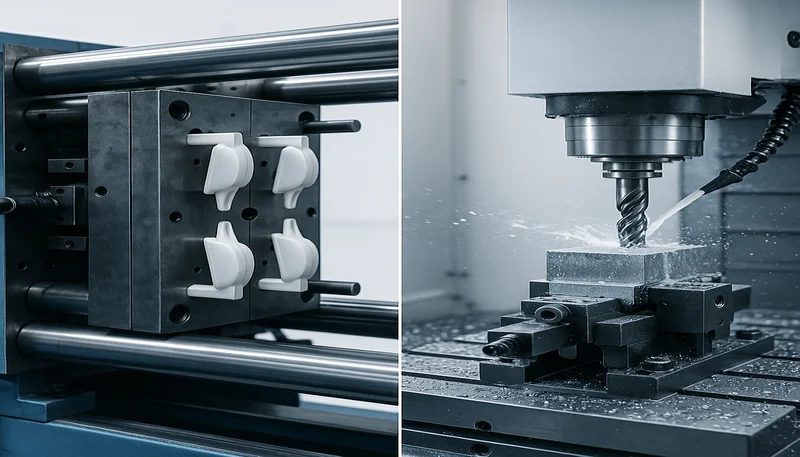
Enjeksiyon kalıplı ürün tasarımı, faydalı bir ürün fikrini üretimde dolabilen, soğuyabilen, çıkarılabilen, monte edilebilen ve tekrarlanabilen geometriye dönüştürme işidir. Bir parça CAD’de basit görünebilir; ancak tasarım kalıp ve proses sınırlarını dikkate almazsa çöküntü izleri, sürüklenme çizikleri, hapsolmuş gaz, çapak, kırık itici pimler veya kalıp revizyonu oluşturabilir.
Bu kılavuz, enjeksiyonla kalıplanan ürünlerin tasarım ilkelerini üretim gerçekliği temelinde yeniden ele alır. Duvar kalınlığı, nervürler, çıkma açısı1, kapama yüzeyleri, tolerans, malzeme davranışı ve inceleme disiplinine odaklanır; çünkü çelik kesildikten sonra takımın kararlı çalışıp çalışmayacağını bu seçimler belirler.
İlk baskılardan sonra değil, tasarım dondurulmadan önce kullanın. Fabrikamız yeni bir plastik parçayı incelerken kalıp riskini henüz bir CAD kararı aşamasındayken belirlemeye çalışır; çünkü takımlamadan önce yapılacak 0.3 mm’lik bir geometri değişikliği, daha sonra kaynaklı bir insert veya acil çelik modifikasyonundan çok daha ucuzdur.
- Kalıplamaya uygun tasarım; eşit malzeme akışı, öngörülebilir soğutma ve güvenli çıkarmayla başlar.
- Duvar kalınlığı, nervürler, vida kuleleri ve köşeler birbirine bağlı tek bir sistem olarak boyutlandırılmalıdır.
- Çıkma açısı ve ayırma stratejisi, kalıptan ayrılmayı ve çapak riskini kontrol ettikleri için takımlandırmadan önce incelenmelidir.
- Tolerans, işlenmiş metal çizimlerinden kopyalanmamalı; işleve ve proses yetkinliğine göre atanmalıdır.
- Kalıp üretiminden önce yapılan kısa bir DFM incelemesi, geç aşamadaki birçok kusuru ve beklenmedik maliyeti önler.
Enjeksiyon kalıplama ürünleri için temel tasarım ilkeleri nelerdir?
Enjeksiyon kalıplama ürünlerine yönelik temel tasarım ilkeleri, bu bölümde açıklanan ana kategoriler veya seçeneklerdir. Bu ilkeler; eşit et kalınlığı, dengeli akış uzunluğu, kontrollü soğutma, güvenilir çıkarma, gerçekçi tolerans ve kalıp açısından güvenli geometridir. Plastik soğurken büzüldüğü ve kalıbın bitmiş parçayı sürüklemeden veya deforme etmeden serbest bırakması gerektiği için bu ilkeler birlikte işler.
Önce parçayı bir akış ve soğutma problemi olarak ele alın. Basınç, kayma ve soğuma dolum düzenini değiştirmeden önce bir giriş, erimiş malzemeyi yalnızca belirli bir mesafeye itebilir. Bir bölge diğerlerinden çok daha kalınsa daha uzun süre sıcak kalır, daha geç çeker ve çoğunlukla çökme izi, boşluk veya yerel çarpılma oluşturur.
En güvenli erken inceleme, ürün işlevini üretim sınırlarına bağlar. Yararlı bir ürün spesifikasyonu hangi yüzeylerin kozmetik olduğunu, hangi ölçülerin montajı kontrol ettiğini, hangi alanların itici izi kabul edebileceğini ve parçanın hangi yüklere dayanması gerektiğini belirtir. Bu bilgiler, takım yerleşimi sabitlenmeden önce tasarımcı ile kalıp üreticisinin geometri, giriş konumu ve malzeme arasında denge kurmasını sağlar.
Süreç hakkında daha geniş bir temel için ZetarMold’un enjeksiyon kalıplama süreci kılavuzunu kullanın. Ayırma çizgisi, kızaklar, eğik iticiler, soğutma ve çelik paylı değişiklikler gibi takım kararlarında incelemeyi enjeksiyon kalıbı kılavuzuyla ilişkilendirin. Alıcı bir fabrika seçiyorsa tedarikçi bulma kılavuzu bu kontrolleri tedarik sorularına dönüştürmeye yardımcı olur.
"Kalıplanmış bir parça, kozmetik tasarım kesinleştirilmeden önce eriyik akışı, soğutma ve çıkarma dikkate alınarak tasarlanmalıdır."True
Bu doğrudur; çünkü çelik işlendikten sonra kalıp her geometri sorununu düzeltemez. Stil, nervürler, boss'lar, klipsler ve tolerans yığılmaları; basınç kaybını, çekmeyi, kalıp açısını ve ayırma kuvvetini etkiler.
"Malzeme yeterince dayanıklıysa her plastik parça, CNC ile işlenmiş parçayla aynı geometriyi koruyabilir."False
Bu yanlıştır; çünkü kalıplama büzülme, soğutma gradyanları, itici yükleri, ayırma kısıtları ve giriş izi oluşturur. Malzeme dayanımı, kalıplamaya özgü geometri gereksinimini ortadan kaldırmaz.
| Prensip | Kontrol Edilecekler | Göz Ardı Edilirse Risk |
|---|---|---|
| Cidar kontrolü | Geçişleri kademeli tutun ve yalıtılmış kütlelerden kaçının | Çökme, boşluklar, çarpılma |
| Kalıp ayırıcı | Çıkma açısı ekleyin ve sıkışmış ters açılardan kaçının | Sürtünme izleri, kalıpta sıkışan parçalar |
| İşlevsel tolerans | Dar toleransları kritik arayüzlerle sınırlayın | Yüksek hurda oranı ve kalıp yeniden işleme |
| İnceleme zamanlaması | Kalıp üretiminden önce DFM yapın | Geç tasarım değişiklikleri |
Pratik bir DFM incelemesi, nominal duvar kalınlığının2 seçilen reçine için yeterince tutarlı olup olmadığını, en uzun akış yolunun aşırı ütüleme olmadan dolup dolamayacağını ve kozmetik yüzeyin giriş ve itici izlerinden korunup korunamayacağını sorgulamalıdır. Mühendislerimiz genellikle önce yüksek riskli bölgeleri işaretler, ardından her düzeltmeyi maliyet, teslim süresi ve ürün işlevine etkisine göre sıralar.
Et kalınlığı, federler ve göbekler nasıl tasarlanmalıdır?
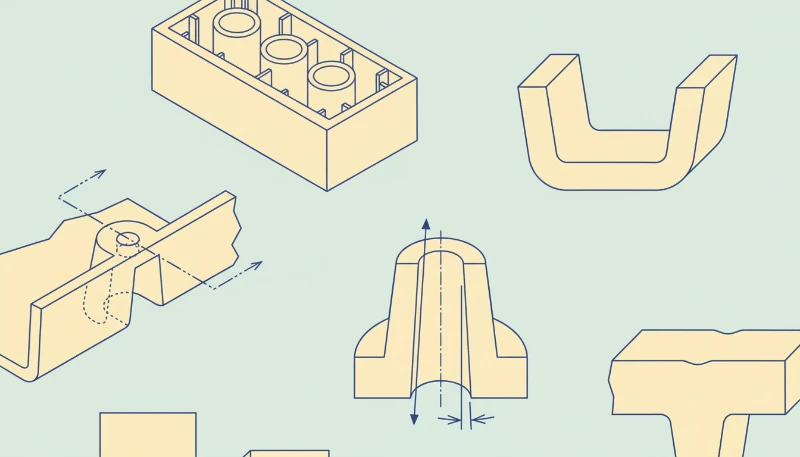
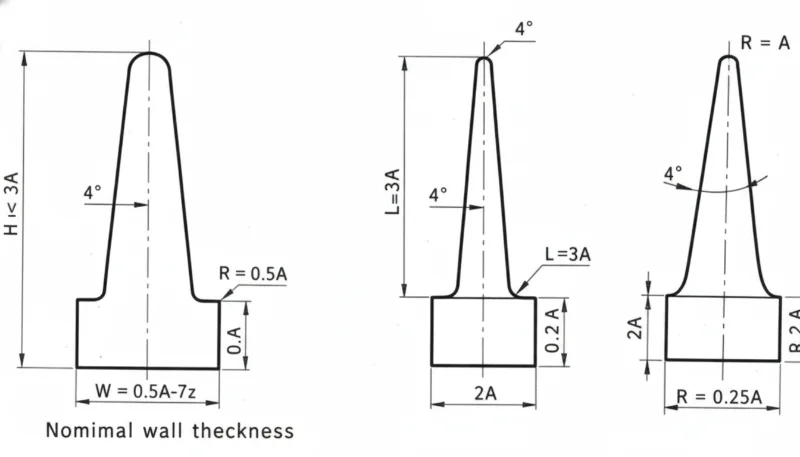
Et kalınlığı, kalıplanmış bir parçada soğutma süresi, büzülme ve yerel gerilimin temel kontrol unsurudur. Kalınlık soğutma süresini, büzülmeyi ve yerel gerilimi belirlediğinden, ürün işlevinin izin verdiği ölçüde eşit olmalıdır. Nominal et kalınlığı; akış ve soğutmanın bir bölgeden diğerine keskin biçimde değişmek yerine öngörülebilir kalması için parça genelinde kullanılan hedef et değeridir.
Birçok mühendislik termoplastiğinde ilk konseptler genellikle 1.5 mm ila 3.0 mm civarında cidarlarla başlar; ardından reçine, akış uzunluğu, rijitlik ve düşürme testi gereklilikleri bilindiğinde değerler değiştirilir. İnce kesitler kalıp boşluğu dolmadan donabilir; kalın kesitler ise ısıyı tutarak kozmetik yüzeyde görünür çöküntü oluşturabilir.
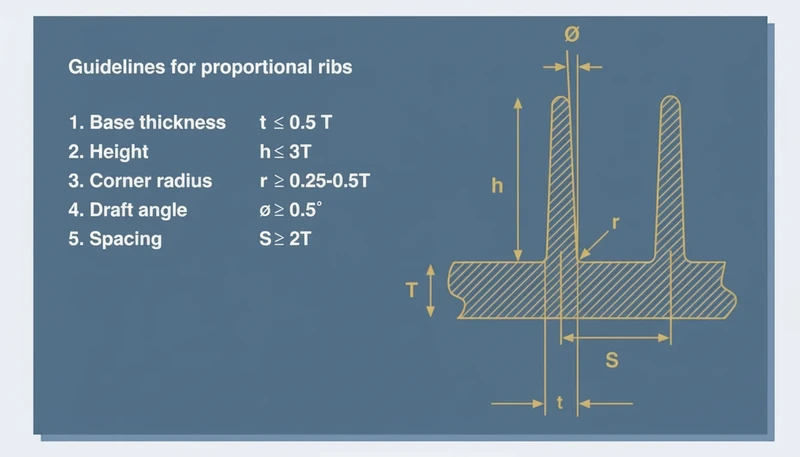
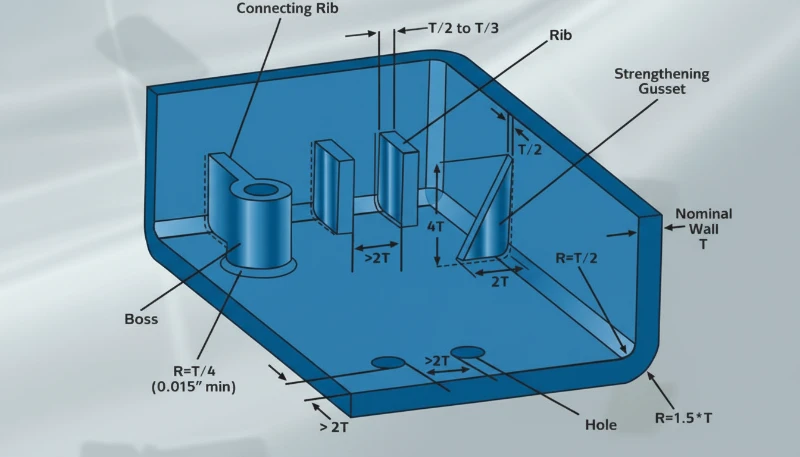
Nervürler, parçayı kalın bir bloğa dönüştürmeden rijitlik kazandırır. Yaygın bir nervür-duvar oranı3 hedefi, geniş kök radyüsleri ve çelik dayanımı için yeterli aralıkla birlikte bitişik duvarın yaklaşık %40–60’ıdır. Nervür çok kalınsa dış yüzey çökebilir; çok yüksek ve inceyse dolum ve çıkarma kararsızlaşır.
Vida yuvaları da aynı disiplinle tasarlanmalıdır. Bir vida yuvası, ince bir duvar üzerinde duran kalın bir silindir yerine federler veya payandalarla bağlanmalıdır. Tasarımın eksik doluma, yanık izlerine veya kırık maça pimlerine yol açmaması için yuvanın dış çapı, maça pimi dayanımı, vida kavrama boyu ve itme yönü birlikte değerlendirilmelidir.
Fabrikamızdaki DFM incelemelerinde, yakındaki duvara göre yaklaşık 30% üzerinde olan duvar geçişleri genellikle değerlendirme için işaretlenir. Ayrıca ilk baskılardan sonra nervür tabanlarını büyütme altında inceleriz; çünkü görünür bir muhafazadaki küçük bir çöküntüyü müşteriye kabul ettirmek, küçük bir kalıp değişikliğinden daha zor olabilir.
Köşeler keskin değil yuvarlatılmış olmalıdır. İç yarıçaplar akışı iyileştirip gerilim yoğunlaşmasını azaltırken dış yarıçaplar köşe çevresinde cidar kalınlığını tutarlı tutar. Keskin bir iç köşe CAD’de düzgün görünebilir; ancak polimerin aniden yön değiştirmesine neden olur ve darbe ya da titreşim altında zayıf bir nokta bırakabilir.
Parçanın rijit kalması gerektiğinde nervürleri, malzeme seçimini ve yerel geometriyi birlikte değerlendirin. En iyi tasarım nadiren en kalın tasarımdır. En iyi tasarım, tekrarlanabilir kalıplama için soğutma profilini yeterince dengeli tutarken malzemeyi yük yollarının ihtiyaç duyduğu noktalara yerleştirir.
Kalıp Çıkış Açısı, Ayırma Çizgisi ve Kapamalar Kalıp Riskini Nasıl Azaltır?
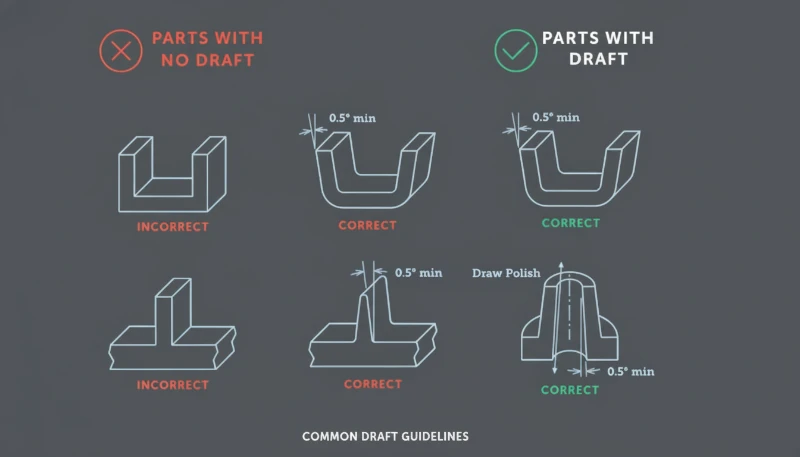
Kalıptan çıkma açısı, kalıplanmış parçanın kaviteden veya maçadan ayrılmasını sağlayan boşluktur. Parça kaviteden veya maçadan çıkarken gerekli boşluğu oluşturarak kalıp riskini azaltır. Yeterli kalıptan çıkma açısı olmadığında dokulu yüzeyler, derin nervürler ve yüksek duvarlar çıkarma sırasında çeliğe sürtünebilir; sürtünme izleri, beyazlama, deformasyon veya parçanın sıkışmasına yol açabilir.
Birçok düz dikey yüzey için tipik başlangıç hedefi her yanda 1.0 degrees ila 2.0 degrees olup dokulu veya derin unsurlarda daha fazla draft gerekir. Nihai değer malzeme çekmesine, yüzey kalitesine, çekme derinliğine, takım polisajına ve yüzeyin kalıp gözü ya da maça tarafında olmasına bağlıdır.
Ayırma hattı stratejisi, görsel yüzey kesinleşmeden önce seçilmelidir. Ayırma hattı; çapağın nerede oluşabileceğini, kapama yüzeylerinin nerede birleşeceğini ve sürgü ya da eğik iticilerin gerekip gerekmediğini belirler. Estetik bir ürün bölünmesi, kaçınılmaz bir ters açıyı gizler veya zayıf kapama çeliğini zorunlu kılarsa pahalı hâle gelebilir.
Kapama yüzeyleri, tekrarlanan çevrimlere dayanmak için yeterli açıya ve temas alanına ihtiyaç duyar. Çok ince çelik kenarlar üretim başladıktan sonra kırılabilir, aşınabilir veya çapak oluşturabilir. Bir klips, pencere, havalandırma ya da geçme özelliği kapama yüzeyi gerektiriyorsa DFM incelemesi çelik kalınlığını, polisaj erişimini ve özelliğin daha güvenli bir kalıp hareketi için yeniden tasarlanıp tasarlanamayacağını kontrol etmelidir.
"Kalıp yerleşimi onaylanmadan önce kalıptan çıkma açısı ve ayırma çizgisi seçimleri DFM incelemesinde görünür olmalıdır."True
Bu doğrudur; çünkü bu seçimler kalıp açılma yönünü, sürgü sayısını, kapama yüzeyi aşınmasını, kozmetik izleri ve itme güvenilirliğini belirler. Geç değişiklikler çoğu zaman çeliğin yeniden tasarlanmasını gerektirir.
"CAD modelinin yüzey finisajı pürüzsüzse sıfır draft açılı cidar kabul edilebilir."False
Bu yanlıştır; çünkü düz bir yüzey bile büzülmeden sonra çeliğe tutunabilir. Sıfır çıkış açısı, çıkarma kuvvetini artırır ve kalıptan çıkarma sırasında parçada iz bırakabilir veya parçayı deforme edebilir.
Kalıp açılma yönünü sonradan düşünülecek bir ayrıntı değil, tasarım kısıtı olarak ele alın. Model üzerinde maça tarafını, boşluk tarafını, sürgü çekme yönlerini, eğik itici hareketini ve beklenen birleşim izlerini işaretleyin. Mühendislerimiz bir muhafazayı incelerken işlev, görünüm ve kalıp maliyetinin çakıştığı alanları müşterinin görebilmesi için çoğu kez renk kodlaması kullanır.
Alıcı ile tedarikçi arasındaki iletişim burada da önemlidir. Yalnızca teknik resme fiyat veren bir tedarikçi gizli kalıp risklerini gözden kaçırabilir; çekme yönünü, çelik emniyet payını ve ilk baskı riskini açıklayan bir tedarikçi ise alıcıya karar için daha sağlam bir temel sunar. Bu nedenle tasarım incelemesi, satın alma siparişi serbest bırakıldıktan sonra değil, ticari RFQ iş akışının içinde yer almalıdır.
Toleranslar, malzeme seçimi ve montaj özellikleri nasıl dengelenmelidir?
Tolerans dengesi; ölçüleri, reçine davranışını ve montaj riskini gerçek kalıplama kabiliyetiyle eşleştirme sürecidir. Her dar tolerans süreç riskini artırdığından tolerans, malzeme seçimi ve montaj özellikleri işleve göre dengelenmelidir. GD&T; biçim, yön, konum ve salgıdaki izin verilen sapmayı tanımlayan bir teknik resim dilidir; böylece tedarikçiler montajı gerçekten hangi ölçülerin kontrol ettiğini bilir.
Kalıplanmış plastik toleransı; reçine çekmesini, kalıp sıcaklığını, nemi, dolgu oranını, parça geometrisini ve ölçüm yöntemini dikkate almalıdır. 0.05 mm tolerans, işlenmiş bir parçadaki kısa bir çelik özellik için makul olabilir; ancak düzensiz soğuyan uzun bir kalıplanmış açıklık boyunca gerçekçi olmayabilir.
Malzeme seçimi tasarım kurallarını değiştirir. Cam elyaf dolgulu naylon daha dayanıklı takım çeliği ve elyaf yönüne daha fazla dikkat gerektirebilirken PC, ABS, PP, POM, PPSU ve PEEK’in her biri farklı çekme, rijitlik, sıcaklık direnci ve birleşme çizgisi davranışı getirir. İlk karşılaştırmalarda hem ürün performansını hem de kalıplama kararlılığını değerlendirin.
Montaj özellikleri mümkün olduğunda toleranslı olmalıdır. Geçmeli bağlantılar giriş geometrisi, gerinim kontrolü ve test edilebilir sehim sınırları gerektirir. Vida yuvaları maça pimi desteği ve yarılmayı önleyen geometri gerektirir. Canlı menteşeler, klipsler, contalar ve ultrasonik kaynak nervürlerinin tümü genel cidar ilaveleri değil, prosese özgü ayrıntılar gerektirir.
| Tasarım Alanı | Önerilen İnceleme | Fabrika Riski |
|---|---|---|
| Kritik geçme | Referansı ve ölçüm yöntemini tanımlayın | Kontrol anlaşmazlığı |
| Geçmeli bağlantı | Gerinimi ve kalıptan çıkma yönünü kontrol edin | Çatlama veya zayıf tutunma |
| Patron | Maça pimi ve vida yükünü kontrol edin | Eksik dolum veya yarılmış bağlantı çıkıntısı |
| Kozmetik yüzey | Yolluk girişi ve itici izlerinden koruyun | Görünür kusur |
Prototipten üretime geçen programlarda kalıplanmış tasarımı prototip prosesiyle karşılaştırın. CNC prototipi; yolluk akışı, büzülme telafisi veya itme gerektirmediği için kalıplama risklerini gizleyebilir. Hızlı prototipleme enjeksiyon kalıplaması, prototip kalıplarının üretim çeliğinden önce bu farkı ne zaman azaltabileceğini açıklar.
Hata geçmişi de tasarım incelemesine girdi sağlamalıdır. Benzer ürünlerde çöküntü, çapak, eksik dolum veya çarpılma görüldüyse sonraki kalıp üretilmeden önce bu kanıttan yararlanın. Yaygın enjeksiyon kalıplama hataları, bilinen hata türlerini geometri kontrollerine dönüştürürken yararlıdır.
Ekibimiz tolerans incelemesini bir risk sıralama çalışması olarak ele alır. Sıkı toleransı yalnızca ürün işlevinin gerektirdiği yerlerde korumayı, kritik olmayan yüzeylerde ise çevrim kararlılığını, kontrol hızını ve uzun vadeli üretim verimini güvenceye almak için toleransı genişletmeyi tercih ederiz.
Çeliği onaylamadan önce bu tolerans seçimlerini inceleme notlarına dönüştürün. Referans yüzeyleri, fikstür konseptini, ölçüm sıcaklığını ve numune alma kuralını tanımlayın. Bu, teknik resmin üretim sırasında kimsenin tutarlı biçimde ölçemeyeceği bir hassasiyet istemesini önler.
Alıcılar takım üretiminden önce hangi tasarım inceleme iş akışını talep etmelidir?
Tasarım inceleme iş akışı, takım üretimi başlamadan önce uygulanan aşamalı bir DFM geçididir. Ürün işlevini, reçine seçimini, kalıp hareketini, giriş konumunu, soğutmayı, çıkarmayı, toleransı ve muayeneyi kontrol eder. Bu iş akışı, tasarım ilkelerini e-postayla paylaşılan görüşler yerine doğrulanabilir kararlara dönüştürür.
İlk aşama geometri incelemesidir. Cidar haritasını, nervür haritasını, boss yerleşimini, köşe radyüslerini, kalıptan çıkış açılarını, ayrım çizgisini ve alt kesitleri doğrulayın. İkinci aşama takım incelemesidir. Göz sayısını, sürgü ve eğik itici hareketlerini, giriş türünü, soğutma kanalı erişimini, havalandırmayı, çelik emniyet payını ve beklenen bakım noktalarını doğrulayın.
Üçüncü kapı, üretim incelemesidir. Reçine kurutmayı, beklenen çevrim süresini, kozmetik kabul ölçütlerini, kontrol fikstürlerini, ambalaj yüklerini ve değişiklik kontrol kurallarını doğrulayın. Numune onayını geçen ancak üretim planı bulunmayan bir kalıp, sipariş hacmi arttığında yine başarısız olabilir.
İnceleme kanıtlarını yalnızca eklemeli olarak saklayın. İşaretlenmiş ekran görüntülerini, DFM yorumlarını, müşteri onaylarını, ilk baskı raporlarını ve kalıp değişikliği kayıtlarını koruyun. Daha sonra bir kusur ortaya çıktığında bu geçmiş, sorunun tasarımdan, takımdan, malzemeden, proses ayarından veya belgelenmemiş bir değişiklikten kaynaklanıp kaynaklanmadığını gösterir.
En iyi sonuç daha uzun bir kontrol listesi değil, ürün gereksiniminden kararlı üretime uzanan daha kısa bir yoldur. Tasarım dosyası, kalıp planı ve kontrol kriterleri birbiriyle uyumlu olduğunda tedarikçi daha doğru fiyat verebilir, alıcı teklifleri daha adil karşılaştırabilir ve ilk üretim serisinde önlenebilir sürprizler azalır.
Sıralama geri kazanımına yönelik içerikte bu iş akışı arama kalitesi için de önemlidir. Okurların tasarım sorularını doğrudan yanıtlayan, üretim kanıtı sunan ve sonraki projede kullanabilecekleri pratik bir inceleme sırası veren bir sayfaya ihtiyacı vardır. Bu birleşim, genel bir plastik tasarım ipuçları listesinden daha etkilidir.
Ayrıca satış ekibine daha net bir talep yolu sağlar; alıcı yalnızca fiyat talebi göndermek yerine çizimleri ekleyebilir, riskli özellikleri vurgulayabilir ve odaklı bir DFM yanıtı isteyebilir.
Sıkça Sorulan Sorular
Enjeksiyon kalıplı ürünler için en önemli tasarım kuralı nedir?
En önemli kural, parçayı yalnızca nihai ürün şekline göre değil, tutarlı dolum, soğutma ve çıkarma çevresinde tasarlamaktır. Eşit cidar kalınlığı, yumuşak geçişler, gerçekçi tolerans ve yeterli kalıp çıkış açısı birçok yaygın kalıplama hatasını önler. Bu temeller göz ardı edildiğinde kalıp üreticisi yine de numune üretebilir; ancak üretimde çökme izleri, çarpılma, sıkışmış parçalar, çapak ve kararsız ölçüler görülebilir. Böylece DFM hem alıcı hem tedarikçi için ortak bir kontrol listesine dönüşür ve kalıbın çözmesi beklenenler hakkındaki geç anlaşmazlıkları önler.
Bir plastik parça ne kadar çekme açısına sahip olmalıdır?
Yararlı bir erken hedef, genellikle pürüzsüz dikey duvarlarda her taraf için 1.0 derece ile 2.0 derece arasıdır, ancak son çekme açısı malzemeye, dokusuna, çekme derinliğine, büzülmeye ve estetik gereksinimlere bağlıdır. Derin kaburgalar, dokulu yüzeyler ve cam dolgulu malzemeler genellikle daha muhafazakar bir inceleme gerektirir. Doğru soru, CAD’de görülen çekme açısının ne kadar olduğu değil, parçanın beklenen üretim hacmi için sürüklenme izleri, beyazlanma, deformasyon veya fazla ejector kuvveti olmadan temiz çıkabilmesidir. Doku derinliği ve polisaj erişimi bu kararda da dahil edilmelidir.
Kaburgalar enjeksiyon kalıplamada neden çökme izleri oluşturur?
Kaburgalar, kaburga tabanının yerel bir kalın kesit oluşturması ve bu kesitin çevreleyen duvardan daha yavaş soğuması nedeniyle çökme izleri oluşturur. Bu kalın alan büzülürken, dıştaki estetik yüzey içe doğru çekilerek görünür bir çökme gösterir. Genel çözüm, kaburga kalınlığını azaltmak, geniş radyuslar eklemek, bir kalın kaburgayı birkaç daha ince kaburgaya bölmek veya özelliği kritik bir görünüm yüzeyinden uzaklaştırmaktır. Kaburga, gizli bir plastik blok gibi davranarak soğumayı geciktirmeden, sertliği artırmalıdır.
Kalıplanmış bir plastik parça her yerde çok dar toleranslar kullanmalı mı?
Hayır. Dar toleranslar, sızdırmazlık yüzeyleri, snap fitler, dişli hizalama, konnektör yerleri veya montaj datumları gibi fonksiyonel ara yüzler için saklanmalıdır. Kritik olmayan yüzeyler daha geniş toleranslar kullanmalıdır, böylece kalıplama prosesi stabil kalabilir. Dar toleransı her yere uygulamak, muayene maliyetini, hurda riskini, kalıp ayarlama zamanını ve tedarikçi kafa karışıklığını artırırken son ürün fonksiyonunu geliştirmez. Daha iyi bir çizim, fonksiyona kritik boyutları estetik veya boşluk boyutlarından ayırır ve ölçüm sorumluluğunu netleştirir. Bu, tedarikçinin muayene aparatlarını, örnekleme frekansını ve beklenen proses kapasitesini dürüstçe teklif etmesine yardımcı olur.
Yeni bir enjeksiyon kalıplama projesinde DFM incelemesi ne zaman gerçekleşmelidir?
DFM incelemesi, kalıp teklifi kesinleştirilmeden önce ve kalıp çeliği kesilmeden önce bir kez daha gerçekleştirilmelidir. İlk inceleme, tasarım değişiklikleri henüz ucuz olduğu sırada geometri ve proses riskini bulur. İkinci inceleme, kararlaştırılan kalıp yerleşimi, giriş yeri, ayırma çizgisi, çıkarma planı ve muayene gereksinimlerini doğrular. İlk çekimlere kadar beklemek, pek çok basit CAD değişikliğini pahalı kalıp modifikasyonlarına dönüştürür. Kayıtlı bir inceleme, alıcıya tedarikçileri karşılaştırırken ve kalıp başlatımını onaylarken daha iyi kanıt sağlar. Çizimler, kalıp yerleşimi ve onay kayıtlarıyla saklanmalıdır.
çıkma açısı: Çıkma açısı, kalıplanmış bir parçanın daha az sürtünmeyle boşluktan veya maçadan ayrılabilmesi için dikey yüzeylere verilen küçük eğimdir. ↩
nominal duvar kalınlığı: Nominal duvar kalınlığı, kalıplanmış bir plastik parçanın soğuma, dolum, rijitlik ve çekme incelemelerinde temel alınan hedef duvar değeridir. ↩
nervür-duvar oranı: Nervür-duvar oranı, aşırı çökme oluşturmadan rijitliği artırmak için nervür taban kalınlığı ile bitişik nominal duvar arasındaki ilişkiyi ifade eder. ↩