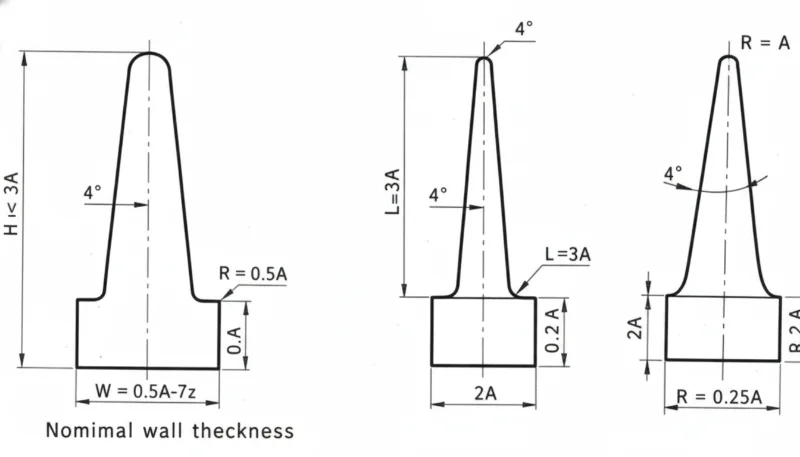
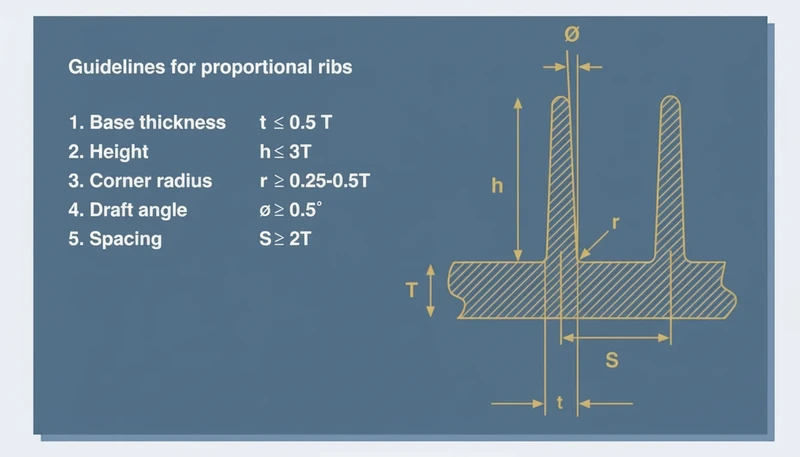
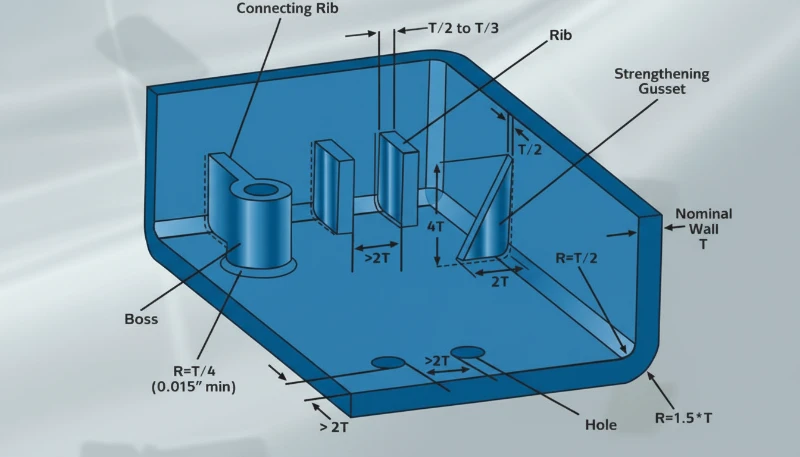
El objetivo es aproximadamente del 40% al 60% del espesor de la pared adyacente, con radios de raíz generosos y suficiente espacio para la resistencia del acero. Si una nervadura es demasiado gruesa, la superficie exterior puede hundirse; si es demasiado alta y delgada, el llenado y la eyección se vuelven inestables.
Esta guía replantea los principios de diseño de productos moldeados por inyección desde la realidad de la producción. Se centra en el espesor de pared, los nervios, el ángulo de desmoldeo1, los cierres, las tolerancias, el comportamiento del material y la disciplina de revisión, porque estas decisiones determinan si el molde funcionará de forma estable una vez cortado el acero.
Utilícelo antes de congelar el diseño, no después de las primeras inyecciones. Cuando nuestra fábrica revisa una pieza de plástico nueva, intentamos detectar el riesgo del molde mientras todavía es una decisión de CAD, porque un cambio geométrico de 0.3 mm antes del utillaje resulta mucho más barato que un inserto soldado o una modificación de emergencia del acero posteriormente.
- El diseño para moldeo comienza con un flujo uniforme del material, una refrigeración predecible y una expulsión segura.
- El espesor de pared, las nervaduras, los resaltes y las esquinas deben dimensionarse como un único sistema conectado.
- El ángulo de desmoldeo y la estrategia de la línea de partición deben revisarse antes de fabricar el utillaje porque controlan el riesgo de desmoldeo y rebaba.
- La tolerancia debe asignarse según la función y la capacidad del proceso, no copiarse de planos de metal mecanizado.
- Una breve revisión DFM antes de fabricar el molde evita muchos defectos tardíos y costes inesperados.
¿Cuáles son los principios básicos de diseño de productos para moldeo por inyección?
Los principios básicos de diseño de productos moldeados son las principales categorías explicadas aquí: espesor uniforme, longitud de flujo equilibrada, refrigeración controlada, expulsión fiable, tolerancias realistas y geometría segura para el utillaje. Funcionan conjuntamente porque el plástico se contrae al enfriarse y el molde debe liberar la pieza sin arrastre ni deformación.
Comience tratando la pieza como un problema de flujo y refrigeración. Una compuerta solo puede impulsar el material fundido hasta cierta distancia antes de que la presión, el cizallamiento y el enfriamiento alteren el patrón de llenado. Si una zona es mucho más gruesa que el resto, permanece caliente más tiempo, se contrae más tarde y suele generar rechupes, vacíos o alabeo localizado.
La revisión inicial más segura vincula la función del producto con los límites de fabricación. Una especificación de producto útil indica qué superficies son estéticas, qué dimensiones controlan el ensamblaje, qué zonas pueden aceptar marcas de expulsor y qué cargas debe soportar la pieza. Esta información permite al diseñador y al fabricante del molde ajustar la geometría, la ubicación de la compuerta y el material antes de fijar la disposición del molde.
Para ampliar los fundamentos del proceso, consulte la guía del proceso de moldeo por inyección de ZetarMold. Para decisiones de utillaje como la línea de partición, las correderas, los expulsores inclinados, la refrigeración y los cambios con margen de mecanizado en el acero, vincule la revisión con la guía de moldes de inyección. Si el comprador está seleccionando una fábrica, la guía de búsqueda de proveedores ayuda a convertir estas comprobaciones en preguntas de compra.
"Una pieza moldeada debe diseñarse teniendo en cuenta el flujo del material fundido, el enfriamiento y la expulsión antes de cerrar el diseño estético."True
Esto es cierto porque el molde no puede corregir todos los problemas geométricos después de mecanizar el acero. El estilo, las nervaduras, los resaltes, los clips y las cadenas de tolerancias influyen en la pérdida de presión, la contracción, el ángulo de desmoldeo y la fuerza de expulsión.
"Cualquier pieza plástica puede conservar la misma geometría que una pieza mecanizada por CNC si el material es suficientemente resistente."False
Esto es falso porque el moldeo introduce contracción, gradientes de refrigeración, cargas de expulsión, restricciones de partición y vestigios de la compuerta. La resistencia del material no elimina la necesidad de una geometría específica para el moldeo.
| Principio | Qué comprobar | Riesgo si se ignora |
|---|---|---|
| Control de paredes | Mantenga transiciones graduales y evite masas aisladas | Rechupes, huecos, alabeo |
| Desmoldeo | Añada ángulo de desmoldeo y evite los socavados atrapados | Marcas de arrastre, piezas atascadas |
| Tolerancia funcional | Limite las tolerancias estrechas a las interfaces críticas | Alta tasa de residuos y retrabajo del molde |
| Momento de la revisión | Realice el DFM antes de fabricar el utillaje | Cambios tardíos de diseño |
Una revisión DFM práctica debe comprobar si el espesor nominal de pared2 es suficientemente uniforme para la resina elegida, si la trayectoria de flujo más larga puede llenarse sin sobrecompactación y si la cara estética puede protegerse de las marcas de las compuertas y los expulsores. Nuestros ingenieros suelen señalar primero las zonas de alto riesgo y después ordenan cada corrección según su coste, plazo y efecto sobre la función del producto.
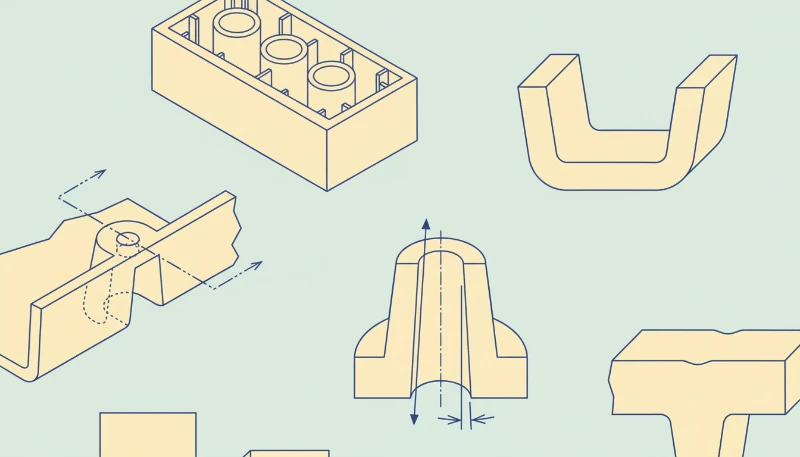
¿Cómo deben diseñarse el espesor de pared, las nervaduras y los resaltes?
El espesor de pared es el principal factor de control del tiempo de refrigeración, la contracción y la tensión local en una pieza moldeada. Debe ser tan uniforme como permita la función del producto, porque el espesor controla el tiempo de refrigeración, la contracción y la tensión local. El espesor nominal de pared es un valor objetivo que se aplica a toda la pieza para que el flujo y la refrigeración sigan siendo predecibles, en lugar de cambiar bruscamente de una zona a otra.
Para muchos termoplásticos técnicos, los conceptos iniciales suelen partir de paredes de entre 1.5 mm y 3.0 mm, y luego se ajustan una vez conocidos los requisitos de resina, longitud de flujo, rigidez y ensayo de caída. Las secciones delgadas pueden solidificarse antes de que se llene la cavidad, mientras que las secciones gruesas pueden retener calor y crear rechupes visibles en la cara estética.
Los nervios aportan rigidez sin convertir la pieza en un bloque grueso. Un objetivo habitual para la relación nervio-pared3 es aproximadamente del 40 % al 60 % del espesor de la pared adyacente, con radios generosos en la raíz y separación suficiente para conservar la resistencia del acero. Si el nervio es demasiado grueso, la superficie exterior puede presentar rechupes; si es demasiado alto y delgado, el llenado y la expulsión se vuelven inestables.
Mantenga la evidencia de revisión solo de adición. Guarde capturas de pantalla marcadas, comentarios de DFM, aprobaciones del cliente, informes de primer disparo y registros de cambio de molde. Cuando aparece un defecto posterior, este historial muestra si el problema provino del diseño, herramientas, material, configuración del proceso o un cambio no documentado.
En nuestras revisiones DFM de fábrica, una transición de pared superior a aproximadamente el 30% de la pared cercana suele marcarse para analizarla. También examinamos con aumento las bases de las nervaduras tras las primeras inyecciones, porque un pequeño rechupe en una carcasa visible puede ser más difícil de aceptar que una modificación menor del utillaje.
Las esquinas deben ser redondeadas, no agudas. Los radios interiores mejoran el flujo y reducen la concentración de tensiones, mientras que los exteriores mantienen uniforme el espesor de pared alrededor de la esquina. Una esquina interior aguda puede parecer limpia en CAD, pero obliga al polímero a girar bruscamente y puede dejar un punto débil ante impactos o vibraciones.
Cuando la pieza debe mantener su rigidez, combine nervaduras, selección de material y geometría local. El mejor diseño rara vez es el más grueso. Es el diseño que sitúa el material donde lo requieren las rutas de carga y mantiene al mismo tiempo un perfil de enfriamiento suficientemente uniforme para un moldeo repetible.
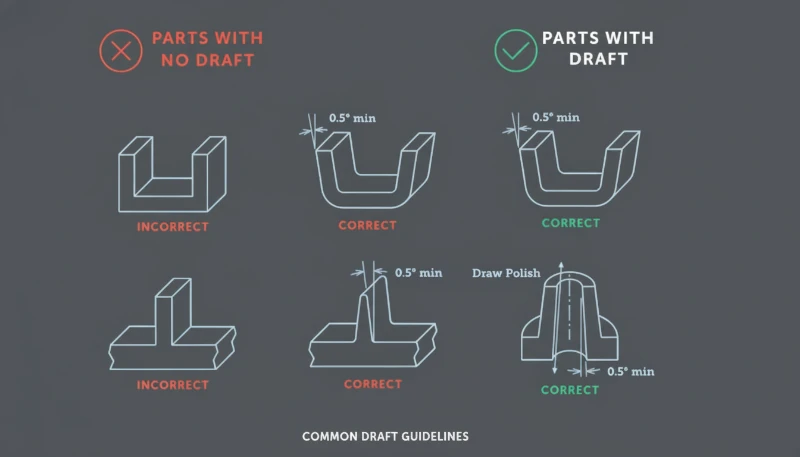
¿Cómo reducen el ángulo de desmoldeo, la línea de partición y los cierres el riesgo del utillaje?
El ángulo de desmoldeo es la holgura que ayuda a liberar una pieza moldeada de la cavidad o del núcleo. Reduce el riesgo del utillaje al proporcionar separación mientras la pieza sale. Sin suficiente ángulo, las superficies texturizadas, nervaduras profundas y paredes altas pueden rozar el acero durante la expulsión y causar marcas de arrastre, blanqueamiento, deformación o piezas atascadas.
Un objetivo inicial habitual es de 1,0 a 2,0 grados por lado para muchas caras verticales lisas, con más ángulo de desmoldeo para texturas o detalles profundos. El valor final depende de la contracción del material, el acabado superficial, la profundidad de extracción, el pulido del molde y de si la superficie corresponde al lado de la cavidad o al del núcleo.
La estrategia de la línea de partición debe elegirse antes de fijar la superficie visual. La línea determina dónde pueden aparecer rebabas, dónde se encuentran las caras de cierre y si se necesitan correderas o expulsores inclinados. Una división estética del producto puede resultar costosa si oculta una contrasalida inevitable u obliga a utilizar acero de cierre débil.
Los cierres necesitan suficiente ángulo y superficie de apoyo para soportar ciclos repetidos. Los bordes de acero muy finos pueden astillarse, desgastarse o generar rebabas. Si un clip, ventana, ventilación o encaje requiere un cierre, la revisión DFM debe comprobar el espesor del acero, el acceso para pulido y si la característica puede rediseñarse para una acción más segura.
"Las decisiones sobre el ángulo de desmoldeo y la línea de partición deben ser visibles en la revisión DFM antes de aprobar la disposición del molde."True
Esto es cierto porque estas decisiones determinan la dirección de apertura del molde, el número de correderas, el desgaste de los cierres, las marcas estéticas y la fiabilidad de la expulsión. Los cambios tardíos suelen exigir rediseñar el acero.
"Una pared con ángulo de desmoldeo cero es aceptable cuando el modelo CAD tiene un acabado superficial liso."False
Esto es falso porque incluso una superficie lisa puede agarrarse al acero tras la contracción. Un ángulo de desmoldeo nulo aumenta la fuerza de expulsión y puede marcar o deformar la pieza durante la extracción.
Utilice la dirección de apertura del molde como una restricción de diseño, no como una consideración posterior. Marque en el modelo el lado del núcleo, el lado de la cavidad, los recorridos de las correderas, el movimiento de los elevadores y las líneas testigo previstas. Cuando nuestros ingenieros revisan una carcasa, suelen codificar esas zonas por colores para que el cliente vea dónde compiten la función, el aspecto y el coste del utillaje.
Aquí también es importante la comunicación entre comprador y proveedor. Un proveedor que se limita a cotizar según el plano puede pasar por alto riesgos ocultos del molde; uno que explica la dirección de desmoldeo, el margen de seguridad del acero y el riesgo de la primera inyección ofrece al comprador una base mejor para decidir. Por eso, la revisión del diseño debe formar parte del flujo comercial de RFQ, no realizarse después de emitir la orden de compra.
¿Cómo deben equilibrarse las tolerancias, la selección de materiales y las características de ensamblaje?
El equilibrio de tolerancias es el proceso de ajustar las dimensiones, el comportamiento de la resina y el riesgo del montaje a la capacidad real de moldeo. La tolerancia, la selección del material y las características de montaje deben equilibrarse según la función, porque cada dimensión estricta añade riesgo al proceso. GD&T es un lenguaje de dibujo que define la variación admisible de forma, orientación, ubicación y oscilación para que los proveedores sepan qué dimensiones controlan realmente el montaje.
La tolerancia de una pieza de plástico moldeada debe considerar la contracción de la resina, la temperatura del molde, la humedad, el contenido de carga, la geometría de la pieza y el método de medición. Una tolerancia de 0.05 mm puede ser razonable para una característica corta de acero en una pieza mecanizada, pero puede resultar irreal en un tramo largo moldeado que se enfría de manera desigual.
La elección del material cambia las reglas de diseño. El nailon reforzado con fibra de vidrio puede requerir un acero de utillaje más resistente y mayor atención a la dirección de las fibras, mientras que PC, ABS, PP, POM, PPSU y PEEK presentan distintas contracciones, rigideces, resistencias térmicas y comportamientos de las líneas de soldadura. Para realizar comparaciones iniciales, evalúe tanto el rendimiento del producto como la estabilidad del moldeo.
Los elementos de montaje deben admitir cierta tolerancia siempre que sea posible. Los encajes a presión necesitan una entrada guiada, control de deformación y límites de deflexión verificables. Los resaltes para tornillos necesitan apoyo del pasador de núcleo y una geometría que evite la fisuración. Las bisagras vivas, los clips, las juntas y las nervaduras para soldadura ultrasónica requieren detalles específicos del proceso, no simples aumentos genéricos del espesor de pared.
| Área de diseño | Revisión recomendada | Riesgo de la fábrica |
|---|---|---|
| Ajuste crítico | Defina el datum y el método de medición | Disputa sobre la inspección |
| Ajuste a presión | Compruebe la deformación y la dirección de desmoldeo | Agrietamiento o retención débil |
| Jefe | Comprobar el pasador del núcleo y la carga del tornillo | Inyección incompleta o tetón partido |
| Cara estética | Proteja de las marcas de compuertas y expulsores | Defecto visible |
Para programas de prototipo a producción, compare el diseño moldeado con el proceso de prototipo. Un prototipo CNC puede ocultar riesgos de moldeo porque no necesita flujo de compuerta, compensación de contracción o expulsión. La moldura por inyección de prototipos rápidos explica cuándo el utillaje de prototipo puede reducir esa brecha antes del acero de producción.
El historial de defectos también debe alimentar la revisión de diseño. Si productos similares tuvieron hundimientos, rebabas, piezas incompletas o alabeo, use esa evidencia antes de construir el siguiente molde. Los defectos comunes de moldeo por inyección son útiles al convertir modos de fallo conocidos en verificaciones geométricas.
Nuestro equipo trata la revisión de tolerancias como una clasificación de riesgos. Preferimos mantener tolerancias estrechas solo donde la función lo necesita y ampliar las superficies no críticas para proteger la estabilidad del ciclo, la rapidez de inspección y el rendimiento productivo a largo plazo.
Antes de aprobar el acero, convierta esas elecciones de tolerancias en notas de inspección. Defina las superficies de referencia, el concepto de utillaje, la temperatura de medición y la regla de muestreo. Esto evita que un plano exija una precisión que nadie pueda medir de forma constante durante la producción.
¿Qué flujo de revisión del diseño deben exigir los compradores antes de fabricar el utillaje?
Un flujo de revisión de diseño es una puerta DFM por etapas antes de iniciar el utillaje. Comprueba la función del producto, la elección de la resina, el movimiento del molde, la ubicación de la compuerta, la refrigeración, la expulsión, la tolerancia y la inspección. Este flujo convierte los principios de diseño en decisiones verificables, en lugar de opiniones intercambiadas por correo electrónico.
El primer punto de control es una revisión de la geometría. Confirme el mapa de espesores de pared, el mapa de nervaduras, la disposición de resaltes, los radios de esquina, el ángulo de desmoldeo, la línea de partición y los contrasalidas. El segundo punto de control es una revisión del utillaje. Confirme el número de cavidades, las acciones de correderas y elevadores, el tipo de compuerta, el acceso a los canales de refrigeración, la ventilación, el margen de seguridad del acero y los puntos de mantenimiento previstos.
La tercera puerta de control es una revisión de producción. Confirme el secado de la resina, el tiempo de ciclo previsto, los criterios de aceptación estética, los útiles de inspección, las cargas del embalaje y las reglas de control de cambios. Un molde que supera la aprobación de muestras pero carece de un plan de producción aún puede fallar cuando aumenta el volumen de pedidos.
Mantenga las pruebas de revisión como registro de solo adición. Guarde capturas marcadas, comentarios DFM, aprobaciones, informes de primera inyección y cambios de molde. Ante un defecto posterior, el historial muestra si vino del diseño, utillaje, material, ajuste o cambio no documentado.
Guía de Principios de Diseño de Productos de Moldeo por Inyección
Para el contenido destinado a recuperar posiciones, este flujo de trabajo también es importante para la calidad de búsqueda. Los lectores necesitan una página que responda directamente a las preguntas de diseño, muestre evidencias de producción y les proporcione una secuencia práctica de revisión que puedan utilizar en el siguiente proyecto. Esa combinación es más sólida que una lista genérica de consejos sobre diseño de plásticos.
También ofrece al equipo de ventas una vía de consulta más clara, porque el comprador puede adjuntar planos, señalar las características de riesgo y solicitar una respuesta de DFM específica en lugar de enviar únicamente una solicitud de precio.
Preguntas frecuentes
¿Cuál es la regla de diseño más importante para los productos moldeados por inyección?
La regla más importante es diseñar la pieza en torno a un llenado, enfriamiento y expulsión uniformes, no solo alrededor de la forma final del producto. Un espesor de pared uniforme, transiciones suaves, tolerancias realistas y suficiente ángulo de desmoldeo evitan muchos fallos habituales. Si se ignoran estos principios, el fabricante del molde puede producir muestras, pero la producción puede sufrir rechupes, alabeo, piezas atascadas, rebabas y dimensiones inestables. Esto convierte el DFM en una lista de comprobación compartida por comprador y proveedor y evita disputas tardías sobre lo que debía resolver la herramienta.
¿Qué ángulo de desmoldeo debe tener una pieza de plástico?
Un objetivo inicial útil suele ser de 1.0 a 2.0 grados por lado en paredes verticales lisas, pero el ángulo final depende del material, la textura, la profundidad de extracción, la contracción y los requisitos estéticos. Las nervaduras profundas, las caras texturizadas y los materiales reforzados con fibra de vidrio suelen requerir una revisión más conservadora. La pregunta correcta no es solo cuánto ángulo aparece en CAD, sino si la pieza puede desmoldearse limpiamente durante el volumen de producción previsto sin marcas de arrastre, blanqueamiento, deformación ni fuerza de expulsión excesiva. La profundidad de la textura y el acceso para pulido también deben incluirse en la decisión.
¿Por qué las nervaduras causan rechupes en el moldeo por inyección?
Los nervios provocan marcas de hundimiento cuando su base crea una sección gruesa local que se enfría más lentamente que la pared circundante. Al contraerse esa zona pesada, la cara estética exterior puede hundirse y mostrar una depresión visible. La solución habitual es reducir el espesor del nervio, añadir radios generosos, dividir un nervio pesado en varios más ligeros o alejar la característica de una superficie de apariencia crítica. El nervio debe mejorar la rigidez sin comportarse como un bloque de plástico oculto que retrasa el enfriamiento.
¿Debe una pieza de plástico moldeada utilizar tolerancias muy estrechas en todas partes?
No. Las tolerancias estrechas deben reservarse para interfaces funcionales, como superficies de sellado, encajes a presión, alineación de engranajes, ubicaciones de conectores o referencias de montaje. Las superficies no críticas deben utilizar tolerancias más amplias para que el proceso de moldeo pueda mantenerse estable. Aplicar tolerancias estrechas en todas partes aumenta el coste de inspección, el riesgo de desechos, el tiempo de ajuste del molde y la confusión del proveedor sin mejorar la función del producto final. Un plano mejor diferencia las dimensiones críticas para la función de las dimensiones cosméticas o de holgura y deja clara la responsabilidad de medición. Esto también ayuda al proveedor a cotizar con honestidad los dispositivos de inspección, la frecuencia de muestreo y la capacidad prevista del proceso.
¿Cuándo debe realizarse la revisión DFM en un nuevo proyecto de moldeo por inyección?
La revisión DFM debe realizarse antes de cerrar la cotización del molde y de nuevo antes de mecanizar el acero para herramientas. La primera revisión detecta riesgos geométricos y de proceso cuando los cambios de diseño aún son económicos. La segunda confirma la disposición acordada del molde, la ubicación de la compuerta, la línea de partición, el plan de expulsión y los requisitos de inspección. Esperar hasta las primeras inyecciones convierte muchos cambios sencillos de CAD en costosas modificaciones del molde. Una revisión documentada también ofrece al comprador mejores pruebas para comparar proveedores y aprobar el lanzamiento del molde. Debe almacenarse junto con los planos, la disposición del molde y los registros de aprobación.
ángulo de desmoldeo: El ángulo de desmoldeo es una ligera inclinación aplicada a las caras verticales para que una pieza moldeada se desprenda de la cavidad o del macho con menor fricción. ↩
espesor nominal de pared: El espesor nominal de pared es un valor objetivo que se utiliza como referencia para revisar la refrigeración, el llenado, la rigidez y la contracción de una pieza de plástico moldeada. ↩
relación nervio-pared: La relación nervio-pared expresa la relación entre el espesor de la base de un nervio y la pared nominal adyacente, de modo que pueda aumentarse la rigidez sin provocar rechupes excesivos. ↩