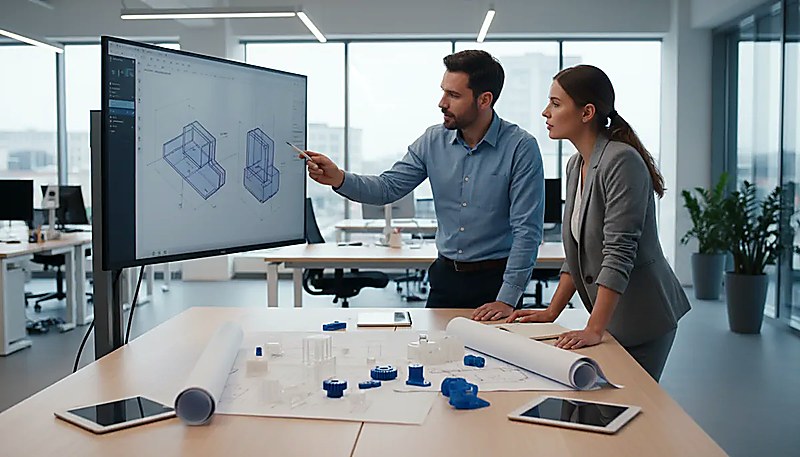
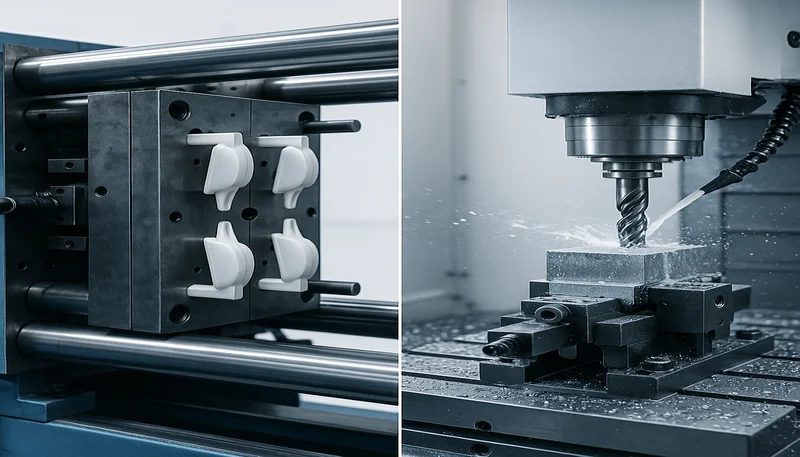
Проектирование литьевого изделия — это преобразование полезной идеи продукта в геометрию, которую можно заполнить, охладить, извлечь, собрать и стабильно воспроизводить. Деталь может выглядеть простой в CAD, но при игнорировании ограничений оснастки и процесса всё равно возникнут утяжины, задиры при извлечении, запертый газ, облой, поломка выталкивателей или необходимость доработки пресс-формы.
Это руководство заново формулирует принципы проектирования изделий для литья под давлением с учётом производственной практики. Основное внимание уделено толщине стенок, рёбрам, углу уклона1, затворам, допускам, поведению материалов и дисциплине анализа, поскольку именно эти решения определяют стабильность работы формы после обработки стали.
Используйте это до фиксации конструкции, а не после первых впрысков. Когда наш завод анализирует новую пластиковую деталь, мы стремимся выявить риск для пресс-формы, пока его еще можно устранить в CAD: изменение геометрии на 0.3 mm до изготовления оснастки обходится значительно дешевле, чем последующая установка сварной вставки или срочная доработка стали.
- Проектирование под литье начинается с равномерного течения материала, предсказуемого охлаждения и безопасного извлечения детали.
- Толщину стенок, ребра, бобышки и углы следует рассчитывать как единую взаимосвязанную систему.
- Угол уклона и схему разъема необходимо проверить до изготовления оснастки, поскольку они определяют извлекаемость детали и риск образования облоя.
- Допуски следует назначать по функции детали и возможностям процесса, а не копировать с чертежей механически обработанных металлических деталей.
- Краткий анализ DFM до изготовления пресс-формы предотвращает многие поздние дефекты и непредвиденные затраты.
Каковы основные принципы проектирования изделий для литья под давлением?
В этом разделе рассматриваются основные категории и варианты принципов проектирования изделий для литья под давлением. К ним относятся равномерная толщина стенок, сбалансированная длина потока, управляемое охлаждение, надёжное выталкивание, реалистичные допуски и безопасная для оснастки геометрия. Эти принципы взаимосвязаны, поскольку пластик усаживается при охлаждении, а готовая деталь должна извлекаться из формы без задиров и деформации.
Сначала рассматривайте деталь как задачу течения расплава и охлаждения. Впуск способен продвинуть расплавленный материал лишь на определенное расстояние, после чего давление, сдвиг и охлаждение изменяют характер заполнения. Если одна зона значительно толще остальных, она дольше остается горячей, позже дает усадку и часто становится причиной утяжин, пустот или локального коробления.
Самая надежная ранняя проверка связывает функцию изделия с производственными ограничениями. Грамотная спецификация указывает, какие поверхности являются декоративными, какие размеры определяют сборку, где допустимы следы выталкивателей и какие нагрузки должна выдерживать деталь. Это позволяет конструктору и изготовителю формы согласовать геометрию, положение литника и материал до фиксации компоновки оснастки.
Общие основы процесса изложены в руководстве ZetarMold по процессу литья под давлением. При выборе линии разъёма, ползунов, наклонных толкателей, охлаждения и безопасных припусков на доработку используйте руководство по литьевым формам. При выборе завода руководство по поиску поставщика помогает превратить эти проверки в вопросы для закупки.
"Конструкцию литой детали следует согласовать с течением расплава, охлаждением и выталкиванием до окончательного утверждения внешнего вида."True
Это верно, поскольку после обработки стали пресс-форма не может исправить все проблемы геометрии. Внешняя форма, ребра, бобышки, защелки и цепочки допусков влияют на потерю давления, усадку, уклон и усилие извлечения.
"Любая пластиковая деталь может сохранять ту же геометрию, что и деталь, обработанная на CNC, если материал достаточно прочен."False
Это неверно, поскольку при литье необходимо учитывать усадку, градиенты охлаждения, нагрузки при выталкивании, ограничения по линии разъёма и след от литника. Прочность материала не устраняет необходимость в геометрии, рассчитанной специально для процесса литья.
| Принцип | Что проверить | Риск игнорирования |
|---|---|---|
| Контроль стенок | Делайте переходы плавными и избегайте локальных скоплений материала | Утяжины, пустоты, коробление |
| Извлечение из пресс-формы | Добавьте уклоны и исключите запертые поднутрения | Задиры, застревание деталей |
| Функциональный допуск | Назначайте жесткие допуски только для критических сопряжений | Высокий уровень брака и доработок формы |
| Время проведения проверки | Выполните DFM до изготовления пресс-формы | Поздние изменения конструкции |
Практический DFM-анализ должен установить, достаточно ли постоянна номинальная толщина стенки2 для выбранной смолы, заполняется ли самый длинный путь течения без переподпитки и можно ли защитить декоративную поверхность от следов литников и толкателей. Наши инженеры сначала отмечают зоны высокого риска, затем ранжируют исправления по стоимости, срокам и влиянию на функцию изделия.
Как следует проектировать толщину стенок, рёбра и бобышки?
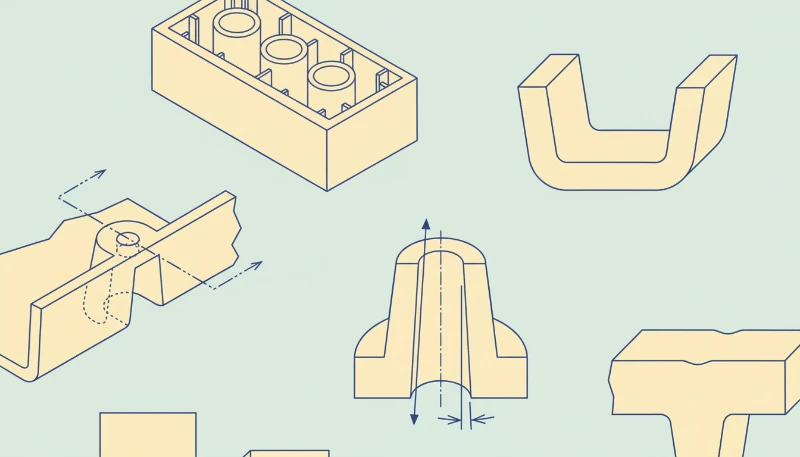
Толщина стенки — основной параметр, определяющий время охлаждения, усадку и локальные напряжения в отлитой детали. Она должна быть настолько равномерной, насколько позволяет функция изделия, поскольку от неё зависят время охлаждения, усадка и локальные напряжения. Номинальная толщина стенки — целевое значение для всей детали, позволяющее сохранить предсказуемость течения и охлаждения без резких переходов между участками.
Для многих инженерных термопластов исходная концепция часто начинается со стенок 1.5–3.0 mm, а затем корректируется после определения смолы, длины течения, жесткости и требований испытания падением. Тонкие участки могут замерзнуть до заполнения полости, а толстые — удерживать тепло и создавать видимые утяжины на декоративной стороне.
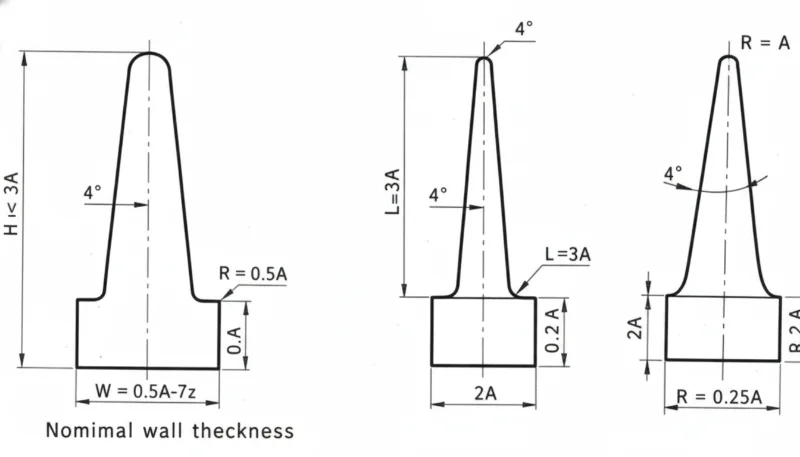
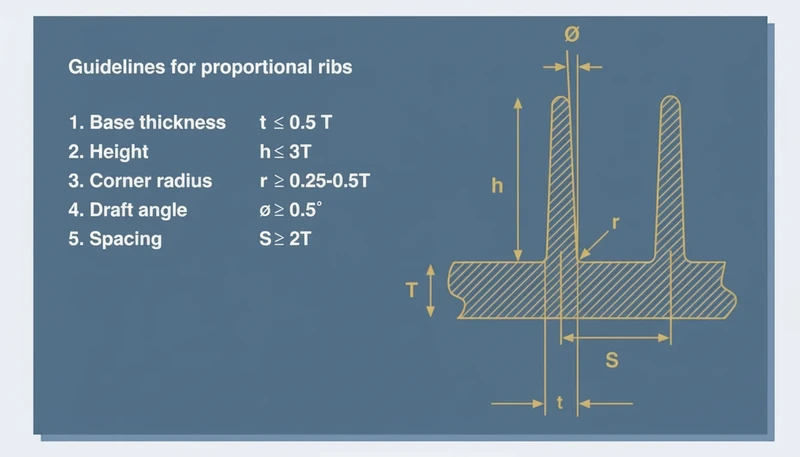
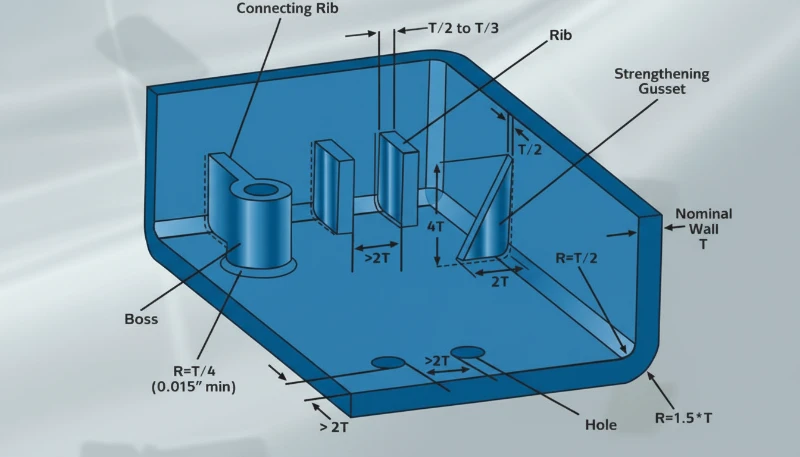
Рёбра повышают жёсткость, не превращая деталь в сплошной толстый блок. Обычно целевое отношение толщины ребра к стенке3 составляет около 40–60% толщины соседней стенки; также нужны достаточный радиус у основания и интервалы, сохраняющие прочность стали. Слишком толстое ребро вызывает утяжины снаружи, а слишком высокое и тонкое делает заполнение и извлечение нестабильными.
Бобышки требуют такого же строгого подхода. Бобышку под винт следует соединять с рёбрами или косынками, а не выполнять в виде массивного цилиндра на тонкой стенке. Наружный диаметр бобышки, прочность стержня, глубину зацепления винта и направление выталкивания необходимо рассматривать совместно, чтобы конструкция не приводила к недоливу, прижогам или поломке стержней.
При DFM-анализе на нашем предприятии переход толщины более чем примерно на 30% относительно соседней стенки обычно выносится на обсуждение. После первых отливок мы также осматриваем основания рёбер под увеличением, поскольку небольшую утяжину на видимом корпусе может быть сложнее согласовать с заказчиком, чем незначительное изменение оснастки.
Углы следует скруглять. Внутренние радиусы улучшают течение и снижают концентрацию напряжений, а наружные поддерживают постоянную толщину стенки в зоне угла. Острый внутренний угол может выглядеть аккуратно в CAD, но заставляет полимер резко менять направление и может стать слабым местом при ударе или вибрации.
Если деталь должна сохранять жёсткость, сочетайте рёбра, выбор материала и локальную геометрию. Лучшей редко оказывается самая толстая конструкция. Оптимальна конструкция, в которой материал расположен по траекториям передачи нагрузки, а профиль охлаждения остаётся достаточно равномерным для стабильного воспроизводимого формования.
Как уклон, линия разъёма и затворы снижают риски при изготовлении оснастки?
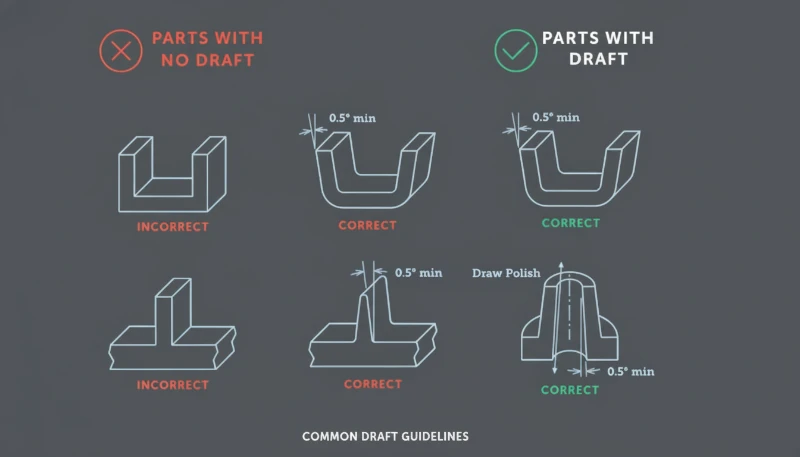
Уклон — это зазор, помогающий отлитой детали выйти из гнезда или со стержня. Он снижает риск для оснастки, обеспечивая зазор при выходе детали. При недостаточном уклоне текстурированные поверхности, глубокие ребра и высокие стенки трутся о сталь при выталкивании, вызывая задиры, побеление, деформацию или застревание деталей.
Типичная ранняя цель — 1.0–2.0 градуса на сторону для многих гладких вертикальных поверхностей, больше для текстуры или глубоких элементов. Итог зависит от усадки, отделки, глубины извлечения, полировки и стороны полости или сердечника.
Стратегию линии разъема следует выбрать до фиксации внешнего вида поверхности. Линия разъема определяет, где может появиться облой, где сходятся поверхности запирания и нужны ли ползуны или наклонные толкатели. Красивое разделение изделия может оказаться дорогим, если скрывает неизбежный поднутрение или требует слабой стали запирания.
Запирающим элементам нужны достаточный угол и площадь контакта, чтобы выдерживать многократные циклы. Очень тонкие стальные кромки после запуска производства могут скалываться, изнашиваться или образовывать облой. Если для зажима, окна, вентиляционного отверстия или защёлки требуется запирающий элемент, при анализе DFM следует проверить толщину стали, доступ для полирования и возможность переработать геометрию для более надёжного механизма пресс-формы.
"Выбор формовочных уклонов и линии разъёма должен быть отражён в анализе DFM до утверждения компоновки пресс-формы."True
Это верно, поскольку данные решения определяют направление раскрытия пресс-формы, число ползунов, износ запирающих поверхностей, видимые следы и надёжность выталкивания. Поздние изменения часто требуют переработки стальных деталей.
"Стенка без уклона допустима, если CAD-модель имеет гладкую поверхность."False
Это неверно, поскольку даже гладкая поверхность после усадки может зацепляться за сталь. Нулевой уклон повышает усилие выталкивания и может оставить следы или деформировать деталь при извлечении.
Рассматривайте направление раскрытия пресс-формы как исходное ограничение конструкции, а не как второстепенный вопрос. Отметьте на модели сторону пуансона, сторону матрицы, направления перемещения ползунов и наклонных выталкивателей, а также ожидаемые следы стыков. При анализе корпуса наши инженеры часто обозначают эти участки цветом, чтобы заказчик видел противоречия между функциональностью, внешним видом и стоимостью оснастки.
Здесь также важна коммуникация между покупателем и поставщиком. Поставщик, который рассчитывает цену только по чертежу, может пропустить скрытые риски оснастки; поставщик, объясняющий направление извлечения, запас стали и риски первых образцов, даёт покупателю более надёжную основу для решения. Поэтому анализ конструкции должен входить в коммерческий процесс RFQ, а не выполняться после выдачи заказа на закупку.
Как сбалансировать допуски, выбор материала и сборочные элементы?
Баланс допусков — это согласование размеров, поведения смолы и сборочных рисков с реальными возможностями литья. Допуски, выбор материала и сборочные элементы следует балансировать по функции, поскольку каждый размер с жестким допуском повышает технологический риск. GD&T — язык чертежей, определяющий допустимые отклонения формы, ориентации, расположения и биения, чтобы поставщики понимали, какие размеры действительно определяют сборку.
При назначении допуска для литой пластиковой детали следует учитывать усадку смолы, температуру оснастки, влажность, содержание наполнителя, геометрию детали и метод измерения. Допуск 0.05 mm может быть обоснован для короткого стального элемента механически обработанной детали, но нереалистичен на длинном литом участке с неравномерным охлаждением.
Выбор материала меняет правила проектирования. Для стеклонаполненного нейлона может потребоваться более прочная инструментальная сталь и повышенное внимание к направлению волокон, а PC, ABS, PP, POM, PPSU и PEEK различаются усадкой, жесткостью, термостойкостью и поведением линий спая. На раннем этапе сравнивайте как эксплуатационные характеристики изделия, так и стабильность литья.
Сборочные элементы по возможности должны допускать отклонения. Защелкам нужны заходная часть, контроль деформации и проверяемые пределы прогиба. Бобышкам под винты нужны опора для знака и геометрия, предотвращающая раскалывание. Интегральные шарниры, зажимы, уплотнения и ребра для ультразвуковой сварки требуют специальных для процесса решений, а не общего увеличения стенок.
| Область проектирования | Рекомендуемый обзор | Производственный риск |
|---|---|---|
| Критическая посадка | Определите базу и метод измерения | Спор по результатам контроля |
| Защелкивающееся соединение | Проверьте деформацию и направление расцепления | Растрескивание или слабая фиксация |
| Босс | Проверьте нагрузку на стержневой штифт и винт | Недолив или расколотая бобышка |
| Лицевая поверхность | Защищать от следов литников и толкателей | Видимый дефект |
В программах перехода от прототипа к серийному производству сравнивайте формуемую конструкцию с технологией изготовления прототипа. Прототип, изготовленный на станке CNC, может скрывать риски литья, поскольку для него не требуются течение расплава от впуска, компенсация усадки и выталкивание. Материал о литье под давлением для быстрого прототипирования объясняет, когда опытная пресс-форма позволяет сократить этот разрыв до изготовления серийной стальной оснастки.
Историю дефектов также следует учитывать при анализе конструкции. Если аналогичные изделия имели утяжины, облой, недолив или коробление, используйте эти данные до изготовления следующей формы. Материал о распространённых дефектах литья под давлением полезен при преобразовании известных видов отказов в проверки геометрии.
Наша команда рассматривает анализ допусков как ранжирование рисков. Мы предпочитаем сохранять жёсткие допуски только там, где этого требует функция изделия, и расширять их для некритичных поверхностей, чтобы обеспечить стабильность цикла, скорость контроля и долгосрочный выход годной продукции.
До утверждения стали перенесите выбранные допуски в указания по контролю. Определите базовые поверхности, концепцию приспособления, температуру измерения и правило выборочного контроля. Это исключит ситуацию, когда чертеж требует точности, которую невозможно стабильно контролировать в ходе производства.
Какой процесс проверки конструкции покупатели должны требовать до изготовления оснастки?
Процесс анализа конструкции — это поэтапный контроль DFM до начала изготовления оснастки. Он охватывает функцию изделия, выбор полимера, движения формы, расположение литника, охлаждение, выталкивание, допуски и контроль. Такой процесс превращает принципы проектирования в проверяемые решения, а не в мнения, которыми обмениваются по электронной почте.
Первый контрольный этап — анализ геометрии. Проверьте карту толщин стенок, карту рёбер, расположение бобышек, радиусы углов, уклоны, линию разъёма и поднутрения. Второй этап — анализ оснастки. Проверьте число полостей, работу ползунов и наклонных толкателей, тип литника, доступ к каналам охлаждения, вентиляцию, запас стали и предполагаемые точки технического обслуживания.
Третий контрольный этап — проверка готовности к производству. Подтвердите режим сушки полимера, ожидаемое время цикла, критерии приёмки внешнего вида, контрольные приспособления, нагрузки на упаковку и правила управления изменениями. Пресс-форма, прошедшая приёмку образцов, но не имеющая производственного плана, всё равно может оказаться несостоятельной при увеличении объёма заказа.
Храните доказательства проверки в режиме только добавления. Сохраняйте размеченные снимки экрана, комментарии DFM, согласования заказчика, отчёты о первых впрысках и записи об изменениях пресс-формы. Если позднее появится дефект, эта история покажет, относится ли причина к конструкции, оснастке, материалу, настройке процесса или недокументированному изменению.
Лучший результат — не более длинный контрольный список, а более короткий путь от требований к изделию до стабильного производства. Когда файл конструкции, план формы и критерии контроля согласованы, поставщик точнее рассчитывает цену, покупатель объективнее сравнивает предложения, а первый производственный запуск приносит меньше предотвратимых неожиданностей.
Для контента, восстанавливающего позиции, этот процесс важен и для качества поиска. Читателю нужна страница, которая прямо отвечает на вопросы проектирования, показывает производственные доказательства и предлагает практическую последовательность проверки для следующего проекта. Такое сочетание сильнее общего списка советов по проектированию пластиковых деталей.
Это также упрощает для отдела продаж обработку запроса: покупатель может приложить чертежи, выделить элементы с повышенным риском и запросить предметный анализ DFM вместо простого запроса цены.
Часто задаваемые вопросы
Каково главное правило проектирования изделий для литья под давлением?
Главное правило — проектировать деталь с учетом стабильного заполнения, охлаждения и извлечения, а не только ее конечной формы. Равномерная толщина стенок, плавные переходы, реалистичные допуски и достаточные уклоны предотвращают многие дефекты литья. Если пренебречь основами, образцы получить можно, но в серии появятся утяжины, коробление, застревание деталей, облой и нестабильные размеры. Поэтому DFM должно стать общим контрольным списком заказчика и поставщика, исключающим поздние споры о назначении оснастки.
Какой угол съема должна иметь пластиковая деталь?
Полезной ранней целью часто является 1,0–2,0 градуса на сторону на гладких вертикальных стенках, но окончательный угол съема зависит от материала, текстуры, глубины вытяжки, усадки и требований к внешнему виду. Глубокие ребра, текстурированные поверхности и материалы с стекловолокном обычно требуют более консервативного анализа. Правильный вопрос не только в том, какой угол съема виден в CAD, но и в том, может деталь чисто выйти из формы для ожидаемого объема производства без следов задиров, побеления, деформации или чрезмерного усилия выталкивания. Глубина текстуры и доступ для полировки также должны учитываться в этом решении.
Почему ребра вызывают утяжения в литье под давлением?
Ребра вызывают утяжения, когда основание ребра создает локальное толстое сечение, которое охлаждается медленнее окружающей стенки. Когда эта тяжелая область усаживается, внешняя косметическая поверхность может втягиваться внутрь и показывать видимую впадину. Обычное решение — уменьшить толщину ребра, добавить достаточные радиусы, разделить одно тяжелое ребро на несколько более легких ребер или переместить элемент от критической внешней поверхности. Ребро должно улучшать жесткость без поведения как скрытого блока пластика, который замедляет охлаждение.
Должна ли литая пластиковая деталь использовать очень жесткие допуски на всех участках?
Нет. Жесткие допуски следует резервировать для функциональных интерфейсов, таких как уплотняющие поверхности, защелки, центровка шестерен, места расположения соединителей или базовые точки сборки. Некритичные поверхности должны использовать более широкие допуски, чтобы процесс литья оставался стабильным. Применение жестких допусков повсеместно увеличивает стоимость контроля, риск брака, время корректировки формы и вызывает непонимание поставщика без улучшения функциональности конечного продукта. Улучшенный чертеж отделяет критичные для функции размеры от косметических или зазоровых размеров и четко определяет ответственность за измерение. Это также помогает поставщику честно оценить контрольные приспособления, частоту выборки и ожидаемую способность процесса.
Когда следует проводить DFM-анализ в новом проекте литья под давлением?
DFM-анализ должен проводиться до окончательного утверждения стоимости формы и повторно до начала обработки стальной оснастки. Первый анализ выявляет геометрические и технологические риски, когда изменения дизайна еще недороги. Второй анализ подтверждает согласованную конструкцию формы, место расположения впуска, линию разъема, план выталкивания и требования к контролю. Ожидание до первых отливок превращает многие простые CAD-изменения в дорогостоящие модификации формы. Документированный анализ также дает покупателю более весомые доказательства при сравнении поставщиков и утверждении запуска оснастки. Он должен храниться вместе с чертежами, конструкцией формы и записями утверждения.
угол уклона: Угол уклона — небольшой наклон вертикальных поверхностей, который уменьшает трение при извлечении отлитой детали из полости или с сердечника. ↩
номинальная толщина стенки: Номинальная толщина стенки — целевое значение, служащее базой для анализа охлаждения, заполнения, жёсткости и усадки пластмассовой детали. ↩
отношение толщины ребра к стенке: Это отношение толщины основания ребра к соседней номинальной стенке, позволяющее повысить жёсткость без чрезмерных утяжин. ↩