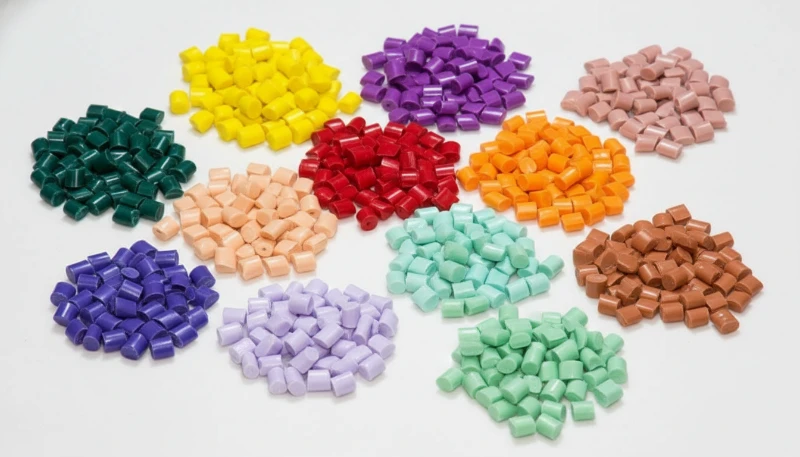
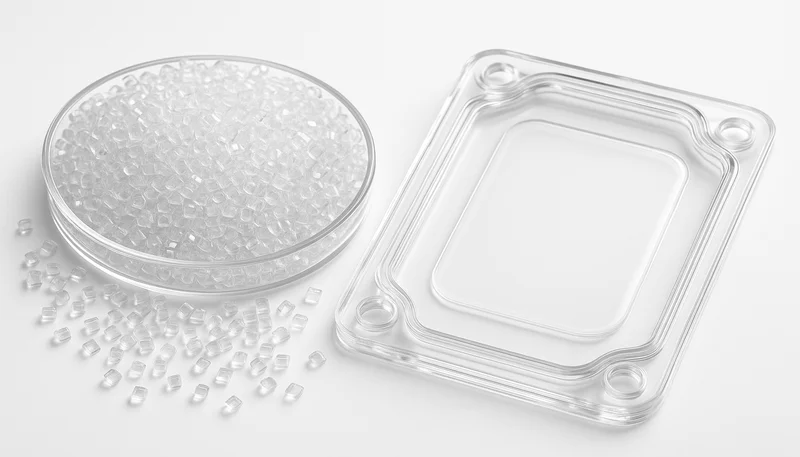
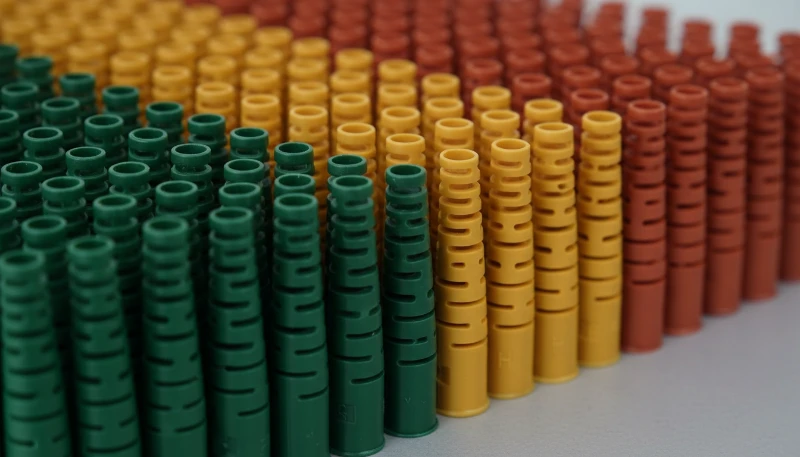
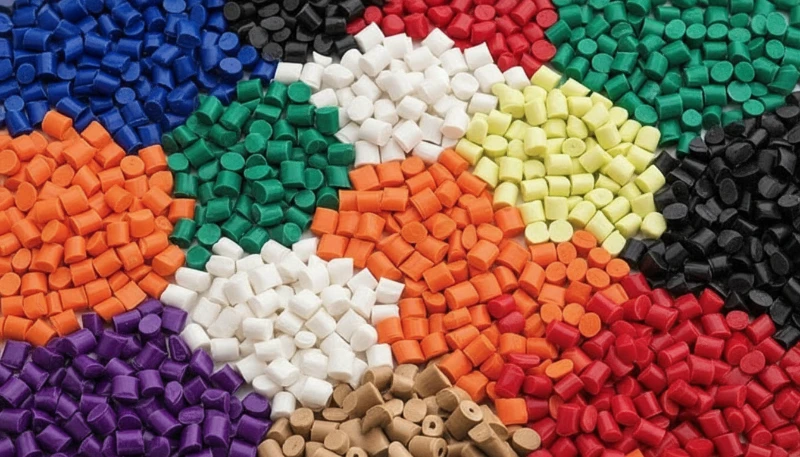
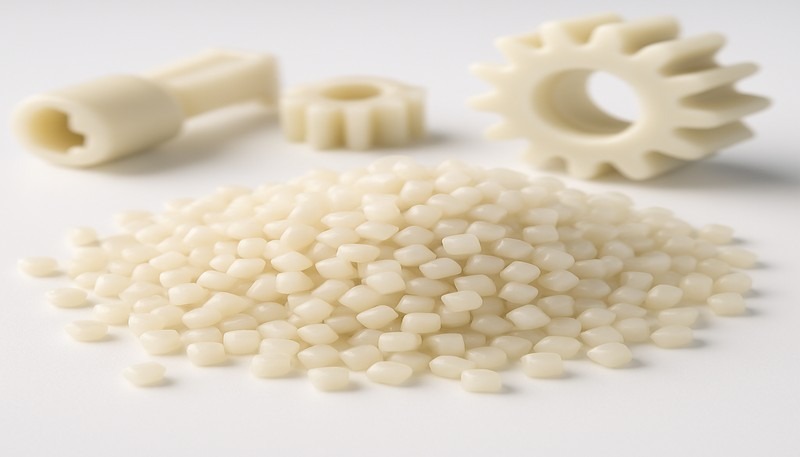
A moldagem por injeção de borracha é um processo de fabricação que aquece borracha crua ou material elastomérico, injeta-o sob pressão em uma cavidade fechada e o cura até formar a peça final. Ao contrário da moldagem por injeção de plástico, em que o material esfria para solidificar, esse processo depende da Vulcanização1 — uma reação química de reticulação acionada pelo calor que fixa permanentemente a forma e as propriedades mecânicas da peça. O resultado é um componente elastomérico preciso e repetível, usado nos setores automotivo, médico, eletrônico e industrial.
Para engenheiros que comparam métodos de moldagem, a injeção de borracha situa-se entre o processamento por molde de injeção de termoplásticos e a moldagem por compressão de borracha: oferece maior precisão dimensional que a compressão, ciclos mais rápidos que a moldagem por transferência e capacidade para geometrias complexas que as alternativas dificilmente reproduzem.
Este contexto inicial é importante porque as peças de borracha são geralmente especificadas para vedação, controlo de vibrações, aderência, isolamento ou flexão repetida, em vez de estrutura dimensional rígida. Antes de escolher o processo, os compradores devem confirmar a família da borracha, o comportamento de cura, o objetivo de tolerância, o volume anual e o risco de falha por rebarbas, cura insuficiente ou ar aprisionado.
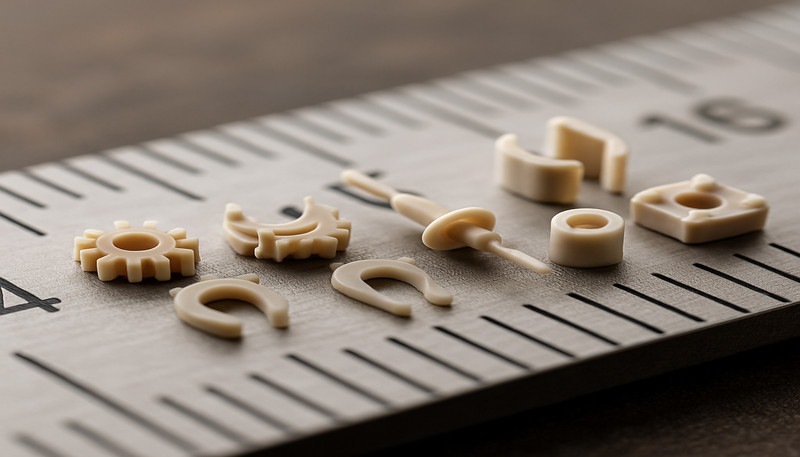
- A moldagem por injeção de borracha utiliza calor e pressão para injetar material elastomérico num molde, curando-o depois através de vulcanização
- Os materiais comuns incluem NR, SBR, EPDM, borracha de silicone e FKM — cada um adequado a diferentes condições operacionais
- Os parâmetros do processo (temperatura, pressão, tempo de cura) determinam diretamente a qualidade da peça, as taxas de defeito e a eficiência do ciclo
- Produz peças de maior precisão do que a moldagem por compressão ou transferência, com melhor repetibilidade para geometrias complexas
- Na nossa fábrica em Xangai, operamos 47 máquinas de moldagem por injeção de 90T a 1850T, suportando uma vasta gama de aplicações em borracha e elastómeros
Como Funciona o Processo de Moldagem por Injeção de Borracha?
Na nossa fábrica de Xangai, operamos sob os sistemas ISO 9001, ISO 13485, ISO 14001 e ISO 45001, com uma instalação interna de fabrico de moldes. Esta configuração integrada permite-nos manter um controlo rigoroso sobre a qualidade e a velocidade de iteração das ferramentas, o que é crucial no desenvolvimento de novos compostos de borracha com comportamentos de cura únicos.
A moldagem por injeção de borracha aquece, injeta e cura a borracha crua para produzir peças de precisão. Diferentemente da moldagem de termoplásticos, em que o material apenas esfria, a borracha exige a cura química (vulcanização) do Elastômero2 cru dentro do molde. Veja a seguir o que realmente acontece no chão de fábrica, etapa por etapa.
Etapa 1: Preparação do material. O composto de borracha crua — normalmente pré-misturado com agentes de cura, cargas e aditivos — alimenta a máquina em tiras ou grânulos. Antes de entrar no cilindro, o material deve estar na temperatura e consistência corretas. Nessa fase, o composto ainda não passou por reticulação.
Etapa 2: Aquecimento e plastificação. Dentro da unidade de injeção, uma rosca giratória empurra a borracha por um cilindro aquecido. A combinação do calor de cisalhamento gerado pela rosca com os aquecedores externos do cilindro leva o material ao estado plastificado — normalmente entre 80 e 120°C, conforme o composto. A borracha agora flui, mas ainda não começou a curar.
"A vulcanização é o que confere às peças de borracha moldadas por injeção a sua forma permanente e as suas propriedades elásticas."True
Sem a reação de reticulação que ocorre durante a vulcanização, a borracha permaneceria termoplástica e deformar-se-ia quando aquecida novamente, perdendo toda a estabilidade dimensional e desempenho mecânico.
"A moldação por injeção de borracha e a moldação por injeção de plástico utilizam o mesmo mecanismo de solidificação."False
Não funcionam da mesma forma. A moldagem por injeção de plástico solidifica as peças através de arrefecimento, enquanto a moldagem por injeção de borracha cura as peças através de uma reação química induzida pelo calor chamada vulcanização, que reticulam permanentemente as cadeias poliméricas.
Etapa 3: Injeção. Depois que uma quantidade suficiente de material se acumula à frente da rosca (o volume da dose), a rosca avança como um êmbolo e injeta a borracha pelo bico e pelo sistema de canais até a cavidade fechada do molde. As pressões de injeção geralmente variam de 500 a 2.000 bar, conforme a viscosidade do material e a geometria da peça.
Etapa 4: Cura (vulcanização). Esta é a diferença fundamental em relação à moldagem por injeção de plástico. O molde, aquecido a 150–200°C, mantém a borracha sob pressão enquanto os agentes de cura promovem a reticulação molecular. O tempo de cura varia de 30 segundos para peças finas de silicone a vários minutos para componentes espessos de borracha de alto desempenho. Acertar esse tempo é o que separa uma peça boa do refugo.
Etapa 5: Desmoldagem. Ao final do ciclo de cura, o molde se abre e a peça acabada é extraída. Pode ser necessário aparar a rebarba, isto é, o excesso de borracha na linha de partição. Depois, o molde é limpo, eventuais insertos são carregados para o próximo ciclo e o processo se repete.
Que Materiais de Borracha São Utilizados na Moldagem por Injeção?
A seleção do material é a decisão mais consequente em qualquer projeto de moldagem por injeção de borracha. O elastómero certo determina se a peça irá sobreviver ao seu ambiente operacional — temperaturas extremas, exposição química, tensão mecânica ou requisitos regulamentares. Aqui estão os cinco materiais de borracha mais comumente moldados por injeção, e onde cada um realmente se destaca.
| Material | Propriedades principais | Aplicações típicas | Faixa de temperatura |
|---|---|---|---|
| Borracha Natural (NR) | Excelente elasticidade, alta resistência à tração, boa resistência à abrasão | Pneus, suportes de motor, amortecedores de vibrações, vedantes | -50°C a 80°C |
| Borracha Estireno-Butadieno (SBR) | Baixo custo, boa resistência à abrasão, resistência química moderada | Pisos de pneus, solas de sapatos, juntas, mangueiras industriais | -40°C a 100°C |
| EPDM | Excelente resistência às intempéries, ao ozono e aos UV; bom isolamento elétrico | Vedantes automotivos, membranas de cobertura, componentes de AVAC | -50°C a 150°C |
| Borracha de Silicone (VMQ) | Amplo intervalo de temperatura, biocompatível, excelentes propriedades eléctricas | Dispositivos médicos, peças para contacto com alimentos, selos electrónicos | -60°C a 230°C |
| Fluoroelastómero (FKM) | Resistência excepcional a químicos, óleo e altas temperaturas | Selos aeronáuticos, componentes de sistemas de combustível, processamento químico | -20°C a 250°C |
A borracha natural continua a ser a escolha preferida para aplicações dinâmicas — peças que flexionam repetidamente — porque nada mais combina a sua resistência à tração e resistência à fadiga. O EPDM domina a vedação ao ar livre e automotiva porque não se degrada sob exposição a UV ou ozono, como a NR faz. A borracha de silicone é a única escolha prática para aplicações médicas e de contacto com alimentos, onde a biocompatibilidade e o desempenho em temperaturas extremas são não negociáveis. O FKM (Viton) é caro, mas quando a sua peça está em combustível de jato a 200°C, não há alternativa mais barata que sobreviva.
Um aspecto prático que os engenheiros frequentemente ignoram é que nem todos esses materiais se comportam da mesma maneira na injetora. A Borracha de Silicone Líquido (LSR)3, por exemplo, é um sistema bicomponente que requer cabeçote de mistura especializado e sistema de câmara fria — um ferramental totalmente diferente do usado em um molde de injeção convencional para NR ou EPDM. Seja na validação de um molde-protótipo ou na ampliação para produção, a qualidade do molde determina diretamente a precisão das peças acabadas. A escolha do material define o investimento em equipamentos, e não o contrário.
Que Equipamento Requer a Moldagem por Injeção de Borracha?
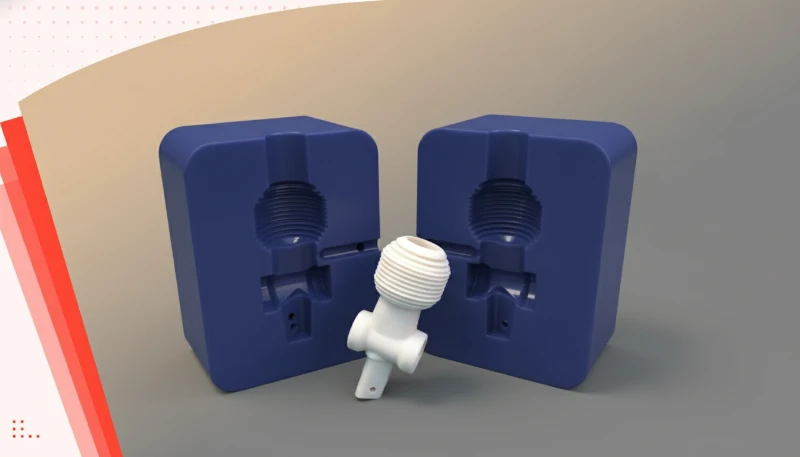
Um sistema de moldagem por injeção de borracha é construído em torno de dois componentes principais: a máquina de injeção e o molde. A máquina trata da preparação do material, injeção e força de clampagem. O molde define a geometria da peça, controla o rebarba e gere a transferência de calor durante a cura. Ambos devem ser adequados ao material e à complexidade da peça.
Tipos de Máquina de Injeção
Na nossa fábrica de Xangai, a nossa equipa mantém uma instalação interna de fabrico de moldes com capacidades de maquinagem CNC, suportando mais de 100 conjuntos de moldes por mês. Ter a ferramentaria no mesmo local que a produção significa que podemos iterar desenhos de moldes em dias, em vez de semanas — uma vantagem prática quando se está a ajustar um novo composto de borracha que se comporta de forma diferente do esperado.
As máquinas horizontais são a base da produção por injeção de borracha. Elas oferecem forças de fechamento maiores, ciclos mais rápidos e integração mais simples com o manuseio automatizado de materiais. A maioria das peças de borracha produzidas em grande volume — vedações, juntas e conectores — é fabricada em máquinas horizontais.
As máquinas para LSR são desenvolvidas especificamente para borracha de silicone líquido. Elas usam um sistema de dois cilindros para manter separados os dois componentes do LSR até que se encontrem em um misturador estático imediatamente antes da injeção. O molde é aquecido, não o cilindro — o inverso da injeção convencional de borracha.
Considerações de Design do Molde
Os moldes de injeção de borracha diferem dos moldes de plástico em várias formas importantes. Primeiro, o molde deve ser aquecido (não refrigerado) para iniciar a vulcanização. Segundo, a borracha flui com viscosidade muito maior que o termoplástico fundido, por isso o design da entrada e o layout dos distribuidores são críticos para evitar falhas de enchimento ou rebarba excessiva. Terceiro, o molde deve acomodar diferenças de expansão térmica entre o aço do molde e o composto de borracha.
Na nossa fábrica de Shanghai, mantemos uma instalação interna de fabricação de moldes com capacidades de maquinagem CNC, suportando mais de 100 conjuntos de moldes por mês. Ter a ferramentaria no mesmo local da produção significa que podemos iterar designs de moldes em dias, não semanas — uma vantagem prática quando estamos ajustando um novo composto de borracha que se comporta de forma diferente do esperado.
Que Parâmetros do Processo Controlam a Qualidade da Moldagem por Injeção de Borracha?
Os quatro parâmetros críticos na moldagem por injeção de borracha são temperatura, pressão, velocidade de injeção e tempo de cura. Não são independentes — alterar um afeta os outros, e encontrar a combinação adequada é um processo iterativo que depende do composto específico de borracha, geometria da peça e design do molde.
| Parâmetro | Faixa típica | Efeito na Qualidade da Peça |
|---|---|---|
| Temperatura do barril | 80–120°C | Muito baixa: o material não flui uniformemente. Muito alta: cura prematura (queima) no cilindro |
| Temperatura do molde | 150–200°C | Impulsiona a velocidade de vulcanização. Temperaturas mais altas reduzem o tempo de cura, mas arriscam rebarbas e ar aprisionado |
| Pressão de injeção | 500–2,000 bar | Deve superar a viscosidade do material e a resistência do canal. Pressão insuficiente causa peças incompletas |
| Tempo de cura | 30s – 10 min | Cura insuficiente: propriedades mecânicas pobres. Cura excessiva: degradação, fragilidade, alteração dimensional |
| Velocidade de injeção | 10–200 mm/s | Injeção rápida reduz defeitos relacionados à viscosidade, mas pode aprisionar ar. Injeção lenta melhora o acabamento superficial |
O problema de qualidade mais comum na moldagem por injeção de borracha não é cura insuficiente — é cura excessiva. Os engenheiros tendem a adicionar margem de segurança ao tempo de cura, mas cura excessiva degrada propriedades mecânicas e aumenta custo do ciclo. Na prática, determinamos o tempo de cura ideal executando injeções sucessivas com tempos decrescentes até ver os primeiros sinais de enchimento insuficiente ou baixa dureza, depois adicionamos uma margem de 10–15%.
Como se Compara a Moldagem por Injeção de Borracha com Outros Métodos?
A moldagem por injeção de borracha não é o único método para produzir peças elastoméricas. A moldagem por compressão, a moldagem por transferência e a injeção de silicone líquido (LSR) têm cada uma trade-offs distintos em custo de ferramentas, tempo de ciclo, precisão da peça e adequação do material.
| Método | Custo das ferramentas | Tempo de ciclo | Precisão da Peça | Melhor para |
|---|---|---|---|---|
| Moldagem por injeção | Elevado | Rápido (30s–3min) | Alta (±0,05–0,1mm) | Geometrias complexas, alto volume, tolerâncias estreitas |
| Moldagem por compressão | Baixo–Médio | Lento (3–10min) | Médio (±0.2–0.5mm) | Formas simples, peças grandes, baixo volume, prototipagem |
| Moldagem por Transferência | Médio | Médio (1–5min) | Médio-Alto | Peças com inserções, complexidade moderada |
| Injeção de LSR | Elevado | Rápido (20–60s) | Muito Alta (±0,02–0,05mm) | Médica, contacto alimentar, micropartes, alta precisão |
A decisão se resume a três fatores: complexidade da geometria da peça, volume de produção e requisitos de tolerância dimensional. Para juntas simples em baixo volume, a moldagem por compressão é economicamente superior, pois o ferramental custa uma fração de um molde de injeção. Porém, para peças com rebaixos, paredes finas, tolerâncias posicionais rigorosas ou volumes anuais acima de 10.000 unidades, a moldagem por injeção oferece menor custo unitário apesar do investimento inicial maior. Cada método tem um perfil próprio de risco para defeitos comuns — rebarbas nas linhas de partição, marcas de queimadura causadas por ar aprisionado e preenchimento incompleto da cavidade — e compreender esses modos de falha antes de escolher o processo evita retrabalho caro.
Quais São os Defeitos Comuns e Como Evitá-los?
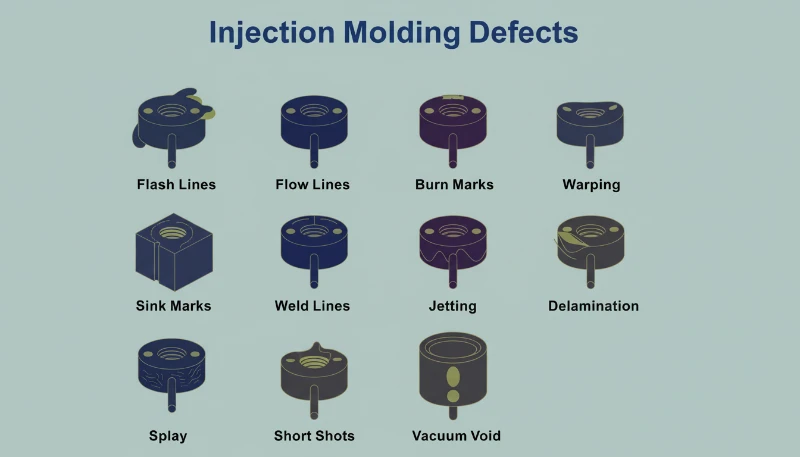
Os defeitos na moldagem por injeção de borracha são causados principalmente por deriva na condição do material, estado do molde ou calibração da máquina. Os problemas mais frequentes são rebarbas, peças incompletas, porosidade e sub-cura, e compreender as suas causas raiz é essencial para manter o rendimento da produção acima de 95%.
| Defeito | Causa raiz | Método de prevenção |
|---|---|---|
| Rebarba | Pressão de injeção excessiva ou linha de separação do molde desgastada | Reduzir a pressão, manter as superfícies do molde, usar moldagem assistida a vácuo |
| Tiro curto | Material insuficiente ou cura prematura no canal de distribuição | Aumentar o tamanho do disparo, elevar a temperatura do cilindro, otimizar o desenho do canal de alimentação |
| Porosidade / Bolhas | Ar ou humidade retidos no composto | Pré-secar o material, usar desgaseificação a vácuo, reduzir a velocidade de injeção |
| Subcura | Tempo de cura insuficiente ou temperatura do molde baixa | Prolongar o tempo de cura, verificar a calibração do termopar do molde |
| Sobrecura (Fragilidade) | Tempo ou temperatura de cura excessivos | Reduzir o tempo de cura, verificar a uniformidade da temperatura do molde |
| Repetibilidade Dimensional Deficiente | Volume de injeção inconsistente ou variação da temperatura do molde | Calibrar o controlo do disparo, instalar aquecimento do molde multi-zona |
O rebarbado é o defeito que vemos com mais frequência na produção — e é quase sempre um problema de manutenção do molde, não um problema do processo. Quando a linha de separação do molde desgasta, a borracha espreme através do intervalo, independentemente do cuidado com que se define a pressão de injeção. A solução é preventiva: programe a recondicionamento do molde antes que o rebarbado se torne visível, não depois. Um molde bem mantido produz peças consistentemente sem rebarbado durante dezenas de milhares de ciclos.
"A manutenção do molde é a forma mais económica de evitar rebarbas na moldação por injeção de borracha."True
A limpeza e recondicionamento regulares das superfícies da linha de separação previnem o desgaste gradual que permite ao material escapar através do fecho do molde. Um molde bem mantido produz peças consistentemente sem rebarbado durante dezenas de milhares de ciclos.
"Uma temperatura do molde mais elevada produz sempre melhores peças de borracha moldadas por injeção."False
Uma temperatura do molde mais elevada acelera a vulcanização e pode melhorar o fluxo, mas temperatura excessiva causa degradação do material, rebarbas, ar retido e vida útil mais curta do molde. A temperatura ótima depende do composto de borracha específico e da geometria da peça.
Na nossa fábrica em Xangai, operamos 47 máquinas de moldagem por injeção de 90T a 1850T, suportadas por mais de 20 anos de experiência em moldagem por injeção e ferramental em mais de 400 materiais plásticos e elastoméricos. Esta gama de máquinas permite-nos moldar desde micropartes médicas de silicone em prensas de baixa tonelagem até grandes componentes de borracha automotivos em máquinas de alta força de fecho.
Que Indústrias Utilizam a Moldagem por Injeção de Borracha?
A moldação por injeção de borracha serve praticamente todas as indústrias que necessitam de componentes elastoméricos — ou seja, a maioria. A flexibilidade na escolha do material, aliada à capacidade do processo para produzir geometrias complexas em grande volume, faz deste o método de produção habitual de peças de borracha nestes setores essenciais.
Automotivo: Vedações, juntas, coxins de motor, amortecedores de vibração, capas de conectores e guarnições. O setor automotivo consome mais peças de borracha moldadas por injeção do que qualquer outro, impulsionado pela necessidade de qualidade constante em grandes volumes. Os veículos modernos contêm mais de 100 componentes individuais de borracha moldados por injeção.
Médico: Empunhaduras de instrumentos cirúrgicos, componentes de válvulas, vedações para dispositivos de administração de medicamentos e cabos sobremoldados com LSR. As aplicações médicas exigem materiais biocompatíveis (normalmente silicone ou EPDM de grau médico), produção em sala limpa e rastreabilidade documental, fatores que elevam o custo, mas são indispensáveis para a conformidade regulatória.
Eletrônico: Teclados, vedações de conectores, ilhós e capas protetoras. Os eletrônicos de consumo usam cada vez mais peças personalizadas de silicone moldadas por injeção para impermeabilização e absorção de impactos — como vedações à prova d’água de celulares e membranas de teclado de notebooks.
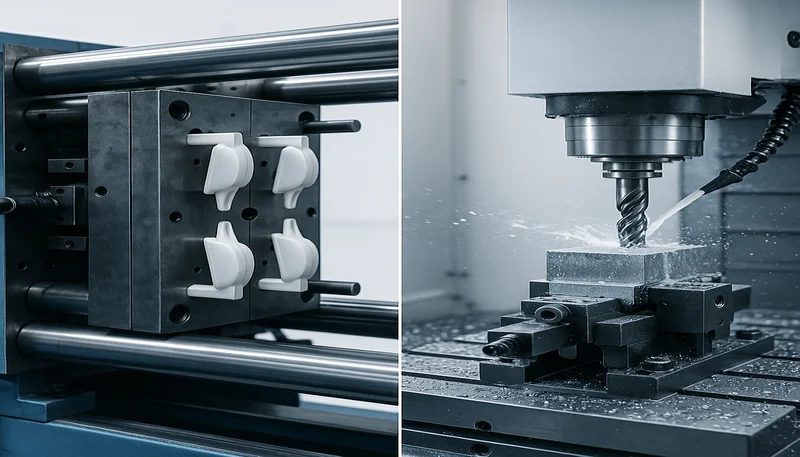
Industrial: Vedações hidráulicas, diafragmas de bombas, componentes de correias transportadoras e juntas personalizadas. As peças industriais de borracha muitas vezes enfrentam as condições operacionais mais severas — exposição química, meios abrasivos e temperaturas extremas —, por isso a seleção do material e a formulação do composto são decisivas para a vida útil. Quando as peças exigem tolerâncias rigorosas e o volume supera algumas centenas de unidades, a moldagem por injeção costuma superar diretamente a usinagem CNC, pois a vantagem de custo por peça cresce com a escala.
Como Projetar Peças para Moldagem por Injeção de Borracha?
Um bom desenho de peça de borracha não se trata apenas de fazer a geometria funcionar — trata-se de tornar a geometria fabricável. A borracha comporta-se de forma muito diferente dos plásticos rígidos durante a moldagem, e as decisões de desenho que mais importam são as que afetam o fluxo do material, a evacuação do ar e a desmoldagem.
Espessura da parede. Mantenha as paredes tão uniformes quanto possível. Seções espessas curam mais devagar, pois a borracha é um isolante térmico, criando uma densidade de reticulação irregular. Quando uma seção espessa for inevitável, projete a peça para que o tempo de cura seja determinado por essa seção e aceite o ciclo mais longo. As transições entre seções espessas e finas devem ter raios generosos, não degraus abruptos.
Ângulos de saída. Ao contrário das peças de plástico rígido, muitas peças de borracha podem ser desmoldadas sem ângulo de saída porque o material flexiona durante a extração. Porém, em peças com núcleos profundos ou elementos muito ajustados, um ângulo de 0,5–1° por lado evita rasgos durante a extração.
Rebaixos. A flexibilidade da borracha permite moldar rebaixos que seriam impossíveis em plástico rígido. Rebaixos pequenos, de até 5% da espessura da parede, podem ser retirados do molde sem ação mecânica. Rebaixos maiores exigem moldes com cavidade bipartida ou núcleo colapsável, o que aumenta consideravelmente o custo do ferramental.
Rasgos e rebarbas. A regra de projeto mais importante é evitar cantos internos vivos. Todo canto interno deve ter raio mínimo de 0,5 mm. Cantos vivos concentram tensões durante a desmoldagem e o uso, dando início a rasgos. A rebarba é controlada no molde, mas a posição da linha de partição no projeto determina onde aparecerá qualquer resíduo; coloque-a em uma área discreta.
O Que Reserva o Futuro para a Moldagem por Injeção de Borracha?
A indústria de moldagem por injeção de borracha está a evoluir em três vetores: controlo de processo mais inteligente, materiais sustentáveis e maior precisão.
Indústria 4.0 e monitoramento do processo. As injetoras modernas de borracha incorporam sensores de pressão da cavidade em tempo real, mapeamento infravermelho da temperatura do molde e previsão da cura baseada em IA. Esses sistemas não substituem a experiência do operador — eles a ampliam. O benefício prático é detectar mais cedo os desvios do processo, antes que peças defeituosas cheguem à inspeção. Em ambientes de produção com grande variedade, que processam compostos diferentes na mesma máquina ao longo dos turnos, esse monitoramento reduz o refugo de preparação em 30–50%.
Elastômeros sustentáveis. EPDM de origem biológica, compostos de borracha reciclada e vulcanizados termoplásticos (TPVs) estão ganhando espaço, sobretudo em aplicações automotivas nas quais os fabricantes enfrentam exigências de sustentabilidade cada vez mais rigorosas. Se você está avaliando fornecedores para moldagem sustentável de borracha, nosso guia para selecionar fornecedores de moldagem por injeção aborda a preparação da RFQ e a qualificação.
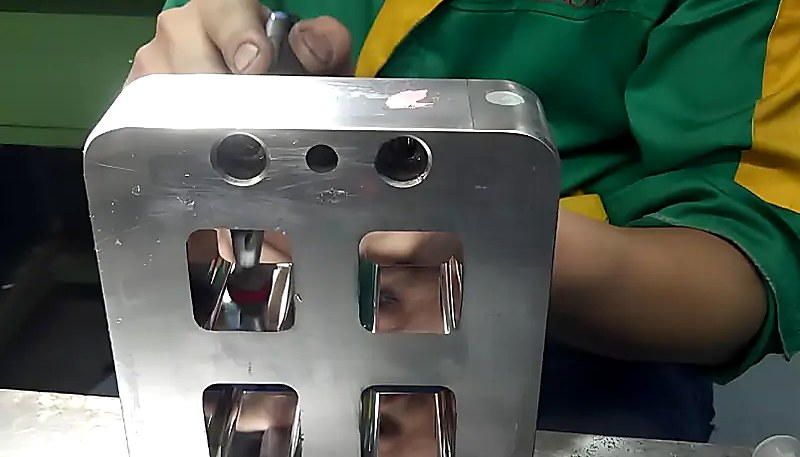
Micromoldagem e LSR. O segmento de crescimento mais rápido na moldagem por injeção de borracha é o de borracha de silicone líquido (LSR) para microcomponentes de dispositivos médicos e eletrônicos. A micromoldagem de LSR produz detalhes de até 0,1 mm com tolerâncias de ±0,02 mm — capacidades que há cinco anos eram curiosidades de laboratório e hoje são realidade industrial. Essa tendência é impulsionada pela miniaturização dos dispositivos médicos vestíveis e dos eletrônicos de consumo.
Quais são as Perguntas Frequentes sobre Moldagem por Injeção de Borracha?
Perguntas mais frequentes
Qual é a diferença entre a moldagem por injeção de borracha e a moldagem por injeção de plástico?
A maioria dos elastómeros pode ser moldada por injeção, mas a adequação do processo varia significativamente consoante o tipo de material. NR, SBR, EPDM e NBR são facilmente moldáveis em máquinas de injeção de borracha padrão com configurações convencionais de parafuso e cilindro. A borracha de silicone e o LSR requerem equipamento especializado com cabeças de mistura de cilindro duplo e sistemas de canal frio que mantêm o material líquido até entrar no molde aquecido. O FKM (Viton) é moldável, mas requer componentes de cilindro e parafuso resistentes à corrosão devido à sua química agressiva de flúor a temperaturas de processamento acima de 160°C. A seleção de material deve sempre ter em conta a disponibilidade do equipamento, e não apenas os requisitos de desempenho da peça.
Todos os tipos de borracha podem ser moldados por injecção?
O custo do molde varia de 5.000 USD para um molde de compressão simples de cavidade única a 50.000 USD ou mais para um molde de injeção multi-cavidade com características complexas, placas deslizantes ou capacidade de carregamento de insertos. O custo é determinado principalmente pelo número de cavidades, pela complexidade geométrica da peça, pela seleção do material do molde (como aço-ferramenta temperado versus alumínio para ferramentas de produção curta) e pelo volume de produção esperado. Moldes de maior volume justificam graus de aço mais duros, como H13 ou S136, que mantêm a precisão dimensional ao longo de milhões de ciclos. Para orçamentação, planeie 15 a 25% do custo do molde anualmente para manutenção, incluindo o recondicionamento da linha de separação e a substituição dos pinos ejetores.
Quanto custa um molde de injecção de borracha?
O tempo de ciclo na moldagem por injecção de borracha é dominado pelo tempo de cura, que varia de 30 segundos para peças finas de silicone a 10 minutos para componentes de borracha de alto desempenho de secção grossa, como apoios de motor. As peças de produção típicas situam-se na gama de 1 a 3 minutos, dependendo da espessura da parede e da formulação do composto. Ao contrário da moldagem por injecção de plástico, onde o tempo de arrefecimento pode ser reduzido com canais de arrefecimento conformes, o tempo de cura da borracha é fundamentalmente limitado pela cinética de vulcanização do composto específico. Secções mais grossas requerem tempos de cura exponencialmente mais longos porque a borracha age como isolante térmico, o que significa que o calor deve penetrar desde a superfície do molde até ao centro da peça para alcançar densidade de ligação cruzada total em toda a sua espessura.
Qual é o tempo de ciclo típico para a moldagem por injecção de borracha?
A moldagem por injeção de borracha geralmente não é rentável para prototipagem devido ao elevado investimento inicial em ferramentas, que só faz sentido quando amortizado em volumes de produção de 1.000 unidades ou mais. Para prototipagem de peças elastoméricas, moldes de silicone impressos em 3D, uretano fundido ou moldagem por compressão com ferramentas de alumínio macio são alternativas muito mais práticas e económicas. Estes métodos podem entregar peças protótipo em dias, em vez das semanas necessárias para a ferramentagem de moldagem por injeção de produção. A moldagem por injeção torna-se economicamente justificada assim que o design é congelado e as quantidades de produção justificam a despesa de capital, onde a amortização da ferramenta por peça fica bem abaixo de métodos de fabrico alternativos.
A moldagem por injecção de borracha é adequada para prototipagem?
A moldagem por injeção de borracha padrão atinge tolerâncias de mais ou menos 0,05 a 0,1 mm para peças compactas de geometria simples. A micro-moldagem de LSR pode atingir mais ou menos 0,02 mm para características inferiores a 5 mm. No entanto, as tolerâncias da borracha são inerentemente menos precisas do que as dos plásticos rígidos porque os elastómeros encolhem, deformam-se e relaxam após a desmoldagem. As características de tolerância crítica devem ser projetadas tendo em conta este comportamento viscoelástico, evitando tolerâncias apertadas em paredes finas ou características flexíveis que se deformam sob a força de contacto da medição. Para inspeção dimensional de peças de borracha, utilize sistemas de medição ótica ou sem contacto para evitar erros sistemáticos introduzidos pelo contacto da sonda em superfícies flexíveis.
Que tolerâncias pode atingir a moldagem por injecção de borracha?
A moldagem por injecção de borracha padrão atinge tolerâncias de mais ou menos 0,05 a 0,1mm para peças compactas de geometria simples. A micro-moldagem LSR pode atingir mais ou menos 0,02mm para características com menos de 5mm. No entanto, as tolerâncias da borracha são inerentemente menos precisas do que as dos plásticos rígidos porque os elastómeros encolhem e relaxam após a desmoldagem. As características com tolerâncias críticas devem ser desenhadas tendo este comportamento em mente, evitando tolerâncias apertadas em paredes finas ou características flexíveis que se deformam sob a força de contacto da medição. Para inspecção de peças de borracha utilize sistemas de medição ópticos ou sem contacto para evitar erro sistemático do contacto da sonda em superfícies flexíveis.
Como se evita o rebarbado (flash) na moldagem por injecção de borracha?
A prevenção do rebarbado (flash) requer três coisas: construção precisa do molde com folgas da linha de separação inferiores a 0,02 mm, força de fecho adequada para manter o molde fechado contra a pressão de injecção, e pressão de injecção controlada que enche a cavidade sem forçar material para a linha de separação. A manutenção regular do molde é a estratégia de prevenção mais rentável, ou seja, limpeza e recondicionamento programados das superfícies da linha de separação para prevenir o desgaste gradual que permite o desenvolvimento de rebarbado. A moldagem assistida a vácuo reduz ainda mais o rebarbado ao evacuar o ar antes da injecção, diminuindo o diferencial de pressão que impele o material para as folgas da linha de separação.
Precisa de peças personalizadas de borracha moldadas por injeção? Obtenha preços competitivos, feedback de DFM e um cronograma de produção com nossa equipe de engenharia. Com mais de 20 anos de experiência, 47 máquinas de 90T a 1850T e mais de 400 materiais processados, cuidamos de tudo, desde ferramental para protótipos até produção em grande volume. Consulte nosso guia para selecionar fornecedores de moldagem por injeção para encontrar o parceiro de fabricação certo ou explore nosso guia completo de moldagem por injeção para ter uma visão abrangente.
Vulcanização: este termo designa um processo químico em que a borracha é endurecida pela adição de enxofre ou outros agentes de cura sob calor, passando do estado plástico ao elástico. ↩
Elastômero: Polímero com viscoelasticidade, ou seja, capaz de se alongar consideravelmente e retornar à forma original, muito usado em vedações, juntas e componentes flexíveis. ↩
Borracha de Silicone Líquido (LSR): Elastômero líquido bicomponente curado com platina, amplamente utilizado na moldagem por injeção de produtos médicos, automotivos e de consumo que exigem alta precisão. ↩