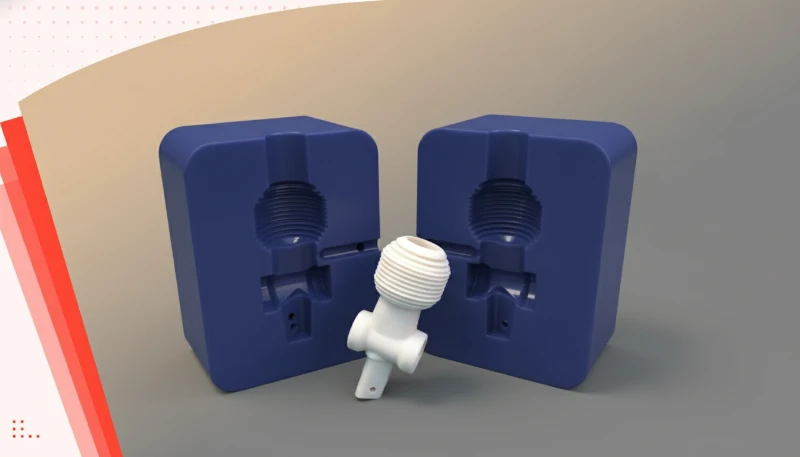
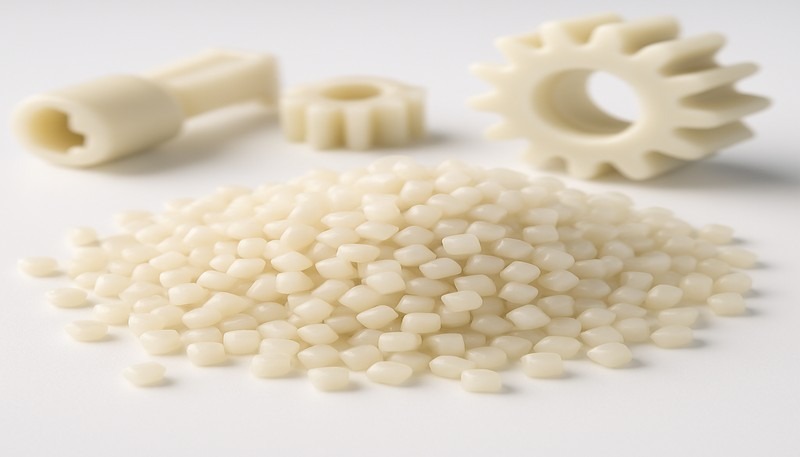
ゴム射出成形は、生ゴムやエラストマー材料を加熱し、圧力をかけて密閉された金型キャビティに注入し、完成品に硬化させる製造プロセスです。プラスチックとは異なり、 射出成形材料が冷却して固化する場所では、ゴム射出成形は 加硫1 — 熱によって駆動される化学的な架橋反応であり、部品の形状と機械的特性を永久的に固定します。結果として、自動車、医療、電子機器、産業用途などで使用される高精度で繰り返し可能なエラストマー部品が得られます。
成形方法を比較するエンジニアにとって、ゴム射出成形は、 射出成形金型 熱可塑性プラスチックの加工やゴムの圧縮成形とは異なり、圧縮成形よりも寸法精度が高く、トランスファー成形よりもサイクルタイムが短く、他の方法では容易に対応できない複雑な形状を扱う能力を提供します。
この初期の文脈は重要です。なぜなら、ゴム部品は通常、密封、振動制御、グリップ、絶縁、または繰り返し屈曲のために指定されるため、剛性のある寸法構造ではありません。プロセスを選択する前に、購入者はゴムの種類、硬化特性、公差目標、年間生産量、およびフラッシュ、未硬化、または閉じ込められた空気の故障リスクを確認する必要があります。
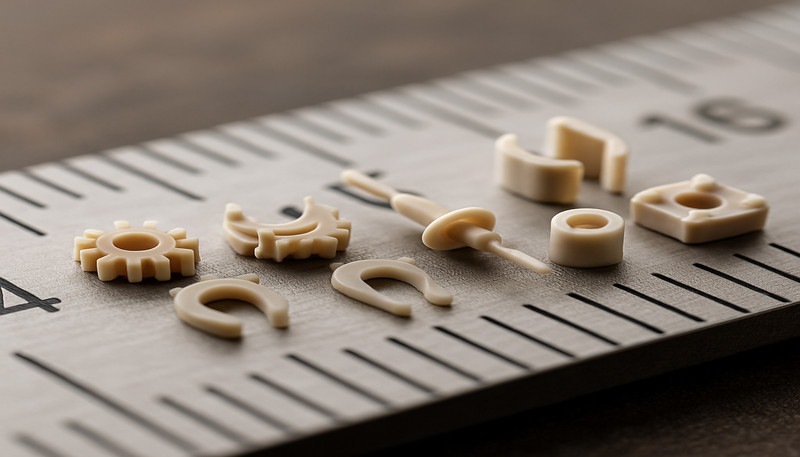
- ゴム射出成形では、熱と圧力を使ってエラストマー材料を金型に注入し、その後加硫によって硬化させます
- 一般的な材料にはNR、SBR、EPDM、シリコンゴム、FKMがあり、それぞれ異なる使用条件に適しています
- プロセスパラメータ(温度、圧力、硬化時間)は、部品品質、不良率、サイクル効率を直接決定します
- 圧縮成形やトランスファー成形よりも高精度の部品を生産し、複雑な形状に対してより優れた再現性を提供します
- 当社の上海工場では、90トンから1850トンまでの47台の射出成形機を稼働しており、多様なゴムおよびエラストマー用途をサポートしています。
ゴム射出成形プロセスはどのように機能しますか?
ゴム射出成形は、生ゴムを加熱、射出、硬化させて精密部品を製造するプロセスです。材料が単に冷却される熱可塑性成形とは異なり、ゴムは生 Elastomer2 金型内部で。生産現場で実際に起こることをステップごとに分解して説明します。
Step 1: Material Preparation. 生ゴムコンパウンド — 通常は加硫剤、充填剤、添加剤が予め混合されています — は、ストリップまたはペレットの形で機械に供給されます。材料はバレルに入る前に適切な温度と一貫性を持っている必要があります。この段階では、コンパウンドはまだ架橋を受けていません。
ステップ2:加熱と可塑化。 射出ユニット内では、回転するスクリューがゴムを加熱されたバレルを通して前方に押し出します。スクリューからの剪断熱と外部バレルヒーターの組み合わせにより、材料は可塑化状態(通常はコンパウンドに応じて80〜120°C)に加熱されます。ゴムは流動性を持ちますが、まだ硬化はしていません。
「加硫は、ゴム射出成形部品に永久的な形状と弾性特性を与えるものです。」真
加硫時に起こる架橋反応がない場合、ゴムは熱可塑性を保ち、再び加熱すると変形し、すべての寸法安定性と機械的性能を失います。
「ゴム射出成形とプラスチック射出成形は、同じ固化メカニズムを使用しています。」偽
それらは異なります。プラスチック射出成形は冷却によって部品を固化させますが、ゴム射出成形は加硫と呼ばれる熱駆動の化学反応によって部品を硬化させます。これはポリマー鎖を永久的に架橋します。
Step 3: Injection. スクリューの前方に十分な材料(ショットサイズ)が蓄積されると、スクリューはプランジャーとして前進し、ゴムをノズルおよびランナーシステムを通じて閉じた金型キャビティに射出します。射出圧力は通常、材料の粘度と部品形状に応じて500〜2,000 barの範囲です。
ステップ4:硬化(加硫)。 これがプラスチック射出成形との決定的な違いです。150〜200°Cに加熱された金型は、加硫剤が分子レベルで架橋を引き起こす間、ゴムを圧力下で保持します。硬化時間は、薄いシリコン部品の場合は30秒から、厚い高性能ゴム部品の場合は数分までさまざまです。このタイミングを正確にすることが、良品と不良品の違いを生みます。
ステップ5:脱型 硬化サイクルが完了した後、金型が開き、完成した部品が排出されます。フラッシュ(金型の合わせ面での余分なゴム)はトリミングが必要かもしれません。その後、金型は清掃され、次のサイクル用のインサートが装填され、プロセスが繰り返されます。
射出成形ではどのようなゴム材料が使用されますか?
材料選択は、ゴム射出成形プロジェクトにおいて最も重要な決定です。適切なエラストマーは、部品が使用環境(極端な温度、化学物質への曝露、機械的ストレス、または規制要件)を生き残るかどうかを決定します。以下は、最も一般的に射出成形される5つのゴム材料と、それぞれが実際に優れている分野です。
| 素材 | 主要物件 | 代表的なアプリケーション | Temperature Range |
|---|---|---|---|
| 天然ゴム(NR) | 優れた弾性、高い引張強度、良好な耐磨耗性 | タイヤ、エンジンマウント、防振ダンパー、シール | -50°C から 80°C |
| スチレン・ブタジエンゴム(SBR) | 低コスト、良好な耐摩耗性、中程度の耐化学性 | タイヤトレッド、靴底、ガスケット、工業用ホース | -40°Cから100°C |
| EPDM | 優れた耐候性、耐オゾン性、耐紫外線性;良好な電気絶縁性 | 自動車用シール、屋根用防水シート、HVAC部品 | -50°C から 150°C |
| Silicone Rubber (VMQ) | Wide temperature range, biocompatible, excellent electrical properties | Medical devices, food-contact parts, electronics seals | -60°C to 230°C |
| Fluoroelastomer (FKM) | Exceptional chemical, oil, and high-temperature resistance | Aerospace seals, fuel system components, chemical processing | -20°C to 250°C |
Natural rubber remains the go-to for dynamic applications — parts that flex repeatedly — because nothing else matches its combination of tensile strength and fatigue resistance. EPDM dominates outdoor and automotive sealing because it does not degrade under UV or ozone exposure the way NR does. Silicone rubber is the only practical choice for medical and food-contact applications where biocompatibility and extreme temperature performance are non-negotiable. FKM (Viton) is expensive, but when your part sits in jet fuel at 200°C, there is no cheaper alternative that survives.
One practical consideration that engineers often overlook: not all of these materials behave the same way in the injection molding machine. 液状シリコーンゴム(LSR)3, for instance, is a two-component system that requires a specialized mixing head and cold-runner system — completely different tooling from a standard NR or EPDM injection mold. Whether you are validating a prototype mold or scaling to production, the mold quality directly determines the precision of the finished parts. Material choice drives equipment investment, not the other way around.

ゴム射出成形にはどのような設備が必要ですか?
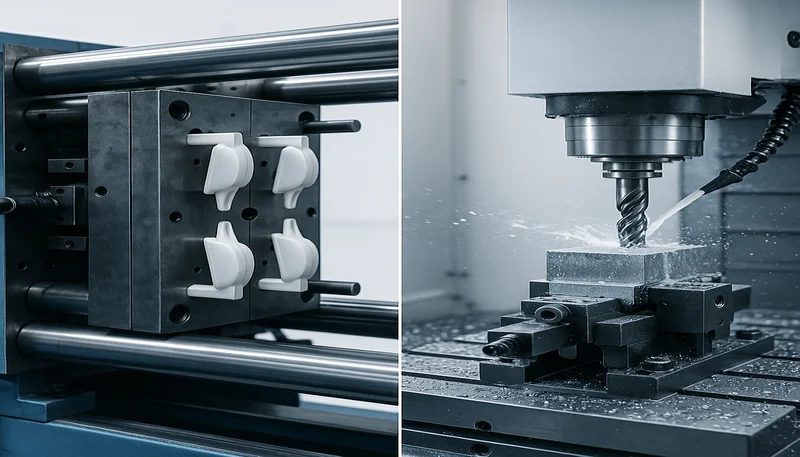
A rubber injection molding system is built around two core components: the injection machine and the mold. The machine handles material preparation, injection, and clamp force. The mold defines part geometry, controls flash, and manages heat transfer during cure. Both must be matched to the material and part complexity.
Injection Machine Types
Vertical machines are preferred for insert molding — where a metal or plastic component is loaded into the mold before rubber injection. The vertical orientation lets gravity hold the insert in place, reducing fixture complexity. They are also common for multi-material and multi-color molding.
Horizontal machines are the workhorse of rubber injection molding production. They offer higher clamp forces, faster cycle times, and easier integration with automated material handling. Most high-volume rubber parts — seals, gaskets, connectors — run on horizontal machines.
LSR machines are purpose-built for liquid silicone rubber. They use a dual-barrel system to keep the two LSR components separate until they meet at a static mixer immediately before injection. The mold is heated, not the barrel — the reverse of conventional rubber injection.
Mold Design Considerations
Rubber injection molds differ from plastic molds in several important ways. First, the mold must be heated (not cooled) to initiate vulcanization. Second, rubber flows at much higher viscosity than thermoplastic melt, so gate design and runner layout are critical to prevent short shots or excessive flash. Third, the mold must accommodate thermal expansion differences between the mold steel and the rubber compound.
In our Shanghai factory, we maintain an in-house mold manufacturing facility with CNC machining capabilities, supporting 100+ mold sets per month. Having tooling under the same roof as production means we can iterate mold designs within days rather than weeks — a practical advantage when you are dialing in a new rubber compound that behaves differently than expected.
ゴム射出成形の品質を制御するプロセスパラメータは何ですか?
The four critical parameters in rubber injection molding are temperature, pressure, injection speed, and cure time. These are not independent — changing one affects the others, and finding the right combination is an iterative process that depends on the specific rubber compound, part geometry, and mold design.
| パラメータ | Typical Range | Effect on Part Quality |
|---|---|---|
| バレル温度 | 80–120°C | Too low: material does not flow uniformly. Too high: premature cure (scorch) in the barrel |
| 金型温度 | 150–200°C | Drives vulcanization speed. Higher temps reduce cure time but risk flash and trapped air |
| 射出圧力 | 500–2,000 bar | Must overcome material viscosity and runner resistance. Insufficient pressure causes short shots |
| キュアタイム | 30s – 10 min | Undercure: poor mechanical properties. Overcure: degradation, brittleness, dimensional shift |
| 射出速度 | 10–200 mm/s | Fast fill reduces viscosity-related defects but can trap air. Slow fill improves surface finish |
The most common quality problem in rubber injection molding is not undercure — it is overcure. Engineers tend to add safety margin to cure time, but excessive cure degrades mechanical properties and increases cycle cost. In practice, we determine optimal cure time by running successive shots at decreasing times until we see the first signs of underfill or low hardness, then add 10–15% margin.
ゴム射出成形は他の方法と比較してどうですか?
Rubber injection molding is not the only way to make elastomeric parts. Compression molding, transfer molding, and liquid silicone rubber (LSR) injection each have distinct trade-offs in tooling cost, cycle time, part precision, and material suitability.
| Method | 金型費用 | サイクルタイム | Part Precision | 最適 |
|---|---|---|---|---|
| 射出成形 | 高い | Fast (30s–3min) | High (±0.05–0.1mm) | Complex geometries, high volume, tight tolerances |
| 圧縮成形 | Low–Medium | Slow (3–10min) | Medium (±0.2–0.5mm) | Simple shapes, large parts, low volume, prototyping |
| Transfer Molding | ミディアム | Medium (1–5min) | ミディアム-ハイ | Parts with inserts, moderate complexity |
| LSR Injection | 高い | Fast (20–60s) | Very High (±0.02–0.05mm) | Medical, food-contact, micro parts, high precision |
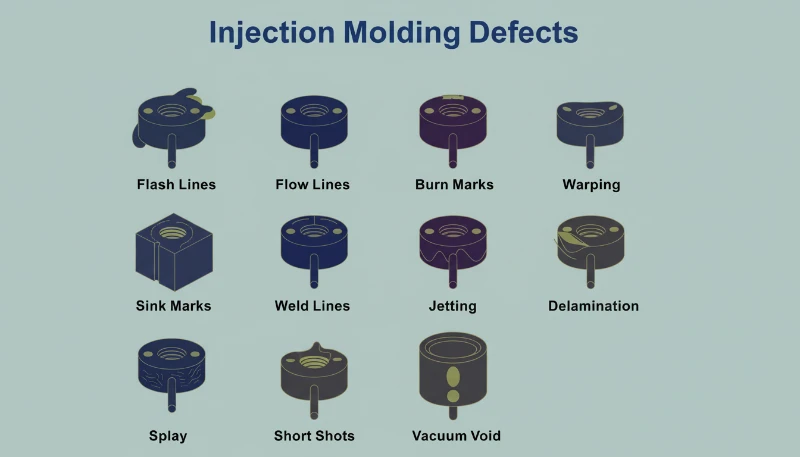
The decision comes down to three factors: part geometry complexity, production volume, and dimensional tolerance requirements. For simple gaskets at low volume, compression molding is economically superior — the tooling costs a fraction of an injection mold. But for anything with undercuts, thin walls, tight positional tolerances, or annual volumes above 10,000 units, injection molding delivers lower per-part cost despite the higher initial tooling investment. Each method has its own risk profile for common defects - フラッシュ along parting lines, 火傷の跡 from trapped air, short shots from inadequate cavity fill — and understanding these failure modes before committing to a process prevents expensive rework.

一般的な欠陥は何ですか?また、どのように防止しますか?
Rubber injection molding defects are primarily caused by drift in material condition, mold state, or machine calibration. The most frequent issues are flash, short shots, porosity, and under-cure, and understanding their root causes is essential for keeping production yield above 95%.
| 欠陥 | Root Cause | Prevention Method |
|---|---|---|
| フラッシュ | Excessive injection pressure or worn mold parting line | Reduce pressure, maintain mold surfaces, use vacuum-assisted molding |
| ショートショット | Insufficient material or premature cure in runner | Increase shot size, raise barrel temperature, optimize runner design |
| Porosity / Bubbles | Trapped air or moisture in compound | Pre-dry material, use vacuum degassing, reduce injection speed |
| Undercure | Insufficient cure time or low mold temperature | Extend cure time, verify mold thermocouple calibration |
| Overcure (Brittleness) | Excessive cure time or temperature | Reduce cure time, verify mold temperature uniformity |
| Poor Dimensional Repeatability | Inconsistent shot volume or mold temperature variation | Calibrate shot control, install multi-zone mold heating |
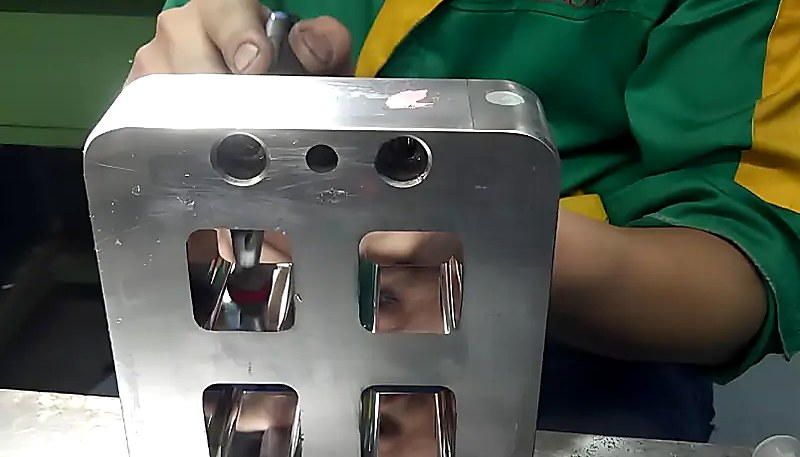
Flash is the defect we see most often in production — and it is almost always a mold maintenance issue, not a process problem. When the mold parting line wears, rubber squeezes through the gap regardless of how carefully you set injection pressure. The fix is preventive: schedule mold refurbishing before flash becomes visible, not after. A well-maintained mold produces consistently flash-free parts for tens of thousands of cycles.
“Mold maintenance is the most cost-effective way to prevent flash in rubber injection molding.”真
Regular cleaning and reconditioning of parting line surfaces prevents the gradual wear that allows material to escape through the mold closure. A well-maintained mold produces consistently flash-free parts for tens of thousands of cycles.
“Higher mold temperature always produces better rubber injection molded parts.”偽
Higher mold temperature accelerates vulcanization and can improve flow, but excessive temperature causes material degradation, flash, trapped air, and shorter mold life. Optimal temperature depends on the specific rubber compound and part geometry.
In our Shanghai factory, we run 47 injection molding machines from 90T to 1850T, supported by 20+ years of injection molding and tooling experience across 400+ plastic and elastomeric materials. This machine range lets us mold everything from micro silicone medical parts on small-tonnage presses to large automotive rubber components on high-clamp-force machines.
ゴム射出成形はどの産業で使用されていますか?
Rubber injection molding serves virtually every industry that needs elastomeric components — which is most of them. The flexibility in material choice, combined with the process’s ability to produce complex geometries at high volume, makes it the default production method for rubber parts across these key sectors.
自動車: Seals, gaskets, engine mounts, vibration dampers, connector boots, and weather stripping. The automotive industry consumes more rubber injection molded parts than any other sector, driven by the need for consistent quality at high volume. Modern vehicles contain 100+ individual rubber injection molded components.
メディカルだ: Surgical instrument grips, valve components, seals for drug delivery devices, and LSR overmolded handles. Medical applications require biocompatible materials (typically silicone or medical-grade EPDM), cleanroom production, and documentation traceability that adds cost but is non-negotiable for regulatory compliance.
エレクトロニクス: Keypads, connector seals, grommets, and protective boots. Consumer electronics increasingly use custom silicone injection molded parts for waterproofing and shock absorption — think waterproof phone seals and laptop keyboard membranes.
Industrial: Hydraulic seals, pump diaphragms, conveyor belt components, and custom gaskets. Industrial rubber parts often face the harshest operating conditions — chemical exposure, abrasive media, and extreme temperatures — making material selection and compound formulation critical to service life. For parts requiring tight tolerances, injection molding often outperforms CNC加工 in a direct comparison when volumes exceed a few hundred units, since the per-part cost advantage grows with scale.

ゴム射出成形用の部品設計はどのように行いますか?
Good rubber part design is not just about making the geometry work — it is about making the geometry manufacturable. Rubber behaves very differently from rigid plastics during molding, and the design decisions that matter most are the ones that affect material flow, air evacuation, and demolding.
Wall Thickness. Keep wall sections as uniform as possible. Thick sections cure slower (because rubber is a thermal insulator), creating uneven crosslink density. If a thick section is unavoidable, design it so the cure time is driven by the thick section — and accept the longer cycle. Transitions between thick and thin sections should use generous radii, not sharp steps.
Draft Angles. Unlike rigid plastic parts, rubber parts can often be demolded with zero draft because the material flexes during ejection. But for parts with deep cores or tight-fitting features, 0.5–1° of draft per side prevents tearing during ejection.
Undercuts. Rubber’s flexibility allows molding undercuts that would be impossible in rigid plastic. Small undercuts (up to 5% of the wall thickness) can be stripped from the mold without mechanical action. Larger undercuts require split-cavity or collapsible-core mold designs, which increase tooling cost significantly.
Tears and Flash. The single most important design rule: avoid sharp internal corners. Every internal corner should have a minimum radius of 0.5mm. Sharp corners concentrate stress during demolding and during service, leading to tear initiation. Flash is controlled at the mold level, but parting line placement on the design determines where any residual flash will appear — put it somewhere inconspicuous.
ゴム射出成形の将来はどうなりますか?
The rubber injection molding industry is evolving along three vectors: smarter process control, sustainable materials, and tighter precision.
Industry 4.0 and Process Monitoring. Modern rubber injection machines now incorporate real-time cavity pressure sensors, infrared mold temperature mapping, and AI-driven cure prediction. These systems do not replace operator expertise — they augment it. The practical benefit is earlier detection of process drift, before defective parts reach inspection. In high-mix production environments (running different compounds on the same machine across shifts), this monitoring reduces setup scrap by 30–50%.
Sustainable Elastomers. Bio-based EPDM, recycled rubber compounds, and thermoplastic vulcanizates (TPVs) are gaining traction, particularly in automotive applications where OEMs face tightening sustainability mandates. If you are evaluating suppliers for sustainable rubber molding, our injection molding supplier sourcing guide covers RFQ prep and qualification.

Micro-Molding and LSR. The fastest-growing segment in rubber injection molding is liquid silicone rubber (LSR) for micro-components in medical devices and electronics. LSR micro-molding achieves feature sizes down to 0.1mm with tolerances of ±0.02mm — capabilities that were laboratory curiosities five years ago and are now production realities. This trend is driven by miniaturization in wearable medical devices and consumer electronics.
ゴム射出成形に関するよくある質問は何ですか?
よくある質問
What is the difference between rubber injection molding and plastic injection molding?
Most elastomers can be injection molded, but the process suitability varies significantly by material type. NR, SBR, EPDM, and NBR are readily moldable on standard rubber injection machines with conventional screw and barrel configurations. Silicone rubber and LSR require specialized equipment with dual-barrel mixing heads and cold-runner systems that keep the material liquid until it enters the heated mold. FKM (Viton) is moldable but requires corrosion-resistant barrel and screw components due to its aggressive fluorine chemistry at processing temperatures above 160°C. Material selection should always account for equipment availability, not just part performance requirements.
Can all types of rubber be injection molded?
Tooling cost ranges from 5,000 USD for a simple single-cavity compression mold to 50,000 USD or more for a multi-cavity injection mold with complex features, slides, or insert-loading capability. The cost is driven primarily by cavity count, part geometry complexity, mold material selection such as hardened tool steel versus aluminum for short-run tooling, and expected production volume. Higher-volume molds justify harder steel grades such as H13 or S136 that maintain dimensional accuracy over millions of cycles. For budgeting, plan on 15 to 25 percent of the mold cost annually for maintenance including parting line refurbishing and ejector pin replacement.
How much does a rubber injection mold cost?
Cycle time in rubber injection molding is dominated by cure time, which ranges from 30 seconds for thin silicone parts to 10 minutes for thick-section high-performance rubber components such as engine mounts. Typical production parts fall in the 1 to 3 minute range depending on wall thickness and compound formulation. Unlike plastic injection molding where cooling time can be reduced with conformal cooling channels, rubber cure time is fundamentally limited by the vulcanization kinetics of the specific compound. Thicker sections require exponentially longer cure times because rubber acts as a thermal insulator, meaning heat must penetrate from the mold surface to the part center to achieve full crosslink density throughout.
What is the typical cycle time for rubber injection molding?
Rubber injection molding is generally not cost-effective for prototyping due to the high initial tooling investment, which makes sense only when amortized across production volumes of 1,000 units or more. For prototyping elastomeric parts, 3D-printed silicone molds, cast urethane, or compression molding with soft aluminum tooling are far more practical and economical alternatives. These methods can deliver prototype parts in days rather than the weeks required for production injection mold tooling. Injection molding becomes economically justified once the design is frozen and production quantities justify the capital expenditure, where per-part tooling amortization drops well below alternative manufacturing methods.
Is rubber injection molding suitable for prototyping?
Standard rubber injection molding achieves tolerances of plus or minus 0.05 to 0.1mm for compact simple-geometry parts. LSR micro-molding can reach plus or minus 0.02mm for features under 5mm. However rubber tolerances are inherently less precise than rigid plastics because elastomers shrink deform and relax after demolding. Critical tolerance features should be designed with this viscoelastic behavior in mind, avoiding tight tolerances on thin walls or flexible features that deflect under measurement contact force. For dimensional inspection of rubber parts use optical or non-contact measurement systems to avoid systematic error introduced by probe contact on compliant surfaces.
What tolerances can rubber injection molding achieve?
Standard rubber injection molding achieves tolerances of plus or minus 0.05 to 0.1mm for compact simple-geometry parts. LSR micro-molding can reach plus or minus 0.02mm for features under 5mm. However rubber tolerances are inherently less precise than rigid plastics because elastomers shrink and relax after demolding. Critical tolerance features should be designed with this behavior in mind, avoiding tight tolerances on thin walls or flexible features that deflect under measurement contact force. For inspection of rubber parts use optical or non-contact measurement systems to avoid systematic error from probe contact on compliant surfaces.
How do you prevent flash in rubber injection molding?
Flash prevention requires three things: precise mold construction with parting line gaps under 0.02 mm, adequate clamping force to keep the mold closed against injection pressure, and controlled injection pressure that fills the cavity without forcing material through the parting line. Regular mold maintenance is the most cost-effective prevention strategy, meaning scheduled cleaning and reconditioning of parting line surfaces to prevent the gradual wear that allows flash to develop. Vacuum-assisted molding reduces flash further by evacuating air before injection, lowering the pressure differential that drives material into parting line gaps.
Need Custom Rubber Injection Molded Parts? Get competitive pricing, DFM feedback, and a production timeline from our engineering team. With 20+ years of experience, 47 machines from 90T to 1850T, and 400+ materials processed, we can handle everything from prototype tooling to high-volume production. See our injection molding supplier sourcing guide to find the right manufacturing partner, or explore our injection molding complete guide for a comprehensive overview.
-
加硫: This refers to a chemical process in which rubber is hardened through the addition of sulfur or other curatives under heat, converting it from a plastic state to an elastic state. ↩
-
Elastomer: An elastomer is a polymer with viscoelasticity — meaning it can stretch significantly and return to its original shape — commonly used in seals, gaskets, and flexible components. ↩
-
液状シリコーンゴム(LSR): Liquid silicone rubber is a two-part platinum-cured elastomer supplied in liquid form, widely used in injection molding for medical, automotive, and consumer products requiring high precision. ↩