U specificeert kunststofcomponenten voor een nieuw voertuigplatform. Het ontwerp omvat 47 spuitgietdelen voor het interieur, exterieur en de systemen onder de motorkap. Uw leverancier moet voor al deze onderdelen een constante kwaliteit leveren op automobielschaal. Spuitgieten1 produceert het merendeel van de kunststofonderdelen in een moderne auto, van dashboardbekleding tot luchtinlaatspruitstukken. Dit artikel behandelt de specifieke materialen, vormtechnieken en kwaliteitseisen die een betrouwbaar programma voor auto-onderdelen onderscheiden van een programma dat uitval en vertraging veroorzaakt.
- Spuitgieten is goed voor meer dan 90% van de kunststofonderdelen in personenauto's
- PP, ABS en nylon domineren het spuitgieten voor automotive dankzij de balans tussen kosten en prestaties
- Meervoudig spuitgieten en insert molding maken geïntegreerde componenten mogelijk die het aantal assemblagestappen verminderen
- IATF 16949 en PPAP zijn niet onderhandelbaar voor auto-onderdelen op productieniveau
- Geef bij de selectie van een partner prioriteit aan het tonnagebereik, de materiaalervaring en de registratie van defecten
Welke rol speelt spuitgieten in de moderne autoproductie?
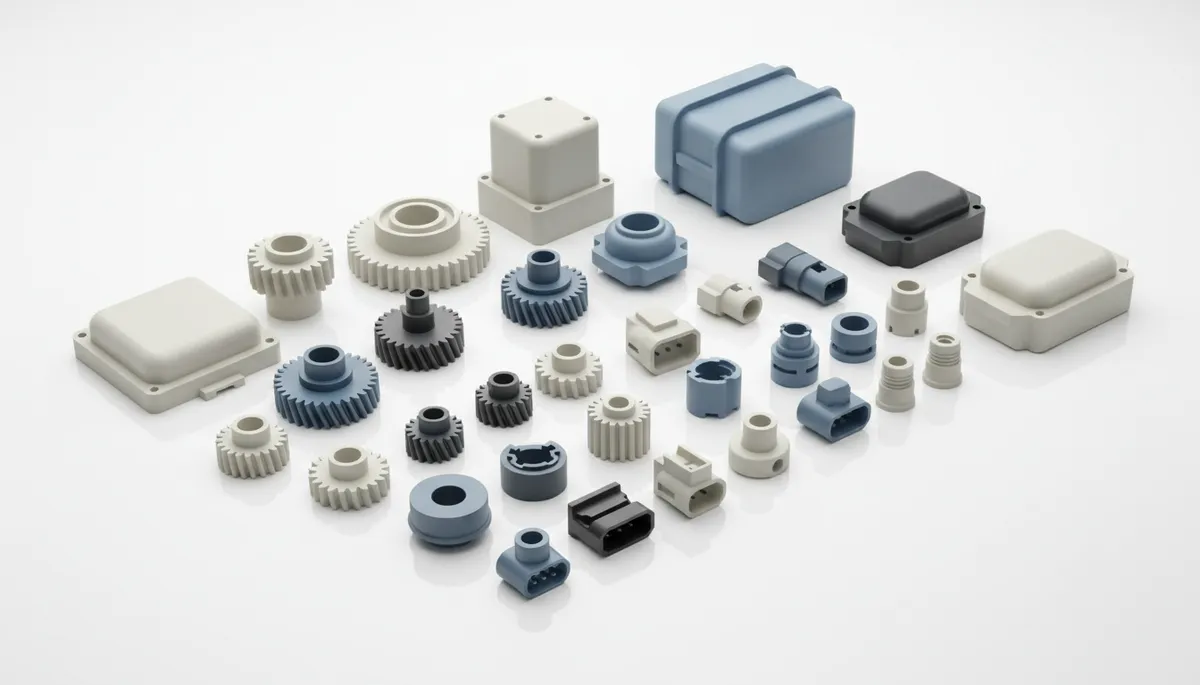
Spuitgieten vormt de ruggengraat van de productie van automotive kunststofcomponenten. Een enkele middenklasse sedan bevat ongeveer 30.000 onderdelen, waarvan meer dan 1.000 van kunststof zijn – de meeste daarvan zijn gespoten. Bumpers, dashboards, deurpanelen, inlaatspruitstukken, vloeistofreservoirs, sensorbehuizingen en connectorblokken komen allemaal van spuitgietmachines, niet van bewerkingscentra.
Voor een breder overzicht behandelt onze complete gids over spuitgieten de basis van het proces, materiaalgedrag en productiebeslissingen.
De reden is eenvoudig: zodra de matrijs is gebouwd, kost elk onderdeel slechts een fractie van een dollar aan materiaal en machinetijd. Bij productievolumes boven 10,000 stuks kan geen ander proces concurreren op kosten per onderdeel. Een gemiddelde automobielmatrijs doorloopt 500,000 tot meer dan 1 miljoen cycli voordat een ingrijpende revisie nodig is. Daarom vertrouwen alle grote autofabrikanten en hun Tier 1-leveranciers op spuitgieten als primaire methode voor de productie van niet-metalen componenten.
Spuitgieten voor auto’s is echter niet hetzelfde als spuitgieten van consumptiegoederen. De toleranties zijn nauwer (vaak ±0,05 mm voor functionele kenmerken), de materiaalspecificaties strenger (elke harskwaliteit moet op de OEM-goedkeuringslijsten staan) en de documentatielast zwaarder. Wie ooit een PPAP-indiening voor een kunststofbeugel heeft doorlopen, weet dat het papierwerk zwaarder kan wegen dan het onderdeel.
De verschuiving naar elektrische voertuigen breidt de rol van spuitgieten verder uit. EV-accubehuizingen, behuizingen voor thermisch beheer, laadpoortsamenstellingen en lichtgewicht structurele beugels zijn allemaal nieuwe toepassingsgebieden waarin kunststof onderdelen zwaardere metalen alternatieven vervangen. De gewichtsbesparing vertaalt zich rechtstreeks in een groter rijbereik. Daarom zetten OEM’s materiaalleveranciers en spuitgieters onder druk om structurele kunststoffen op grote schaal te leveren.
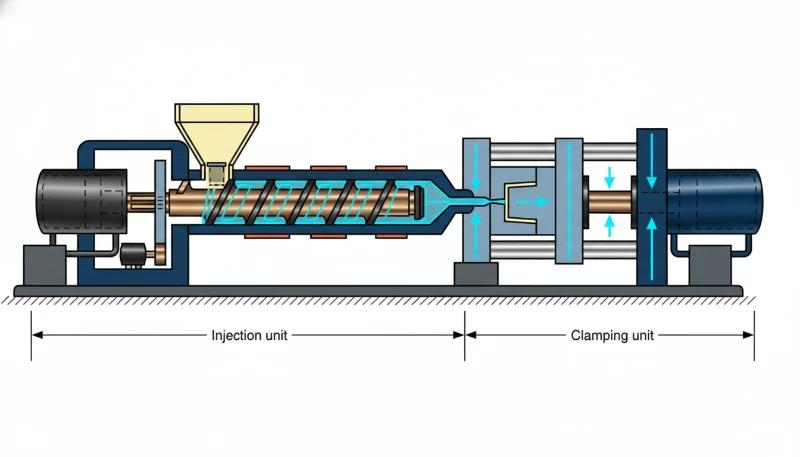
Welke materialen worden gebruikt voor spuitgieten in de auto-industrie?
PP, ABS, nylon en polycarbonaat zijn de dominante automotive spuitgietmaterialen, geselecteerd op basis van kosten, sterkte en hittebestendigheid. Materiaalkeuze wordt bepaald door drie beperkingen: kosten per kilogram, mechanische prestaties bij temperatuur en regelgevingsconformiteit (interieuronderdelen moeten voldoen aan condensatie- en VOC-limieten; onderdelen onder de motorkap moeten continu blootstelling aan 120–150 °C kunnen weerstaan). De onderstaande tabel toont de werkpaardharsen die wereldwijd de automotive productie domineren.
| Materiaal | Essentiële eigenschappen | Typische toepassing in de auto-industrie |
|---|---|---|
| Polypropyleen (PP) | Lage dichtheid (0,90 g/cm3), chemische bestendigheid, lage kosten | Bumpers, accubakken, interieurbekleding |
| ABS | Slagvastheid, goede oppervlakteafwerking, overschilderbaar | Dashboardonderdelen, roosters, wieldoppen |
| Nylon type 6/6 (PA66) | Hoge sterkte, hittebestendigheid (kortstondig tot 180 °C) | Inlaatspruitstukken, motorkappen, tandwielen |
| Polycarbonaat (PC) | Transparantie, slagvastheid, maatvastheid | Koplamplenzen, schuifdakmodules |
| POM (acetaal) | Lage wrijving, uitstekende vermoeiingsweerstand | Componenten van brandstofsystemen, bevestigingsmiddelen, clips |
| TPO / TPE | Flexibel, weerbestendig, overschilderbaar | Afdichtingen, pakkingen, zacht aanvoelende interieurpanelen |
| PA66-GF30 | Hoge stijfheid en kruipbestendigheid bij verhoogde temperaturen | Constructieve beugels, transmissieonderdelen |
In de praktijk specificeert de OEM voor elk subsysteem een lijst met goedgekeurde materialen. Als spuitgieter kunt u PA66 niet zonder technische goedkeuring door PA6 vervangen — zelfs als de smeltindex vergelijkbaar is. Daarom is werken met een leverancier die 400+ materiaalkwaliteiten op voorraad heeft belangrijk: deze zal minder snel een vervanging voorstellen die verderop in de voertuigassemblage problemen veroorzaakt.
Glasgevulde kwaliteiten verdienen bijzondere aandacht. De toevoeging van 30% korte glasvezel aan nylon verhoogt de treksterkte met ongeveer een factor 2,5, maar versnelt ook de matrijsslijtage — de vezels werken als microscopisch schuurpapier op de oppervlakken van de matrijsholte — en vereist een hogere injectiedruk. Als u constructieve beugels of componenten voor onder de motorkap inkoopt, controleer dan of het spuitgietbedrijf ervaring heeft met glasgevulde compounds op productiegereedschap en niet alleen met proefspuitingen in een laboratorium.
Ook regelgeving bepaalt de materiaalkeuze. Interieuronderdelen in voertuigen die in de EU worden verkocht, moeten voldoen aan de stoffenbeperkingen van REACH en de ELV-richtlijn. Onderdelen die in contact komen met voedsel of drinkwater, zoals beker- en fleshouders, kunnen harskwaliteiten vereisen die aan de FDA-eisen voldoen. Een deskundig spuitgietbedrijf signaleert deze vereisten vroeg in de ontwerpfase, voordat het gereedschapsstaal wordt bewerkt.
Wat zijn de belangrijkste automobieltoepassingen van spuitgegoten onderdelen?
Interieurtrim, externe panelen en componenten van de aandrijflijn onder de motorkap zijn de drie toepassingsgebieden voor gespoten automotive onderdelen. Elk gebied stelt verschillende eisen aan hittebestendigheid, oppervlakteafwerking en structurele integriteit.
Interieursystemen
Instrumentenpanelen, middenconsoles, deurpanelen, HVAC-kanalen en airbagafdekkingen. Interieuronderdelen vereisen een klasse A-oppervlakteafwerking (geen zichtbare invallingen, vloeilijnen of laslijnen op zichtvlakken) en moeten slagen voor condensatietests (< 1 mg condensaat volgens DIN 75201). Overmolding2 met meerdere materialen komt hier veel voor: een stijve PP-drager krijgt een TPE-huid voor een zacht aanvoelend oppervlak, zonder afzonderlijke montagestap. Op automobielschaal kan het wegvallen van een verlijmingsbewerking aanzienlijke kosten besparen.
Exterieursystemen
Bumpers, grilles, binnenschermen, spiegelbehuizingen en lampranden. Deze onderdelen worden blootgesteld aan uv-straling, temperatuurwisselingen van −40 °C tot +90 °C en steenslag op de weg. Lakhechting op gegoten TPO-bumpers is een bekend knelpunt: vóór de laklijn is een oppervlaktebehandeling (vlam of plasma) vereist en de spuitgieter moet de migratie van additieven beheersen die de hechting verstoort. De juiste oppervlakte-energie vóór het lakken is cruciaal om garantieclaims wegens afbladderende lak te voorkomen.
Onder de motorkap en aandrijflijn
Luchtinlaatspruitstukken, koelvloeistofreservoirs, sensorbehuizingen, connectorblokken en kabelboomclips. Dit zijn de zwaarst belaste toepassingen: continue temperaturen boven 120 °C, blootstelling aan brandstof, olie en koelvloeistof en trillingsbelastingen van de motor. Nylon 6/6, vaak glasvezelversterkt, domineert dit gebied. Insert molding3 wordt vaak gebruikt om metalen inzetstukken of elektronische sensoren rechtstreeks in de kunststofbehuizing in te kapselen. Dit elimineert montagestappen en verhoogt de betrouwbaarheid onder trillingen.
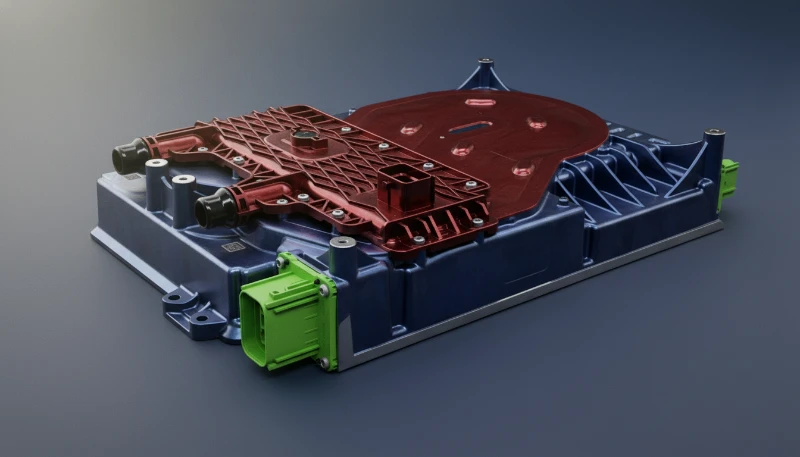
De overgang naar elektrische voertuigen voegt nieuwe categorieën toe: behuizingen voor batterijmodules en omvormers, verdeelstukken voor thermisch beheer en hoogspanningsconnectorsystemen. Veel van deze onderdelen vereisen vlamvertragende materialen (UL94 V-0-geclassificeerd) en moeten maatvast blijven over een breed temperatuurbereik. Het matrijsontwerp voor deze onderdelen is complexer omdat de wandsecties vaak dikker zijn, wat de koeltijd en het risico op invallingen vergroot.
Welke spuitgiettechnieken worden in de autoproductie gebruikt?
Enkel-fasig spuitgieten, twee-fasig spuitgieten, insert molding en gas-geassisteerd spuitgieten zijn de vier kerntechnieken die worden gebruikt in de automotive kunststofproductie. Gespecialiseerde methoden maken multi-materiaalintegratie, gewichtsreductie en kostenbesparingen op productievolumes mogelijk.
Bij tweecomponentenspuitgieten worden in één machinecyclus twee verschillende materialen gevormd. Een typische automobieltoepassing is een knop met een stijve PC-behuizing en een zachte TPE-bovenzijde. Een roterende matrijskern brengt de drager van holte A naar holte B zonder deze uit te werpen. Dit elimineert een tweede montagestap en garandeert een nauwkeurige uitlijning van beide materialen. De verbinding is doorgaans sterker dan een lijmverbinding, omdat de materialen tijdens het afkoelen op moleculair niveau in elkaar grijpen.
Bij insert molding wordt vóór het injecteren een metalen stansdeel, schroefdraadbus of elektronische component in de matrijs geplaatst. De kunststof stroomt eromheen en vormt één geïntegreerd onderdeel. Connectorblokken voor auto’s met vooraf geplaatste metalen aansluitingen zijn een voorbeeld van massaproductie: wereldwijd worden er jaarlijks miljarden van gespuitgiet.
Bij gasondersteund spuitgieten wordt stikstof in de smelt geïnjecteerd om dikke secties uit te hollen. Dit verlaagt het onderdeelgewicht met 10–30%, voorkomt invallingen op zichtvlakken en verkort de productietijd doordat minder massa hoeft af te koelen. Deurgrepen, frames van armsteunen in consoles en spiegelbeugels worden vaak zo gemaakt. De holle kern verbetert ook de verhouding tussen stijfheid en gewicht ten opzichte van een massief onderdeel met dezelfde buitenafmetingen, omdat het gaskanaal als een interne rib werkt zonder materiaal toe te voegen.
De juiste vormtechniek kiezen is geen beslissing die u geïsoleerd neemt. De onderdeelgeometrie, het jaarvolume, de materiaaleisen en de assemblagebeperkingen spelen allemaal mee. Een goede vormpartner adviseert de kosteneffectiefste techniek op basis van de totale eigendomskosten—inclusief matrijzen, cyclustijd, secundaire bewerkingen en uitvalpercentage—in plaats van standaard de eenvoudigste methode te kiezen en te hopen dat die werkt. De initiële investering in matrijsvloei-simulatie verdient zichzelf vele malen terug als u bedenkt dat één herstelcyclus van een matrijs voor serieproductie in de auto-industrie $5.000–$15.000 kan kosten en twee tot vier weken aan de planning kan toevoegen.
"Tweeschotsspuitgieten maakt een afzonderlijke lijmverbindingsstap tussen stijve en zachte componenten overbodig."True
Het tweede materiaal hecht tijdens de vormcyclus op moleculair niveau aan het substraat, waardoor een sterkere grenslaag ontstaat dan met enig secundair lijmproces mogelijk is.
"Gasgeassisteerd spuitgieten wordt voornamelijk gebruikt voor kleine precisieonderdelen onder 50 grams."False
Gasgeassisteerd spuitgieten is het waardevolst voor grote onderdelen met dikke secties (vaak meer dan 500 gram), waarbij het uithollen van de kern veel gewicht bespaart en inval op zichtoppervlakken vermindert.
Hoe werkt kwaliteitscontrole voor spuitgegoten auto-onderdelen?
Automobielkwaliteit is niet optioneel en niet onderhandelbaar. Twee kaders bepalen de basis: IATF 16949, de sectorspecifieke norm voor kwaliteitsmanagement die voortbouwt op ISO 9001 met aanvullende eisen voor procesbeheersing, risicomanagement en traceerbaarheid, en PPAP, het Production Part Approval Process dat het indieningspakket met 18 elementen vastlegt dat een leverancier moet aanleveren voordat de OEM de productievrijgave goedkeurt.
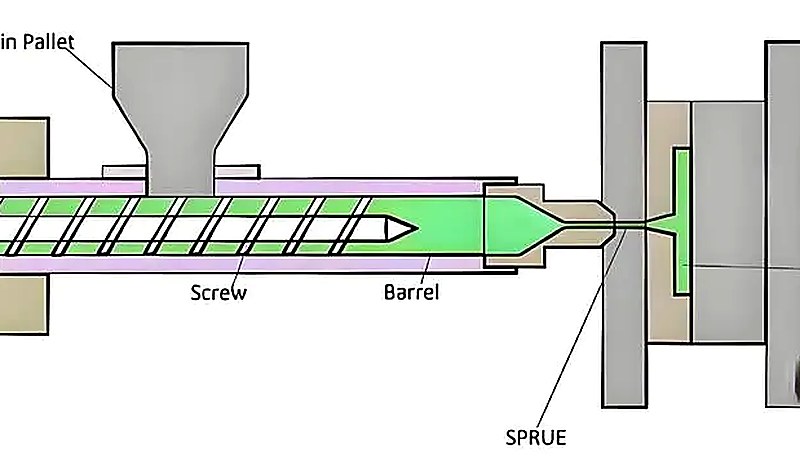
Op de werkvloer vertaalt dit zich in diverse concrete activiteiten. Monsters van de eerste productierun worden met CMM-apparatuur aan de GD&T-tekening getoetst. Procesparameters zoals injectiedruk, smelttemperatuur, stollingstijd van de aanspuiting en koeltijd worden aan de stappen van het spuitgietproces gekoppeld en vervolgens in een controleplan vastgelegd. Tijdens de productie volgen SPC-grafieken (statistische procesbeheersing) kritieke afmetingen steekproefsgewijs—doorgaans elke 2 uur of elke 500 onderdelen, afhankelijk van wat het eerst wordt bereikt.
Een leverancier die automotiveonderdelen produceert zonder CMM-capaciteit en gedocumenteerde SPC is geen Tier 1- of Tier 2-leverancier, ongeacht wat de website beweert. Wanneer we bij ZetarMold leveranciers auditen, zoeken we naar de werkelijke inspectieapparatuur — coördinatenmeetmachines, profielprojectoren, hardheidstesters — en de kalibratieregistraties van elk instrument. ISO 9001 / ISO 13485-certificering is voor automotivewerk de ondergrens, niet de bovengrens.
Ook traceerbaarheid is niet onderhandelbaar. Elke productiebatch moet kunnen worden herleid tot de specifieke materiaalbatch, machine, matrijs en operator. Als zich in het veld een defect voordoet, moet de OEM binnen enkele uren alle betrokken voertuigen kunnen identificeren, niet pas na weken. Dit niveau van traceerbaarheid vereist systematische batchregistratie vanaf ontvangst van de grondstoffen tot de uiteindelijke verzending. Het is een van de eerste zaken die een auditor uit de automobielsector bij een fabrieksbeoordeling controleert.
Zonder een robuust systeem voor lottraceerbaarheid wordt een terugroepactie exponentieel duurder, omdat de OEM het getroffen productievenster niet kan afbakenen en uit voorzorg een groter aantal voertuigen moet terugroepen. Elke leverancier die deze capaciteit tijdens een audit niet kan aantonen, moet worden uitgesloten van autoprojecten, ongeacht diens overige kwalificaties.
"PPAP vereist maatresultaten uit minimaal 3 productieruns voordat een leverancier productieonderdelen mag verzenden."True
Het minimum van 3 productieseries toont de procesherhaalbaarheid aan, niet alleen dat de machine één keer voor monsters correct was ingesteld. Elke serie moet onder productie-equivalente omstandigheden onderdelen binnen de specificatie opleveren.
"Als een onderdeel de visuele inspectie doorstaat, is het goedgekeurd voor gebruik in de autoproductie."False
Visuele inspectie detecteert alleen cosmetische defecten. PPAP voor de automobielindustrie vereist maatgegevens, materiaalcertificaten, onderzoeken naar procescapabiliteit (Cpk-waarden) en vaak resultaten van destructieve tests voordat productie wordt goedgekeurd.
Hoe kiest u de juiste partner voor spuitgieten in de automobielsector?
De belangrijkste selectiecriteria zijn bereik van knelperscapaciteit, materiaalervaring, kwaliteitssystemen, interne gereedschapsbouw en communicatiesnelheid. Hier is wat elke factor in de praktijk betekent voor een voertuigprogramma.
Tonnagebereik en machinepark. Auto-onderdelen variëren van connectorclips van 5 gram tot bumperbekledingen van 3 kilogram. Een leverancier met uitsluitend machines tot 200T kan geen grote exterieuronderdelen produceren. Omgekeerd verspilt een bedrijf met alleen machines van 1000T+ capaciteit aan kleine componenten. Zoek naar een bereik van minimaal 90T tot 1000T, met de mogelijkheid om voor speciale opdrachten hoger te gaan. Ook de leeftijd van de machines telt: oudere hydraulische machines missen mogelijk de nauwkeurigheid van servo-elektrische of hybride machines, wat de consistentie bij kleine toleranties beïnvloedt.
Materiaalervaring. Glasvezelversterkt nylon op productieschaal verwerken is iets anders dan standaard-PP spuitgieten. De abrasieve vulstof laat aanspuitingen en holteoppervlakken sneller slijten, waardoor vaker matrijsonderhoud en striktere procesbewaking nodig zijn. Een leverancier die meer dan 400 materialen heeft verwerkt voor automobiel-, medische en consumententoepassingen heeft verwerkingsproblemen gezien en opgelost die een bedrijf dat alleen PP verwerkt nog niet kent.
Diepgang van het kwaliteitssysteem. Vraag om een exemplaar van het sjabloon voor het beheersplan en een recent maatrapport. Als de leverancier die niet binnen een dag kan leveren, bestaat het kwaliteitssysteem alleen op papier. De leverancier moet minimaal een gestructureerde kwaliteitsstroom hanteren met ingangscontrole (IQC), tussentijdse controles, procesinspectie, verpakkingsinspectie, eindcontrole (FQC) en uitgangscontrole (OQC), ondersteund door gekalibreerde meetapparatuur en gedocumenteerde procedures.
Technische ondersteuning bij matrijswijzigingen. Automobielprogramma’s lopen 5–7 jaar. In die periode zijn ontwerpwijzigingen onvermijdelijk, soms door kostenreductie, soms door facelifts van voertuigen en soms door optimalisatie van het productieproces.
Als uw spuitgieter niet zelf matrijzen kan vervaardigen, wordt elke ontwerpwijziging een logistieke onderhandeling met een externe gereedschapmaker, waardoor de planning weken uitloopt. Een interne matrijzenmakerij met CNC-, EDM- en draadvonkmachines kan een staalwijziging in dagen in plaats van weken uitvoeren, zodat de productielijn zonder onderbreking blijft draaien.
Communicatie en reactiesnelheid. Als zich op de productielijn een maatprobleem voordoet, hebt u binnen enkele uren een reactie nodig, niet pas na dagen. Een leverancier met Engelssprekende projectmanagers die de technische context begrijpen, en niet alleen een verkoopteam dat e-mails doorstuurt, kan problemen oplossen voordat de lijn stilvalt. Dit is vooral belangrijk bij internationale inkoop, waar tijdzoneverschillen het communicatievenster al beperken.
Wat zijn veelvoorkomende defecten bij spuitgieten voor de automobielindustrie en hoe worden ze voorkomen?
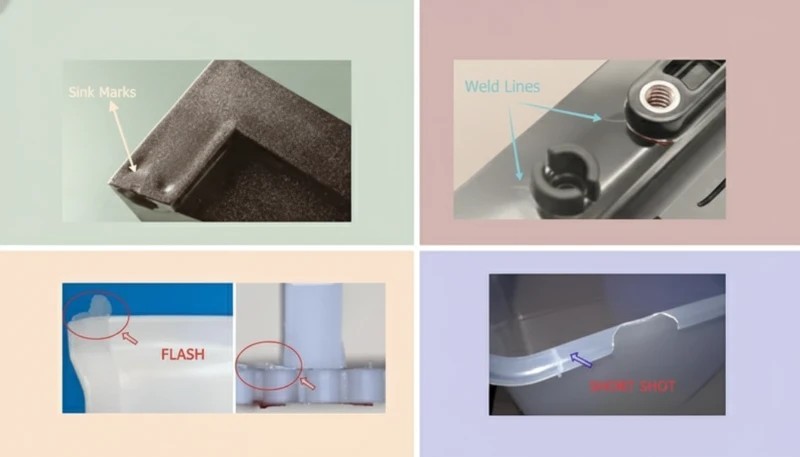
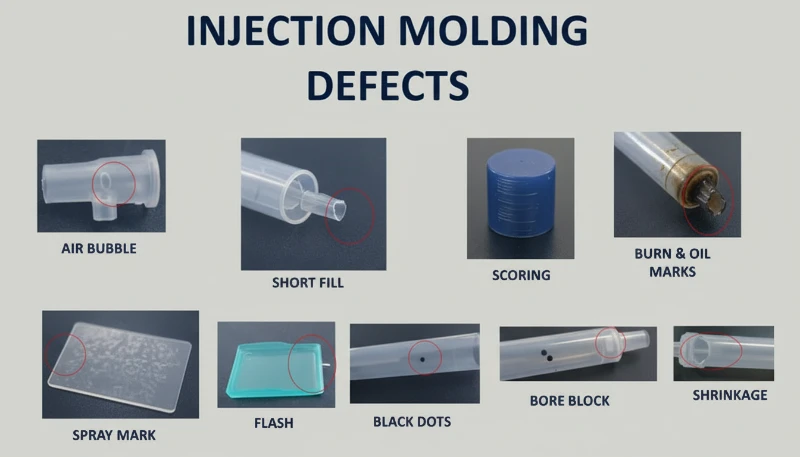
Krimpkraters, laslijnen en onvolledige vulling zijn de meest voorkomende defecten bij automotive spuitgieten. Elk is te voorkomen door juiste procescontrole, matrijsontwerp en systematische monitoring tijdens de productie.
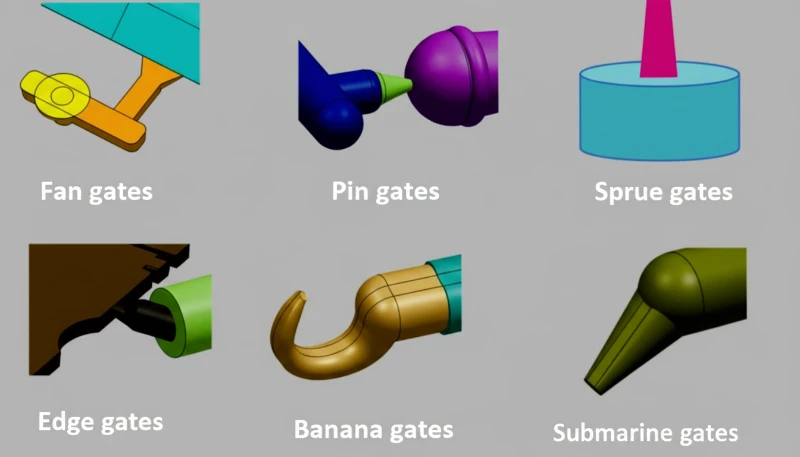
Invallingen verschijnen op het zichtvlak tegenover dikke secties, zoals ribben, nokken en wanddiktesprongen. De dikkere sectie koelt langzamer af, krimpt en trekt het zichtbare oppervlak naar binnen. Preventie: houd de dikte aan de ribvoet op 50–60% van de nominale wanddikte en gebruik voldoende nadruk en nadruktijd. Een leverancier die de nadruk op gevoel instelt in plaats van de werkelijke drukcurve te bewaken, gokt met uw eisen voor klasse A-oppervlakken.
Laslijnen ontstaan waar twee vloeifronten samenkomen, meestal rond gaten of inzetstukken. In glasvezelversterkte materialen richten de vezels zich evenwijdig aan de laslijn, waardoor een zwakke plek ontstaat waar de treksterkte 30–50% lager kan zijn dan in het bulkmateriaal. Preventie bestaat uit het verplaatsen van de aanspuiting zodat de laslijn in een niet-kritisch gebied komt, of het verhogen van de smelttemperatuur om moleculaire diffusie over de laslijn te verbeteren. Een stromingssimulatie vóór het verspanen van het gereedschap onderschept de meeste van deze problemen, maar alleen als de spuitgieter de simulatie werkelijk uitvoert en de resultaten toepast.
Naast deze drie categorieën letten spuitgieters voor de automobielindustrie ook op kromtrekken (vooral bij grote vlakke onderdelen zoals deurpanelen), braamvorming (overtollig materiaal dat langs de deelnaad ontsnapt) en maatafwijkingen tijdens lange productieruns. Elk van deze problemen heeft zijn hoofdoorzaak in de procesbeheersing, de staat van de matrijs of de materiaalconsistentie — en elk probleem is veel goedkoper te voorkomen met een gedisciplineerde instelling dan te verhelpen door nabewerking of afkeur na het spuitgieten.
De kosten van defecten in de autoproductie beperken zich niet tot de schrootwaarde van het onderdeel zelf. Een defect onderdeel dat de assemblagelijn bereikt, kan de productie stilleggen; een defect onderdeel dat de eindklant bereikt, leidt tot een garantieclaim of terugroepactie. Daarom stellen automotive OEM’s doelen voor het defectpercentage in parts per million (PPM) en investeren serieuze spuitgieters in geautomatiseerde inspectieapparatuur en realtime procesbewaking om afwijkingen op te sporen voordat er onderdelen buiten specificatie worden geproduceerd.
Hoe ziet een gekwalificeerde autospuitgietpartner er in de praktijk uit?
De belangrijkste kwalificaties zijn een breed bereik van knelperscapaciteit, interne gereedschapsbouw, gecertificeerde kwaliteitssystemen en gedocumenteerde materiaaltraceerbaarheid.
Een gekwalificeerde partner voor automotive matrijsvormgeving combineert een breed bereik van knelperscapaciteit, interne gereedschapsproductie en gedocumenteerde kwaliteitssystemen. In onze fabriek in Shanghai bedient ons team 47 spuitgietmachines van 90T tot 1850T en werken we volgens de ISO 9001, ISO 13485, ISO 14001 en ISO 45001 systemen. Met meer dan 20 jaar ervaring in spuitgieten en gereedschapsbouw beoordelen onze engineers de haalbaarheid van automotive onderdelen op materiaal, knelperscapaciteit, dimensionaal risico en PPAP-documentatie voordat de gereedschapsbouw start.
Voor auto-projecten richten we ons specifiek op drie praktische controles. Ten eerste houdt onze interne matrijzenproductiefaciliteit het ontwerp, de bewerking, de proef en het onderhoud van gereedschappen onder één dak in plaats van de verantwoordelijkheid te verdelen over externe gereedschapsmakers. Ten tweede documenteert ons kwaliteitsproces de inkomende inspectie, tussentijdse steekproeven, verpakkingscontroles, eindinspectie en uitgaande inspectie, zodat PPAP-bewijs niet achteraf uit het geheugen wordt opgebouwd. Ten derde heeft ons team ervaring met meer dan 400 kunststofmaterialen, wat het risico op harsvervanging vermindert wanneer een OEM een specifieke PP-, ABS-, PA-, PC- of glasgevulde kwaliteit vereist.
Ons productieteam bestaat uit meer dan 120 medewerkers die het verschil begrijpen tussen cosmetische afwerkingen, semi-structurele bevestigingen en motorruimte-onderdelen die worden blootgesteld aan hitte en trillingen. Als u spuitgietpartners voor een autoprogramma evalueert, vraag dan om voorbeelden van dimensionale rapporten, een sjabloon voor een controleplan, materiaaltraceerbaarheidsgegevens en procescapaciteitsgegevens voordat u investeert in gereedschapsbouw.
Welke vragen stellen kopers over autospuitgieten?
Veelgestelde vragen
Wat is de gebruikelijke doorlooptijd voor een spuitgietmatrijs voor de auto-industrie?
Een standaard automobielmatrijs met één caviteit vergt 6–10 weken van ontwerpgoedkeuring tot T1-monsters. Matrijzen met meerdere caviteiten of familiematrijzen met complexe zijbewegingen kunnen 12–16 weken vergen. Bij ZetarMold levert onze eigen matrijzenmakerij T1-monsters voor automobielgereedschappen van gemiddelde complexiteit doorgaans binnen 8 weken, omdat we het volledige bewerkings- en proefproces intern beheersen en niet op externe gereedschapmakers hoeven te wachten. Voor de matrijsproef zijn meestal 2–3 iteraties nodig om de procesparameters af te stellen voordat het inspectierapport van het eerste product wordt opgesteld.
Kan spuitgieten structurele auto-onderdelen produceren?
Ja, bij gebruik van glasvezelversterkt nylon of langvezelthermoplastische compounds (LFT). Een PA66-GF30-beugel kan een treksterkte boven 180 MPa bereiken—voldoende voor veel constructieve en semiconstructieve toepassingen, zoals stoelframes, pedaalbeugels en accubevestigingscomponenten in EV-platforms. De sleutel is de juiste vezelinhoud en -oriëntatie kiezen. Daarbij maken matrijsstroomsimulatie en deskundige plaatsing van het aanspuitpunt het verschil tussen een onderdeel dat laboratoriumtests doorstaat en een onderdeel dat onder werkelijke belasting in het veld faalt.
Wat is het minimale productievolume dat spuitgieten voor auto-onderdelen rechtvaardigt?
Voor eenvoudige onderdelen met middelmatige matrijscomplexiteit ligt het break-evenpunt doorgaans bij 5,000–10,000 eenheden tegenover CNC-bewerking of 3D-printen wanneer de afgeschreven gereedschapskosten worden meegerekend. Voor complexe matrijzen met meerdere caviteiten, zijschuiven en schuine uitwerpers stijgt dit naar 30,000–50,000 eenheden. Autoprogramma’s liggen gedurende een modelcyclus van 5–7 jaar meestal ruim boven deze volumes. Sommige spuitgieters bieden voor lagere volumes een prototypebrug met aluminium matrijzen, wat de initiële gereedschapskosten met 40–60% kan verlagen.
Hoe worden spuitgegoten auto-onderdelen op duurzaamheid getest?
Veelvoorkomende testcategorieën zijn thermische cycli (−40 °C tot +120 °C gedurende 100+ cycli volgens de OEM-specificatie), UV-veroudering (versnelde blootstelling in een weatherometer volgens SAE J2412 of gelijkwaardige normen), trillingstests (volgens ISO 16750-3-wegprofielspectra, doorgaans 8–24 uur per as) en chemische bestendigheid (onderdompeling in brandstof, olie en koelmiddel gedurende vastgestelde tijden bij verhoogde temperaturen). Sommige toepassingen vereisen ook valtests, slagtests bij lage temperatuur en vochtveroudering. De OEM bepaalt de exacte testmatrix in het componentspecificatiedocument en de leverancier moet gecertificeerde testrapporten als onderdeel van het PPAP-indieningspakket verstrekken voordat productiegoedkeuring wordt verleend.
Welke toleranties kan spuitgieten voor auto-onderdelen behalen?
Algemene toleranties van ±0.1 mm zijn gebruikelijk voor kenmerken onder 50 mm in standaard technische harsen. Nauwe toleranties van ±0.05 mm zijn haalbaar voor kritieke kenmerken zoals klikclips, positioneerpennen en afdichtvlakken, maar vereisen een nauwkeurige matrijsconstructie, vastgelegde procesparameters en statistische bewaking. Kenmerken boven 150 mm houden doorgaans ±0.2–0.3 mm aan door variatie in materiaalkrimp over langere afmetingen. Kristallijne materialen zoals nylon en POM vertonen meer krimp dan amorfe harsen zoals ABS of PC, wat de tolerantiecapaciteit beïnvloedt.
Wordt overmolding gebruikt in de automobielproductie?
Zeer uitgebreid. Two-shot-overmolding produceert onderdelen met meerdere materialen, zoals soft-touch-stuurknoppen, afgedichte elektrische connectoren met geïntegreerde pakkinglippen en trillingsgedempte montagebeugels—allemaal in één machinecyclus zonder secundaire assemblage. Dit elimineert afzonderlijke verbindingsbewerkingen en levert sterkere materiaalverbindingen dan lijmverbindingen, omdat beide materialen tijdens het koelen op moleculair niveau versmelten. Het proces vereist een vormmachine met twee onafhankelijke injectie-eenheden en een matrijs met een roterende kern of indexplaat om het substraat tussen het eerste en tweede materiaalshot over te dragen.
Welke certificering moet een leverancier van spuitgietwerk voor de auto-industrie hebben?
IATF 16949 is de sectorspecifieke kwaliteitsmanagementnorm voor autoleveranciers en wordt door de meeste Tier 1-OEM’s vereist voor goedkeuring van productie-inkoop. Minimaal ISO 9001-certificering wordt verwacht van elke leverancier die automobielwerk offreert, maar serieuze productieprogramma’s stellen IATF 16949 als harde eis in de leverancierskwalificatie. Certificering voor milieumanagement (ISO 14001) en gezondheid en veiligheid op het werk (ISO 45001) wordt door Europese en Noord-Amerikaanse OEM’s steeds vaker vereist als onderdeel van hun normen voor duurzame inkoop en maatschappelijk verantwoord ondernemen.
Een spuitgietpartner kiezen voor automobielproductie is een beslissing voor 5–7 jaar. De juiste leverancier levert een constante maatkwaliteit, verwerkt ontwerpwijzigingen zonder de planning te verstoren en verstrekt de documentatie die uw PPAP-indiening vereist. Als u kunststofcomponenten voor auto’s inkoopt en materiaalkeuze, matrijsontwerp of procescapaciteit met ons engineeringteam wilt bespreken, gebruikt u onze complete gids over spuitgietmatrijzen als technische beoordelingschecklist voordat u een offerte aanvraagt.
spuitgieten: Spuitgieten is een productieproces waarbij gesmolten thermoplastische hars onder hoge druk in een gesloten matrijsholte wordt geïnjecteerd en daar afkoelt en stolt tot de definitieve onderdeelgeometrie. ↩
overmolding: Overmolding is een tweecomponentenspuitgietproces waarbij een tweede materiaal over een eerder gevormde drager wordt gespuitgiet om een multimateriaalonderdeel met betere grip, afdichting of trillingsdemping te maken. ↩
insert molding: Insert molding is een proces waarbij een vooraf geplaatst metalen of elektronisch component door geïnjecteerde kunststof wordt ingekapseld tot één geïntegreerde samenstelling. ↩