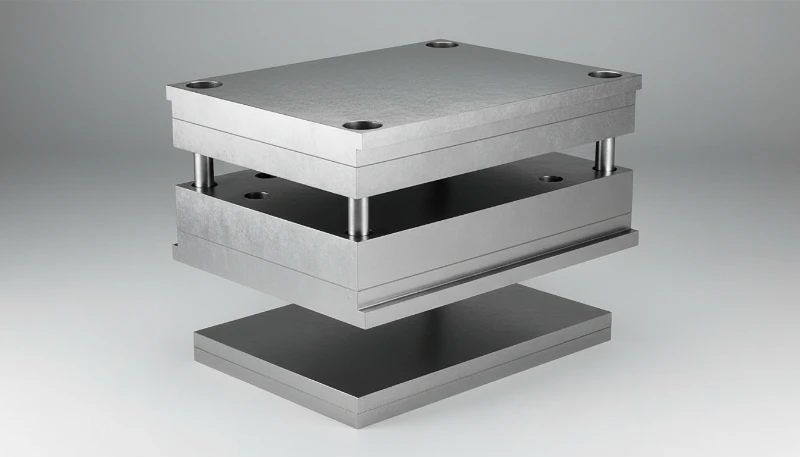
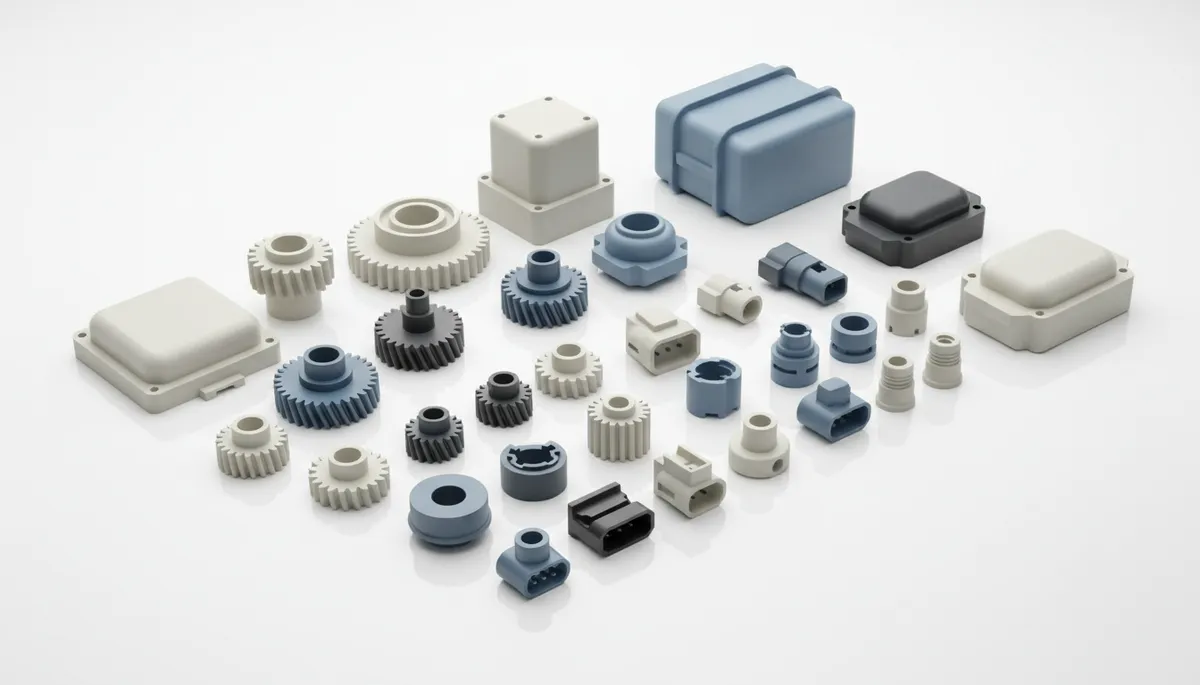
...

自動車部品製造における射出成形の応用

• ZetarMold Engineering Guide
• Plastic Injection Mold Manufacturing Since 2005
• Built by ZetarMold engineers for buyers comparing mold and molding solutions.

あなたは新しい車両プラットフォーム用のプラスチック部品を指定しています。設計では、内装、外装、ボンネット下システムにわたる47の射出成形部品が必要であり、サプライヤーは自動車生産量においてすべての部品で一貫した品質を提供する必要があります。 射出成形1 現代の自動車におけるプラスチック部品の大部分を生産しています。これは、インストルメントパネルトリムからエアインテークマニホールドまで多岐にわたります。この記事では、信頼性の高い自動車部品プログラムと、スクラップと遅延を生み出すプログラムとを分ける、具体的な材料、成形技術、品質要件について解説します。

要点
  • Injection molding accounts for over 90% of plastic parts in passenger vehicles
  • PP, ABS, and nylon dominate automotive molding due to cost and performance balance
  • Multi-shot and insert molding enable integrated components that reduce assembly steps
  • IATF 16949 and PPAP are non-negotiable for production-tier automotive parts
  • Partner selection should prioritize tonnage range, material experience, and defect tracking

What Role Does Injection Molding Play in Modern Automotive Manufacturing?

射出成形は、自動車プラスチック部品生産の基盤です。1台の中型セダンには約30,000の部品が含まれ、そのうち1,000以上がプラスチック製で、そのほとんどが射出成形されています。バンパー、ダッシュボード、ドアパネル、インテークマニホールド、液溜、センサーケーシング、コネクタブロックはすべて、加工センターではなく成形機から生み出されます。

より広い視点では、当社の injection molding complete guide プロセスの基礎、材料挙動、生産判断について説明します。

理由は単純です:金型が作られると、各部品の材料と機械時間のコストは数分の1ドルになります。10,000単位以上の生産量では、他のプロセスは部品ごとのコストで競合できません。典型的な自動車金型は、重要な改修が必要になる前に500,000から1百万以上のサイクルを実行します。これが、すべての主要自動車製造業者とそのTier1供給者が依存する理由です。 射出成形 非金属部品の製造における主要手法として。

But automotive molding is not the same as consumer-goods molding. The tolerances are tighter (often ±0.05 mm for functional features), the material specifications are stricter (each resin grade must meet OEM approval lists), and the documentation burden is heavier. If you have ever been through a PPAP submission for a plastic bracket, you know the paperwork can outweigh the part.

The shift toward electric vehicles is expanding the role of injection molding further. EV battery enclosures, thermal management housings, charging port assemblies, and lightweight structural brackets are all new application areas where plastic parts replace heavier metal alternatives. The weight savings directly translate to range improvements, which is why OEMs are pushing material suppliers and molders to deliver structural-grade plastics at scale.

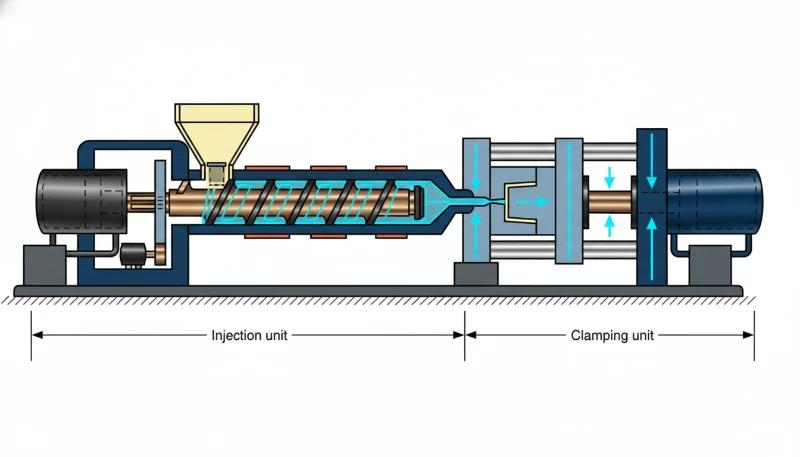
Diagram of a plastic injection molding machine
Plastic injection molding machine diagram

What Materials Are Used for Automotive Injection Molding?

PP、ABS、ナイロン、ポリカーボネートは、コスト、強度、耐熱性から選ばれる主要な自動車用成形材料です。材料選択は、キログラムあたりのコスト、温度下での機械的性能、規制適合性(内装部品はフォギングとVOC制限を満たす必要あり;ボンネット下部品は120〜150℃への連続暴露に耐える必要あり)という3つの制約によって決定されます。以下の表は、世界中の自動車生産を支配する主力樹脂を示しています。

Common Automotive Injection Molding Materials
素材 主要物件 Typical Automotive Use
ポリプロピレン(PP) 低密度(0.90 g/cm3)、耐薬品性、低コスト Bumpers, battery cases, interior trim
ABS Impact strength, good surface finish, paintable Dashboard components, grilles, wheel covers
Nylon 6/6 (PA66) High strength, heat resistance (up to 180 °C short-term) Intake manifolds, engine covers, gears
ポリカーボネート(PC) Transparency, impact resistance, dimensional stability Headlamp lenses, sunroof modules
POM (Acetal) Low friction, excellent fatigue resistance Fuel system components, fasteners, clips
TPO / TPE Flexible, weatherable, paintable Seals, gaskets, soft-touch interior panels
PA66-GF30 High stiffness, creep resistance at elevated temperatures Structural brackets, transmission components

In practice, the OEM specifies an approved material list for each subsystem. As a molder, you do not get to swap PA66 for PA6 without engineering sign-off—even if the melt flow index is similar. This is why working with a supplier who stocks 400+ material grades matters: they are less likely to push a substitution that creates problems downstream in the vehicle assembly.

Glass-filled grades deserve special attention. Adding 30% short glass fiber to nylon increases tensile strength by roughly 2.5×, but it also accelerates mold wear (the fibers act like microscopic sandpaper on cavity surfaces) and requires higher injection pressures. If you are sourcing structural brackets or under-hood components, confirm the molder has experience running glass-filled compounds on production tooling—not just sample shots in a lab environment.

Regulatory requirements also shape material choices. Interior components in vehicles sold in the EU must comply with REACH and ELV Directive substance restrictions. Parts that contact food or drinking water (cup holders, water bottle holders) may need FDA-compliant resin grades. A knowledgeable molder will flag these requirements early in the design phase, before tool steel is cut.

What Are the Key Automotive Applications of Injection Molded Parts?

内装トリム、外装パネル、ボンネット下のパワートレインコンポーネントは、射出成形自動車部品の3つの適用領域です。各領域は、耐熱性、表面仕上げ、構造的完全性に対して異なる要求を持っています。

Interior Systems

Instrument panels, center consoles, door trim panels, HVAC ducting, and airbag covers. Interior parts require Class A surface finish (no visible sink marks, weld lines, or flow marks in visible areas) and must pass fogging tests (< 1 mg condensate per DIN 75201). Multi-material オーバーモールディング2 ここでは一般的です:硬質PP基材にTPE表皮を施し、別途組み立てステップなしでソフトタッチ感を得ます。結合作業を排除することで得られるコスト削減は、自動車生産量において相当なものとなります。

Exterior Systems

Bumpers, grilles, fender liners, mirror housings, and lamp bezels. These parts face UV exposure, temperature cycling from −40 °C to +90 °C, and stone impact on the road. Paint adhesion on molded TPO bumpers is a well-known pain point—surface treatment (flame or plasma) is required before the paint line, and the molder must control additive migration that interferes with adhesion. Getting the surface energy right before painting is critical to avoid warranty claims for peeling paint.

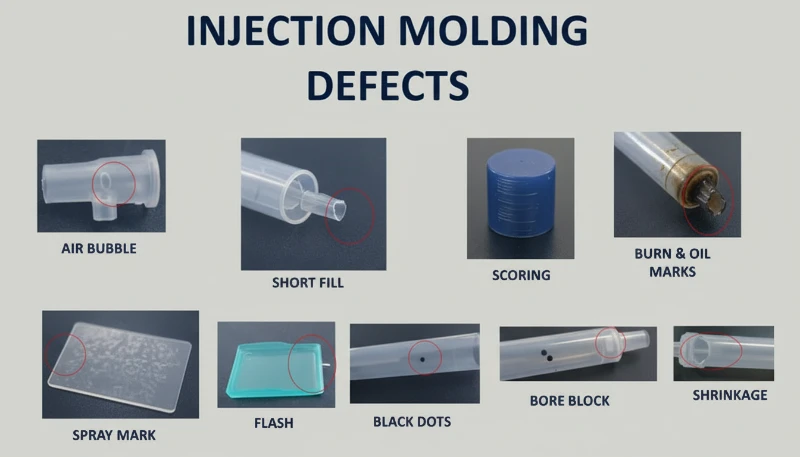
射出成形の欠陥概要

Air intake manifolds, coolant reservoirs, sensor housings, connector blocks, and wire harness clips. These are the most demanding applications: continuous temperatures above 120 °C, exposure to fuel, oil, and coolant, and vibration loads from the engine. Nylon 6/6 (often glass-filled) dominates this zone. インサート成形3 は、金属インサートや電子センサーをプラスチックハウジングに直接封入するためによく使用され、組立工程を削減し、振動下での信頼性を向上させます。

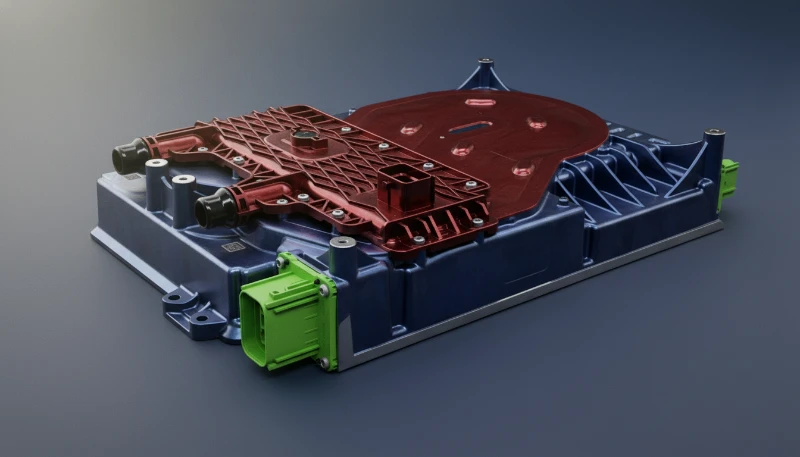
電気自動車への移行は、新しいカテゴリーを追加しています:バッテリーモジュールハウジング、インバーターエンクロージャー、熱管理マニホールド、高電圧コネクタシステムなどです。これらの部品の多くは難燃性材料(UL94 V-0認定)を必要とし、広い温度範囲で寸法安定性を維持しなければなりません。 金型設計 これらの部品の成形はより複雑です。なぜなら、肉厚が厚くなる傾向があり、冷却時間が長くなり、シンクマークのリスクが高まるためです。

What Injection Molding Techniques Are Used in Automotive Production?

シングルショット、2ショット、インサート成形、ガスアシスト成形は、自動車プラスチック生産で使用される4つの主要技術です。特殊な方法により、多材料統合、軽量化、量産におけるコスト削減が可能になります。

Two-shot (multi-component) molding molds two different materials in a single machine cycle. A typical automotive application is a button with a rigid PC body and a soft TPE top—the process uses a rotating mold core to transfer the substrate from cavity A to cavity B without demolding. This eliminates a secondary assembly operation and ensures precise alignment between the two materials. The resulting bond is typically stronger than any adhesive joint because the materials interlock at the molecular level during cooling.

インサート成形 places a metal stamping, threaded bushing, or electronic component into the mold before the shot. The plastic flows around it, creating a single integrated part. Automotive connector blocks with pre-positioned metal terminals are a high-volume example—billions of these are molded annually across the global automotive supply chain.

Gas-assist molding 溶融樹脂内に窒素ガスを注入し、肉厚部分を中空化します。これにより、部品重量を10〜30%削減し、外観面のシンクマークを除去し、冷却が必要な質量を減らすことで射出成形の生産時間を短縮します。ドアグラブハンドル、コンソールアームレストフレーム、ミラーブラケットによく使用される技術です。中空コアは、同じ外形寸法のソリッド部品と比較して剛性対重量比を向上させます。なぜなら、ガスチャネルは材料を追加せずに内部リブのように機能するからです。

適切な成形技術を選択することは、孤立して行う決定ではありません。部品形状、年間生産量、材料要件、および組立制約がすべて影響します。優れた成形パートナーは、金型、サイクルタイム、二次作業、スクラップ率を含む総所有コストに基づいて、最も費用対効果の高い技術を推奨します。最も単純な方法をデフォルトにしてうまくいくことを期待するのではありません。金型流動シミュレーションへの先行投資は、自動車生産金型の単一の金型修正サイクルが$5,000〜$15,000ドルかかり、タイムラインに2〜4週間を追加する可能性があることを考慮すると、何倍も回収できます。
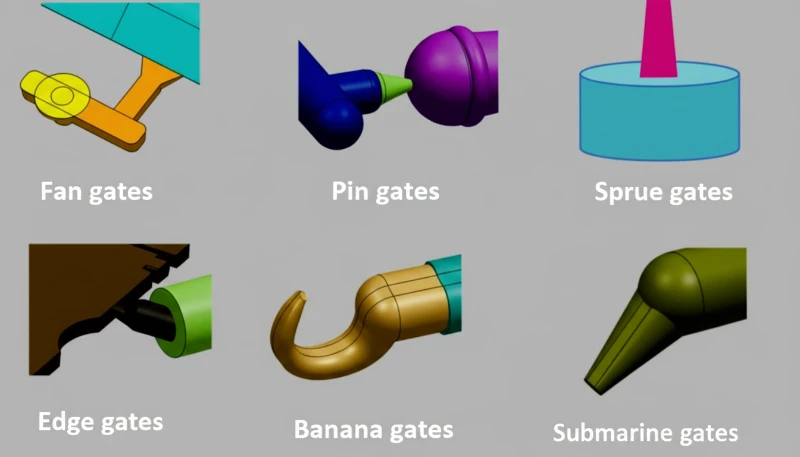
Types of plastic injection molding gates
Plastic injection molding gate types

“Two-shot molding eliminates the need for a separate adhesive-bonding step between rigid and soft components.”

The second material bonds molecularly to the substrate during the molding cycle, producing a stronger interface than any secondary adhesive process could achieve.

“Gas-assist molding is mainly used for small, precision parts under 50 grams.”

Gas-assist is most valuable for large, thick-sectioned parts (often over 500 grams) where hollowing out the core saves significant weight and reduces sink marks on cosmetic surfaces.

How Does Quality Control Work for Automotive Injection Molded Parts?

Automotive quality is not optional and not negotiable. Two frameworks define the baseline: IATF 16949 (the automotive-specific quality management system standard, built on ISO 9001 but with additional requirements for process control, risk management, and traceability) and ピーピーエーピー (Production Part Approval Process, which defines the 18-element submission package a supplier must provide before the OEM approves production release).

現場では、これはいくつかの具体的な活動に変換されます。初回サンプルはCMM装置を用いてGD&T図面と照合して測定されます。射出圧力、溶融温度、ゲート凍結時間、冷却時間などのプロセスパラメータは、射出成形の工程にマッピングされ、その後コントロールプランに固定されます。生産中は、SPC(統計的工程管理)チャートが、サンプリングベース(通常2時間ごと、または500部品ごと、いずれか早い方)で重要寸法を追跡します。

A supplier running automotive parts without CMM capability and documented SPC is not a Tier 1 or Tier 2 supplier, regardless of what their website says. When we audit suppliers at ZetarMold, we look for the actual inspection equipment—coordinate measuring machines, profile projectors, hardness testers—and the calibration records for each instrument. ISO 9001 / ISO 13485 certification is the floor, not the ceiling, for automotive work.

Traceability is another non-negotiable. Every production lot must be traceable back to the specific material batch, machine, mold, and operator. If a field failure occurs, the OEM needs to identify every affected vehicle within hours, not weeks. This level of traceability requires systematic lot tracking from raw material receiving through final shipment, and it is one of the first things an automotive auditor will verify during a facility assessment.

Without a robust lot tracking system, a recall becomes exponentially more expensive because the OEM cannot isolate the affected production window and must recall a wider range of vehicles as a precaution. Any supplier who cannot demonstrate this capability during an audit should be disqualified from automotive work, regardless of their other qualifications.

“PPAP requires dimensional results from a minimum of 3 production runs before a supplier can ship production parts.”

The 3-run minimum demonstrates process repeatability, not just that the machine was dialed in once for sample shots. Each run must produce parts within specification using production-equivalent conditions.

“If a part passes visual inspection, it is approved for automotive production use.”

Visual inspection catches cosmetic defects only. Automotive PPAP requires dimensional data, material certifications, process capability studies (Cpk values), and often destructive testing results before any production approval.

How Do You Choose the Right Automotive Injection Molding Partner?

重要な選定基準は、トンネージ範囲、材料経験、品質システム、自社金型製作、コミュニケーション速度です。以下に、各要素が車両プログラムにおいて実際に何を意味するかを説明します。

Tonnage range and machine fleet. Automotive parts span from 5-gram connector clips to 3-kilogram bumper fascias. A supplier limited to 200T machines cannot run large exterior parts. Conversely, a shop with only 1000T+ machines will waste capacity on small components. Look for a tonnage range of at least 90T to 1000T, with the flexibility to go higher for specialized jobs. Machine age matters too—older hydraulic machines may lack the precision of servo-electric or hybrid machines, which affects consistency in tight-tolerance work.

Material experience. Running glass-filled nylon at production volumes is different from molding commodity PP. The abrasive filler wears gates and cavity surfaces faster, requiring more frequent mold maintenance and more disciplined process monitoring. A supplier who has run 400+ materials across automotive, medical, and consumer applications has seen (and solved) the processing problems that a PP-only shop has not encountered yet.

Quality system depth. Ask for a copy of their control plan template and a recent dimensional report. If they cannot produce these within a day, their quality system is shelfware. The supplier should have a structured quality flow—IQC, in-process checks, process inspection, packaging inspection, FQC, and OQC—as a minimum framework, backed by calibrated measurement equipment and documented procedures.

Engineering support for mold modifications. 自動車プログラムは5〜7年間実行されます。その間、設計変更は避けられません。コスト削減、車両フェイスリフト、または製造プロセス最適化によって引き起こされることがあります。

成形業者が社内に金型製造能力を持っていない場合、すべての設計変更は外部の金型工場との物流交渉となり、タイムラインに数週間を追加します。CNC、EDM、ワイヤーカット設備を備えた社内金型工場があれば、数週間ではなく数日で鋼材変更に対応でき、生産ラインを中断なく稼働させることができます。
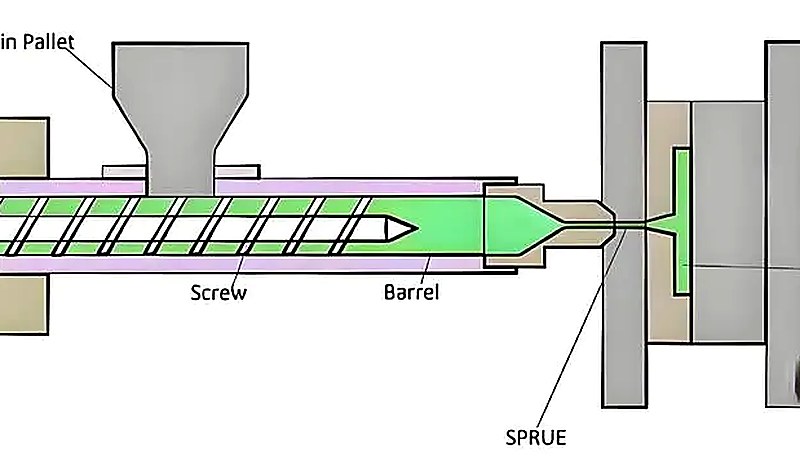
Injection Molding Machine Diagram
Injection molding machine diagram

Communication and responsiveness. 生産ラインで寸法問題が発生した場合、数日ではなく数時間以内に回答が必要です。技術的な背景を理解する英語を話すプロジェクトマネージャーを持つ供給者(単にメールを転送する営業チームではない)は、問題がライン停止状況になる前に解決できます。これは海外の sourcing、時間帯の違いが既に通信の窓を圧縮している場合。

What Are Common Defects in Automotive Injection Molding and How Are They Prevented?

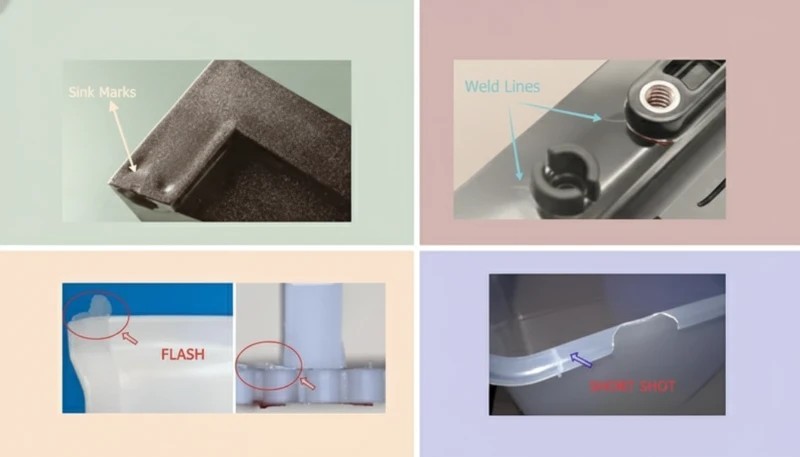
シンクマーク、溶接ライン、ショートショットは、自動車用射出成形で最も一般的な欠陥です。それぞれは、適切なプロセス制御、金型設計、生産中の体系的なモニタリングによって防止可能です。

Sink marks appear on the show surface opposite thick sections—ribs, bosses, and wall transitions. The thicker section cools slower, contracts, and pulls the visible surface inward. Prevention: maintain rib-base thickness at 50–60% of the nominal wall, and pack with sufficient hold pressure and time. A supplier who sets hold pressure by feel rather than by monitoring the actual pressure curve data is gambling with your Class A surface requirements.

溶接ライン form where two flow fronts meet, typically around holes or inserts. In glass-filled materials, the fibers orient parallel to the weld line, creating a weak spot where tensile strength can drop 30–50% compared to the bulk material. Prevention involves adjusting gate placement to move the weld line to a non-critical area, or increasing melt temperature to improve molecular diffusion across the knit line. Flow simulation before tool cutting catches most of these issues, but only if the molder actually runs the simulation and acts on the results.

Beyond these three categories, automotive molders also watch for warpage (especially in large flat parts like door panels), flash (excess material escaping along the parting line), and dimensional drift over long production runs. Each of these has root causes in process control, mold condition, or material consistency—and each is far cheaper to prevent through disciplined setup than to fix through post-molding rework or scrap.

The cost of defects in automotive production is not limited to the scrap value of the part itself. A defective part that reaches the assembly line can stop production, and a defective part that reaches the end customer triggers a warranty claim or a recall. This is why automotive OEMs set defect rate targets in parts per million (PPM), and why serious molders invest in automated inspection equipment and real-time process monitoring to catch deviations before they produce out-of-spec parts.

Injection molding defects and examples overview
Injection molding defects overview

実際に適格な自動車成形パートナーはどのようなものか?

重要な要件は、広範囲なトンネージ対応、自社金型製作、認証された品質システム、文書化された材料トレーサビリティです。

🏭 ZetarMold Factory Insight
適格な自動車成形パートナーは、広範囲なトンネージ対応、自社金型製作、文書化された品質システムを兼ね備えています。当社の上海工場では、90トンから1850トンまでの47台の射出成形機を稼働させ、ISO 9001、ISO 13485、ISO 14001、ISO 45001システムの下で活動しています。20年以上の射出成形および金型製作の経験を持つ当社のエンジニアは、金型製作開始前に、材料、トンネージ、寸法リスク、PPAP文書に対して自動車部品の実現可能性をチェックします。

自動車プロジェクトに特化して、当社は3つの実用的な管理に焦点を当てます。第一に、社内金型製造施設は、金型設計、加工、試作、および保守を一つの場所で管理し、外部の金型工場に責任を分散させません。第二に、当社の品質プロセスは、入荷検査、工程中のサンプリング、包装検査、最終検査、および出荷検査を文書化し、PPAP証拠が生産開始後に記憶から再構築されないようにします。第三に、当社のチームは400以上のプラスチック材料の経験があり、OEMが特定のPP、ABS、PA、PC、またはガラス充填グレードを要求する場合の樹脂置換リスクを減少させます。

当社の生産チームには120名以上のスタッフがおり、化粧トリム、半構造ブラケット、熱と振動にさらされるボンネット下の部品の違いを理解しています。自動車プログラムの成形パートナーを評価している場合、金型投資を決定する前に、サンプル寸法報告書、管理計画テンプレート、材料トレーサビリティ記録、および工程能力データを要求してください。

自動車用射出成形について買い手が尋ねる質問とは?

よくある質問

What is the typical lead time for an automotive injection mold?

A standard single-cavity automotive mold takes 6–10 weeks from design approval to T1 samples. Multi-cavity or family molds with complex side actions can take 12–16 weeks. At ZetarMold, our in-house mold shop typically delivers T1 samples within 8 weeks for moderate-complexity automotive tools, because we control the entire machining and trial process internally rather than waiting on external tool shops. The mold trial itself usually requires 2–3 iterations to dial in process parameters before the first article inspection report is generated.

Can injection molding produce structural automotive parts?

Yes, when using glass-filled nylon or long-fiber thermoplastic (LFT) compounds. A PA66-GF30 bracket can achieve tensile strength above 180 MPa—sufficient for many structural and semi-structural applications such as seat frames, pedal brackets, and battery mounting components in EV platforms. The key is selecting the right fiber content and orientation, which is where mold flow simulation and gate placement expertise make the difference between a part that passes lab testing and one that fails in the field under real loading conditions.

What is the minimum production volume that justifies injection molding for automotive parts?

For simple parts with moderate mold complexity, 5,000–10,000 units is typically the breakeven point versus CNC machining or 3D printing when you factor in the amortized tooling cost across the production run. For complex multi-cavity tools with side actions and lifters, the threshold rises to 30,000–50,000 units before the per-part savings offset the higher initial tooling investment. Automotive programs usually run well above these volumes over a 5–7 year model lifecycle, making injection molding the clear economic choice. Some molders also offer prototyping bridges using aluminum molds for lower volumes before committing to production steel tooling, which can reduce initial tooling cost by 40–60%.

How are injection molded automotive parts tested for durability?

Common test categories include thermal cycling (−40 °C to +120 °C for 100+ cycles per the OEM specification), UV aging (accelerated weatherometer exposure per SAE J2412 or equivalent standards), vibration testing (per ISO 16750-3 road profile spectra, typically 8–24 hours per axis), and chemical resistance (immersion in fuel, oil, and coolant for specified durations at elevated temperatures). Some applications also require drop testing, impact testing at low temperature, and humidity aging. The OEM defines the exact test matrix in the component specification document, and the supplier must provide certified test reports as part of the PPAP submission package before any production approval is granted.

What tolerances can injection molding achieve for automotive parts?

General tolerances of ±0.1 mm are routine for features under 50 mm in standard engineering resins. Tight tolerances of ±0.05 mm are achievable for critical features like snap-fit clips, locating pins, and sealing surfaces, but require precision mold construction, locked process parameters, and statistical monitoring. Features over 150 mm typically hold ±0.2–0.3 mm due to material shrinkage variation across longer dimensions. Crystalline materials like nylon and POM exhibit higher shrinkage than amorphous resins like ABS or PC, which affects tolerance capability.

Is overmolding used in automotive production?

広範に。2色成形(ツーショットオーバーモールディング)は、ソフトタッチステアリングホイールボタン、一体成形ガスケットリップ付き密閉電気コネクタ、振動減衰マウントブラケットなどの多材料部品を、二次組立なしで単一のマシンサイクルで生産します。これにより、別々の接着作業が不要になり、接着接合よりも強力な材料結合が得られます。なぜなら、2つの材料は冷却中に分子レベルで融合するからです。このプロセスには、2つの独立した射出ユニットを備えた成形機と、第1ショットと第2ショットの間で基材を転送するための回転コアまたはインデックスプレートを備えた金型が必要です。

What certification should an automotive injection molding supplier have?

IATF 16949 is the sector-specific quality management standard for automotive suppliers and is required by most Tier 1 OEMs for production-level sourcing approval. At minimum, ISO 9001 certification is expected for any supplier quoting automotive work, but serious production programs will mandate IATF 16949 as a hard requirement in the supplier qualification process. Environmental management certification (ISO 14001) and occupational health and safety certification (ISO 45001) are increasingly required by European and North American OEMs as part of their sustainability procurement standards and corporate responsibility requirements.

自動車生産における射出成形パートナーを選ぶことは、5〜7年の決定です。適切な供給者は、一貫した寸法品質を提供し、タイムラインの混乱なしに設計変更を処理し、PPAP提出に必要な文書を提供します。自動車プラスチック部品を調達し、材料選択、金型設計、またはプロセス能力についてエンジニアリングチームと議論したい場合は、当社の 完全な射出金型ガイド 見積前の技術評価チェックリストとして。


  1. 射出成形: 射出成形は、溶融した熱可塑性樹脂を高圧で密閉された金型キャビティに注入し、冷却・固化させて最終的な部品形状を得る製造プロセスです。

  2. オーバーモールディング: オーバーモールディングとは、2ショット射出成形プロセスで、事前に成形された基材の上に第2の材料を成形し、グリップ、シール、振動減衰を強化した多材料部品を作成することを指します。

  3. インサート成形: インサート成形は、事前に配置された金属部品や電子部品を射出プラスチックで封入し、単一の統合アセンブリを形成するプロセスです。

最新の投稿
フェイスブック
ツイッター
LinkedIn
ピンタレスト
Mike Tangの写真
マイク・タン

Hi, I'm the author of this post, and I have been in this field for more than 20 years. and I have been responsible for handling on-site production issues, product design optimization, mold design and project preliminary price evaluation. If you want to custom plastic mold and plastic molding related products, feel free to ask me any questions.

私とつながる

クイック見積もり

図面および詳細要件を下記までお送りください。 

Emial:[email protected]

または下記のお問い合わせフォームにご記入ください:

クイック見積もり

図面および詳細要件を下記までお送りください。 

Emial:[email protected]

または下記のお問い合わせフォームにご記入ください:

クイック見積もり

図面および詳細要件を下記までお送りください。 

Emial:[email protected]

または下記のお問い合わせフォームにご記入ください:

クイック見積もり

図面および詳細要件を下記までお送りください。 

Emial:[email protected]

または下記のお問い合わせフォームにご記入ください:

クイック見積もり

図面および詳細要件を下記までお送りください。 

Emial:[email protected]

または下記のお問い合わせフォームにご記入ください:

ブランドのクイック見積もり

図面および詳細要件を下記までお送りください。 

Emial:[email protected]

または下記のお問い合わせフォームにご記入ください:

Спроситебыструюцитату。

Мы свяжемся с вами в течение одного рабочего дня, обратите внимание на письмо с суффиксом "[email protected]".

クイック見積もり

図面および詳細要件を下記までお送りください。 

Emial:[email protected]

または下記のお問い合わせフォームにご記入ください:

クイック見積もり

図面および詳細要件を下記までお送りください。 

Emial:[email protected]

または下記のお問い合わせフォームにご記入ください: