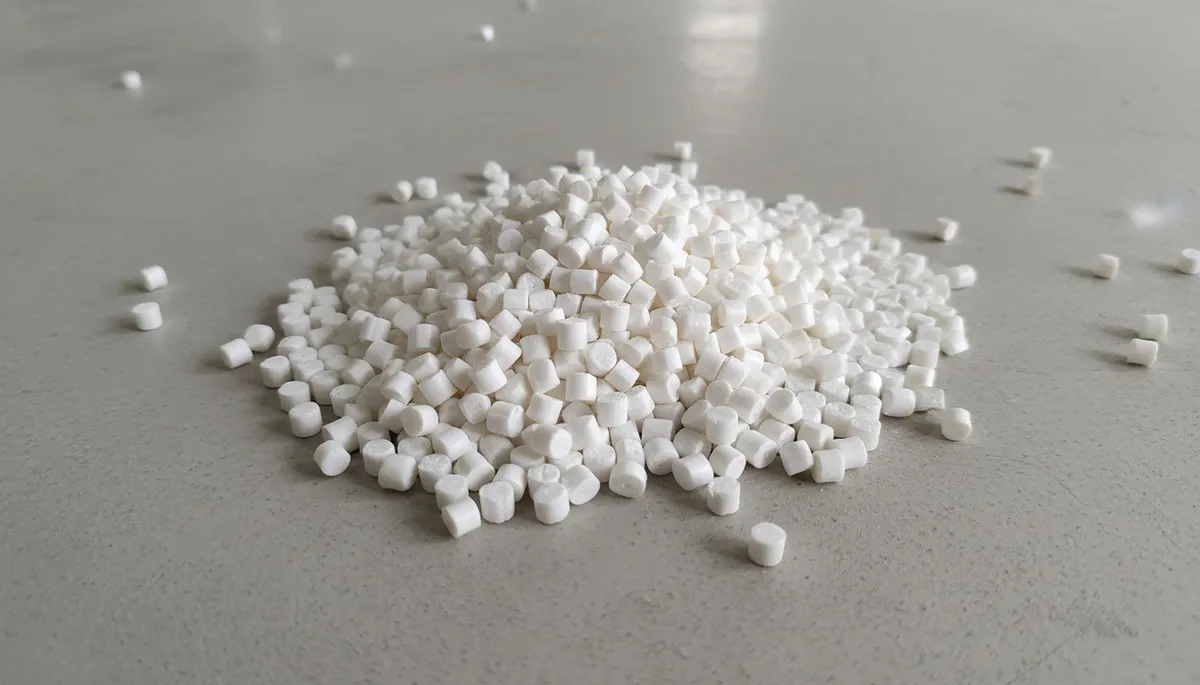
Está especificando componentes plásticos para una nueva plataforma de vehículo. El diseño requiere 47 piezas moldeadas por inyección para los sistemas interiores, exteriores y del compartimento del motor, y su proveedor debe ofrecer una calidad uniforme en todas ellas a volúmenes de automoción. El moldeo por inyección1 produce la mayoría de las piezas plásticas de un automóvil moderno, desde los embellecedores del panel de instrumentos hasta los colectores de admisión. Este artículo detalla los materiales, las técnicas de moldeo y los requisitos de calidad que distinguen un programa fiable de piezas de automóvil de otro que genera desperdicios y retrasos.
- El moldeo por inyección representa más del 90% de las piezas de plástico de los vehículos de pasajeros
- PP, ABS y nailon dominan el moldeo para automoción por su equilibrio entre coste y rendimiento
- El moldeo multicomponente y por inserción permite obtener componentes integrados que reducen los pasos de montaje
- IATF 16949 y PPAP no son negociables para las piezas de automoción destinadas a producción
- La selección del socio debe priorizar el intervalo de tonelaje, la experiencia con materiales y el seguimiento de defectos
¿Qué papel desempeña el moldeo por inyección en la fabricación moderna de automóviles?
El moldeo por inyección es la base de la producción de componentes plásticos para automoción. Un solo sedán mediano contiene aproximadamente 30,000 piezas, y más de 1,000 son de plástico—la mayoría moldeadas por inyección. Los parachoques, salpicaderos, paneles de puertas, colectores de admisión, depósitos de fluidos, carcasas de sensores y bloques de conectores proceden de máquinas de moldeo, no de centros de mecanizado.
Para obtener una visión más amplia, nuestra guía completa del moldeo por inyección aborda los fundamentos del proceso, el comportamiento de los materiales y las decisiones de producción.
La razón es sencilla: una vez construido el molde, cada pieza cuesta apenas una fracción de dólar en material y tiempo de máquina. Con volúmenes de producción superiores a 10,000 unidades, ningún otro proceso compite en coste por pieza. Un molde típico de automoción completa entre 500,000 y más de 1 millón de ciclos antes de necesitar una renovación importante. Por eso todos los grandes fabricantes de automóviles y sus proveedores Tier 1 recurren al moldeo por inyección como método principal para producir componentes no metálicos.
Pero el moldeo para automoción no es igual que el de bienes de consumo. Las tolerancias son más estrictas —a menudo ±0.05 mm en características funcionales—, las especificaciones de materiales son más rigurosas —cada grado de resina debe figurar en las listas de aprobación del OEM— y la carga documental es mayor. Si alguna vez ha tramitado una presentación PPAP para un soporte de plástico, sabrá que el papeleo puede pesar más que la pieza.
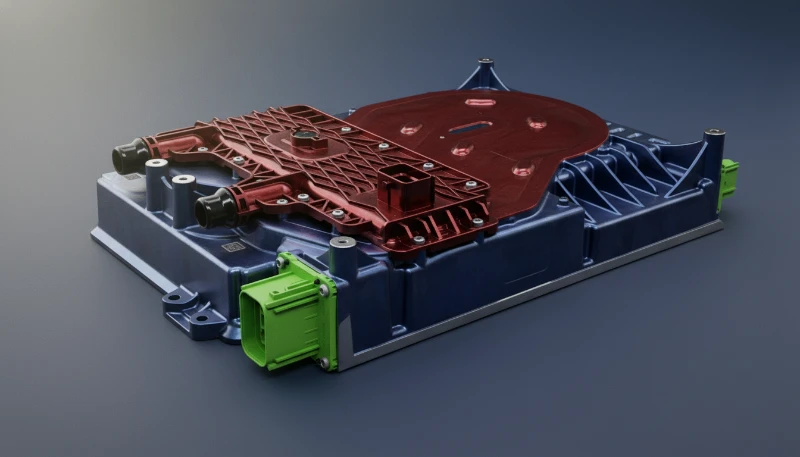
El avance hacia los vehículos eléctricos amplía aún más el papel del moldeo por inyección. Las carcasas de baterías de vehículos eléctricos, las envolventes de gestión térmica, los conjuntos de puertos de carga y los soportes estructurales ligeros son nuevas áreas de aplicación en las que las piezas de plástico sustituyen alternativas metálicas más pesadas. El ahorro de peso se traduce directamente en una mayor autonomía, por lo que los fabricantes de equipos originales presionan a los proveedores de materiales y a los moldeadores para que suministren plásticos de grado estructural a gran escala.
¿Qué materiales se utilizan para el moldeo por inyección de automoción?
PP, ABS, nailon y policarbonato son los principales materiales de moldeo para automoción, elegidos por coste, resistencia mecánica y resistencia térmica. La selección está condicionada por tres factores: coste por kilogramo, rendimiento mecánico a temperatura y cumplimiento normativo —las piezas interiores deben cumplir límites de empañamiento y VOC; las piezas bajo el capó deben soportar una exposición continua a 120–150 °C—. La tabla siguiente muestra las resinas de uso general que dominan la producción mundial de automóviles.
| Tipo de material | Propiedades clave | Uso habitual en automoción |
|---|---|---|
| Polipropileno (PP) | Baja densidad (0.90 g/cm3), resistencia química, bajo coste | Parachoques, cajas de baterías, guarnecidos interiores |
| ABS | Resistencia al impacto, buen acabado superficial, apto para pintura | Componentes del salpicadero, rejillas, tapacubos |
| Nailon 6/6 (PA66) | Alta resistencia mecánica y térmica (hasta 180 °C a corto plazo) | Colectores de admisión, cubiertas de motor, engranajes |
| Policarbonato (PC) | Transparencia, resistencia al impacto, estabilidad dimensional | Lentes de faros, módulos de techo solar |
| POM (acetal) | Baja fricción, excelente resistencia a la fatiga | Componentes del sistema de combustible, sujetadores, clips |
| TPO / TPE | Flexible, resistente a la intemperie, pintable | Sellos, juntas, paneles interiores de tacto suave |
| PA66-GF30 | Alta rigidez y resistencia a la fluencia a temperaturas elevadas | Soportes estructurales, componentes de transmisión |
En la práctica, el OEM especifica una lista de materiales aprobados para cada subsistema. Como moldeador, no puede sustituir PA66 por PA6 sin aprobación de ingeniería, aunque el índice de fluidez sea similar. Por eso importa trabajar con un proveedor que mantenga más de 400 grados de material en inventario: será menos probable que proponga una sustitución que genere problemas posteriores en el montaje del vehículo.
Los grados reforzados con fibra de vidrio merecen especial atención. Añadir un 30% de fibra de vidrio corta al nailon aumenta la resistencia a la tracción aproximadamente 2.5×, pero también acelera el desgaste del molde (las fibras actúan como papel de lija microscópico sobre las superficies de la cavidad) y exige presiones de inyección más altas. Si busca soportes estructurales o componentes para el compartimento del motor, confirme que el moldeador tenga experiencia procesando compuestos reforzados con fibra de vidrio en utillaje de producción, no solo realizando inyecciones de muestra en un laboratorio.
Los requisitos normativos también condicionan la elección de materiales. Los componentes interiores de vehículos vendidos en la EU deben cumplir las restricciones de sustancias de REACH y la Directiva ELV. Las piezas en contacto con alimentos o agua potable (portavasos, soportes de botellas) pueden necesitar grados de resina conformes con la FDA. Un moldeador competente identificará estos requisitos al principio de la fase de diseño, antes de mecanizar el acero del molde.
¿Cuáles son las principales aplicaciones automotrices de las piezas moldeadas por inyección?
El revestimiento interior, los paneles exteriores y los componentes del tren motriz bajo el capó son las tres zonas de aplicación de las piezas de automoción moldeadas por inyección. Cada zona plantea requisitos diferentes de resistencia a la temperatura, acabado superficial e integridad estructural.
Sistemas interiores
Paneles de instrumentos, consolas centrales, paneles interiores de puertas, conductos HVAC y cubiertas de airbags. Las piezas interiores requieren un acabado superficial de Clase A (sin rechupes, líneas de soldadura ni marcas de flujo visibles) y deben superar las pruebas de empañamiento (< 1 mg de condensado según DIN 75201). El sobremoldeo multimaterial2 es habitual: un sustrato rígido de PP recibe una capa de TPE para ofrecer un tacto suave sin una operación de montaje independiente. El ahorro derivado de eliminar una operación de unión puede ser considerable a volúmenes de automoción.
Sistemas exteriores
Parachoques, parrillas, revestimientos de guardabarros, carcasas de espejos y embellecedores de faros. Estas piezas están expuestas a radiación UV, ciclos térmicos de −40 °C a +90 °C e impactos de piedras en carretera. La adherencia de la pintura en parachoques de TPO moldeado es un problema bien conocido: se requiere un tratamiento superficial (con llama o plasma) antes de la línea de pintura, y el moldeador debe controlar la migración de aditivos que interfiere con la adherencia. Conseguir la energía superficial adecuada antes de pintar es fundamental para evitar reclamaciones de garantía por desprendimiento de pintura.
Bajo el capó y tren motriz
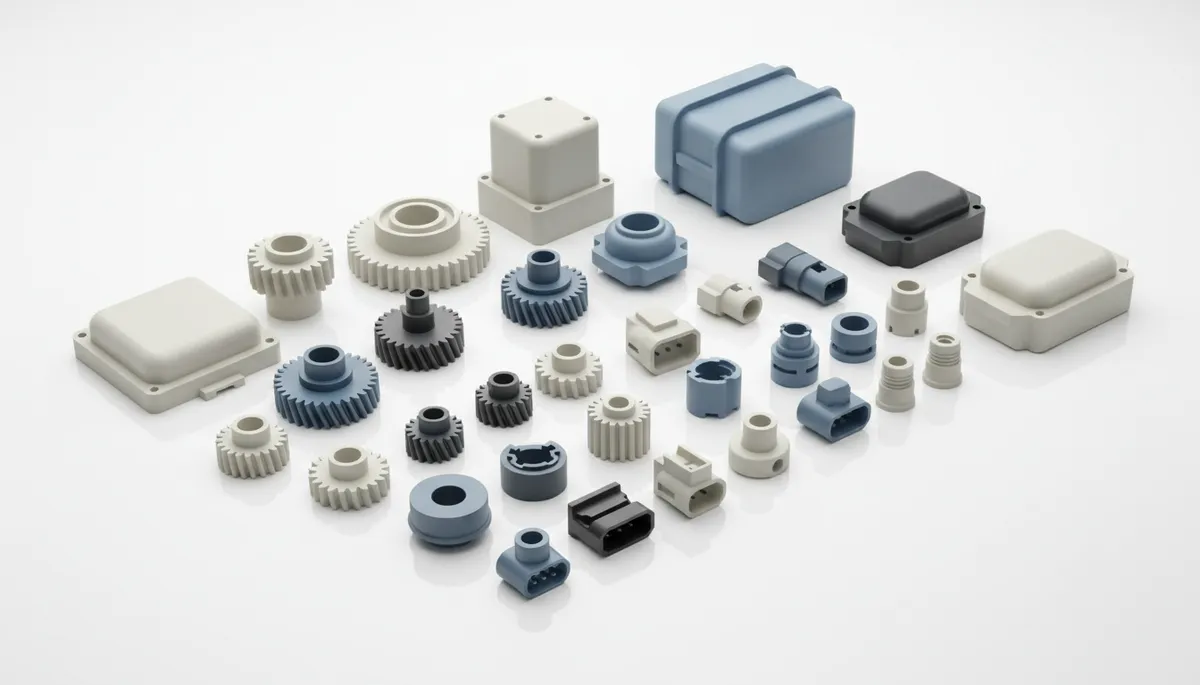
Colectores de admisión, depósitos de refrigerante, carcasas de sensores, bloques de conectores y clips para mazos de cables. Son las aplicaciones más exigentes: temperaturas continuas superiores a 120 °C, exposición a combustible, aceite y refrigerante, y cargas de vibración del motor. El nailon 6/6, a menudo reforzado con fibra de vidrio, predomina en esta zona. El moldeo por inserción3 se utiliza con frecuencia para encapsular insertos metálicos o sensores electrónicos directamente en la carcasa de plástico, lo que elimina etapas de montaje y mejora la fiabilidad frente a las vibraciones.
La transición al vehículo eléctrico está incorporando nuevas categorías: carcasas de módulos de batería, envolventes de inversores, colectores de gestión térmica y sistemas de conectores de alta tensión. Muchas de estas piezas requieren materiales ignífugos (clasificación UL94 V-0) y deben conservar la estabilidad dimensional en un amplio intervalo de temperaturas. El diseño del molde para estas piezas es más complejo porque las secciones de pared suelen ser más gruesas, lo que aumenta el tiempo de enfriamiento y el riesgo de rechupes.
¿Qué técnicas de moldeo por inyección se utilizan en la producción de automóviles?
El moldeo de una inyección, dos inyecciones, con insertos y asistido por gas son las cuatro técnicas principales en la producción de plásticos para automoción. Los métodos especializados integran varios materiales, reducen peso y ahorran costes a volúmenes de producción.
El moldeo de dos componentes moldea dos materiales diferentes en un único ciclo de máquina. Una aplicación habitual en automoción es un botón con cuerpo rígido de PC y superficie blanda de TPE: el proceso utiliza un núcleo giratorio para transferir el sustrato de la cavidad A a la cavidad B sin desmoldearlo. Así se elimina una operación de montaje secundaria y se garantiza la alineación precisa entre ambos materiales. La unión resultante suele ser más fuerte que cualquier unión adhesiva porque los materiales se entrelazan a escala molecular durante el enfriamiento.
El moldeo por inserción coloca una pieza metálica estampada, un casquillo roscado o un componente electrónico en el molde antes de la inyección. El plástico fluye a su alrededor y crea una única pieza integrada. Los bloques de conectores de automoción con terminales metálicos preposicionados son un ejemplo de gran volumen: cada año se moldean miles de millones en la cadena mundial de suministro de automoción.
El moldeo asistido por gas inyecta nitrógeno en el material fundido para ahuecar las secciones gruesas. Esto reduce el peso de la pieza entre un 10–30%, elimina los rechupes de las superficies visibles y acorta el tiempo de producción del moldeo por inyección al reducir la masa que debe enfriarse. Esta técnica se utiliza a menudo en asideros de puertas, bastidores de reposabrazos de consola y soportes de retrovisores. El núcleo hueco también mejora la relación rigidez-peso frente a una pieza maciza de las mismas dimensiones exteriores, porque el canal de gas actúa como un nervio interno sin añadir material.
Elegir la técnica de moldeo adecuada no es una decisión aislada. Influyen la geometría de la pieza, el volumen anual, los requisitos del material y las restricciones de ensamblaje. Un buen socio de moldeo recomendará la técnica más rentable según el coste total de propiedad —incluidos el utillaje, el tiempo de ciclo, las operaciones secundarias y la tasa de desperdicio— en vez de optar por defecto por el método más sencillo y esperar que funcione. La inversión inicial en simulación de flujo del molde se amortiza muchas veces si se considera que un solo ciclo de retrabajo de un molde de producción para automoción puede costar entre 5.000 y 15.000 $ y añadir de dos a cuatro semanas al plazo.
"El moldeo de dos inyecciones elimina la necesidad de una etapa separada de unión con adhesivo entre los componentes rígidos y blandos."True
El segundo material se une molecularmente al sustrato durante el ciclo de moldeo y produce una interfaz más resistente que la que podría lograr cualquier proceso adhesivo secundario.
"El moldeo asistido por gas se utiliza principalmente para piezas pequeñas y de precisión de menos de 50 gramos."False
La asistencia por gas es especialmente valiosa en piezas grandes y de secciones gruesas (a menudo de más de 500 gramos), en las que ahuecar el núcleo permite ahorrar mucho peso y reducir los rechupes de las superficies estéticas.
¿Cómo funciona el control de calidad de las piezas automotrices moldeadas por inyección?
La calidad en automoción no es opcional ni negociable. Dos marcos definen el punto de partida: IATF 16949 (la norma del sistema de gestión de calidad específico de la automoción, basada en ISO 9001 pero con requisitos adicionales de control de procesos, gestión de riesgos y trazabilidad) y PPAP (Proceso de Aprobación de Piezas de Producción, que define el paquete de 18 elementos que un proveedor debe presentar antes de que el OEM apruebe el inicio de la producción).
En planta, esto se traduce en actividades concretas. Las primeras muestras se miden frente al plano GD&T con equipos CMM. Los parámetros del proceso —presión de inyección, temperatura de masa, congelación del punto y enfriamiento— se vinculan a las etapas del moldeo y se fijan en un plan de control. Durante la producción, los gráficos SPC (control estadístico del proceso) siguen dimensiones críticas por muestreo, normalmente cada 2 horas o 500 piezas, lo que ocurra primero.
Un proveedor que fabrica piezas de automoción sin capacidad CMM ni SPC documentado no es un proveedor Tier 1 o Tier 2, con independencia de lo que diga su sitio web. Cuando auditamos proveedores en ZetarMold, buscamos el equipo de inspección real —máquinas de medición por coordenadas, proyectores de perfiles y durómetros— y los registros de calibración de cada instrumento. La certificación ISO 9001 / ISO 13485 es el mínimo, no el máximo, para los trabajos de automoción.
La trazabilidad tampoco es negociable. Cada lote debe remontarse al lote de material, máquina, molde y operario concretos. Si ocurre un fallo en campo, el OEM debe identificar todos los vehículos afectados en horas, no semanas. Esto exige seguimiento sistemático desde la recepción de materia prima hasta el envío final y es una de las primeras cosas que verifica un auditor de automoción.
Sin un sistema sólido de trazabilidad de lotes, una retirada se vuelve exponencialmente más costosa porque el OEM no puede aislar el periodo de producción afectado y debe retirar un intervalo más amplio de vehículos como precaución. Todo proveedor que no pueda demostrar esta capacidad durante una auditoría debe quedar descalificado para trabajos de automoción, independientemente de sus demás cualificaciones.
"El PPAP exige resultados dimensionales de un mínimo de 3 series de producción antes de que un proveedor pueda enviar piezas de producción."True
El mínimo de 3 tiradas demuestra la repetibilidad del proceso, no solo que la máquina se ajustó una vez para las inyecciones de muestra. Cada tirada debe producir piezas dentro de las especificaciones utilizando condiciones equivalentes a las de producción.
"Si una pieza supera la inspección visual, queda aprobada para su uso en la producción de automóviles."False
La inspección visual solo detecta defectos estéticos. El PPAP automotriz exige datos dimensionales, certificados de materiales, estudios de capacidad del proceso (valores Cpk) y, a menudo, resultados de ensayos destructivos antes de aprobar la producción.
¿Cómo elegir al socio adecuado de moldeo por inyección para automoción?
Los criterios de selección clave son el rango de tonelaje, la experiencia con materiales, los sistemas de calidad, la fabricación interna de utillaje y la rapidez de comunicación. Esto es lo que significa cada factor en la práctica para un programa de vehículos.
Rango de tonelaje y parque de máquinas. Las piezas de automóvil abarcan desde clips de conectores de 5 gramos hasta revestimientos de parachoques de 3 kilogramos. Un proveedor limitado a máquinas de 200T no puede producir piezas exteriores grandes. A la inversa, un taller que solo disponga de máquinas de 1000T o más desperdiciará capacidad en componentes pequeños. Busque un rango de al menos 90T a 1000T, con posibilidad de aumentarlo para trabajos especializados. La antigüedad de las máquinas también importa: las máquinas hidráulicas antiguas pueden carecer de la precisión de las servoeléctricas o híbridas, lo que afecta a la uniformidad de los trabajos con tolerancias estrechas.
Experiencia con materiales. Procesar nailon reforzado con fibra de vidrio a volúmenes de producción es distinto de moldear PP de uso general. La carga abrasiva desgasta más deprisa las entradas y las superficies de las cavidades, por lo que exige un mantenimiento más frecuente del molde y una supervisión más rigurosa del proceso. Un proveedor que haya trabajado con más de 400 materiales en aplicaciones de automoción, médicas y de consumo habrá visto y resuelto problemas de procesamiento que un taller dedicado exclusivamente al PP aún no ha encontrado.
Profundidad del sistema de calidad. Solicite una copia de su plantilla de plan de control y un informe dimensional reciente. Si no pueden proporcionarlos en un día, su sistema de calidad solo existe sobre el papel. Como marco mínimo, el proveedor debe contar con un flujo de calidad estructurado —IQC, controles durante el proceso, inspección del proceso, inspección del embalaje, FQC y OQC—, respaldado por equipos de medición calibrados y procedimientos documentados.
Asistencia de ingeniería para modificar moldes. Los programas de automoción duran entre 5–7 años. Durante ese periodo, los cambios de diseño son inevitables: a veces obedecen a la reducción de costes, otras al rediseño de un vehículo y otras a la optimización del proceso de fabricación.
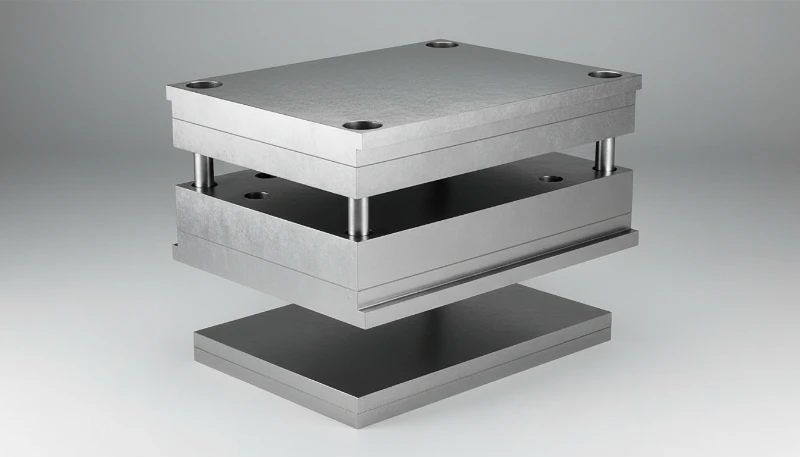
Si su proveedor de moldeo no dispone de capacidad interna para fabricar moldes, cada cambio de diseño se convierte en una negociación logística con un taller de moldes externo, lo que añade semanas al plazo. Un taller interno con equipos CNC, EDM y de corte por hilo puede completar una modificación del acero en días en lugar de semanas, manteniendo la línea de producción en funcionamiento sin interrupciones.
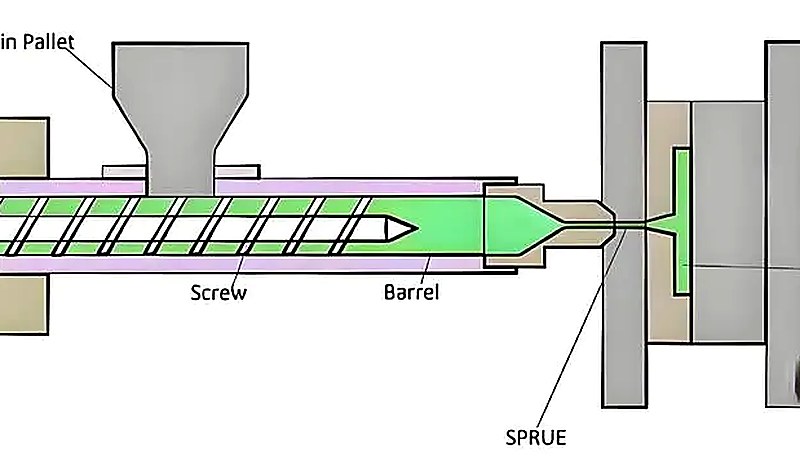
Comunicación y capacidad de respuesta. Cuando surge un problema dimensional en la línea de producción, se necesita una respuesta en horas, no en días. Un proveedor con jefes de proyecto que hablen inglés y comprendan el contexto técnico —no solo un equipo comercial que reenvíe correos— puede resolver los problemas antes de que detengan la línea. Esto es especialmente importante en el abastecimiento internacional, donde las diferencias horarias ya reducen la ventana de comunicación.
¿Cuáles son los defectos habituales del moldeo por inyección para automoción y cómo se previenen?
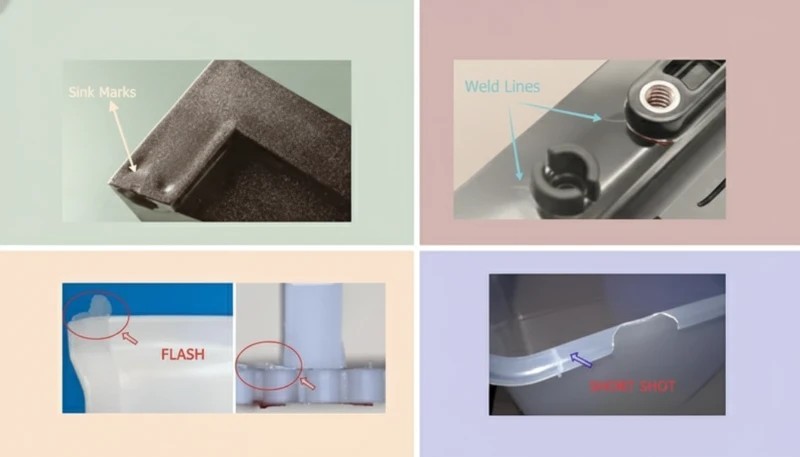
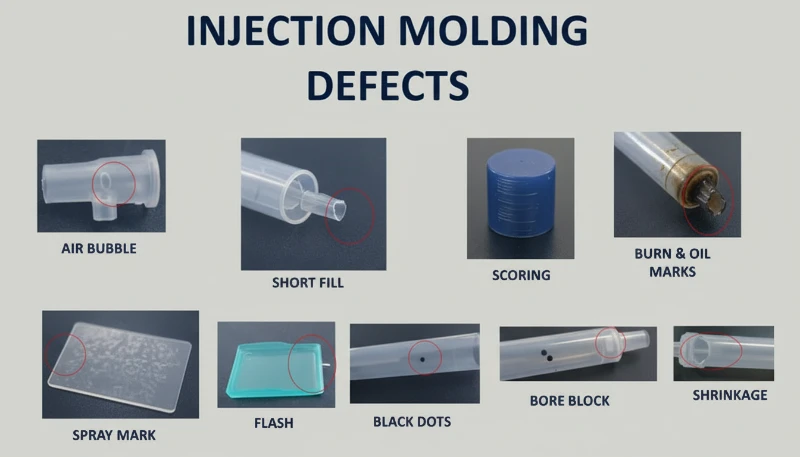
Las marcas de hundimiento, las líneas de soldadura y los llenados incompletos son los defectos más comunes del moldeo por inyección para automoción. Todos pueden prevenirse mediante un control adecuado del proceso, un buen diseño del molde y una supervisión sistemática durante la producción.
Los rechupes aparecen en la superficie visible opuesta a las secciones gruesas, como nervios, resaltes y transiciones de pared. La sección más gruesa se enfría más despacio, se contrae y tira de la superficie visible hacia dentro. Prevención: mantener el espesor de la base del nervio entre el 50–60% de la pared nominal y compactar con suficiente presión y tiempo de mantenimiento. Un proveedor que ajuste la presión de mantenimiento por intuición en vez de controlar los datos reales de la curva de presión está poniendo en riesgo sus requisitos de superficie de Clase A.
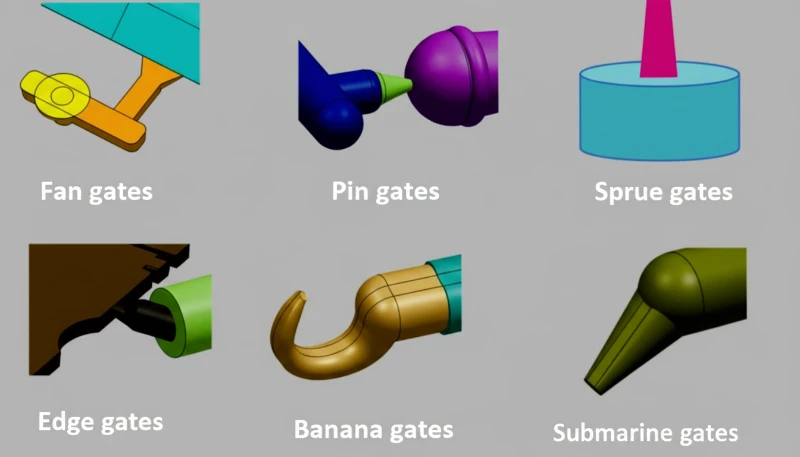
Las líneas de soldadura se forman donde se encuentran dos frentes de flujo, normalmente alrededor de orificios o insertos. En los materiales reforzados con fibra de vidrio, las fibras se orientan paralelas a la línea y crean un punto débil cuya resistencia a la tracción puede disminuir entre un 30–50% respecto al material base. Para prevenirlo, se ajusta la ubicación de la entrada a fin de desplazar la línea a una zona no crítica o se aumenta la temperatura del material fundido para mejorar la difusión molecular a través de la línea de unión. La simulación de flujo antes de mecanizar la herramienta detecta la mayoría de estos problemas, pero solo si el moldeador ejecuta la simulación y aplica sus resultados.
Además de estas tres categorías, los moldeadores de automoción también vigilan el alabeo (especialmente en piezas planas grandes, como los paneles de las puertas), las rebabas (material sobrante que escapa por la línea de partición) y la deriva dimensional durante series de producción prolongadas. Cada problema tiene sus causas fundamentales en el control del proceso, el estado del molde o la consistencia del material, y todos son mucho más baratos de prevenir mediante una configuración rigurosa que de corregir con retrabajos posteriores al moldeo o desechando piezas.
El coste de los defectos en la producción automotriz no se limita al valor como residuo de la propia pieza. Una pieza defectuosa que llega a la línea de montaje puede detener la producción, y una que llega al cliente final provoca una reclamación de garantía o una retirada del mercado. Por eso los fabricantes de equipos originales de automoción fijan objetivos de tasa de defectos en partes por millón (PPM), y por eso los moldeadores serios invierten en equipos de inspección automatizada y supervisión del proceso en tiempo real para detectar desviaciones antes de que generen piezas fuera de especificación.
¿Cómo es en la práctica un socio de moldeo automotriz calificado?
Las cualificaciones clave son una amplia cobertura de tonelajes, fabricación interna de utillajes, sistemas de calidad certificados y trazabilidad documentada de los materiales.
Un socio cualificado para el moldeo de automoción combina una amplia cobertura de tonelajes, fabricación interna de moldes y sistemas de calidad documentados. En nuestra fábrica de Shanghái, nuestro equipo opera 47 máquinas de moldeo por inyección de 90T a 1850T y trabaja conforme a los sistemas ISO 9001, ISO 13485, ISO 14001 e ISO 45001. Con más de 20 años de experiencia en moldeo por inyección y fabricación de moldes, nuestros ingenieros comprueban la viabilidad de las piezas de automoción en función del material, el tonelaje, el riesgo dimensional y la documentación PPAP antes de iniciar el molde.
Para proyectos automotrices específicamente, nos enfocamos en tres controles prácticos. Primero, nuestras instalaciones internas de fabricación de moldes mantienen el diseño de herramientas, mecanizado, pruebas y mantenimiento bajo un mismo techo en lugar de dividir la responsabilidad entre talleres externos. Segundo, nuestro proceso de calidad documenta inspección de entrada, muestreo en proceso, controles de embalaje, inspección final e inspección de salida para que la evidencia PPAP no se reconstruya de memoria después de que comience la producción. Tercero, nuestro equipo tiene experiencia con más de 400 materiales plásticos, lo que reduce el riesgo de sustitución de resina cuando un OEM requiere un grado específico de PP, ABS, PA, PC o con carga de vidrio.
Nuestro equipo de producción incluye más de 120 empleados que comprenden la diferencia entre revestimientos cosméticos, soportes semiestructurales y piezas bajo el capó expuestas al calor y la vibración. Si está evaluando socios de moldeo para un programa automotriz, solicite informes dimensionales de muestras, una plantilla de plan de control, registros de trazabilidad de materiales y datos de capacidad del proceso antes de comprometerse con una inversión en herramientas.
¿Qué preguntas hacen los compradores sobre el moldeo por inyección automotriz?
Preguntas frecuentes
¿Cuál es el plazo habitual de un molde de inyección para automoción?
Moldeo por Inyección para Piezas Automotrices: Guía Completa
¿Puede el moldeo por inyección producir piezas estructurales de automoción?
Sí, cuando se utiliza nailon reforzado con vidrio o compuestos termoplásticos de fibra larga (LFT). Un soporte de PA66-GF30 puede alcanzar una resistencia a la tracción superior a 180 MPa, suficiente para muchas aplicaciones estructurales y semiestructurales, como armazones de asientos, soportes de pedales y componentes de montaje de baterías en plataformas de vehículos eléctricos. La clave es seleccionar el contenido y la orientación correctos de la fibra; ahí es donde la simulación del flujo del molde y la experiencia en ubicación de compuertas marcan la diferencia entre una pieza que supera los ensayos de laboratorio y otra que falla en uso real bajo cargas efectivas.
¿Cuál es el volumen mínimo de producción que justifica el moldeo por inyección de piezas de automoción?
Para piezas sencillas con complejidad moderada del molde, entre 5.000 y 10.000 unidades suele ser el punto de equilibrio frente al mecanizado CNC o la impresión 3D al amortizar el utillaje. En moldes multicavidad complejos con correderas y elevadores, el umbral sube a 30.000–50.000 unidades. Los programas de automoción suelen superar estos volúmenes durante ciclos de 5–7 años. Algunos moldeadores ofrecen puentes de prototipado con moldes de aluminio para volúmenes menores antes de invertir en acero de producción, reduciendo el coste inicial un 40–60%.
¿Cómo se prueba la durabilidad de las piezas de automoción moldeadas por inyección?
Las categorías de ensayo habituales incluyen ciclos térmicos (de −40 °C a +120 °C durante más de 100 ciclos según la especificación del OEM), envejecimiento UV (exposición acelerada en intemperímetro según SAE J2412 o normas equivalentes), ensayos de vibración (según los espectros de perfil de carretera ISO 16750-3, normalmente 8–24 horas por eje) y resistencia química (inmersión en combustible, aceite y refrigerante durante periodos especificados a temperaturas elevadas). Algunas aplicaciones también requieren ensayos de caída, ensayos de impacto a baja temperatura y envejecimiento por humedad. El OEM define la matriz exacta de ensayos en el documento de especificación del componente, y el proveedor debe aportar informes de ensayo certificados como parte del paquete de presentación PPAP antes de que se conceda cualquier aprobación de producción.
¿Qué tolerancias puede lograr el moldeo por inyección en piezas de automoción?
Las tolerancias generales de ±0.1 mm son habituales para características inferiores a 50 mm en resinas de ingeniería estándar. Se pueden alcanzar tolerancias estrictas de ±0.05 mm en características críticas como clips de encaje a presión, pasadores de posicionamiento y superficies de sellado, pero requieren una construcción de molde de precisión, parámetros de proceso bloqueados y supervisión estadística. Las características superiores a 150 mm suelen mantener ±0.2–0.3 mm debido a la variación de la contracción del material en dimensiones más largas. Los materiales cristalinos como el nailon y el POM presentan mayor contracción que las resinas amorfas como ABS o PC, lo que afecta a la capacidad de tolerancia.
¿Se utiliza el sobremoldeo en la producción de automóviles?
De forma generalizada. El sobremoldeo de dos inyecciones produce piezas multimaterial, como botones de volante de tacto suave, conectores eléctricos sellados con labios de junta integrados y soportes de montaje con amortiguación de vibraciones, todo en un solo ciclo de máquina sin montaje secundario. Esto elimina las operaciones de unión independientes y produce uniones de materiales más fuertes que las obtenidas con adhesivos, porque ambos materiales se fusionan a escala molecular durante el enfriamiento. El proceso requiere una máquina de moldeo equipada con dos unidades de inyección independientes y un molde con un núcleo giratorio o una placa indexadora para transferir el sustrato entre la primera y la segunda inyección de material.
¿Qué certificación debe tener un proveedor de moldeo por inyección para automoción?
IATF 16949 es la norma de gestión de calidad específica del sector para proveedores de automoción y la mayoría de los OEM de nivel 1 la exige para aprobar el abastecimiento de producción. Como mínimo, se espera la certificación ISO 9001 de cualquier proveedor que cotice trabajos de automoción, pero los programas de producción serios impondrán IATF 16949 como requisito estricto en el proceso de cualificación de proveedores. Los OEM europeos y norteamericanos exigen cada vez más la certificación de gestión ambiental (ISO 14001) y la de seguridad y salud laboral (ISO 45001) como parte de sus normas de compra sostenible y sus requisitos de responsabilidad corporativa.
Elegir un socio de moldeo por inyección para la producción de automoción es una decisión con una vigencia de 5–7 años. El proveedor adecuado ofrece una calidad dimensional uniforme, gestiona los cambios de diseño sin alterar los plazos y proporciona la documentación exigida para la presentación PPAP. Si busca componentes plásticos para automoción y desea hablar con nuestro equipo de ingeniería sobre selección de materiales, diseño de moldes o capacidad de proceso, utilice nuestra guía completa de moldes de inyección como lista de comprobación técnica antes de solicitar presupuesto.
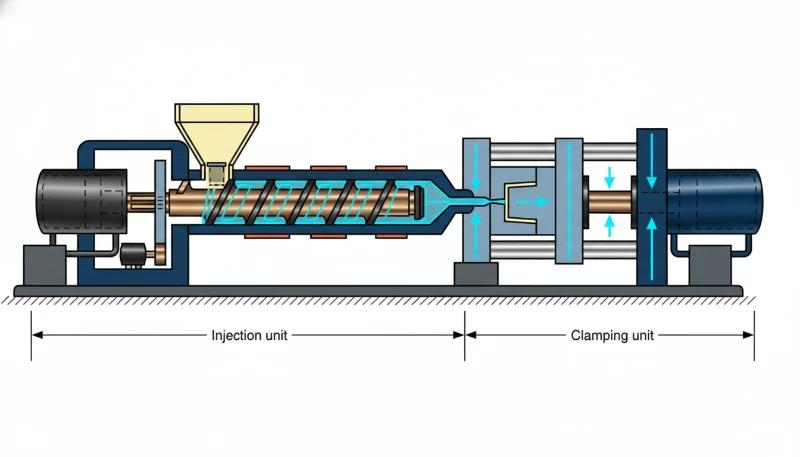
moldeo por inyección: el moldeo por inyección es un proceso de fabricación en el que una resina termoplástica fundida se inyecta a alta presión en la cavidad cerrada de un molde, donde se enfría y solidifica hasta adoptar la geometría final de la pieza. ↩
sobremoldeo: el sobremoldeo es un proceso de moldeo por inyección de dos componentes en el que se moldea un segundo material sobre un sustrato previamente moldeado para crear una pieza multimaterial con mejor agarre, sellado o amortiguación de vibraciones. ↩
moldeo por inserción: el moldeo por inserción es un proceso en el que un componente metálico o electrónico colocado previamente se encapsula con plástico inyectado para formar un único conjunto integrado. ↩