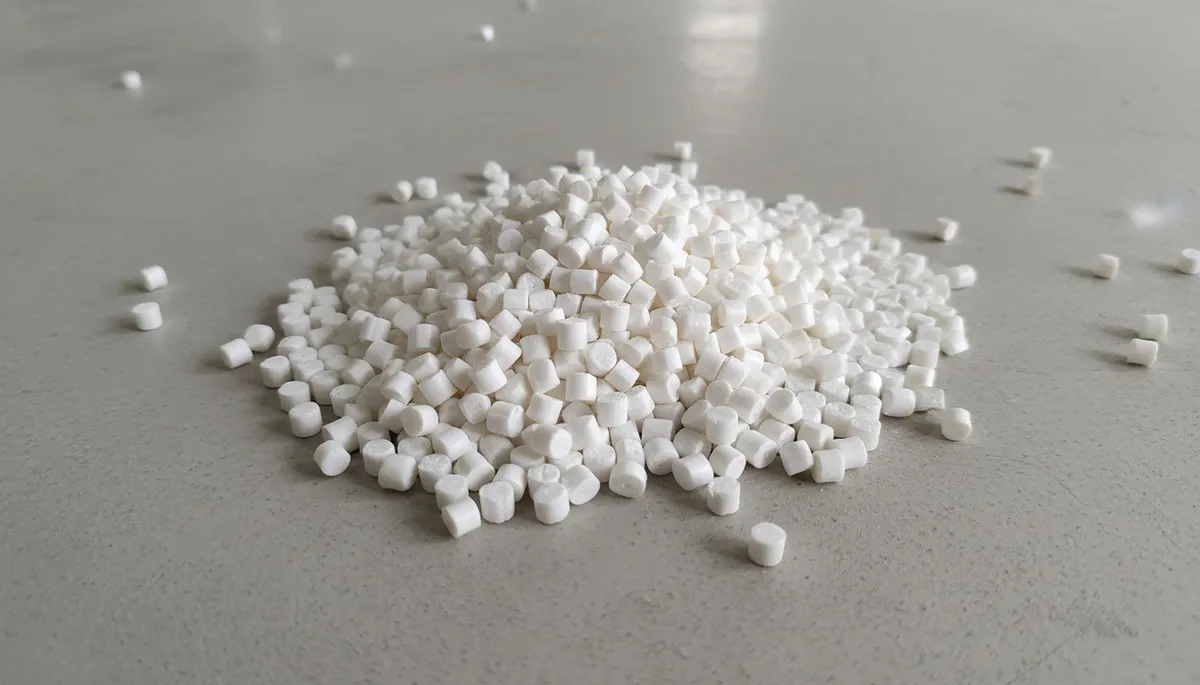
Vous définissez les composants plastiques d’une nouvelle plateforme automobile. La conception prévoit 47 pièces injectées pour l’habitacle, l’extérieur et les systèmes sous capot ; votre fournisseur doit garantir une qualité constante pour chacune d’elles aux cadences de l’industrie automobile. Le moulage par injection1 permet de produire la majorité des pièces plastiques d’une voiture moderne, des garnitures de tableau de bord aux collecteurs d’admission d’air. Cet article détaille les matériaux, techniques de moulage et exigences qualité qui distinguent un programme fiable de pièces automobiles d’un programme générant rebuts et retards.
- Le moulage par injection représente plus de 90% des pièces plastiques des véhicules particuliers
- Le PP, l’ABS et le nylon dominent le moulage automobile grâce à leur équilibre entre coût et performances
- Le moulage multicomposant et le surmoulage d’inserts permettent d’intégrer des composants qui réduisent les étapes d’assemblage
- IATF 16949 et PPAP sont incontournables pour les pièces automobiles de série
- Le choix du partenaire doit privilégier la plage de tonnage, l’expérience des matériaux et le suivi des défauts
Quel rôle le moulage par injection joue-t-il dans la construction automobile moderne ?
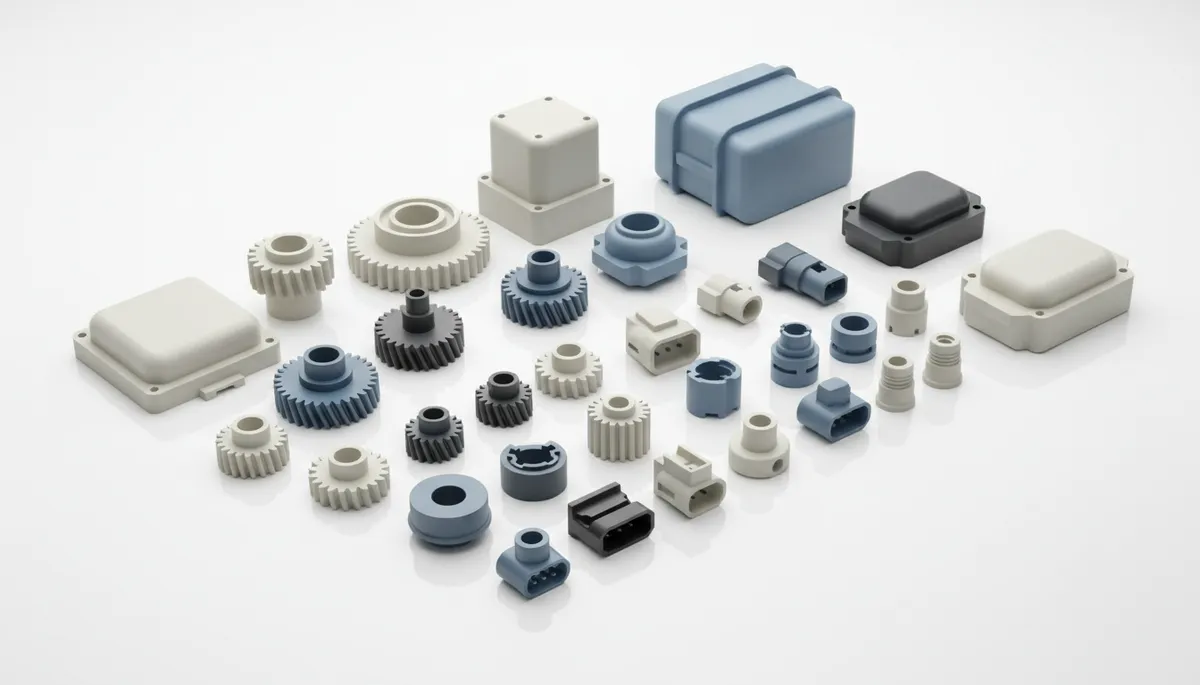
Le moulage par injection est la colonne vertébrale de la production de composants plastiques automobiles. Une berline de taille moyenne contient environ 30 000 pièces, dont plus de 1 000 sont en plastique—la plupart étant moulées par injection. Les pare-chocs, les tableaux de bord, les panneaux de porte, les collecteurs d’admission, les réservoirs de fluide, les boîtiers de capteurs et les blocs de connecteurs sortent tous de machines de moulage, et non de centres d’usinage.
Pour une vue d’ensemble, notre guide complet du moulage par injection présente les principes du procédé, le comportement des matériaux et les décisions de production.
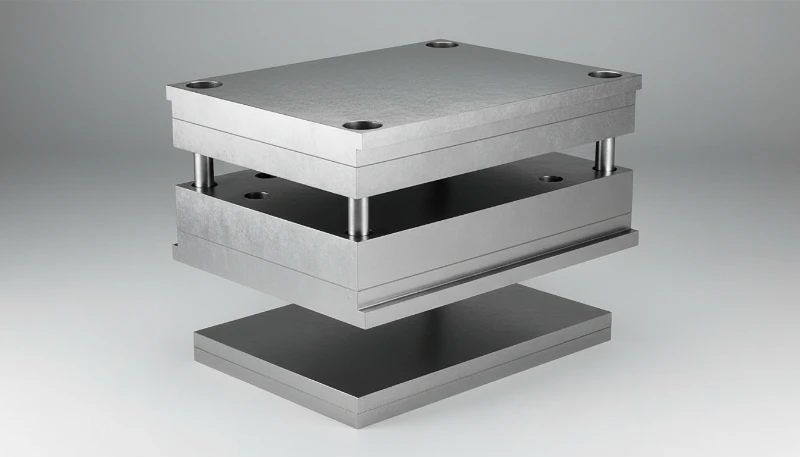
La raison est simple : une fois le moule fabriqué, chaque pièce ne coûte que quelques fractions de dollar en matière et en temps machine. Au-delà de 10 000 unités, aucun autre procédé ne rivalise en coût unitaire. Un moule automobile réalise généralement de 500 000 à plus d’un million de cycles avant de nécessiter une rénovation importante. C’est pourquoi tous les grands constructeurs automobiles et leurs équipementiers de rang 1 utilisent le moulage par injection comme principal procédé de fabrication des composants non métalliques.
Le moulage automobile n’est toutefois pas identique à celui des produits grand public. Les tolérances sont plus serrées, souvent ±0,05 mm pour les caractéristiques fonctionnelles, les spécifications des matériaux sont plus strictes, chaque nuance de résine devant figurer sur les listes d’approbation des équipementiers, et la charge documentaire est plus lourde. Si vous avez déjà soumis un PPAP pour un support en plastique, vous savez que la paperasse peut peser plus lourd que la pièce.
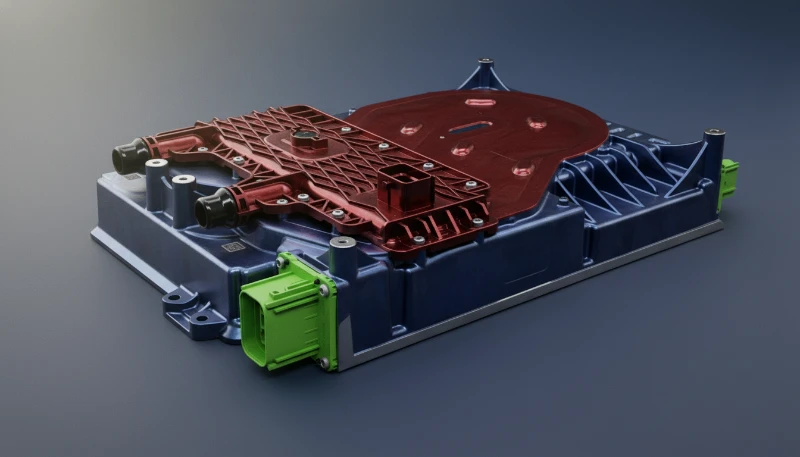
L’essor des véhicules électriques élargit encore le rôle du moulage par injection. Boîtiers de batteries, enveloppes de gestion thermique, ensembles de prises de charge et supports structurels légers sont de nouvelles applications où le plastique remplace des solutions métalliques plus lourdes. Le gain de poids améliore directement l’autonomie, raison pour laquelle les constructeurs poussent les fournisseurs de matériaux et les mouleurs à produire à grande échelle des plastiques de qualité structurelle.
Quels matériaux sont utilisés pour le moulage par injection automobile ?
Le PP, l’ABS, le nylon et le polycarbonate sont les principaux matériaux de moulage automobiles, choisis pour leur coût, leur résistance et leur tenue à la chaleur. Le choix du matériau est dicté par trois contraintes : le coût par kilogramme, les performances mécaniques à température et la conformité réglementaire (les pièces intérieures doivent respecter les limites d’embuage et de COV ; les pièces sous capot doivent supporter une exposition continue à 120–150 °C). Le tableau ci-dessous présente les résines de base qui dominent la production automobile mondiale.
| Matériau | Propriétés principales | Utilisation automobile typique |
|---|---|---|
| Polypropylène (PP) | Faible densité (0,90 g/cm3), résistance chimique, faible coût | Pare-chocs, boîtiers de batterie, garnitures intérieures |
| ABS | Résistance aux chocs, bon état de surface, apte à la peinture | Composants de tableau de bord, calandres, enjoliveurs |
| Polyamide 6/6 (PA66, nylon) | Haute résistance mécanique et thermique (jusqu’à 180 °C à court terme) | Collecteurs d’admission, caches moteur, engrenages |
| Le polycarbonate (PC) | Transparence, résistance aux chocs, stabilité dimensionnelle | Lentilles de phares, modules de toit ouvrant |
| POM (acétal) | Faible friction, excellente résistance à la fatigue | Composants de circuit de carburant, fixations, clips |
| TPO / TPE | Flexible, résistant aux intempéries, peignable | Joints, garnitures, panneaux intérieurs doux au toucher |
| PA66-GF30 | Rigidité élevée, résistance au fluage à température élevée | Supports structurels, composants de transmission |
En pratique, l’OEM définit une liste de matériaux approuvés pour chaque sous-système. En tant que mouleur, vous ne pouvez pas remplacer le PA66 par du PA6 sans validation technique, même si l’indice de fluidité est similaire. C’est pourquoi il importe de travailler avec un fournisseur qui stocke plus de 400 nuances de matériaux : il sera moins susceptible d’imposer une substitution créant des problèmes en aval lors de l’assemblage du véhicule.
Les grades chargés de fibres de verre méritent une attention particulière. L’ajout de 30 % de fibres de verre courtes au nylon multiplie sa résistance à la traction par environ 2,5, mais accélère aussi l’usure du moule (les fibres agissent comme du papier abrasif microscopique sur les surfaces d’empreinte) et exige des pressions d’injection supérieures. Si vous achetez des supports structurels ou des composants sous capot, confirmez que le mouleur possède une expérience de production avec des composés chargés de fibres de verre sur des outillages de série — et pas seulement quelques injections d’échantillons en laboratoire.
Les exigences réglementaires orientent également le choix des matériaux. Les composants intérieurs des véhicules vendus dans l’UE doivent respecter les restrictions de substances de REACH et de la directive ELV. Les pièces en contact avec des aliments ou de l’eau potable (porte-gobelets, porte-bouteilles) peuvent nécessiter des grades de résine conformes à la FDA. Un mouleur compétent signalera ces exigences dès la phase de conception, avant l’usinage de l’acier de l’outillage.
Quelles sont les principales applications automobiles des pièces moulées par injection ?
Les garnitures intérieures, les panneaux extérieurs et les composants du groupe motopropulseur sous capot sont les trois zones d’application des pièces automobiles moulées par injection. Chaque zone a des exigences différentes en matière de résistance à la température, de finition de surface et d’intégrité structurelle.
Systèmes intérieurs
Tableaux de bord, consoles centrales, panneaux de porte, conduits CVC et caches d’airbag. Les pièces intérieures exigent un état de surface de classe A, sans retassure, ligne de soudure ni marque d’écoulement visible, et doivent réussir les essais de fogging (< 1 mg de condensat selon DIN 75201). Le surmoulage2 multimatériau est fréquent : un substrat rigide en PP reçoit une peau en TPE au toucher souple, sans étape d’assemblage distincte. Aux volumes automobiles, la suppression d’une opération de collage peut générer des économies considérables.
Systèmes extérieurs
Pare-chocs, calandres, doublures d’ailes, coques de rétroviseurs et enjoliveurs de feux. Ces pièces sont exposées aux UV, à des cycles de température de −40 °C à +90 °C et aux impacts de gravillons sur la route. L’adhérence de la peinture sur les pare-chocs en TPO moulé est un problème bien connu : un traitement de surface (à la flamme ou au plasma) est nécessaire avant la ligne de peinture, et le mouleur doit maîtriser la migration des additifs qui nuit à l’adhérence. Obtenir la bonne énergie de surface avant peinture est essentiel pour éviter les réclamations sous garantie dues au décollement de la peinture.
Sous le capot et groupe motopropulseur
Collecteurs d’admission d’air, réservoirs de liquide de refroidissement, boîtiers de capteurs, blocs de connexion et clips de faisceaux électriques. Ce sont les applications les plus exigeantes : températures continues supérieures à 120 °C, exposition au carburant, à l’huile et au liquide de refroidissement, ainsi qu’aux vibrations du moteur. Le nylon 6/6, souvent chargé de fibres de verre, domine cette zone. Le moulage avec inserts3 sert fréquemment à encapsuler directement des inserts métalliques ou des capteurs électroniques dans le boîtier plastique, ce qui supprime des étapes d’assemblage et améliore la fiabilité sous vibrations.
La transition vers le véhicule électrique crée de nouvelles catégories : boîtiers de modules de batterie et d’onduleurs, collecteurs de gestion thermique et systèmes de connecteurs haute tension. Beaucoup de ces pièces exigent des matériaux ignifuges classés UL94 V-0 et une stabilité dimensionnelle sur une large plage de températures. La conception du moule est plus complexe pour ces pièces, car leurs parois sont généralement plus épaisses, ce qui augmente le temps de refroidissement et le risque de retassures.
Quelles techniques de moulage par injection sont utilisées dans la production automobile ?
Le moulage en une seule injection, à deux coups, avec insert et avec assistance gazeuse sont les quatre techniques fondamentales utilisées dans la production de plastiques automobiles. Les méthodes spécialisées permettent l’intégration multimatériau, la réduction de poids et des économies de coût aux volumes de production.
Le moulage bi-injection (multicomposant) moule deux matériaux différents au cours d’un même cycle machine. Une application automobile typique est un bouton composé d’un corps rigide en PC et d’une surface souple en TPE : un noyau rotatif transfère le substrat de l’empreinte A à l’empreinte B sans démoulage. Le procédé supprime une opération d’assemblage secondaire et assure l’alignement précis des deux matériaux. La liaison obtenue est généralement plus résistante qu’un collage, car les matériaux s’imbriquent à l’échelle moléculaire pendant le refroidissement.
Le moulage avec inserts consiste à placer un élément métallique embouti, une douille filetée ou un composant électronique dans le moule avant l’injection. Le plastique l’enveloppe et forme une pièce monobloc. Les blocs de connexion automobiles à bornes métalliques prépositionnées en sont un exemple de grande série : des milliards sont moulés chaque année dans la chaîne d’approvisionnement automobile mondiale.
Le moulage assisté par gaz injecte de l’azote dans la matière fondue afin d’évider les sections épaisses. Il réduit le poids de 10 à 30 %, élimine les retassures sur les surfaces d’aspect et raccourcit le temps de production en diminuant la masse à refroidir. Cette technique est souvent utilisée pour les poignées de porte, les cadres d’accoudoir de console et les supports de rétroviseur. Le noyau creux améliore aussi le rapport rigidité/poids par rapport à une pièce pleine de mêmes dimensions extérieures, car le canal de gaz agit comme une nervure interne sans ajouter de matière.
Le choix de la bonne technique de moulage ne se fait pas isolément. La géométrie de la pièce, le volume annuel, les exigences matière et les contraintes d’assemblage entrent tous en compte. Un bon partenaire recommandera la technique la plus rentable selon le coût total de possession — outillage, temps de cycle, opérations secondaires et taux de rebut — plutôt que d’adopter par défaut la méthode la plus simple en espérant qu’elle fonctionne. L’investissement initial dans la simulation d’écoulement est amorti plusieurs fois lorsqu’on sait qu’une seule reprise d’un moule de production automobile peut coûter $5,000–$15,000 et ajouter deux à quatre semaines au calendrier.
"Le moulage bi-injection élimine l’étape distincte de collage entre les composants rigides et souples."True
La seconde matière se lie au substrat à l’échelle moléculaire pendant le cycle de moulage, créant une interface plus résistante que ne pourrait le faire n’importe quel procédé de collage secondaire.
« Le moulage assisté par gaz est principalement utilisé pour de petites pièces de précision pesant moins de 50 grammes. »False
L’injection assistée par gaz est particulièrement avantageuse pour les pièces de grande taille à sections épaisses, pesant souvent plus de 500 grammes, dont l’évidement du cœur réduit sensiblement le poids et les retassures sur les surfaces esthétiques.
Comment s’effectue le contrôle qualité des pièces automobiles moulées par injection ?
Dans l’automobile, la qualité n’est ni facultative ni négociable. Deux référentiels définissent le socle : IATF 16949 (norme de système de management de la qualité propre à l’automobile, fondée sur ISO 9001 mais assortie d’exigences supplémentaires de maîtrise des procédés, de gestion des risques et de traçabilité) et le PPAP (processus d’homologation des pièces de production, qui définit le dossier en 18 éléments qu’un fournisseur doit remettre avant l’autorisation de production par le constructeur).
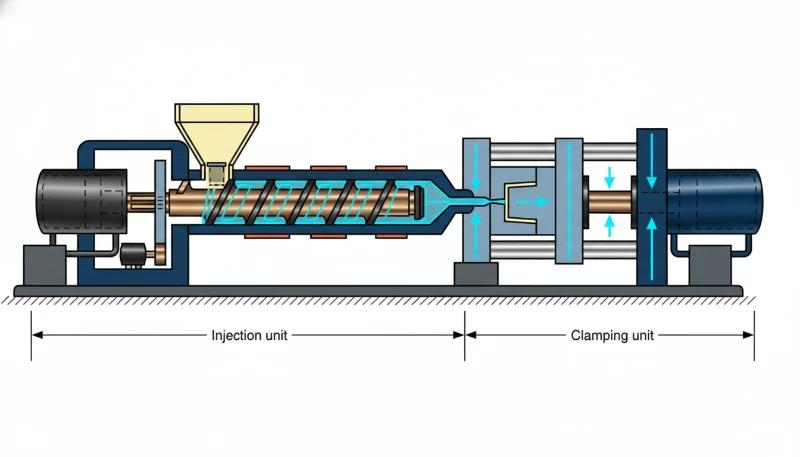
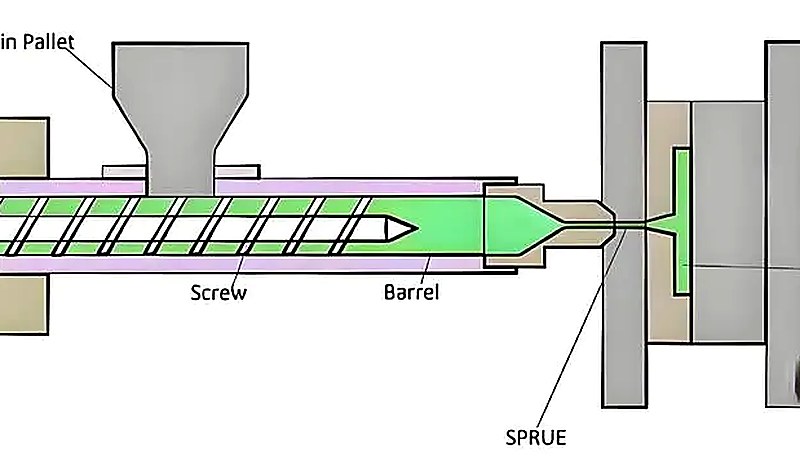
Dans l’atelier, cela se traduit par plusieurs activités concrètes. Les échantillons de première série sont contrôlés par machine à mesurer tridimensionnelle selon le plan GD&T. Les paramètres de procédé, tels que la pression d’injection, la température de la matière, le temps de gel du point d’injection et le temps de refroidissement, sont associés aux étapes du moulage par injection, puis verrouillés dans un plan de contrôle. En production, des cartes SPC (maîtrise statistique des procédés) suivent les cotes critiques par échantillonnage, généralement toutes les 2 heures ou toutes les 500 pièces, selon la première échéance.
Un fournisseur qui produit des pièces automobiles sans capacité MMT ni maîtrise statistique documentée n’est pas un fournisseur de rang 1 ou 2, quelles que soient les affirmations de son site. Lors de nos audits chez ZetarMold, nous recherchons le matériel de contrôle réel — machines à mesurer tridimensionnelles, projecteurs de profils, duromètres — et les relevés d’étalonnage de chaque instrument. Pour les travaux automobiles, les certifications ISO 9001 / ISO 13485 constituent un minimum, pas un aboutissement.
La traçabilité est une autre exigence non négociable. Chaque lot de production doit pouvoir être relié au lot précis de matériau, à la machine, au moule et à l’opérateur concernés. En cas de défaillance sur le terrain, le constructeur doit pouvoir identifier tous les véhicules touchés en quelques heures, et non en quelques semaines. Ce niveau de traçabilité exige un suivi systématique des lots, depuis la réception des matières premières jusqu’à l’expédition finale. C’est aussi l’un des premiers points qu’un auditeur automobile vérifiera lors de l’évaluation d’une usine.
Sans système robuste de traçabilité des lots, un rappel devient exponentiellement plus coûteux, car l’OEM ne peut pas isoler la fenêtre de production concernée et doit rappeler par précaution une gamme plus large de véhicules. Tout fournisseur incapable de démontrer cette capacité lors d’un audit doit être exclu des projets automobiles, quelles que soient ses autres qualifications.
"Le PPAP exige des résultats dimensionnels provenant d'au moins 3 séries de production avant l'expédition de pièces de série."True
Le minimum de 3 séries démontre la répétabilité du procédé, et pas seulement le fait que la machine a été réglée une fois pour les injections d’échantillons. Chaque série doit produire des pièces conformes aux spécifications dans des conditions équivalentes à celles de la production.
"Si une pièce réussit le contrôle visuel, elle est approuvée pour une utilisation en production automobile."False
Le contrôle visuel ne détecte que les défauts esthétiques. Le PPAP automobile exige des données dimensionnelles, des certificats matière, des études de capabilité du procédé (valeurs Cpk) et souvent des résultats d’essais destructifs avant toute homologation de la production.
Comment choisir le bon partenaire de moulage par injection automobile ?
Les critères de sélection clés sont la gamme de tonnage, l’expérience matériau, les systèmes qualité, l’outillage interne et la rapidité de communication. Voici ce que chaque facteur signifie en pratique pour un programme véhicule.
Plage de tonnage et parc de machines. Les pièces automobiles vont du clip de connecteur de 5 grammes à la peau de pare-chocs de 3 kilogrammes. Un fournisseur limité à des presses de 200 t ne peut pas produire de grandes pièces extérieures. À l’inverse, un atelier équipé uniquement de presses de plus de 1 000 t gaspillera de la capacité sur les petits composants. Recherchez une plage d’au moins 90 à 1 000 t, avec la possibilité de monter davantage pour les projets spéciaux. L’âge des machines compte également : les anciennes presses hydrauliques peuvent manquer de la précision des presses servoélectriques ou hybrides, ce qui nuit à la régularité des pièces à tolérances serrées.
Expérience des matériaux. Transformer du nylon chargé de fibres de verre en grande série diffère du moulage d’un PP courant. La charge abrasive use plus vite les seuils et les surfaces d’empreinte, ce qui exige un entretien plus fréquent des moules et une surveillance plus rigoureuse du procédé. Un fournisseur ayant transformé plus de 400 matériaux pour l’automobile, le médical et les biens de consommation a déjà rencontré, et résolu, des problèmes qu’un atelier limité au PP ne connaît pas encore.
Maturité du système qualité. Demandez un exemplaire de leur modèle de plan de contrôle et un rapport dimensionnel récent. S’ils ne peuvent pas les fournir sous un jour, leur système qualité reste théorique. Le fournisseur doit au minimum disposer d’un flux qualité structuré — contrôle à réception, contrôles en cours de fabrication, inspection du procédé, contrôle de l’emballage, contrôle final et contrôle avant expédition — étayé par des équipements de mesure étalonnés et des procédures documentées.
Assistance technique pour les modifications de moule. Les programmes automobiles durent de 5 à 7 ans. Pendant cette période, les modifications de conception sont inévitables, qu’elles soient motivées par une réduction des coûts, un restylage du véhicule ou l’optimisation du procédé de fabrication.
Si votre mouleur ne dispose pas de capacités internes de fabrication de moules, chaque modification de conception devient une négociation logistique avec un outilleur externe, ce qui ajoute des semaines au calendrier. Un atelier de moulage interne équipé de machines CNC, d’EDM et d’électroérosion à fil peut réaliser une modification de l’acier en quelques jours au lieu de quelques semaines, maintenant ainsi la ligne de production en fonctionnement sans interruption.
Communication et réactivité. Lorsqu’un problème dimensionnel apparaît sur la ligne de production, il faut une réponse en quelques heures, pas en quelques jours. Un fournisseur dont les chefs de projet anglophones comprennent le contexte technique, au lieu de simples commerciaux qui transfèrent des courriels, peut résoudre les problèmes avant l’arrêt de la ligne. C’est particulièrement important pour l’approvisionnement à l’étranger, où le décalage horaire réduit déjà la fenêtre de communication.
Quels sont les défauts courants du moulage par injection automobile et comment les prévenir ?
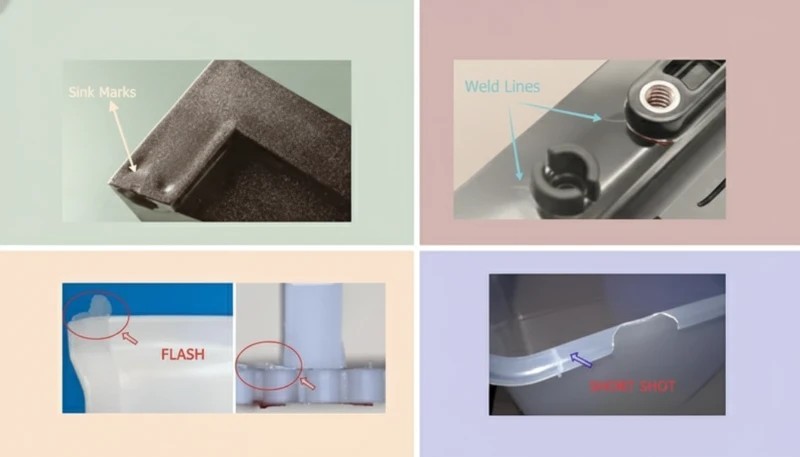
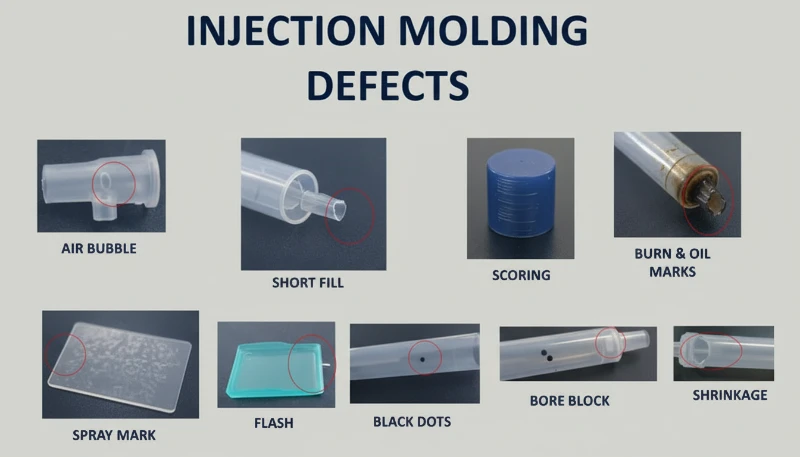
Les marques de retassure, les lignes de soudure et les pièces incomplètes sont les défauts les plus courants dans le moulage par injection automobile. Chacun peut être évité grâce à un contrôle de processus adéquat, une conception de moule appropriée et une surveillance systématique pendant la production.
Les retassures apparaissent sur la surface d’aspect en regard des sections épaisses : nervures, bossages et transitions de paroi. La section épaisse refroidit plus lentement, se contracte et tire la surface visible vers l’intérieur. Prévention : limiter l’épaisseur à la base des nervures à 50–60 % de la paroi nominale et appliquer une pression et un temps de maintien suffisants. Un fournisseur qui règle la pression de maintien au ressenti plutôt qu’à partir de la courbe de pression réelle met en péril vos exigences de surface de classe A.
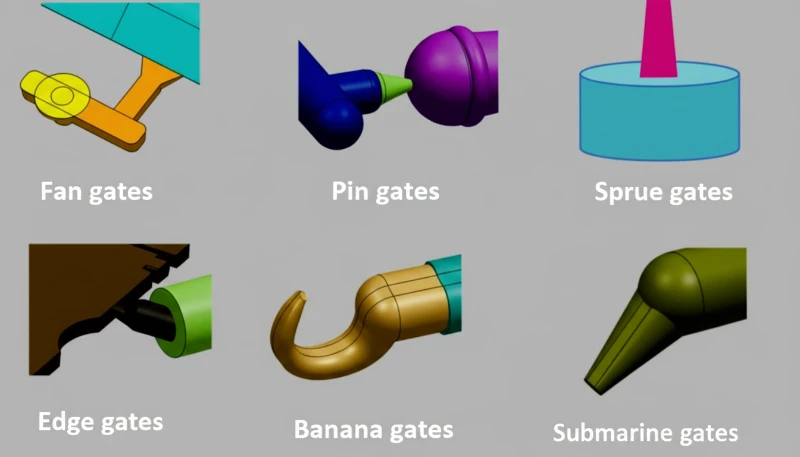
Les lignes de soudure se forment à la rencontre de deux fronts d’écoulement, généralement autour des trous ou des inserts. Dans les matériaux chargés de fibres de verre, les fibres s’orientent parallèlement à la ligne, créant une zone faible où la résistance à la traction peut chuter de 30 à 50 % par rapport au matériau massif. Pour les prévenir, on déplace le seuil afin de repousser la ligne vers une zone non critique ou on augmente la température de fusion pour favoriser la diffusion moléculaire. Une simulation d’écoulement avant l’usinage détecte la plupart de ces problèmes, à condition que le mouleur l’exécute réellement et en exploite les résultats.
Au-delà de ces trois catégories, les mouleurs automobiles surveillent également le gauchissement (notamment sur les grandes pièces planes comme les panneaux de porte), les bavures (excès de matière s’échappant le long du plan de joint) et la dérive dimensionnelle pendant les longues séries de production. Chacun de ces défauts trouve son origine dans la maîtrise du procédé, l’état du moule ou la régularité de la matière — et chacun coûte bien moins cher à prévenir par un réglage rigoureux qu’à corriger par reprise après moulage ou mise au rebut.
Le coût des défauts dans la production automobile ne se limite pas à la valeur au rebut de la pièce elle-même. Une pièce défectueuse qui atteint la ligne d’assemblage peut arrêter la production, tandis qu’une pièce défectueuse livrée au client final entraîne une demande de garantie ou un rappel. C’est pourquoi les constructeurs automobiles fixent des objectifs de taux de défauts en parties par million (PPM), et pourquoi les mouleurs sérieux investissent dans des équipements d’inspection automatisés et la surveillance des procédés en temps réel afin de détecter les écarts avant qu’ils ne produisent des pièces hors spécifications.
À quoi ressemble en pratique un partenaire de moulage automobile qualifié ?
Les qualifications clés sont une large gamme de tonnage, un outillage interne, des systèmes qualité certifiés et une traçabilité documentée des matériaux.
Un partenaire de moulage automobile qualifié combine une large gamme de tonnage, un outillage interne et des systèmes qualité documentés. Dans notre usine de Shanghai, notre équipe exploite 47 machines de moulage par injection de 90T à 1850T et travaille sous les systèmes ISO 9001, ISO 13485, ISO 14001 et ISO 45001. Avec plus de 20 ans d'expérience en moulage par injection et en outillage, nos ingénieurs vérifient la faisabilité des pièces automobiles par rapport au matériau, au tonnage, au risque dimensionnel et à la documentation PPAP avant le démarrage de l'outillage.
Pour les projets automobiles spécifiquement, nous nous concentrons sur trois contrôles pratiques. Premièrement, notre atelier interne de fabrication de moules regroupe la conception d’outillage, l’usinage, les essais et la maintenance sous un même toit, au lieu de répartir la responsabilité entre des ateliers d’outillage externes. Deuxièmement, notre processus qualité documente l’inspection à réception, l’échantillonnage en cours de processus, les contrôles d’emballage, l’inspection finale et l’inspection de sortie, afin que les preuves PPAP ne soient pas reconstruites de mémoire après le début de la production. Troisièmement, notre équipe a de l’expérience avec plus de 400 matériaux plastiques, ce qui réduit le risque de substitution de résine lorsqu’un constructeur exige un grade spécifique de PP, ABS, PA, PC ou chargé de verre.
Notre équipe de production comprend plus de 120 personnes qui comprennent la différence entre une garniture esthétique, un support semi-structurel et des pièces sous capot exposées à la chaleur et aux vibrations. Si vous évaluez des partenaires de moulage pour un programme automobile, demandez des rapports dimensionnels d’échantillons, un modèle de plan de contrôle, des registres de traçabilité des matériaux et des données de capacité de processus avant de vous engager dans un investissement d’outillage.
Quelles questions les acheteurs posent-ils sur le moulage par injection automobile ?
Questions fréquemment posées
Quel est le délai type d’un moule d’injection automobile ?
Un moule automobile standard à une empreinte nécessite 6–10 semaines entre l’approbation de la conception et les échantillons T1. Les moules multi-empreintes ou famille dotés de mouvements latéraux complexes peuvent demander 12–16 semaines. Chez ZetarMold, notre atelier interne livre généralement les échantillons T1 en 8 semaines pour des outillages automobiles de complexité moyenne, car nous maîtrisons en interne tout le processus d’usinage et d’essai au lieu d’attendre des outilleurs externes. L’essai du moule nécessite généralement 2–3 itérations pour régler précisément les paramètres du procédé avant l’établissement du rapport de contrôle du premier article.
Le moulage par injection peut-il produire des pièces structurelles automobiles ?
Oui, avec du nylon chargé de fibres de verre ou des composés thermoplastiques à fibres longues (LFT). Un support en PA66-GF30 peut atteindre une résistance à la traction supérieure à 180 MPa, suffisante pour de nombreuses applications structurelles et semi-structurelles telles que les armatures de sièges, les supports de pédales et les éléments de fixation de batteries sur les plateformes de véhicules électriques. L’essentiel est de choisir la teneur et l’orientation appropriées des fibres. C’est là que l’expertise en simulation d’écoulement dans le moule et en positionnement des seuils fait la différence entre une pièce qui réussit les essais en laboratoire et une autre qui échoue sur le terrain sous des charges réelles.
Quel est le volume de production minimal qui justifie le moulage par injection de pièces automobiles ?
Pour les pièces simples dont le moule est de complexité moyenne, le seuil de rentabilité par rapport à l’usinage CNC ou à l’impression 3D se situe généralement entre 5 000 et 10 000 unités, en tenant compte de l’amortissement du coût de l’outillage sur la série. Pour les moules multi-empreintes complexes avec tiroirs et éjecteurs inclinés, le seuil atteint 30 000 à 50 000 unités avant que l’économie par pièce compense l’investissement initial plus élevé. Les programmes automobiles dépassent généralement largement ces volumes sur un cycle de modèle de 5 à 7 ans, ce qui fait du moulage par injection le choix économique évident. Certains mouleurs proposent également une transition de prototypage au moyen de moules en aluminium pour les faibles volumes, avant d’investir dans un outillage de production en acier, ce qui peut réduire le coût initial de 40 à 60 %.
Comment teste-t-on la durabilité des pièces automobiles moulées par injection ?
Les catégories d’essais courantes comprennent les cycles thermiques (de −40 °C à +120 °C pendant plus de 100 cycles selon la spécification OEM), le vieillissement UV (exposition accélérée au Weather-Ometer selon SAE J2412 ou des normes équivalentes), les essais vibratoires (selon les spectres de profil routier ISO 16750-3, généralement 8–24 heures par axe) et la résistance chimique (immersion dans du carburant, de l’huile et du liquide de refroidissement pendant des durées définies à température élevée). Certaines applications exigent aussi des essais de chute, des essais de choc à basse température et un vieillissement à l’humidité. L’OEM définit la matrice d’essais exacte dans le document de spécification du composant, et le fournisseur doit remettre des rapports d’essais certifiés dans le dossier PPAP avant toute approbation de production.
Quelles tolérances le moulage par injection peut-il atteindre pour les pièces automobiles ?
Des tolérances générales de ±0.1 mm sont courantes pour les caractéristiques de moins de 50 mm réalisées dans des résines techniques standard. Des tolérances serrées de ±0.05 mm sont réalisables sur des caractéristiques critiques telles que les clips encliquetables, les pions de positionnement et les surfaces d’étanchéité, mais elles exigent une construction de moule de précision, des paramètres de procédé verrouillés et un suivi statistique. Les caractéristiques de plus de 150 mm tiennent généralement ±0.2–0.3 mm en raison des variations de retrait sur les grandes dimensions. Les matériaux cristallins tels que le nylon et le POM présentent un retrait supérieur à celui des résines amorphes comme l’ABS ou le PC, ce qui influe sur la capacité à respecter les tolérances.
Le surmoulage est-il utilisé dans la production automobile ?
Très largement. Le surmoulage par double injection produit en un seul cycle machine et sans assemblage secondaire des pièces multimatériaux telles que des boutons de volant doux au toucher, des connecteurs électriques étanches à lèvres de joint intégrées et des supports de fixation amortissant les vibrations. Cela supprime les opérations de collage séparées et produit des liaisons entre matériaux plus solides que celles obtenues par adhésif, car les deux matières fusionnent au niveau moléculaire pendant le refroidissement. Le procédé exige une presse dotée de deux unités d’injection indépendantes et un moule comportant soit un noyau rotatif, soit une plaque d’indexage pour transférer le substrat entre la première et la seconde injection de matière.
Quelle certification un fournisseur de moulage par injection automobile doit-il détenir ?
IATF 16949 est la norme de management de la qualité propre aux fournisseurs automobiles et la plupart des équipementiers de rang 1 l’exigent pour approuver un approvisionnement destiné à la production. Au minimum, tout fournisseur qui chiffre un projet automobile doit être certifié ISO 9001, mais les programmes de production sérieux imposent IATF 16949 comme exigence ferme du processus de qualification. La certification du management environnemental ISO 14001 et celle de la santé et de la sécurité au travail ISO 45001 sont de plus en plus exigées par les équipementiers européens et nord-américains dans le cadre de leurs normes d’achat durable et de leurs obligations de responsabilité d’entreprise.
Le choix d’un partenaire de moulage par injection pour une production automobile vous engage pendant 5 à 7 ans. Le bon fournisseur garantit une qualité dimensionnelle constante, gère les modifications de conception sans perturber le calendrier et fournit les documents requis pour votre dossier PPAP. Si vous recherchez des composants plastiques automobiles et souhaitez discuter du choix des matériaux, de la conception du moule ou des capacités du procédé avec notre équipe d’ingénieurs, utilisez notre guide complet du moule d’injection comme liste de contrôle technique avant toute demande de prix.
moulage par injection: procédé de fabrication dans lequel une résine thermoplastique fondue est injectée sous haute pression dans une empreinte fermée, où elle refroidit et se solidifie selon la géométrie finale de la pièce. ↩
surmoulage: procédé de moulage par injection en deux injections dans lequel un second matériau est moulé sur un substrat déjà formé afin de créer une pièce multimatériau offrant une meilleure préhension, étanchéité ou absorption des vibrations. ↩
moulage avec inserts: procédé dans lequel un composant métallique ou électronique prépositionné est encapsulé par le plastique injecté afin de former un assemblage monobloc. ↩