 Overslaan naar inhoud

- TPU is a flexible, abrasion-resistant thermoplastic elastomer processed at 180–230°C on standard injection molding machines.
- Shore A hardness spans 60A–98A, covering everything from soft grips to semi-rigid structural parts.
- Pre-drying at 80–100°C for 2–4 hours is mandatory — moisture above 0.02% causes splay and chain scission.
- TPU outperforms TPE in tensile strength (25–55 MPa) and abrasion resistance, making it ideal for demanding applications.
- Design for TPU requires generous draft angles (2–3° for soft grades) and gate diameters ≥1.5 mm.
What Is TPU Injection Molding?
TPU spuitgieten1 is het proces waarbij gesmolten thermoplastisch polyurethaan in een stalen mal wordt gespoten om flexibele, slijtvaste onderdelen te produceren. Het materiaal combineert rubberachtige elasticiteit met thermoplastische verwerkbaarheid, waardoor het ideaal is voor overmoulding, afdichtingen en slijtonderdelen. Voor een breder overzicht, zie onze spuitgieten gids en het spuitgietvorm2 overzicht.
Voor een bredere visie, onze injection molding complete guide behandelt procesfundamenten, materiaalgedrag en productiebeslissingen.
For broader context, compare this topic with supplier sourcing guide.
In onze fabriek in Shanghai hebben we 47 spuitgietmachines van 90T tot 1850T, dus behandelen we elke gereedschapsbeslissing als een procesvenstervraag, niet alleen als een gecoteerde prijs.
TPU-spuitgieten is het smelten van thermoplastische polyurethaanpellets en deze in een mal injecteren om flexibele, rubberachtige onderdelen te maken. Het draait op dezelfde machines die worden gebruikt voor ABS, PP of nylon.
In our factory, TPU has become one of the most requested elastomeric materials over the past five years. Customers come to us when they need parts that combine rubber-like flexibility with thermoplastic recyclability — think cable overmolds, wearable device skins, and industrial seals. The chemistry behind TPU consists of alternating hard segments (from diisocyanate and chain extender) and soft segments (from polyol), which create its signature combination of strength and elasticity at the molecular level.
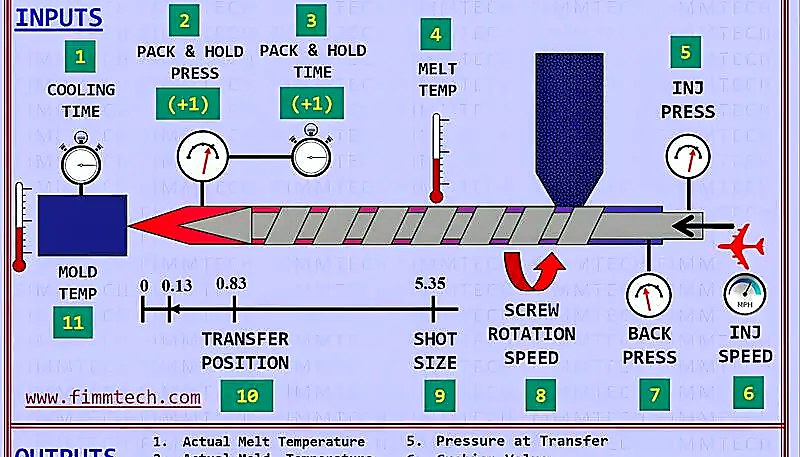
TPU Spuitgieten: Complete Gids voor Ingenieurs
““TPU kan worden gespoten op dezelfde machines die worden gebruikt voor ABS, PP en nylon.””Echt
Standard reciprocating-screw injection molding machines process TPU effectively. The key differences are parameter settings (lower barrel temperatures of 180–230°C, slower injection speeds) and the mandatory pre-drying step — not the equipment itself.
““Je hebt gespecialiseerde rubberverwerkingsapparatuur nodig om TPU-onderdelen te vormen.””Vals
TPU is a thermoplastic elastomer, not a thermoset rubber. It melts and flows like a thermoplastic, so it can be processed on any standard injection molding machine without special rubber-processing attachments or vulcanization ovens.
What Are the Key Material Properties of TPU?
De belangrijkste eigenschappen van TPU zijn Shore A-hardheid van 60A–98A, treksterkte van 25–55 MPa en slijtageverlies van 20–80 mm3. Deze worden tijdens de synthese vastgesteld via de verhouding harde/zachte segmenten.
| Eigendom | Typical Value | Significance |
|---|---|---|
| Shore Hardness | 60A–98A / 40D–80D | Soft grips to semi-rigid housings |
| Treksterkte | 25–55 MPa | Higher than most TPEs |
| Rek bij breuk | 300–700% | Excellent flexibility |
| Operating Temp. | –40°C to +100°C | Outdoor and refrigerated use |
| Schuurweerstand | 20–80 mm3 DIN-verlies | Superior to rubbers and TPEs |
| Waterabsorptie | 0.5–2.0% (24 hr) | Mandatory pre-drying |
Polyester-based TPU grades offer superior oil resistance and abrasion performance, while polyether-based grades excel in hydrolysis resistance and low-temperature flexibility. For marine or humid-environment parts, we always specify polyether TPU. For automotive underhood components exposed to hydraulic fluid, polyester grades perform better.
TPU process parameters are barrel temp 180–230°C, mold temp 20–50°C, slow injection speed, and 2–4 hour pre-drying at 80–100°C. Moisture below 0.02% is mandatory.
| Parameter | Range | Opmerkingen |
|---|---|---|
| Pre-drying Temp. | 80–100°C | 2–4 hours; dehumidifying dryer |
| Barrel Temp. (Rear) | 170–190°C | Prevents premature melting |
| Barrel Temp. (Front) | 190–230°C | Avoid exceeding 240°C |
| Schimmel Temperatuur | 20–50°C | Higher = better surface |
| Injectiedruk | 50–120 MPa | Softer grades need less |
| Houddruk | 60–80% of peak | Prevents sink marks |
| Koeltijd | 15–60 seconds | Temp. Bereik |
| Schroefsnelheid | 30–80 RPM | Slow prevents shear damage |
In our experience, TPU’s sensitivity to residence time is one of the trickiest parameters to manage. If TPU sits in the barrel at processing temperature for more than 5–10 minutes, it begins to degrade — you’ll see yellowing and a sharp drop in tensile properties. We always purge the machine between runs and minimize shot-to-cycle intervals during production startup.
What Are Common Defects in TPU Injection Molding and How Can You Prevent Them?
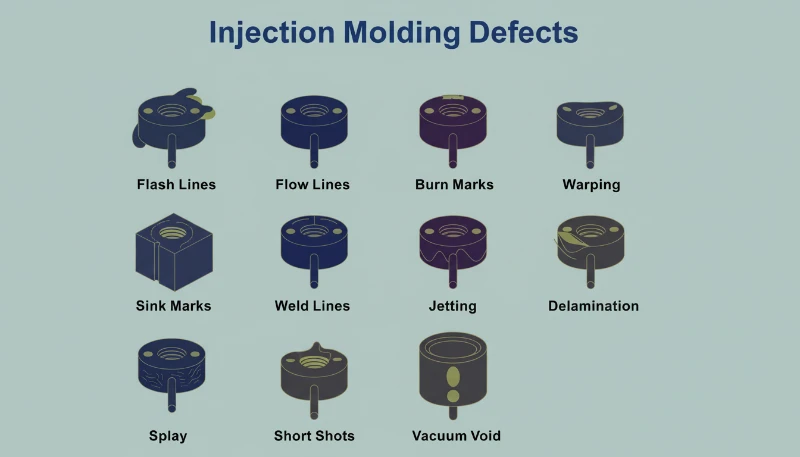
The most common TPU defects are splay marks (moisture), mold sticking (high tack), short shots (low pressure), and yellowing (thermal degradation). Each has a specific root cause and a practical fix.
| Defect | Root Cause | Prevention |
|---|---|---|
| Splay / Silver Streaks | Moisture in material | Dry at 90°C for 3–4 hours |
| Part Sticking | High elasticity, low draft | Increase draft to 2–3° |
| Bubbles / Voids | Thermal degradation | Reduce barrel temp; improve venting |
| Kort schot | Insufficient fill pressure | Raise injection pressure 10–20% |
| Flash | Overpacking; worn parting line | Reduce holding pressure |
| Yellowing | Excessive temp or residence | Keep barrel below 240°C; purge |
We’ve found that part sticking is the single biggest production bottleneck for soft TPU grades. In one project for a wearable fitness device, we were running Shore 75A TPU with a complex undercut geometry. The fix wasn’t more release agent — it was increasing the draft angle from 1° to 2.5° on the sidewalls and redesigning the ejector pin locations. Cycle time dropped from 45 seconds to 28 seconds after the mold modification.
““TPU moet voor elke productierun gedurende 2–4 uur worden gedroogd bij 80–100°C.””Echt
Pre-drying is non-negotiable. Moisture content above 0.02% causes hydrolytic chain scission during the melt phase, producing splay marks, surface bubbles, and significant reduction in tensile strength.
““Als TPU-korrels in een verzegelde zak worden bewaard, hoeven ze niet te worden gedroogd.””Vals
TPU is highly hygroscopic — it can absorb enough moisture in 30–60 minutes of open-air exposure to cause splay marks and chain scission. Pre-drying is mandatory regardless of storage conditions.
What Industries Rely on TPU Injection Molded Parts?
TPU is widely used across automotive, footwear, medical, consumer electronics, and industrial applications. Its combination of flexibility, abrasion resistance, and chemical tolerance makes it the go-to elastomer for demanding environments.
Automobiel: Door seals, gearshift boots, cable grommets, and vibration-damping mounts. Polyester-based TPU grades offer the fuel and oil resistance required for underhood applications. We’ve produced TPU cable harness guides for EV battery packs where dimensional stability at –30°C was a hard requirement.
Footwear: Middenzolen, buitenzolen en teenkappen gebruiken TPU voor uitzonderlijke slijtweerstand (20–40 mm3 DIN-verlies) en buigvermoeiingsbestendigheid. Gespoten TPU-buitenzolen weerstaan miljoenen buigcycli zonder te barsten.
Medische hulpmiddelen: Medical-grade TPU formulations are used for surgical tubing, catheter components, and wearable sensor housings. Polyether TPU’s hydrolysis resistance and biocompatibility (ISO 10993) make it suitable for body-contact applications. We produce flexible TPU housings for continuous glucose monitoring devices.
““TPU kan kleine ondertrekken opvangen door tijdens het uitnemen te buigen.””Echt
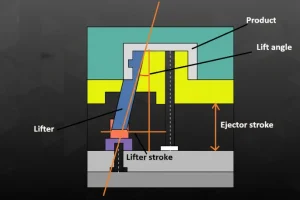
TPU’s elasticity allows it to stretch over minor undercuts without damage, reducing tooling complexity by eliminating sliders or lifters.
““TPU-onderdelen zijn te duur voor hoogvolume consumentenproducten.””Vals
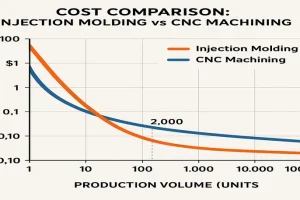
TPU costs more per kilogram than commodity TPE, but its longer mold life (300K+ shots), lower scrap rate, and runner recyclability often make it cheaper per-part in volumes above 10,000 units.
Consumentenelektronica: Phone cases, cable overmolds, earphone tips, and smartwatch bands. TPU’s chemical resistance to sweat, cleaning solvents, and UV light makes it durable in daily consumer environments.
Industrial: Hydraulic hose couplings, conveyor components, roll covers, and protective boots from harder TPU grades (Shore 90A–60D). Abrasion and tear resistance exceeds natural rubber by 3–5× in high-speed conveyor applications.
How Does TPU Compare to TPE, Silicone, and Rubber?
TPU is sterker en slijtvaster dan standaard thermoplastische elastomeren (TPE's), met een treksterkte van 25–55 MPa versus 8–20 MPa voor TPE. Het biedt ook recycleerbaarheid die gevulkaniseerd rubber en LSR niet kunnen evenaren.
| Eigendom | TPU | TPE | Silicone | Rubber |
|---|---|---|---|---|
| Treksterkte | 25–55 MPa | 8–20 MPa | 6–12 MPa | 10–30 MPa |
| Abrasion | Uitstekend | Goed | Slecht | Very Good |
| Temp. Range | Rode TPU kunststof spuitgietcomponent | –50 to +80°C | –60 to +200°C | Rode TPU kunststof spuitgietcomponent |
| Recyclable | Yes | Yes | Geen | Geen |
| Pre-drying | Mandatory | Sometimes | Geen | N/A |
We’ve run direct comparison projects for clients choosing between TPU and TPE for phone case applications. TPE (SEBS-based) costs 20–30% less per kilogram and processes more easily, but drop test results were consistently 15–25% worse with TPE versus a comparable Shore 85A TPU grade. When mechanical performance under repeated impact is critical, TPU wins.
What Design Guidelines Should You Follow for TPU Parts?
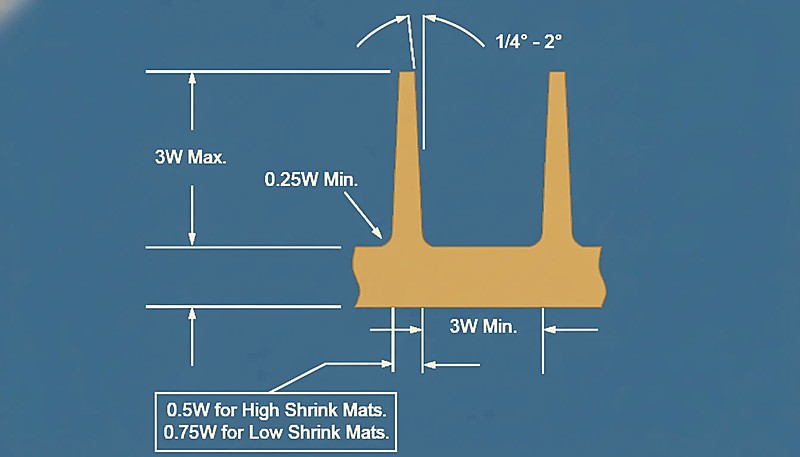
TPU parts are best designed with 1.5–4.0 mm walls, 2–3° draft for soft grades, gate diameter ≥1.5 mm, and gradual transitions. TPU flexes enough to demold 3–5% undercuts without sliders.
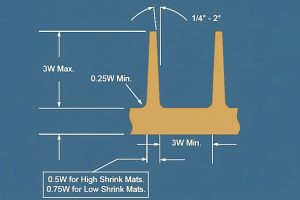
Wanddikte: Very thin walls (6 mm) produce long cooling times and potential voids. Uniform wall thickness is especially important with TPU — sudden changes cause differential shrinkage that creates warpage.
Opzethoeken: This is where we see the most design revisions. Shore 60A–75A grades need 2–3° minimum, and 3–5° for textured surfaces. TPU grips the mold core during cooling, so generous draft is essential for reliable ejection.
Ondersnijdingen: Unlike rigid plastics, TPU can accommodate minor undercuts (3–5% of part diameter) by flexing during demolding. This reduces tooling complexity — many features that would require sliders in ABS can be directly demolded with TPU.
Poortontwerp: Submarine gates are popular for TPU because they self-degate. Gate diameter must be 1.5–2.5 mm minimum — undersized gates cause excessive shear. Avoid pin gates smaller than 1.0 mm with soft grades.
| Checkpoint 1-gebied | Checkpoint 1 verificatie |
|---|---|
| Tooling | Bevestig hoe matrijsoontwerp TPU-spuitgieten beïnvloedt: Complete verwerkingsgids voor ingenieurs. |
| Materiaal | Check resin behavior, shrinkage, heat, and cosmetic risks. |
| Kwaliteit | Ask for inspection evidence before production approval. |
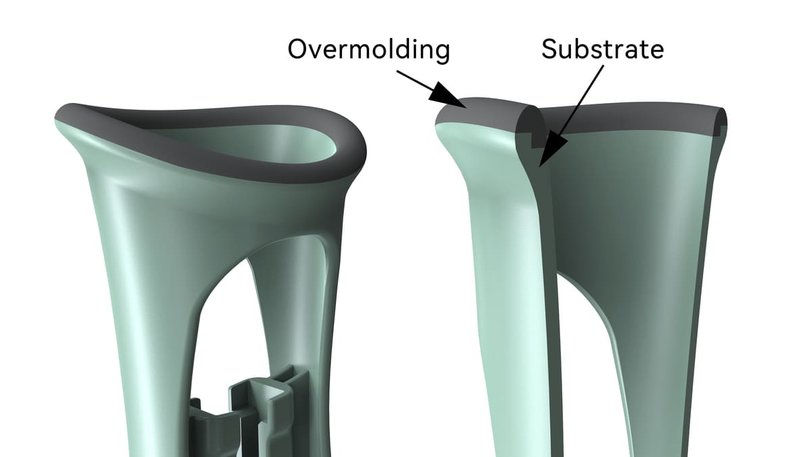
Overmolding: TPU is een van de meest veelzijdige materialen voor overmoulding op stijve substraten (ABS, PC, PC/ABS, nylon). We hebben succesvol Shore 85A TPU overgemouleerd op PC/ABS behuizingen, met een hechtingsterkte van meer dan 5 MPa in peeltesten. Voor meer informatie over ontwerp van spuitgietmatrijzen design principles, see our complete guide.
Belangrijke controles voor een RFQ zijn het bevestigen van harsgraad, toleranties, cosmetische zones en jaarlijks volume. Gereedschapslevensduur, holtetelling en automatiseringsniveau veranderen ook de eenheidsprijs.
The RFQ should also ask for manufacturing assumptions. Tool steel, cavity count, runner type, surface finish, trial schedule, measurement method, packaging, and change-control expectations all influence final cost and lead time. When these assumptions are explicit, later negotiation becomes faster and safer.
Een sterke, gedetailleerde technische reactie zal altijd ontbrekende invoer identificeren in plaats van onzekerheid te verbergen. Als de leverancier vraagt naar tolerantie-opstapeling, gate-restricties, hars-certificering, kleurmatch of jaarlijkse vraagvariatie, betekent dat meestal dat het engineeringteam het project op productiediepte evalueert in plaats van blind te citeren.
Voor ZetarMold-stijl projecten is het beste resultaat een duidelijke productieweg: DFM-beoordeling, matrijsoontwerpbevestiging, gereedschapsbouw, monstername, inspectie, corrigerende actie en productievrijgave. Die reeks biedt praktische autoriteit en geeft kopers een nuttige checklist voor hun volgende gesprek met een leverancier.
Welk productiebewijs moet u beoordelen voordat u een TPU-leverancier goedkeurt?
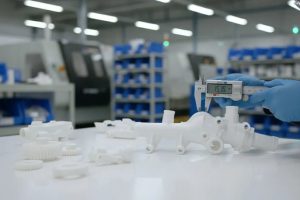
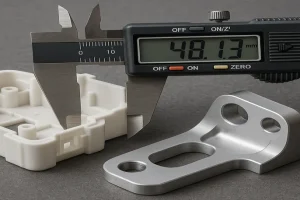
Belangrijke productiebewijsregistraties zijn gietproeven, dimensionale rapporten en hars-certificaten. Voordat een TPU-leverancier voor productie wordt goedgekeurd, moeten eerstestuksgegevens gemeten waarden voor elke kritieke dimensie vermelden, niet alleen goed/fout-stempels.
Wanneer een project cosmetische of strakke toleranties omvat kunststof3 onderdelen, het bewijs moet ook de vooraf overeengekomen monsterkeuringsregels bevatten voordat de serieproductie begint. Grensmonsters, meetgereedschappen, kleurstandaarden en defectclassificatieborden moeten worden opgesteld en duidelijk gedocumenteerd vóór de productievrijgave om latere subjectieve acceptatiegeschillen te voorkomen.
Veelgestelde vragen over TPU-spuitgieten
What is the minimum order quantity for TPU injection molded parts?
There is no universal minimum — it depends on tooling amortization. For a simple mold costing $3,000–5,000, quantities of 500–2,000 parts can be economical. For high-volume TPU parts (100,000+ units/year), multi-cavity molds with 4–8 cavities are standard.
Can I use recycled TPU (rTPU) for injection molding?
Yes, but with limitations. Recycled TPU typically has 10–20% lower tensile strength and reduced elongation. For non-structural applications, rTPU works well. For load-bearing parts, mixing 10–20% rTPU with virgin resin is a common compromise.
How long does a TPU injection mold typically last?
A production-grade P20 steel mold for TPU typically lasts 300,000–500,000 shots. TPU is gentler on mold steel than abrasive-filled materials, so mold life is primarily driven by shot count.
Why does my TPU part turn yellow after molding?
Yellowing is almost always caused by thermal degradation — barrel temperature too high (above 240°C), excessive residence time, or moisture-induced hydrolysis. Check your barrel temperature profile first and purge the machine before production.
What is the typical shrinkage rate for TPU?
TPU shrinkage ranges from 0.8–2.0% depending on hardness. Softer grades (Shore 60A–75A) shrink 1.5–2.0%, while harder grades (Shore 90A–60D) shrink 0.8–1.2%. Always consult the material datasheet and run test shots before finalizing mold dimensions.
Is TPU safe for food contact applications?
Some TPU grades are FDA-compliant for food contact under 21 CFR regulations, but the specific grade must be verified. Not all formulations are food-safe — colorants and additives may disqualify a grade.
What is the difference between polyester and polyether TPU?
Polyester TPU offers better oil resistance and abrasion performance; polyether TPU provides superior hydrolysis resistance and low-temperature flexibility. For marine or humid environments, specify polyether. For automotive underhood applications, choose polyester.
Get Expert TPU Injection Molding Support
De grootste kostenfactor bij TPU-spuitgieten is niet de materiaalprijs — het is het in één keer goed krijgen van drogen, ontwerphoeken en poortontwerp. In onze 20 jaar ervaring met TPU-gereedschappen bij ZetarMold gebruiken onze 8 senior engineers bij elk TPU-project moldflow-simulatie voordat staal wordt gesneden, waardoor vullingsonevenwichtigheden en laslijnrisico's vroegtijdig worden opgespoord.
Met 47 spuitgietmachines (90T–1850T), meer dan 400 materiaalopties en ISO 9001/13485 gecertificeerde kwaliteitssystemen, hebben we de apparatuur en ervaring om TPU-projecten van prototype tot serieproductie te behandelen. Neem contact met ons op om uw TPU-project te bespreken — ons Engelstalige technische team reageert binnen 24 uur.
-
spuitgieten: spuitgieten verwijst naar het productieproces dat kunststof smelt, het in een matrijsholte injecteert, het onderdeel afkoelt en de cyclus herhaalt voor stabiele volumeproductie. ↩
-
spuitgietvorm: injectiematrijs verwijst naar een injectiematrijs is het precisiegereedschap dat onderdeelgeometrie, koelgedrag, ejectie, gating, oppervlakafwerking en reproduceerbaarheid definieert. ↩
-
kunststof: Plastic is een materiaalfamilie waarvan stroming, krimp, sterkte, hittebestendigheid, cosmetische kwaliteit, cyclustijd en langetermijnprestaties vormgevingsbeslissingen beïnvloeden. ↩


 EN
EN  ES
ES  FR
FR  DE
DE  PT
PT  AR
AR  RU
RU  JA
JA  KO
KO  IT
IT  NL
NL  TR
TR  PL
PL 