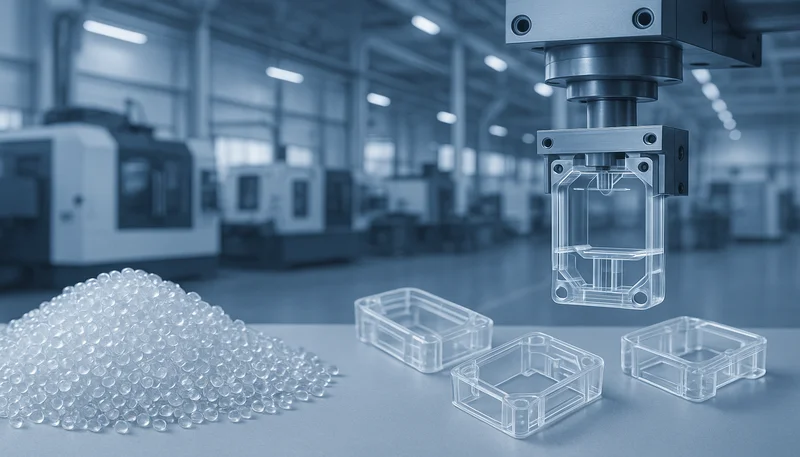
- El TPU es un elastómero termoplástico flexible y resistente a la abrasión que se procesa a 180–230°C en máquinas de moldeo por inyección estándar.
- La dureza Shore A abarca 60A–98A, desde empuñaduras blandas hasta piezas estructurales semirrígidas.
- El presecado a 80–100°C durante 2–4 horas es obligatorio; una humedad superior al 0.02% provoca vetas y escisión de cadenas.
- El TPU supera al TPE en resistencia a la tracción (25–55 MPa) y resistencia a la abrasión, por lo que es ideal para aplicaciones exigentes.
- El diseño para TPU requiere ángulos de desmoldeo generosos (2–3° para grados blandos) y diámetros de compuerta ≥1.5 mm.
¿Qué es el moldeo por inyección de TPU?
El moldeo por inyección1 de TPU consiste en inyectar poliuretano termoplástico fundido en un molde de acero para producir piezas flexibles y resistentes a la abrasión. El material combina una elasticidad similar a la del caucho con la procesabilidad de un termoplástico, por lo que resulta ideal para sobremoldeo, sellos y componentes de desgaste. Para una visión más amplia, consulte nuestra guía de moldeo por inyección y la descripción general del molde de inyección2.
Para una visión más amplia, nuestra guía completa de moldeo por inyección aborda los fundamentos del proceso, el comportamiento de los materiales y las decisiones de producción.
Para ampliar el contexto, compare este tema con la guía de búsqueda de proveedores.
En nuestra fábrica de Shanghai, operamos 47 máquinas de moldeo por inyección de 90T a 1850T, por lo que tratamos cada decisión de herramienta como una pregunta sobre el margen de proceso, no solo como un precio cotizado.
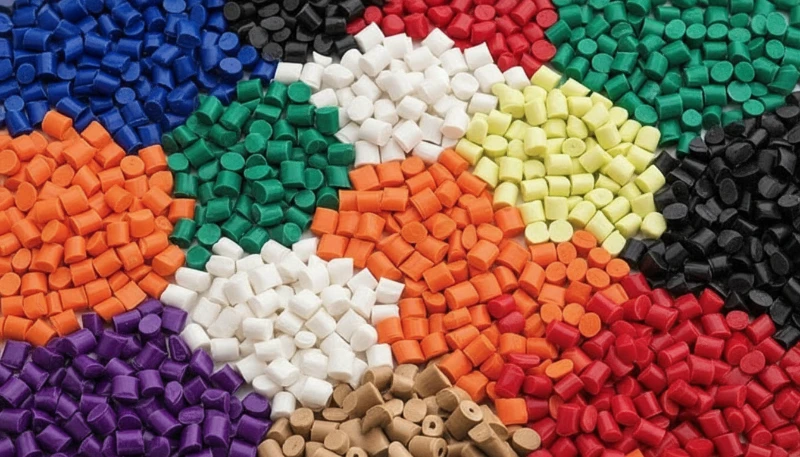
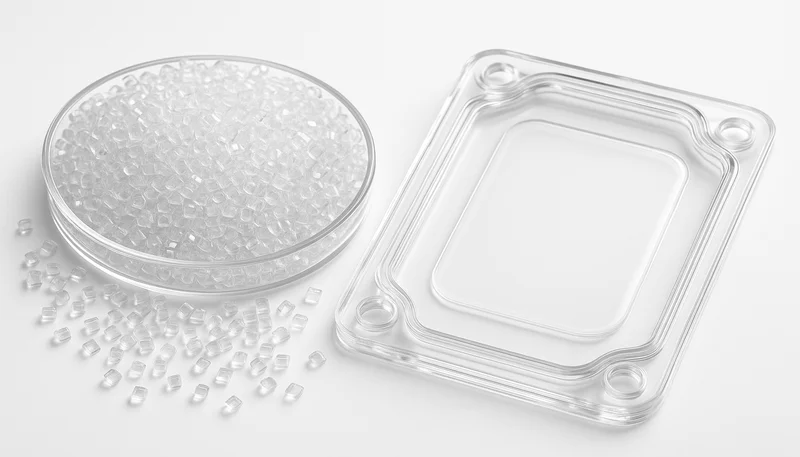
El moldeo por inyección de TPU consiste en fundir gránulos de poliuretano termoplástico e inyectarlos en un molde para hacer piezas flexibles, similares al caucho. Funciona en las mismas máquinas utilizadas para ABS, PP o nylon.
En nuestra fábrica, el TPU se ha convertido en uno de los materiales elastoméricos más solicitados durante los últimos cinco años. Los clientes acuden a nosotros cuando necesitan piezas que combinen una flexibilidad similar a la del caucho con la reciclabilidad de los termoplásticos —por ejemplo, sobremoldeados de cables, revestimientos de dispositivos portátiles y sellos industriales. La química del TPU consta de segmentos duros alternos (de diisocianato y extensor de cadena) y segmentos blandos (de poliol), que crean su combinación característica de resistencia y elasticidad a nivel molecular.
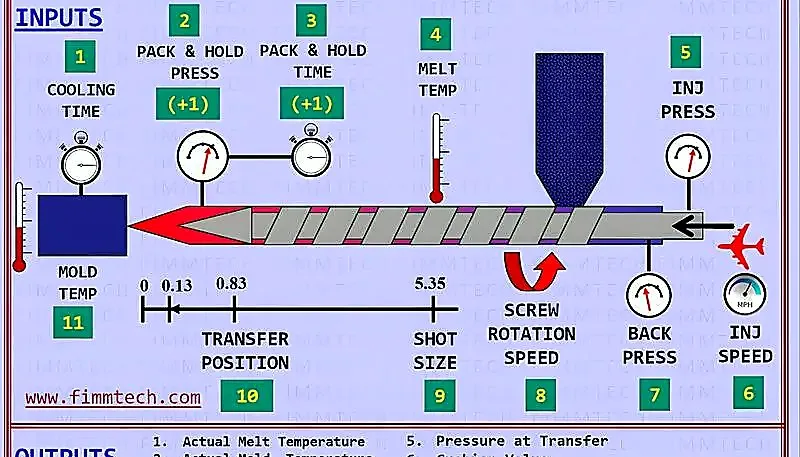
El moldeo por inyección de TPU sigue el mismo ciclo fundamental que cualquier termoplástico: plastificación, inyección, compactación, enfriamiento y expulsión. Sin embargo, la sensibilidad del TPU a la humedad y su singular comportamiento de flujo exigen un control del proceso más estricto que el de los plásticos básicos. El resultado es una pieza con un rendimiento mecánico excepcional que ningún otro termoplástico reproduce por completo.
"“TPU puede moldearse por inyección en las mismas máquinas utilizadas para ABS, PP y nailon.”"True
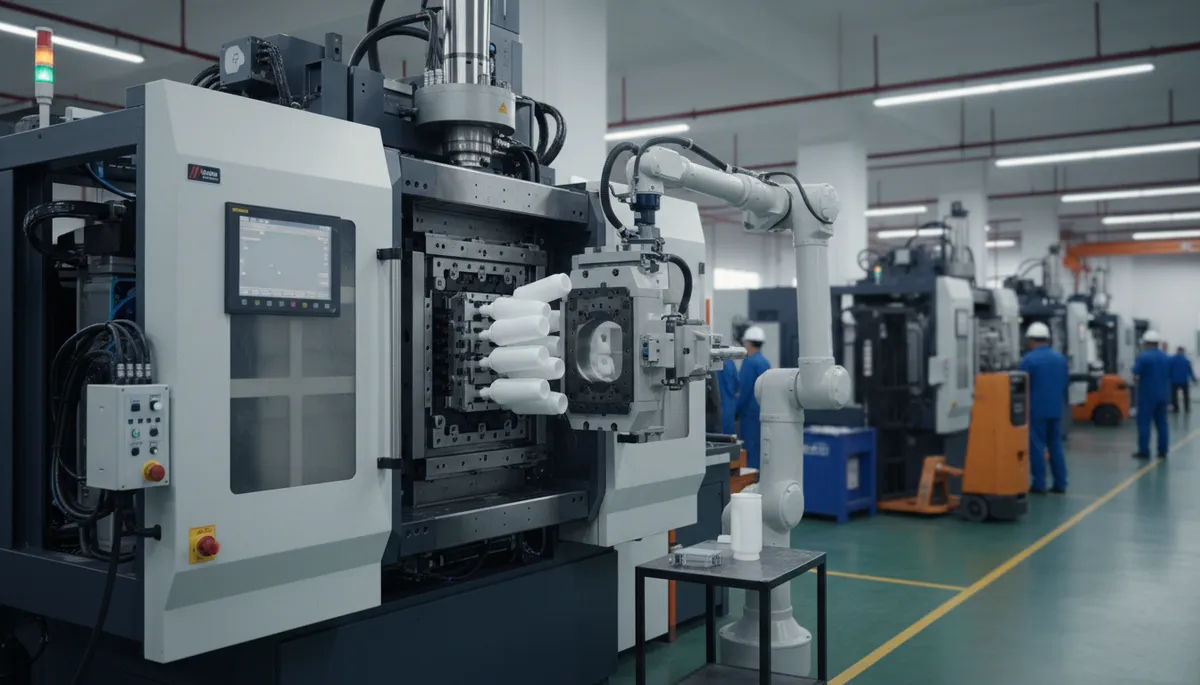
Las máquinas estándar de husillo alternativo procesan TPU eficazmente. Las diferencias clave son los parámetros —temperaturas de cilindro de 180–230°C y velocidades menores— y el secado previo obligatorio, no el equipo.
"“Se necesita equipo especializado para procesar caucho a fin de moldear piezas de TPU.”"False
El TPU es un elastómero termoplástico, no un caucho termoestable. Se funde y fluye como un termoplástico, por lo que puede procesarse en cualquier máquina de moldeo por inyección estándar sin accesorios especiales para caucho ni hornos de vulcanización.
¿Cuáles son las principales propiedades materiales del TPU?
Las propiedades clave del TPU son dureza Shore A de 60A–98A, resistencia a la tracción de 25–55 MPa y pérdida por abrasión de 20–80 mm3. Estas se establecen durante la síntesis mediante la proporción de segmentos duros/blandos.
| Propiedad | Valor típico | Importancia |
|---|---|---|
| Dureza Shore | 60A–98A / 40D–80D | Empuñaduras blandas sobre carcasas semirrígidas |
| Resistencia a la tracción | 25–55 MPa | Superior a la mayoría de los TPE |
| Alargamiento a la rotura | 300–700% | Excelente flexibilidad |
| Temp. de funcionamiento | –40°C a +100°C | Uso en exteriores y refrigeración |
| Resistencia a la abrasión | 20–80 mm3 pérdida DIN | Superior a los cauchos y TPE |
| Absorción de agua | 0.5–2.0% (24 h) | Presecado obligatorio |
Los grados de TPU basados en poliéster ofrecen una resistencia superior al aceite y a la abrasión, mientras que los grados basados en poliéter destacan por su resistencia a la hidrólisis y su flexibilidad a bajas temperaturas. Para piezas destinadas a entornos marinos o húmedos, siempre especificamos TPU de poliéter. Para componentes bajo el capó expuestos a fluido hidráulico, los grados de poliéster ofrecen mejor rendimiento.
Los parámetros de proceso del TPU son: temperatura del cilindro de 180–230°C, temperatura del molde de 20–50°C, velocidad de inyección lenta y presecado durante 2–4 horas a 80–100°C. Es obligatorio mantener la humedad por debajo del 0.02%.
| Parámetro | Intervalo | Notas |
|---|---|---|
| Temperatura de presecado | 80–100°C | 2–4 horas; secador deshumidificador |
| Temp. del cilindro (parte trasera) | 170–190°C | Evita la fusión prematura |
| Temp. del cilindro (delantera) | 190–230°C | Abrasión |
| Temperatura del molde | 20–50°C | Mayor = mejor superficie |
| Presión de inyección | 50–120 MPa | Los grados más blandos necesitan menos |
| Presión de mantenimiento | 60–80% del máximo | Evita los rechupes |
| Tiempo de enfriamiento | 15–60 segundos | Las piezas flexibles necesitan más tiempo |
| Velocidad del tornillo | 30–80 RPM | Una velocidad lenta evita daños por cizallamiento |
Según nuestra experiencia, la sensibilidad del TPU al tiempo de residencia es uno de los parámetros más difíciles de controlar. Si el TPU permanece en el cilindro a la temperatura de procesamiento durante más de 5–10 minutos, comienza a degradarse: aparecerá amarilleamiento y una fuerte caída de las propiedades de tracción. Siempre purgamos la máquina entre tiradas y minimizamos los intervalos entre disparo y ciclo durante el arranque de producción.
¿Cuáles son los defectos habituales del moldeo por inyección de TPU y cómo se pueden prevenir?
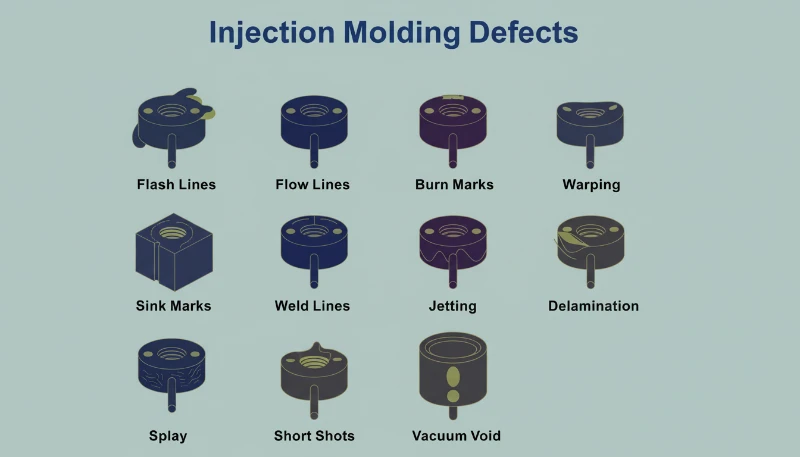
Los defectos más comunes del TPU son las estrías plateadas (humedad), la adherencia al molde (alta pegajosidad), los llenados incompletos (baja presión) y el amarilleamiento (degradación térmica). Cada uno tiene una causa raíz específica y una solución práctica.
| Defecto | Causa raíz | Prevención |
|---|---|---|
| Ráfagas/estrías plateadas | Humedad en el material | Secar a 90°C durante 3–4 horas |
| Adherencia de la pieza | Alta elasticidad, poco ángulo de desmoldeo | Aumentar el ángulo de desmoldeo a 2–3° |
| Burbujas / Huecos | Degradación térmica | Reduzca la temperatura del cilindro; mejore la ventilación |
| Disparo corto | Presión de llenado insuficiente | Aumentar la presión de inyección un 10–20% |
| Rebaba | Sobrecompactación; línea de partición desgastada | Reducir la presión de mantenimiento |
| Amarilleamiento | Temperatura o residencia excesivas | Mantenga el cilindro por debajo de 240°C; purgue |
Hemos comprobado que la adherencia de las piezas es el mayor cuello de botella de producción para los grados blandos de TPU. En un proyecto para un dispositivo portátil de actividad física, trabajábamos con TPU Shore 75A y una geometría de contrasalida compleja. La solución no fue usar más desmoldeante, sino aumentar el ángulo de desmoldeo de las paredes laterales de 1° a 2.5° y rediseñar la ubicación de los pasadores expulsores. Tras modificar el molde, el tiempo de ciclo bajó de 45 a 28 segundos.
"“El TPU debe secarse a 80–100°C durante 2–4 horas antes de cada ciclo de producción.”"True
El secado previo es imprescindible. Un contenido de humedad superior al 0.02% provoca la escisión hidrolítica de las cadenas durante la fase de fusión, lo que produce ráfagas plateadas, burbujas superficiales y una reducción considerable de la resistencia a la tracción.
"«Si los gránulos de TPU se almacenan en una bolsa sellada, no es necesario secarlos»."False
TPU es muy higroscópico: puede absorber suficiente humedad en 30–60 minutos al aire para causar ráfagas y escisión de cadenas. El presecado es obligatorio con independencia del almacenamiento.
¿Qué sectores dependen de piezas de TPU moldeadas por inyección?
El TPU se utiliza ampliamente en aplicaciones de automoción, calzado, medicina, electrónica de consumo e industria. Su combinación de flexibilidad, resistencia a la abrasión y tolerancia química lo convierte en el elastómero de referencia para entornos exigentes.
Automoción: juntas de puertas, fuelles de palanca de cambios, pasacables y soportes antivibración. Los grados de TPU a base de poliéster ofrecen la resistencia a combustibles y aceites necesaria bajo el capó. Hemos producido guías de TPU para mazos de cables de baterías de vehículos eléctricos donde la estabilidad dimensional a –30 °C era un requisito estricto.
Calzado: las entresuelas, suelas y punteras emplean TPU por su excepcional resistencia a la abrasión (pérdida DIN de 20-40 mm3) y a la fatiga por flexión. Las suelas de TPU moldeadas por inyección soportan millones de ciclos de flexión sin agrietarse.
Dispositivos médicos: las formulaciones de TPU de grado médico se utilizan en tubos quirúrgicos, componentes de catéteres y carcasas de sensores portátiles. La resistencia a la hidrólisis y la biocompatibilidad (ISO 10993) del TPU de poliéter lo hacen apto para aplicaciones en contacto con el cuerpo. Producimos carcasas flexibles de TPU para dispositivos de monitorización continua de glucosa.
"“El TPU puede admitir pequeñas contrasalidas al flexionarse durante el desmoldeo.”"True
La elasticidad del TPU permite estirarlo sobre contrasalidas menores sin daños, reduciendo la complejidad al eliminar correderas o elevadores.
"“Las piezas de TPU son demasiado caras para productos de consumo de gran volumen.”"False
El TPU cuesta más por kilogramo que el TPE básico, pero su mayor vida útil del molde (300K+ inyecciones), su menor tasa de residuos y la posibilidad de reciclar los canales suelen reducir el coste por pieza en volúmenes superiores a 10,000 unidades.
Electrónica de consumo: fundas de teléfono, sobremoldeados de cables, almohadillas de auriculares y correas de relojes inteligentes. La resistencia química del TPU al sudor, los disolventes de limpieza y la luz UV aporta durabilidad en el uso cotidiano.
Industria: acoplamientos de mangueras hidráulicas, componentes de transportadores, revestimientos de rodillos y fuelles protectores fabricados con grados de TPU más duros (Shore 90A-60D). En transportadores de alta velocidad, su resistencia a la abrasión y al desgarro supera entre 3 y 5 veces la del caucho natural.
¿Cómo se compara el TPU con el TPE, la silicona y el caucho?
El TPU es más fuerte y resistente a la abrasión que los elastómeros termoplásticos estándar (TPE), con una resistencia a la tracción de 25–55 MPa frente a 8–20 MPa del TPE. También ofrece reciclabilidad que el caucho vulcanizado y el LSR no pueden igualar.
| Propiedad | TPU | TPE | Silicona | Caucho |
|---|---|---|---|---|
| Resistencia a la tracción | 25–55 MPa | 8–20 MPa | 6–12 MPa | 10–30 MPa |
| Abrasión | Excelente | Bien | Pobre | Muy buena |
| Moldeo por Inyección de TPU: Guía Completa para Ingenieros | –40 a +100°C | –50 a +80°C | –60 a +200°C | –40 a +100°C |
| Reciclable | Sí | Sí | No. | No. |
| Presecado | Obligatorio | A veces | No. | N/A |
Hemos realizado proyectos de comparación directa para clientes que elegían entre TPU y TPE para aplicaciones de fundas de teléfono. El TPE (basado en SEBS) cuesta un 20–30% menos por kilogramo y se procesa con mayor facilidad, pero los resultados de las pruebas de caída fueron sistemáticamente un 15–25% peores con TPE que con un grado comparable de TPU Shore 85A. Cuando el rendimiento mecánico ante impactos repetidos es crítico, gana el TPU.
¿Qué directrices de diseño debe seguir para piezas de TPU?
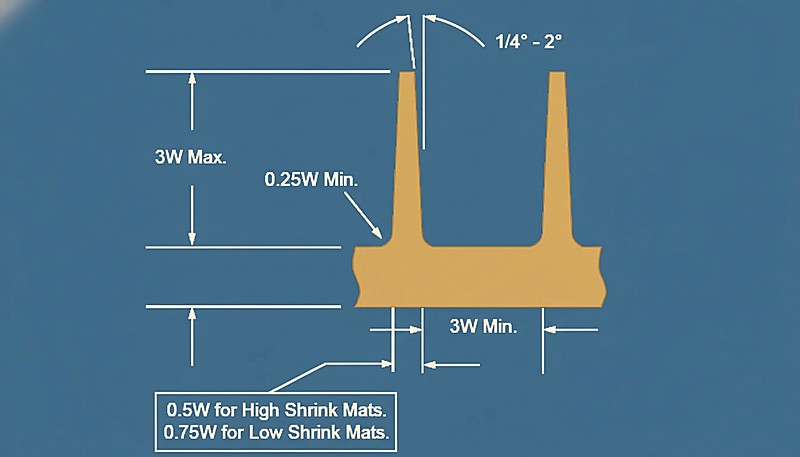
Las piezas de TPU se diseñan mejor con paredes de 1.5–4.0 mm, ángulos de desmoldeo de 2–3° para grados blandos, diámetro de compuerta ≥1.5 mm y transiciones graduales. El TPU se flexiona lo suficiente para desmoldear contrasalidas del 3–5% sin correderas.
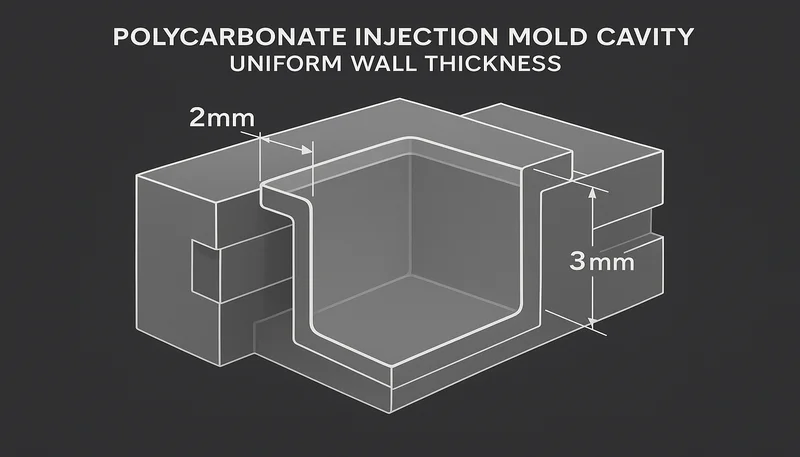
Espesor de pared: las paredes muy delgadas (<1,0 mm) requieren una presión de inyección elevada que puede degradar los grados blandos de TPU. Las paredes gruesas (>6 mm) generan tiempos de enfriamiento largos y posibles huecos. Un espesor uniforme es especialmente importante con el TPU: los cambios bruscos provocan contracción diferencial y alabeo.
Ángulos de desmoldeo: es el aspecto que más revisiones de diseño exige. Los grados Shore 60A-75A necesitan un mínimo de 2-3°, y las superficies texturizadas, 3-5°. El TPU se adhiere al núcleo del molde durante el enfriamiento, por lo que un ángulo generoso es esencial para una expulsión fiable.
Socavados: a diferencia de los plásticos rígidos, el TPU admite pequeños socavados (3-5 % del diámetro de la pieza) al flexionarse durante el desmoldeo. Esto reduce la complejidad del utillaje: muchas características que exigirían correderas en ABS pueden desmoldearse directamente con TPU.
Diseño de la compuerta: las compuertas submarinas son populares para el TPU porque se separan automáticamente. El diámetro mínimo debe ser de 1,5-2,5 mm; las compuertas demasiado pequeñas generan cizallamiento excesivo. Evite compuertas puntiformes menores de 1,0 mm con grados blandos.
| Área del punto de control 1 | Verificación del punto de control 1 |
|---|---|
| Utillaje | Confirma cómo el diseño del molde afecta al moldeo por inyección de TPU: Guía de procesamiento completa para ingenieros. |
| Tipo de material | Compruebe el comportamiento de la resina, la contracción, el calor y los riesgos estéticos. |
| Calidad | Solicite pruebas de inspección antes de aprobar la producción. |
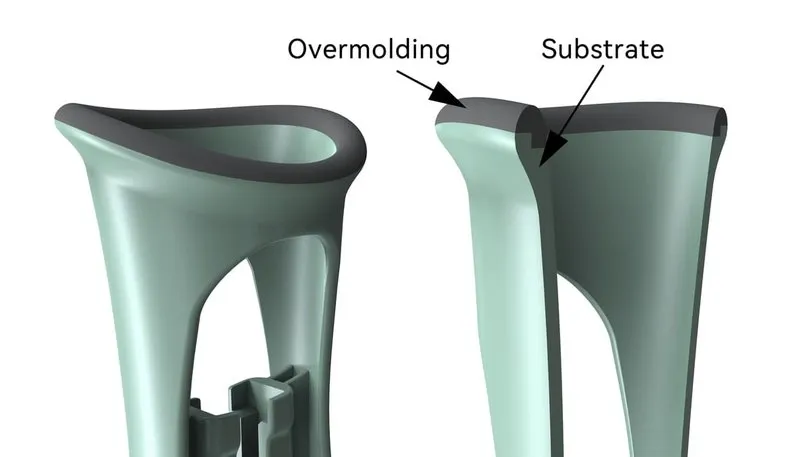
Sobremoldeo: el TPU es uno de los materiales más versátiles para sobremoldear sustratos rígidos (ABS, PC, PC/ABS y nailon). Hemos sobremoldeado con éxito TPU Shore 85A sobre carcasas de PC/ABS, logrando una resistencia de unión superior a 5 MPa en ensayos de pelado. Para conocer mejor los principios de diseño de moldes de inyección, consulte nuestra guía completa.
Las verificaciones clave antes de una solicitud de cotización son confirmar el grado de resina, las tolerancias, las zonas cosméticas y el volumen anual. La vida útil del molde, el número de cavidades y el nivel de automatización también cambian el precio unitario.
La RFQ también debe solicitar los supuestos de fabricación. El acero del utillaje, el número de cavidades, el tipo de canal, el acabado superficial, el calendario de pruebas, el método de medición, el embalaje y las expectativas de control de cambios influyen en el coste final y el plazo de entrega. Cuando estos supuestos son explícitos, la negociación posterior resulta más rápida y segura.
Una respuesta técnica sólida y detallada siempre identificará las entradas faltantes en lugar de ocultar la incertidumbre. Si el proveedor pregunta sobre la acumulación de tolerancias, los límites del vestigio de la compuerta, la certificación de la resina, la igualación de color o la variación de la demanda anual, eso suele significar que el equipo de ingeniería está evaluando el proyecto en profundidad de producción en lugar de cotizar a ciegas.
Para proyectos al estilo ZetarMold, el mejor resultado es una ruta de fabricación clara: revisión de DFM, confirmación del diseño del molde, construcción del utillaje, muestreo, inspección, acción correctiva y liberación para producción. Esa secuencia proporciona autoridad práctica y ofrece a los compradores una lista de verificación útil para su próxima conversación con el proveedor.
¿Qué Evidencia de Producción Debe Revisar Antes de Aprobar un Proveedor de TPU?
Los registros clave de evidencia de producción son pruebas de moldeo, reportes dimensionales y certificados de resina. Antes de aprobar cualquier proveedor de TPU para producción, los datos de primera pieza deben listar valores medidos para cada dimensión crítica, no solo marcas de aprobado/rechazado.
Cuando un proyecto incluye piezas de plástico3 estéticas o con tolerancias estrechas, las pruebas también deben incluir reglas de aprobación de muestras acordadas antes de iniciar la producción en serie. Las muestras límite, los útiles de medición, los patrones de color y los paneles de clasificación de defectos deben establecerse y documentarse claramente antes de liberar la producción, para evitar después disputas subjetivas de aceptación.
Preguntas Frecuentes sobre el Moldeo por Inyección de TPU
¿Cuál es la cantidad mínima de pedido para piezas moldeadas por inyección de TPU?
No hay un mínimo universal — depende de la amortización de las herramientas. Para un molde simple que cuesta $3,000–5,000, cantidades de 500–2,000 piezas pueden ser económicas. Para piezas de TPU de alto volumen (100,000+ unidades/año), moldes multicavidad con 4–8 cavidades son estándar.
¿Puedo usar TPU reciclado (rTPU) para moldeo por inyección?
Sí, pero con limitaciones. El TPU reciclado generalmente tiene una resistencia a la tracción 10–20% menor y una elongación reducida. Para aplicaciones no estructurales, el rTPU funciona bien. Para piezas que soportan carga, mezclar un 10–20% de rTPU con resina virgen es un compromiso común.
¿Cuánto tiempo suele durar un molde de inyección de TPU?
Un molde de acero P20 de grado de producción para TPU suele durar entre 300.000 y 500.000 inyecciones. El TPU es más suave con el acero del molde que los materiales rellenos de abrasivos, por lo que la vida útil del molde depende principalmente del número de inyecciones.
¿Por qué mi pieza de TPU se vuelve amarilla después del moldeo?
El amarillamiento casi siempre es causado por degradación térmica — temperatura del cañón demasiado alta (por encima de 240°C), tiempo de residencia excesivo o hidrólisis inducida por humedad. Verifique primero su perfil de temperatura del cañón y purgue la máquina antes de la producción.
¿Cuál es la tasa de contracción típica para el TPU?
La contracción del TPU varía de 0,8 a 2,0% dependiendo de la dureza. Los grados más blandos (Shore 60A–75A) se contraen 1,5–2,0%, mientras que los grados más duros (Shore 90A–60D) se contraen 0,8–1,2%. Consulte siempre la hoja de datos del material y realice disparos de prueba antes de finalizar las dimensiones del molde.
¿Es el TPU seguro para aplicaciones de contacto con alimentos?
Algunos grados de TPU cumplen con las normas de la FDA para contacto con alimentos bajo las regulaciones 21 CFR, pero el grado específico debe verificarse. No todas las formulaciones son seguras para alimentos: los colorantes y aditivos pueden descalificar un grado.
¿Cuál es la diferencia entre el TPU de poliéster y el TPU de poliéter?
El TPU de poliéster ofrece mayor resistencia al aceite y a la abrasión; el TPU de poliéter proporciona una resistencia superior a la hidrólisis y flexibilidad a bajas temperaturas. Para entornos marinos o húmedos, especifique poliéter. Para aplicaciones de automoción bajo el capó, elija poliéster.
Obtenga asistencia experta para el moldeo por inyección de TPU
El mayor factor de costo en el moldeo de TPU no es el precio del material, sino lograr el secado, los ángulos de desmoldeo y el diseño de la compuerta correctos desde la primera vez. En nuestros 20 años de manejar herramientas de TPU en ZetarMold, nuestros 8 ingenieros senior utilizan simulación de flujo de molde en cada proyecto de TPU antes de cortar el acero, detectando desequilibrios de llenado y riesgos de líneas de soldadura de manera temprana.
Con 47 máquinas de moldeo por inyección (90T–1850T), más de 400 opciones de material y sistemas de calidad certificados ISO 9001/13485, tenemos el equipo y la experiencia para manejar proyectos de TPU desde prototipo hasta producción en volumen. Contáctenos para discutir su proyecto de TPU — nuestro equipo de ingeniería que habla inglés responde dentro de 24 horas.
{ “@context”: “https://schema.org”, “@type”: “FAQPage”, “mainEntity”: [ { “@type”: “Question”, “name”: “¿Cuál es la cantidad mínima de pedido para piezas de TPU moldeadas por inyección?”, “acceptedAnswer”: { “@type”: “Answer”, “text”: “No existe un mínimo universal: depende de la amortización del utillaje. Para un molde sencillo que cueste $3,000–5,000, las cantidades de 500–2,000 piezas pueden ser rentables. Para piezas de TPU de gran volumen (100,000+ unidades/año), son habituales los moldes multicavidad con 4–8 cavidades.” } }, { “@type”: “Question”, “name”: “¿Puedo utilizar TPU reciclado (rTPU) para el moldeo por inyección?”, “acceptedAnswer”: { “@type”: “Answer”, “text”: “Sí, pero con limitaciones. El TPU reciclado suele presentar una resistencia a la tracción un 10–20% menor y una elongación reducida.
-
moldeo por inyección: el moldeo por inyección es el proceso de producción que funde plástico, lo inyecta en la cavidad de un molde, enfría la pieza y repite el ciclo para una fabricación estable en volumen. ↩
-
molde de inyección: un molde de inyección es la herramienta de precisión que define la geometría de la pieza, el comportamiento de enfriamiento, la expulsión, la alimentación, el acabado superficial y la repetibilidad. ↩
-
plástico: el plástico es una familia de materiales cuyo flujo, contracción, resistencia mecánica y térmica, calidad estética, tiempo de ciclo y rendimiento a largo plazo determinan las decisiones de moldeo. ↩
<