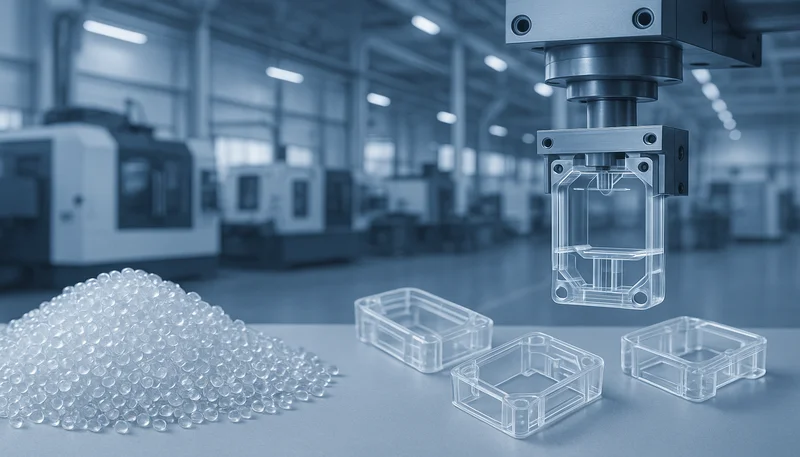
- TPU ist ein flexibles, abriebfestes thermoplastisches Elastomer, das bei 180–230 °C auf Standard-Spritzgießmaschinen verarbeitet wird.
- Die Shore-A-Härte reicht von 60A–98A und deckt damit alles von weichen Griffen bis zu halbstarren Strukturteilen ab.
- Eine Vortrocknung bei 80–100 °C für 2–4 Stunden ist zwingend erforderlich — Feuchtigkeit über 0,02 % verursacht Silberschlieren und Kettenspaltung.
- TPU übertrifft TPE bei Zugfestigkeit (25–55 MPa) und Abriebfestigkeit und eignet sich daher ideal für anspruchsvolle Anwendungen.
- Die Konstruktion für TPU erfordert großzügige Entformungsschrägen (2–3° bei weichen Typen) und Anschnittdurchmesser von ≥1,5 mm.
Was ist TPU-Spritzgießen?
Beim TPU-Spritzguss1 wird geschmolzenes thermoplastisches Polyurethan in eine Stahlform eingespritzt, um flexible, abriebfeste Teile herzustellen. Der Werkstoff vereint gummiartige Elastizität mit thermoplastischer Verarbeitbarkeit und eignet sich daher ideal zum Umspritzen sowie für Dichtungen und Verschleißteile. Einen breiteren Überblick bieten unser Spritzgussleitfaden und die Einführung zur Spritzgussform2.
Einen breiteren Überblick über Verfahrensgrundlagen, Werkstoffverhalten und Produktionsentscheidungen bietet unser vollständiger Spritzgussleitfaden.
Für einen breiteren Kontext vergleichen Sie dieses Thema mit unserem Leitfaden zur Lieferantenauswahl.
In unserem Werk in Shanghai betreiben wir 47 Spritzgießmaschinen von 90T bis 1850T, daher betrachten wir jede Werkzeugentscheidung als Frage des Prozessfensters, nicht nur als angebotenen Preis.
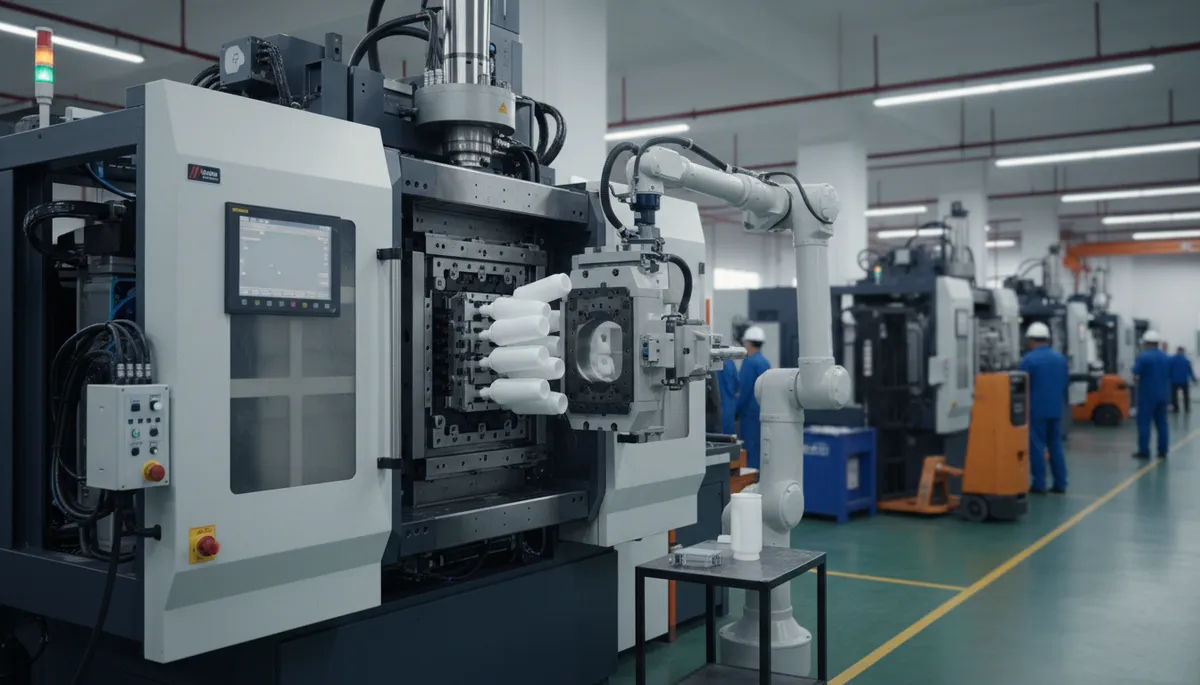
TPU-Spritzgießen bedeutet, thermoplastische Polyurethanschmelze zu erhitzen und in eine Form zu injizieren, um flexible, gummiartige Teile zu produzieren. Es wird auf denselben Maschinen verwendet wie für ABS, PP oder Nylon.
In unserem Werk hat sich TPU in den vergangenen fünf Jahren zu einem der am häufigsten nachgefragten Elastomerwerkstoffe entwickelt. Kunden wenden sich an uns, wenn sie Teile benötigen, die gummiähnliche Flexibilität mit thermoplastischer Recyclingfähigkeit verbinden – beispielsweise Kabelumspritzungen, Außenhüllen tragbarer Geräte und Industriedichtungen. Die Chemie von TPU besteht aus abwechselnden Hartsegmenten (aus Diisocyanat und Kettenverlängerer) und Weichsegmenten (aus Polyol), die auf molekularer Ebene seine charakteristische Kombination aus Festigkeit und Elastizität erzeugen.
TPU-Spritzgießen: Vollständiger Leitfaden für Ingenieure
"“TPU kann auf denselben Maschinen spritzgegossen werden, die für ABS, PP und Nylon eingesetzt werden.”"True
Standard-Spritzgießmaschinen mit Hubschnecke verarbeiten TPU effektiv. Die entscheidenden Unterschiede liegen in den Parametereinstellungen (niedrigere Zylindertemperaturen von 180–230 °C, langsamere Einspritzgeschwindigkeiten) und im vorgeschriebenen Vortrocknungsschritt — nicht in der Anlage selbst.
"“Für das Spritzgießen von TPU-Teilen benötigen Sie spezielle Kautschukverarbeitungsanlagen.”"False
TPU ist ein thermoplastisches Elastomer und kein duroplastischer Kautschuk. Es schmilzt und fließt wie ein Thermoplast und kann daher ohne spezielle Vorrichtungen zur Kautschukverarbeitung oder Vulkanisieröfen auf jeder Standard-Spritzgießmaschine verarbeitet werden.
Was sind die wichtigsten Werkstoffeigenschaften von TPU?
Die wichtigsten Eigenschaften von TPU sind Shore-A-Härte von 60A–98A, Zugfestigkeit von 25–55 MPa und Abriebverlust von 20–80 mm3. Diese werden bei der Synthese durch das Verhältnis von Hart- und Weichsegmenten bestimmt.
| Eigentum | Typischer Wert | Bedeutung |
|---|---|---|
| Shore-Härte | 60A–98A / 40D–80D | Von weichen Griffflächen bis zu halbstarren Gehäusen |
| Zugfestigkeit | 25–55 MPa | Höher als bei den meisten TPEs |
| Dehnung beim Bruch | 300–700% | Ausgezeichnete Flexibilität |
| Betriebstemperatur | –40°C bis +100°C | Einsatz im Freien und im Kühlbereich |
| Abnutzungswiderstand | 20–80 mm3 DIN-Abrieb | Gummi und TPE überlegen |
| Wasserabsorption | 0,5–2,0 % (24 Std.) | Obligatorische Vortrocknung |
TPU-Güten auf Polyesterbasis bieten eine überlegene Ölbeständigkeit und Abriebfestigkeit, während Güten auf Polyetherbasis bei Hydrolysebeständigkeit und Tieftemperaturflexibilität überlegen sind. Für Teile in maritimen oder feuchten Umgebungen spezifizieren wir stets Polyether-TPU. Für Komponenten im Motorraum von Fahrzeugen, die Hydraulikflüssigkeit ausgesetzt sind, eignen sich Polyestergüten besser.
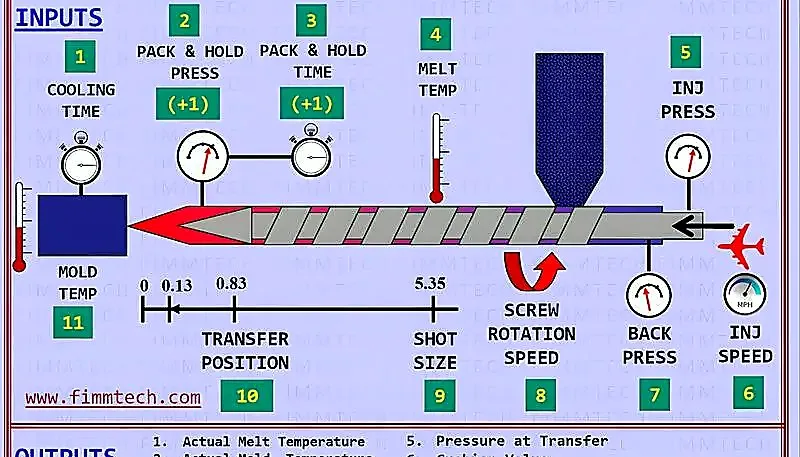
Die TPU-Prozessparameter sind eine Zylindertemperatur von 180–230°C, eine Werkzeugtemperatur von 20–50°C, eine niedrige Einspritzgeschwindigkeit und 2–4 Stunden Vortrocknung bei 80–100°C. Eine Feuchtigkeit unter 0.02% ist zwingend erforderlich.
| Kenngröße | Bereich | Anmerkungen |
|---|---|---|
| Vortrocknungstemperatur | 80–100°C | 2–4 Stunden; Entfeuchtungstrockner |
| Zylindertemperatur (hinten) | 170–190°C | Verhindert vorzeitiges Aufschmelzen |
| Zylindertemp. (vorne) | 190–230°C | 240 °C nicht überschreiten |
| Temperatur der Form | 20–50°C | Höher = bessere Oberfläche |
| Einspritzdruck | 50–120 MPa | Weichere Typen benötigen weniger |
| Haltedruck | 60–80% des Spitzenwerts | Verhindert Einfallstellen |
| Abkühlungszeit | 15–60 Sekunden | Flexible Teile benötigen mehr Zeit |
| Schneckendrehzahl | –60 bis +200°C | Eine niedrige Geschwindigkeit verhindert Scherschäden |
Nach unserer Erfahrung gehört die Empfindlichkeit von TPU gegenüber der Verweilzeit zu den schwierigsten Prozessparametern. Verbleibt TPU bei Verarbeitungstemperatur länger als 5–10 Minuten im Zylinder, beginnt es sich abzubauen – erkennbar an Vergilbung und einem starken Abfall der Zugeigenschaften. Wir spülen die Maschine stets zwischen den Läufen und minimieren beim Produktionsanlauf die Abstände zwischen Schuss und Zyklus.
Welche Fehler treten beim TPU-Spritzguss häufig auf und wie lassen sie sich verhindern?
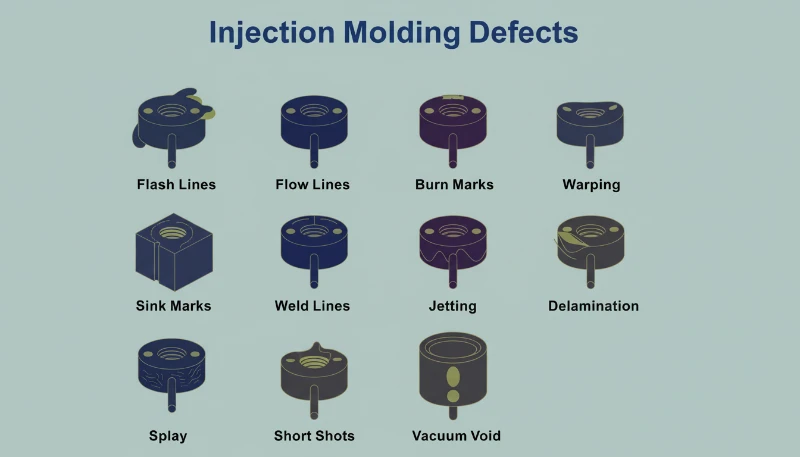
Die häufigsten TPU-Fehler sind Silberschlieren (Feuchtigkeit), Werkzeughaftung (hohe Klebrigkeit), unvollständige Füllung (niedriger Druck) und Vergilbung (thermischer Abbau). Jeder Fehler hat eine spezifische Grundursache und eine praktische Abhilfe.
| Defekt | Verhindert Einfallstellen auf der gegenüberliegenden Oberfläche | Prävention |
|---|---|---|
| Schlieren / Silberstreifen | Feuchtigkeit im Material | Bei 90°C für 3–4 Stunden trocknen |
| Anhaften des Formteils | Hohe Elastizität, geringe Entformungsschräge | Entformungsschräge auf 2–3° erhöhen |
| Blasen / Hohlräume | Thermischer Abbau | Zylindertemperatur senken; Entlüftung verbessern |
| Kurzer Schuss | Unzureichender Fülldruck | Einspritzdruck um 10–20% erhöhen |
| Blitzlicht | Überpacken; verschlissene Trennlinie | Nachdruck reduzieren |
| Vergilbung | Übermäßige Temperatur oder Verweilzeit | Zylindertemperatur unter 240 °C halten; spülen |
Nach unserer Erfahrung ist das Haften von Teilen der größte einzelne Produktionsengpass bei weichen TPU-Typen. In einem Projekt für ein tragbares Fitnessgerät verarbeiteten wir TPU mit Shore 75A und einer komplexen Hinterschneidungsgeometrie. Die Lösung war nicht mehr Trennmittel, sondern eine Erhöhung der Entformungsschräge an den Seitenwänden von 1° auf 2.5° und eine Neugestaltung der Auswerferstiftpositionen. Nach der Werkzeugänderung sank die Zykluszeit von 45 auf 28 Sekunden.
"„TPU muss vor jedem Produktionslauf 2–4 Stunden bei 80–100°C getrocknet werden.“"True
Vortrocknung ist unverzichtbar. Ein Feuchtigkeitsgehalt über 0.02% verursacht während der Schmelzphase hydrolytische Kettenspaltung und führt zu Silberschlieren, Oberflächenblasen und einer deutlichen Verringerung der Zugfestigkeit.
"“Wenn TPU-Granulat in einem versiegelten Beutel gelagert wird, muss es nicht getrocknet werden.”"False
TPU ist stark hygroskopisch – bei 30–60 Minuten Kontakt mit der Umgebungsluft kann es genug Feuchtigkeit aufnehmen, um Silberschlieren und Kettenspaltung zu verursachen. Eine Vortrocknung ist unabhängig von den Lagerbedingungen zwingend erforderlich.
Welche Branchen sind auf TPU-Spritzgussteile angewiesen?
TPU wird in der Automobil-, Schuh-, Medizin-, Unterhaltungselektronik- und Industriebranche vielseitig eingesetzt. Seine Kombination aus Flexibilität, Abriebfestigkeit und Chemikalienbeständigkeit macht es zum bevorzugten Elastomer für anspruchsvolle Umgebungen.
Automobilindustrie: Türdichtungen, Schalthebelmanschetten, Kabeldurchführungen und schwingungsdämpfende Lager. TPU-Typen auf Polyesterbasis bieten die für Anwendungen im Motorraum erforderliche Kraftstoff- und Ölbeständigkeit. Wir haben TPU-Kabelbaumführungen für EV-Batteriepacks gefertigt, bei denen Maßstabilität bei –30 °C zwingend erforderlich war.
Schuhe: Zwischensohlen, Laufsohlen und Zehenkappen nutzen TPU wegen seiner außergewöhnlichen Abriebfestigkeit (20–40 mm3 DIN-Abrieb) und Dauerbiegefestigkeit. Spritzgegossene TPU-Laufsohlen überstehen Millionen Biegezyklen ohne Rissbildung.
Medizinprodukte: TPU-Formulierungen in medizinischer Qualität werden für chirurgische Schläuche, Katheterkomponenten und Gehäuse tragbarer Sensoren eingesetzt. Die Hydrolysebeständigkeit und Biokompatibilität (ISO 10993) von Polyether-TPU machen es für Anwendungen mit Körperkontakt geeignet. Wir fertigen flexible TPU-Gehäuse für Geräte zur kontinuierlichen Glukosemessung.
"“TPU kann kleine Hinterschnitte aufnehmen, indem es sich beim Entformen elastisch verformt.”"True
Dank seiner Elastizität kann sich TPU ohne Beschädigung über kleine Hinterschneidungen dehnen, wodurch Schieber oder Auswerfer entfallen und die Werkzeugkomplexität sinkt.
"“TPU-Teile sind für Konsumgüter in Großserie zu teuer.”"False
TPU kostet pro Kilogramm mehr als Standard-TPE. Aufgrund seiner längeren Werkzeugstandzeit (über 300.000 Schuss), der geringeren Ausschussquote und der Wiederverwertbarkeit des Angusses ist es bei Stückzahlen über 10.000 jedoch häufig pro Teil günstiger.
Unterhaltungselektronik: Handyhüllen, Kabelumspritzungen, Ohrhöreraufsätze und Smartwatch-Armbänder. Die chemische Beständigkeit von TPU gegenüber Schweiß, Reinigungsmitteln und UV-Licht macht es im täglichen Gebrauch langlebig.
Industrie: Hydraulikschlauchkupplungen, Fördertechnikkomponenten, Walzenbeschichtungen und Schutzmanschetten aus härteren TPU-Typen (Shore 90A–60D). Bei schnell laufenden Förderanlagen übertreffen Abrieb- und Reißfestigkeit die von Naturkautschuk um das 3- bis 5-Fache.
Wie unterscheidet sich TPU von TPE, Silikon und Gummi?
TPU ist fester und verschleißfester als Standard-Thermoplastische Elastomere (TPE), mit einer Zugfestigkeit von 25–55 MPa gegenüber 8–20 MPa bei TPE. Es bietet zudem eine Recycelbarkeit, die vulkanisierter Gummi und LSR nicht erreichen.
| Eigentum | TPU | TPE | Silikon | Gummi |
|---|---|---|---|---|
| Zugfestigkeit | 25–55 MPa | 8–20 MPa | 6–12 MPa | 10–30 MPa |
| Abrieb | Ausgezeichnet | Gut | Schlecht | Sehr gut |
| Temperaturbereich | –40 bis +100°C | –50 bis +80°C | –60 bis +200°C | –40 bis +100°C |
| Rote TPU-Kunststoff-Spritzgussteile | Ja | Ja | Nein | Nein |
| Vortrocknung | Verpflichtend | Manchmal | Nein | N/A |
Wir haben für Kunden, die bei Handyhüllen zwischen TPU und TPE wählen mussten, direkte Vergleichsprojekte durchgeführt. TPE (SEBS-basiert) kostet je Kilogramm 20–30% weniger und lässt sich leichter verarbeiten, doch die Ergebnisse der Fallprüfung waren mit TPE durchgängig 15–25% schlechter als mit einem vergleichbaren TPU-Typ Shore 85A. Wenn die mechanische Leistung bei wiederholten Stößen entscheidend ist, gewinnt TPU.
Welche Konstruktionsrichtlinien sollten Sie für TPU-Teile beachten?
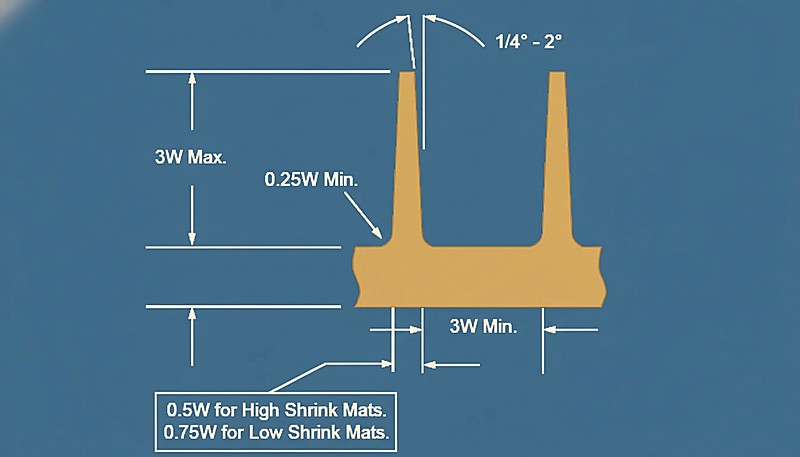
TPU-Teile werden am besten mit Wanddicken von 1,5–4,0 mm, 2–3° Entformungsschräge bei weichen Typen, einem Anschnittdurchmesser von ≥1,5 mm und allmählichen Übergängen konstruiert. TPU ist flexibel genug, um Hinterschneidungen von 3–5 % ohne Schieber zu entformen.
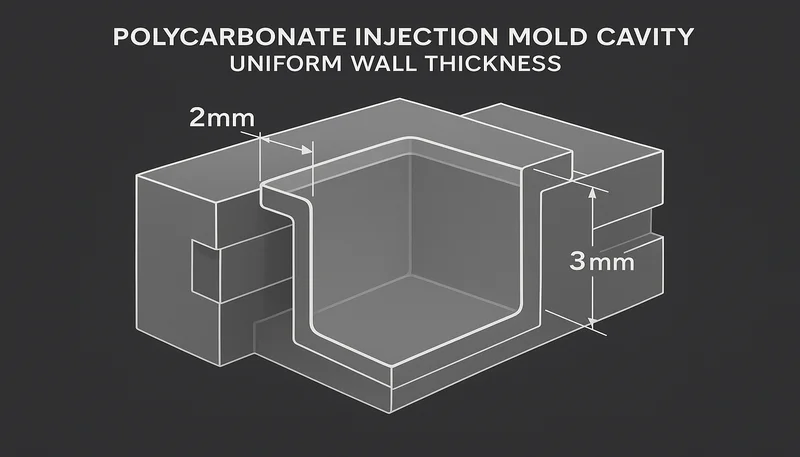
Wandstärke: Sehr dünne Wände (<1,0 mm) erfordern einen hohen Einspritzdruck, der weiche TPU-Typen abbauen kann. Dicke Wände (>6 mm) führen zu langen Kühlzeiten und möglichen Hohlstellen. Eine gleichmäßige Wandstärke ist bei TPU besonders wichtig – abrupte Änderungen verursachen unterschiedliche Schwindung und damit Verzug.
Entformungsschrägen: Hier sehen wir die meisten Konstruktionsänderungen. Typen mit Shore 60A–75A benötigen mindestens 2–3°, bei strukturierten Oberflächen 3–5°. TPU haftet beim Abkühlen am Formkern, daher sind großzügige Entformungsschrägen für eine zuverlässige Entformung unerlässlich.
Hinterschneidungen: Anders als starre Kunststoffe kann TPU kleine Hinterschneidungen (3–5 % des Teiledurchmessers) durch Verformung beim Entformen überwinden. Das vereinfacht das Werkzeug – viele Merkmale, die bei ABS Schieber erfordern, lassen sich bei TPU direkt entformen.
Angussgestaltung: Tunnelangüsse sind bei TPU beliebt, weil sie sich selbst abtrennen. Der Angussdurchmesser muss mindestens 1,5–2,5 mm betragen – zu kleine Angüsse erzeugen übermäßige Scherung. Bei weichen Typen sind Punktangüsse unter 1,0 mm zu vermeiden.
| Prüfpunkt 1 Bereich | Verifizierung von Prüfpunkt 1 |
|---|---|
| Werkzeugbau | Bestätigen Sie, wie das Werkzeugdesign die TPU-Spritzgussverarbeitung beeinflusst: Vollständige Verarbeitungsanleitung für Ingenieure. |
| Werkstoff | Prüfen Sie Harzverhalten, Schwindung, Wärme und optische Risiken. |
| Qualität | Fordern Sie vor der Produktionsfreigabe Prüfnachweise an. |
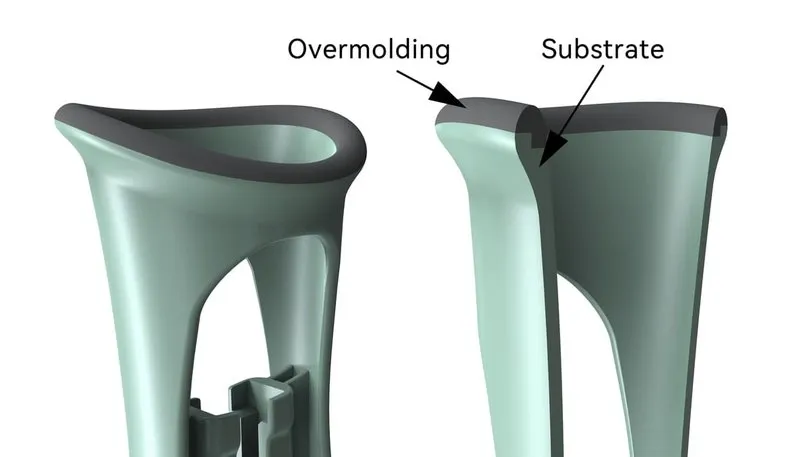
Umspritzen: TPU ist einer der vielseitigsten Werkstoffe zum Umspritzen starrer Substrate (ABS, PC, PC/ABS, Nylon). Wir haben TPU mit Shore 85A erfolgreich auf PC/ABS-Gehäuse aufgespritzt und in Schälversuchen eine Haftfestigkeit von über 5 MPa erreicht. Weitere Grundsätze der Spritzgussformkonstruktion finden Sie in unserem vollständigen Leitfaden.
Vor einer RFQ müssen die Prüfungen des Kunststoffgrades, der Toleranzen, der kosmetischen Bereiche und des Jahresvolumens erfolgen. Die Werkzeuglebensdauer, die Kavitätenzahl und der Automatisierungsgrad beeinflussen ebenfalls den Stückpreis.
Die Anfrage sollte auch nach den Fertigungsannahmen fragen. Werkzeugstahl, Kavitätszahl, Angusstyp, Oberflächengüte, Versuchsplan, Messverfahren, Verpackung und Erwartungen an die Änderungskontrolle beeinflussen Endkosten und Lieferzeit. Sind diese Annahmen ausdrücklich festgehalten, werden spätere Verhandlungen schneller und sicherer.
Eine starke, detaillierte technische Antwort identifiziert immer fehlende Eingaben, statt Unsicherheiten zu verbergen. Wenn der Lieferant Fragen zur Toleranzkette, Grenzen für Angussrest, Kunststoffzertifizierung, Farbabgleich oder Jahresbedarfsschwankungen stellt, deutet dies meist darauf hin, dass das Engineering-Team das Projekt auf Produktionsniveau evaluiert, statt blind zu kalkulieren.
Für Projekte im Stil von ZetarMold ist das beste Ergebnis ein klarer Fertigungsweg: DFM-Prüfung, Werkzeugdesignbestätigung, Werkzeugbau, Musterfertigung, Inspektion, Korrekturmaßnahmen und Produktionsfreigabe. Diese Abfolge bietet praktische Handlungsfähigkeit und gibt Einkäufern eine nützliche Checkliste für ihr nächstes Lieferantengespräch.
Welche Produktionsnachweise sollten Sie vor der Freigabe eines TPU-Lieferanten prüfen?
Wichtige Produktionsnachweise sind Spritzgießversuche, Maßberichte und Harzzertifikate. Vor der Freigabe eines TPU-Lieferanten für die Produktion sollten Erstmusterdaten gemessene Werte für jede kritische Dimension auflisten, nicht nur Pass/Fail-Stempel allein.
Bei Projekten mit optisch anspruchsvollen oder eng tolerierten Kunststoff3teilen müssen die Nachweise auch vor Beginn der Serienfertigung vereinbarte Regeln zur Musterfreigabe enthalten. Grenzmuster, Messvorrichtungen, Farbstandards und Fehlerklassifikationstafeln müssen vor der Produktionsfreigabe festgelegt und eindeutig dokumentiert sein, um spätere Streitigkeiten über subjektive Abnahmekriterien zu vermeiden.
Häufig gestellte Fragen zum TPU-Spritzgießen
Wie hoch ist die Mindestbestellmenge für TPU-Spritzgussteile?
Es gibt kein allgemeingültiges Minimum — es hängt von der Amortisierung des Werkzeugs ab. Bei einem einfachen Werkzeug für $3,000–5,000 können Mengen von 500–2,000 Teilen wirtschaftlich sein. Bei TPU-Großserienteilen (100,000+ Einheiten/Jahr) sind Mehrkavitätenwerkzeuge mit 4–8 Kavitäten Standard.
Kann ich recyceltes TPU (rTPU) zum Spritzgießen verwenden?
Ja, allerdings mit Einschränkungen. Recyceltes TPU weist typischerweise eine um 10–20% geringere Zugfestigkeit und eine reduzierte Dehnung auf. Für nichttragende Anwendungen eignet sich rTPU gut. Bei lasttragenden Teilen ist die Mischung von 10–20% rTPU mit Neuware ein gängiger Kompromiss.
Wie lange hält ein TPU-Spritzgießwerkzeug normalerweise?
Eine produktionsgerechte P20-Stahlform für TPU hält typischerweise 300.000–500.000 Schuss. TPU beansprucht den Formenstahl weniger als abrasive gefüllte Materialien, sodass die Formlebensdauer hauptsächlich von der Schusszahl abhängt.
Warum vergilbt mein TPU-Teil nach dem Spritzgießen?
Vergilbung wird fast immer durch thermische Zersetzung verursacht—zu hohe Zylindertemperatur (über 240°C), übermäßige Verweilzeit oder feuchtigkeitsbedingte Hydrolyse. Prüfen Sie zuerst das Zylindertemperaturprofil und spülen Sie die Maschine vor der Produktion.
Wie hoch ist die typische Schwindungsrate von TPU?
Die Schwindung von TPU liegt je nach Härte zwischen 0.8–2.0%. Weichere Typen (Shore 60A–75A) schwinden um 1.5–2.0%, härtere Typen (Shore 90A–60D) um 0.8–1.2%. Ziehen Sie stets das Materialdatenblatt heran und führen Sie Probeschüsse durch, bevor Sie die Formabmessungen festlegen.
Ist TPU für Anwendungen mit Lebensmittelkontakt sicher?
Einige TPU-Typen erfüllen gemäß den Vorschriften 21 CFR die FDA-Anforderungen für Lebensmittelkontakt, doch der konkrete Typ muss geprüft werden. Nicht alle Formulierungen sind lebensmittelecht — Farbstoffe und Additive können einen Typ disqualifizieren.
Was ist der Unterschied zwischen Polyester- und Polyether-TPU?
Polyester-TPU bietet eine bessere Ölbeständigkeit und Abriebfestigkeit; Polyether-TPU weist eine höhere Hydrolysebeständigkeit und Flexibilität bei niedrigen Temperaturen auf. Für maritime oder feuchte Umgebungen ist Polyether zu spezifizieren. Für Anwendungen im Motorraum von Fahrzeugen sollte Polyester gewählt werden.
Fachkundige Unterstützung beim TPU-Spritzgießen erhalten
Der größte Kostentreiber beim TPU-Spritzgießen ist nicht der Materialpreis – es ist, Trocknung, Entwurfswinkel und Angussdesign gleich beim ersten Mal richtig zu machen. In unseren 20 Jahren Erfahrung mit TPU-Werkzeugen bei ZetarMold setzen unsere 8 Senior-Ingenieure bei jedem TPU-Projekt vor dem Stahlzuschnitt eine Fließsimulation ein, um Füllungsungleichgewichte und Nahtstellenrisiken frühzeitig zu erkennen.
Mit 47 Spritzgießmaschinen (90T–1850T), über 400 Materialoptionen und ISO 9001/13485-zertifizierten Qualitätssystemen verfügen wir über die Ausrüstung und Erfahrung, um TPU-Projekte vom Prototyp bis zur Serienproduktion zu betreuen. Kontaktieren Sie uns, um Ihr TPU-Projekt zu besprechen – unser englischsprachiges Ingenieursteam antwortet innerhalb von 24 Stunden.
{ “@context”: “https://schema.org”, “@type”: “FAQPage”, “mainEntity”: [ { “@type”: “Question”, “name”: “Wie hoch ist die Mindestbestellmenge für TPU-Spritzgussteile?”, “acceptedAnswer”: { “@type”: “Answer”, “text”: “Es gibt keine allgemeingültige Mindestmenge – sie hängt von der Werkzeugamortisation ab. Bei einer einfachen Form für $3,000–5,000 können Stückzahlen von 500–2,000 Teilen wirtschaftlich sein. Für TPU-Großserienteile (100,000+ Einheiten/Jahr) sind Mehrkavitätenwerkzeuge mit 4–8 Kavitäten üblich.” } }, { “@type”: “Question”, “name”: “Kann ich recyceltes TPU (rTPU) für das Spritzgießen verwenden?”, “acceptedAnswer”: { “@type”: “Answer”, “text”: “Ja, jedoch mit Einschränkungen. Recyceltes TPU weist typischerweise eine um 10–20% geringere Zugfestigkeit und eine reduzierte Bruchdehnung auf.
-
Spritzguss: Der Spritzguss ist ein Produktionsverfahren, bei dem Kunststoff geschmolzen, in eine Formkavität eingespritzt und abgekühlt wird; dieser Zyklus wiederholt sich für eine stabile Serienfertigung. ↩
-
Spritzgussform: Eine Spritzgussform ist das Präzisionswerkzeug, das Bauteilgeometrie, Kühlverhalten, Entformung, Anguss, Oberflächenqualität und Wiederholgenauigkeit bestimmt. ↩
-
Kunststoff: Kunststoffe sind eine Werkstofffamilie, deren Fließverhalten, Schwindung, Festigkeit, Wärmebeständigkeit, optische Qualität, Zykluszeit und Langzeitverhalten die Entscheidungen beim Formen bestimmen. ↩
<