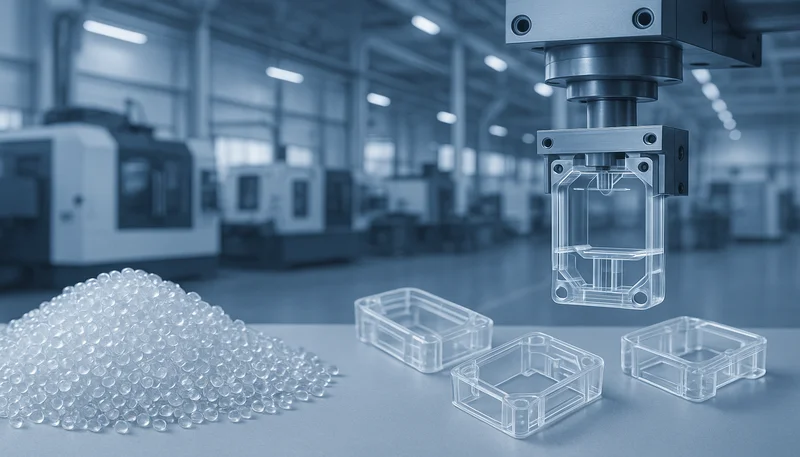
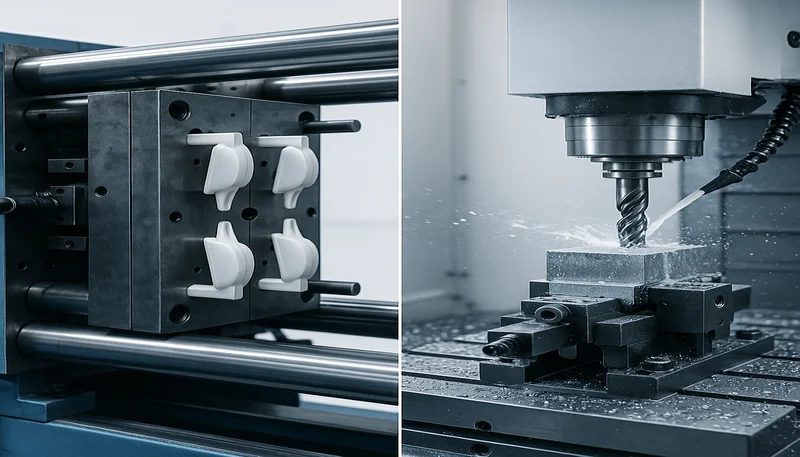
Wenn Sie jemals ein Werkzeugangebot erhalten und gedacht haben, „das ist viel Geld für einen Stahlklotz“, liegen Sie nicht falsch — Sie sehen jedoch auch nicht das Gesamtbild. Die Kosten für Spritzgießwerkzeuge sind die größte einmalige Anfangsinvestition in jedem Kunststoffteileprogramm. Zu verstehen, wodurch sie bestimmt werden, macht den Unterschied zwischen einer fundierten Verhandlung und einem Blindflug. Dieser Artikel schlüsselt jede Kostenkomponente anhand realer Zahlen auf, damit Sie Ihr nächstes Angebot wie ein Ingenieur und nicht wie ein Glücksspieler lesen können. Einen umfassenderen Überblick über den Prozess bietet unser vollständiger Leitfaden zum Spritzgießen.
- Die Bearbeitungsarbeit ist mit 40–50% des gesamten Werkzeugpreises der größte einzelne Kostentreiber, nicht der Stahlwerkstoff, wie die meisten Käufer annehmen.
- Die Stahlsorte bestimmt 15–25% der Kosten; H13 oder S136 kosten 3–5x mehr als P20, bieten bei Großserien jedoch eine 5–10x längere Formenstandzeit.
- Jedes Komplexitätsmerkmal — Schieber, Schrägauswerfer oder Heißkanäle — erhöht das Werkzeugangebot um $500–$12,000 je Merkmal.
- Mehrkavitätenformen senken die Stückkosten, erhöhen jedoch die anfängliche Werkzeuginvestition je zusätzlicher Kavität um 60–90%.
- Chinesischer Werkzeugbau liefert eine gleichwertige Maßqualität zu 40–60% der westlichen Preise, wenn Sie Betriebe anhand ihrer ISO-Zertifizierung und Exportbilanz qualifizieren.
Woraus setzt sich ein Kostenangebot für ein Spritzgießwerkzeug zusammen?
Ein Kostenangebot für Spritzgusswerkzeuge gliedert sich in fünf messbare Kategorien: Stahlmaterial (15–25 %), CNC und EDM Spritzguss1 Bearbeitungsarbeit (40–50 %), Design und Konstruktion (10–15 %), Montage und Werkbankmontage (10–15 %) und Erprobung/Validierung (5–10 %). Diese Prozentsätze gelten für die meisten Formgrößen und -komplexitäten, da die Bearbeitungsstunden unabhängig von der Formklasse mit der Teilegeometrie skalieren. Die wichtigste Erkenntnis, die den meisten Käufern entgeht, ist, dass die Arbeit und nicht das Material die Rechnung dominiert. Eine Form, die 300 Stunden CNC- und Erodierarbeit zu 30–60 US-Dollar/Stunde erfordert, kostet allein für die Bearbeitung 9.000–18.000 US-Dollar, bevor Sie Stahl, Design oder Tests hinzufügen.
Bei ZetarMold gliedern unsere Kalkulationsingenieure jedes Projekt ausdrücklich in diese Kategorien. Wir haben festgestellt, dass Transparenz in dieser Phase spätere Auseinandersetzungen über den Leistungsumfang verhindert: Ein Kunde, der versteht, warum sein Werkzeug $15,000 kostet, verlangt während des Projekts deutlich seltener kostentreibende Änderungen als ein Kunde, der lediglich einen Endpreis ohne Erläuterung erhalten hat.
Wenn Sie mit dem Verfahren noch nicht vertraut sind, deckt unsere Übersicht über Spritzgussformen die Grundlagen des Formenbaus und der Terminologie ab. Das SPI-Formenklassifizierungssystem bietet einen nützlichen Rahmen: Formen der Klasse 101 (über 1.000.000 Zyklen) erfordern hochwertigen Stahl und Präzisionsbearbeitung, während Formen der Klasse 104 (weniger als 100.000 Zyklen) weichere Stähle mit weniger Polieren verwenden können. Ihre Formklasse sollte zu Ihrem Produktionsplan passen – eine Überspezifikation verschwendet Geld und eine Unterspezifikation birgt das Risiko eines vorzeitigen Werkzeugausfalls[1].
Wie beeinflusst die Wahl der Stahlsorte 15–25% Ihrer Werkzeugkosten?
Die Auswahl der Stahlsorte bestimmt gleichzeitig drei Kostenkomponenten: Rohstoffpreis, Bearbeitungszeit und Formlebensdauer. P202 Vorgehärteter Stahl (28–36 HRC) ist die Standardeinstellung für kurze bis mittlere Produktionsläufe unter 500.000 Teilen. Es lässt sich leicht verarbeiten, kostet 4–8 US-Dollar/kg und bietet eine ausreichende Lebensdauer für die meisten Verbraucherproduktanwendungen. H13-Werkzeugstahl kostet 3–4x mehr pro Kilogramm, hält aber mehr als 1.000.000 Zyklen in glasgefüllten und Hochtemperaturharzen stand.
Rostfreier S136-Stahl bietet Korrosionsbeständigkeit für Medizin- und Lebensmittelkontaktformen, kostet jedoch 4–5x so viel wie P20. Ein häufiger Fehler ist, Stahl ausschließlich nach den Anschaffungskosten auszuwählen. Eine P20-Form für eine Serie von 1,000,000 Bauteilen aus 30% glasfaserverstärktem Nylon fällt nach 300,000–400,000 Zyklen aus. Der dann erforderliche Kavitätsaustausch kostet 40–60% des ursprünglichen Werkzeugpreises. Für diese Anwendung ist H13 oder eine gehärtete Güte wie 8407 richtig. Der Aufpreis von $3,000–$5,000 für den Stahl spart über die Produktionsdauer $8,000–$15,000 an Reparatur- und Ersatzkosten.
Mit 45 Spritzgießmaschinen von 90T bis 1850T und 8 leitenden Ingenieuren mit durchschnittlich 10+ Jahren Erfahrung führen wir DFM-Prüfungen durch, bei denen die Stahlsorte anhand der prognostizierten Jahresmenge, der Abrasivität des Granulats und der erforderlichen Oberflächengüte festgelegt wird. Diese frühzeitige Analyse hat die Kosten unserer Kunden für Werkzeugänderungen gegenüber Projekten, die diesen Schritt auslassen, im Durchschnitt um 60% gesenkt. Unser Betrieb fertigt monatlich 100+ Werkzeugsätze; durch unser Einkaufsvolumen für Stahl liegen die Materialkosten zudem 10–15% unter den Spotpreisen für Einzelabnehmer.
Die Stahlkosten variieren auch je nach Formgröße. Für eine kleine Gussform für ein Elektronikgehäuse könnten 50 kg Stahl (200–400 US-Dollar in P20) benötigt werden, während für eine große Gussform für das Armaturenbrett eines Automobils mehr als 2.000 kg (8.000–16.000 US-Dollar) erforderlich sein könnten. Bei größeren Formgrößen macht Stahl einen größeren Anteil der Gesamtkosten aus, da das Material volumetrisch skaliert, während die Bearbeitungskomplexität nicht immer proportional zunimmt. Wenn Käufer Angebote bewerten möchten, bitten Sie Ihren Formenbauer, die genaue Stahlsorte für Hohlräume, Kerne und Formbasis separat anzugeben. Viele Geschäfte geben P20 für die Basis und H13 für die Hohlräume an – dieser Hybridansatz bringt Kosten und Leistung effektiv in Einklang[2].
Warum entfallen 40–50% der Werkzeugkosten auf die Bearbeitungsarbeit?
Der Bearbeitungsaufwand dominiert die Kosten von Spritzgießwerkzeugen, da der Werkzeugbau grundsätzlich ein Präzisionsmetallbearbeitungsprozess ist. Ein typisches Einkavitätenwerkzeug erfordert insgesamt 150–400 Stunden CNC-Fräsen, EDM (electrical discharge machining) und Oberflächenbearbeitung. Bei $30–60/hour für qualifizierte Fachkräfte entstehen allein $4,500–$24,000 Arbeitskosten, bevor weitere Kosten hinzukommen. Mehrkavitätenwerkzeuge und komplexe Geometrien erhöhen den Bearbeitungsaufwand auf 600–1,200 Stunden. CNC-Fräsen übernimmt den Großteil des Materialabtrags—Schruppen der Kavitäten, Bearbeiten der Trennebenen und Bohren der Kühlkanäle. EDM wird für Merkmale eingesetzt, die CNC-Werkzeuge nicht erreichen: scharfe Innenecken, tiefe Rippen und komplexe Hinterschnittgeometrien.
Wire EDM (Drahterodieren) schneidet Präzisionsprofile mit Toleranzen von ±0.005 mm in gehärteten Stahl. Die Oberflächenbearbeitung — Polieren, Strukturieren, Beschichten — erfordert je nach geforderter Oberflächenklasse weitere 20–60 Stunden. Allein eine SPI A-1-Hochglanzpolitur für optische Linsen kann 40+ Stunden Handpolitur erfordern. Die regional unterschiedlichen Lohnsätze sind weltweit der größte Einzelfaktor für Abweichungen bei den Werkzeugkosten. CNC-Bediener verdienen in China $8–15/Stunde, gegenüber $35–65/Stunde in den US und $25–55/Stunde in Westeuropa. Bei einem Werkzeug mit 300 Bearbeitungsstunden betragen die Bearbeitungslohnkosten in China $2,400–$4,500, in den US dagegen $10,500–$19,500. Maschinen, Software und Schneidwerkzeuge sind weltweit im Wesentlichen gleich — Anlagen von Haas, Makino und GF Machining Solutions sind in leistungsfähigen Werkzeugbaubetrieben auf der ganzen Welt zu finden.
„Der Bearbeitungsaufwand macht 40–50% der gesamten Werkzeugkosten aus.“True
CNC-Fräsen, EDM und manuelle Endbearbeitung bilden den größten einzelnen Kostenblock in jedem Werkzeugangebot. Chinesische Betriebe bieten bei gleichwertiger Ausrüstung 60–75% niedrigere Bearbeitungssätze als westliche Betriebe und schaffen damit den wichtigsten Kostenvorteil im globalen Werkzeugbau.
„Mehr Kavitäten senken immer die Stückkosten.“False
Mehrkavitätenwerkzeuge sind erst ab 200,000–500,000 Teilen pro Jahr wirtschaftlich sinnvoll. Unterhalb dieser Schwelle übersteigt die zusätzliche anfängliche Werkzeuginvestition die Einsparungen bei der Maschinenzeit.

Welche Mehrkosten verursachen komplexe Bauteilmerkmale in Ihrem Werkzeugangebot?
Die Teilekomplexität erhöht die Kosten in einzelnen, kalkulierbaren Schritten. Jede Hinterschneidung, jedes Gewinde, jedes feine Detail und jede enge Toleranzanforderung führt zu konkreten Werkzeugmerkmalen, die zusätzliche Bearbeitung, Komponenten und Montagezeit erfordern. Hier sind die wichtigsten Komplexitätskostentreiber mit realen Preisspannen: Seitenschieber (äußere Hinterschneidungen) kosten jeweils $800–$2,500. Sie erfordern gleitende Kurvenmechanismen, die beim Öffnen des Werkzeugs zurückfahren. Jeder Seitenschieber verursacht zusätzlich 20–40 Stunden Bearbeitungs- und Einpassarbeit.
Interne Lifter kosten jeweils 400–1.200 US-Dollar. Heber beheben interne Hinterschneidungen mithilfe abgewinkelter Stifte, die beim Auswerfen nach innen gezogen werden. Sie sind einfacher als Nebenschritte, erfordern aber dennoch präzise Anpassungsarbeit. Heißkanalsysteme kosten 1.500 bis 3.000 US-Dollar für ein Single-Drop-System; Ein Multi-Drop-System mit Ventilverschluss bringt zusätzliche 6.000 bis 12.000 US-Dollar mit sich. Heißkanäle eliminieren Kaltkanalverschwendung, fügen aber temperaturgesteuerte Verteilerbaugruppen, Düsen und Regler hinzu[3].
Abschraubmechanismen (Gewindeelemente) kosten 2.000 bis 5.000 US-Dollar pro Gewindeachse. Diese verwenden eine hydraulische oder servobetriebene Rotation, um Innen- oder Außengewinde zu entformen, ohne dass Kerne kollabieren. Die Spiegelpolitur SPI A-1 kostet 1.500 bis 4.000 US-Dollar pro Hohlraumfläche. Für optisch hochwertige Oberflächen ist eine fortschreitende Handpolitur mit Diamantpasten erforderlich. Eine einfache Form mit einer Kavität ohne Hinterschneidungen, P20-Stahl und einer Standardpolitur kann zwischen 5.000 und 12.000 US-Dollar kosten. Fügen Sie zwei Nebenaktionen hinzu: a Heißkanal3und eine strukturierte Oberfläche, und Sie liegen bei 15.000 bis 30.000 US-Dollar.
Die Geometrie veränderte weder den Stahl noch die Maschine – die Komplexität führte zu zusätzlichen Arbeitsstunden und speziellen Komponenten. Das Design für die Herstellbarkeit (DFM4) Durch die Überprüfung kontrollieren Sie diese Kosten. Ein erfahrener DFM-Ingenieur kann Hinterschnitte häufig in Merkmale umgestalten, die sich beim Auswerfen lösen oder zusammenbrechen, wodurch Nebeneffekte vollständig vermieden werden. In unserer Einrichtung fallen bei DFM-Prüfungen durchschnittlich drei bis fünf kostensenkende Konstruktionsänderungen pro Projekt auf. Wir ermutigen jeden Kunden, in diesen Schritt zu investieren, bevor er sich für die Werkzeugausstattung entscheidet.
Wann rechtfertigt ein Mehrkavitätenwerkzeug die Investition?
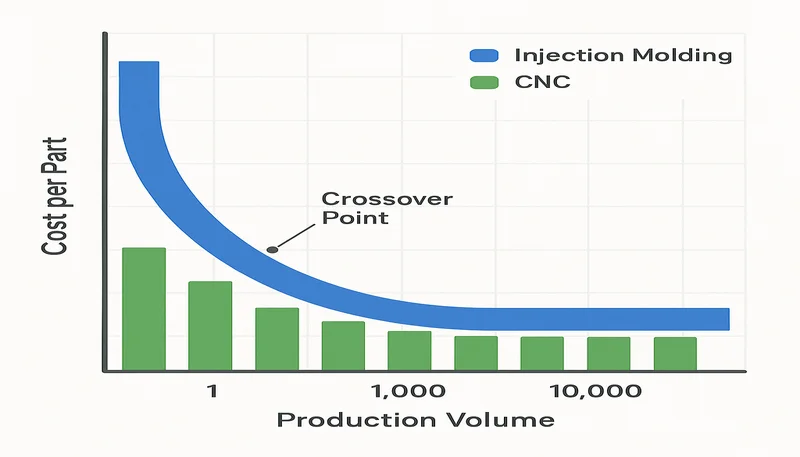
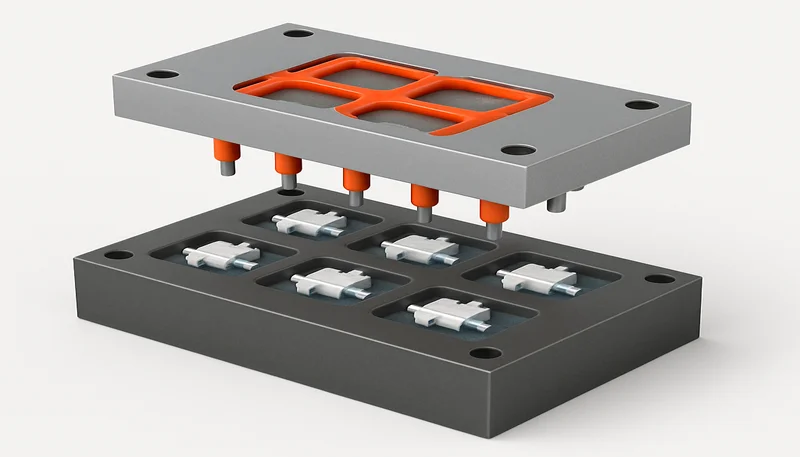
Ein Mehrkavitätenwerkzeug ist wirtschaftlich sinnvoll, wenn die Einsparungen bei der Maschinenzeit je Teil über die Produktionslaufzeit die zusätzliche Werkzeuginvestition übersteigen. Die Rechnung ist einfach: Jede zusätzliche Kavität erhöht die Kosten eines Einkavitätenwerkzeugs um 60–90%, verdoppelt jedoch die Ausbringung je Zyklus. Der Break-even hängt von drei Variablen ab: Jahresmenge, Maschinenstundensatz und Zykluszeit. Bei weniger als 100,000 Teilen pro Jahr und einem 30-Sekunden-Zyklus ist ein Einkavitätenwerkzeug fast immer die kostengünstigere Wahl. Ab 500,000+ Teilen pro Jahr gewinnt ein 4-Kavitäten-Werkzeug nahezu immer bei den Gesamtbetriebskosten. Zwischen 100,000 und 500,000 Teilen hängt die Entscheidung vom konkreten Maschinensatz und der Bauteilgeometrie ab.
Ein Praxisbeispiel: Ein 20-Gramm-Polypropylenteil läuft auf einer 150T-Maschine zu $25/hour. Ein Einkavitätenwerkzeug produziert bei einem Zyklus von 25 Sekunden 144 Teile/Stunde. Ein 4-Kavitätenwerkzeug fertigt dasselbe Teil mit derselben Zykluszeit und erreicht 576 Teile/Stunde. Bei 500,000 Teilen pro Jahr benötigt die Einkavitätenvariante 3,472 Maschinenstunden ($86,800 Maschinenzeit), gegenüber 868 Stunden ($21,700) beim 4-Kavitätenwerkzeug.
Wenn das Werkzeug mit 4 Kavitäten $18,000 mehr kostet als die Einkavitätenausführung, amortisieren Sie den Aufpreis durch eingesparte Maschinenzeit innerhalb des ersten Jahres. Das Risiko bei Mehrkavitätenwerkzeugen ist eine ungleichmäßige Kavitätenbalance: Unterschiede in der Füllung der Kavitäten verursachen Maßabweichungen. Ein kompetenter Formenbauer begegnet dem mit einer ausbalancierten Angusskanalauslegung und Fließanalyse (Moldflow-Simulation). Dies erhöht die Entwicklungskosten um $1,000–$3,000, verhindert jedoch Ausschuss in der Produktion.
Wie viel können Sie mit chinesischem Werkzeugbau wirklich sparen?
Chinesische Werkzeugbaubetriebe liefern maßlich gleichwertige Werkzeuge zu 40–60% der westlichen Preise. Der Kostenunterschied beruht fast vollständig auf den Arbeitskosten—CNC-Bediener verdienen in China $8–15/hour gegenüber $35–65/hour in den US und $25–55/hour in Europa. Anlagen, CAD/CAM-Software, Schneidwerkzeuge und Rohstahlkosten sind globalisiert und regional vergleichbar. Bei einem Werkzeug mit 300 Bearbeitungsstunden betragen die chinesischen Bearbeitungslöhne $2,400–$4,500, gegenüber $10,500–$19,500 in den USA. Gleiche Maschinen, gleiche Software, anderer Stundensatz.
Die Qualifikationskriterien für chinesische Werkzeugbauer sind wichtiger als der Preisunterschied. Eine Zertifizierung nach ISO 9001 bildet die Mindestanforderung — ohne sie gehen Sie bei der Prozesskonsistenz ein Risiko ein. ISO 13485 (Medizintechnik) und IATF 16949 (Automobilindustrie) weisen auf eine höhere Prozessdisziplin hin. Die Fähigkeit zur englischsprachigen Dokumentation ist wichtig, da Kommunikationsfehler mehr Projektverzögerungen verursachen als technische Fehler. Ein Betrieb mit 30+ fließend Englisch sprechenden Beschäftigten kann Konstruktionsfragen in einem einzigen E-Mail-Verlauf klären, statt eine Woche lang über einen Übersetzer Rückfragen auszutauschen.
Unser Werk in Shanghai ist nach ISO 9001, ISO 13485, ISO 14001 und ISO 45001 zertifiziert. Mit 30+ englischsprachigen Mitarbeitern und 20+ Jahren Exporterfahrung seit 2005 betreuen wir nordamerikanische und europäische OEMs mit Dokumentation, Maßberichten und Kommunikation auf muttersprachlichem Englischniveau. Wir verarbeiten 400+ Harzmaterialien und liefern bei Bedarf eine vollständige PPAP-Dokumentation.
Wechselkursschwankungen von 5–10 % können sich auf die Werkzeugkosten auswirken, die in USD angegeben, aber in RMB abgerechnet werden. Um dieses Risiko zu mindern, bieten die meisten chinesischen Formenbauer ihre Angebote in USD mit einer Gültigkeitsdauer von 30–90 Tagen an. Sperren Sie Ihr Angebot frühzeitig, wenn der RMB im Vergleich zu Ihrer Währung tendiert. Hinweise zur Bewertung und Auswahl chinesischer Werkzeugbaupartner finden Sie in unserer Beschaffungsleitfaden für Spritzgusslieferanten. Versand und Logistik erhöhen die Anschaffungskosten einer in China hergestellten Form um 3–7 %. Eine 500-kg-Form wird per Luftfracht für 2.000–4.000 US-Dollar (5–7 Tage) oder per Seefracht für 400–800 US-Dollar (25–35 Tage) versendet. Planen Sie Seefracht ein, es sei denn, Ihr Zeitplan ist entscheidend – die Einsparungen sind erheblich.

Welche versteckten Kosten sollten Sie zusätzlich zum Angebot einplanen?
Das ursprüngliche Werkzeugangebot entspricht nur selten den endgültigen Kosten. Verdeckte Kosten lassen sich in drei Kategorien einteilen: Konstruktionsänderungen, Werkzeugmodifikationen und Instandhaltung. Konstruktionsänderungen (vom Kunden gewünschte Änderungen nach Beginn der Stahlbearbeitung) kosten je nach Umfang $500–$5,000 pro Änderung. Schweißreparaturen und die erneute Bearbeitung einer geänderten Kavität können die Lieferzeit um 1–3 Wochen verlängern. Deshalb ist eine DFM-Prüfung vor Beginn des Werkzeugbaus der Schritt mit dem höchsten ROI in jedem Formenbauprojekt. Werkzeugänderungen zur Produktionsoptimierung – etwa zusätzliche Kühlkreisläufe, angepasste Anschnittpositionen oder geänderte Auswerferstiftpositionen – erhöhen die ursprünglichen Werkzeugkosten typischerweise um 5–15%. Dies sind keine Fehler des ursprünglichen Entwurfs, sondern normale Optimierungen, mit denen erfahrene Spritzgießer beim ersten Produktionslauf rechnen. Planen Sie dafür Budget ein.
Bei Formen mittlerer Produktion belaufen sich die Wartungskosten auf 2–5 % der ursprünglichen Formkosten pro Jahr. Dazu gehören die jährliche Inspektion, der Austausch von Komponenten (Auswerferstifte, Federn, Verschleißplatten) und das Nachpolieren der Hohlraumoberflächen. Die ordnungsgemäße Wartung einer Form im Wert von 20.000 US-Dollar kostet 400 bis 1.000 US-Dollar pro Jahr. Das Auslassen der Wartung beschleunigt den Verschleiß und führt zu Maßabweichungen, die zu Ausschuss führen – was immer teurer ist als die Wartung selbst. Die Kosten für Probenahme und Validierung werden häufig separat angegeben. Erstmusterprüfung (FAI), Maßberichte und Materialzertifizierungen kosten 500–2.000 US-Dollar mehr für das Projekt. Wenn Ihre Branche PPAP (Automotive) oder IQ/OQ/PQ (Medizin) erfordert, kann die Validierungsdokumentation zwischen 2.000 und 8.000 US-Dollar kosten. Klären Sie mit Ihrem Werkzeuglieferanten, ob diese Kosten inbegriffen oder zusätzlich anfallen[4].
Häufig gestellte Fragen zu Werkzeugkosten beim Spritzgießen
Was sind die typischen Kosten für ein Spritzgusswerkzeug?
Eine Standard-Einkavitäten-Spritzgussform kostet $5.000–$15.000 für einfache Geometrien in P20-Stahl. Komplexe Mehrkavitätenformen mit Heißkanälen und Seiteneingriffen liegen bei $20.000–$80.000+. Große Automobil- oder Medizinformen können $100.000 überschreiten. Die Kosten hängen hauptsächlich von der Bauteilkomplexität, der Kavitätenzahl, der Stahlgüte und der erforderlichen Oberflächengüte ab.
Die Einholung von 3-5 Angeboten zeigt Preisunterschiede von 30-70 % zwischen Anbietern für identische Formenspezifikationen. Inländische Anbieter verlangen typischerweise 50–150 € pro Stunde für Konstruktionsleistungen, gegenüber 15–40 € pro Stunde bei Offshore-Anbietern, was erhebliche Kostendifferenzen schafft. Der Angebotsvergleich deckt versteckte Kosten auf wie Versand (500–3.000 €), Zollgebühren (6–25 %) und Änderungsgebühren (100–300 € pro Stunde). Regionale Spezialisten bieten oft 15–25 % bessere Preise für bestimmte Branchen oder Bauteiltypen. Die Qualitätsstandards variieren erheblich – manche Anbieter liefern Formen für 1 Million Zyklen, während andere Werkzeuge für 100.000 Zyklen zu ähnlichen Preisen anbieten. Die Qualität der Dokumentation, Garantiebedingungen (6–24 Monate) und die Unterstützung nach der Lieferung unterscheiden sich wesentlich, weshalb ein gründlicher Angebotsvergleich für einen optimalen Wert unerlässlich ist.
Die Formlebensdauer hängt von der Stahlgüte, der Harzabrasivität und der Wartung ab. P20-Formen erreichen typischerweise 300.000–500.000 Zyklen. H13-gehärtete Formen erreichen 1.000.000+ Zyklen. Glasgefüllte und flammhemmende Harze beschleunigen den Verschleiß um das 2–3-fache. Jährliche Wartung mit 2–5% der Formkosten verlängert die Lebensdauer um 30–50% im Vergleich zu nicht gewarteten Werkzeugen.
Kann ich die Kosten für Spritzgussformen senken, ohne die Qualität zu beeinträchtigen?
Ja, durch drei Strategien: (1) Investieren Sie in DFM-Überprüfung, um unnötige Komplexität vor dem Stahlschnitt zu eliminieren, (2) passen Sie die Stahlgüte an das tatsächliche Produktionsvolumen an, anstatt zu hoch zu spezifizieren, und (3) beziehen Sie von qualifizierten chinesischen Werkzeugbaubetrieben, die gleichwertige Präzision bei 40–60% niedrigeren Arbeitskosten liefern. Jede Strategie kann unabhängig 10–30% einsparen.
Was ist der Unterschied zwischen einem Prototypenwerkzeug und einem Serienwerkzeug?
Prototypenformen (auch Brückenwerkzeuge genannt) verwenden Aluminium oder Weichstahl, vereinfachte Kühlung und manuelle Auswerfer, um 100–10.000 Teile zu 30–50% der Produktionsformkosten herzustellen. Sie opfern Langlebigkeit für Geschwindigkeit und geringere Investition. Produktionsformen verwenden gehärteten Stahl, optimierte Kühlung und automatisierte Auswerfer für Serien von 100.000+ Teilen mit konsistenter Maßqualität.
Wie vergleiche ich Spritzgussangebote von verschiedenen Lieferanten?
Vergleichen Sie Angebote zeilenweise: Stahlgüte für Kavitäten und Grundkörper, gesamte Bearbeitungsstunden, inkludierte Oberflächengüte, Anzahl der Designüberarbeitungsrunden, enthaltene Probeschüsse und Garantiebedingungen. Zwei Angebote bei $15.000 können sehr unterschiedliche Wertversprechen darstellen – eines kann T1-Proben und zwei Überarbeitungsrunden beinhalten, während das andere beides extra berechnet.
Welche Zahlungsbedingungen sind typisch für Spritzgussformen?
Standardbedingungen sind 40–50% Anzahlung bei Auftragserteilung, 30–40% bei T1-Proben und 10–20% bei endgültiger Freigabe. Chinesische Werkzeugbaubetriebe bieten häufig 50/30/20- oder 40/40/20-Strukturen an. Vermeiden Sie Lieferanten, die 100% im Voraus verlangen – meilensteinbasierte Zahlungen schützen beide Parteien und stimmen Anreize für termingerechte Lieferung ab.
Beeinflusst die Formgröße die Kosten stärker als die Komplexität?
Komplexität beeinflusst die Kosten in den meisten Fällen mehr als die Größe. Eine kleine Form mit 4 Seiteneingriffen, einem Heißkanal und SPI A-1-Politur kostet mehr als eine große, flache Form ohne Hinterschneidungen und mit Standardoberfläche. Die Größe treibt Stahl- und Maschinenzeitkosten linear, während Komplexität die Arbeitsstunden aufgrund von Präzisionspassungsanforderungen exponentiell erhöht.
„DFM-Überprüfung vor dem Stahlschnitt reduziert die gesamten Projektkosten.“True
Eine 4-stündige DFM-Sitzung spart typischerweise 2–3 Schweißreparaturrunden à $1.000–$5.000 sowie 2–4 Wochen Verzögerung. Probleme vor Beginn der Bearbeitung zu identifizieren, ist der Schritt mit der höchsten Kapitalrendite in jedem neuen Werkzeugprogramm.
„Das niedrigste Werkzeugangebot stellt immer den besten Wert dar.“False
Niedrige Angebote schließen oft wesentliche Dienstleistungen wie DFM-Überprüfung, Formenqualifizierungsberichte oder Support nach der Lieferung aus. Fordern Sie detaillierte Aufschlüsselungen an, um Stahlgüten, Bearbeitungsstunden und Validierungszuschläge zu vergleichen – nicht nur den Gesamtpreis.
Erhalten Sie eine genaue Werkzeugkostenschätzung von ZetarMold
Das Verständnis der Aufschlüsselung Ihrer Spritzgussform-Werkzeugkosten ist der erste Schritt zu fundierten Beschaffungsentscheidungen. Bei ZetarMold bieten wir transparente, positionsgenaue Angebote, die genau zeigen, wohin Ihr Geld fließt – Stahlgüte, Bearbeitungsstunden, Komplexitätsmerkmale und Validierungskosten. Keine Überraschungen, keine versteckten Gebühren.
Mit über 20 Jahren Werkzeugerfahrung, 8 leitenden Ingenieuren mit durchschnittlich jeweils über 10 Jahren Erfahrung und den Zertifizierungen ISO 9001/13485/14001/45001 liefern wir produktionsreife Formen, die den OEM-Standards Nordamerikas und Europas entsprechen. Unsere über 30 englischsprachigen Mitarbeiter gewährleisten eine klare Kommunikation von der DFM-Prüfung bis zur Produktionsmusterung.
Fordern Sie ein Angebot an Senden Sie uns Ihre 3D-CAD-Datei und den jährlichen Volumenbedarf. Unsere Ingenieure senden Ihnen innerhalb von 48 Stunden eine detaillierte Kostenaufschlüsselung.
SPI-Formenklassifizierung: Die Society of the Plastics Industry (SPI) definiert Formklassen von 101 (höchste, 1.000.000+ Zyklen) bis 104 (niedrigste, unter 100.000 Zyklen). Die Klasse bestimmt die Stahlsorte, die Kühlanforderungen und die Standards für die Oberflächenbeschaffenheit. ↩
Kostenbenchmarks für Werkzeugstahl: Vorgehärteter P20-Stahl wird weltweit für 4–8 $/kg gehandelt. H13-Warmarbeitsstahl wird für 12–25 $/kg gehandelt. Der rostfreie Werkzeugstahl S136 wird für 18–35 $/kg gehandelt. Die Preise stammen aus den Materialspezifikationen von ASM International und den Preisen globaler Stahlhändler, 2024–2025. ↩
Daten zu Heißkanalkosten: Single-Drop-Heißkanalsysteme von Herstellern wie Mastip, Yudo und Synventive kosten zwischen 1.500 und 3.000 US-Dollar. Mehrpunkt-Nadelverschlusssysteme kosten je nach Düsenanzahl und Steuerungskomplexität zwischen 6.000 und 12.000 US-Dollar. ↩
Wartungskosten-Benchmarks: Basierend auf Daten der American Mold Builders Association (AMBA) liegen die jährlichen Wartungskosten für Formen zwischen 2 und 5 % der anfänglichen Werkzeugkosten für Produktionsformen für Anwendungen mit mittlerem Volumen. ↩