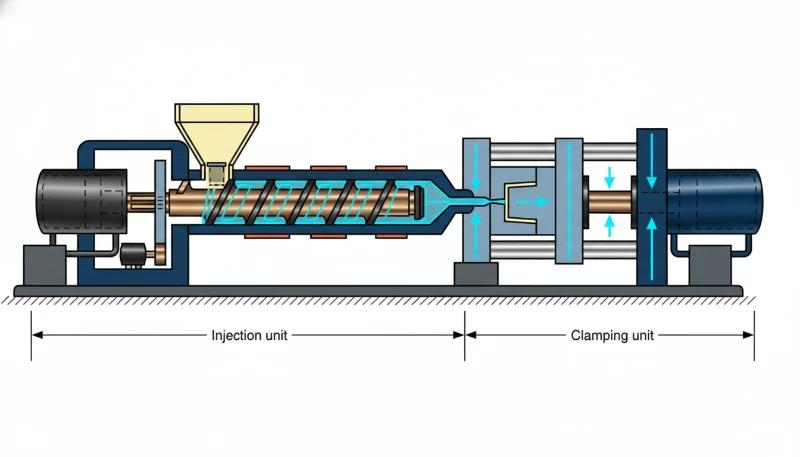
Üretim müdürünüz az önce basit bir kapak parçasının neden atış başına 45 saniye sürdüğünü, rakiplerin ise 18 saniye teklif ettiğini sordu. Cevap neredeyse her zaman tek bir şeye bağlıdır: enjeksiyon kalıplama döngüsünü ne kadar iyi anladığınız ve optimize ettiğiniz.
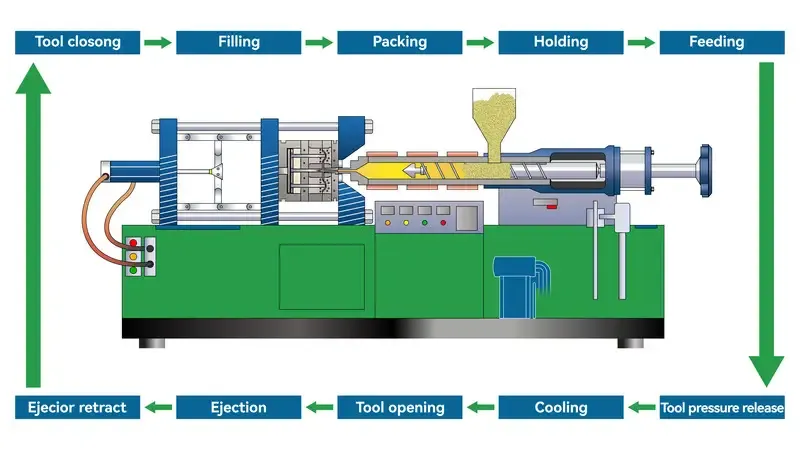
Enjeksiyon kalıplama döngüsü, kalıp kapanmasından parça çıkarmaya kadar olan tam sıralamadır. Yüksek hacimli üretimde parça başı maliyetin en büyük belirleyicisidir. Yanlış yaparsanız, her döngüde karınızı yakarsınız. Doğru yaparsanız, tek bir yeni makine satın almadan kapasite kazanırsınız.
- Enjeksiyon kalıplama döngüsü enjeksiyon, paketleme, soğutma ve çıkarma aşamalarını içerir.
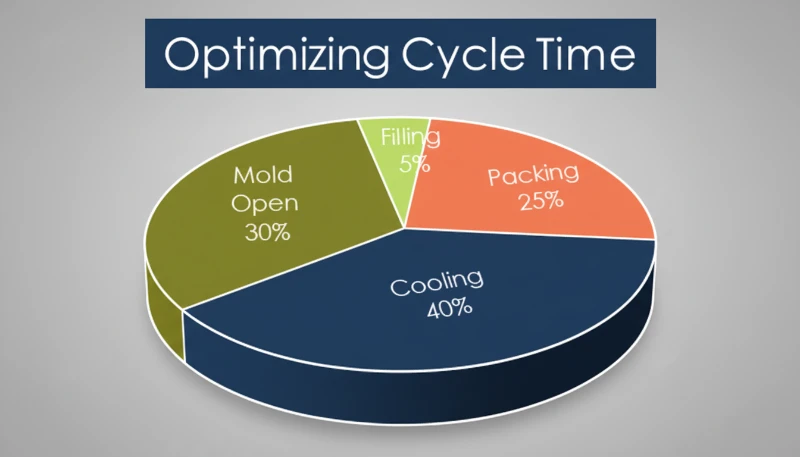
- Soğutma genellikle toplam döngü süresinin –80'ini tüketir.
- Döngü süresi, parça başı maliyetinizi ve makine kullanım oranınızı doğrudan belirler.
- Duvar kalınlığı, kalıp soğutma tasarımı ve malzeme seçimi en büyük üç etken faktördür.
- Yüksek boşluklu bir kalıpta sadece 2 saniyelik bir azalma bile ayda binlerce tasarruf sağlayabilir.
Enjeksiyon Kalıplama Döngüsü Nedir?
Enjeksiyon kalıplama çevrimi, bir enjeksiyon kalıplama makinesinde kalıbın kapanmasından parçanın çıkarılmasına kadar geçen toplam süredir.
Tedarikçileri karşılaştırıyor veya satın alma planlıyorsanız enjeksiyon kalıplama tedarikçisi bulma kılavuzumuz; teklif talebi hazırlığını, yeterlilik değerlendirmesini ve ticari risk kontrollerini ele alır.
Bu döngü önemlidir çünkü üretim kapasitenizin tavanını belirler. Döngü süreniz 30 saniye ve 4 boşluklu bir kalıp kullanıyorsanız, saatte 480 parça üretirsiniz. Bu döngüden 5 saniye kısaltırsanız, saatte 576 parçaya çıkarsınız—sıfır sermaye harcamasıyla ‘lik bir kapasite artışı.
Şangay fabrikamızda 90T'den 1850T'ye kadar 47 enjeksiyon kalıplama makinesi çalıştırıyoruz. 20+ yıllık üretim deneyimimizle binlerce kalıp programında döngü sürelerini optimize ettik. Mühendislik ekibimiz her işte döngü süresini takip eder, hedef birim fiyattan geriye doğru çalışarak optimal döngü parametrelerini belirler.
Fabrikamızda her işte döngü süresini takip ediyoruz. Bir müşteri belirli bir birim fiyat hedefi koyduğunda, ilk geriye doğru çalıştığımız sayı döngü süresidir, çünkü bu, parça başına makine-saat maliyetini belirler.
Enjeksiyon Kalıplama Döngüsünün Dört Aşaması Nedir?
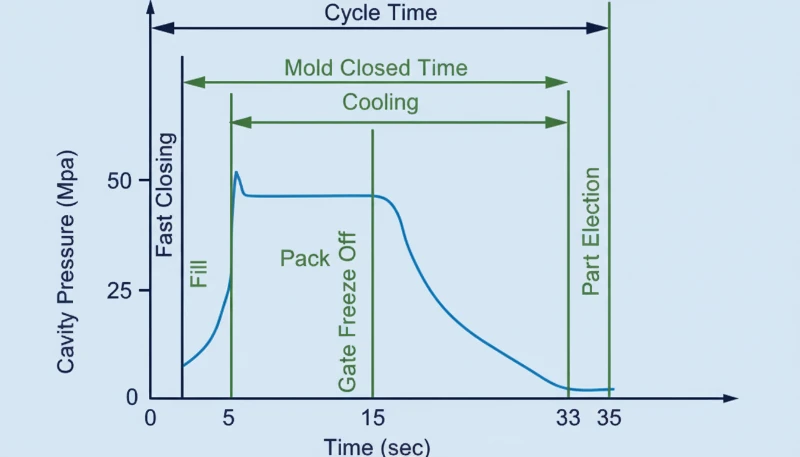
Enjeksiyon kalıplama döngüsü, her biri parça geometrisi ve malzemesi tarafından belirlenen dört aşamadan oluşur: enjeksiyon, paketleme, soğutma ve çıkarma.
1. Enjeksiyon (Kalıp Dolumu)
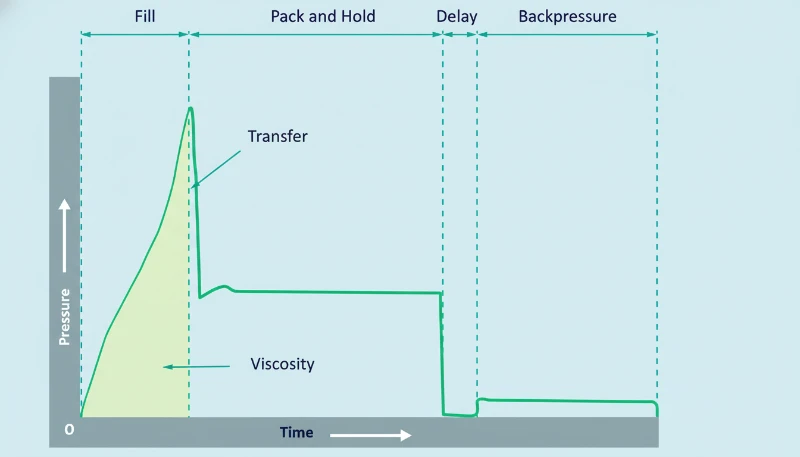
Çoğu standart parça için (duvar kalınlığı 2–3 mm, standart reçine), enjeksiyon boşluğu 2–5 saniyede doldurur. Kalın duvarlı büyük yapısal parçalar 8–12 saniye sürebilir. Enjeksiyon hız profili genellikle aşamalı olarak programlanır—kapıda jetleme (sıçrama) önlemek için yavaş, ana boşlukta hızlı, sonlara doğru aşırı paketlemeyi önlemek için tekrar yavaş.
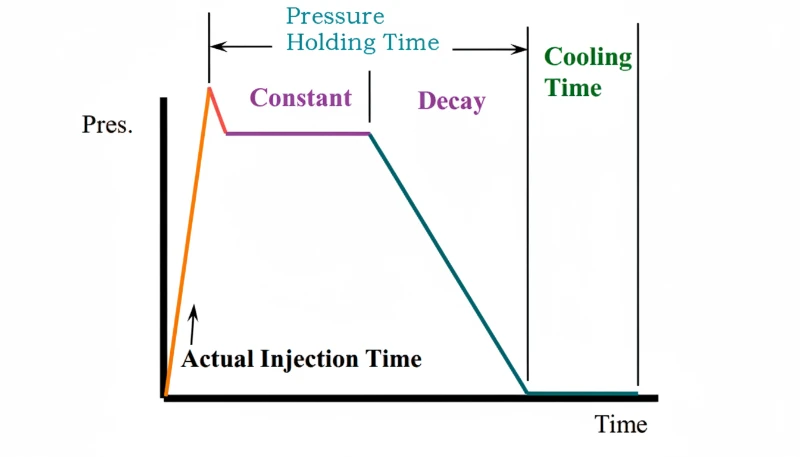
2. Paketleme (Tutma Basıncı)
Paketleme süresi genellikle 5–30 saniye sürer. Boşluk nominal olarak dolduktan sonra, vida plastik erime sıcaklığından katılaşma sıcaklığına soğurken hacimsel büzülmeyi telafi etmek için basıncı korur.
Bu aşama, ilk dolumdan sonra boşluğa 5–25% daha fazla malzeme ekler. Paketleme basıncı, kapı donana kadar korunmalıdır—kapı katılaştığında, ek basıncın parça üzerinde hiçbir etkisi olmaz. Bu nedenle kapı boyutu ve konumu kritik tasarım kararlarıdır. Çok erken donan bir kapı aşırı büzülmeye yol açar; çok geç donan bir kapı ise döngüyü gereksiz yere uzatır.
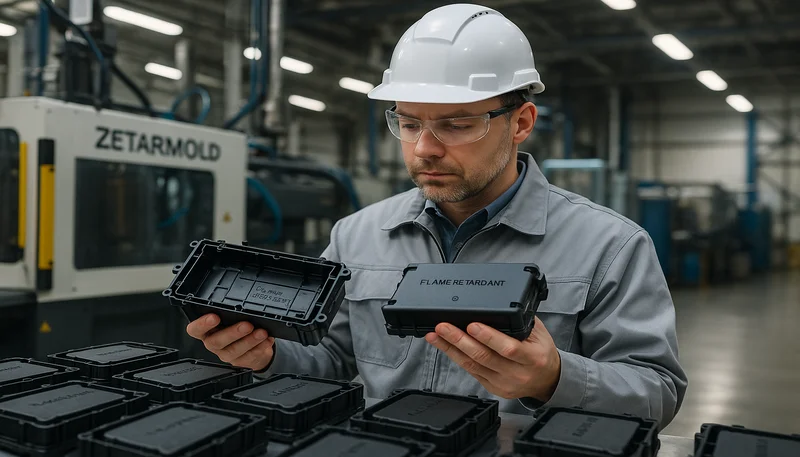
Optimal tutma süresi, parça ağırlığı sabitlenene kadar artan tutma sürelerinde parçaları tartarak bulunur. ZetarMold’da her yeni kalıpta T1 numune alma sırasında bu kapak mühürleme çalışmasını yürütüyoruz.
3. Soğutma
Soğutma neredeyse her zaman en uzun aşamadır ve toplam çevrim süresinin %50–80’ini oluşturur. Tipik soğutma süreleri 10 ila 120 saniye arasında değişir ve esas olarak cidar kalınlığı ile malzemenin ısıl yayınımı1 tarafından belirlenir.
Soğutma süresi için genel kural, yaklaşık olarak duvar kalınlığının karesiyle orantılıdır. Duvar kalınlığını iki katına çıkardığınızda, soğutma süresi kabaca dört katına çıkar. Bu nedenle DFM incelemesi sırasında sıklıkla duvar kalınlığı optimizasyonunu öneriyoruz—kritik olmayan bir alanda 4 mm’den 3 mm’ye inmek, soğutma süresini yaklaşık azaltabilir.
Soğutma kanalı tasarımı, çevrim süresi üzerindeki en etkili mühendislik kararıdır. Parçanın konturunu izleyen konformal soğutma kanalları2, geleneksel düz delinmiş kanallara kıyasla soğutma süresini %20–40 azaltabilir. Yüksek hacimli üretimde bu avantaj tek başına daha yüksek takım maliyetini karşılayabilir.
4. Çıkarma ve Kalıp Açma
Çıkarma süresi tipik olarak 2-10 saniye sürer. Bu aşama, kalıp açmayı, parça çıkarmayı (çıkarıcı pimler, sıyırıcı plakalar veya hava üflemeleriyle) ve herhangi bir robot veya operatör çıkarma süresini içerir, ardından bir sonraki döngü için kalıp kapanır.
Robotik parça çıkarma ile otomatik üretim için 3–6 saniye planlayın. Manuel çıkarma 1–3 saniye ekler. Kalıp açma mesafesi, çıkarma stroku ve yan hareketlerin (kaldırıcılar, sürgüler) varlığı bu süreyi etkiler.
Makine boyutu da rol oynar: 80T’lik bir makine 4 saniyede açılıp kapanabilirken, 1000T’lik bir makine daha büyük tabla hareket mesafesi ve daha ağır kalıp ağırlığı nedeniyle aynı işlem için 10-15 saniyeye ihtiyaç duyar.
Tipik Bir Enjeksiyon Kalıplama Döngüsü Ne Kadar Sürer?
Çoğu üretim parçası için tipik bir enjeksiyon kalıplama döngüsü 10 ile 60 saniye arasındadır. İnce duvarlı ambalaj 5 saniyenin altında çalışabilirken, büyük kalın duvarlı yapısal parçalar 120 saniyeyi aşabilir.
| Parça Tipi | Duvar Kalınlığı | Tipik Döngü | Ana Darboğaz |
|---|---|---|---|
| İnce duvarlı ambalaj | 0.5–1.0 mm | 3-8 saniye | Enjeksiyon hızı |
| Tüketici elektroniği muhafazası | 1.5–2.5 mm | 12-25 saniye | Soğutma süresi |
| Otomotiv iç mekanı | 2.0–3.5 mm | 20–45 saniye | Soğutma süresi |
| Tıbbi cihaz bileşeni | 1.0–3.0 mm | 15–35 saniye | Paketleme + soğutma |
| Büyük yapısal parça | 4.0–8.0 mm | 60–120+ saniye | Soğutma süresi |
Yukarıdaki tablo bir şeyi açıkça gösteriyor: soğutma baskındır. Duvar kalınlığı 2 mm’nin üzerindeki parçalar için optimizasyon çabalarınızı öncelikle soğutmaya odaklamalısınız.
Toplam Döngü Süresi Nasıl Hesaplanır?
Toplam döngü süresi, enjeksiyon süresi, paketleme süresi, soğutma süresi ve kalıp açma/kapama artı çıkarma sürelerinin toplamıdır. Pratikte, vida geri kazanımı (plastikleştirme) soğutmayla örtüşür, bu nedenle etkin döngü en uzun örtüşmeyen aşama tarafından belirlenir.
Temel formül:
Çevrim Süresi Formülü:Tcycle = Tinjection + Tpacking + max(Tcooling, Tscrew recovery) + Tmold open/close + Tejection
Enjeksiyon süresini hızlı tahmin etmek için:
Enjeksiyon Süresi Tahmini:Tinjection = Vshot / (0.20–0.50 × Vmax) + tbase
Pratik bir örnek olarak 200T makinede üretilen, standart 3 mm duvar kalınlığına sahip bir PP gövdeyi ele alın. Enjeksiyon kaviteyi yaklaşık 3 saniyede doldurur, ütüleme 8 saniye sürer, soğutma 18 saniye gerektirir ve kalıbın açılıp kapanması ile itme 5 saniye alır. Toplam çevrim süresi: baskı başına yaklaşık 34 saniye; tek kaviteli kalıptan saatte yaklaşık 106 parça elde edilir.
Döngü Süresini En Çok Hangi Faktörler Etkiler?
Duvar kalınlığı, kalıp soğutma tasarımı ve malzemenin ısıl özellikleri çevrim süresi üzerinde en büyük etkiye sahiptir. İkincil etkenler arasında yolluk girişi tasarımı, makine kabiliyeti ve parça çıkarma karmaşıklığı bulunur.
Vida geri kazanım süresi çoğu zaman soğutmayla çakışır ve genel hesaplamada dikkate alınmalıdır. Vida, soğutma aşaması bitmeden bir sonraki baskı için erimiş malzemeyi tamamen geri kazanamazsa (yeniden dolduramazsa), geri kazanım süresi darboğaz hâline gelir ve toplam çevrim süresini yalnızca soğutma hesabının göstereceğinden çok daha fazla uzatır.
Duvar Kalınlığı
Duvar kalınlığı en etkili tek faktördür; çünkü soğutma süresi kalınlığın karesiyle artar. 4 mm’lik bir duvarın 3 mm’ye indirilmesi soğutma süresini yaklaşık %44 azaltabilir. Bu nedenle duvar kalınlığına ilişkin DFM geri bildirimi yalnızca faydalı bir ek değildir; parça başına maliyetinizi doğrudan etkiler.
Kalıp Soğutma Tasarımı
Soğutma kanallarının sayısı, çapı ve kalıp boşluğu yüzeyine yakınlığı, ısının ne kadar hızlı uzaklaştırılacağını belirler. İyi tasarlanmış bir soğutma devresi, giriş ve çıkış suyu arasındaki sıcaklık farkını 3°C’nin altında tutar. Delta-T değeriniz 8°C ise soğutma akışı sorununuz vardır.
Malzeme Seçimi
Kristalin polimerler (PP, POM, PEEK), katılaşma sırasında gizli kristalleşme ısısı3 açığa çıkarır ve eşdeğer cidar kalınlığında amorf polimerlere (ABS, PC, PMMA) kıyasla soğutma süresini %30–50 uzatır. Dolgulu malzemeler (cam elyaf dolgulu naylon, mineral dolgulu PP) ısıyı daha iyi iletir ve çoğu zaman daha hızlı soğur.
Çok gözlü kalıplarda yolluk düzeni de çevrim süresini etkiler. Dengeli yolluk sistemi tüm gözlerin eşit dolup ütülenmesini sağlar ve aşırı ütülenen gözlerin fazla soğutma gerektirmesini önler. Dengesiz yolluklar, en yavaş dolan göze uyum için soğutma süresini uzatmanıza neden olabilir.
Giriş Tasarımı ve Yolluk Sistemi
Gelişmiş simülasyon araçları (Moldflow, Moldex3D), çelik işlenmeden önce çevrim süresini öngörerek kalıp tasarımcılarının soğutma düzenini ve giriş konumunu sanal ortamda optimize etmesini sağlar. Bu, numune alma sırasında gereken fiziksel iterasyon sayısını azaltır.
Yolluk girişi boyutu, giriş donmadan önce ütüleme basıncının ne kadar süre etkili olacağını belirler. Sıcak yolluk sistemi yolluk firesini ortadan kaldırır ve soğutulup çıkarılacak bir soğuk yolluk kütlesi bulunmadığından çoğu zaman çevrim süresini kısaltır. Soğuk yolluklu kalıplar, özellikle üç plakalı tasarımlar, hem soğutma hem de kalıp açma süresini artırır.
Makine Yeteneği
Enjeksiyon hızı, kapama kuvveti ve plaka hızı çevrim süresine katkıda bulunur. Modern servo tahrikli bir makine, aynı tonajdaki eski bir hidrolik makineye göre kalıbı 15–20% daha hızlı açıp kapatabilir. Çevriminiz makineyle sınırlıysa daha hızlı veya plastikleştirme kapasitesi daha yüksek bir makineye geçmek, kalıp değişikliklerinden daha ekonomik olabilir.
Kaliteden Ödün Vermeden Döngü Süresi Nasıl Kısaltılır?
Çevrim süresini azaltmanın en etkili yolları; soğutma kanallarını optimize etmek, cidar kalınlığını azaltmak ve yolluk girişi donma süresini doğru boyutlandırmaktır.
Önce Soğutmayı Optimize Edin
Soğutma, çevrim süresinin %50–80’ini oluşturduğundan en büyük kazanç burada sağlanır. Çelik kesilmeden önce sıcak noktaları belirlemek için ısıl simülasyon (kalıp akış analizi) kullanın. Yüksek hacimli kalıplarda konformal soğutma kanallarını değerlendirin; bunlar soğutma süresini %20–40 azaltabilir.
Yeterli soğutma sıvısı akışı sağlayın. Hedef, her kanalda türbülanslı akıştır (Reynolds sayısı > 4000). İşletmeniz yazın soğutucu olmadan şebeke suyu kullanıyorsa su sıcaklığı yükselir ve soğutma verimliliği önemli ölçüde düşer.
Ütüleme Süresini Doğru Ayarlayın
Birçok kalıpçı güvenlik payı olarak sıkıştırma süresini gereğinden uzun ayarlar. Yolluk girişi donma çalışması yapın: parçaları 5, 10, 15 ve 20 saniyelik sıkıştırma sürelerinde tartın. Parça ağırlığı artmayı bıraktığında, etkili asgari sıkıştırma süresini bulmuş olursunuz. Bunun ötesindeki her süre kayıptır.
Robotun Eş Zamanlı İşlemlerini Kullanın
Parçayı çıkarmak için robot kullanıyorsanız tam açılmayı beklemek yerine kalıp açılırken çıkarmaya başlayacak şekilde programlayın. Bu, çevrim başına 1–3 saniye kazandırabilir. 24/7 çalışan çok gözlü bir kalıpta bu, ayda binlerce ek parça demektir.
Malzeme İkamesini Değerlendirin
Uygulama izin veriyorsa, yavaş soğuyan kristal bir malzemeden daha hızlı soğuyan amorf bir alternatife geçmek çevrim süresini %20–30 azaltabilir. Örneğin, kritik olmayan bir braket uygulamasında POM yerine ABS kullanılabilir. Bu değişikliği yapmadan önce mekanik gereksinimleri mutlaka doğrulayın.
Doğru veya Yanlış: Enjeksiyon Kalıplama Döngüsü Bilginizi Test Edin?
"“Enjeksiyon kalıplama çevriminde en büyük payı soğutma süresi oluşturur.”"True
Soğutma genellikle toplam çevrim süresinin 50–80%'ini oluşturur. Bu nedenle soğutma kanalı tasarımı, çevrim süresinin azaltılmasında diğer tüm tekil etkenlerden daha fazla etkiye sahiptir.
"“Daha kısa çevrim süresi her zaman daha düşük parça başı maliyet demektir.”"False
Soğutmayı çok kısa keserek döngü süresini azaltırsanız, eğrilmiş parçalar, boyutsal hatalı parçalar veya çıkarma sırasında sıkışmış parçalar elde edersiniz. Yeniden işleme, hurda ve ayıklama maliyetleri, makine zamanı tasarrufunu aşabilir. Döngü optimizasyonu öncelikle kaliteyi korumalıdır.
Bu yaygın yanlış kanıları anlamak, üretim planlaması veya kalıp tasarımı süreçlerinde görev alan herkes için gereklidir. Sonraki ifadeler, çevrim süresine ilişkin kararların malzeme davranışı, takım tasarımı ve mühendislerin her gün üretim sahasında karşılaştığı gerçek üretim kısıtlarıyla nasıl etkileştiğini daha ayrıntılı inceler.
Çoğu deneyimli kalıpçı, teorik bilgiler ve üretim hattı gerçekliğinin farklılaştığı durumlarla karşılaşmıştır. Kağıt üzerinde optimal görünen bir döngü, uzun bir üretim sürecinde malzeme batch özelliklerindeki değişimler, ortam sıcaklığı dalgalanmaları veya kalıp yüzey durumundaki küçük değişiklikler nedeniyle tutarsız sonuçlar verebilir. Bu nedenle, iyi yönetilen kalıplama tesislerinde sürekli izleme ve periyodik döngü denetimleri standart uygulamadır.
Yüksek hacimli üretim ortamlarında, küçük döngü süresi iyileştirmeleri bile hızla birikir. Günlük 24 saat çalışan bir kalıpta iki saniyelik bir azalma, haftada yüzlerce ek parça anlamına gelir. Ancak, herhangi bir ayarlama, standart proses parametrelerine sabitlenmeden önce boyutsal veriler ve hata takibi ile doğrulanmalıdır. Tecrübe gösteriyor ki, en güvenli optimizasyonlar önce soğutma verimliliğini hedefler, ardından dolum süresi azaltması ve sonra çıkarma hızı iyileştirmeleri gelir.
"“Sıcak yolluk sistemleri, yolluk soğutmasını ortadan kaldırarak çevrim süresini kısaltabilir.”"True
Sıcak dağıtıcılar, plastiği atışlar arasında dağıtıcı sisteminde erimiş halde tutar, böylece soğutulacak ve çıkarılacak soğuk dağıtıcı kütlesi olmaz. Bu, dağıtıcıyla ilgili soğutma ve çıkarma süresini ortadan kaldırır ve ayrıca malzeme israfını azaltır.
"Enjeksiyon süresi genellikle çevrimin en uzun aşamasıdır."False
Enjeksiyon süresi tipik olarak 1–10 saniye ile en kısa aşamadır. Soğuma en uzun aşamadır, genellikle toplam döngü süresinin 50–80%'sini oluşturur. Enjeksiyon hızı parça kalitesi için önemlidir, ancak nadiren döngü süresini baskın şekilde etkiler.
Enjeksiyon Kalıplama Döngüsü Hakkında En Sık Sorulan Sorular Nelerdir?
Ortalama enjeksiyon kalıplama döngü süresi nedir?
Üretim parçalarının ortalama enjeksiyon kalıplama döngü süresi 15 ila 45 saniye arasında değişir. İnce duvar paketleme 5 saniye altında çalışabilirken, büyük yapısal parçalar 120 saniyeyi aşabilir. Soğuma süresi, çoğu döngüde baskın faktördür.
Enjeksiyon kalıplama döngü süresi nasıl hesaplanır?
Döngü süresi = enjeksiyon süresi + dolum süresi + maks(soğutma süresi, vida geri kazanım süresi) + kalıp açma/kapama süresi + çıkarma süresi. Maks() fonksiyonu, soğutma ve vida geri kazanımı arasındaki örtüşmeyi hesaba katar.
Döngü süresinin yüzde kaçı soğutmadan oluşur?
Soğutma, toplam enjeksiyon kalıplama döngü süresinin –80’ini oluşturur. Kalın cidarlı parçalar (4 mm+) için soğutma, toplam döngünün ‘ini aşabilir.
Kalıp yapıldıktan sonra enjeksiyon kalıplama döngü süresini azaltabilir misiniz?
Evet. Kalıp sonrası optimizasyonlar, proses parametrelerinin ayarlanmasını (enjeksiyon hızı, dolum süresi, kalıp sıcaklığı), soğutucu akışının iyileştirilmesini, harici soğutma aparatlarının eklenmesini ve bazı durumlarda soğutma kanallarının yenilenmesini veya sıcak dağıtıcı nozullarının takılmasını içerir.
Döngü süresi parça kalitesini etkiler mi?
Evet. Yetersiz soğutma süresi eğrilmeye, boyutsal kararsızlığa ve çıkarma izlerine neden olur. Aşırı dolum süresi aşırı doluma ve taşmaya neden olabilir. Her aşama, malzeme ve parça geometrisi gereksinimlerine göre optimize edilmelidir.
Enjeksiyon kalıplamada döngü süresi ile teslim süresi arasındaki fark nedir?
Döngü süresi makinede atış başına saniyedir (tipik olarak 10–60 saniye). Teslimat süresi siparişten teslimata kadar olan toplam süredir (tipik olarak 4–12 hafta), kalıp yapımı, numune alma, üretim planlaması ve nakliye dahildir.
Duvar kalınlığı döngü süresini nasıl etkiler?
Soğuma süresi kabaca duvar kalınlığının karesiyle ölçeklenir. Duvar kalınlığını iki katına çıkarmak soğuma süresini kabaca dört katına çıkarır. Bu nedenle, kalıp başlamadan önce DFM incelemesinde duvar kalınlığı optimizasyonu, en etkili döngü süresi azaltma stratejisidir.
Enjeksiyon Kalıplama Çevriminizi Optimize Etmek İçin Yardıma mı İhtiyacınız Var? Mühendislik ekibimiz çevrim optimizasyonu için kalıp tasarımınızı inceleyebilir, kalıp akış simülasyonu yapabilir ve çelik kesilmeden önce ayrıntılı bir çevrim süresi tahmini sunabilir. 45 makine (90T–1850T) ve 20 yılı aşkın üretim deneyimiyle çevrim süresiyle ilgili çoğu zorluğu gördük ve çözdük. Ücretsiz Teklif Alın →
ısıl yayınım: Isıl yayınım, ısının bir malzeme içinde ne kadar hızlı hareket ettiğinin ölçüsüdür; ısıl iletkenliğin yoğunluk ve özgül ısı kapasitesine bölümü olarak tanımlanır ve mm2/s cinsinden ölçülür. ↩
konformal soğutma kanalları: Konformal soğutma kanalları, bir kalıpta parça boşluğunun konturunu izleyen ve genellikle 3D baskıyla üretilen soğutma geçitleridir; geleneksel düz delinmiş kanallara göre daha eşit soğutma sağlar. ↩
gizli kristalleşme ısısı: Gizli kristalleşme ısısı, kristalin bir polimerin düzensiz eriyik hâlinden düzenli kristalin katı hâle geçerken açığa çıkardığı ve genellikle J/g cinsinden ölçülen ısıl enerjidir. ↩