Ваш руководитель производства только что спросил, почему изготовление простой крышки занимает 45 секунд за цикл, тогда как конкурент указал 18. Ответ почти всегда сводится к одному: насколько хорошо вы понимаете и оптимизируете цикл литья под давлением.
Цикл литья под давлением — это полная последовательность операций от смыкания пресс-формы до извлечения детали. В крупносерийном производстве именно он сильнее всего влияет на себестоимость одной детали. Ошибётесь с ним — и будете терять прибыль в каждом цикле. Настроите правильно — и увеличите производственную мощность без покупки хотя бы одной новой машины.
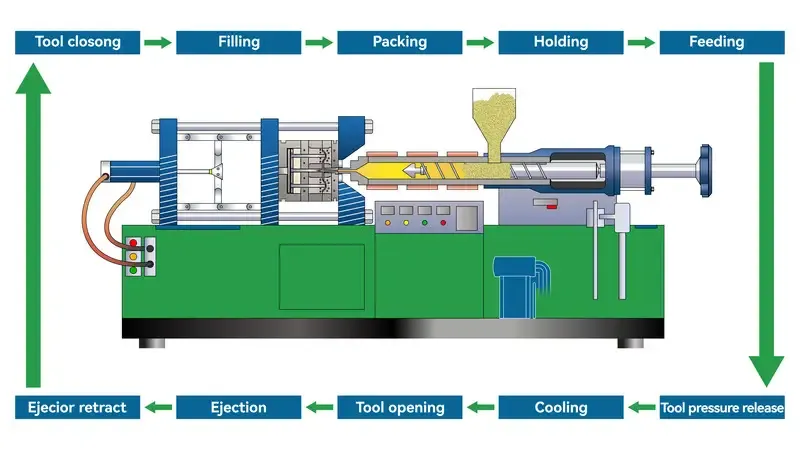
- Цикл литья под давлением включает этапы впрыска, уплотнения, охлаждения и извлечения детали.
- Охлаждение обычно занимает 50–80% общего времени цикла.
- Время цикла напрямую определяет себестоимость одной детали и коэффициент использования оборудования.
- Толщина стенки, конструкция охлаждения пресс-формы и выбор материала — три главных рычага оптимизации.
- Даже сокращение на 2 секунды при использовании многогнёздной пресс-формы может сэкономить тысячи в месяц.
Что такое цикл литья под давлением?
Цикл литья под давлением — это общее время от смыкания пресс-формы до извлечения детали на машине для литья под давлением.
Если вы сравниваете поставщиков или планируете закупки, наше руководство по поиску поставщика для литья под давлением охватывает подготовку RFQ, квалификационную оценку и проверку коммерческих рисков.
Этот цикл важен, поскольку задаёт верхний предел производительности. Если время цикла составляет 30 секунд и используется 4-гнёздная пресс-форма, вы производите 480 деталей в час. Сократите этот цикл на 5 секунд — и производительность вырастет до 576 деталей в час, то есть на 20% без капитальных затрат.
На нашем заводе в Шанхае работают 47 машин для литья под давлением усилием от 90T до 1850T. За 20+ лет производственного опыта мы оптимизировали время цикла в тысячах проектов пресс-форм. Наша инженерная команда отслеживает время цикла для каждого заказа и, исходя из целевой цены за единицу, определяет оптимальные параметры цикла.
На нашем заводе мы отслеживаем время цикла для каждого заказа. Когда заказчик просит обеспечить определённую цену за единицу, первым показателем, от которого мы ведём обратный расчёт, становится время цикла, поскольку оно определяет стоимость машино-часа на одну деталь.
Каковы четыре этапа цикла литья под давлением?
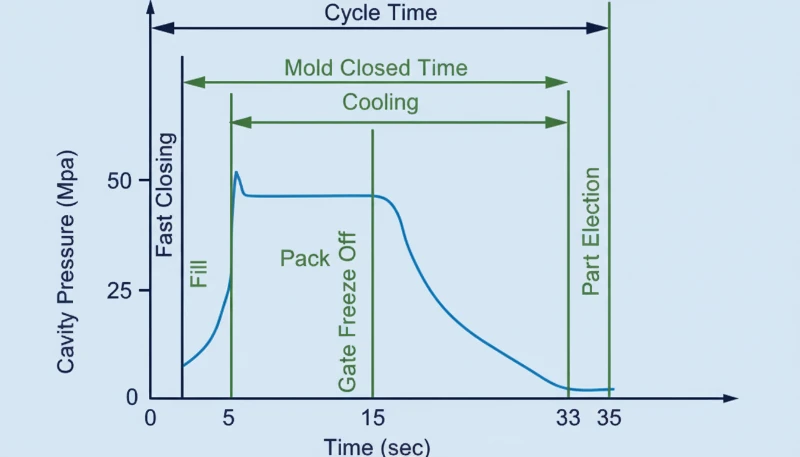
Цикл литья под давлением состоит из четырёх этапов: впрыска, уплотнения, охлаждения и извлечения детали, каждый из которых определяется геометрией детали и материалом.
1. Впрыск (заполнение пресс-формы)
Для большинства стандартных деталей (толщина стенки 2–3 mm, стандартная полимерная смола) полость заполняется при впрыске за 2–5 секунд. Для крупных толстостенных конструкционных деталей может потребоваться 8–12 секунд. Профиль скорости впрыска обычно программируют поэтапно: медленно у литника для предотвращения струйного течения, быстро через основную полость, а затем снова медленно ближе к концу, чтобы избежать переуплотнения.
2. Уплотнение (давление выдержки)
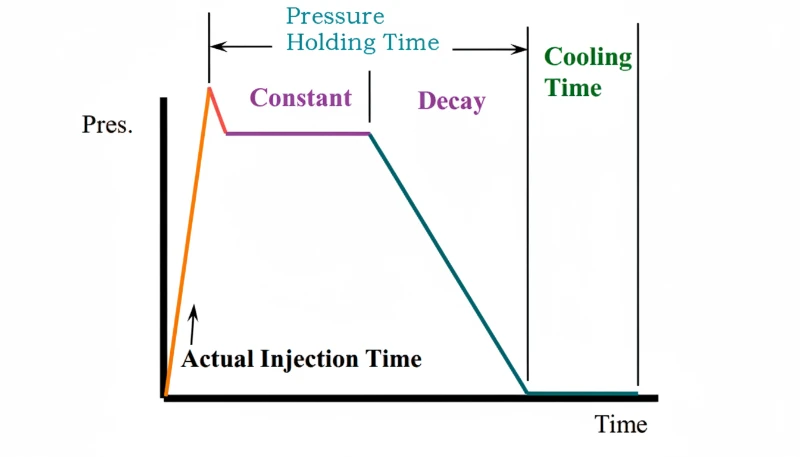
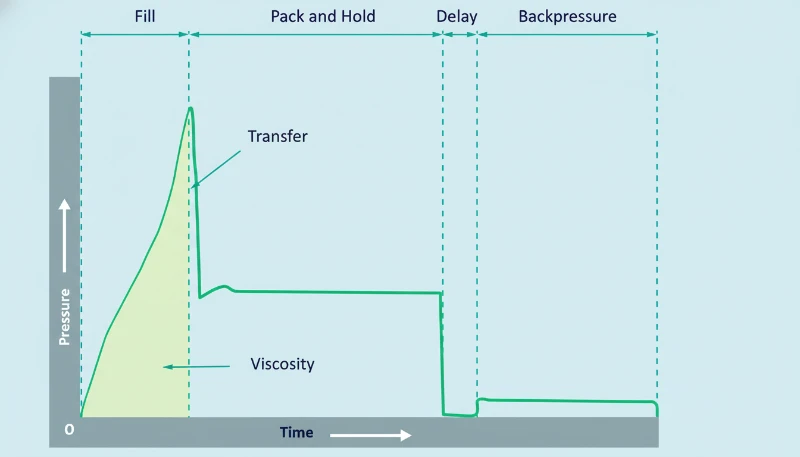
Время уплотнения обычно составляет 5–30 секунд. После номинального заполнения полости шнек поддерживает давление, компенсируя объёмную усадку по мере охлаждения пластика от температуры расплава до температуры затвердевания.
На этом этапе после первоначального заполнения в полость поступает ещё 5–25% материала. Давление выдержки необходимо поддерживать до застывания литника: после его затвердевания дополнительное давление уже не влияет на деталь. Именно поэтому размер и расположение литника являются критически важными конструктивными решениями. Если литник застывает слишком рано, возникает чрезмерная усадка; если слишком поздно, цикл неоправданно удлиняется.
Оптимальное время выдержки определяют, взвешивая детали при постепенно увеличивающемся времени выдержки до стабилизации их массы. В ZetarMold мы проводим такое исследование герметизации литника для каждой новой пресс-формы во время изготовления образцов T1.
3. Охлаждение
Охлаждение почти всегда является самым длительным этапом и занимает 50–80% общего времени цикла. Типичное время охлаждения составляет от 10 до 120 секунд и определяется главным образом толщиной стенки и температуропроводностью1 материала.
Согласно практическому правилу, время охлаждения приблизительно пропорционально квадрату толщины стенки. Удвойте толщину стенки — и время охлаждения увеличится примерно в четыре раза. Именно поэтому при DFM-анализе мы часто рекомендуем оптимизировать толщину стенки: уменьшение толщины с 4 mm до 3 mm на некритичном участке может сократить время охлаждения почти на 40%.
Конструкция каналов охлаждения — самое значимое инженерное решение для времени цикла. Конформные каналы охлаждения2, повторяющие контур детали, могут сократить время охлаждения на 20–40% по сравнению с обычными прямыми сверлёными каналами. При крупносерийном производстве одно это может оправдать более высокую стоимость оснастки.
4. Извлечение детали и раскрытие пресс-формы
Извлечение детали обычно занимает 2–10 секунд. Этот этап включает раскрытие пресс-формы, извлечение детали (толкателями, съёмными плитами или струями воздуха) и время её удаления роботом или оператором, после чего пресс-форма смыкается для следующего цикла.
Для автоматизированного производства с роботизированным удалением деталей закладывайте 3–6 секунд. Ручное удаление добавляет 1–3 секунды. На это время влияют расстояние раскрытия пресс-формы, ход извлечения и наличие механизмов бокового действия (наклонных толкателей, ползунов).
Размер машины также имеет значение: машина 80T может раскрыть и сомкнуть пресс-форму за 4 секунды, а машине 1000T для того же действия требуется 10–15 секунд из-за большего хода плит и большей массы пресс-формы.
Сколько длится типичный цикл литья под давлением?
Для большинства серийных деталей типичный цикл литья под давлением длится от 10 до 60 секунд. Цикл для тонкостенной упаковки может занимать менее 5 секунд, а для крупных толстостенных конструкционных деталей — превышать 120 секунд.
| Part Type | Wall Thickness | Typical Cycle | Key Bottleneck |
|---|---|---|---|
| Thin-wall packaging | 0.5–1.0 mm | 3–8 seconds | Injection speed |
| Consumer electronics housing | 1.5–2.5 mm | 12–25 seconds | Cooling time |
| Automotive interior | 2.0–3.5 mm | 20–45 seconds | Cooling time |
| Medical device component | 1.0–3.0 mm | 15–35 seconds | Packing + cooling |
| Large structural part | 4.0–8.0 mm | 60–120+ seconds | Cooling time |
Таблица выше наглядно показывает одно: охлаждение преобладает. Для деталей с толщиной стенки более 2 mm именно на охлаждении следует в первую очередь сосредоточить усилия по оптимизации.
Как рассчитать полное время цикла?
Полное время цикла складывается из времени впрыска, уплотнения, охлаждения, раскрытия и смыкания пресс-формы, а также извлечения детали. На практике восстановление шнека (пластификация) происходит одновременно с охлаждением, поэтому фактический цикл определяется самым длительным этапом, не совмещённым с другими.
Основная формула:
Формула времени цикла:
Tcycle = Tinjection + Tpacking + max(Tcooling, Tscrew recovery) + Tmold open/close + Tejection
Для быстрой оценки времени впрыска:
Оценка времени впрыска:
Tinjection = Vshot / (0.20–0.50 × Vmax) + tbase
В качестве практического примера рассмотрим стандартный корпус из PP с толщиной стенки 3 mm, изготовленный на машине 200T. Впрыск заполняет полость примерно за 3 секунды, уплотнение длится 8 секунд, для охлаждения требуется 18 секунд, а раскрытие и смыкание пресс-формы вместе с извлечением детали занимают 5 секунд. Полное время цикла составляет приблизительно 34 секунды на цикл, что даёт около 106 деталей в час при использовании одногнёздной пресс-формы.
Какие факторы сильнее всего влияют на время цикла?
Наибольшее влияние на время цикла оказывают толщина стенки, конструкция охлаждения пресс-формы и тепловые свойства материала. К вторичным факторам относятся конструкция литника, возможности оборудования и сложность извлечения детали.
Время восстановления шнека часто частично совпадает с охлаждением, и его необходимо учитывать в общем расчёте. Если шнек не успевает полностью восстановиться (набрать дозу) для следующей порции расплава до завершения этапа охлаждения, время восстановления становится узким местом и удлиняет общий цикл намного сильнее, чем можно было бы предположить только по расчёту охлаждения.
Толщина стенки
Толщина стенки — самый влиятельный фактор, поскольку время охлаждения растёт пропорционально квадрату толщины. Уменьшение стенки с 4 mm до 3 mm может сократить время охлаждения примерно на 44%. Именно поэтому рекомендации по толщине стенки при DFM-анализе — не просто желательное дополнение: они напрямую влияют на себестоимость одной детали.
Конструкция охлаждения пресс-формы
Количество и диаметр каналов охлаждения, а также их близость к поверхности полости определяют скорость отвода тепла. Хорошо спроектированный контур охлаждения поддерживает разницу температур воды на входе и выходе менее 3°C. Если разница температур составляет 8°C, у вас проблема с потоком охлаждающей жидкости.
Выбор материала
Кристаллические полимеры (PP, POM, PEEK) выделяют скрытую теплоту кристаллизации3 при затвердевании, что увеличивает время охлаждения на 30–50% по сравнению с аморфными полимерами (ABS, PC, PMMA) при одинаковой толщине стенки. Наполненные материалы (стеклонаполненный нейлон, минералонаполненный PP) лучше проводят тепло и часто охлаждаются быстрее.
Для многогнёздных пресс-форм схема литниковых каналов также влияет на время цикла. Сбалансированная литниковая система обеспечивает равномерное заполнение и уплотнение всех полостей, не позволяя переуплотнённым полостям требовать чрезмерного охлаждения. Несбалансированные литниковые каналы могут вынудить вас увеличить время охлаждения с учётом полости, которая заполняется медленнее всего.
Конструкция литника и литниковая система
Современные инструменты моделирования (Moldflow, Moldex3D) позволяют прогнозировать время цикла до обработки стали, благодаря чему конструкторы пресс-форм могут виртуально оптимизировать схему охлаждения и расположение литника. Это сокращает количество физических итераций, необходимых при изготовлении образцов.
Размер литника определяет, как долго давление выдержки остаётся эффективным до его застывания. Горячеканальная система устраняет отходы литниковых каналов и часто сокращает время цикла, поскольку отсутствует масса холодного литникового канала, которую нужно охлаждать и извлекать. Холодноканальные пресс-формы, особенно трёхплитные конструкции, увеличивают как время охлаждения, так и время раскрытия пресс-формы.
Возможности оборудования
Свой вклад вносят скорость впрыска, усилие смыкания и скорость движения плит. Современная машина с сервоприводом может раскрывать и смыкать пресс-форму на 15–20% быстрее устаревшей гидравлической машины того же тоннажа. Если цикл ограничен возможностями машины, переход на более быструю машину или машину с большей производительностью пластификации может оказаться экономичнее модификации пресс-формы.
Как сократить время цикла без ущерба для качества?
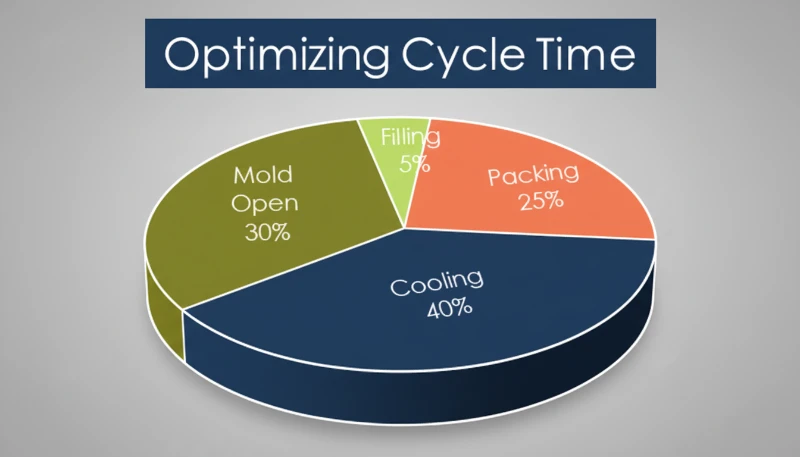
Наиболее эффективные способы сократить время цикла — оптимизировать каналы охлаждения, уменьшить толщину стенки и точно подобрать время герметизации литника.
Сначала оптимизируйте охлаждение
Поскольку охлаждение занимает 50–80% времени цикла, именно здесь сосредоточен наибольший потенциал улучшений. Используйте тепловое моделирование (анализ течения расплава), чтобы выявить горячие зоны до обработки стали. Для пресс-форм крупносерийного производства рассмотрите конформные каналы охлаждения: они могут сократить время охлаждения на 20–40%.
Обеспечьте достаточный расход охлаждающей жидкости. Целевая величина — турбулентный поток (число Рейнольдса > 4000) в каждом канале. Если летом ваше производство использует водопроводную воду без чиллера, температура воды повышается, а эффективность охлаждения значительно снижается.
Подберите оптимальное время выдержки
Многие специалисты по литью задают чрезмерно большое время уплотнения в качестве запаса надёжности. Проведите исследование герметизации литника: взвесьте детали после 5, 10, 15 и 20 секунд уплотнения. Когда масса детали перестаёт увеличиваться, минимальное эффективное время уплотнения найдено. Всё, что превышает это значение, — потерянное время.
Используйте одновременные операции робота
Если для удаления деталей используется робот, запрограммируйте его начинать извлечение во время раскрытия пресс-формы, а не ждать полного раскрытия. Это может сэкономить 1–3 секунды на каждом цикле. Для многогнёздной пресс-формы, работающей 24/7, это означает тысячи дополнительных деталей в месяц.
Рассмотрите замену материала
Если применение допускает, переход с медленно охлаждающегося кристаллического материала на быстрее охлаждающийся аморфный аналог может сократить время цикла на 20–30%. Например, можно заменить POM на ABS в некритичном кронштейне. Перед такой заменой всегда проверяйте требования к механическим свойствам.
Правда или ложь: проверьте свои знания о цикле литья под давлением?
"“На время охлаждения приходится наибольшая доля цикла литья под давлением.”"True
Охлаждение обычно занимает 50–80% общего времени цикла. Именно поэтому конструкция каналов охлаждения сильнее влияет на сокращение цикла, чем любой другой отдельно взятый фактор.
"“Более короткое время цикла всегда означает меньшую себестоимость одной детали.”"False
Если вы сокращаете время цикла за счёт недостаточного охлаждения, детали коробятся, не проходят контроль размеров или застревают при извлечении. Затраты на доработку, брак и сортировку могут превысить экономию машинного времени. При оптимизации цикла качество всегда должно быть на первом месте.
Понимание этих распространённых заблуждений необходимо всем, кто занимается планированием производства или проектированием пресс-форм. Следующая группа утверждений подробнее показывает, как решения о времени цикла взаимодействуют с поведением материала, конструкцией оснастки и реальными производственными ограничениями, с которыми инженеры ежедневно сталкиваются в цехе.
Многие опытные специалисты по литью сталкивались с ситуациями, когда теория из учебников расходилась с реальностью цеха. Цикл, который на бумаге выглядит оптимальным, может давать нестабильные результаты из-за различий в свойствах партий материала, колебаний температуры окружающей среды или небольших изменений состояния поверхности пресс-формы в ходе длительного производственного цикла. Именно поэтому непрерывный мониторинг и периодический аудит цикла остаются стандартной практикой на предприятиях с хорошо организованным процессом литья.
В условиях крупносерийного производства даже небольшие улучшения времени цикла быстро дают накопительный эффект. Сокращение на две секунды для пресс-формы, работающей 24 часа в сутки, означает сотни дополнительных деталей в неделю. Однако прежде чем закреплять любую корректировку в стандартных параметрах процесса, её необходимо подтвердить данными измерений и отслеживанием дефектов. Опыт показывает, что самые безопасные меры оптимизации сначала направлены на эффективность охлаждения, затем на сокращение времени уплотнения и только после этого — на повышение скорости извлечения.
"“Горячеканальные системы могут сократить время цикла, устраняя охлаждение литниковых каналов.”"True
Горячеканальные системы поддерживают пластик в литниковой системе расплавленным между циклами, поэтому отсутствует масса холодного литникового канала, которую нужно охлаждать и извлекать. Это устраняет время охлаждения и извлечения, связанное с литниковыми каналами, а также сокращает отходы материала.
"Время впрыска обычно является самым длительным этапом цикла."False
Время впрыска обычно является самым коротким этапом и составляет 1–10 секунд. Самым длительным этапом является охлаждение, которое часто занимает 50–80% общего времени цикла. Скорость впрыска важна для качества детали, но редко определяет общую длительность цикла.
Какие вопросы о цикле литья под давлением задают чаще всего?
Каково среднее время цикла литья под давлением?
Среднее время цикла литья под давлением для серийных деталей составляет от 15 до 45 секунд. Цикл для тонкостенной упаковки может занимать менее 5 секунд, а для крупных конструкционных деталей — превышать 120 секунд. В большинстве циклов определяющим фактором является время охлаждения.
Как рассчитывается время цикла литья под давлением?
Время цикла = время впрыска + время уплотнения + max(время охлаждения, время восстановления шнека) + время раскрытия/смыкания пресс-формы + время извлечения. Функция max() учитывает совмещение охлаждения и восстановления шнека.
Какую долю времени цикла занимает охлаждение?
Охлаждение занимает 50–80% общего времени цикла литья под давлением. Для толстостенных деталей (4 mm+) охлаждение может превышать 80% общего времени цикла.
Можно ли сократить время цикла литья под давлением после изготовления пресс-формы?
Да. После изготовления можно оптимизировать параметры процесса (скорость впрыска, время уплотнения, температуру пресс-формы), улучшить поток охлаждающей жидкости, добавить внешние охлаждающие приспособления, а в некоторых случаях — модернизировать каналы охлаждения или установить горячеканальные сопла.
Влияет ли время цикла на качество детали?
Да. Недостаточное время охлаждения вызывает коробление, нестабильность размеров и следы от толкателей. Чрезмерное время уплотнения может привести к переуплотнению и облою. Каждый этап необходимо оптимизировать с учётом требований к материалу и геометрии детали.
Чем отличаются время цикла и сроки поставки при литье под давлением?
Время цикла — это количество секунд на один цикл машины (обычно 10–60 секунд). Сроки поставки — это общее время от заказа до поставки (обычно 4–12 недель), включая изготовление пресс-формы, изготовление образцов, планирование производства и отгрузку.
Как толщина стенки влияет на время цикла?
Время охлаждения приблизительно пропорционально квадрату толщины стенки. Удвоение толщины стенки примерно в четыре раза увеличивает время охлаждения. Именно поэтому оптимизация толщины стенки во время DFM-анализа — самая эффективная стратегия сокращения времени цикла, доступная до начала изготовления оснастки.
Нужна помощь в оптимизации цикла литья под давлением? Наша инженерная команда может проанализировать конструкцию вашей пресс-формы с точки зрения оптимизации цикла, выполнить моделирование течения расплава и предоставить подробную оценку времени цикла до обработки стали. Имея 45 машин (90T–1850T) и 20+ лет производственного опыта, мы сталкивались с большинством проблем, связанных со временем цикла, и решали их. Получить бесплатное предложение →
температуропроводность: Температуропроводность — это мера скорости распространения тепла в материале, определяемая как теплопроводность, делённая на плотность и удельную теплоёмкость, и измеряемая в mm2/s. ↩
конформные каналы охлаждения: Конформные каналы охлаждения — это каналы охлаждения в пресс-форме, повторяющие контур полости детали и обычно изготавливаемые с помощью 3D-печати, что обеспечивает более равномерное охлаждение по сравнению с обычными прямыми сверлёными каналами. ↩
скрытая теплота кристаллизации: Скрытая теплота кристаллизации — это тепловая энергия, выделяемая при переходе кристаллического полимера из неупорядоченного состояния расплава в упорядоченное кристаллическое твёрдое состояние и обычно измеряемая в J/g. ↩