 İçeriğe geç

Tamponlar, ızgaralar, çamurluk astarları, ayna yuvaları ve lamba çerçeveleri. Bu parçalar UV ışınlarına, -40 °C ila +90 °C arası sıcaklık döngülerine ve yolda taş darbelerine maruz kalır. Kalıplanmış TPO tamponlarda boya yapışması iyi bilinen bir sorundur—boya hattından önce yüzey işlemi (alev veya plazma) gereklidir ve kalıplayıcı, yapışmayı engelleyen katkı maddesi göçünü kontrol etmelidir. Boya soyulması için garanti taleplerinden kaçınmak için, boyama öncesi yüzey enerjisini doğru ayarlamak kritik öneme sahiptir. enjeksiyon kalıplama1 produces the majority of plastic parts in a modern car, from instrument panel trim to air intake manifolds. This article breaks down the specific materials, molding techniques, and quality requirements that separate a reliable automotive parts program from one that generates scrap and delays.
- Injection molding accounts for over 90% of plastic parts in passenger vehicles
- PP, ABS, and nylon dominate automotive molding due to cost and performance balance
- Multi-shot and insert molding enable integrated components that reduce assembly steps
- IATF 16949 and PPAP are non-negotiable for production-tier automotive parts
- Partner selection should prioritize tonnage range, material experience, and defect tracking
What Role Does Injection Molding Play in Modern Automotive Manufacturing?
Enjeksiyonla kalıplama, otomotiv plastik bileşen üretiminin temelidir. Tek bir orta boy sedan yaklaşık 30.000 parça içerir ve bunların 1.000'den fazlası plastiktir—çoğu enjeksiyonla kalıplanmıştır. Tamponlar, gösterge panelleri, kapı panelleri, emme manifoldları, sıvı depoları, sensör muhafazaları ve bağlantı elemanı bloklarının tümü kalıplama makinelerinden çıkar, işleme merkezlerinden değil.
Daha geniş bir bakış için, injection molding complete guide proses temellerini, malzeme davranışını ve üretim kararlarını kapsar.
Sebep basittir: kalıp yapıldıktan sonra, her parçanın malzeme ve makine zamanı olarak maliyeti bir doların kesirleridir. 10.000 birimin üzerindeki üretim hacimlerinde, başka hiçbir süreç parça başı maliyette rekabet edemez. Tipik bir otomotiv kalıbı, önemli bir yenileme gerektirmeden önce 500.000 ila 1 milyondan fazla döngü çalışır. Bu nedenle her büyük otomotiv üreticisi ve Tier 1 tedarikçileri, enjeksiyon kalıplama metal olmayan bileşenler üretmek için birincil yöntem olarak.
But automotive molding is not the same as consumer-goods molding. The tolerances are tighter (often ±0.05 mm for functional features), the material specifications are stricter (each resin grade must meet OEM approval lists), and the documentation burden is heavier. If you have ever been through a PPAP submission for a plastic bracket, you know the paperwork can outweigh the part.
The shift toward electric vehicles is expanding the role of injection molding further. EV battery enclosures, thermal management housings, charging port assemblies, and lightweight structural brackets are all new application areas where plastic parts replace heavier metal alternatives. The weight savings directly translate to range improvements, which is why OEMs are pushing material suppliers and molders to deliver structural-grade plastics at scale.

What Materials Are Used for Automotive Injection Molding?
PP, ABS, naylon ve polikarbonat, maliyet, dayanıklılık ve ısı direnci nedeniyle seçilen baskın otomotiv kalıplama malzemeleridir. Malzeme seçimi üç kısıtlamayla belirlenir: kilogram başına maliyet, sıcaklıktaki mekanik performans ve düzenleyici uygunluk (iç parçalar buğulanma ve VOC sınırlarını karşılamalıdır; motor bölmesi parçaları 120–150 °C'ye sürekli maruz kalmaya dayanmalıdır). Aşağıdaki tablo, dünya çapında otomotiv üretimine hakim olan temel reçineleri göstermektedir.
| Malzeme | Anahtar Özellikler | Typical Automotive Use |
|---|---|---|
| Polipropilen (PP) | Düşük yoğunluk (0.90 g/cm3), kimyasal direnç, düşük maliyet | Bumpers, battery cases, interior trim |
| ABS | Impact strength, good surface finish, paintable | Dashboard components, grilles, wheel covers |
| Nylon 6/6 (PA66) | High strength, heat resistance (up to 180 °C short-term) | Intake manifolds, engine covers, gears |
| Polikarbonat (PC) | Transparency, impact resistance, dimensional stability | Headlamp lenses, sunroof modules |
| POM (Acetal) | Low friction, excellent fatigue resistance | Fuel system components, fasteners, clips |
| TPO / TPE | Flexible, weatherable, paintable | Seals, gaskets, soft-touch interior panels |
| PA66-GF30 | High stiffness, creep resistance at elevated temperatures | Structural brackets, transmission components |
In practice, the OEM specifies an approved material list for each subsystem. As a molder, you do not get to swap PA66 for PA6 without engineering sign-off—even if the melt flow index is similar. This is why working with a supplier who stocks 400+ material grades matters: they are less likely to push a substitution that creates problems downstream in the vehicle assembly.
Glass-filled grades deserve special attention. Adding 30% short glass fiber to nylon increases tensile strength by roughly 2.5×, but it also accelerates mold wear (the fibers act like microscopic sandpaper on cavity surfaces) and requires higher injection pressures. If you are sourcing structural brackets or under-hood components, confirm the molder has experience running glass-filled compounds on production tooling—not just sample shots in a lab environment.
Regulatory requirements also shape material choices. Interior components in vehicles sold in the EU must comply with REACH and ELV Directive substance restrictions. Parts that contact food or drinking water (cup holders, water bottle holders) may need FDA-compliant resin grades. A knowledgeable molder will flag these requirements early in the design phase, before tool steel is cut.
What Are the Key Automotive Applications of Injection Molded Parts?
İç döşeme, dış paneller ve motor bölmesi güç aktarım bileşenleri, enjeksiyonla kalıplanmış otomotiv parçalarının üç uygulama alanıdır. Her alanın sıcaklık direnci, yüzey kalitesi ve yapısal bütünlük için farklı talepleri vardır.
Interior Systems
Instrument panels, center consoles, door trim panels, HVAC ducting, and airbag covers. Interior parts require Class A surface finish (no visible sink marks, weld lines, or flow marks in visible areas) and must pass fogging tests (< 1 mg condensate per DIN 75201). Multi-material üst kalıplama2 is common here: a rigid PP substrate gets a TPE skin for soft-touch feel without a separate assembly step. The cost savings from eliminating a bonding operation can be substantial at automotive volumes.
Exterior Systems
Bumpers, grilles, fender liners, mirror housings, and lamp bezels. These parts face UV exposure, temperature cycling from −40 °C to +90 °C, and stone impact on the road. Paint adhesion on molded TPO bumpers is a well-known pain point—surface treatment (flame or plasma) is required before the paint line, and the molder must control additive migration that interferes with adhesion. Getting the surface energy right before painting is critical to avoid warranty claims for peeling paint.
tasarımdan süregelen bakıma kadar, harici alet atölyelerine güvenmeden. İkincisi, altı adımlı kalite sürecimiz (IQC → süreç içi örnekleme → süreç denetimi → paketleme/montaj denetimi → FQC → OQC), otomotiv PPAP başvurularının talep ettiği izlenebilirlik belgelerini sağlar. Üçüncüsü, envanterde 400'den fazla onaylı malzeme sınıfı ile, OEM'in belirttiği tam reçine sınıfında üretimi, ikame gecikmeleri olmadan yürütebiliriz.
Air intake manifolds, coolant reservoirs, sensor housings, connector blocks, and wire harness clips. These are the most demanding applications: continuous temperatures above 120 °C, exposure to fuel, oil, and coolant, and vibration loads from the engine. Nylon 6/6 (often glass-filled) dominates this zone. ekleme kalıplama3 is frequently used to encapsulate metal inserts or electronic sensors directly into the plastic housing, eliminating assembly steps and improving reliability under vibration.
Elektrikli araç geçişi yeni kategoriler ekliyor: pil modülü muhafazaları, invertör muhafazaları, termal yönetim manifoldları ve yüksek voltajlı bağlantı elemanı sistemleri. Bu parçaların birçoğu alev geciktirici malzemeler (UL94 V-0 dereceli) gerektirir ve geniş bir sıcaklık aralığında boyutsal kararlılığı korumalıdır. Kalıp tasarımı Bu bölgeler için duvar kesitleri daha kalın olma eğiliminde olduğundan, soğutma süresini ve çökme izi riskini artırarak işlem daha karmaşıktır.
What Injection Molding Techniques Are Used in Automotive Production?
Tek atışlı, çift atışlı, içine yerleştirmeli ve gaz destekli kalıplama, otomotiv plastik üretiminde kullanılan dört temel tekniktir. Özel yöntemler, üretim hacimlerinde çoklu malzeme entegrasyonu, ağırlık azaltma ve maliyet tasarrufu sağlar.
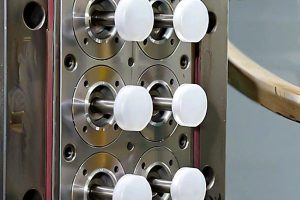
Two-shot (multi-component) molding molds two different materials in a single machine cycle. A typical automotive application is a button with a rigid PC body and a soft TPE top—the process uses a rotating mold core to transfer the substrate from cavity A to cavity B without demolding. This eliminates a secondary assembly operation and ensures precise alignment between the two materials. The resulting bond is typically stronger than any adhesive joint because the materials interlock at the molecular level during cooling.
Ekleme kalıplama places a metal stamping, threaded bushing, or electronic component into the mold before the shot. The plastic flows around it, creating a single integrated part. Automotive connector blocks with pre-positioned metal terminals are a high-volume example—billions of these are molded annually across the global automotive supply chain.
Gas-assist molding eriyiğe nitrojen gazı enjekte ederek kalın kesitleri içi boşaltır. Bu, parça ağırlığını –30 oranında azaltır, görünür yüzeylerdeki çökme izlerini ortadan kaldırır ve soğuması gereken kütleyi azaltarak enjeksiyonla kalıplama üretim süresini kısaltır. Kapı tutma kolları, konsol kol dayama çerçeveleri ve ayna braketleri genellikle bu tekniği kullanır. İçi boş çekirdek, aynı dış boyutlara sahip dolu bir parçaya kıyasla sertlik-ağırlık oranını da iyileştirir, çünkü gaz kanalı malzeme eklemeden iç bir nervür gibi davranır.
Choosing the right molding technique is not a decision you make in isolation. The part geometry, annual volume, material requirements, and assembly constraints all factor in. A good molding partner will recommend the most cost-effective technique based on the total cost of ownership—including tooling, cycle time, secondary operations, and scrap rate—rather than defaulting to the simplest method and hoping it works. The upfront investment in mold flow simulation pays for itself many times over when you consider that a single mold rework cycle for an automotive production tool can cost $5,000–$15,000 and add two to four weeks to the timeline.
“Two-shot molding eliminates the need for a separate adhesive-bonding step between rigid and soft components.”Doğru
The second material bonds molecularly to the substrate during the molding cycle, producing a stronger interface than any secondary adhesive process could achieve.
“Gas-assist molding is mainly used for small, precision parts under 50 grams.”Yanlış
Gas-assist is most valuable for large, thick-sectioned parts (often over 500 grams) where hollowing out the core saves significant weight and reduces sink marks on cosmetic surfaces.
How Does Quality Control Work for Automotive Injection Molded Parts?
Automotive quality is not optional and not negotiable. Two frameworks define the baseline: IATF 16949 (the automotive-specific quality management system standard, built on ISO 9001 but with additional requirements for process control, risk management, and traceability) and PPAP (Production Part Approval Process, which defines the 18-element submission package a supplier must provide before the OEM approves production release).
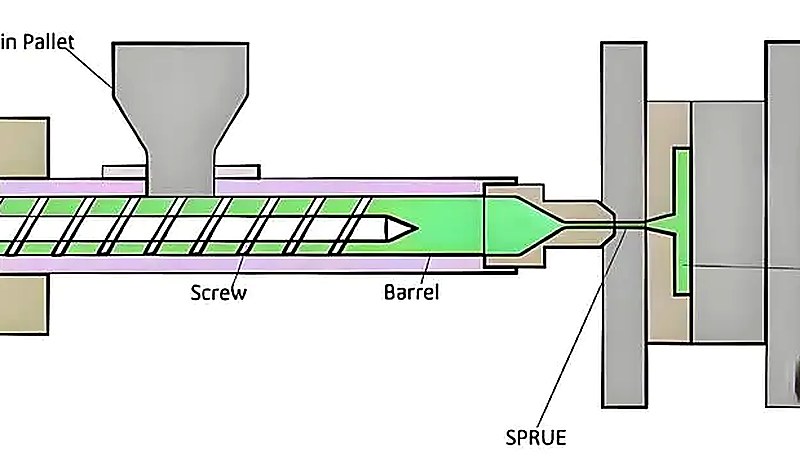
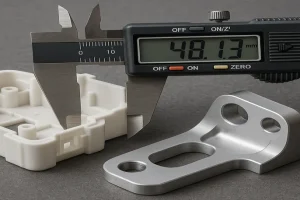
Atölyede bu, birkaç somut faaliyete dönüşür. İlk çalışma numuneleri, CMM ekipmanı kullanılarak GD&T çizimine göre ölçülür. Enjeksiyon basıncı, erime sıcaklığı, geçit donma süresi ve soğutma süresi gibi proses parametreleri, enjeksiyonla kalıplama adımlarına göre haritalanır ve ardından bir kontrol planında kilitlenir. Üretim sırasında, SPC (istatistiksel proses kontrol) grafikleri kritik boyutları örnekleme temelinde takip eder—genellikle her 2 saatte bir veya her 500 parçada bir, hangisi önce gelirse.
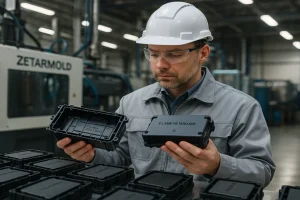
A supplier running automotive parts without CMM capability and documented SPC is not a Tier 1 or Tier 2 supplier, regardless of what their website says. When we audit suppliers at ZetarMold, we look for the actual inspection equipment—coordinate measuring machines, profile projectors, hardness testers—and the calibration records for each instrument. ISO 9001 / ISO 13485 certification is the floor, not the ceiling, for automotive work.
Traceability is another non-negotiable. Every production lot must be traceable back to the specific material batch, machine, mold, and operator. If a field failure occurs, the OEM needs to identify every affected vehicle within hours, not weeks. This level of traceability requires systematic lot tracking from raw material receiving through final shipment, and it is one of the first things an automotive auditor will verify during a facility assessment.
Without a robust lot tracking system, a recall becomes exponentially more expensive because the OEM cannot isolate the affected production window and must recall a wider range of vehicles as a precaution. Any supplier who cannot demonstrate this capability during an audit should be disqualified from automotive work, regardless of their other qualifications.
“PPAP requires dimensional results from a minimum of 3 production runs before a supplier can ship production parts.”Doğru
The 3-run minimum demonstrates process repeatability, not just that the machine was dialed in once for sample shots. Each run must produce parts within specification using production-equivalent conditions.
“If a part passes visual inspection, it is approved for automotive production use.”Yanlış
Visual inspection catches cosmetic defects only. Automotive PPAP requires dimensional data, material certifications, process capability studies (Cpk values), and often destructive testing results before any production approval.
How Do You Choose the Right Automotive Injection Molding Partner?
Kilit seçim kriterleri tonaj aralığı, malzeme deneyimi, kalite sistemleri, şirket içi kalıplama ve iletişim hızıdır. İşte her faktörün bir araç programı için pratikte ne anlama geldiği.
Tonnage range and machine fleet. Automotive parts span from 5-gram connector clips to 3-kilogram bumper fascias. A supplier limited to 200T machines cannot run large exterior parts. Conversely, a shop with only 1000T+ machines will waste capacity on small components. Look for a tonnage range of at least 90T to 1000T, with the flexibility to go higher for specialized jobs. Machine age matters too—older hydraulic machines may lack the precision of servo-electric or hybrid machines, which affects consistency in tight-tolerance work.
Material experience. Running glass-filled nylon at production volumes is different from molding commodity PP. The abrasive filler wears gates and cavity surfaces faster, requiring more frequent mold maintenance and more disciplined process monitoring. A supplier who has run 400+ materials across automotive, medical, and consumer applications has seen (and solved) the processing problems that a PP-only shop has not encountered yet.
Quality system depth. Ask for a copy of their control plan template and a recent dimensional report. If they cannot produce these within a day, their quality system is shelfware. The supplier should have a structured quality flow—IQC, in-process checks, process inspection, packaging inspection, FQC, and OQC—as a minimum framework, backed by calibrated measurement equipment and documented procedures.
Engineering support for mold modifications. Automotive programs run for 5–7 years. During that time, design changes are inevitable—sometimes driven by cost reduction, sometimes by vehicle facelifts, and sometimes by manufacturing process optimization.
If your molder does not have in-house mold manufacturing capability, every design change becomes a logistics negotiation with an external tool shop, adding weeks to the timeline. An in-house mold shop with CNC, EDM, and wire-cut equipment can turn around a steel change in days instead of weeks, keeping the production line running without interruption.
Communication and responsiveness. Üretim hattında bir boyutsal sorun ortaya çıktığında, günler değil saatler içinde bir yanıta ihtiyacınız vardır. Teknik bağlamı anlayan İngilizce konuşan proje yöneticilerine sahip bir tedarikçi (sadece e-postaları ileten bir satış ekibi değil), sorunları hat durma durumları haline gelmeden çözebilir. Bu, özellikle denizaşırı sourcingzaman dilimi farklılıklarının iletişim penceresini zaten daralttığı durumlarda.
What Are Common Defects in Automotive Injection Molding and How Are They Prevented?
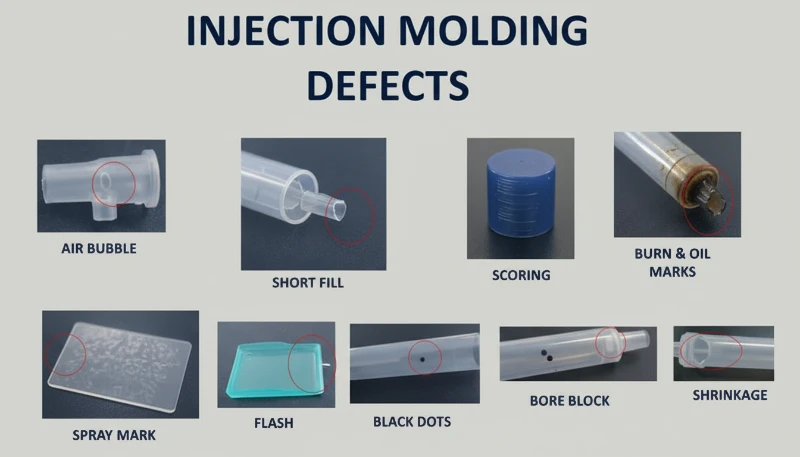
Çökme izleri, kaynak çizgileri ve kısa dolumlar, otomotiv enjeksiyonla kalıplamada en yaygın kusurlardır. Her biri, uygun proses kontrolü, kalıp tasarımı ve üretim sırasında sistematik izleme ile önlenebilir.
Sink marks appear on the show surface opposite thick sections—ribs, bosses, and wall transitions. The thicker section cools slower, contracts, and pulls the visible surface inward. Prevention: maintain rib-base thickness at 50–60% of the nominal wall, and pack with sufficient hold pressure and time. A supplier who sets hold pressure by feel rather than by monitoring the actual pressure curve data is gambling with your Class A surface requirements.
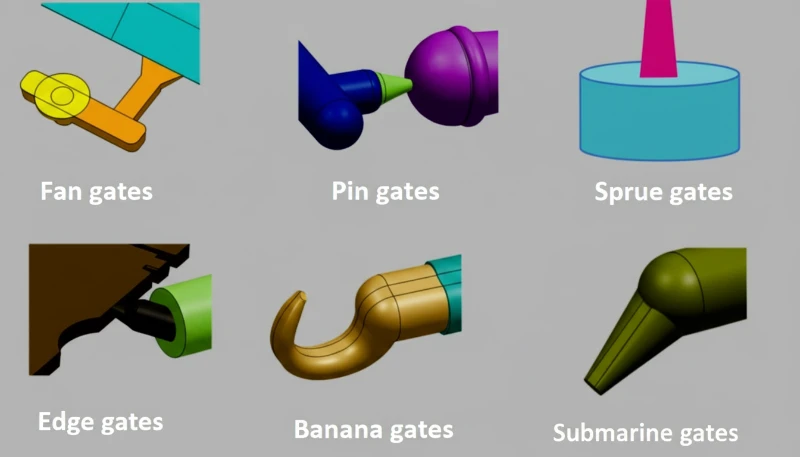
Kaynak hatları form where two flow fronts meet, typically around holes or inserts. In glass-filled materials, the fibers orient parallel to the weld line, creating a weak spot where tensile strength can drop 30–50% compared to the bulk material. Prevention involves adjusting gate placement to move the weld line to a non-critical area, or increasing melt temperature to improve molecular diffusion across the knit line. Flow simulation before tool cutting catches most of these issues, but only if the molder actually runs the simulation and acts on the results.
Beyond these three categories, automotive molders also watch for warpage (especially in large flat parts like door panels), flash (excess material escaping along the parting line), and dimensional drift over long production runs. Each of these has root causes in process control, mold condition, or material consistency—and each is far cheaper to prevent through disciplined setup than to fix through post-molding rework or scrap.
The cost of defects in automotive production is not limited to the scrap value of the part itself. A defective part that reaches the assembly line can stop production, and a defective part that reaches the end customer triggers a warranty claim or a recall. This is why automotive OEMs set defect rate targets in parts per million (PPM), and why serious molders invest in automated inspection equipment and real-time process monitoring to catch deviations before they produce out-of-spec parts.
Uygulamada Kalifiye Bir Otomotiv Kalıplama Ortağı Nasıl Görünür?
Kilit nitelikler geniş tonaj kapsamı, şirket içi kalıplama, sertifikalı kalite sistemleri ve belgelenmiş malzeme izlenebilirliğidir.
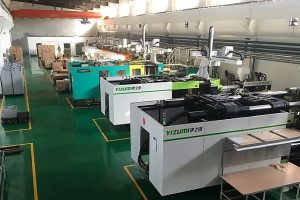
Kalifiye bir otomotiv kalıplama ortağı, geniş tonaj kapsamı, şirket içi kalıplama ve belgelenmiş kalite sistemlerini birleştirir. Şangay fabrikamızda, ekibimiz 90T ila 1850T arasında 47 enjeksiyonla kalıplama makinesi çalıştırır ve ISO 9001, ISO 13485, ISO 14001 ve ISO 45001 sistemleri altında çalışır. 20+ yıllık enjeksiyonla kalıplama ve kalıp deneyimiyle mühendislerimiz, kalıplama başlamadan önce otomotiv parça fizibilitesini malzeme, tonaj, boyutsal risk ve PPAP dokümantasyonuna karşı kontrol eder.
Özellikle otomotiv projeleri için üç pratik kontrole odaklanıyoruz. İlk olarak, şirket içi kalıp imalat tesisimiz, sorumluluğu dışarıdaki kalıp atölyelerine dağıtmak yerine, kalıp tasarımını, işlemeyi, denemeyi ve bakımı tek çatı altında tutar. İkinci olarak, kalite sürecimiz gelen muayeneyi, süreç içi örneklemeyi, paketleme kontrollerini, nihai muayeneyi ve giden muayeneyi belgelendirir, böylece PPAP kanıtları üretim başladıktan sonra hafızadan yeniden oluşturulmaz. Üçüncüsü, ekibimiz 400'den fazla plastik malzeme deneyimine sahiptir, bu da bir OEM belirli bir PP, ABS, PA, PC veya cam dolgulu bir sınıf gerektirdiğinde reçine ikame riskini azaltır.
Üretim ekibimiz, kozmetik kaplama, yarı yapısal braketler ve ısıya ve titreşime maruz kalan kaput altı parçalar arasındaki farkı anlayan 120'den fazla personelden oluşmaktadır. Bir otomotiv programı için kalıplama ortaklarını değerlendiriyorsanız, kalıp yatırımına başlamadan önce örnek boyutsal raporlar, bir kontrol planı şablonu, malzeme izlenebilirlik kayıtları ve süreç yetenek verileri talep edin.
Alıcılar Otomotiv Enjeksiyon Kalıplama Hakkında Hangi Soruları Soruyor?
Sıkça Sorulan Sorular
What is the typical lead time for an automotive injection mold?
A standard single-cavity automotive mold takes 6–10 weeks from design approval to T1 samples. Multi-cavity or family molds with complex side actions can take 12–16 weeks. At ZetarMold, our in-house mold shop typically delivers T1 samples within 8 weeks for moderate-complexity automotive tools, because we control the entire machining and trial process internally rather than waiting on external tool shops. The mold trial itself usually requires 2–3 iterations to dial in process parameters before the first article inspection report is generated.
Can injection molding produce structural automotive parts?
Yes, when using glass-filled nylon or long-fiber thermoplastic (LFT) compounds. A PA66-GF30 bracket can achieve tensile strength above 180 MPa—sufficient for many structural and semi-structural applications such as seat frames, pedal brackets, and battery mounting components in EV platforms. The key is selecting the right fiber content and orientation, which is where mold flow simulation and gate placement expertise make the difference between a part that passes lab testing and one that fails in the field under real loading conditions.
What is the minimum production volume that justifies injection molding for automotive parts?
For simple parts with moderate mold complexity, 5,000–10,000 units is typically the breakeven point versus CNC machining or 3D printing when you factor in the amortized tooling cost across the production run. For complex multi-cavity tools with side actions and lifters, the threshold rises to 30,000–50,000 units before the per-part savings offset the higher initial tooling investment. Automotive programs usually run well above these volumes over a 5–7 year model lifecycle, making injection molding the clear economic choice. Some molders also offer prototyping bridges using aluminum molds for lower volumes before committing to production steel tooling, which can reduce initial tooling cost by 40–60%.
How are injection molded automotive parts tested for durability?
Common test categories include thermal cycling (−40 °C to +120 °C for 100+ cycles per the OEM specification), UV aging (accelerated weatherometer exposure per SAE J2412 or equivalent standards), vibration testing (per ISO 16750-3 road profile spectra, typically 8–24 hours per axis), and chemical resistance (immersion in fuel, oil, and coolant for specified durations at elevated temperatures). Some applications also require drop testing, impact testing at low temperature, and humidity aging. The OEM defines the exact test matrix in the component specification document, and the supplier must provide certified test reports as part of the PPAP submission package before any production approval is granted.
What tolerances can injection molding achieve for automotive parts?
General tolerances of ±0.1 mm are routine for features under 50 mm in standard engineering resins. Tight tolerances of ±0.05 mm are achievable for critical features like snap-fit clips, locating pins, and sealing surfaces, but require precision mold construction, locked process parameters, and statistical monitoring. Features over 150 mm typically hold ±0.2–0.3 mm due to material shrinkage variation across longer dimensions. Crystalline materials like nylon and POM exhibit higher shrinkage than amorphous resins like ABS or PC, which affects tolerance capability.
Is overmolding used in automotive production?
Extensively. Two-shot overmolding produces multi-material parts like soft-touch steering wheel buttons, sealed electrical connectors with integrated gasket lips, and vibration-damped mounting brackets—all in a single machine cycle without any secondary assembly. This eliminates separate bonding operations and produces stronger material bonds than adhesive joining could achieve, because the two materials fuse at the molecular level during cooling. The process requires a molding machine equipped with two independent injection units and a mold with either a rotating core or an index plate to transfer the substrate between the first and second material shots.
What certification should an automotive injection molding supplier have?
IATF 16949 is the sector-specific quality management standard for automotive suppliers and is required by most Tier 1 OEMs for production-level sourcing approval. At minimum, ISO 9001 certification is expected for any supplier quoting automotive work, but serious production programs will mandate IATF 16949 as a hard requirement in the supplier qualification process. Environmental management certification (ISO 14001) and occupational health and safety certification (ISO 45001) are increasingly required by European and North American OEMs as part of their sustainability procurement standards and corporate responsibility requirements.
Otomotiv üretimi için bir enjeksiyon kalıplama ortağı seçmek 5–7 yıllık bir karardır. Doğru tedarikçi, tutarlı boyutsal kalite sunar, tasarım değişikliklerini zaman çizelgesini bozmadan yönetir ve PPAP başvurunuzun gerektirdiği belgeleri sağlar. Otomotiv plastik bileşenleri tedarik ediyorsanız ve mühendislik ekibimizle malzeme seçimi, kalıp tasarımı veya süreç yeteneği hakkında görüşmek istiyorsanız, lütfen tam enjeksiyon kalıp rehberi teklif vermeden önce teknik bir değerlendirme kontrol listesi olarak.
-
enjeksiyon kalıplama: Enjeksiyonla kalıplama, erimiş termoplastik reçinenin yüksek basınç altında kapalı bir kalıp boşluğuna enjekte edildiği, soğuduğu ve nihai parça geometrisine katılaştığı bir üretim sürecidir. ↩
-
üst kalıplama: Üstten kalıplama, ikinci bir malzemenin daha önce kalıplanmış bir alt tabaka üzerine kalıplandığı, gelişmiş tutuş, sızdırmazlık veya titreşim sönümleme sağlayan çoklu malzemeli bir parça oluşturan bir çift atışlı enjeksiyonla kalıplama sürecini ifade eder. ↩
-
ekleme kalıplama: İçine yerleştirmeli kalıplama, önceden yerleştirilmiş bir metal veya elektronik bileşenin, tek bir entegre montaj oluşturmak için enjekte edilen plastikle kapsüllendiği bir işlemdir. ↩


 EN
EN  ES
ES  FR
FR  DE
DE  PT
PT  AR
AR  RU
RU  JA
JA  KO
KO  IT
IT  NL
NL  TR
TR  PL
PL 