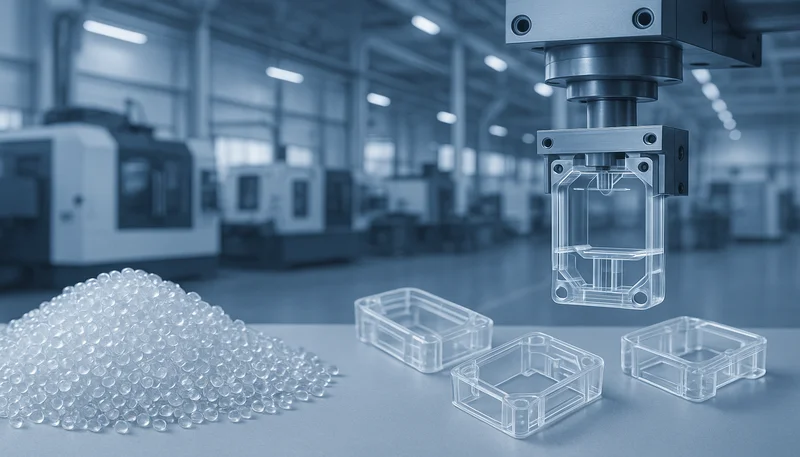
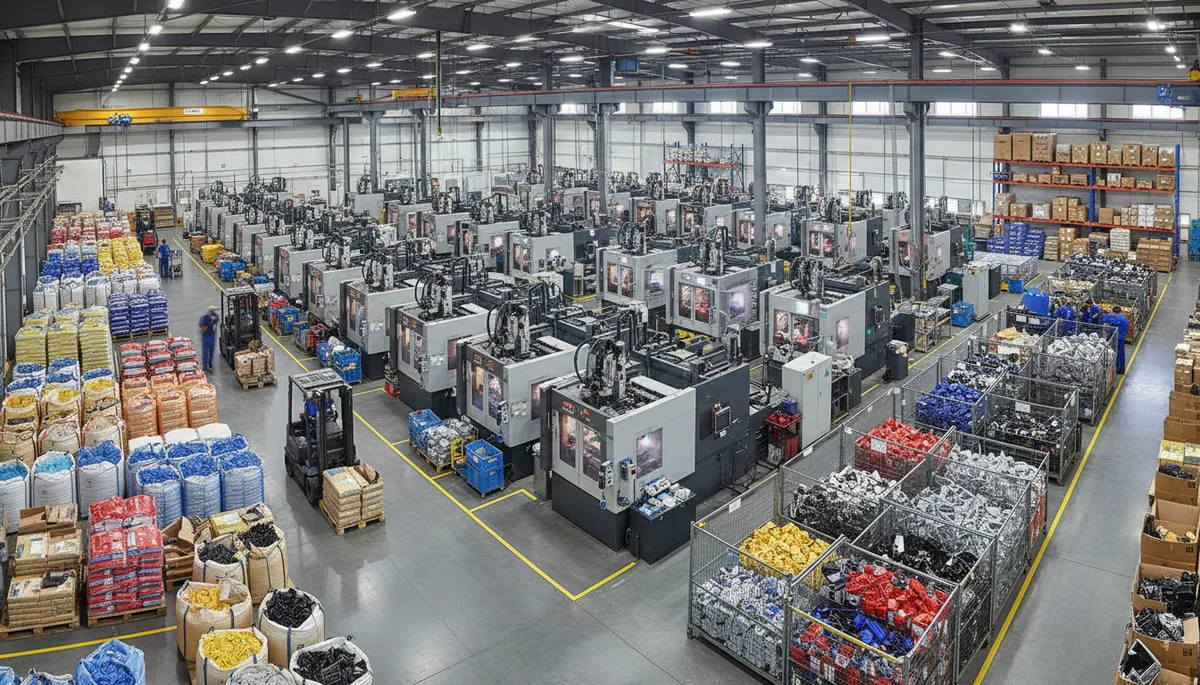
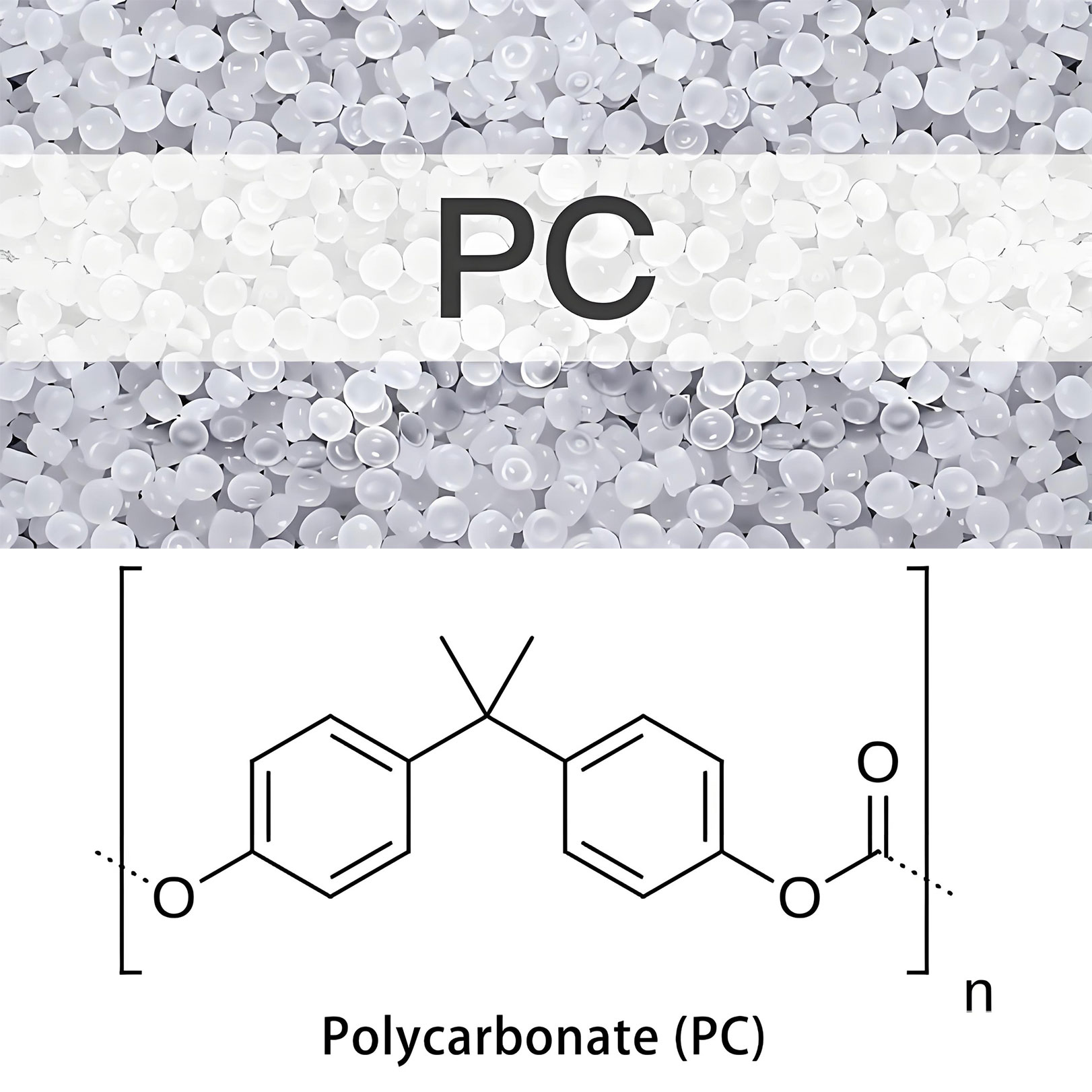
- ABS-productielijn
- De standaardkrimp van ABS bedraagt 0,4–0,8%, aanzienlijk minder dan die van PE of PP. Daardoor zijn nauwere maattoleranties met minder matrijscompensatie mogelijk.
- ABS is de meest gebruikte technische kunststof voor consumentenelektronica, auto-interieurs en behuizingen van apparaten vanwege de uitstekende slagvastheid en geschiktheid voor galvaniseren.
- De wanddikte van ABS moet op 1.5–4.0 mm worden gehouden, met een maximale variatieverhouding van 3:1, om inval, kromtrekken en haperende materiaalstroming te voorkomen.
- ABS-oppervlakken kunnen na het vormen zonder hechtingsbevorderaars worden gelakt, gegalvaniseerd, vacuümgemetalliseerd en tamponbedrukt, waardoor ABS het voorkeursmateriaal voor gedecoreerde onderdelen is.
Wat is ABS en waarom domineert het de technische kunststoffen?
U hebt zojuist een offerteaanvraag ontvangen voor een ABS1-behuizing voor een consumentenapparaat, en de juiste parameters zijn cruciaal. ABS (acrylonitril-butadieen-styreen) is een amorfe technische thermoplast met een uitgebalanceerde combinatie van slagvastheid, stijfheid, chemische bestendigheid en verwerkbaarheid die geen enkelvoudig polymeer biedt. De drie monomeren leveren elk specifieke eigenschappen: acrylonitril zorgt voor chemische bestendigheid en thermische stabiliteit; butadieenrubberdeeltjes (diameter 0.1–1.0 µm) absorberen slagenergie via cavitatie en craze-vorming; styreen zorgt voor stijfheid, oppervlakteglans en smeltvloei-eigenschappen, waardoor ABS een van de best spuitgietbare technische materialen is.
De eigenschappen van standaard-ABS omvatten: treksterkte 40–55 MPa, buigmodulus 2,000–2,700 MPa, gekerfde Izod-slagvastheid2 100–400 J/m, warmtevervormingstemperatuur3 (HDT) bij 1.82 MPa: 70–100°C en krimp 0.4–0.8%. Daarmee bevindt ABS zich tussen universele kunststoffen (PP, PE) en hoogwaardige technische polymeren (PC, PA), tegen een prijs ($1.5–$3.0/kg) die grootschalige productie van consumentenproducten economisch haalbaar maakt. Vergelijkt u leveranciers van ABS-vormwerk, gebruik dan vóór gunning van een productiematrijs een praktische inkoopgids. In onze fabriek vormt ABS ongeveer 25% van het totale harsverbruik op alle spuitgietmachines.
In onze fabriek in Shanghai gebruikt ZetarMold 47 spuitgietmachines van 90T tot 1850T en hebben we ervaring met 400+ kunststofmaterialen. Voor ABS-projecten is dat bereik belangrijk, omdat dezelfde hars zich anders gedraagt in kleine behuizingen, dikke afdekkingen, cosmetische onderdelen en productiegereedschappen.
Wat zijn de kritieke procesparameters voor het spuitgieten van ABS?
De smelttemperatuur voor ABS-spuitgieten ligt afhankelijk van kwaliteit en toepassing tussen 200–260°C. Standaard-ABS wordt verwerkt bij 220–240°C, slagvaste kwaliteiten aan de onderkant (200–220°C) om de butadieenrubberfase te behouden en hoogvloeibare kwaliteiten bij 230–250°C. Boven 270°C breekt de butadieenfase thermisch af, met verkleuring, slechte slagvastheid en vluchtige emissies als gevolg. Stel de spuitmond 5–10°C hoger in dan de voorste zone om dichtvriezen te voorkomen.
De matrijstemperatuur voor ABS wordt ingesteld op 40–80°C, afhankelijk van de vereiste oppervlakteafwerking. Hogere matrijstemperaturen (60–80°C) produceren bij gepolijste stalen vormholten glanzende oppervlakken met Ra 0,025–0,1 µm en verbeteren de sterkte van laslijnen met 10–15% ten opzichte van koude matrijzen. Lagere matrijstemperaturen (40–50°C) verkorten de cyclustijd, maar kunnen spanningsverbleking, zichtbare laslijnen en interne restspanningen veroorzaken die het risico op spanningsscheuren tijdens gebruik vergroten. Voor gegalvaniseerde ABS-onderdelen is een matrijstemperatuur van 60–70°C verplicht om voldoende hechtingskwaliteit te waarborgen.
| Parameterwaarde | Standaard-ABS | Slagvast ABS | ABS met hoge vloeibaarheid |
|---|---|---|---|
| Smelttemperatuur | 220–240°C | 200–220°C | 230–250°C |
| Matrijstemperatuur | 40–80°C | 40–70°C | 40–60°C |
| Injectiedruk | 70–120 MPa | 60–110 MPa | 60–100 MPa |
| Houddruk | 40–70% van de injectie | 35–65% van de injectiedruk | 35–60% van de injectie |
| Koeltijd | 15–40 s | 10–30 s | 10–25 s |
| Tegendruk | 5–15 MPa | 5–12 MPa | 3–10 MPa |
| Schroefsnelheid | 30–70 RPM | 25–60 RPM | 40–80 RPM |
| Voordrogen | 80°C, 2–4 uur | 80°C, 2–4 uur | 80°C, 2–4 uur |
Voordrogen is verplicht bij ABS-spuitgieten. ABS is hygroscopisch en neemt afhankelijk van de omgevingstemperatuur en luchtvochtigheid vocht op. Ongedroogd ABS met meer dan 0.1% vocht veroorzaakt zilverstrepen, vlamstrepen, een ruw oppervlak en slechtere mechanische eigenschappen. Het standaarddroogprotocol is 2–4 uur op 80°C in een ontvochtigende trechterdroger met een dauwpunt onder -25°C. Bij 80% relatieve luchtvochtigheid kan ABS binnen 2–4 uur blootstelling in de trechter een problematisch vochtniveau (>0.1%) bereiken — continu drogen met droogmiddel tijdens productie is essentieel. Vergelijk voor de cyclusplanning het drogen, koelen en de productietijd voor spuitgieten gezamenlijk.

Hoe moeten ABS-onderdelen voor spuitgieten worden ontworpen?
De wanddikte is de belangrijkste ontwerpparameter voor ABS-onderdelen. De aanbevolen wanddikte is 1.5–4.0 mm, met een optimaal bereik van 2.0–3.0 mm voor constructieve consumentenproducten. We raden aan de nominale wand vóór het aanspuitontwerp vast te leggen, omdat late wijzigingen de vulbalans en koeling kunnen verstoren. Wanden onder 1.5 mm vereisen hoge injectiesnelheden die de schuifspanning verhogen en oppervlaktedefecten kunnen veroorzaken. Wanden boven 4.0 mm krijgen invalplekken door de matrijskrimp van ABS van 0.4–0.8% en kunnen zelfs bij maximale nadruk oppervlaktedeuken vertonen. Hol onvermijdelijke dikke secties van binnen uit om een uniforme schaalgeometrie te verkrijgen.
Lossingshoeken voor spuitgegoten ABS-onderdelen moeten per zijde 1°–2° zijn voor gladde oppervlakken, 2°–3° voor lichte textuur (MT 11020/SPI C1) en 3°–5° voor zware textuur (MT 11030/SPI D2). Onvoldoende lossing veroorzaakt slepen, uitwerpmarkeringen en krassen op het gevormde oppervlak. ABS hecht sterker aan matrijsstaal dan PE of PP, waardoor voldoende lossing extra belangrijk is. Richtlijnen voor spuitgietmatrijzen adviseren bij diepgetrokken ABS-kenmerken 0.5° extra lossing per 25 mm wanddiepte.
Hoe moeten nokken, ribben en klikverbindingen in ABS-onderdelen worden gedimensioneerd?
Het ontwerp van bevestigingsnokken in ABS volgt de verhoudingsregel 0,6:1: de wanddikte van de nok moet 60% van de nominale wanddikte bedragen om inval aan het tegenoverliggende oppervlak te voorkomen. Zonder versterkingsribben mag de nokhoogte niet groter zijn dan 3× de buitendiameter van de nok. Verstevigingsschotten die nokken met wanden verbinden, moeten 50% van de nominale wanddikte bedragen. Bij nokken voor schroeven moet de buitendiameter 2,0–2,2× de schroefdraaddiameter zijn om voldoende uittreksterkte te bieden zonder dat het ABS door het montagemoment barst.
Voor het ribontwerp van ABS-spuitgietonderdelen geldt dezelfde 0,6:1-regel: de ribdikte aan de basis mag niet meer dan 60% van de nominale wand bedragen om zichtbare inval op het tegenoverliggende cosmetische oppervlak te voorkomen. De hoogte van constructieve ribben wordt doorgaans beperkt tot 3× de nominale wanddikte en ribben moeten aan elke zijde minstens 0,5° taps toelopen voor zuiver uitwerpen. Hoekstralen aan de ribbasis moeten 0,25–0,5× de nominale wanddikte bedragen om spanningsconcentraties te verminderen die bij herhaalde belasting scheuren tussen rib en wand kunnen veroorzaken.
Klikverbindingen in ABS benutten de goede balans tussen stijfheid en rek bij breuk (5–20%). Uitkragende ABS-klikhaken worden ontworpen met 1.5–2.5% rek bij maximale doorbuiging voor permanente verbindingen en 3–4% voor tijdelijke eenmalige montage. Bij volledige aangrijping moet de rek onder de ABS-vloeirek blijven om blijvende vervorming of witverkleuring aan de wortel te voorkomen. Een geleidelijke tapsheid — dunner aan de punt, dikker aan de wortel — verdeelt de rek gelijkmatig en vergroot de toegestane doorbuiging zonder lokale grenzen te overschrijden.
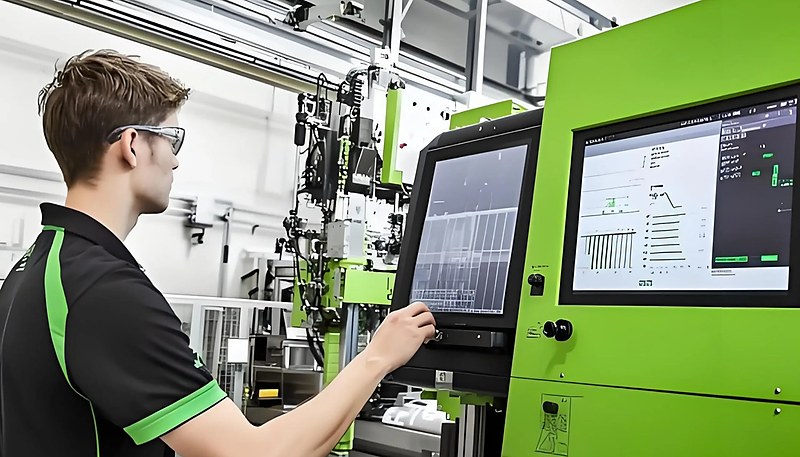
"ABS moet vóór het spuitgieten tot minder dan 0.1% vocht worden gedroogd om zilverstrepen en spetterdefecten te voorkomen."True
ABS is hygroscopisch door het acrylonitrilgehalte, dat vocht aantrekt en vasthoudt. Bij een vochtgehalte boven 0.1% verdampen watermoleculen tijdens het injecteren bij 220–240°C tot stoom, waardoor gasbellen ontstaan die door de snel stromende smelt tot zilverstrepen worden uitgerekt. Standaard drogen bij 80°C gedurende 2–4 uur in een ontvochtigingsdroger verlaagt het vochtgehalte van ABS tot onder 0.05%, ruim binnen het veilige verwerkingsbereik. Onvoldoende gedroogd ABS is een van de meest voorkomende oorzaken van gebrekkige oppervlaktekwaliteit bij het spuitgieten van ABS.
"ABS-spuitgieten levert ongeacht de ingestelde matrijstemperatuur dezelfde oppervlaktekwaliteit."False
De matrijstemperatuur heeft een grote invloed op de oppervlaktekwaliteit van ABS. Bij lage matrijstemperaturen (40 °C) koelt ABS bij contact met de holte snel af, wat een hogere oppervlakteruwheid, zichtbaardere vloeinaden en mogelijke spanningsverbleking veroorzaakt. Bij hogere matrijstemperaturen (60–80 °C) blijft de smelt langer vloeibaar tegen het holteoppervlak, waardoor fijne holtedetails beter worden gereproduceerd en glanzendere, gladdere oppervlakken ontstaan. Voor gegalvaniseerde of gelakte ABS-onderdelen is een matrijstemperatuur van 60–70 °C verplicht om de oppervlaktekwaliteit te bereiken die nodig is voor de hechting van de galvanische laag of lak.
Welke nabewerkingen werken het best voor ABS?
ABS is onder spuitgietharsen het belangrijkste materiaal voor galvaniseren. De butadieenrubberfase wordt selectief geëtst met chroomzuur (zeswaardig chroom) of gepatenteerde chroomvrije etsoplossingen, waardoor een microporeus oppervlak ontstaat dat mechanische verankering biedt voor de daaropvolgende nikkel- en chroomlagen. ABS dat met decoratief chroom is gegalvaniseerd, bereikt een hechting van 8–12 N/cm (afpeltest), ruim boven de minimale specificatie van 5 N/cm voor autobekleding. Niet alle ABS-kwaliteiten zijn galvaniseerbaar — alleen speciaal daarvoor bestemde kwaliteiten (doorgaans met een butadieengehalte van 15–20%) voldoen aan de eisen voor gelijkmatig etsen.
Voor het lakken van ABS is op de meeste correct gevormde oppervlakken geen hechtprimer nodig — oplosmiddelhoudende en watergedragen lakken hechten rechtstreeks en uitstekend op schoon, vetvrij ABS. Spuitlakken, tampondruk, zeefdruk en hot stamping worden allemaal veel toegepast voor ABS-consumentenproducten. Voor tweecomponenten (2K) polyurethaan-blanke lak moet het ABS-oppervlak vrij zijn van resten van lossingsmiddel, waarvoor het vóór het coaten met alcohol moet worden afgenomen. Lasergraveren van ABS levert scherpe tekens met wit contrast op in zwart of donkergekleurd gevormde onderdelen.
"ABS is het voorkeursmateriaal voor het spuitgieten van gegalvaniseerde onderdelen, omdat de butadieenfase mechanische hechting van de galvanische lagen mogelijk maakt."True
Bij het galvaniseren van ABS tast het etsen met chroomzuur de butadieenrubberdeeltjes in het oppervlak selectief aan en verwijdert deze, waardoor een netwerk van microporiën (diameter 0,5–5 µm) ontstaat dat als mechanische verankering dient voor de daaropvolgende stroomloos aangebrachte nikkel- en elektrolytische chroomlagen. Deze unieke morfologische eigenschap van ABS geeft het een veel betere hechting van galvanische lagen dan andere amorfe kunststoffen zoals polycarbonaat of polystyreen, die de voor etsen gevoelige fase missen. De hechting van galvanische lagen op ABS (8–12 N/cm) voldoet aan de specificaties voor automotive-interieurkwaliteit.
"Alle ABS-kwaliteiten kunnen met dezelfde prestaties worden gegalvaniseerd."False
Alleen specifieke ABS-kwaliteiten die als 'plating grade' zijn aangeduid, bereiken de vereiste gelijkmatige ets voor galvaniseren met hoge hechting. Deze kwaliteiten bevatten 15–20% butadieen met nauwkeurig beheerste rubberdeeltjesgrootte en -verdeling. Universele, hittebestendige of vlamvertragende ABS-kwaliteiten hebben een gewijzigde rubbermorfologie of additievenpakket dat het etsproces verstoort, met ongelijkmatig etsen, hechtingsverlies of blaasvorming als gevolg. De verkeerde ABS-kwaliteit voor gegalvaniseerde toepassingen kiezen is een veelgemaakte en kostbare fout die pas in afgewerkte onderdelen zichtbaar wordt en vervanging van alle geproduceerde onderdelen vereist.
Wat zijn veelvoorkomende problemen en oplossingen bij het spuitgieten van ABS?
Veelvoorkomende problemen en oplossingen bij ABS-spuitgieten zijn de hoofdcategorieën of opties die in dit gedeelte worden uitgelegd. Delaminatie bij ABS-onderdelen — waarbij het oppervlak uit afzonderlijke lagen lijkt te bestaan die als boekpagina’s afbladderen — wordt bijna altijd door materiaalverontreiniging veroorzaakt. Zelfs 0.1% verontreiniging met een incompatibel materiaal (PP, PE of siliconen uit lossingsmiddel) veroorzaakt zichtbare delaminatie op het eindoppervlak. De cilinder vóór ABS-series spoelen met een commercieel spoelmiddel, lossingsmiddelen op siliconenbasis vermijden en strikte materiaalbehandelingsprotocollen voorkomen delaminatie door verontreiniging. Zodra verontreiniging in de cilinder komt, kan deze 50–100+ shots aanhouden.
Spanningsscheuren in ABS-onderdelen tijdens gebruik worden veroorzaakt door restspanning uit het vormproces in combinatie met stoffen die omgevingsspanningsscheuren veroorzaken, zoals vetten, reinigingsmiddelen of aromatische chemicaliën. Het verlagen van de nadruk, verlengen van de koeltijd en uitgloeien van onderdelen gedurende 2–4 uur bij 70–80°C na het spuitgieten vermindert de restspanning en verbetert de weerstand tegen spanningsscheuren aanzienlijk. In onze fabriek gloeien we kritieke ABS-onderdelen uit die bestemd zijn voor omgevingen met chemische blootstelling — dit verhoogt de kosten, maar voorkomt storingen in het veld. Ook de keuze van de thermoplastische soort is belangrijk: slagvaste ABS-soorten met een hoger butadieengehalte zijn beter bestand tegen omgevingsspanningsscheuren dan standaardsoorten.
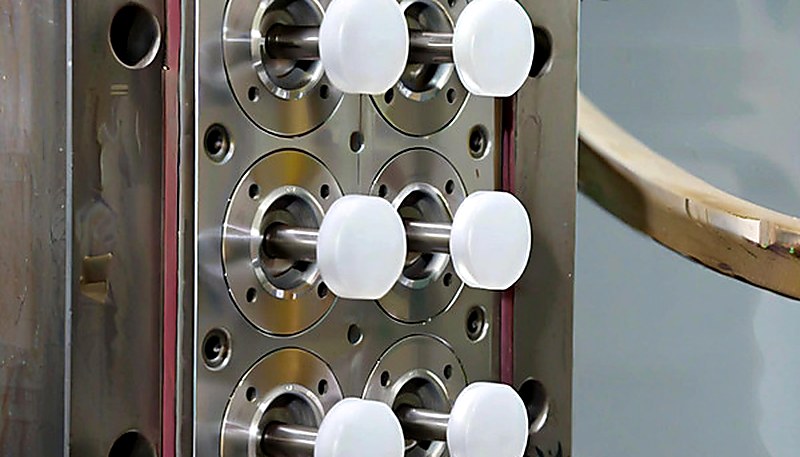
Veelgestelde vragen over ABS-spuitgieten
Wat is de ideale smelttemperatuur voor het spuitgieten van ABS?
De ideale ABS-smelttemperatuur hangt af van de specifieke kwaliteit en toepassing. Standaard ABS voor algemeen gebruik wordt optimaal verwerkt bij een cilindertemperatuur van 220–240°C, gemeten in de voorste zone. Slagvaste ABS-kwaliteiten worden bij 200–220°C verwerkt om de butadieenrubberfase te behouden, die boven 240°C degradeert. Hoogvloeiende ABS-kwaliteiten voor dunwandige onderdelen worden bij 230–250°C verwerkt. De spuitmond wordt doorgaans 5–10°C hoger ingesteld dan de voorste zone. Boven 270°C treedt zichtbare degradatie op: vergeling, lagere slagvastheid en emissie van vluchtige stoffen. De vuistregel is de laagste smelttemperatuur te gebruiken die volledige vulling zonder oppervlaktedefecten oplevert.
Hoe lang moet ABS vóór het spuitgieten worden gedroogd?
Het standaarddroogprotocol voor ABS is 80°C gedurende 2–4 uur in een ontvochtigende trechterdroger met een dauwpunt onder -25°C. Het vochtgehalte moet lager zijn dan 0,1% (bij voorkeur lager dan 0,05%) voordat het spuitgieten begint. Bij een hoge omgevingsluchtvochtigheid (meer dan 70% RV) kan onjuist opgeslagen ABS binnen 2–4 uur blootstelling in de trechter problematische vochtniveaus opnemen, waardoor continu drogen met een droogmiddel tijdens de productie essentieel is. Overmatig drogen van ABS bij temperaturen boven 90°C of langer dan 8 uur kan oxidatieve vergeling van de styreenfase veroorzaken. Controleer altijd de droogaanbevelingen van de specifieke harsleverancier, aangezien speciale ABS-kwaliteiten andere vereisten kunnen hebben.
Kan ABS voor buitentoepassingen worden gebruikt?
Standaard ABS heeft een slechte UV-bestendigheid — langdurige buitenblootstelling veroorzaakt binnen 6–12 maanden krijtvorming, kleurvervaging en brosheid. Voor buitentoepassingen verlengen UV-gestabiliseerde ABS-soorten met ultravioletabsorbers (benzofenonen, benzotriazolen) en HALS (hindered amine light stabilizers) de levensduur buiten tot 3–5 jaar. ASA (acrylonitril-styreen-acrylaat) wordt voor veeleisende buitentoepassingen vaak in plaats van ABS gespecificeerd, omdat de acrylaatrubberfase UV-stabiel is en vergelijkbare verwerkbaarheid en mechanische eigenschappen biedt. Bij gelakte ABS-buitenonderdelen is de keuze van een UV-bestendige toplaag even belangrijk als UV-stabilisatie van de hars.
Welke injectiedruk wordt aanbevolen voor ABS?
De injectiedruk voor ABS ligt bij standaardkwaliteiten doorgaans tussen 70–120 MPa. Dunwandige onderdelen (1.0–1.5 mm) kunnen tot 140 MPa vereisen om volledig te vullen voordat de poort bevriest. De vereiste injectiedruk hangt af van de onderdeelgeometrie (verhouding stroomlengte/wanddikte), smelttemperatuur, injectiesnelheid en poortgrootte. Een verhouding boven 150:1 vereist bij standaard-ABS doorgaans een druk boven 100 MPa. De nadruk wordt ingesteld op 40–70% van de injectiedruk en gehandhaafd totdat de poort bevriest (doorgaans 3–8 seconden voor poorten van 1.5–3 mm) om terugzuigen en inval te voorkomen.
Hoe verhoudt ABS zich bij spuitgieten tot een PC/ABS-mengsel?
PC/ABS-mengsels combineren de superieure hittebestendigheid (HDT: 100–120°C) en slagvastheid van polycarbonaat met de verwerkbaarheid en oppervlaktekwaliteit van ABS. Zuiver ABS heeft een HDT van 70–100°C en gekerfde Izod van 100–400 J/m, terwijl PC/ABS (20–70% PC-gehalte) een HDT van 100–115°C en gekerfde Izod van 400–800 J/m bereikt. PC/ABS wordt bij hogere temperaturen (230–270°C) verwerkt en vereist langer drogen (110°C, 4–6 uur). PC/ABS kost 30–60% meer dan standaard ABS. Voor auto-interieuronderdelen is PC/ABS vaak verplicht vanwege de betere temperatuurbestendigheid. Voor consumentenelektronica, waar kosten en galvaniseerbaarheid prioriteit hebben, heeft standaard ABS de voorkeur.
Wat is de typische cyclustijd voor het spuitgieten van ABS?
De typische cyclustijd voor ABS-spuitgieten bedraagt 15–60 seconden, afhankelijk van de wanddikte, geometrische complexiteit en matrijstemperatuur. Voor een standaardonderdeel met een wanddikte van 2,5 mm in een goed geoptimaliseerde matrijs bedraagt de totale cyclustijd — van sluiten tot openen — ongeveer 20–30 seconden, waarvan de koeltijd 60–70% vormt. Dunwandige ABS-onderdelen van 1,0–1,5 mm kunnen op hogesnelheidsmachines cycli van 10–15 seconden halen. Dikwandige onderdelen van minimaal 4,0 mm kunnen 40–60 seconden vereisen voor voldoende koeling en om vervorming bij het uitwerpen te voorkomen. Optimalisatie van het koelkanaalontwerp en het gebruik van hogere matrijstemperaturen met conforme koelkanalen kunnen de cyclustijd met 15–25% verlagen zonder de onderdeelkwaliteit op te offeren.
ABS: ABS (acrylonitril-butadieen-styreen) is een amorfe technische thermoplast, gedefinieerd als een terpolymeer dat acrylonitril voor chemische bestendigheid, butadieenrubber voor taaiheid en styreen voor stijfheid en verwerkbaarheid combineert. ↩
gekerfde Izod-slagvastheid: De gekerfde Izod-slagvastheid meet de weerstand van een materiaal tegen plotselinge impact en is gedefinieerd als de geabsorbeerde energie per oppervlakte-eenheid van de gekerfde doorsnede wanneer een slinger het proefstuk raakt, gemeten in J/m of kJ/m². ↩
warmtevervormingstemperatuur: De warmtevervormingstemperatuur (HDT) is de temperatuur waarbij een polymeermonster onder een vastgelegde belasting een bepaalde mate doorbuigt, gemeten in graden Celsius volgens ASTM D648, en geeft de praktische maximale gebruikstemperatuur aan. ↩