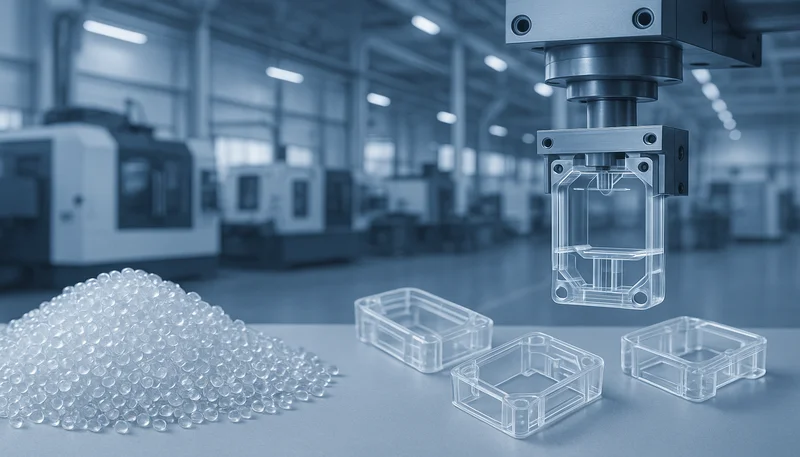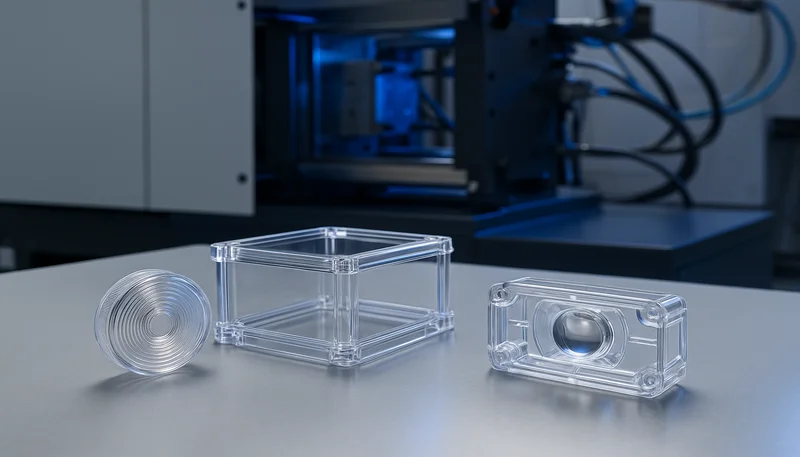
- Verschiedene ABS-Spritzgussteile, die Oberflächenqualität und Designqualität demonstrieren
- Die Standardschwindung von ABS beträgt 0.4–0.8% und ist damit deutlich geringer als bei PE oder PP. Dadurch sind engere Maßtoleranzen mit geringerem Aufmaß im Werkzeug möglich.
- ABS ist aufgrund seiner hervorragenden Schlagfestigkeit und Galvanisierbarkeit der am häufigsten verwendete technische Kunststoff für Unterhaltungselektronik, Fahrzeuginnenräume und Gerätegehäuse.
- Die ABS-Wanddicke sollte bei 1.5–4.0 mm mit einem maximalen Variationsverhältnis von 3:1 gehalten werden, um Einfallstellen, Verzug und Fließstockungen zu vermeiden.
- ABS-Oberflächen lassen sich nach dem Formen ohne Haftvermittler lackieren, galvanisieren, vakuummetallisieren und tamponbedrucken. Deshalb ist ABS der bevorzugte Werkstoff für dekorierte Teile.
Was ist ABS und warum dominiert es die technischen Kunststoffe?
Sie haben gerade eine Angebotsanfrage für ein ABS1-Gehäuse eines Verbrauchergeräts erhalten, und die richtigen Parameter sind entscheidend. ABS (Acrylnitril-Butadien-Styrol) ist ein amorpher technischer Thermoplast, der eine ausgewogene Kombination aus Schlagzähigkeit, Steifigkeit, Chemikalienbeständigkeit und Verarbeitbarkeit bietet, die kein Einkomponentenpolymer allein erreicht. Die drei Monomere tragen jeweils bestimmte Eigenschaften bei: Acrylnitril sorgt für Chemikalienbeständigkeit und Wärmestabilität; Butadienkautschukpartikel (0,1–1,0 µm Durchmesser) absorbieren durch Kavitation und Crazing Schlagenergie; Styrol steuert Steifigkeit, Oberflächenglanz und Fließeigenschaften bei, die ABS zu einem der am besten spritzgießbaren technischen Werkstoffe machen.
Die Eigenschaften von Standard-ABS liegen in folgenden Bereichen: Zugfestigkeit 40–55 MPa, Biegemodul 2.000–2.700 MPa, gekerbte Izod-Schlagzähigkeit2 100–400 J/m, Wärmeformbeständigkeitstemperatur3 (HDT) bei 1,82 MPa: 70–100 °C, und Schwindung 0,4–0,8 %. Damit liegt ABS zwischen Standardkunststoffen (PP, PE) und technischen Hochleistungspolymeren (PC, PA); bei Kosten von 1,5–3,0 $/kg ist es für die Großserienfertigung von Konsumgütern wirtschaftlich. Wenn Sie Anbieter für das ABS-Spritzgießen vergleichen, sollten Sie vor der Vergabe eines Serienwerkzeugs einen praxisnahen Beschaffungsleitfaden heranziehen. In unserem Werk entfallen etwa 25 % des gesamten Harzverbrauchs aller Spritzgießmaschinen auf ABS.
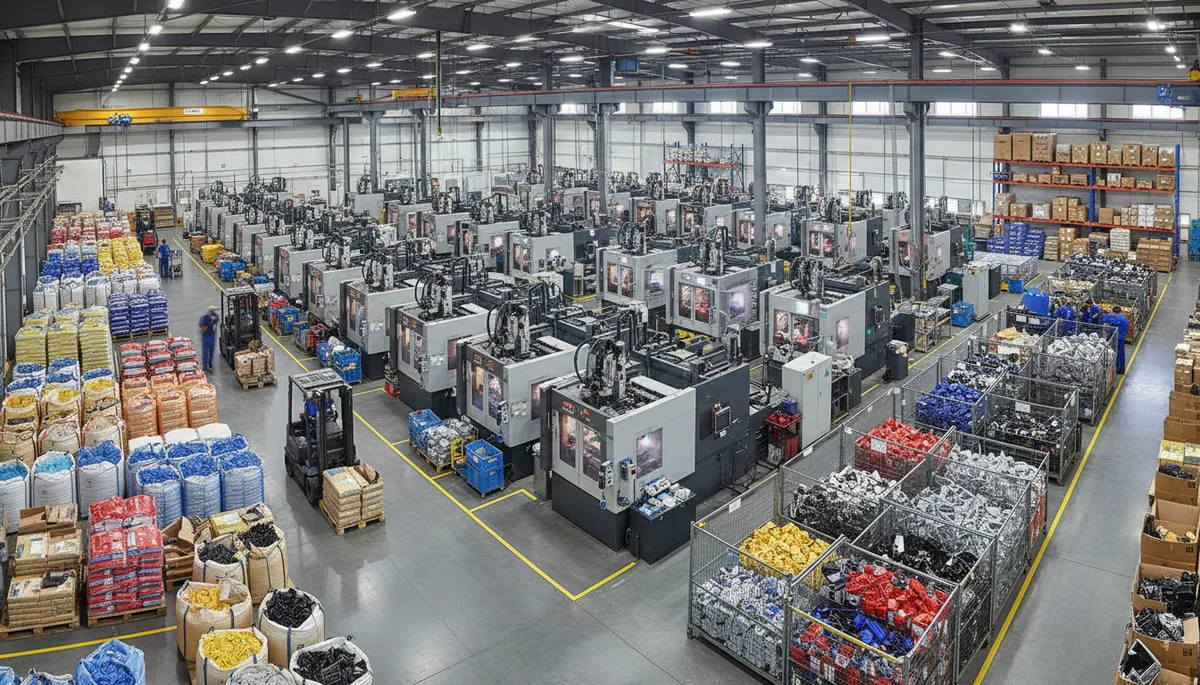
In unserer Fabrik in Shanghai betreibt ZetarMold 47 Spritzgießmaschinen von 90T bis 1850T und hat Erfahrung mit über 400 Kunststoffmaterialien. Für ABS-Projekte ist dieser Bereich wichtig, da dasselbe Harz sich bei kleinen Gehäusen, dicken Abdeckungen, dekorativen Teilen und Serienwerkzeugen unterschiedlich verhält.
Welches sind die kritischen Prozessparameter beim ABS-Spritzgießen?
Die Schmelzetemperatur beim ABS-Spritzgießen liegt je nach Typ und Anwendung zwischen 200 und 260 °C. Standard-ABS für allgemeine Anwendungen wird bei 220–240 °C verarbeitet, hochschlagzähe Typen am unteren Ende des Bereichs (200–220 °C), um die Butadienkautschukphase zu erhalten, und hochfließfähige Typen bei 230–250 °C. Oberhalb von 270 °C wird die Butadienphase thermisch abgebaut, was Verfärbungen, geringere Schlagzähigkeit und flüchtige Emissionen verursacht. Die Düsentemperatur sollte 5–10 °C über der Temperatur der vorderen Zone liegen, um ein Einfrieren zu verhindern.
Die Werkzeugtemperatur für ABS wird je nach Anforderungen an die Oberflächenbeschaffenheit auf 40–80°C eingestellt. Höhere Werkzeugtemperaturen (60–80°C) erzeugen bei polierten Stahlkavitäten glänzende Oberflächen mit Ra 0.025–0.1 µm und verbessern die Bindennahtfestigkeit gegenüber kalten Werkzeugen um 10–15%. Niedrigere Werkzeugtemperaturen (40–50°C) verkürzen die Zykluszeit, können jedoch Spannungsweißbruch, sichtbare Bindenähte und innere Eigenspannungen verursachen, die das Risiko von Spannungsrissen im Einsatz erhöhen. Bei galvanisierten ABS-Teilen ist eine Werkzeugtemperatur von 60–70°C zwingend erforderlich, um eine ausreichende Haftungsqualität sicherzustellen.
| Kenngröße | Standard-ABS | Hochschlagfestes ABS | Hochfließfähiges ABS |
|---|---|---|---|
| Schmelztemperatur | 220–240°C | 200–220°C | 230–250°C |
| Temperatur der Form | 40–80°C | 40–70°C | 40–60°C |
| Einspritzdruck | 70–120 MPa | 60–110 MPa | 60–100 MPa |
| Nachdruck | 40–70% der Einspritzung | 35–65 % der Einspritzung | 35–60 % des Einspritzvorgangs |
| Abkühlungszeit | 15–40 s | 10–30 s | 10–25 s |
| Gegendruck | 5–15 MPa | 5–12 MPa | 3–10 MPa |
| Schneckendrehzahl | 30–70 RPM | 25–60 RPM | 40–80 RPM |
| Vortrocknung | 80°C, 2–4 Stunden | 80°C, 2–4 Stunden | 80°C, 2–4 Stunden |
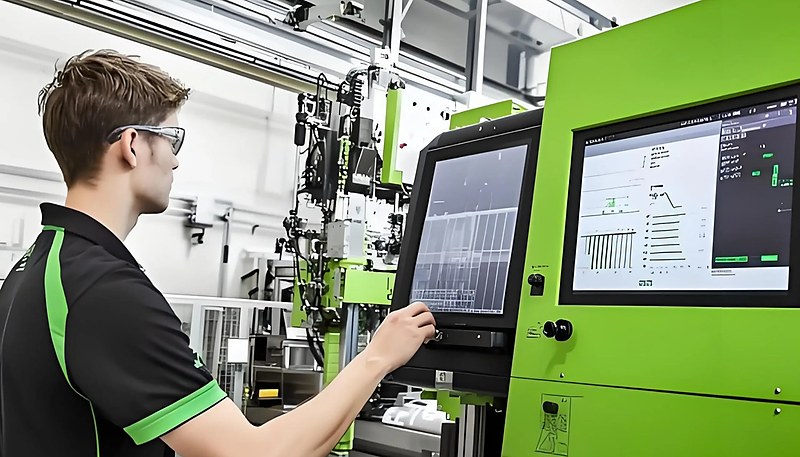
Beim ABS-Spritzgießen ist eine Vortrocknung zwingend erforderlich. ABS ist hygroskopisch und nimmt abhängig von Umgebungsluftfeuchte und Temperatur Feuchtigkeit aus der Atmosphäre auf. Ungetrocknetes ABS mit mehr als 0,1 % Feuchtigkeit verursacht Silberstreifen, Schlieren, raue Oberflächen und schlechtere mechanische Eigenschaften. Das Standard-Trocknungsprotokoll lautet 80 °C für 2–4 Stunden in einem entfeuchtenden Trichtertrockner mit einem Taupunkt unter -25 °C. Bei 80 % relativer Luftfeuchte kann ABS bereits nach 2–4 Stunden im Trichter problematische Feuchtewerte (>0,1 %) erreichen; daher ist während der Produktion eine kontinuierliche Trockenlufttrocknung unerlässlich. Für die Zyklusplanung sollten Trocknung, Kühlung und Produktionszeit beim Spritzgießen gemeinsam betrachtet werden.

Wie sollten ABS-Teile für das Spritzgießen konstruiert werden?
Die Wanddicke ist der wichtigste Konstruktionsparameter für ABS-Bauteile. Empfohlen werden 1,5–4,0 mm, wobei 2,0–3,0 mm für strukturelle Konsumgüterbauteile optimal sind. Wir empfehlen, die Nennwanddicke vor der Angusskonstruktion festzulegen, da späte Änderungen das Füllgleichgewicht und die Kühlung beeinträchtigen können. Wände unter 1,5 mm erfordern hohe Einspritzgeschwindigkeiten, die die Scherbeanspruchung erhöhen und Oberflächenfehler verursachen können. Wände über 4,0 mm entwickeln aufgrund der Formschwindung von ABS von 0,4–0,8 % Einfallstellen und können selbst bei maximalem Nachdruck Oberflächenvertiefungen zeigen. Lassen sich dicke Bereiche nicht vermeiden, sollten sie von innen ausgehöhlt werden, um eine gleichmäßige Schalengeometrie zu erhalten.
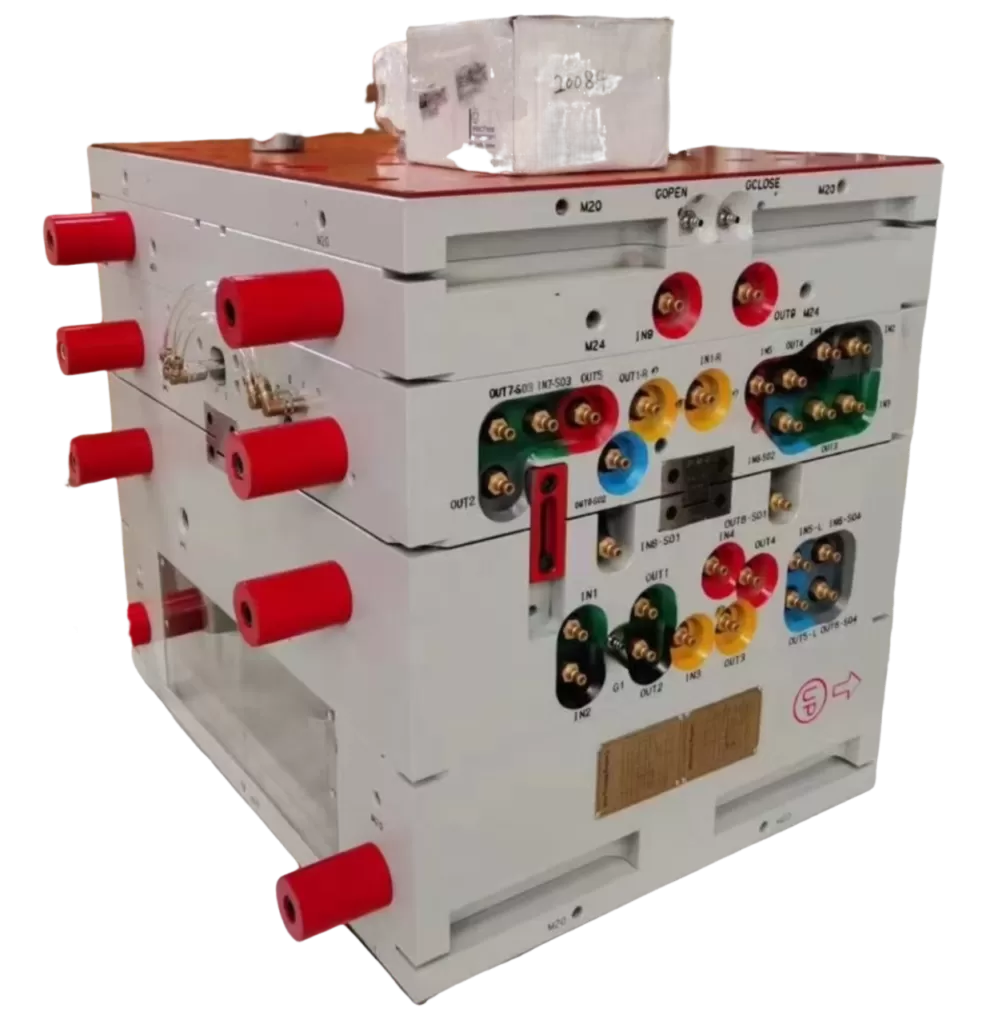
Entformungsschrägen für spritzgegossene ABS-Bauteile sollten bei glatten Oberflächen 1°–2° je Seite betragen, bei leichter Textur (MT 11020/SPI C1) 2°–3° und bei starker Textur (MT 11030/SPI D2) 3°–5°. Eine unzureichende Schräge führt zu Schleifspuren, Auswerferabdrücken und Kratzern auf der Formoberfläche. ABS haftet stärker an Werkzeugstahl als PE oder PP, weshalb eine ausreichende Entformungsschräge noch wichtiger ist. Richtlinien für die Konstruktion von Spritzgießwerkzeugen empfehlen bei tiefgezogenen ABS-Merkmalen pro 25 mm Wandtiefe eine zusätzliche Schräge von 0,5°.
Wie sollten Dome, Rippen und Schnappverbindungen in ABS-Teilen dimensioniert werden?
Die Domkonstruktion für ABS folgt der Verhältnisregel 0.6:1: Die Domwandstärke sollte 60% der Nennwandstärke betragen, um Einfallstellen auf der gegenüberliegenden Oberfläche zu vermeiden. Die Domhöhe sollte ohne Verstärkungsrippen das 3-Fache des Domaußendurchmessers nicht überschreiten. Knotenbleche, die Dome mit Wänden verbinden, sollten 50% der Nennwandstärke aufweisen. Bei Domen zur Schraubenaufnahme sollte der Außendurchmesser das 2.0–2.2-Fache des Schraubengewindedurchmessers betragen, um eine ausreichende Auszugfestigkeit zu gewährleisten, ohne dass das ABS unter dem Montagedrehmoment reißt.
Die Rippengestaltung bei ABS-Spritzgussteilen folgt derselben Regel von 0,6:1: Die Rippendicke an der Basis sollte höchstens 60 % der Nennwand betragen, um sichtbare Einfallstellen auf der gegenüberliegenden Sichtfläche zu vermeiden. Die Höhe tragender Rippen ist typischerweise auf das Dreifache der Nennwanddicke begrenzt. Für sauberes Auswerfen sollten die Rippen pro Seite mindestens 0,5° Entformungsschräge aufweisen. Eckradien an der Rippenbasis sollten das 0,25- bis 0,5-Fache der Nennwanddicke betragen, um Spannungskonzentrationen zu verringern, die bei wiederholter Belastung zu Rissen zwischen Rippe und Wand führen können.
Die Schnappverbindungskonstruktion in ABS nutzt das ausgewogene Verhältnis von Steifigkeit und Bruchdehnung (5–20%) des Materials. Freitragende Schnapphaken aus ABS werden bei maximaler Auslenkung für dauerhafte Verbindungen auf eine Dehnung von 1.5–2.5% und für temporäre Einmalmontagen auf 3–4% ausgelegt. Die Dehnung bei vollständigem Eingriff muss unter der Streckdehnung von ABS bleiben, um bleibende Verformung oder Weißbruch am Schnapphakenfuß zu vermeiden. Eine allmähliche Verjüngung der Schnapphakenarme – dünner an der Spitze und dicker am Fuß – verteilt die Dehnung gleichmäßig entlang des Arms und ermöglicht eine größere Auslenkung, ohne lokale Dehnungsgrenzen zu überschreiten.
"ABS muss vor dem Spritzgießen auf einen Feuchtigkeitsgehalt unter 0.1% getrocknet werden, um Silberschlieren und Spreizfehler zu vermeiden."True
ABS ist aufgrund seines Acrylnitrilanteils hygroskopisch und zieht Feuchtigkeit an beziehungsweise hält sie fest. Bei einem Feuchtigkeitsgehalt über 0,1 % verdampfen Wassermoleküle beim Einspritzen bei 220–240 °C. Dadurch entstehen Gasblasen, die vom schnell fließenden Schmelzestrom zu Silberschlieren auseinandergezogen werden. Eine übliche Trocknung bei 80 °C für 2–4 Stunden in einem Trockenlufttrockner senkt den Feuchtigkeitsgehalt von ABS auf unter 0,05 % und damit deutlich in den sicheren Verarbeitungsbereich. Unzureichend getrocknetes ABS gehört zu den häufigsten Ursachen für Fehler der Oberflächenqualität beim ABS-Spritzguss.
"ABS-Spritzguss liefert unabhängig von der eingestellten Werkzeugtemperatur dieselbe Oberflächenqualität."False
Die Werkzeugtemperatur hat einen erheblichen Einfluss auf die Oberflächenqualität von ABS. Bei niedrigen Werkzeugtemperaturen (40°C) kühlt ABS beim Kontakt mit der Kavität schnell ab, wodurch eine höhere Oberflächenrauheit, deutlichere Bindenahtlinien und mögliche Spannungsweißfärbung entstehen. Bei höheren Werkzeugtemperaturen (60–80°C) bleibt die Schmelze an der Kavitätsoberfläche länger fließfähig, bildet feine Kavitätsdetails besser ab und erzeugt glänzendere, glattere Oberflächen. Für galvanisierte oder lackierte ABS-Teile ist eine Werkzeugtemperatur von 60–70°C zwingend erforderlich, um die für die Haftung der Beschichtung oder Lackierung notwendige Oberflächenqualität zu erreichen.
ABS spritzgegossene Kunststoffteile, die verschiedene Verbraucherproduktkomponenten zeigen
ABS ist unter den Spritzgießharzen das führende Material für die Galvanisierung. Die Butadien-Kautschukphase wird selektiv durch Chromsäure (sechswertiges Chrom) oder proprietäre chromfreie Ätzlösungen angeätzt, wodurch eine mikroporöse Oberfläche entsteht, die eine mechanische Verankerung für nachfolgende Nickel- und Chromschichten bietet. Mit dekorativem Chrom galvanisiertes ABS erreicht eine Schichthaftung von 8–12 N/cm (Abziehtest) und übertrifft damit die Mindestspezifikation von 5 N/cm für Fahrzeuginnenverkleidungen deutlich. Nicht alle ABS-Typen sind galvanisierbar — nur ausgewiesene Galvaniktypen (üblicherweise mit einem Butadiengehalt von 15–20%) erfüllen die Anforderungen an die Gleichmäßigkeit der Ätzung.
Für das Lackieren von ABS ist auf den meisten korrekt geformten Oberflächen kein Haftgrund erforderlich — lösemittel- und wasserbasierte Lacke haften direkt und ausgezeichnet auf sauberem, fettfreiem ABS. Spritzlackieren, Tampondruck, Siebdruck und Heißprägen werden für ABS-Verbraucherprodukte häufig eingesetzt. Bei zweikomponentigen (2K) Polyurethan-Klarlacken muss die ABS-Oberfläche frei von Trennmittelrückständen sein, wofür sie vor dem Beschichten mit Alkohol abgewischt werden muss. Die Lasergravur von ABS erzeugt scharfe Zeichen mit weißem Kontrast auf geformten schwarzen oder dunkel gefärbten Teilen.
"ABS ist das bevorzugte Spritzgießmaterial für galvanisierte Teile, da seine Butadienphase die mechanische Haftung der Beschichtungsschichten ermöglicht."True
Beim Galvanisieren von ABS greift die Chromsäureätzung selektiv die Butadien-Kautschukpartikel an und entfernt sie von der Oberfläche. Dadurch entsteht ein Netz aus Mikroporen (0.5–5 µm Durchmesser), die als mechanische Verankerung für die anschließenden chemisch abgeschiedenen Nickel- und elektrolytischen Chromschichten dienen. Dieses einzigartige morphologische Merkmal von ABS verleiht ihm eine wesentlich höhere Beschichtungshaftung als anderen amorphen Kunststoffen wie Polycarbonat oder Polystyrol, denen die ätzreaktive Phase fehlt. Die Haftfestigkeit galvanischer Schichten auf ABS (8–12 N/cm) erfüllt die Spezifikationen für Fahrzeuginnenräume.
"Alle ABS-Typen lassen sich mit gleicher Leistung galvanisieren."False
Nur spezielle ABS-Typen in 'Galvanikqualität' erreichen die für hochhaftende galvanische Beschichtungen erforderliche gleichmäßige Ätzung. Diese Typen enthalten 15–20% Butadien mit genau kontrollierter Größe und Verteilung der Gummipartikel. Allzweck-, hochwärmebeständige oder flammgeschützte ABS-Typen besitzen eine veränderte Gummimorphologie oder Additivpakete, die den Ätzprozess beeinträchtigen und zu ungleichmäßiger Ätzung, Haftungsversagen oder Blasenbildung führen. Die Wahl des falschen ABS-Typs für galvanisierte Anwendungen ist ein häufiger und kostspieliger Fehler, der erst an Fertigteilen sichtbar wird und den Austausch aller mit dem Werkzeug gefertigten Teile erfordert.
Welche Probleme treten beim ABS-Spritzgießen häufig auf und wie werden sie gelöst?
Häufige Probleme und Lösungen beim ABS-Spritzgießen sind die wichtigsten Kategorien oder Optionen, die in diesem Abschnitt erläutert werden. Delamination an ABS-Teilen—bei der die Oberfläche getrennte Schichten aufweist, die sich wie Buchseiten ablösen—wird fast immer durch Materialverunreinigung verursacht. Schon eine Verunreinigung von 0.1% mit einem unverträglichen Material (PP, PE oder Silikon aus Trennmittel) erzeugt auf der fertigen Oberfläche sichtbare Delamination. Das Spülen des Zylinders mit einem handelsüblichen Spülmittel vor ABS-Läufen, der Verzicht auf silikonhaltige Trennmittel und strenge Materialhandhabungsprotokolle verhindern kontaminationsbedingte Delamination. Ist die Verunreinigung einmal in den Zylinder gelangt, kann sie über 50–100+ Schüsse fortbestehen.
Spannungsrisse an ABS-Teilen im Einsatz werden durch Eigenspannungen aus dem Spritzgießprozess in Verbindung mit umgebungsbedingten spannungsrissauslösenden Medien wie Fetten, Reinigungsmitteln oder aromatischen Chemikalien verursacht. Die Verringerung der Eigenspannungen durch niedrigeren Nachdruck, eine verlängerte Kühlzeit und das Tempern der Teile bei 70–80°C für 2–4 Stunden nach dem Spritzgießen verbessert die Beständigkeit gegen Spannungsrisse erheblich. In unserem Werk tempern wir kritische ABS-Teile, die für Umgebungen mit Chemikalienkontakt bestimmt sind — dies verursacht Mehrkosten, verhindert jedoch Ausfälle im Einsatz. Auch die Wahl des Thermoplasttyps ist relevant: Hochschlagzähe ABS-Typen mit höherem Butadiengehalt sind gegen umgebungsbedingte Spannungsrissbildung beständiger als Standardtypen.
Häufig gestellte Fragen zum ABS-Spritzgießen
Was ist die ideale Schmelzetemperatur für das Spritzgießen von ABS?
Die ideale ABS-Schmelzetemperatur hängt von der jeweiligen Sorte und Anwendung ab. Standard-ABS für allgemeine Anwendungen wird optimal bei einer Zylindertemperatur von 220–240°C verarbeitet, gemessen in der vorderen Zone. Schlagzähe ABS-Sorten werden bei 200–220°C verarbeitet, um die Butadien-Kautschukphase zu erhalten, die oberhalb von 240°C abgebaut wird. Hochfließende ABS-Sorten für Dünnwandbauteile werden bei 230–250°C verarbeitet. Die Düse wird üblicherweise 5–10°C höher als die vordere Zone eingestellt. Über 270°C tritt sichtbarer Abbau auf: Vergilbung, geringere Schlagzähigkeit und flüchtige Emissionen. Als Faustregel gilt, die niedrigste Schmelzetemperatur zu verwenden, die eine vollständige Füllung ohne Oberflächenfehler ermöglicht.
Wie lange sollte ABS vor dem Spritzgießen getrocknet werden?
Das Standard-Trocknungsprotokoll für ABS beträgt 80°C für 2–4 Stunden in einem Entfeuchtungstrichtertrockner mit einem Taupunkt unter -25°C. Vor Beginn des Spritzgießens muss der Feuchtegehalt unter 0.1% liegen (vorzugsweise unter 0.05%). Bei hoher Umgebungsfeuchte (über 70% RH) kann unsachgemäß gelagertes ABS innerhalb von 2–4 Stunden im Trichter problematische Feuchtemengen aufnehmen. Deshalb ist während der Produktion eine kontinuierliche Trocknung mit Trockenmittel unerlässlich. Eine Übertrocknung von ABS bei Temperaturen über 90°C oder länger als 8 Stunden kann zur oxidativen Vergilbung der Styrolphase führen. Prüfen Sie stets die Trocknungsempfehlungen des jeweiligen Harzlieferanten, da ABS-Spezialtypen abweichende Anforderungen haben können.
Kann ABS für Außenanwendungen verwendet werden?
Standard-ABS besitzt eine geringe UV-Beständigkeit – längere Außenbewitterung führt innerhalb von 6–12 Monaten zu Kreidung der Oberfläche, Farbverblassung und Versprödung. Für Außenanwendungen verlängern UV-stabilisierte ABS-Typen mit UV-Absorbern (Benzophenone, Benzotriazole) und HALS (gehinderte Amin-Lichtstabilisatoren) die Lebensdauer im Außenbereich auf 3–5 Jahre. ASA (Acrylnitril-Styrol-Acrylat) wird bei anspruchsvollen Außenanwendungen häufig anstelle von ABS spezifiziert, da seine Acrylat-Kautschukphase UV-stabil ist und zugleich eine ähnliche Verarbeitbarkeit und ähnliche mechanische Eigenschaften bietet. Bei lackierten ABS-Außenteilen ist die Auswahl eines UV-beständigen Decklacks ebenso wichtig wie die UV-Stabilisierung des Harzes.
Welcher Einspritzdruck wird für ABS empfohlen?
Der Einspritzdruck für ABS liegt bei Standardtypen typischerweise zwischen 70–120 MPa. Dünnwandige Teile (1.0–1.5 mm) können bis zu 140 MPa benötigen, um vor dem Einfrieren des Angusses vollständig gefüllt zu werden. Der erforderliche Einspritzdruck hängt von der Bauteilgeometrie (Verhältnis von Fließlänge zu Wandstärke), der Schmelzetemperatur, der Einspritzgeschwindigkeit und der Angussgröße ab. Ein Verhältnis von Fließlänge zu Wandstärke über 150:1 erfordert bei Standard-ABS typischerweise einen Druck über 100 MPa. Der Nachdruck wird auf 40–70% des Einspritzdrucks eingestellt und bis zum Einfrieren des Angusses gehalten (bei Angüssen von 1.5–3 mm typischerweise 3–8 Sekunden), um Rücksaugen und Einfallstellen zu verhindern.
Wie unterscheidet sich ABS beim Spritzgießen von einer PC/ABS-Mischung?
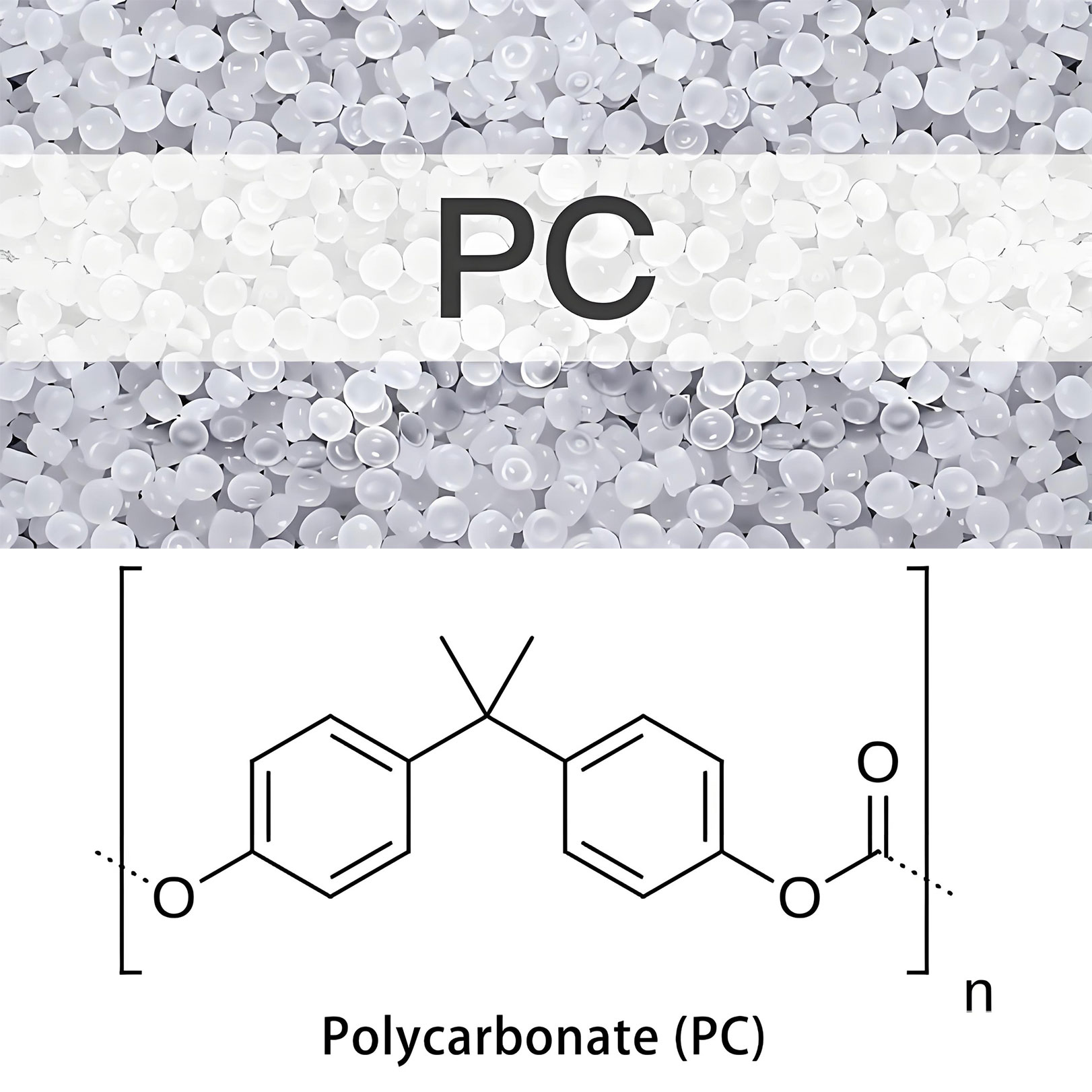
PC/ABS-Blends verbinden die höhere Wärmebeständigkeit (HDT: 100–120°C) und Schlagzähigkeit von Polycarbonat mit der Verarbeitbarkeit und Oberflächenqualität von ABS. Reines ABS hat eine HDT von 70–100°C und eine Kerbschlagzähigkeit nach Izod von 100–400 J/m, während PC/ABS (20–70 % PC-Anteil) eine HDT von 100–115°C und eine Kerbschlagzähigkeit nach Izod von 400–800 J/m erreicht. PC/ABS wird bei höheren Temperaturen (230–270°C) verarbeitet und muss länger getrocknet werden (110°C, 4–6 Stunden). PC/ABS kostet 30–60 % mehr als Standard-ABS. Für Automobil-Innenraumteile wird PC/ABS wegen seiner höheren Temperaturbeständigkeit häufig vorgeschrieben. Bei Unterhaltungselektronik, wo Kosten und Galvanisierbarkeit Priorität haben, wird Standard-ABS bevorzugt.
Wie lang ist die typische Zykluszeit beim ABS-Spritzgießen?
Die typische Zykluszeit beim ABS-Spritzgießen liegt je nach Wanddicke, Komplexität der Geometrie und Werkzeugtemperatur zwischen 15 und 60 Sekunden. Bei einem Standardteil mit 2,5 mm Wanddicke und einem gut optimierten Werkzeug beträgt die Gesamtzykluszeit vom Schließen bis zum Öffnen des Werkzeugs etwa 20–30 Sekunden; davon entfallen 60–70 % auf die Kühlung. Dünnwandige ABS-Teile mit 1,0–1,5 mm können auf Hochgeschwindigkeitsmaschinen Zykluszeiten von 10–15 Sekunden erreichen. Dickwandige Teile ab 4,0 mm benötigen möglicherweise 40–60 Sekunden, um ausreichend abzukühlen und eine Verformung beim Auswerfen zu vermeiden. Durch eine optimierte Auslegung der Kühlkanäle im Werkzeug und höhere Werkzeugtemperaturen in Kombination mit konturnahen Kühlkanälen lässt sich die Zykluszeit ohne Qualitätseinbußen um 15–25 % verkürzen.
ABS: ABS (Acrylnitril-Butadien-Styrol) ist ein amorpher technischer Thermoplast und ein Terpolymer, das Acrylnitril für Chemikalienbeständigkeit, Butadienkautschuk für Zähigkeit und Styrol für Steifigkeit und Verarbeitbarkeit kombiniert. ↩
Gekerbte Izod-Schlagzähigkeit: Die gekerbte Izod-Schlagzähigkeit ist ein Maß für den Widerstand eines Werkstoffs gegen plötzliche Stoßbelastung. Sie ist als die pro Querschnittsfläche der Kerbe absorbierte Energie definiert, wenn ein Pendel auf den Prüfkörper trifft, und wird in J/m oder kJ/m² gemessen. ↩
Wärmeformbeständigkeitstemperatur: Die Wärmeformbeständigkeitstemperatur (HDT) ist die Temperatur, bei der sich eine Polymerprobe unter einer definierten Last um einen festgelegten Betrag verformt. Sie wird gemäß ASTM D648 in Grad Celsius gemessen und gibt die praktisch nutzbare obere Einsatztemperatur des Werkstoffs an. ↩