 콘텐츠로 건너뛰기

새로운 차량 플랫폼을 위한 플라스틱 부품을 지정하고 계십니다. 설계는 실내, 외부 및 후드 아래 시스템에 걸쳐 47개의 사출 성형 부품을 요구하며, 귀사의 공급업체는 자동차 생산량에 걸쳐 모든 부품에서 일관된 품질을 제공해야 합니다. 사출 성형은 계기판 트림부터 흡기 매니폴드까지 현대 자동차의 대부분의 플라스틱 부품을 생산합니다. 이 글은 신뢰할 수 있는 자동차 부품 프로그램과 불량품과 지연을 발생시키는 프로그램을 구분하는 구체적인 재료, 성형 기술 및 품질 요구 사항을 설명합니다.
- Injection molding accounts for over 90% of plastic parts in passenger vehicles
- PP, ABS, and nylon dominate automotive molding due to cost and performance balance
- Multi-shot and insert molding enable integrated components that reduce assembly steps
- IATF 16949 and PPAP are non-negotiable for production-tier automotive parts
- Partner selection should prioritize tonnage range, material experience, and defect tracking
What Role Does Injection Molding Play in Modern Automotive Manufacturing?
Injection molding is the backbone of automotive plastic component production. A single mid-size sedan contains roughly 30,000 parts, and over 1,000 of those are plastic—most of them injection molded¹. Bumpers, dashboards, door panels, intake manifolds, fluid reservoirs, sensor housings, and connector blocks all come off molding machines, not machining centers.
이유는 간단합니다: 금형이 제작되면, 각 부품의 재료 및 기계 가동 시간 비용은 1달러 미만입니다. 10,000개 이상의 생산량에서는 다른 공정이 개별 부품당 비용에서 경쟁할 수 없습니다. 일반적인 자동차 금형은 상당한 개조가 필요하기 전에 500,000회에서 100만 회 이상의 사이클을 실행합니다. 이것이 모든 주요 자동차 제조업체와 그들의 1차 공급업체들이 사출 성형1 을 비금속 부품 생산의 주요 방법으로.
But automotive molding is not the same as consumer-goods molding. The tolerances are tighter (often ±0.05 mm for functional features), the material specifications are stricter (each resin grade must meet OEM approval lists), and the documentation burden is heavier. If you have ever been through a PPAP submission for a plastic bracket, you know the paperwork can outweigh the part.
The shift toward electric vehicles is expanding the role of injection molding further. EV battery enclosures, thermal management housings, charging port assemblies, and lightweight structural brackets are all new application areas where plastic parts replace heavier metal alternatives. The weight savings directly translate to range improvements, which is why OEMs are pushing material suppliers and molders to deliver structural-grade plastics at scale.

What Materials Are Used for Automotive Injection Molding?
이 섹션은 자동차 사출 성형에 사용되는 재료와 이의 비용, 품질, 시기 또는 조달 리스크에 미치는 영향에 관한 것입니다. 자동차 성형의 재료 선정은 세 가지 제약 조건에 의해 결정됩니다: 킬로그램당 비용, 온도에서의 기계적 성능, 규제 준수(내장 부품은 포그 및 VOC 한도를 충족해야 함; 후드 아래 부품은 120~150°C의 지속적인 노출을 견뎌야 함). 아래 표는 전 세계 자동차 생산을 지배하는 주력 수지들을 보여줍니다.
| 재료 | 주요 속성 | Typical Automotive Use |
|---|---|---|
| 폴리프로필렌(PP) | Low density (0.90 g/cm³), chemical resistance, low cost | Bumpers, battery cases, interior trim |
| ABS | Impact strength, good surface finish, paintable | Dashboard components, grilles, wheel covers |
| Nylon 6/6 (PA66) | High strength, heat resistance (up to 180 °C short-term) | Intake manifolds, engine covers, gears |
| 폴리카보네이트(PC) | Transparency, impact resistance, dimensional stability | Headlamp lenses, sunroof modules |
| POM (Acetal) | Low friction, excellent fatigue resistance | Fuel system components, fasteners, clips |
| TPO / TPE | Flexible, weatherable, paintable | Seals, gaskets, soft-touch interior panels |
| PA66-GF30 | High stiffness, creep resistance at elevated temperatures | Structural brackets, transmission components |
In practice, the OEM specifies an approved material list for each subsystem. As a molder, you do not get to swap PA66 for PA6 without engineering sign-off—even if the melt flow index is similar. This is why working with a supplier who stocks 400+ material grades matters: they are less likely to push a substitution that creates problems downstream in the vehicle assembly.
Glass-filled grades deserve special attention. Adding 30% short glass fiber to nylon increases tensile strength by roughly 2.5×, but it also accelerates mold wear (the fibers act like microscopic sandpaper on cavity surfaces) and requires higher injection pressures. If you are sourcing structural brackets or under-hood components, confirm the molder has experience running glass-filled compounds on production tooling—not just sample shots in a lab environment.
Regulatory requirements also shape material choices. Interior components in vehicles sold in the EU must comply with REACH and ELV Directive substance restrictions. Parts that contact food or drinking water (cup holders, water bottle holders) may need FDA-compliant resin grades. A knowledgeable molder will flag these requirements early in the design phase, before tool steel is cut.
What Are the Key Automotive Applications of Injection Molded Parts?
The key automotive applications of injection molded parts are the main categories or options explained in this section. Automotive applications split into three zones, each with distinct performance demands and quality requirements.
Interior Systems
Instrument panels, center consoles, door trim panels, HVAC ducting, and airbag covers. Interior parts require Class A surface finish (no visible sink marks, weld lines, or flow marks in visible areas) and must pass fogging tests (< 1 mg condensate per DIN 75201). Multi-material 오버몰딩2 is common here: a rigid PP substrate gets a TPE skin for soft-touch feel without a separate assembly step. The cost savings from eliminating a bonding operation can be substantial at automotive volumes.
Exterior Systems
Bumpers, grilles, fender liners, mirror housings, and lamp bezels. These parts face UV exposure, temperature cycling from −40 °C to +90 °C, and stone impact on the road. Paint adhesion on molded TPO bumpers is a well-known pain point—surface treatment (flame or plasma) is required before the paint line, and the molder must control additive migration that interferes with adhesion. Getting the surface energy right before painting is critical to avoid warranty claims for peeling paint.
Under-Hood and Powertrain
Air intake manifolds, coolant reservoirs, sensor housings, connector blocks, and wire harness clips. These are the most demanding applications: continuous temperatures above 120 °C, exposure to fuel, oil, and coolant, and vibration loads from the engine. Nylon 6/6 (often glass-filled) dominates this zone. 인서트 몰딩3 is frequently used to encapsulate metal inserts or electronic sensors directly into the plastic housing, eliminating assembly steps and improving reliability under vibration.
The electric vehicle transition is adding new categories: battery module housings, inverter enclosures, thermal management manifolds, and high-voltage connector systems. Many of these parts require flame-retardant materials (UL94 V-0 rated) and must maintain dimensional stability across a wide temperature range. Mold design for these parts is more complex because wall sections tend to be thicker, increasing cooling time and the risk of sink marks.
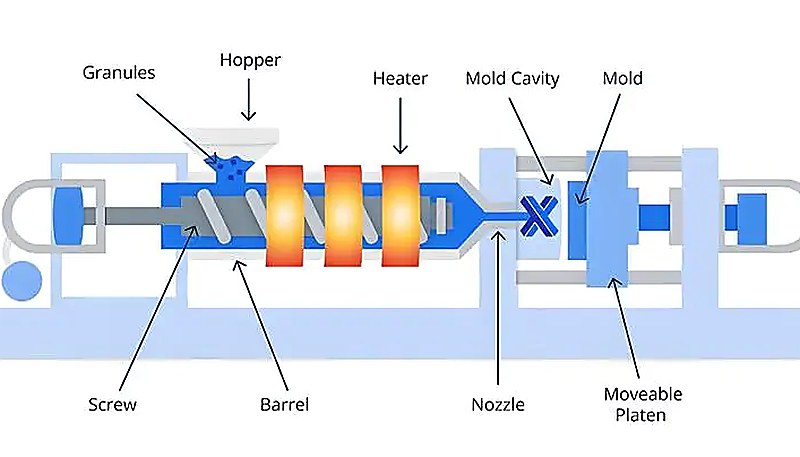
What Injection Molding Techniques Are Used in Automotive Production?
이 섹션은 자동차 생산에 사용되는 사출 성형 기술과 이의 비용, 품질, 시기 또는 조달 리스크에 미치는 영향에 관한 것입니다. 표준 단일 사출 성형은 자동차 플라스틱 부품의 대부분을 처리하지만, 몇 가지 특수 기술은 현대 차량 프로그램에서 기능 통합 및 비용 절감에 필수적입니다.
자동차 사출 성형에 관한 자주 묻는 질문 molds two different materials in a single machine cycle. A typical automotive application is a button with a rigid PC body and a soft TPE top—the process uses a rotating mold core to transfer the substrate from cavity A to cavity B without demolding. This eliminates a secondary assembly operation and ensures precise alignment between the two materials. The resulting bond is typically stronger than any adhesive joint because the materials interlock at the molecular level during cooling.
몰딩 삽입 places a metal stamping, threaded bushing, or electronic component into the mold before the shot. The plastic flows around it, creating a single integrated part. Automotive connector blocks with pre-positioned metal terminals are a high-volume example—billions of these are molded annually across the global automotive supply chain.
Gas-assist molding 두꺼운 부분을 비우기 위해 용융물에 질소 가스를 주입합니다. 이는 부품 무게를 10~30% 줄이고, 표면에 싱크 마크를 제거하며, 단축시킵니다. 사출 성형 생산 시간 를 통해 냉각해야 하는 질량을 줄입니다. 도어 그랩 핸들, 콘솔 암레스트 프레임, 미러 브라켓은 종종 이 기술을 사용합니다. 중공 코어는 또한 동일한 외부 치수의 솔리드 부품에 비해 강성 대 중량 비율을 향상시킵니다. 가스 채널이 재료를 추가하지 않고 내부 리브처럼 작용하기 때문입니다.
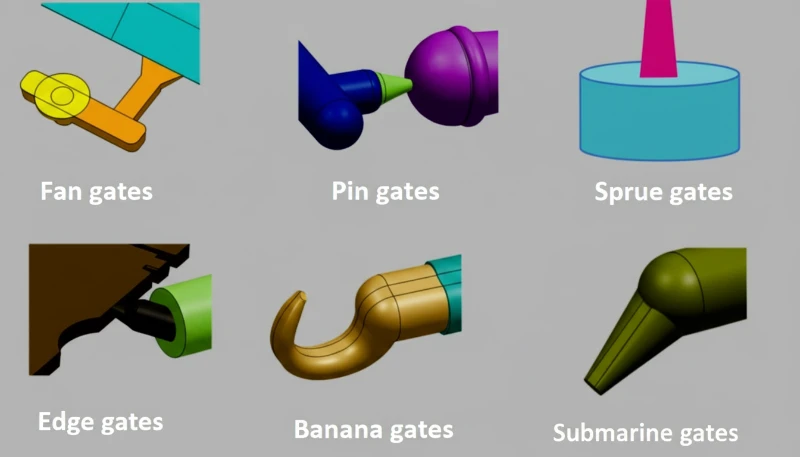
Choosing the right molding technique is not a decision you make in isolation. The part geometry, annual volume, material requirements, and assembly constraints all factor in. A good molding partner will recommend the most cost-effective technique based on the total cost of ownership—including tooling, cycle time, secondary operations, and scrap rate—rather than defaulting to the simplest method and hoping it works. The upfront investment in mold flow simulation pays for itself many times over when you consider that a single mold rework cycle for an automotive production tool can cost $5,000–$15,000 and add two to four weeks to the timeline.
“이중 사출 성형은 경성과 연성 부품 사이의 별도 접착 결합 단계 필요성을 제거합니다.”True
The second material bonds molecularly to the substrate during the molding cycle, producing a stronger interface than any secondary adhesive process could achieve.
“가스 보조 성형은 주로 50그램 미만의 소형 정밀 부품에 사용됩니다.”False
Gas-assist is most valuable for large, thick-sectioned parts (often over 500 grams) where hollowing out the core saves significant weight and reduces sink marks on cosmetic surfaces.
How Does Quality Control Work for Automotive Injection Molded Parts?
Automotive quality is not optional and not negotiable. Two frameworks define the baseline: IATF 16949 (the automotive-specific quality management system standard, built on ISO 9001 but with additional requirements for process control, risk management, and traceability) and PPAP (Production Part Approval Process, which defines the 18-element submission package a supplier must provide before the OEM approves production release).
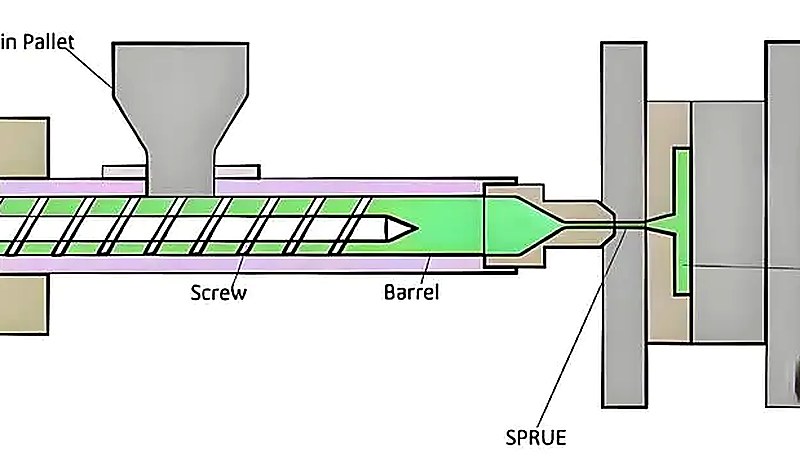
현장에서는 이것이 몇 가지 구체적인 활동으로 변환됩니다. 초회 생산 샘플은 CMM 장비를 사용하여 GD&T 도면에 대해 측정됩니다. 사출 압력, 용융 온도, 게이트 동결 시간, 냉각 시간과 같은 공정 파라미터는 사출 성형 단계 그런 다음 제어 계획에 고정됩니다. 생산 중 SPC(통계적 공정 관리) 차트는 일반적으로 2시간마다 또는 500개 부품마다(먼저 도래하는 기준) 샘플링을 통해 중요한 치수를 추적합니다.
A supplier running automotive parts without CMM capability and documented SPC is not a Tier 1 or Tier 2 supplier, regardless of what their website says. When we audit suppliers at ZetarMold, we look for the actual inspection equipment—coordinate measuring machines, profile projectors, hardness testers—and the calibration records for each instrument. ISO 9001 / ISO 13485 certification is the floor, not the ceiling, for automotive work.
Traceability is another non-negotiable. Every production lot must be traceable back to the specific material batch, machine, mold, and operator. If a field failure occurs, the OEM needs to identify every affected vehicle within hours, not weeks. This level of traceability requires systematic lot tracking from raw material receiving through final shipment, and it is one of the first things an automotive auditor will verify during a facility assessment.
Without a robust lot tracking system, a recall becomes exponentially more expensive because the OEM cannot isolate the affected production window and must recall a wider range of vehicles as a precaution. Any supplier who cannot demonstrate this capability during an audit should be disqualified from automotive work, regardless of their other qualifications.
“PPAP는 공급업체가 생산 부품을 출하하기 전에 최소 3회의 생산 런에서 나온 치수 결과를 요구합니다.”True
The 3-run minimum demonstrates process repeatability, not just that the machine was dialed in once for sample shots. Each run must produce parts within specification using production-equivalent conditions.
“부품이 외관 검사를 통과하면 자동차 생산 사용에 승인됩니다.”False
Visual inspection catches cosmetic defects only. Automotive PPAP requires dimensional data, material certifications, process capability studies (Cpk values), and often destructive testing results before any production approval.
How Do You Choose the Right Automotive Injection Molding Partner?
Choosing the right automotive injection molding partner is about tooling capability, quality systems, communication, and commercial fit. Selecting a molder for automotive work involves questions that go beyond price-per-part. Here is what actually matters in practice when you are evaluating a long-term molding partner for a vehicle program.
Tonnage range and machine fleet. Automotive parts span from 5-gram connector clips to 3-kilogram bumper fascias. A supplier limited to 200T machines cannot run large exterior parts. Conversely, a shop with only 1000T+ machines will waste capacity on small components. Look for a tonnage range of at least 90T to 1000T, with the flexibility to go higher for specialized jobs. Machine age matters too—older hydraulic machines may lack the precision of servo-electric or hybrid machines, which affects consistency in tight-tolerance work.
Material experience. Running glass-filled nylon at production volumes is different from molding commodity PP. The abrasive filler wears gates and cavity surfaces faster, requiring more frequent mold maintenance and more disciplined process monitoring. A supplier who has run 400+ materials across automotive, medical, and consumer applications has seen (and solved) the processing problems that a PP-only shop has not encountered yet.
Quality system depth. Ask for a copy of their control plan template and a recent dimensional report. If they cannot produce these within a day, their quality system is shelfware. The supplier should have a structured quality flow—IQC, in-process checks, process inspection, packaging inspection, FQC, and OQC—as a minimum framework, backed by calibrated measurement equipment and documented procedures.
Engineering support for mold modifications. Automotive programs run for 5–7 years. During that time, design changes are inevitable—sometimes driven by cost reduction, sometimes by vehicle facelifts, and sometimes by manufacturing process optimization.
If your molder does not have in-house mold manufacturing capability, every design change becomes a logistics negotiation with an external tool shop, adding weeks to the timeline. An in-house mold shop with CNC, EDM, and wire-cut equipment can turn around a steel change in days instead of weeks, keeping the production line running without interruption.
Communication and responsiveness. 생산 라인에서 치수 문제가 발생하면, 며칠이 아니라 몇 시간 내에 대응이 필요합니다. 기술적 맥락을 이해하는(단순히 이메일을 전달하는 영업팀이 아닌) 영어를 구사하는 프로젝트 관리자를 보유한 공급업체는 문제가 라인 중단 상황이 되기 전에 해결할 수 있습니다. 이는 특히 해외 sourcing에서 중요합니다. 이미 시차가 의사소통 창을 압축하기 때문입니다.
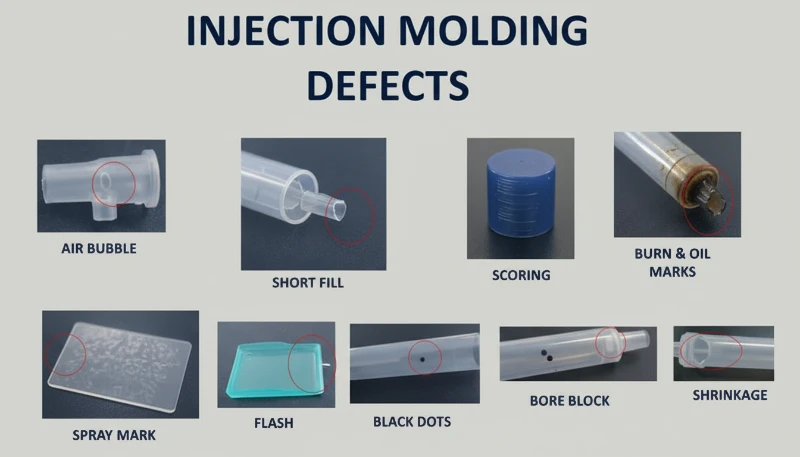
What Are Common Defects in Automotive Injection Molding and How Are They Prevented?
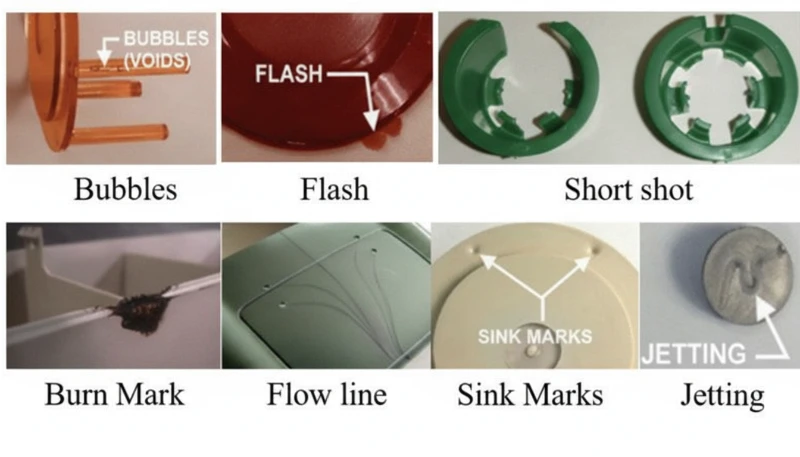
Common defects in automotive injection molding and how are they prevented are the main categories or options explained in this section. Even with optimized processes, certain defects recur in automotive molding. Understanding these helps you evaluate whether a supplier is actively controlling their process or just hoping for the best. The three most common automotive-specific defect categories are sink marks, weld lines, and short shots.
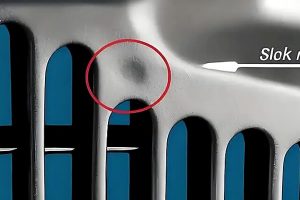
금형 수명 종료: appear on the show surface opposite thick sections—ribs, bosses, and wall transitions. The thicker section cools slower, contracts, and pulls the visible surface inward. Prevention: maintain rib-base thickness at 50–60% of the nominal wall, and pack with sufficient hold pressure and time. A supplier who sets hold pressure by feel rather than by monitoring the actual pressure curve data is gambling with your Class A surface requirements.
용접 라인 form where two flow fronts meet, typically around holes or inserts. In glass-filled materials, the fibers orient parallel to the weld line, creating a weak spot where tensile strength can drop 30–50% compared to the bulk material. Prevention involves adjusting gate placement to move the weld line to a non-critical area, or increasing melt temperature to improve molecular diffusion across the knit line. Flow simulation before tool cutting catches most of these issues, but only if the molder actually runs the simulation and acts on the results.
Beyond these three categories, automotive molders also watch for warpage (especially in large flat parts like door panels), flash (excess material escaping along the parting line), and dimensional drift over long production runs. Each of these has root causes in process control, mold condition, or material consistency—and each is far cheaper to prevent through disciplined setup than to fix through post-molding rework or scrap.
The cost of defects in automotive production is not limited to the scrap value of the part itself. A defective part that reaches the assembly line can stop production, and a defective part that reaches the end customer triggers a warranty claim or a recall. This is why automotive OEMs set defect rate targets in parts per million (PPM), and why serious molders invest in automated inspection equipment and real-time process monitoring to catch deviations before they produce out-of-spec parts.
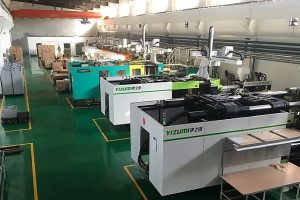
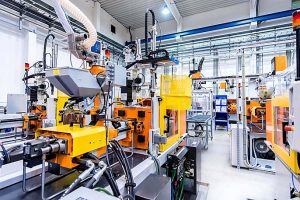
자격을 갖춘 자동차 성형 파트너는 실제로 어떤 모습일까요?
상하이 공장에서 당사 팀은 90톤부터 1850톤까지 47대의 사출 성형기를 운영하며 ISO 9001, ISO 13485, ISO 14001, ISO 45001 시스템 하에서 작업합니다. 20년 이상의 사출 성형 및 금형 경험을 가진 당사 엔지니어들은 금형 작업 시작 전에 재료, 토너지, 치수 리스크 및 PPAP 서류에 대해 자동차 부품의 실현 가능성을 확인합니다.
자동차 프로젝트를 위해, 우리는 세 가지 실용적인 통제에 중점을 둡니다. 첫째, 자체 금형 제작 시설은 외부 도구 공장에 책임을 분산시키지 않고 금형 설계, 가공, 시험 및 유지 관리를 한 곳에서 처리합니다. 둘째, 우리의 품질 프로세스는 수입 검사, 공정 중 샘플링, 포장 검사, 최종 검사 및 출고 검사를 문서화하여 생산 시작 후 PPAP 증거를 기억에서 재구성하지 않도록 합니다. 셋째, 우리 팀은 400종 이상의 플라스틱 재료 경험을 보유하여 OEM이 특정 PP, ABS, PA, PC 또는 유리 충전 등급을 요구할 때 수지 대체 위험을 줄입니다.
당사 생산 팀은 외관 트림, 반구조 브라켓, 열과 진동에 노출되는 후드 아래 부품의 차이를 이해하는 120명 이상의 직원으로 구성됩니다. 자동차 프로그램을 위한 성형 파트너를 평가 중이라면, 금형 투자를 결정하기 전에 샘플 치수 보고서, 관리 계획 템플릿, 재료 추적성 기록 및 공정 능력 데이터를 요청하십시오.
구매자들은 자동차 사출 성형에 대해 어떤 질문을 하나요?
자주 묻는 질문
What is the typical lead time for an automotive injection mold?
인서트 몰딩은 사전에 배치된 금속 또는 전자 부품을 주입된 플라스틱으로 캡슐화하여 단일 통합 어셈블리를 형성하는 공정입니다.
Can injection molding produce structural automotive parts?
Yes, when using glass-filled nylon or long-fiber thermoplastic (LFT) compounds. A PA66-GF30 bracket can achieve tensile strength above 180 MPa—sufficient for many structural and semi-structural applications such as seat frames, pedal brackets, and battery mounting components in EV platforms. The key is selecting the right fiber content and orientation, which is where mold flow simulation and gate placement expertise make the difference between a part that passes lab testing and one that fails in the field under real loading conditions.
What is the minimum production volume that justifies injection molding for automotive parts?
For simple parts with moderate mold complexity, 5,000–10,000 units is typically the breakeven point versus CNC machining or 3D printing when you factor in the amortized tooling cost across the production run. For complex multi-cavity tools with side actions and lifters, the threshold rises to 30,000–50,000 units before the per-part savings offset the higher initial tooling investment. Automotive programs usually run well above these volumes over a 5–7 year model lifecycle, making injection molding the clear economic choice. Some molders also offer prototyping bridges using aluminum molds for lower volumes before committing to production steel tooling, which can reduce initial tooling cost by 40–60%.
How are injection molded automotive parts tested for durability?
Common test categories include thermal cycling (−40 °C to +120 °C for 100+ cycles per the OEM specification), UV aging (accelerated weatherometer exposure per SAE J2412 or equivalent standards), vibration testing (per ISO 16750-3 road profile spectra, typically 8–24 hours per axis), and chemical resistance (immersion in fuel, oil, and coolant for specified durations at elevated temperatures). Some applications also require drop testing, impact testing at low temperature, and humidity aging. The OEM defines the exact test matrix in the component specification document, and the supplier must provide certified test reports as part of the PPAP submission package before any production approval is granted.
What tolerances can injection molding achieve for automotive parts?
General tolerances of ±0.1 mm are routine for features under 50 mm in standard engineering resins. Tight tolerances of ±0.05 mm are achievable for critical features like snap-fit clips, locating pins, and sealing surfaces, but require precision mold construction, locked process parameters, and statistical monitoring. Features over 150 mm typically hold ±0.2–0.3 mm due to material shrinkage variation across longer dimensions. Crystalline materials like nylon and POM exhibit higher shrinkage than amorphous resins like ABS or PC, which affects tolerance capability.
Is overmolding used in automotive production?
Extensively. Two-shot overmolding produces multi-material parts like soft-touch steering wheel buttons, sealed electrical connectors with integrated gasket lips, and vibration-damped mounting brackets—all in a single machine cycle without any secondary assembly. This eliminates separate bonding operations and produces stronger material bonds than adhesive joining could achieve, because the two materials fuse at the molecular level during cooling. The process requires a molding machine equipped with two independent injection units and a mold with either a rotating core or an index plate to transfer the substrate between the first and second material shots.
What certification should an automotive injection molding supplier have?
IATF 16949 is the sector-specific quality management standard for automotive suppliers and is required by most Tier 1 OEMs for production-level sourcing approval. At minimum, ISO 9001 certification is expected for any supplier quoting automotive work, but serious production programs will mandate IATF 16949 as a hard requirement in the supplier qualification process. Environmental management certification (ISO 14001) and occupational health and safety certification (ISO 45001) are increasingly required by European and North American OEMs as part of their sustainability procurement standards and corporate responsibility requirements.
자동차 생산을 위한 사출 성형 파트너 선택은 5~7년에 걸친 결정입니다. 올바른 공급업체는 일관된 치수 품질을 제공하고, 타임라인 차질 없이 설계 변경을 처리하며, PPAP 제출에 필요한 서류를 제공합니다. 자동차 플라스틱 부품을 조달 중이며 재료 선정, 금형 설계 또는 공정 능력에 대해 당사 엔지니어링 팀과 논의하고 싶으시다면, 당사의 완전한 사출 금형 가이드 을 견적 전 기술 평가 체크리스트로.
-
injection molding: Injection molding is a manufacturing process in which molten thermoplastic resin is injected under high pressure into a closed mold cavity, where it cools and solidifies into the final part geometry. ↩
-
overmolding: Overmolding refers to a two-shot injection molding process where a second material is molded over a previously molded substrate to create a multi-material part with enhanced grip, sealing, or vibration damping. ↩
-
insert molding: Insert molding is a process in which a pre-placed metal or electronic component is encapsulated by injected plastic to form a single integrated assembly. ↩



 EN
EN  ES
ES  FR
FR  DE
DE  PT
PT  AR
AR  RU
RU  JA
JA  KO
KO  IT
IT  NL
NL  TR
TR  PL
PL 