- Synchronisierte Ausstoßmechanismen für Mehrkammerformen
- Die Ausbalancierung des Angusssystems und symmetrische Kavitätsanordnungen sind unerlässlich, damit jede Kavität gleichmäßig gefüllt wird.
- Fortschrittliche Kühlstrategien — insbesondere konturnahe Kanäle — können die Zykluszeit um bis zu 30 % verkürzen.
- Eine sachgerechte Validierung durch Kurzschussanalyse und Überwachung des Kavitätsdrucks verhindert kostspielige Produktionsfehler.
- Die Wahl des richtigen Werkzeugmaterials und der richtigen Oberflächenbeschichtung verlängert die Lebensdauer der Form auf Millionen von Zyklen.
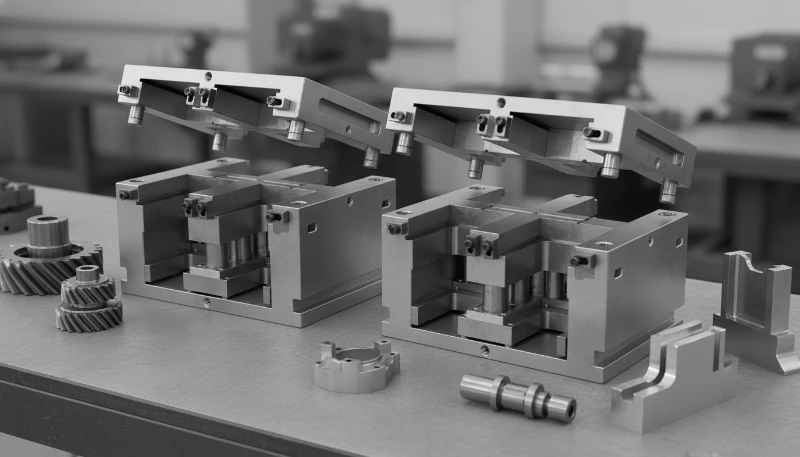
In der modernen Kunststofffertigung ist die Konstruktion von Mehrkavitätenformen eine der wirksamsten Möglichkeiten, die Produktion zu skalieren, ohne die Kosten proportional zu erhöhen. Eine Mehrkavitätenform enthält zwei oder mehr identische Kavitäten, sodass eine Spritzgießmaschine in einem Zyklus mehrere Teile herstellen kann. Dieser Ansatz ist für Branchen unverzichtbar, die Millionen identischer Komponenten benötigen – etwa Flaschenverschlüsse, medizinische Spritzen, elektronische Steckverbinder und Automobilclips. Der Nutzen ist erheblich: höherer Durchsatz, niedrigere Stückkosten und bessere Konsistenz über große Produktionsserien hinweg.
Die Vorteile gehen jedoch mit einer höheren technischen Komplexität einher. Jede zusätzliche Kavität bringt neue Variablen mit sich – Fließwiderstand, Wärmeverteilung und Auswerferzeitpunkt –, die präzise beherrscht werden müssen. Dieser Leitfaden behandelt alle entscheidenden Aspekte der Konstruktion von Mehrkavitäten-Spritzgussformen, von den Grundlagen und der Angussbalancierung1 bis hin zu Kühlstrategien, Validierungsmethoden und Kostenanalysen.
Was ist ein Mehrkavitätenwerkzeug und wie funktioniert es?
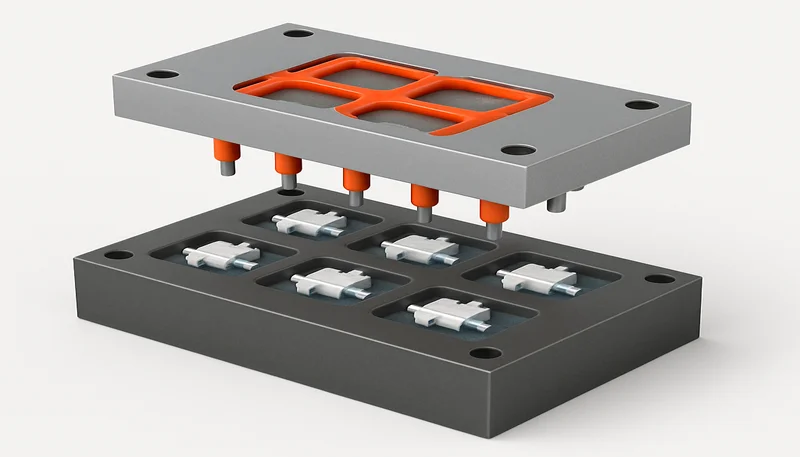
Ein Mehrkavitätenwerkzeug ist ein Spezialwerkzeug für die Kunststoffspritzgussfertigung, das mehrere identische Kavitäten in einem einzigen Formrahmen enthält. Spritzt die Maschine geschmolzenes Polymer in das Werkzeug, fließt das Material durch ein Angusssystem und füllt alle Kavitäten gleichzeitig, sodass in einem Zyklus mehrere Fertigteile entstehen. Die Kavitätszahl kann je nach Bauteilgröße, Maschinenschließkraft und Produktionsanforderungen von nur zwei bis über vierundsechzig reichen.
Das Grundprinzip ist einfach: Statt je Zyklus ein Teil zu formen und auf den nächsten Schuss zu warten, formen Sie viele. Dadurch steigt der effektive Ausstoß drastisch. Eine Maschine mit einem 16-Kavitätenwerkzeug und 22 Sekunden Zykluszeit kann beispielsweise mehr als 2,500 Teile pro Stunde fertigen, gegenüber etwa 160 Teilen pro Stunde bei einem Einkavitätenwerkzeug mit einer etwas kürzeren Zykluszeit von 18 Sekunden.
Mehrkavitätenwerkzeuge und Familienwerkzeuge müssen klar unterschieden werden. Bei einem Mehrkavitätenwerkzeug fertigt jede Kavität dasselbe Teil, wodurch gleichmäßige Fließeigenschaften und Qualität gewährleistet werden. Bei einem Familienwerkzeug fertigen verschiedene Kavitäten unterschiedliche Teile; dies erschwert die Flussbalancierung, weil jede Kavität ein eigenes Volumen und eine eigene Geometrie besitzt. Für eine gleichbleibend hochwertige Produktion sind echte Mehrkavitätenkonstruktionen deutlich vorzuziehen.
Die Entscheidung für eine Mehrkavitätenform sollte auf einer sorgfältigen Analyse des jährlichen Produktionsvolumens, der Teilekomplexität und der verfügbaren Maschinenkapazität beruhen. Wenn das Produktionsvolumen die zusätzliche Werkzeuginvestition rechtfertigt, amortisiert sie sich in der Regel bereits im ersten Produktionslauf. Wenn Sie Anbieter vergleichen oder die Beschaffung planen, behandelt unser Leitfaden zur Beschaffung von Spritzgussleistungen die RFQ-Vorbereitung, Lieferantenqualifizierung und Bewertung kommerzieller Risiken ausführlich.
In unserem Werk in Shanghai betreibt unser Team 47 Spritzgießmaschinen von 90T bis 1850T. Damit unterstützen wir Mehrkavitätenwerkzeuge von Kleinserien-Pilotläufen bis zu Werkzeugen für die Großserie. Dieser Schließkraftbereich ist relevant, weil die Kavitätenzahl Schussvolumen, Schließkraftbedarf und Validierungsrisiko verändert.
Warum sollten Sie für die Großserienproduktion eine Mehrkavitätenform wählen?
Dieser Abschnitt behandelt die Wahl eines Mehrkavitätenwerkzeugs für die Großserienproduktion und dessen Auswirkungen auf Kosten, Qualität, Zeitplan und Beschaffungsrisiko. Ausschlaggebend ist vor allem die Wirtschaftlichkeit: Werden die Fixkosten für Maschinenzeit, Energie und Arbeit auf deutlich mehr Teile je Zyklus verteilt, sinken die Stückkosten erheblich. Die anfängliche Werkzeuginvestition ist zwar höher — häufig drei- bis fünfmal so hoch wie bei einem Einkavitätenwerkzeug —, doch oberhalb der Gewinnschwelle von typischerweise etwa 500,000 bis 1,000,000 Teilen entstehen erhebliche Einsparungen pro Teil.
Neben den Kosten verbessern Mehrkavitätenformen auch die Maßkonstanz. Da alle Teile mit denselben Maschineneinstellungen sowie demselben Temperatur- und Druckprofil geformt werden, ist die Streuung zwischen Teilen aus verschiedenen Kavitäten typischerweise geringer als zwischen Teilen, die auf unterschiedlichen Maschinen oder in unterschiedlichen Produktionsläufen hergestellt werden. Dies ist besonders in regulierten Branchen wie der Medizintechnik und der Automobilindustrie wichtig, in denen enge Toleranzen vorgeschrieben sind.
| Faktor | Einzelkavitätenform | 8-fach-Form | 16-Kavitäten-Form |
|---|---|---|---|
| Ungefähre Werkzeugkosten | $8,000–$15,000 | $25,000–$45,000 | $45,000–$80,000 |
| Zykluszeit | 18 s | 22 Sekunden | 24 s |
| Teile pro Stunde | ~200 | ~1,300 | ~2,400 |
| Stückkosten (bei 1 Mio. Einheiten) | $0.12 | $0.05 | $0.035 |
| Gewinnschwellenmenge | — | ~400.000 Teile | ~600,000 Bauteile |
Die obige Tabelle verdeutlicht eine zentrale Erkenntnis: Mit zusätzlichen Kavitäten steigt die Zykluszeit nur geringfügig, während die Ausbringung nahezu linear zunimmt. Das Ergebnis ist eine drastische Senkung der Stückkosten, die bei jedem Großserienprojekt die Investitionsrendite beschleunigt.
Wie erreichen Sie eine balancierte Füllung bei Mehrfachwerkzeugen?
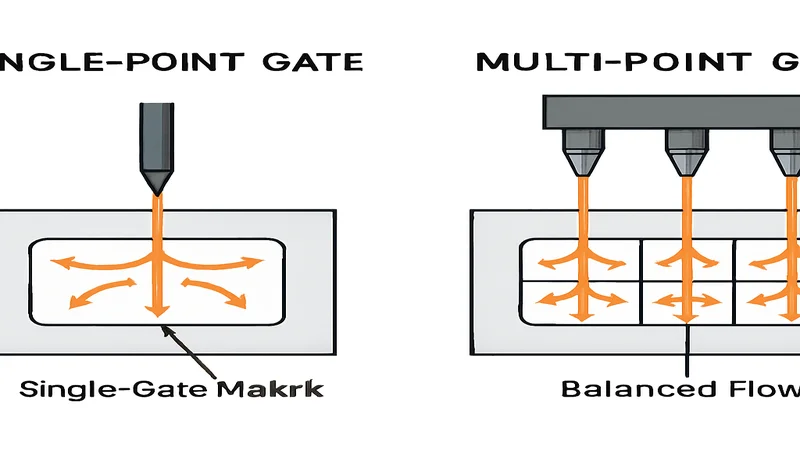
Die Angussbalancierung ist wohl die wichtigste technische Herausforderung bei der Konstruktion von Mehrkavitätenformen. Wenn die Kunststoffschmelze in die Form eintritt, muss sie jede Kavität zur selben Zeit, mit demselben Druck und demselben Temperaturprofil erreichen. Füllt sich eine Kavität vor einer anderen, entstehen Überpackung, Grat, Kurzschüsse oder Maßabweichungen. Dasselbe Prinzip gilt für die Auslegung von Angusskanälen und Anschnitten, bei der kleine Geometrieunterschiede zu reproduzierbaren Produktionsfehlern führen können.
Das Angusssystem ist das Kanalnetz, das die Polymerschmelze von der Maschinendüse über den Anguss in jede Kavität leitet. Bei einem natürlich ausbalancierten Angusssystem ist jede Kavität gleich weit vom Anguss entfernt, sodass Fließweglänge und -widerstand identisch sind. Dies wird durch symmetrische Anordnungen erreicht, etwa radial (die Kavitäten sind kreisförmig um den Anguss angeordnet) oder in H-Konfiguration.
Wenn eine natürliche Balancierung unpraktikabel ist — häufig aufgrund von Einschränkungen bei Werkzeuggröße oder Teilegeometrie — setzen Ingenieure künstlich balancierte Angusskanäle ein und passen Durchmesser und Länge der einzelnen Kanalzweige so an, dass der Strömungswiderstand ausgeglichen wird. Dies erfordert eine präzise Simulation mit Moldflow oder vergleichbarer Software, um Druckverluste und Füllmuster zu modellieren, bevor der Stahl überhaupt bearbeitet wird.
"Eine natürlich ausbalancierte Verteileranordnung stellt sicher, dass jede Kavität vom Anguss aus einen identisch langen Fließweg aufweist."True
In einem natürlich ausgewogenen System werden die Kavitäten symmetrisch angeordnet – beispielsweise in einem H-Muster –, sodass Weg und Fließwiderstand vom Anguss zu jeder Kavität gleich sind. Dies fördert eine gleichzeitige Füllung ohne künstliche Anpassungen.
"Eine Vergrößerung des Angusskanaldurchmessers verbessert in einer Mehrkavitätenform stets die Ausgewogenheit der Kavitätenfüllung."False
Größere Verteilerkanäle reduzieren zwar den Druckabfall, erhöhen jedoch auch den Materialabfall und können zu einer übermäßigen Verdichtung in den näher am Angusskegel liegenden Kavitäten führen. Ein ausgewogenes System entsteht durch präzise Dimensionierung und nicht dadurch, dass Verteilerkanäle einfach größer ausgeführt werden.
Für Mehrkavitätenwerkzeuge mit acht oder mehr Kavitäten werden Heißkanalsysteme dringend empfohlen. Ein Heißkanal hält das Polymer durch beheizte Verteiler im Kanal geschmolzen und vermeidet so Kaltkanalabfall, der andernfalls wiedervermahlen oder entsorgt werden müsste. Heißkanäle ermöglichen außerdem eine gleichmäßigere Temperaturregelung an jedem Anguss und verbessern dadurch die Füllgleichmäßigkeit aller Kavitäten.
Welche Rolle spielt die Kühlung für die Leistung von Mehrkavitätenwerkzeugen?
Hot Runner System bezeichnet ein temperaturgeregeltes Verteilerrohr, das Kunststoff im Spritzkanal in einem geschmolzenen Zustand hält, wodurch Spritzkanalabfall eliminiert und die Füllkonstanz über alle Kavitäten verbessert wird.
Herkömmliche gebohrte Kühlkanäle verlaufen geradlinig und können den Konturen komplexer Teilegeometrien nicht eng folgen. Dadurch entstehen Hotspots – Bereiche mit langsamerer Wärmeabfuhr –, die zu ungleichmäßiger Kühlung und Teilefehlern führen. Konturfolgende Kühlung2, ermöglicht durch additive Metallfertigung, folgt der exakten Form der Kavitätsoberfläche und sorgt über die gesamte Form hinweg für eine gleichmäßige Wärmeabfuhr. Studien zeigen, dass konturfolgende Kühlung die Zykluszeit gegenüber konventionell gebohrten Kanälen um 20–40% reduzieren kann.
Eine wirksame Kühlung in einem Mehrkavitätenwerkzeug erfordert außerdem parallel statt in Reihe geschaltete Kühlkreisläufe. In einem Reihenkreislauf nimmt das Kühlmittel Wärme aus der ersten Kavität auf und erreicht die letzte Kavität mit einer höheren Temperatur, wodurch ein Temperaturgefälle entsteht. Parallele Kreisläufe versorgen jede Kavität mit Kühlmittel derselben Eintrittstemperatur und gewährleisten so eine gleichmäßige Kühlleistung im gesamten Werkzeug.
Mit thermischer Simulationssoftware wie Moldex3D oder Autodesk Moldflow können Ingenieure die Temperaturverteilung im gesamten Werkzeug visualisieren und die Anordnung der Kanäle vor der Fertigung optimieren. Die richtige Platzierung von Umlenkblechen und Sprudlern in jeder Kavität gewährleistet, dass auch dickwandige Bereiche ausreichend gekühlt werden. Bei Werkzeugen mit hoher Kavitätenzahl kann eine gründliche thermische Simulation in der Konstruktionsphase wochenlange Fehlersuche während der Produktionsqualifizierung verhindern.
"Parallele Kühlkreisläufe gewährleisten über alle Kavitäten hinweg eine gleichmäßigere Temperaturverteilung als Reihenschaltungen."True
Parallelschaltungen versorgen alle Kavitäten gleichzeitig mit Kühlmittel derselben Eintrittstemperatur. In Reihenschaltungen erwärmt sich das Kühlmittel beim Durchströmen aufeinanderfolgender Kavitäten zunehmend. Dadurch entstehen thermische Gradienten, die eine uneinheitliche Bauteilqualität verursachen.
„Die Verwendung eines weicheren Werkzeugstahls wie P20 ist für Mehrkavitätenwerkzeuge immer die beste Wahl, weil sie die anfänglichen Werkzeugkosten senkt.“False
P20 senkt zwar die Anfangskosten, verschleißt bei hohen Produktionsmengen jedoch schneller. Für Formen, die mehrere Millionen Zyklen durchlaufen sollen, bieten härtere Stähle wie H13 oder S136 langfristig einen höheren Wert, weil sie die Kavitätsabmessungen und Oberflächengüte über eine wesentlich längere Lebensdauer erhalten.
Wie beeinflussen Entlüftungs- und Auswerfersysteme die Bauteilqualität?
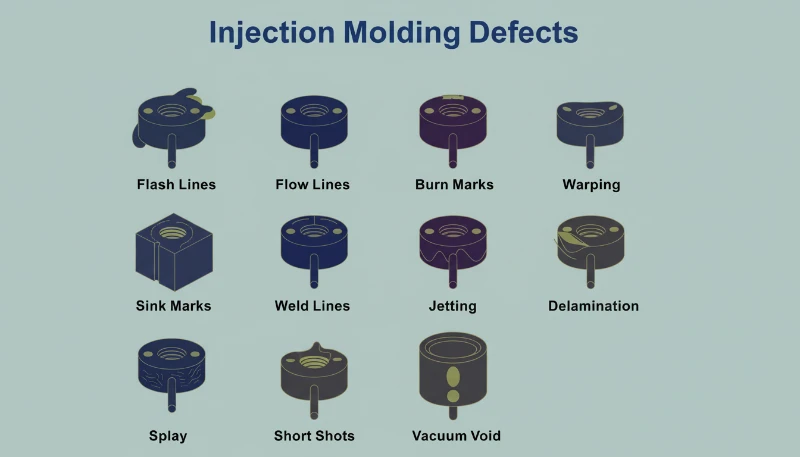
Dieser Abschnitt erläutert, wie Entlüftungs- und Auswerfersysteme die Teilequalität beeinflussen und welche Folgen dies für Kosten, Qualität, Termine oder Beschaffungsrisiken hat. Wenn Kunststoffschmelze eine Kavität füllt, verdrängt sie Luft sowie Feuchtigkeit oder Gase aus dem Polymer. Kann dieses eingeschlossene Gas nicht schnell genug entweichen, wird es verdichtet und erhitzt und verursacht Dieseleffekte – kleine verkohlte Stellen auf der Teileoberfläche, die als Brandstellen bekannt sind. Bei Mehrkavitätenformen muss die Entlüftung jeder Kavität sorgfältig ausgelegt werden, weil das gleichzeitige schnelle Füllen mehrerer Kavitäten in kürzester Zeit große Mengen verdrängten Gases erzeugt. Eine mangelhafte Entlüftung ist eine wiederkehrende Ursache für Spritzgussfehler bei Werkzeugen mit vielen Kavitäten.
Entlüftungen sind dünne Kanäle, üblicherweise 0.01–0.02 mm tief, die in die Trennebene oder die Einsatzflächen jeder Kavität eingeschliffen werden. Sie sind tief genug, damit Gas entweichen kann, aber flach genug, um das Austreten von Kunststoffschmelze zu verhindern. Bei komplexen Geometrien können zusätzliche Entlüftungen durch poröse Stahleinsätze oder Entlüftungsstifte an bestimmten, durch Simulation ermittelten Stellen vorgesehen werden.
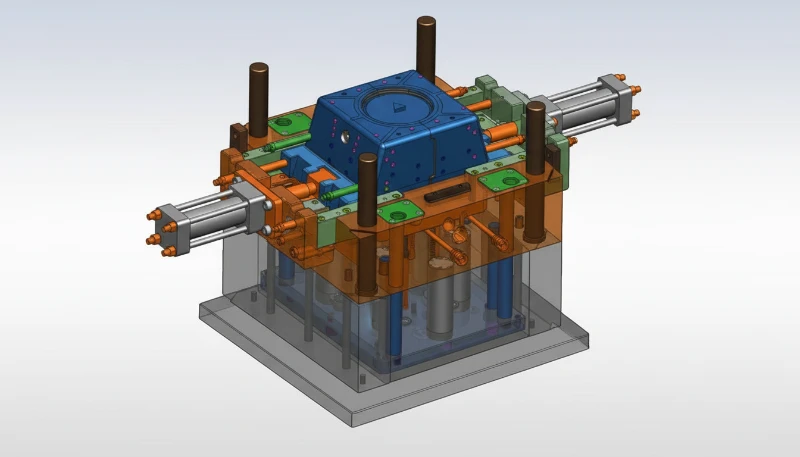
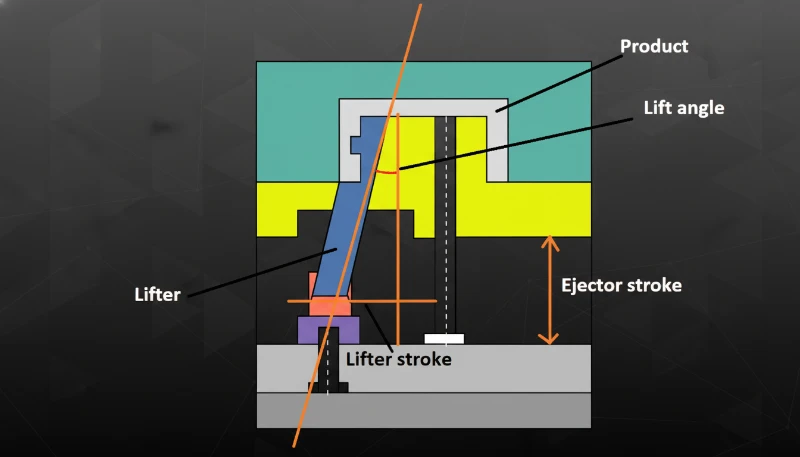
Das Auswerfen ist ebenso kritisch. Bei einem Einkavitätenwerkzeug kann ein einzelner zentraler Auswerferstift genügen. Bei einem Mehrkavitätenwerkzeug benötigt dagegen jede Kavität einen eigenen Satz Auswerferstifte, die alle vollkommen synchron arbeiten müssen. Jede zeitliche Abweichung kann dazu führen, dass Teile haften bleiben, sich verformen oder ungleichmäßig herunterfallen. Synchronisierte Auswerferplatten, Abstreifringe oder pneumatische Auswerfer werden häufig eingesetzt, damit sich jedes Teil sauber und gleichzeitig löst.
Wann sollten Sie ein Heißkanal- statt eines Kaltkanalsystems verwenden?
Die Wahl zwischen Heißkanal- und Kaltkanalsystemen hat bei Mehrkavitätenformen erheblichen Einfluss auf Materialabfall, Zykluszeit und Teilequalität. Ein Kaltkanalsystem ist die einfachere und kostengünstigere Option: Geschmolzener Kunststoff fließt durch unbeheizte Kanäle und erstarrt zusammen mit den Teilen. Der erstarrte Anguss muss anschließend von den Teilen getrennt und entweder nachgemahlen oder entsorgt werden. Bei Formen mit wenigen Kavitäten (zwei bis vier Kavitäten), die Standardmaterialien verarbeiten, können Kaltkanäle wirtschaftlich sein.
Mit steigender Kavitätenzahl wird der Abfall aus Kaltkanälen jedoch zu einem erheblichen wirtschaftlichen Problem. Bei einer 16-fach-Form kann der Kaltkanal 20–40% des gesamten Schussgewichts ausmachen, sodass bei jedem Zyklus ein erheblicher Materialanteil verloren geht. Ein Heißkanalsystem3 beseitigt diesen Abfall, indem es das Polymer in beheizten Kanälen in geschmolzenem Zustand hält, sodass kein erstarrter Anguss entsteht.
Heißkanäle bieten außerdem eine bessere Angusssteuerung. Nadelverschlüsse können sequenziell geöffnet und geschlossen werden, sodass Ingenieure die Füllreihenfolge fein abstimmen und die Sichtbarkeit von Bindenähten verringern können. Thermische Anschnitte ermöglichen eine saubere Trennung ohne Angussrest und verbessern dadurch die Teileästhetik. Bei technischen Harzen, die empfindlich auf thermischen Abbau reagieren, gewährleisten Heißkanäle mit einzeln geregelten Zonen, dass jede Kavität Material mit optimaler Temperatur erhält.
Der Nachteil liegt in den Kosten und der komplexeren Wartung. Ein Heißkanalsystem erhöht die Werkzeugkosten um $5,000–$20,000 oder mehr und erfordert eine regelmäßige Wartung von Heizelementen, Thermoelementen und Verteilerdichtungen. Bei Produktionsläufen unter 100,000 Teilen rechtfertigen die Materialeinsparungen die zusätzliche Investition möglicherweise nicht. Die folgende Tabelle fasst die wichtigsten Unterschiede zusammen:
| Charakteristisch | Kaltkanal | Heißer Läufer |
|---|---|---|
| Anfängliche Werkzeugkosten | Niedriger ($2,000–$5,000) | Höher ($7,000–$20,000+) |
| Materialabfälle | Hoch (Anguss erstarrt) | Minimal (kein erstarrter Anguss) |
| Auswirkung auf die Zykluszeit | Neutraler Zustand | Etwas schneller (keine Kühlung des Angusses) |
| Anschnittqualität | Kann einen Anschnittrest hinterlassen | Saubere, kontrollierte Trennung |
| Wartung | Einfach | Erfordert Wartung von Heizung/Thermoelement |
| Am besten für | Wenige Kavitäten, kurze Produktionsläufe | Große Kavitätenzahl, lange Produktionsläufe |
Welche Materialien und Beschichtungen maximieren die Werkzeugstandzeit?
Die Wahl des Formstahls wirkt sich direkt auf die Werkzeuglebensdauer, die Oberflächengüte der Teile und die Wartungshäufigkeit aus. Bei Mehrkavitätenformen, die Millionen von Zyklen durchlaufen, sollte bei der Materialauswahl nicht gespart werden. Zu den am häufigsten verwendeten Stählen für Hochleistungsformen gehören P20 (für mittlere Stückzahlen auf 30–36 HRC vorvergütet), H13 (auf 44–52 HRC gehärteter Warmarbeitsstahl für hohe Stückzahlen und hohe Temperaturen) und S136 (rostfreier Stahl mit hervorragender Polierbarkeit für optische und medizinische Teile).
Oberflächenbeschichtungen verlängern die Werkzeuglebensdauer zusätzlich, indem sie Reibung verringern, Korrosion verhindern und die Entformung des Polymers verbessern. Diamantähnliche Kohlenstoffbeschichtungen (DLC) bieten außergewöhnliche Härte und geringe Reibung und reduzieren so den Verschleiß an stark beanspruchten Flächen wie Kernen und Schiebern. Titannitrid- (TiN) und Chromnitridbeschichtungen (CrN) bieten gute Korrosionsbeständigkeit und werden häufig in Formen eingesetzt, die glasfasergefüllte oder korrosive Polymere verarbeiten.
Regelmäßige Wartung ist unerlässlich, um die Formleistung dauerhaft zu erhalten. Kühlkanäle sollten regelmäßig gespült und entkalkt werden, damit die Wärmeübertragung effizient bleibt. Auswerferstifte und Führungsbuchsen sind auf Verschleiß zu prüfen und auszutauschen, bevor sie Riefen auf den Formoberflächen verursachen. Eine gut gewartete Mehrkavitätenform kann über ihre Lebensdauer zuverlässig 5–10 Millionen Teile oder mehr produzieren.
Wie validieren und balancieren Sie ein Mehrkavitätenwerkzeug vor der Produktion?
Die Validierung ist die entscheidende Brücke zwischen Formkonstruktion und Produktionsreife. Selbst die sorgfältigste Formkonstruktion kann unter realen Verarbeitungsbedingungen unerwartetes Verhalten zeigen. Ein strukturierter Validierungsprozess erkennt und behebt Probleme vor Beginn der Serienfertigung, spart Zeit und verhindert kostspieligen Ausschuss.
Der erste Validierungsschritt ist die Kurzschussanalyse. Durch bewusstes Einspritzen von weniger als dem vollständigen Schussvolumen können Ingenieure das Füllmuster jeder Kavität beobachten. Bei einem perfekt ausbalancierten Werkzeug sollte jede Kavität denselben Teilfüllgrad zeigen. Jede Abweichung weist auf ein Fließungleichgewicht hin, das durch Anpassungen der Angusskanäle oder der Anschnittgröße behoben werden muss.
Die Überwachung des Kavitätsdrucks liefert quantitative Daten zur Gleichmäßigkeit der Füllung. In jeder Kavität installierte Drucksensoren zeichnen das Füllprofil in Echtzeit auf, sodass Ingenieure Spitzendrücke, Füllzeiten und Nachdruckverhalten zwischen den Kavitäten vergleichen können. Diese Daten sind für die Feinabstimmung der Prozessparameter und den Nachweis, dass jede Kavität spezifikationsgerechte Teile produziert, von unschätzbarem Wert.
Abschließend bestätigen Untersuchungen der Maßhaltigkeit (Cp/Cpk), dass die Teile aus allen Kavitäten die erforderlichen Toleranzen einhalten. Für die Serienfreigabe wird üblicherweise ein Cpk von mindestens 1.33 gefordert; dies zeigt, dass der Prozess Teile zuverlässig innerhalb der Spezifikationsgrenzen fertigen kann. Teile aus jeder Kavität werden mit Koordinatenmessmaschinen (CMMs) oder optischen Prüfsystemen vermessen. Anschließend werden die Daten analysiert, um kavitätsspezifische Abweichungen zu erkennen, die korrigiert werden müssen.
Mit 20+ Jahren Erfahrung im Spritzgießen und Werkzeugbau validieren unsere Ingenieure Mehrkavitätenwerkzeuge vor der Produktionsfreigabe durch Kurzschussstudien, Prüfungen der Kavitätenbalance, Maßstichproben und Prozessfenstertests. Maschinen von 90T bis 1850T geben unserem Team den Spielraum, das Werkzeug der richtigen Presse zuzuordnen, statt ein Werkzeug mit vielen Kavitäten bei grenzwertiger Schließkraft einzusetzen.
Welche Fragen stellen Einkäufer zur Konstruktion von Mehrkavitätenformen?
Häufig gestellte Fragen
Wie viele Kavitäten sind für ein Mehrkavitätenwerkzeug ideal?
Es gibt keine universell ideale Kavitätenzahl. Die richtige Anzahl hängt von Bauteilgröße, prognostizierter Jahresmenge, Fließverhalten des Materials, verfügbarer Pressenkraft und Toleranzrisiko des Bauteils ab. Für viele Serienprogramme liegt der praktische Bereich bei 4 bis 32 Kavitäten. Kleine Verschlüsse, Dichtungen und Steckverbinder können höhere Kavitätenzahlen aufweisen, da Schussvolumen und Schließkraft beherrschbar bleiben. Größere Bauteile benötigen in der Regel weniger Kavitäten. Die sichere Methode besteht darin, Werkzeugkosten, Zykluszeit, Ausschussrisiko und Bedarfsprognose zu vergleichen, bevor die Kavitätenzahl festgelegt wird.
Wie viel mehr kostet ein Mehrkavitätenwerkzeug gegenüber einem Einkavitätenwerkzeug?
Ein Mehrkavitätenwerkzeug kostet mehr als ein Einkavitätenwerkzeug, da es zusätzliche Kavitäten, Anschnitte, Angusskanäle, Kühlkreisläufe, Auswerferkomponenten und Validierungsarbeiten erfordert. Ein 8-Kavitätenwerkzeug kann drei- bis viermal so viel kosten wie ein Einkavitätenwerkzeug; ein 16-Kavitätenwerkzeug fünf- bis siebenmal so viel. Dadurch wird es nicht automatisch je Teil teuer. Bei hohem Jahresbedarf verteilen sich die zusätzlichen Werkzeugkosten auf mehr Teile, wodurch die Stückkosten häufig um 50 bis 70 Prozent sinken.
Kann eine Mehrkavitätenform gleichzeitig unterschiedliche Teile herstellen?
Ja, eine Form kann gleichzeitig unterschiedliche Teile fertigen; dies wird jedoch üblicherweise Familienform und nicht echte Mehrkavitätenform genannt. Familienformen sind sinnvoll, wenn mehrere Teile mit geringer Stückzahl gemeinsam in einer Baugruppe verbaut werden. Das Risiko liegt in einer unausgewogenen Füllung, weil jedes Teil andere Volumen-, Wandstärken- und Druckanforderungen hat. Eine Kavität kann überpackt werden, während eine andere unvollständig gefüllt bleibt. Für Großserien mit hohen Anforderungen an die Maßhaltigkeit sind dedizierte Mehrkavitätenformen mit identischen Kavitäten meist sicherer und leichter zu validieren.
Warum ist die Angussbalancierung bei Mehrkavitätenformen so wichtig?
Die Ausgleichung des Angusses ist entscheidend, da jeder Kavität nahezu gleichzeitig, mit gleichem Druck und gleicher Temperatur gefüllt werden muss. Wenn Kavitäten nahe dem Anguss zuerst gefüllt werden, können sie überfüllt werden und Gratbildung verursachen. Weiter entfernte Kavitäten können unvollständig gefüllt sein oder schwache Schweißnähte aufweisen. Das Ergebnis sind ungleichmäßige Abmessungen und höherer Ausschuss. Ein ausgeglichenes Angusslayout nutzt gleiche Fließlängen, kontrollierte Angussdurchmesser und Simulationsdaten, um den Widerstand über die Kavitäten hinweg ähnlich zu halten. Bei Mehrkavitätenformen sollte diese Arbeit vor dem Stahlschnitt abgeschlossen sein, nicht erst während des Versuchs korrigiert werden.
Wie lange dauert es, eine Mehrfachkavitätenform zu bauen?
Die Vorlaufzeit für eine Mehrfachkavitätenform liegt normal zwischen 6 und 16 Wochen. Ein einfaches 4-Kavitätenwerkzeug mit kalten Verteilerkanälen kann in 6 bis 8 Wochen fertig sein, wenn das Teil einfach und das Materialverhalten bekannt ist. Ein 32-Kavitätenwerkzeug mit warmen Verteilerkanälen, Schiebern, hohen Toleranzen oder konformaler Kühlung kann 12 bis 16 Wochen dauern. Die größten Zeitplanrisiken sind späte Designänderungen, unbestätigte Kunststofftypen, verzögerte DFM-Abnahme und wiederholte T1-Korrekturen. Eine frühe Fertigungsfähigkeitsprüfung reduziert diese Verzögerungen und schützt den Starttermin.
Welche Wartung benötigt eine Mehrfachkavitätenform?
Eine Mehrfachkavitätenform benötigt planmäßige vorbeugende Wartung, weil kleine Verschleißunterschiede zwischen Kavitäten über Zeit Qualitätsvariationen erzeugen. Normale Wartung umfasst Reinigung der Kavitätenoberflächen, Spülung der Kühlkanäle, Prüfung der Entlüftungen, Schmierung der Schieber, Inspektion der Ausstoßstifte und Test der warmen Verteilerkanalheizer oder Thermoelemente. Viele Betriebe servicieren Produktionsformen nach 100.000 bis 200.000 Zyklen, mit kurzen Intervallen für abrasive oder korrosive Materialien. Der Schlüssel ist Zählung der Zyklen pro Werkzeug und Aufzeichnung von Kavitätenspezifischen Problemen, so dass eine schwache Kavität nicht unbemerkt die Ausstoßqualität beeinträchtigt.
Wie wählen Sie den richtigen Spritzgießpartner für Mehrfachkavitätenformen?
Wählen Sie einen Partner durch Prüfung, ob sie bereits ähnliche Kavitätenanzahlen, Materialien, Toleranzen und Validierungsanforderungen bearbeitet haben. Fragen Sie nach Beispielen für Mehrfachkavitätenwerkzeuge, Maschinenkraftbereich, interne Formgestaltungskapazität und der Validierungsmethode, die sie für Kavitätenausgleich verwenden. Ein zuverlässiger Lieferant sollte Kurzschussstudien, dimensionale Stichproben pro Kavität, Cpk-Ziele, Kühlungsprüfungen und Wartungsplanung erklären. Bewerten Sie nicht nur nach dem angegebenen Formpreis. Ein billigeres Werkzeug, das keinen Ausgleich zwischen den Kavitäten halten kann, kostet mehr durch Ausschuss und Ausfallzeiten.
Welche Simulationswerkzeuge werden bei der Gestaltung von Mehrfachkavitätenformen verwendet?
Häufige Simulationswerkzeuge für Mehrfachkavitätenformgestaltung umfassen Autodesk Moldflow, Moldex3D und SolidWorks Plastics. Diese Programme modellieren Fülldruck, Verteilerkanalausgleich, Bindelinienposition, Kühlleistung, Schrumpfung und Verzug vor dem Schneiden der Form. Simulation ersetzt keinen Formtest, aber sie verhindert offensichtliche Fehler wie unausgeglichene Verteilerkanäle, schlechte Einlassplatzierung und Hotspots um dickere Abschnitte. Für Werkzeuge mit vielen Kavitäten sollte Simulation zusammen mit Formlayout, Kühlkreislaufgestaltung und erwarteter Presskapazität vor Stahlbestellung geprüft werden.
Wie können Sie die Produktion mit Mehrkavitätenformen optimieren?
Die Konstruktion von Mehrkavitätenformen ist eine strategische Investition, die sich durch höhere Ausbringung, niedrigere Stückkosten und bessere Konstanz auszahlt. Ob Sie eine Vierkavitätenform für mittlere Stückzahlen oder eine 32-Kavitätenform für die Großserienfertigung benötigen: Die in diesem Leitfaden behandelten technischen Grundsätze — Angussbalancierung, Kühlungsoptimierung, Entlüftungsauslegung und gründliche Validierung — bilden die Grundlage für den Erfolg.
ZetarMold verfügt über mehr als 20 Jahre Erfahrung in Formenkonstruktion und -fertigung und betreibt 47 Spritzgießmaschinen von 90T bis 1850T. Vom Konzept bis zur Produktionsvalidierung wird jedes Spritzgussform-Projekt auf Zuverlässigkeit, Kavitätenbalance und Produktionseffizienz ausgelegt.
Fordern Sie noch heute ein kostenloses Angebot und eine DFM-Prüfung für Ihr Mehrkavitätenform-Projekt an. Wenden Sie sich an das Engineering-Team von ZetarMold, um Ihre Anforderungen zu besprechen und zu erfahren, wie eine optimierte Formenkonstruktion die Wirtschaftlichkeit Ihrer Produktion verändern kann.
Angussbalancierung: Angussbalancierung bezeichnet das Anpassen der Abmessungen von Angusskanälen, damit sich jede Kavität einer Mehrkavitätenform gemäß den Standards der Fließsimulation zur selben Zeit und mit demselben Druck füllt. ↩
Konturfolgende Kühlung: Konturfolgende Kühlung bezeichnet Kühlkanäle, die so gefertigt werden, dass sie den Konturen der Formkavität folgen. Sie werden typischerweise durch additive Metallfertigung hergestellt und ermöglichen eine gleichmäßigere Wärmeabfuhr als gerade gebohrte Kanäle. ↩
Heißkanalsystem: Ein Heißkanalsystem ist ein temperaturgeregelter Verteiler, der den Kunststoff im Angusskanal geschmolzen hält, Angussabfall vermeidet und eine gleichmäßigere Füllung aller Kavitäten ermöglicht. ↩