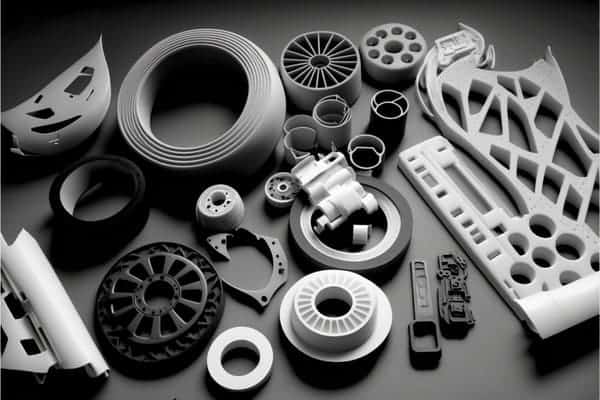
- worden sterk aanbevolen voor meercavitijsgereedschap met acht of meer holtes. Een heetkanaalsysteem gebruikt verwarmde spruitstukken om het polymeer in het kanaal gesmolten te houden, waardoor het afval van koude spruitstukken wordt geëlimineerd dat anders zou moeten worden herverwerkt of weggegooid. Heetkanaalsystemen bieden ook een consistentere temperatuurregeling bij elke ingang, wat de vuluniformiteit over alle holtes verbetert.
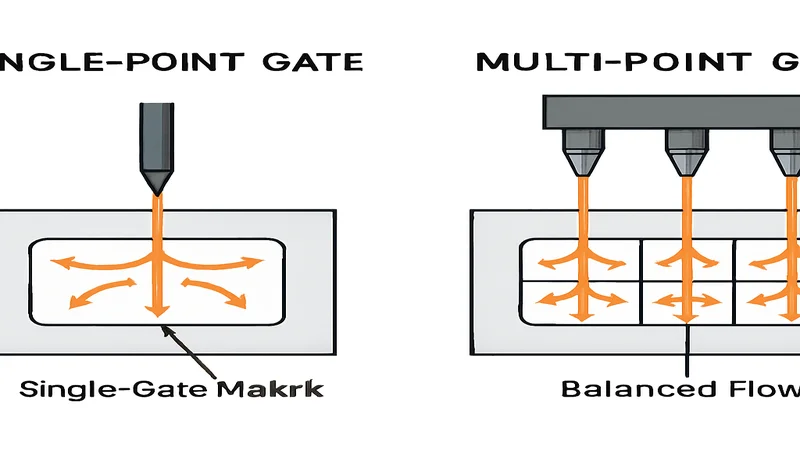
- Een uitgebalanceerd aanspuitsysteem en symmetrische holte-indelingen zijn essentieel om te zorgen dat elke holte gelijkmatig wordt gevuld.
- Geavanceerde koelstrategieën—vooral conformele kanalen—kunnen de cyclustijd met maximaal 30% verkorten.
- Een juiste validatie met short-shotanalyse en bewaking van de vormholtedruk voorkomt kostbare productiedefecten.
- De keuze van het juiste gereedschapsmateriaal en de juiste oppervlaktecoating verlengt de levensduur van de matrijs tot miljoenen cycli.
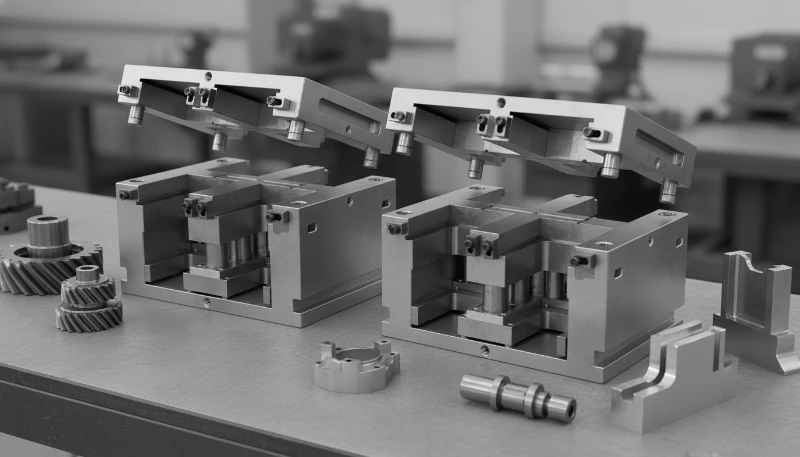
In de moderne kunststofproductie is het ontwerpen van meervoudige matrijzen een van de doeltreffendste manieren om de productie op te schalen zonder dat de kosten evenredig toenemen. Een meervoudige matrijs bevat twee of meer identieke vormholten, zodat een spuitgietmachine in één cyclus meerdere onderdelen kan produceren. Deze aanpak is onmisbaar voor sectoren die miljoenen identieke componenten nodig hebben, zoals flessendoppen, medische spuiten, elektronische connectoren en autoclips. De opbrengst is aanzienlijk: een hogere productiecapaciteit, lagere kosten per onderdeel en een betere consistentie bij grote productieseries.
Deze voordelen gaan echter gepaard met een grotere technische complexiteit. Elke extra vormholte introduceert nieuwe variabelen — stromingsweerstand, warmteverdeling en uitwerptiming — die nauwkeurig moeten worden beheerst. Deze gids behandelt elk kritisch aspect van het ontwerp van meervoudige spuitgietmatrijzen, van de basisprincipes en balancering van het runnersysteem1 tot koelstrategieën, validatiemethoden en kostenanalyse.
Wat is een matrijs met meerdere holten en hoe werkt die?
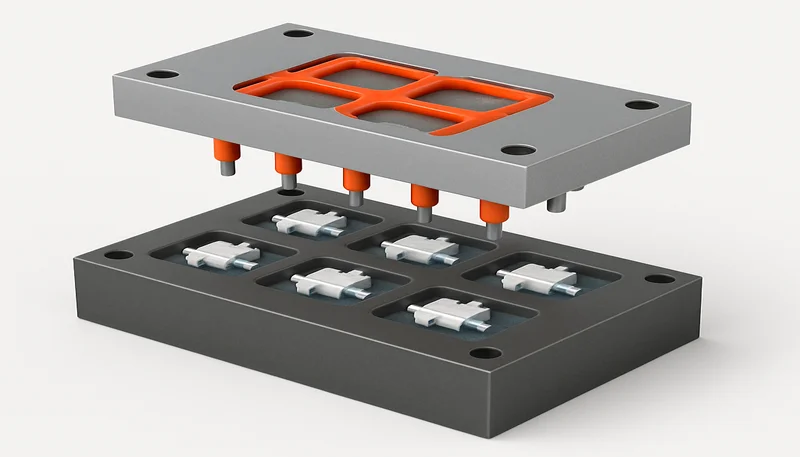
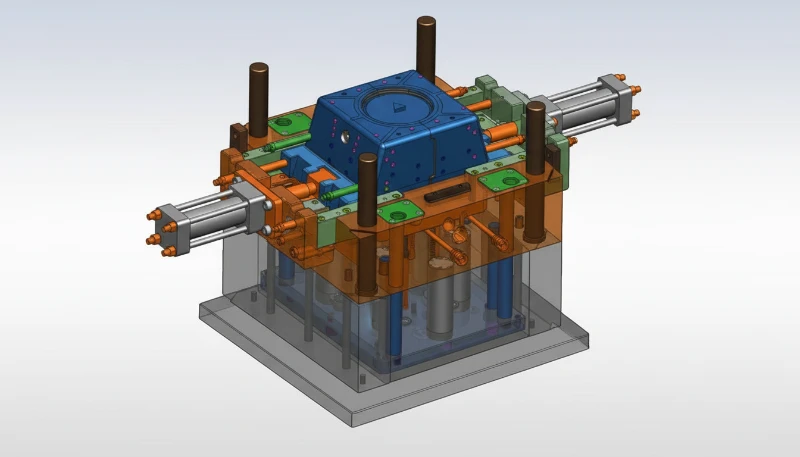
Een matrijs met meerdere holten is een gespecialiseerd gereedschap voor kunststofspuitgieten dat meerdere identieke holten in één matrijsbasis bevat. Wanneer de machine gesmolten polymeer in de matrijs injecteert, stroomt het materiaal door een verdeelkanalensysteem en vult het gelijktijdig alle holten, zodat in één cyclus meerdere afgewerkte onderdelen ontstaan. Het aantal holten kan variëren van twee tot meer dan vierenzestig, afhankelijk van de onderdeelgrootte, het machinetonnage en de productie-eisen.
Het kernprincipe is eenvoudig: in plaats van één onderdeel per cyclus te vormen en op de volgende spuitgang te wachten, vormt u er veel tegelijk. Dit verhoogt de effectieve output drastisch. Een machine met een matrijs met 16 holten en een cyclus van 22 seconden kan bijvoorbeeld meer dan 2.500 onderdelen per uur produceren, tegenover ongeveer 160 onderdelen per uur met een matrijs met één holte en een iets kortere cyclus van 18 seconden.
Er is een belangrijk onderscheid tussen matrijzen met meerdere holten en familiematrijzen. In een matrijs met meerdere holten produceert elke holte hetzelfde onderdeel, wat uniforme stromingseigenschappen en kwaliteit garandeert. In een familiematrijs produceren verschillende holten verschillende onderdelen. Dit bemoeilijkt de stroombalans omdat elke holte een uniek volume en unieke geometrie heeft. Voor een consistente output van hoge kwaliteit verdienen echte ontwerpen met meerdere identieke holten sterk de voorkeur.
De keuze voor een meervoudige matrijs moet berusten op een zorgvuldige analyse van het jaarlijkse productievolume, de complexiteit van het onderdeel en de beschikbare machinecapaciteit. Wanneer de productievolumes de extra investering in gereedschap rechtvaardigen, wordt de investering doorgaans al in de eerste productieserie terugverdiend. Vergelijkt u leveranciers of bereidt u de inkoop voor, dan behandelt onze inkoopgids voor spuitgieten de voorbereiding van offerteaanvragen, leverancierskwalificatie en beoordeling van commerciële risico’s in detail.
In onze fabriek in Shanghai draaien 47 spuitgietmachines van 90T tot 1850T, geschikt voor meervoudige matrijzen van kleinschalige proefseries tot massaproductie. Dit tonnagebereik is belangrijk omdat het aantal caviteiten het schotvolume, de benodigde sluitkracht en het validatierisico verandert.
Waarom kiest u een matrijs met meerdere caviteiten voor massaproductie?
Dit gedeelte gaat over het kiezen van een matrijs met meerdere holtes voor productie in grote volumes en de invloed daarvan op kosten, kwaliteit, planning of inkooprisico. De belangrijkste reden om voor een matrijs met meerdere holtes te kiezen is economisch: door de vaste kosten van machinetijd, energie en arbeid over veel meer onderdelen per cyclus te verdelen, dalen de kosten per eenheid aanzienlijk. Hoewel de initiële gereedschapsinvestering hoger is — vaak drie tot vijf keer de kosten van een matrijs met één holte — worden de besparingen per onderdeel aanzienlijk zodra de productievolumes de break-evendrempel overschrijden, doorgaans rond 500,000 tot 1,000,000 onderdelen.
Naast kostenvoordelen verbeteren meervoudige matrijzen de maatconsistentie. Omdat alle onderdelen met dezelfde machine-instellingen, temperatuur en hetzelfde drukprofiel worden gevormd, is de variatie tussen onderdelen uit verschillende vormholten doorgaans kleiner dan de variatie tussen onderdelen die op verschillende machines of in verschillende productieruns worden gemaakt. Dit is vooral belangrijk in gereguleerde sectoren zoals medische hulpmiddelen en de automobielindustrie, waar nauwe toleranties verplicht zijn.
| Invloedsfactor | Vorm met één holte | Matrijs met 8 holten | 16-compartimenten schimmel |
|---|---|---|---|
| Geschatte matrijskosten | $8,000–$15,000 | $25,000–$45,000 | $45,000–$80,000 |
| Cyclustijd | 18 s | 22 s | 24 s |
| Onderdelen per uur | ~200 | ~1,300 | ~2,400 |
| Kosten per onderdeel (bij 1 miljoen stuks) | $0.12 | $0.05 | $0.035 |
| Break-evenvolume | — | ~400.000 onderdelen | circa 600.000 onderdelen |
De bovenstaande tabel toont een belangrijk inzicht: de cyclustijd neemt slechts licht toe wanneer u caviteiten toevoegt, terwijl de output bijna lineair opschaalt. Het resultaat is een sterke daling van de kosten per onderdeel, waardoor het investeringsrendement voor elk project met grote volumes sneller wordt bereikt.
Hoe brengt u het verdeelkanalensysteem in matrijzen met meerdere holten in balans?
Het balanceren van het runnersysteem is waarschijnlijk de belangrijkste technische uitdaging bij het ontwerp van meervoudige matrijzen. Wanneer gesmolten kunststof de matrijs binnenstroomt, moet het elke vormholte op hetzelfde moment, met dezelfde druk en met hetzelfde temperatuurprofiel bereiken. Als de ene vormholte eerder wordt gevuld dan de andere, leidt dat tot overvulling, braamvorming, onvolledige vulling of maatafwijkingen. Dezelfde logica geldt voor het ontwerp van runners en aanspuitpunten, waarbij kleine geometrische verschillen tot terugkerende productiefouten kunnen leiden.
Het runnersysteem is het netwerk van kanalen dat gesmolten polymeer van de machinespuitmond via de aanspuiting naar elke holte voert. In een natuurlijk gebalanceerde runner ligt elke holte even ver van de aanspuiting, zodat lengte en weerstand van het stroompad identiek zijn. Dit wordt bereikt met symmetrische indelingen, zoals radiale configuraties (holtes in een cirkel rond de aanspuiting) of H-patronen.
Wanneer natuurlijke balancering onpraktisch is — vaak door beperkingen van de matrijsgrootte of de onderdeelgeometrie — gebruiken ingenieurs kunstmatig gebalanceerde aanspuitkanalen. Zij passen de diameter en lengte van de afzonderlijke vertakkingen aan om de stromingsweerstand gelijk te maken. Dit vereist een nauwkeurige simulatie met Moldflow of vergelijkbare software om drukverliezen en vulpatronen te modelleren voordat het staal wordt bewerkt.
"Een natuurlijk uitgebalanceerde kanaalindeling zorgt ervoor dat elke matrijsholte vanaf de aanspuitbus een even lange stromingsweg heeft."True
In een natuurlijk uitgebalanceerd systeem zijn de matrijsholten symmetrisch gerangschikt, bijvoorbeeld in een H-patroon. Daardoor zijn afstand en weerstand van de aanspuitkegel naar elke holte gelijk en worden de holten zonder kunstmatige aanpassingen gelijktijdig gevuld.
"Een grotere runnerdiameter verbetert altijd de vulbalans van de holten in een meerholtematrijs."False
Hoewel grotere runners de drukval verminderen, vergroten ze ook de materiaalverspilling en kunnen ze overmatige nadruk veroorzaken in caviteiten dichter bij de aanspuitkegel. Evenwicht wordt bereikt door nauwkeurige dimensionering en niet simpelweg door de runners groter te maken.
Hotrunnersystemen worden sterk aanbevolen voor matrijzen met acht of meer holtes. Een hotrunner gebruikt verwarmde spruitstukken om het polymeer in het kanaal gesmolten te houden, waardoor coldrunnerafval dat anders opnieuw zou moeten worden gemalen of weggegooid, wordt geëlimineerd. Hotrunners bieden ook een consistentere temperatuurregeling bij elke aanspuiting, waardoor alle holtes gelijkmatiger worden gevuld.
Welke rol speelt koeling in de prestaties van matrijzen met meerdere caviteiten?
Koeling beslaat ongeveer 70% van de totale spuitgietcyclustijd en is daarmee de grootste afzonderlijke factor voor de doorvoer. In een matrijs met meerdere holtes is de koeluitdaging groter, omdat elke holte met dezelfde snelheid moet stollen. Als de ene holte sneller afkoelt dan de andere, vertonen de onderdelen verschillen in krimp, kromtrekken en maatnauwkeurigheid.
Traditionele geboorde koelkanalen lopen recht en kunnen de contouren van complexe onderdeelgeometrieën niet nauwkeurig volgen. Daardoor ontstaan hotspots — zones waar warmte langzamer wordt afgevoerd — met ongelijkmatige koeling en productdefecten als gevolg. Contourvolgende koeling2, mogelijk gemaakt door additieve metaalproductie, volgt exact de vorm van het oppervlak van de vormholte en voert de warmte gelijkmatig over de gehele matrijs af. Onderzoek heeft aangetoond dat contourvolgende koeling de cyclustijd met 20–40% kan verkorten ten opzichte van conventionele geboorde kanalen.
Een doeltreffend koelontwerp in een matrijs met meerdere caviteiten vereist ook parallelle koelcircuits in plaats van in serie geschakelde circuits. In een serieschakeling neemt het koelmiddel warmte op uit de eerste caviteit en bereikt het de laatste caviteit met een hogere temperatuur, waardoor een temperatuurgradiënt ontstaat. Parallelle circuits voeren aan elke caviteit koelmiddel met dezelfde inlaattemperatuur toe en waarborgen zo uniforme koelprestaties in de gehele matrijs.
Met thermische simulatiesoftware zoals Moldex3D of Autodesk Moldflow kunnen engineers de temperatuurverdeling over de matrijs visualiseren en de plaatsing van kanalen vóór de productie optimaliseren. Een juiste plaatsing van keerschotten en borrelbuizen in elke caviteit waarborgt dat ook dikwandige secties voldoende worden gekoeld. Bij matrijzen met veel caviteiten kan een grondige thermische simulatie in de ontwerpfase weken aan probleemoplossing tijdens de productiekwalificatie voorkomen.
"Parallelle koelcircuits zorgen voor een gelijkmatigere temperatuurverdeling over alle caviteiten dan in serie geschakelde circuits."True
Parallelle circuits voeren koelmiddel gelijktijdig met dezelfde inlaattemperatuur naar elke caviteit. In seriecircuits warmt het koelmiddel geleidelijk op terwijl het opeenvolgende caviteiten passeert. Hierdoor ontstaan temperatuurgradiënten die een inconsistente productkwaliteit veroorzaken.
"Het gebruik van zachter matrijsstaal zoals P20 is altijd de beste keuze voor matrijzen met meerdere caviteiten, omdat het de initiële matrijskosten verlaagt."False
Hoewel P20 de aanvangskosten verlaagt, slijt het sneller bij productie in grote volumes. Voor matrijzen die naar verwachting miljoenen cycli draaien, bieden hardere staalsoorten zoals H13 of S136 op lange termijn meer waarde doordat ze de afmetingen van de matrijsholte en de oppervlakteafwerking gedurende een veel langere levensduur behouden.
Welke invloed hebben ontluchtings- en uitwerpsystemen op de onderdeelkwaliteit?
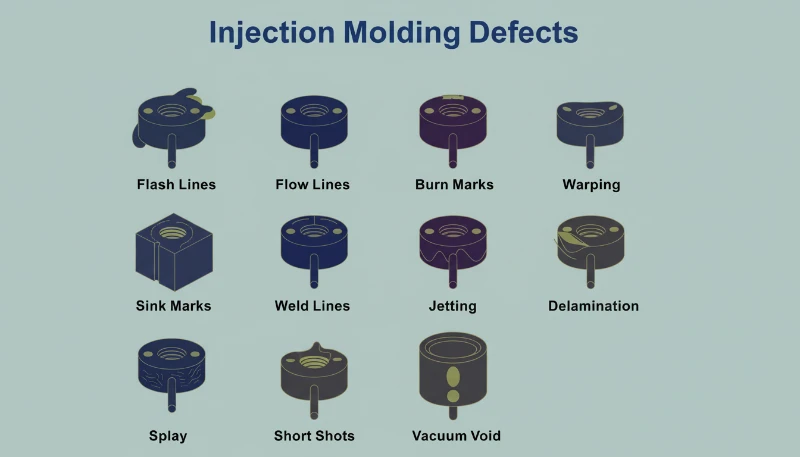
Dit gedeelte gaat over de invloed van ontluchtings- en uitwerpsystemen op de onderdeelkwaliteit en over de gevolgen daarvan voor kosten, kwaliteit, doorlooptijd en inkooprisico. Wanneer gesmolten kunststof een vormholte vult, verdringt deze lucht en eventueel vocht of gassen uit het polymeer zelf. Als dit opgesloten gas niet snel genoeg kan ontsnappen, wordt het samengeperst en verhit en veroorzaakt het dieseleffect: kleine verkoolde plekken op het onderdeeloppervlak die brandplekken worden genoemd. Bij meervoudige matrijzen moet de ontluchting voor elke vormholte zorgvuldig worden ontworpen, omdat het gelijktijdig snel vullen van meerdere vormholten in zeer korte tijd een groot volume gas verdringt. Slechte ontluchting is een van de terugkerende oorzaken van spuitgietfouten bij matrijzen met veel vormholten.
Ontluchtingen zijn dunne kanalen, doorgaans 0.01–0.02 mm diep, die in de deellijn of inzetstukoppervlakken van elke caviteit worden geslepen. Ze zijn diep genoeg om gas te laten ontsnappen, maar ondiep genoeg om te voorkomen dat gesmolten kunststof erdoor lekt. Bij complexe geometrieën kan extra ontluchting worden aangebracht via poreuze stalen inzetstukken of ontluchtingspennen op specifieke, door simulatie bepaalde locaties.
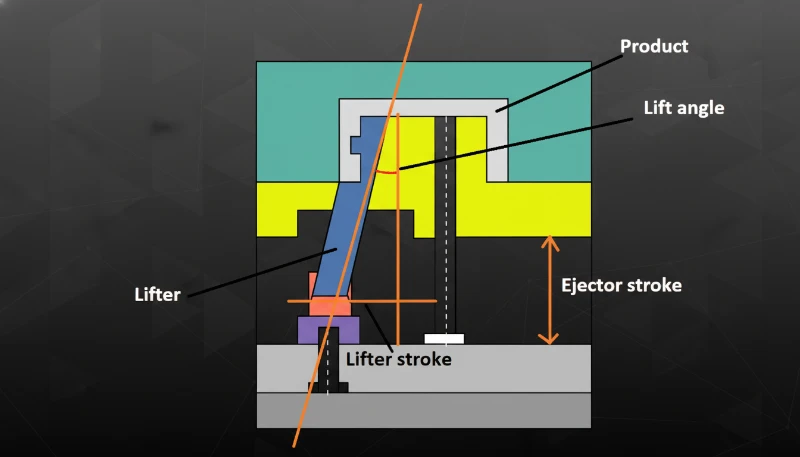
Uitwerping is even kritisch. Bij een matrijs met één holte kan één centrale uitwerppen voldoende zijn. Bij een matrijs met meerdere holten vereist elke holte echter een eigen set uitwerppennen, die allemaal perfect synchroon moeten werken. Elk tijdsverschil kan ertoe leiden dat onderdelen blijven kleven, vervormen of ongelijkmatig vallen. Gesynchroniseerde uitwerpplaten, afstroopringen of pneumatische uitwerpers worden vaak gebruikt om te waarborgen dat elk onderdeel schoon en gelijktijdig loskomt.
Wanneer gebruikt u een hotrunner- in plaats van een koudkanaalsysteem?
De keuze tussen hotrunner- en coldrunnersystemen heeft bij matrijzen met meerdere caviteiten grote invloed op materiaalafval, cyclustijd en onderdeelkwaliteit. Een coldrunnersysteem is de eenvoudigere en goedkopere optie: gesmolten kunststof stroomt door onverwarmde kanalen en stolt samen met de onderdelen. Het gestolde kanaal moet vervolgens van de onderdelen worden gescheiden en vermalen of weggegooid. Voor matrijzen met weinig caviteiten (twee tot vier) die standaardmaterialen verwerken, kunnen coldrunners kosteneffectief zijn.
Naarmate het aantal vormholten toeneemt, wordt afval van koude runners echter een ernstig economisch probleem. In een matrijs met 16 vormholten kan de koude runner 20–40% van het totale shotgewicht uitmaken, waardoor in elke cyclus een aanzienlijk deel van het materiaal verloren gaat. Een hotrunnersysteem3 voorkomt deze verspilling door het polymeer in verwarmde kanalen gesmolten te houden, zodat er geen gestolde runner ontstaat.
Heetkanalen bieden ook een superieure aanspuitregeling. Klepafsluiters kunnen na elkaar worden geopend en gesloten, zodat technici de vulvolgorde nauwkeurig kunnen afstellen en laslijnen minder zichtbaar worden. Thermische aanspuitpunten zorgen voor een zuivere afscheiding zonder aanspuitrest, wat het uiterlijk van het onderdeel verbetert. Bij technische kunststoffen die gevoelig zijn voor thermische degradatie zorgen heetkanalen met afzonderlijk geregelde zones ervoor dat elke caviteit materiaal op de optimale temperatuur ontvangt.
De afweging betreft kosten en onderhoudscomplexiteit. Een heetlopersysteem voegt $5,000–$20,000 of meer toe aan de matrijskosten en vereist periodiek onderhoud van verwarmingselementen, thermokoppels en verdeelblokafdichtingen. Voor productieruns onder 100,000 onderdelen rechtvaardigt de materiaalbesparing mogelijk niet de extra investering. De volgende tabel vat de belangrijkste verschillen samen:
| Kenmerk | Koud aanspuitkanaal | Hete hardloper |
|---|---|---|
| Initiële gereedschapskosten | Lager ($2,000–$5,000) | Hoger ($7,000–$20,000+) |
| Materiaal Afval | Hoog (loper stolt) | Minimaal (geen gestold kanaal) |
| Invloed op de cyclustijd | Neutraal | Iets sneller (geen koeling van de loper) |
| Aanspuitkwaliteit | Kan een restmarkering achterlaten | Schone, beheerste scheiding |
| Onderhoud | Eenvoudig | Vereist onderhoud aan verwarming/thermokoppel |
| Beste voor | Weinig caviteiten, korte series | Veel caviteiten, lange productieruns |
Welke materialen en coatings maximaliseren de levensduur van een matrijs?
De keuze voor vormstaal heeft een directe invloed op de standtijd, de oppervlakteafwerking van het onderdeel en de onderhoudsfrequentie. Voor matrijzen met meerdere holtes die miljoenen cycli doorlopen, is materiaalkeuze geen gebied waarop bezuinigd moet worden. De meest gebruikte staalsoorten in matrijzen voor hoge productie zijn onder meer P20 (voorgehard tot 30–36 HRC voor een gemiddeld volume), H13 (heetwerkstaal gehard tot 44–52 HRC voor toepassingen met grote volumes en hoge temperaturen) en S136 (roestvrij staal met uitstekende polijstbaarheid voor optische en medische onderdelen).
Oppervlaktecoatings verlengen de levensduur van het gereedschap verder door wrijving te verminderen, corrosie te voorkomen en het lossen van polymeren te verbeteren. Diamond-Like Carbon (DLC)-coatings bieden uitzonderlijke hardheid en lage wrijving, waardoor slijtage op oppervlakken met veel contact, zoals kernen en schuiven, afneemt. Coatings van titaniumnitride (TiN) en chroomnitride (CrN) bieden een goede corrosiebestendigheid en worden veel gebruikt in matrijzen die glasgevulde of corrosieve polymeren verwerken.
Regelmatig onderhoud is essentieel om de prestaties van de matrijs op lange termijn te behouden. Koelkanalen moeten periodiek worden gespoeld en ontkalkt om de efficiëntie van de warmteoverdracht te handhaven. Uitwerppennen en geleidebussen moeten op slijtage worden geïnspecteerd en vervangen voordat ze krassen in de matrijsoppervlakken veroorzaken. Een goed onderhouden meervoudige matrijs kan gedurende zijn levensduur betrouwbaar 5–10 miljoen onderdelen of meer produceren.
Hoe valideert en balanceert u vóór productie een matrijs met meerdere vormholten?
Validatie vormt de kritieke brug tussen matrijsontwerp en productiegereedheid. Zelfs een zorgvuldig ontworpen matrijs kan zich onder werkelijke procesomstandigheden onverwacht gedragen. Een gestructureerd validatieproces identificeert en corrigeert problemen vóór serieproductie, bespaart tijd en voorkomt dure afkeur.
De eerste validatiestap is een short-shotanalyse. Door bewust minder dan het volledige spuitvolume te injecteren, kunnen engineers het vulpatroon van elke matrijsholte observeren. In een perfect uitgebalanceerde matrijs moet elke holte dezelfde mate van gedeeltelijke vulling vertonen. Elk verschil wijst op een onbalans in de stroming die door aanpassing van de runners of de afmetingen van de aanspuitingen moet worden gecorrigeerd.
Caviteitsdrukbewaking levert kwantitatieve gegevens over de gelijkmatigheid van de vulling. In elke caviteit geïnstalleerde druksensoren registreren het vulprofiel realtime, zodat technici piekdrukken, vultijden en nadrukgedrag tussen caviteiten kunnen vergelijken. Deze gegevens zijn onmisbaar voor het nauwkeurig afstellen van procesparameters en het verifiëren dat elke caviteit onderdelen binnen specificatie produceert.
Tot slot bevestigen onderzoeken naar de maatvastheid (Cp/Cpk) dat onderdelen uit alle matrijsholten aan de vereiste toleranties voldoen. Voor productiegoedkeuring is doorgaans een minimale Cpk van 1,33 vereist, wat aangeeft dat het proces onderdelen ruim binnen de specificatiegrenzen kan produceren. Onderdelen uit elke matrijsholte worden gemeten met coördinatenmeetmachines (CMM’s) of optische inspectiesystemen. De gegevens worden geanalyseerd om holtespecifieke afwijkingen te identificeren die moeten worden gecorrigeerd.
Met 20+ jaar ervaring in spuitgieten en matrijzenbouw valideren onze engineers matrijzen met meerdere caviteiten vóór productievrijgave via short-shotstudies, caviteitsbalanscontroles, dimensionale steekproeven en procesvenstertests. Met machines van 90T tot 1850T kan ons team de matrijs aan de juiste pers koppelen, in plaats van een matrijs met veel caviteiten binnen een marginale sluitkrachtcapaciteit te forceren.
Welke vragen stellen inkopers over het ontwerpen van matrijzen met meerdere caviteiten?
Veelgestelde vragen
Wat is het ideale aantal holtes voor een meervoudige matrijs?
Er bestaat geen universeel ideaal aantal matrijsholten. Het juiste aantal hangt af van onderdeelgrootte, verwacht jaarvolume, vloeigedrag van het materiaal, beschikbare sluitkracht en tolerantierisico. Voor veel productieprogramma’s ligt het praktische bereik tussen 4 en 32 holten. Kleine doppen, afdichtingen en connectoren kunnen hoger uitkomen omdat shotvolume en sluitkracht beheersbaar blijven. Grotere onderdelen vereisen meestal minder holten. Vergelijk veilig de gereedschapskosten, cyclustijd, het uitvalrisico en de vraagprognose voordat het aantal holten wordt vastgelegd.
Hoeveel duurder is een matrijs met meerdere holten dan een matrijs met één holte?
Een meervoudige matrijs kost meer dan een enkelvoudige matrijs omdat het gereedschap meer caviteiten, aanspuitpunten, kanalen, koelcircuits, uitwerpcomponenten en validatiewerk vereist. Een 8-voudige matrijs kan drie tot vier keer zoveel kosten als een enkelvoudig gereedschap, terwijl een 16-voudige matrijs vijf tot zeven keer zoveel kan kosten. Daardoor is deze niet automatisch duur per onderdeel. Bij een hoge jaarvraag worden de extra gereedschapskosten over meer onderdelen verdeeld, waardoor de stukprijs vaak 50 tot 70 procent daalt.
Kan een matrijs met meerdere holtes gelijktijdig verschillende onderdelen produceren?
Ja, één matrijs kan verschillende onderdelen tegelijk maken, maar dit heet doorgaans een familiematrijs en geen echte meervoudige matrijs. Familiematrijzen zijn nuttig wanneer meerdere onderdelen in kleine series samen in één assemblage worden gebruikt. Het risico is een onbalans in de stroming, omdat elk onderdeel een ander volume, een andere wanddikte en drukbehoefte heeft. De ene holte kan worden overvuld terwijl in een andere een onvolledige vulling ontstaat. Voor serieproductie waarbij maatconsistentie belangrijk is, zijn speciale meervoudige matrijzen met identieke holtes doorgaans veiliger en eenvoudiger te valideren.
Waarom is het balanceren van het aanspuitsysteem zo belangrijk bij meervoudige matrijzen?
Het uitbalanceren van het aanspuitkanaal is cruciaal, omdat elke holte vrijwel gelijktijdig en bij dezelfde druk en temperatuur moet worden gevuld. Als holten dicht bij de aanspuitbus als eerste vol raken, kunnen ze worden overpakt en bramen vormen. Verder gelegen holten kunnen onvolledig worden gevuld of zwakke lasnaden vertonen. Het resultaat is inconsistente maatvoering en meer uitval. Een gebalanceerde aanspuitkanaalindeling gebruikt gelijke vloeiwegen, een beheerste kanaaldiameter en simulatiegegevens om de weerstand tussen de holten vergelijkbaar te houden. Bij matrijzen met veel holten moet dit werk vóór het verspanen van het staal zijn afgerond en niet tijdens de proef worden gecorrigeerd.
Hoe lang duurt het om een matrijs met meerdere holten te bouwen?
De doorlooptijd van een meervoudige matrijs bedraagt doorgaans 6 tot 16 weken. Een eenvoudige koudlopermatrijs met 4 holtes kan in 6 tot 8 weken gereed zijn als het onderdeel eenvoudig is en het materiaalgedrag bekend is. Een matrijs met 32 holtes, hotrunners, schuiven, nauwe toleranties of conforme koeling kan 12 tot 16 weken vergen. De grootste planningsrisico’s zijn late ontwerpwijzigingen, onbevestigde harskwaliteiten, vertraagde DFM-goedkeuring en herhaalde T1-correcties. Een vroege maakbaarheidsbeoordeling beperkt die vertragingen en beschermt de introductiedatum.
Welk onderhoud vereist een matrijs met meerdere matrijsholten?
Een matrijs met meerdere holten vereist gepland preventief onderhoud, omdat kleine slijtageverschillen tussen holten na verloop van tijd kwaliteitsvariatie veroorzaken. Normaal onderhoud omvat het reinigen van holteoppervlakken, doorspoelen van koelkanalen, controleren van ontluchtingen, smeren van schuiven, inspecteren van uitwerppennen en testen van hotrunnerverwarmingselementen of thermokoppels. Veel bedrijven onderhouden productiematrijzen om de 100,000 tot 200,000 cycli, met kortere intervallen voor abrasieve of corrosieve materialen. Het is essentieel om het aantal cycli per matrijs bij te houden en holtespecifieke problemen vast te leggen, zodat één zwakke holte de uitvoerkwaliteit niet ongemerkt aantast.
Hoe kiest u de juiste spuitgietpartner voor matrijzen met meerdere matrijsholten?
Kies een partner door na te gaan of deze eerder vergelijkbare aantallen caviteiten, materialen, toleranties en validatie-eisen heeft verwerkt. Vraag naar voorbeelden van matrijzen met meerdere caviteiten, het bereik van machine-sluitkrachten, interne matrijsontwerpcapaciteit en de gebruikte validatiemethode voor caviteitsbalans. Een betrouwbare leverancier kan short-shotstudies, maatbemonstering per caviteit, Cpk-doelen, koelcontroles en onderhoudsplanning toelichten. Beoordeel niet alleen de geoffreerde matrijsprijs. Een goedkopere matrijs die de caviteiten niet in balans houdt, kost uiteindelijk meer door uitval en stilstand.
Welke simulatietools worden gebruikt bij het ontwerp van meervoudige matrijzen?
Veelgebruikte simulatietools voor het ontwerp van matrijzen met meerdere holtes zijn Autodesk Moldflow, Moldex3D en SolidWorks Plastics. Deze programma’s modelleren vuldruk, kanaalbalans, positie van laslijnen, koelefficiëntie, krimp en kromtrekken voordat de matrijs wordt gesneden. Simulatie vervangt een matrijsproef niet, maar voorkomt duidelijke fouten zoals ongebalanceerde kanalen, slechte plaatsing van aanspuitingen en hete plekken rond dikke secties. Bij gereedschappen met veel holtes moet de simulatie samen met de matrijsindeling, het ontwerp van het koelcircuit en de verwachte perscapaciteit worden beoordeeld voordat staal wordt besteld.
Hoe optimaliseert u de productie met matrijzen met meerdere holten?
Het ontwerpen van matrijzen met meerdere holtes is een strategische investering die rendement oplevert door een hogere productie, lagere kosten per onderdeel en betere consistentie. Of u nu een matrijs met 4 holtes nodig hebt voor middelgrote productievolumes of een matrijs met 32 holtes voor massaproductie, de technische principes in deze gids—balancering van het aanspuitsysteem, optimalisatie van de koeling, ontwerp van de ontluchting en grondige validatie—vormen de basis voor succes.
ZetarMold beschikt over meer dan 20 jaar ervaring in matrijsontwerp en -productie, ondersteund door 47 spuitgietmachines van 90T tot 1850T. Van concept tot productievalidatie wordt elk spuitgietmatrijsproject ontworpen met het oog op betrouwbaarheid, balans tussen vormholten en productie-efficiëntie.
Vraag vandaag nog een gratis offerte en DFM-beoordeling aan voor uw project met een meervoudige matrijs. Neem contact op met het engineeringteam van ZetarMold om uw eisen te bespreken en ontdek hoe een geoptimaliseerd matrijsontwerp de rendabiliteit van uw productie kan verbeteren.
Balancering van het runnersysteem: balancering van het runnersysteem is het aanpassen van runnerafmetingen zodat elke vormholte in een meervoudige matrijs op hetzelfde moment en met dezelfde druk wordt gevuld, zoals bepaald in normen voor stromingssimulatie. ↩
Contourvolgende koeling: contourvolgende koeling verwijst naar koelkanalen die zo worden vervaardigd dat ze de contouren van de vormholte volgen, doorgaans met additieve metaalproductie. Ze voeren de warmte gelijkmatiger af dan recht geboorde kanalen. ↩
Hotrunnersysteem: een hotrunnersysteem is een temperatuurgeregeld verdeelstuk dat de kunststof in de runner gesmolten houdt, waardoor runnerafval wordt voorkomen en de vulconsistentie tussen vormholten verbetert. ↩