- São fortemente recomendados para moldes multicavidade com oito ou mais cavidades. Um hot runner utiliza manifoldes aquecidos para manter o polímero fundido dentro do canal, eliminando o desperdício de cold runner que normalmente precisaria ser reciclado ou descartado. Hot runners também proporcionam um controle de temperatura mais consistente em cada gate, melhorando a uniformidade do enchimento em todas as cavidades.
- O equilíbrio dos canais e a disposição simétrica das cavidades são essenciais para garantir que todas as cavidades enchem uniformemente.
- Estratégias avançadas de resfriamento — especialmente canais conformais — podem reduzir o tempo de ciclo em até 30%.
- A validação adequada através de análise de injeção incompleta e monitorização da pressão da cavidade evita defeitos de produção dispendiosos.
- A escolha correta do material do ferramental e do revestimento superficial prolonga a vida útil do molde para milhões de ciclos.
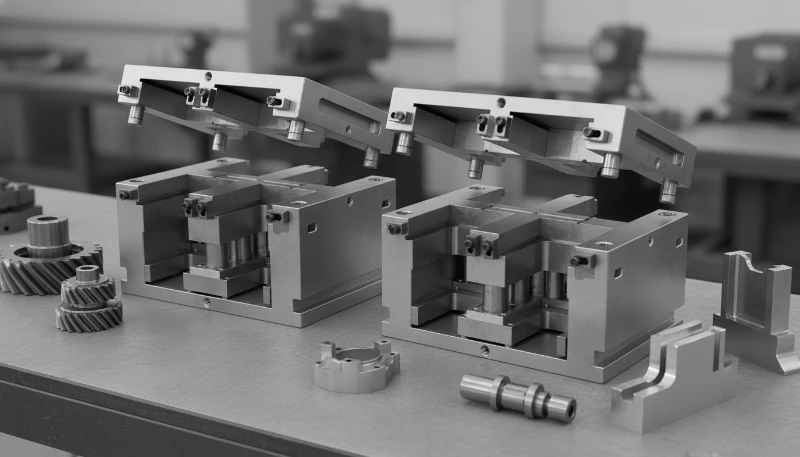
Na fabricação moderna de plásticos, projetar moldes multicavidade é uma das formas mais eficazes de ampliar a produção sem elevar os custos na mesma proporção. Um molde multicavidade contém duas ou mais cavidades idênticas, permitindo que uma máquina de moldagem por injeção produza várias peças em um único ciclo. Essa abordagem é indispensável para setores que exigem milhões de componentes idênticos, como tampas de garrafa, seringas médicas, conectores eletrônicos e presilhas automotivas. Os benefícios são significativos: maior produtividade, menor custo por peça e melhor uniformidade em grandes lotes de produção.
No entanto, esses benefícios vêm acompanhados de maior complexidade de engenharia. Cada cavidade adicional introduz novas variáveis — resistência ao fluxo, distribuição térmica e sincronização da ejeção — que precisam ser controladas com precisão. Este guia aborda todos os aspectos essenciais do projeto de moldes de injeção multicavidade, desde os princípios fundamentais e o balanceamento dos canais1 até estratégias de resfriamento, métodos de validação e análise de custos.
O que é um molde multicavidades e como ele funciona?
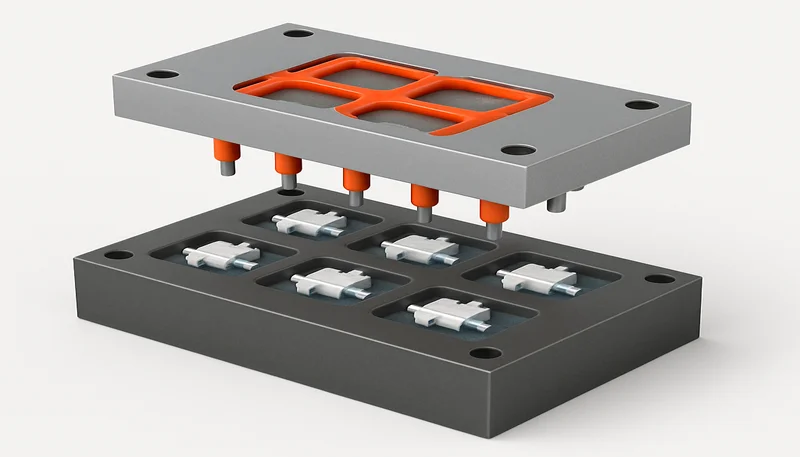
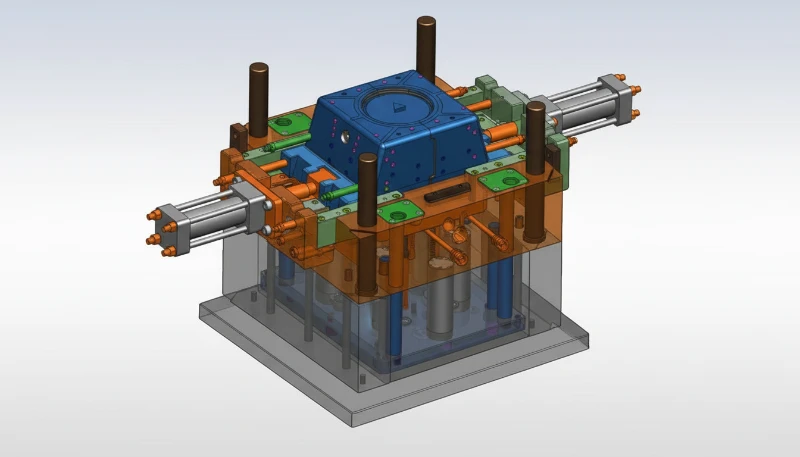
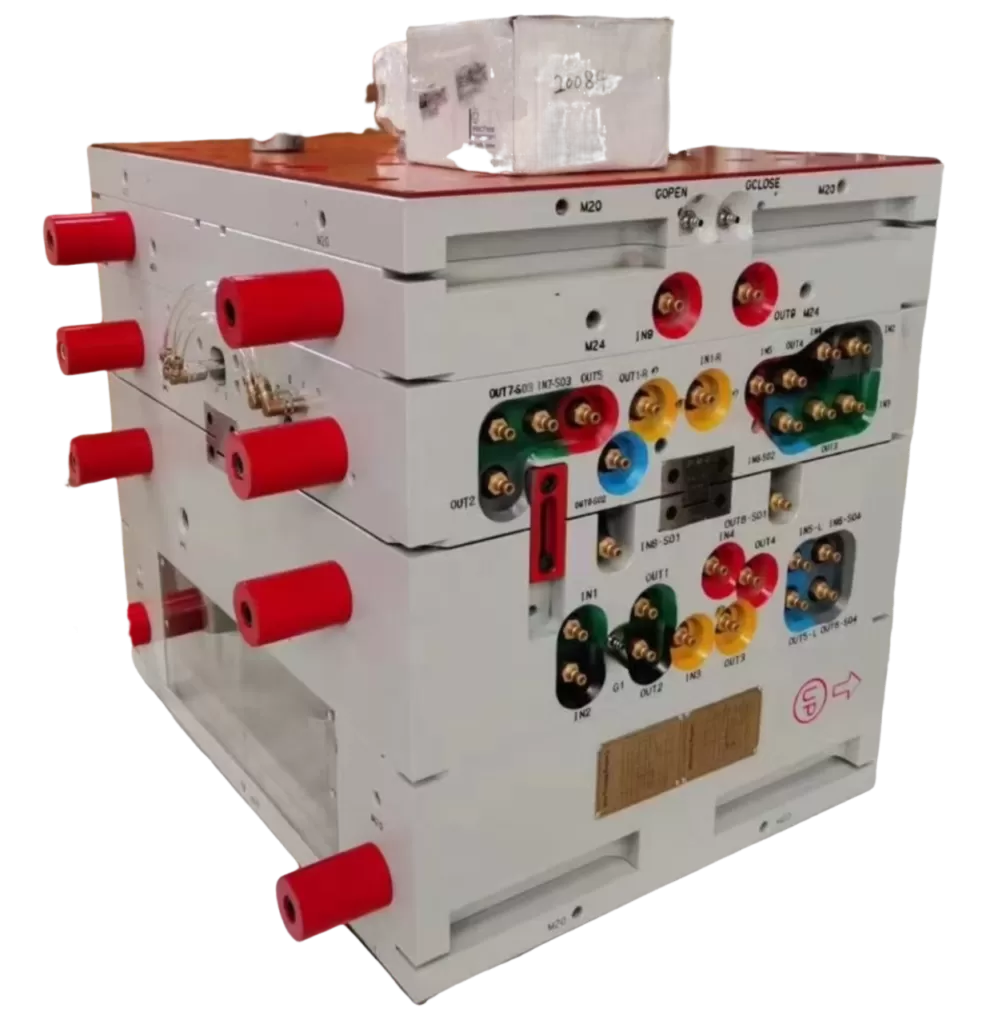
Um molde de múltiplas cavidades é uma ferramenta especializada usada na fabricação de plásticos por injeção que contém várias cavidades idênticas em uma única base. Quando a máquina injeta o polímero fundido no molde, o material percorre um sistema de canais e preenche simultaneamente todas as cavidades, produzindo várias peças acabadas em um só ciclo. O número de cavidades pode variar de apenas duas a mais de sessenta e quatro, conforme o tamanho da peça, a tonelagem da máquina e os requisitos de produção.
O princípio central é simples: em vez de moldar uma peça por ciclo e esperar a injeção seguinte, você molda várias. Isso aumenta drasticamente a produção efetiva. Por exemplo, uma máquina com molde de 16 cavidades e ciclo de 22 segundos pode fabricar mais de 2.500 peças por hora, contra cerca de 160 peças por hora com um molde de cavidade única em um ciclo um pouco menor, de 18 segundos.
Há uma distinção importante entre moldes de múltiplas cavidades e moldes família. No primeiro, todas as cavidades produzem a mesma peça, garantindo características de fluxo e qualidade uniformes. No molde família, cavidades diferentes produzem peças distintas, complicando o balanceamento porque cada uma tem volume e geometria próprios. Para uma produção consistente e de alta qualidade, projetos verdadeiramente multicavidade são muito preferíveis.
A decisão de usar um molde multicavidade deve se basear em uma análise cuidadosa do volume anual de produção, da complexidade da peça e da capacidade disponível da prensa. Quando os volumes de produção justificam o investimento adicional no ferramental, o retorno sobre o investimento costuma ocorrer já no primeiro lote de produção. Se você estiver comparando fornecedores ou planejando uma aquisição, nosso guia de compras de moldagem por injeção aborda detalhadamente a preparação da RFQ, a qualificação de fornecedores e a avaliação de riscos comerciais.
Na nossa fábrica de Xangai, a nossa equipa opera 47 máquinas de moldagem por injeção de 90T a 1850T, o que suporta ferramentas multicavidade desde séries piloto de baixo volume até moldes de produção de alto volume. Essa gama de tonelagem é importante porque o número de cavidades altera o volume de injeção, a necessidade de força de fecho e o risco de validação.
Por que escolher um molde multicavidade para produção em alto volume?
Esta secção trata da escolha de um molde multicavidade para produção de alto volume e do seu impacto no custo, qualidade, tempo ou risco de aprovisionamento. O principal motivador para escolher um molde multicavidade é económico: distribuir o custo fixo do tempo de máquina, energia e mão de obra por muito mais peças por ciclo reduz significativamente o custo por unidade. Embora o investimento inicial em ferramentas seja maior — frequentemente três a cinco vezes o custo de um molde de cavidade única — a poupança por peça torna-se substancial assim que os volumes de produção ultrapassam o limiar de equilíbrio, tipicamente cerca de 500.000 a 1.000.000 de peças.
Além do custo, os moldes multicavidade melhoram a consistência dimensional. Como todas as peças são moldadas com as mesmas configurações de máquina, temperatura e perfil de pressão, a variação entre peças de diferentes cavidades costuma ser menor do que a observada entre peças produzidas em máquinas ou lotes diferentes. Isso é especialmente importante em setores regulamentados, como dispositivos médicos e automotivo, nos quais tolerâncias rigorosas são obrigatórias.
| Fator | Molde de cavidade única | Molde de 8 cavidades | Molde de 16 cavidades |
|---|---|---|---|
| Custo aproximado das ferramentas | $8,000–$15,000 | $25,000–$45,000 | $45,000–$80,000 |
| Tempo de ciclo | 18 segundos | 22 seg | 24 s |
| Peças por hora | ~200 | ~1,300 | ~2,400 |
| Custo por peça (a 1M unidades) | $0.12 | $0.05 | $0.035 |
| Volume de equilíbrio | — | ~400.000 peças | ~600,000 peças |
A tabela acima ilustra uma constatação importante: o tempo de ciclo aumenta apenas ligeiramente à medida que se adicionam cavidades, enquanto a produção cresce quase linearmente. O resultado é uma redução expressiva do custo por peça, acelerando o retorno sobre o investimento de qualquer projeto de alto volume.
Como obter o balanceamento dos canais em moldes de múltiplas cavidades?
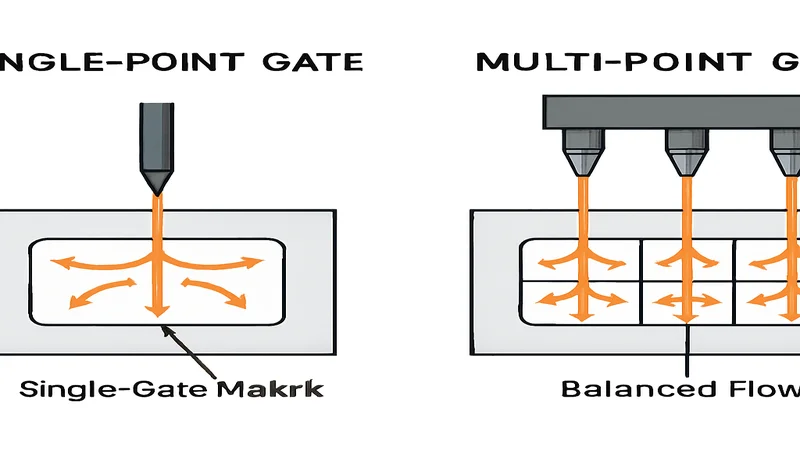
O balanceamento dos canais é, provavelmente, o desafio de engenharia mais importante no projeto de moldes multicavidade. Quando o plástico fundido entra no molde, ele precisa alcançar todas as cavidades ao mesmo tempo, com a mesma pressão e o mesmo perfil de temperatura. Se uma cavidade for preenchida antes das demais, poderão ocorrer sobrecompactação, rebarbas, preenchimento incompleto ou variação dimensional. A mesma lógica se aplica ao projeto de canais e pontos de injeção, no qual pequenas diferenças geométricas podem gerar defeitos recorrentes na produção.
O sistema de canais é a rede que transporta o polímero fundido do bico da máquina através do jito até cada cavidade. Num canal naturalmente equilibrado, todas as cavidades estão à mesma distância do jito, o que significa que o comprimento do percurso e a resistência ao fluxo são idênticos. Isto é conseguido através de disposições simétricas, como configurações radiais (cavidades dispostas em círculo em torno do jito) ou em padrão H.
Quando o equilíbrio natural é impraticável, os engenheiros usam canais artificialmente equilibrados, ajustando diâmetro e comprimento de cada ramo para igualar a resistência. Isto exige simulação precisa com Moldflow ou software semelhante antes do corte do aço.
"Uma disposição de canais de alimentação naturalmente equilibrada garante que todas as cavidades têm um comprimento de percurso de fluxo idêntico a partir do jito."True
Em um sistema naturalmente balanceado, as cavidades são dispostas de modo simétrico — por exemplo, em padrão H — para que a distância e a resistência entre o galho e cada cavidade sejam iguais, promovendo preenchimento simultâneo sem ajustes artificiais.
"Aumentar o diâmetro do canal melhora sempre o equilíbrio do enchimento das cavidades num molde multicavidade."False
Embora canais de distribuição maiores reduzam a queda de pressão, também aumentam o desperdício de material e podem causar excesso de compactação nas cavidades mais próximas do canal de alimentação. O equilíbrio é alcançado através de um dimensionamento preciso, não simplesmente tornando os canais de distribuição maiores.
Os sistemas de canais quentes são fortemente recomendados para moldes multicavidade com oito ou mais cavidades. Um canal quente utiliza colectores aquecidos para manter o polímero fundido no interior do canal, eliminando o desperdício de canal frio que de outra forma teria de ser retriturado ou descartado. Os canais quentes também proporcionam um controlo de temperatura mais consistente em cada entrada, melhorando a uniformidade de enchimento em todas as cavidades.
Que papel desempenha a refrigeração no desempenho de moldes multicavidade?
O resfriamento representa aproximadamente 70% do tempo total do ciclo de moldagem por injeção, sendo o maior fator isolado na determinação da produtividade. Em um molde multicavidade, o desafio do resfriamento é ampliado porque todas as cavidades precisam solidificar na mesma velocidade. Se uma cavidade resfriar mais rápido que outra, as peças terão diferentes níveis de contração, empenamento e precisão dimensional.
Os canais de resfriamento tradicionais, feitos por perfuração, seguem trajetórias retas e não conseguem acompanhar de perto os contornos de geometrias complexas. Isso cria pontos quentes — áreas em que a remoção de calor é mais lenta —, provocando resfriamento irregular e defeitos nas peças. Os canais de resfriamento conformal2, viabilizados pela manufatura aditiva de metais, acompanham exatamente a forma da superfície da cavidade e proporcionam extração uniforme de calor em todo o molde. Estudos demonstram que o resfriamento conformal pode reduzir o tempo de ciclo em 20–40% em comparação com canais convencionais perfurados.
Um projeto de arrefecimento eficaz num molde multicavidade também requer circuitos de arrefecimento paralelos em vez de circuitos em série. Num circuito em série, o refrigerante absorve calor da primeira cavidade e chega à última cavidade a uma temperatura mais elevada, criando um gradiente térmico. Os circuitos paralelos fornecem refrigerante à mesma temperatura de entrada a todas as cavidades, garantindo um desempenho de arrefecimento uniforme em todo o molde.
O software de simulação térmica, como o Moldex3D ou o Autodesk Moldflow, permite aos engenheiros visualizar a distribuição de temperatura no molde e otimizar a colocação dos canais antes da fabricação. A colocação adequada de defletores e borbulhadores dentro de cada cavidade garante que mesmo secções de parede espessa recebam arrefecimento adequado. Para moldes com elevado número de cavidades, investir numa simulação térmica completa durante a fase de projeto pode evitar semanas de resolução de problemas durante a qualificação da produção.
"Os circuitos de refrigeração em paralelo proporcionam uma distribuição de temperatura mais uniforme entre todas as cavidades do que os circuitos em série."True
Os circuitos paralelos fornecem refrigerante à mesma temperatura de entrada a cada cavidade simultaneamente. Nos circuitos em série, o refrigerante aquece progressivamente à medida que passa pelas cavidades sucessivas, criando gradientes térmicos que causam qualidade inconsistente das peças.
"Utilizar um aço de molde mais macio, como P20, é sempre a melhor opção para moldes multicavidade porque reduz o custo inicial da ferramenta."False
Embora o P20 reduza o custo inicial, ele se desgasta mais rápido em alto volume. Para moldes destinados a milhões de ciclos, aços mais duros como H13 ou S136 oferecem melhor valor de longo prazo, mantendo dimensões da cavidade e acabamento por uma vida útil muito maior.
Como afetam os sistemas de ventilação e ejeção a qualidade da peça?
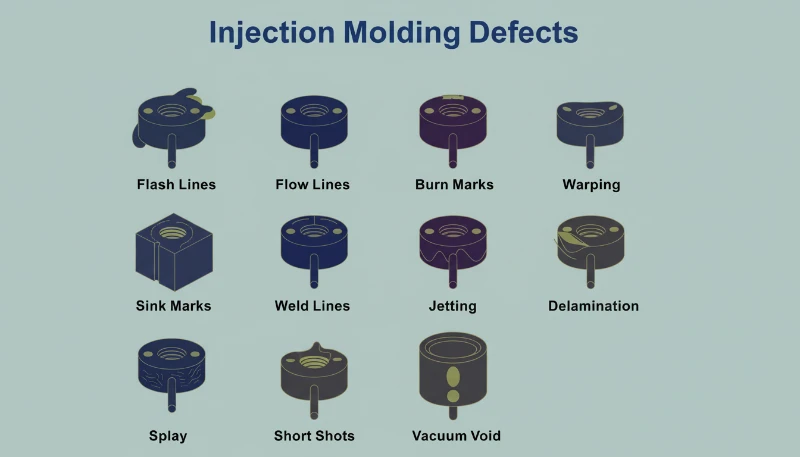
Esta seção trata de como os sistemas de ventilação e ejeção afetam a qualidade das peças e seu impacto no custo, na qualidade, nos prazos ou no risco de fornecimento. Quando o plástico fundido preenche uma cavidade, ele desloca o ar e a umidade ou os gases do próprio polímero. Se esse gás aprisionado não escapar com rapidez suficiente, ele se comprime, aquece e causa queima por efeito diesel — pequenos pontos carbonizados na superfície da peça, conhecidos como marcas de queimadura. Em moldes multicavidade, a ventilação deve ser cuidadosamente projetada em cada cavidade, pois o preenchimento rápido e simultâneo de várias cavidades desloca um grande volume de gás em pouquíssimo tempo. A ventilação deficiente é uma das causas recorrentes de defeitos na moldagem por injeção em moldes com muitas cavidades.
Os respiros são canais finos, normalmente com 0,01–0,02 mm de profundidade, usinados na linha de partição ou nas superfícies dos insertos de cada cavidade. Eles são profundos o suficiente para permitir a saída do gás, mas rasos o suficiente para impedir o vazamento do plástico fundido. Em geometrias complexas, a ventilação adicional pode ser feita por meio de insertos de aço poroso ou pinos de ventilação posicionados em locais específicos identificados por simulação.
A extração é igualmente crítica. Em um molde de cavidade única, um pino extrator central pode bastar. Em um molde com múltiplas cavidades, porém, cada cavidade exige seu próprio conjunto de pinos, e todos devem operar em perfeita sincronia. Qualquer diferença de tempo pode fazer as peças prenderem, deformarem ou caírem de forma irregular. Placas extratoras sincronizadas, anéis extratores ou extratores pneumáticos são usados com frequência para garantir a liberação limpa e simultânea de todas as peças.
Quando utilizar um sistema de canal quente em vez de canal frio?
A escolha entre sistemas de canal quente e canal frio tem impacto significativo no desperdício de material, no tempo de ciclo e na qualidade das peças em moldes multicavidade. Um sistema de canal frio é a opção mais simples e barata: o plástico fundido flui por canais não aquecidos e se solidifica junto com as peças. O canal solidificado deve então ser separado das peças e triturado novamente ou descartado. Para moldes com poucas cavidades (duas a quatro) que processam materiais de uso geral, os canais frios podem ser economicamente vantajosos.
No entanto, à medida que aumenta o número de cavidades, o desperdício do canal frio se torna uma séria preocupação econômica. Em um molde de 16 cavidades, o canal frio pode representar de 20–40% do peso total da injeção, o que significa que uma parcela considerável de cada ciclo é material desperdiçado. Um sistema de canal quente3 elimina esse desperdício ao manter o polímero fundido em canais aquecidos, impedindo a formação de um canal solidificado.
Os canais quentes também proporcionam um controlo superior do ponto de injeção. Os pontos de injeção com válvula podem ser abertos e fechados sequencialmente, permitindo aos engenheiros ajustar com precisão a sequência de enchimento e reduzir a visibilidade das linhas de soldadura. Os pontos de injeção térmicos proporcionam uma separação limpa sem vestígios, melhorando a estética da peça. Para resinas de grau técnico sensíveis à degradação térmica, os canais quentes com zonas controladas individualmente garantem que cada cavidade recebe material à temperatura ideal.
O compromisso é o custo e a complexidade de manutenção. Um sistema de canal quente adiciona $5.000–$20.000 ou mais ao custo do molde e requer manutenção periódica dos aquecedores, termopares e vedações do coletor. Para séries de produção abaixo de 100.000 peças, a poupança de material pode não justificar o investimento adicional. A tabela seguinte resume as principais diferenças:
| Caraterística | Canal frio | Corredor quente |
|---|---|---|
| Custo inicial do ferramental | Mais baixo ($2,000–$5,000) | Superior (7.000–20.000+) |
| Resíduos de materiais | Alto (o canal solidifica) | Mínimo (sem canal de distribuição solidificado) |
| Impacto no tempo de ciclo | Neutro | Ligeiramente mais rápido (sem arrefecimento do canal) |
| Qualidade do Ponto de Injeção | Pode deixar vestígios | Separação limpa e controlada |
| Manutenção | Simples | Exige manutenção de aquecedor/termopar |
| Melhor para | Baixo número de cavidades, séries curtas | Muitas cavidades, produções longas |
Que materiais e revestimentos maximizam a longevidade do molde?
A escolha do aço do molde afeta diretamente a vida útil da ferramenta, o acabamento superficial da peça e a frequência de manutenção. Para moldes multicavidade que operam por milhões de ciclos, a seleção do material não é uma área em que se deva economizar. Os aços mais utilizados em moldes de alta produção incluem P20 (pré-endurecido a 30–36 HRC para volume moderado), H13 (aço para trabalho a quente, endurecido a 44–52 HRC, para aplicações de alto volume e alta temperatura) e S136 (aço inoxidável com excelente capacidade de polimento para peças ópticas e médicas).
Revestimentos superficiais prolongam ainda mais a vida do ferramental ao reduzir atrito, evitar corrosão e melhorar a liberação do polímero. Carbono tipo diamante (DLC) oferece dureza excepcional e baixo atrito, reduzindo desgaste em superfícies de alto contato, como núcleos e carros. Nitreto de titânio (TiN) e nitreto de cromo (CrN) oferecem boa resistência à corrosão e são amplamente usados em moldes para polímeros reforçados com vidro ou corrosivos.
A manutenção regular é essencial para preservar o desempenho do molde ao longo do tempo. Os canais de arrefecimento devem ser lavados e descalcificados periodicamente para manter a eficiência da transferência de calor. Os pinos ejetores e os casquilhos-guia devem ser inspecionados quanto a desgaste e substituídos antes de começarem a riscar as superfícies do molde. Um molde multicavidade bem mantido pode produzir de forma fiável 5–10 milhões de peças ou mais durante a sua vida útil.
Como validar e equilibrar um molde multicavidade antes da produção?
A validação é a ponte crítica entre o projeto do molde e a prontidão para produção. Até o molde mais cuidadosamente projetado pode apresentar comportamento inesperado em condições reais de processamento. Um processo estruturado de validação identifica e corrige problemas antes da fabricação em escala, economizando tempo e evitando refugo caro.
A primeira etapa de validação é a análise de injeção incompleta. Ao injetar intencionalmente menos que o volume total da injeção, os engenheiros podem observar o padrão de preenchimento de cada cavidade. Em um molde perfeitamente balanceado, todas as cavidades devem apresentar o mesmo grau de preenchimento parcial. Qualquer diferença indica um desequilíbrio de fluxo que precisa ser corrigido por ajustes nos canais ou alterações no tamanho dos pontos de injeção.
A monitorização da pressão da cavidade fornece dados quantitativos sobre a uniformidade do enchimento. Sensores de pressão instalados em cada cavidade registam o perfil de enchimento em tempo real, permitindo que os engenheiros comparem pressões de pico, tempos de enchimento e comportamento de embalagem entre cavidades. Estes dados são inestimáveis para afinar parâmetros do processo e verificar que cada cavidade produz peças dentro da especificação.
Por fim, os estudos de capacidade dimensional (Cp/Cpk) confirmam que as peças de todas as cavidades cumprem as tolerâncias exigidas. Normalmente, exige-se um Cpk mínimo de 1.33 para a aprovação da produção, indicando que o processo é capaz de produzir peças com ampla margem dentro dos limites de especificação. As peças de cada cavidade são medidas com máquinas de medição por coordenadas (CMMs) ou sistemas de inspeção ótica, e os dados são analisados para identificar eventuais desvios específicos de cada cavidade que exijam correção.
Com mais de 20 anos de experiência em moldação por injeção e ferramentaria, os nossos engenheiros validam moldes multi-cavidade com estudos de insuficiência de material, verificações de equilíbrio de cavidades, amostragem dimensional e testes de janela de processo antes da aprovação da produção. Máquinas de 90T a 1850T dão à nossa equipa margem para adequar o molde à prensa correta, em vez de forçar um molde de alta cavidade para uma capacidade de fecho marginal.
Que Perguntas os Compradores Fazem Sobre o Projeto de Moldes Multicavidade?
Perguntas mais frequentes
Qual é o Número Ideal de Cavidades para um Molde Multicavidade?
Não existe um número ideal universal de cavidades. O número certo depende do tamanho da peça, do volume anual projetado, do comportamento do fluxo do material, da tonelagem da prensa disponível e do risco de tolerância da peça. Para muitos programas de produção, 4 a 32 cavidades é o intervalo prático. Pequenas tampas, selos e conectores podem ter números mais elevados porque o tamanho da injeção e a força de fecho permanecem geríveis. Peças maiores normalmente necessitam de menos cavidades. O método seguro é comparar o custo da ferramenta, o tempo de ciclo, o risco de desperdício e a previsão de procura antes de fixar o número de cavidades.
Quanto Custa Mais um Molde Multicavidade em Comparação com um Molde de Cavidade Única?
Um molde multicavidade custa mais do que um molde de cavidade única porque a ferramenta necessita de mais cavidades, entradas, canais, circuitos de arrefecimento, componentes de ejeção e trabalho de validação. Um molde de 8 cavidades pode custar três a quatro vezes mais do que uma ferramenta de cavidade única, enquanto um molde de 16 cavidades pode custar cinco a sete vezes mais. Isso não o torna automaticamente caro por peça. Se a procura anual for elevada, o custo extra da ferramenta é distribuído por mais peças, reduzindo frequentemente o custo unitário em 50 a 70 por cento.
Pode um Molde Multi-Cavidade Produzir Peças Diferentes Simultaneamente?
Sim, um molde pode produzir peças diferentes ao mesmo tempo, mas isso geralmente é chamado de molde de família, não de um verdadeiro molde multi-cavidade. Os moldes de família são úteis quando várias peças de baixo volume são consumidas juntas numa montagem. O risco é o desequilíbrio do fluxo porque cada peça tem volume, espessura de parede e exigência de pressão diferentes. Uma cavidade pode sobre-encher enquanto outra tem insuficiência de material. Para produção de alto volume onde a consistência dimensional é importante, moldes multi-cavidade dedicados com cavidades idênticas são geralmente mais seguros e mais fáceis de validar.
Por Que o Equilíbrio do Canal é Tão Importante em Moldes Multicavidade?
O equilíbrio dos canais é crítico, pois todas as cavidades têm de encher quase ao mesmo tempo, à mesma pressão e temperatura. Se as cavidades junto ao jito encherem primeiro, podem ficar sobrecompactadas e formar rebarbas. As cavidades mais afastadas podem apresentar enchimento incompleto ou linhas de soldadura fracas. O resultado são dimensões inconsistentes e mais refugos. Uma configuração equilibrada dos canais utiliza comprimentos de fluxo iguais, diâmetros de canal controlados e dados de simulação para manter uma resistência semelhante entre cavidades. Em moldes com muitas cavidades, este trabalho deve ser concluído antes da maquinação do aço, não corrigido durante o ensaio.
Quanto tempo demora a fabricar um molde multicavidade?
O prazo de entrega de um molde multicavidade varia normalmente entre 6 e 16 semanas. Um molde simples de canal frio com 4 cavidades pode ficar concluído em 6 a 8 semanas se a peça for simples e o comportamento do material for conhecido. Um molde com 32 cavidades, canais quentes, corrediças, tolerâncias apertadas ou arrefecimento conformal pode demorar 12 a 16 semanas. Os maiores riscos para o calendário são alterações tardias ao projeto, graus de resina não confirmados, aprovação DFM atrasada e correções T1 repetidas. Uma revisão antecipada da viabilidade de fabrico reduz esses atrasos e protege a data de lançamento.
Que manutenção exige um molde multicavidade?
Um molde multicavidade requer manutenção preventiva programada, pois pequenas diferenças de desgaste entre cavidades transformam-se, com o tempo, em variações de qualidade. A manutenção normal inclui a limpeza das superfícies das cavidades, a lavagem dos canais de arrefecimento, a verificação dos respiros, a lubrificação das corrediças, a inspeção dos pinos extratores e o teste dos aquecedores ou termopares do sistema de canais quentes. Muitas fábricas efetuam a manutenção dos moldes de produção a cada 100,000 a 200,000 ciclos, com intervalos mais curtos para materiais abrasivos ou corrosivos. É essencial acompanhar o número de ciclos por ferramenta e registar os problemas específicos de cada cavidade, para que uma cavidade deficiente não prejudique silenciosamente a qualidade da produção.
Como escolher o parceiro de moldação por injeção certo para moldes multicavidade?
Escolha um parceiro verificando se já trabalhou com números de cavidades, materiais, tolerâncias e requisitos de validação semelhantes. Peça exemplos de moldes multicavidade, o intervalo de tonelagem das máquinas, a capacidade interna de projeto de moldes e o método de validação utilizado para o equilíbrio das cavidades. Um fornecedor fiável deve explicar os estudos de enchimento incompleto, a amostragem dimensional por cavidade, os objetivos de Cpk, as verificações de arrefecimento e o planeamento da manutenção. Não avalie apenas o preço indicado para o molde. Um molde mais barato que não consiga manter o equilíbrio entre cavidades custará mais em desperdício e tempo de paragem.
Que ferramentas de simulação são utilizadas no projeto de moldes multicavidade?
As ferramentas de simulação mais comuns para o projeto de moldes multicavidade incluem Autodesk Moldflow, Moldex3D e SolidWorks Plastics. Estes programas modelam a pressão de enchimento, o equilíbrio dos canais, a posição das linhas de soldadura, a eficiência do arrefecimento, a contração e o empeno antes de o molde ser maquinado. A simulação não substitui o ensaio do molde, mas evita erros óbvios, como canais desequilibrados, posicionamento deficiente dos pontos de injeção e pontos quentes em torno de secções espessas. No caso de moldes com muitas cavidades, a simulação deve ser analisada em conjunto com a disposição do molde, o projeto do circuito de arrefecimento e a capacidade prevista da máquina antes de encomendar o aço.
Como Pode Otimizar a Produção com Moldes Multicavidade?
O projeto de moldes multicavidade é um investimento estratégico que gera retorno através de maior produção, custos unitários inferiores e melhor consistência. Quer necessite de um molde de 4 cavidades para produção de volume médio ou de um molde de 32 cavidades para fabrico em grande volume, os princípios de engenharia abordados neste guia — equilíbrio dos canais, otimização do arrefecimento, projeto da ventilação e validação rigorosa — constituem a base do sucesso.
A ZetarMold reúne mais de 20 anos de experiência em projeto e fabricação de moldes, com o apoio de 47 máquinas de moldagem por injeção de 90T a 1850T. Do conceito à validação da produção, cada projeto de molde de injeção é desenvolvido para garantir confiabilidade, equilíbrio das cavidades e eficiência produtiva.
Solicite hoje mesmo um orçamento gratuito e uma análise DFM para seu projeto de molde multicavidade. Entre em contato com a equipe de engenharia da ZetarMold para discutir suas necessidades e descobrir como um projeto de molde otimizado pode transformar a economia da sua produção.
Balanceamento dos canais: refere-se ao processo de ajustar as dimensões dos canais para que todas as cavidades de um molde multicavidade sejam preenchidas ao mesmo tempo e com a mesma pressão, conforme definido pelos padrões de simulação de fluxo. ↩
Resfriamento conformal: refere-se a canais de resfriamento fabricados para acompanhar os contornos da cavidade do molde, geralmente por manufatura aditiva de metais, proporcionando uma extração de calor mais uniforme do que os canais retos perfurados. ↩
Sistema de canal quente: refere-se a um coletor com temperatura controlada que mantém o plástico fundido dentro do canal, eliminando o desperdício dos canais e melhorando a uniformidade do preenchimento entre as cavidades. ↩