Wat zijn spuitgegoten ribben en bossen?
Spuitgegoten ribben en boss1en zijn de belangrijkste categorieën of opties die in dit gedeelte worden toegelicht. Om doeltreffende kunststofonderdelen te ontwerpen, moeten ingenieurs onderscheid maken tussen structurele versterking en assemblagekenmerken. Ribben, bussen, schetsplaten en wandovergangen lijken in CAD misschien klein, maar bepalen de stijfheid, het risico op inval, de schroefsterkte, de koelbalans en de toegang tot de matrijs. Als u leveranciers vergelijkt, gebruik deze controles dan samen met onze inkoopgids voor leveranciers van spuitgieten vóór goedkeuring van de matrijzenbouw. Deze DFM2 stap helpt late matrijswijzigingen voorkomen.
- Ribben vergroten de stijfheid zonder bulk toe te voegen; steunen maken schroeven, inserts en uitlijning mogelijk.
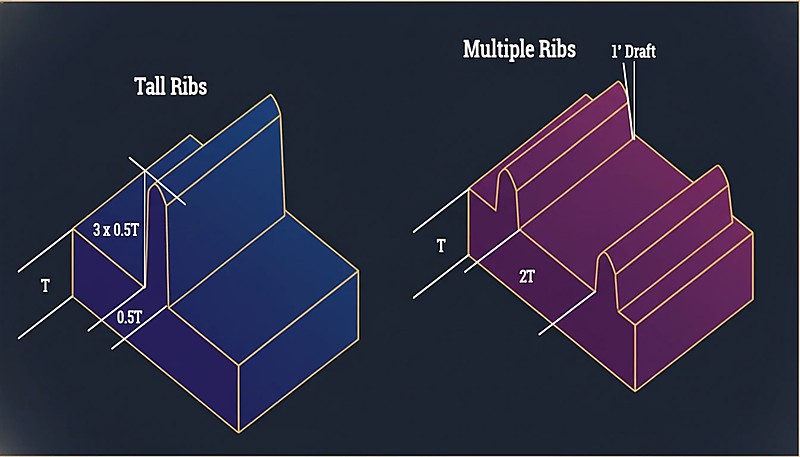
- Beide kenmerken moeten binnen 40–60% van de nominale wanddikte blijven om zinkmarkeringen, holtes en vervorming te vermijden.
- Losstaande steunen hebben ribversterkingen (steunribben) nodig om torsiebelastingen te verdelen over de omliggende wand.
- Een grondige DFM-beoordeling van de geometrie van ribben en steunen vóór het snijden van gereedschap voorkomt kostbare aanpassingen aan de mal.
Ribs zijn dunne, wandachtige uitsteeksels die vanaf de nominale wand uitsteken. Hun hoofdfunctie is de stijfheid van het onderdeel te verhogen zonder de volledige wand dikker te maken. Ze zijn nuttig achter vlakke panelen, afdekkingen, behuizingen en dragende zones waar het onderdeel meer stijfheid nodig heeft. Een goed ribontwerp beheerst rib thickness3, hoogte, lossingshoek, wortelradius en afstand, zodat het kenmerk sterkte toevoegt zonder inval op het tegenoverliggende oppervlak. Gebruik voor bredere ontwerpcontext onze injection mold design handleiding.
Bosses zijn cilindrische, meestal holle uitsteeksels voor schroeven, inzetstukken, positioneerpennen of montagefuncties. Een boss moet voldoende wand rond schroef of insert hebben zonder dikke materiaalophoping aan de basis. Goed ontwerp gebruikt vaak ribben of schoren om belasting naar naburige wanden over te brengen. Dit voorkomt scheuren bij schroefmontage en vermindert vervorming rond zichtvlakken. Deze details beïnvloeden ook de bredere injection molding proces.
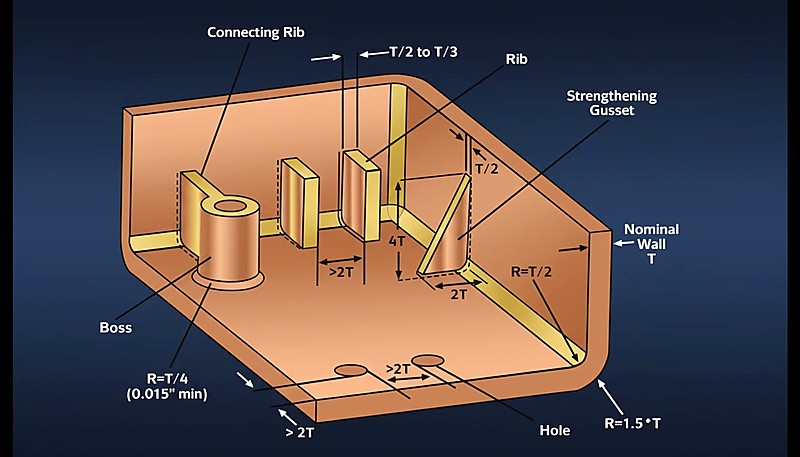
"Bosses die niet met de zijwand zijn verbonden, moeten aan de basis altijd worden ondersteund door hoekribben (steunribben)."True
Vrijstaande bossen kunnen onder torsie buigen of breken; verstevigingsribben verdelen de belasting over de bodem van het onderdeel en verbeteren de materiaalstroming.
"Het is aanvaardbaar een boss met dezelfde wanddikte als de hoofdbehuizing te ontwerpen om maximale schroefretentie te waarborgen."False
Als de wanden van een boss gelijk worden gemaakt aan de nominale wand, ontstaat aan de basis een zeer dikke sectie die gegarandeerd invalplekken en holtes veroorzaakt. Bosswanden moeten ongeveer 60% van de nominale wand bedragen.
Hoe Verhouden Ribben en Steunen zich in Belangrijke Ontwerpparameters?
Hoewel hun functies verschillen, zijn de geometrische regels voor beide afgeleid van uniforme wanddikte, stabiele koeling en voorspelbare vulling. Ribben en nokken moeten samen worden beoordeeld omdat een nok vaak rib-ondersteuning nodig heeft, en een rib de lokale stroming, koeling en uitstootgedrag nabij de nokbasis kan veranderen.
| Kenmerkparameter | Ontwerpregels voor ribben | Ontwerpregels voor bossen |
|---|---|---|
| Primaire functie | Structurele stijfheid, beheersing van kromtrekken | Mechanische montage, uitlijning |
| Geometrie | Lineair en plaatachtig | Cilindrisch (buisvormig) |
| Dikte basis | 40% – 60% van de nominale wanddikte (t) | 60% van de nominale wand (t) |
| Hoogtebeperking | ≤ 3 × nominale wand (t) | ≤ 2,5 × buitendiameter (gebruikelijk) |
| Trekhoek | 0.5° – 1.5° per zijde | 0,5° buitenzijde; 0,25° binnenzijde (om schroeven vast te grijpen) |
| Afstand | ≥ 2 × nominale wanddikte (t) tussen ribben | ≥ 2 × nominale wanddikte (t) vanaf de zijwanden |
| Veelvoorkomend defect | Inval (oppervlakteverdieping) | Lasmiddellijnen 2 (structurele zwakte) |
Wat zijn de voor- en nadelen?
Rib-voordelen zijn stijfheid, materiaalefficiëntie en snellere koeling, terwijl nok-voordelen bevestiging, positionering en insert-ondersteuning zijn. Het nadeel is dat beide kenmerken lokale dikteveranderingen veroorzaken, dus slechte geometrie kan zinkmarkeringen, ingesloten gas, scheuren of langere koeling veroorzaken. Beoordeel de twee kenmerken samen, omdat een nok mogelijk rib-ondersteuning nodig heeft en een rib het cosmetische oppervlak of het lokale stroompad kan beïnvloeden.
Ribben: structurele versterking
| Voordelen van ribben | Nadelen van de Rib |
|---|---|
| Materiaalefficiëntie: Verhoogt de sterkte van het onderdeel aanzienlijk met minimaal kunststofgebruik in vergelijking met dikke wanden. | Cosmetisch Risico: De kruising van de rib en de wand is een belangrijke locatie voor zinkmarkeringen op Klasse-A oppervlakken. |
| Cyclussnelheid: Dunne ribben koelen snel af, waardoor de cyclustijden laag blijven. | Ontluchten: Diepe ribben kunnen gas vasthouden (dieseleffect), wat tot verbrandingen leidt als ze niet goed worden ontlucht. |
| Stroomleiding: Kan fungeren als stroomkanalen om dunne secties van de matrijs te helpen vullen. | Uitwerpproblemen: Lage toog op ribben leidt tot vastzittende onderdelen in de mal of sleepsporen. |
Nokken: assemblage-interface
| Nokvoordelen | Nadelen van de Pen |
|---|---|
| Maakt schroefbevestiging, perspassende inserts en uitlijning mogelijk zonder secundaire bewerkingen. | Dikke basisgedeelten kunnen zichtbare zinkmarkeringen veroorzaken op cosmetische oppervlakken. |
| Integreert direct in de matrijs, dus geen nabewerking is nodig voor montagegaten. | Onjuiste ID of wanddikte leidt tot kraken van de pen tijdens schroefmontage. |
| Kan worden gecombineerd met steunbeugels en ribben om bevestigingsbelastingen te spreiden over de omringende structuur. | Vereist zorgvuldig ontwerp van toog, afrondingen en uitsparingen om schoon uit te werpen en vastkleven te vermijden. |
"Een boss met een dunne rib aan een zijwand verbinden voorkomt dikke materiaalsecties en behoudt de stabiliteit."True
Deze techniek verbindt de boss met de structuur voor sterkte zonder een zware doorsnede te creëren die inval zou veroorzaken.
"Blinde bussen (bussen die niet door het onderdeel lopen) vereisen geen lossingshoek op de binnendiameter."False
Alle verticale stalen oppervlakken bij spuitgieten vereisen een lossingshoek voor het uitwerpen. Een kernpen zonder lossingshoek creëert vacuüm en wrijving, waardoor de pen tijdens het uitwerpen vastloopt of breekt.
Wanneer moet u elk kenmerk toepassen?
Ribben zijn het beste voor stijfheid zonder dikke wanden, terwijl nokken het beste zijn voor schroeven, inserts, pennen en uitlijning. Gebruik ribben wanneer het onderdeel buigweerstand, vlakheid of belastingsverdeling nodig heeft. Gebruik nokken wanneer de productarchitectuur een bevestigingspunt of referentiepunt nodig heeft. Wanneer beide functies overlappen, verbind nokken met dunne steunen in plaats van massief plastic rond de basis toe te voegen.
Toepassingsscenario’s voor ribben
Large flat surfaces: Gebruik ribben om olievatvorming op autodeurpanelen, apparaatbehuizingen en dunne afdekkingen te voorkomen. Houd de ribvoeten onder controle zodat het zichtoppervlak geen inval, doortekening of stromingsvertraging vertoont. Dit is belangrijk wanneer het buitenoppervlak getextureerd, gelakt of zichtbaar voor de klant is.
Load-bearing floors: Voeg ribben toe onder trays, containers, beugels of pallets waar het onderdeel buiging moet weerstaan. De ribrichting moet het belastingpad volgen en niet alleen lege ruimte in het CAD-model vullen. Ontwerpers moeten controleren of ribhoogte en -afstand nog steeds stabiel vullen en lossen uit de matrijs mogelijk maken.
Botszones: Plaats ribben achter bumperafdekkingen, beschermhoezen en gereedschapsbehuizingen om botsenergie te verdelen. Vermijd geïsoleerde dikke kruisingen, omdat die spanningsconcentraties en vormdefecten kunnen veroorzaken. Bij slagbelaste onderdelen moeten de continuïteit en radius van de ribben samen met de taaiheid van het materiaal worden beoordeeld.
Warpage correction: Gebruik gebalanceerde ribpatronen om stijfheid en koelkrimp gelijk te maken. Kruisribben kunnen helpen, maar het ontwerp heeft nog steeds lossingshoeken, radii en afstanden nodig die stabiele vulling en uitwerping mogelijk maken. Ongebalanceerde ribben kunnen een vlak oppervlak juist verslechteren.
Toepassingsscenario’s voor bevestigingsbussen
PCB mounting: Bosses bevestigen printplaten in elektronicabehuizingen met zelftappende schroeven of inzetstukken. Hoogte, voorboorgat en steunribben moeten passen bij schroefbelasting, montagemoment en levensduur, zodat de printplaat na herhaald gebruik stabiel blijft.
Enclosure assembly: Bosses helpen de boven- en onderhelft van clamshellbehuizingen zoals controllers, laders en afstandsbedieningen te verbinden. Een goede indeling houdt de schroefkracht weg van dunne zichtwanden en laat voldoende ruimte voor kernpennen, uitwerpers en koeling.
Installatie van inzetstukken: Bussen kunnen messing schroefdraadinsertstukken bevatten voor producten die herhaaldelijk worden gedemonteerd, zoals batterijcompartimenten of serviceluiken. De bus heeft voldoende materiaal nodig voor warm inpersen of ultrasoon plaatsen, maar een te grote dikte kan nog steeds inval en lange koeltijden veroorzaken.
Uitlijning: Bussen of pennen zonder schroefdraad helpen passende onderdelen vóór bevestiging uit te lijnen. Dit vermindert wrijving tijdens assemblage en voorkomt dat schroeven als uitlijnhulpmiddel worden gebruikt, waardoor kunststof kan barsten. Speling, lossingshoek en tolerantie-opbouw moeten met het passende onderdeel worden gecontroleerd.
In onze fabriek in Shanghai gebruiken onze ingenieurs met 20+ jaar ervaring 47 spuitgietmachines (90T-1850T) om ribdikteverhoudingen, ondersteuningsconstructies van bussen en het risico op inval te beoordelen voordat het matrijsstaal wordt bewerkt. We raden aan elke correctie aan ribben en bussen in het DFM-rapport vast te leggen, zodat inkopers niet alleen prijzen maar ook geometrische risico's kunnen vergelijken.
Hoe integreert u ribben en bevestigingsnokken stap voor stap?
De integratie van ribben en bossen is een gefaseerde DFM-workflow. Lokaliseer eerst elke schroef, elk inzetstuk en elke uitlijnboss; dimensioneer vervolgens elke boss op basis van bevestigingsgegevens, plaats ribben in de buigrichting, verbind niet-ondersteunde bossen met verstevigingsribben aan wanden en controleer ten slotte de snijpunten op risico’s van inval, lossing, ontluchting, uitwerping en gereedschapstoegang voordat het staal wordt bewerkt.
Bepaal eerst de montagepunten. Bepaal waar schroeven, inserts, PCB-afstandhouders of positioneerpennen nodig zijn. Plaats bosses op die coördinaten en controleer de afstand tot hoek, afsluiting, uitwerper of zichtwand die koeling of gereedschapstoegang kan beperken. Markeer zwaar belaste locaties vóór ribben worden toegevoegd.
Dimensioneer de bosses. Bepaal de binnendiameter op basis van de gegevens van de leverancier van het bevestigingsmiddel of inzetstuk en dimensioneer vervolgens de buitendiameter en wand van de bus om barsten en inval te voorkomen. Controleer inschroefdiepte, tolerantie van het voorboorgat, lossingshoek en of de bus aan de basis moet worden uitgekernd. Bevestig vóór T1 het schroefmomentbereik.
"Kruisingen van ribben en bussen vereisen vóór gereedschapsbouw een DFM-beoordeling."True
Het gebied met het hoogste risico bevindt zich vaak waar de voet van een boss, de wortel van een rib, een zichtwand en de schroefbelasting samenkomen. Controle van dit snijpunt vóór het verspanen van het staal vermindert inval, scheurvorming en nabewerking.
"Een dikkere rib verbetert een kunststof onderdeel altijd."False
Een dikkere rib kan meer inval, een ongelijkmatige koeling en kromtrekken veroorzaken. Meerdere middelzware ribben met de juiste lossingshoek en tussenruimte zijn doorgaans veiliger dan één zware rib.
Bepaal daarna de structurele behoeften. Analyseer waar het onderdeel buigt of belasting draagt. Plaats ribben loodrecht op de buigrichting en houd de ribworteldikte binnen het veilige materiaalbereik. Gebruik bij hoog cosmetisch risico meerdere middelgrote ribben in plaats van één dikke. Controleer tegelijk vloeilengte en aanspuitlocatie.
Integreer en ondersteun met verstevigingsribben. Een vrijstaande bossage is zwak. Verbind deze met de dichtstbijzijnde wand of bodem met dunne schoren of ribben. Vul de volledige tussenruimte niet met massieve kunststof, omdat dit dikke gedeelten, langzame koeling en zichtbare inval aan het tegenoverliggende oppervlak veroorzaakt. Gebruik ribondersteuning alleen waar deze de belastingsoverdracht verbetert.
Beheer kruisingen en toegang tot de matrijs. Waar ribben aansluiten op bussen of wanden, brengt u radii aan van minimaal 0.25 maal de wanddikte, voor zover materiaal- en gereedschapsontwerp dit toelaten. Controleer lossingshoek, ontluchting, toegang voor polijsten, uitwerprichting en of schuine uitwerpers of sledes nodig zijn. Vraag vóór het verspanen van de matrijs een offerte van ZetarMold aan als u DFM-feedback nodig hebt over rib- en busgeometrie.
Welke vragen stellen inkopers over het ontwerp van ribben en bossages?
bevestigingsnok: Een bossage is een verhoogd element dat in spuitgietdelen vaak wordt gebruikt voor schroeven, inzetstukken, bevestiging of positionering. ↩
DFM: DFM verwijst naar een beoordeling waarmee vóór de investering in matrijsgereedschap wordt gecontroleerd of een kunststofonderdeel betrouwbaar kan worden gegoten. ↩
ribdikte: ribdikte wordt doorgaans beperkt tot een percentage van de nominale wanddikte om inval en ongelijkmatige koeling te verminderen. ↩
Veelgestelde vragen
Wat is het verschil tussen ribben en verstevigingsnokken in kunststofontwerp?
Ribben verstevigen kunststof wanden, deksels en bodems zonder de hele wand dikker te maken. Bosses ondersteunen schroeven, draadinzetstukken, positioneerpennen of assemblagefuncties. Ribben lossen vooral stijfheidsproblemen op; bosses vooral bevestigings- en uitlijnproblemen. Beide vereisen wanddiktebeheersing omdat dikke ribwortels of bossvoeten inval, holten, kromtrekken en lange koelcycli kunnen veroorzaken. Een goede ontwerpbeoordeling controleert hun onderlinge werking in plaats van elk kenmerk afzonderlijk.
Moeten ribben of verstevigingen eerst worden ontworpen?
Bosses worden vaak eerst geplaatst wanneer schroeflocaties, inserts, PCB-steunen of assemblagebeperkingen vastliggen. Daarna ondersteunen ribben de bosses, verbinden ze belastingspaden en verstijven ze oppervlakken. Bij hoofdzakelijk structurele delen kan het ribontwerp eerder beginnen. De veiligste volgorde is: assemblagebelastingen bepalen, bosses plaatsen, ribondersteuning toevoegen en vervolgens dikte, lossingshoek, radius en matrijstoegang beoordelen. Dit beperkt herwerk zodra de gereedschapsingenieur het staalontwerp en de koeltoegang uitwerkt.
Hoe dik moeten ribben zijn in vergelijking met de hoofdwand?
Een praktisch uitgangspunt is om de ribdikte bij veel spuitgegoten kunststoffen rond 50% tot 60% van de nominale wanddikte te houden. Dikkere ribben kunnen inzinkingen veroorzaken, omdat de ribvoet langzamer afkoelt dan de omringende wand. De definitieve waarde hangt af van de krimp van de hars, de oppervlakte-eisen, de toestand van het gereedschapsstaal en de stromingslengte; DFM moet de verhouding daarom bevestigen voor het gekozen materiaal. Als het buitenoppervlak cosmetisch is, is een conservatieve ribdimensionering doorgaans veiliger voor de productie en latere kwaliteitsgoedkeuring.
Waarom breken bazen tijdens schroefmontage?
Bosses scheuren vaak wanneer de binnendiameter te klein is, de buitendiameter te dun is, de schroef te veel hoepelspanning veroorzaakt of de boss onvoldoende wordt ondersteund door ribben of versterkingsplaten. Brosse materialen, scherpe binnenhoeken en een onjuiste installatietemperatuur van inzetstukken kunnen het probleem verergeren. Een beter ontwerp gebruikt het juiste voorboorgat, voldoende wand rondom de schroef, afgeronde overgangen, een passende lossingshoek en steunribben die de belasting verdelen. Een proefmontage moet vóór goedkeuring het koppel, de uittreksterkte en de herhaalbaarheid bevestigen.
Hoe moeten kopers de rib- en baasontwerpen met leveranciers beoordelen?
Inkopers moeten de leverancier vóór het verspanen van het gereedschap vragen om ribdikte, busdiameter, schroefingrijping, inzetmethode, risico op inval, lossingshoek, textuur, uitwerpmarkeringen en toegang tot het matrijsstaal te beoordelen. Zij moeten montagebelastingen, schroeftype, materiaalkwaliteit, tolerantie-eisen en prioriteiten voor cosmetische oppervlakken aanleveren. Een bekwame leverancier moet DFM-opmerkingen terugsturen waarin wordt uitgelegd welke ribben of bussen moeten worden aangepast, niet alleen een prijsopgave. Hierdoor kunnen de capaciteiten van leveranciers gemakkelijker worden vergeleken voordat de bestelling wordt geplaatst en voordat kosten voor staal worden gemaakt.
Wat is coring out en waarom is het belangrijk voor bazen?
Uithollen betekent onnodig materiaal uit de basis van een bossage of dik deel verwijderen om het te koelen kunststofvolume te verminderen. Dit voorkomt inval op het tegenoverliggende zichtvlak en verkort de cyclus. Een uitgeholde bossage moet voldoende wanddikte houden voor schroefgrip of inzetstukborging; de kerndiameter wordt daarom berekend uit bevestigermaat en materiaalsterkte. De DFM-beoordeling moet uittrek- en koppeleisen plus het vermijden van inval verifiëren.