Ribdesign is niet alleen een geometrieregel in spuitgieten; het is een materiaalgedragprobleem. ABS, PC, PP, nylon, POM en glasgevulde harsen verkleinen, koelen en weerstaan stress verschillend, dus dezelfde rib die werkt in één polymer kan zinkmarkeringen, vervorming of ejectieschade veroorzaken in een andere. Dat is waarom ribdikte, hoogte, wortelradius, ontwerp en gatepositie moeten worden gecontroleerd tegen de harsfamilie voordat mallenstaal wordt gesneden, gesamplet, getest en goed gevalideerd.
Voor kopers en ingenieurs is het praktische doel simpel: ribben gebruiken om stijfheid toe te voegen zonder een dikke massa op de wandverbinding te creëren. In onze DFM-reviews voor mallen identificeren we eerst of de hars amorfe, semi-kristallijn, elastomerisch of gevuld is, en passen dan de rib-wandratio en koelstrategie aan op basis van dat gedrag. Dit artikel legt uit hoe materiaal eigenschappen ribdesign beslissingen veranderen en hoe de meest voorkomende gereedschaps- en vormgebreken te voorkomen.
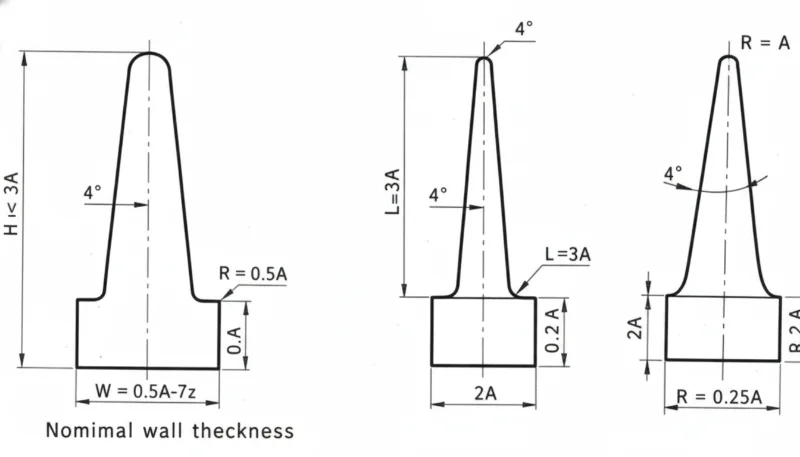
- De ribdikte moet, afhankelijk van het polymeertype, 40-75% van de nominale wanddikte bedragen
- Semikristallijne materialen vereisen dunnere ribben door hun hogere krimp
- Glasgevulde polymeren maken dikkere ribben mogelijk, maar veroorzaken uitdagingen door anisotrope krimp
- De ernst van inval hangt af van de massa op de kruising en het koelgedrag van het materiaal
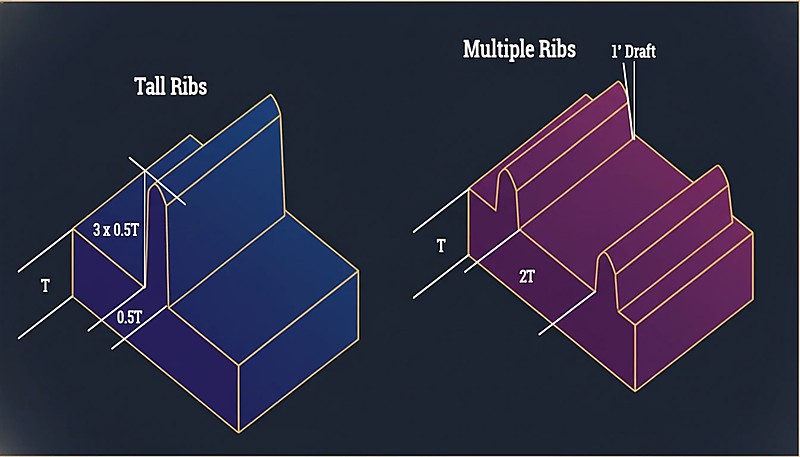
- Lossingshoeken van 0,5–1,5° per zijde zijn essentieel voor een probleemloze uitwerping van ribben
Welke materiaalbeperkingen gelden voor de ribgeometrie?
Materiaalbeperkingen voor ribgeometrie zijn de harsverkleining, koelprofiel, stijfheidsdoel, ejectieweerstand en cosmetische zinkrisico.
Bij spuitgieten is een rib een dun versterkingselement dat loodrecht uit een nominale wand steekt om de stijfheid te vergroten, zonder het extra gewicht en de langere cyclustijd van een overal dikkere wand. De fundamentele uitdaging is dat elke rib op de aansluiting met de wand een lokale materiaalophoping veroorzaakt, en die extra massa leidt tot cosmetische gebreken door krimp.
Wanneer het gesmolten polymeer bij de rib-wandaansluiting afkoelt, blijft de dikkere doorsnede langer vloeibaar dan de omringende huid. Wanneer de kern uiteindelijk stolt en krimpt, trekt deze het al bevroren buitenoppervlak naar binnen, waardoor tegenover de rib zichtbare inval op het klasse A-oppervlak ontstaat. De ernst van dit gebrek is niet constant, maar hangt vrijwel volledig af van de interne structuur en het krimpgedrag van het materiaal.
In onze fabriek in Shanghai gebruiken we 47 spuitgietmachines van 90T tot 1850T en hebben we meer dan 400 verschillende kunststoffen verwerkt. Die brede ervaring betekent dat we uit de eerste hand hebben gezien hoe een rib die voor ABS is ontworpen catastrofaal faalt in PP als de dikteverhouding niet wordt aangepast — dezelfde nominale geometrie kan in het ene materiaal een nauwelijks zichtbare invalplek en in het andere een diepe groef veroorzaken.
Amorfe polymeren (ABS, PC, PMMA) vertonen een lage, vrijwel isotrope krimp (doorgaans 0.2-0.8%). Door hun willekeurige moleculaire ordening krimpen ze relatief gelijkmatig. Dit geeft ontwerpers iets meer speelruimte: ribben kunnen 50-70% van de wanddikte bedragen zonder ernstige inval.
Bij semikristallijne polymeren (PP, PE, PA6, PA66) ligt dat anders. Tijdens het afkoelen vouwen de moleculen zich tot geordende kristallijne structuren die dichter opeengepakt zijn, wat een veel grotere krimp veroorzaakt, vaak 1.0-3.0%. Dit vereist dunnere ribben (40-50% van de wanddikte) en een zorgvuldiger aanspuiting om de door stroming veroorzaakte oriëntatie te beheersen.
"Ribben verhogen de productstijfheid aanzienlijk met een minimale gewichtstoename, vergeleken met het vergroten van de volledige wanddikte."True
Ribben verhogen het traagheidsmoment en bieden gerichte versterking zonder de materiaalkosten, langere koeltijd en het risico op inval van een uniform dikkere wand.
"U kunt ribben veilig even dik ontwerpen als de nominale wand om de constructieve sterkte te maximaliseren."False
Ribben die even dik zijn als de wand veroorzaken op het snijpunt een enorme thermische hotspot, waardoor inval op het zichtoppervlak gegarandeerd is en er mogelijk interne holten ontstaan.
Hoe verschillen krimppercentages per materiaalfamilie?
De relatie tussen materiaalkrimp en ribgeometrie is niet lineair, maar vormt een beperking op systeemniveau. Op basis van gevestigde DFM-richtlijnen1 en internationale krimpnormen2 geeft de onderstaande tabel aanbevolen ontwerpparameters per polymeerfamilie. Deze waarden zijn uitgangspunten; verifieer ze voor uw specifieke onderdeelgeometrie en aanspuitpunt altijd met een Moldflow-simulatie3.
| Parameterwaarde | Amorf (PC, ABS) | Semikristallijn (PP, PA6) | Glasgevuld (PA66-GF30) |
|---|---|---|---|
| Verhouding rib/wand | 50-70% | 40-50% | 55-75% |
| Krimppercentage | 0.2-0.8% | 1.0-3.0% | 0,2–0,8% (anisotroop) |
| Trekhoek | 0.5-1.0 per zijde | 0,5–1,5 per zijde | 1.0-2.0 per zijde |
| Basisstraal | 0,25 × t(wand) | 0.20 × t(wand) | 0,25 × t(wand) |
| Maximale ribhoogte | 3 × t(wand) | 2.5 × t(wand) | 3 × t(wand) |
| Risico op inzinkingen | Laag–gemiddeld | Hoog | Laag (maar risico op kromtrekken) |
Let op de glasgevulde kolom: glasvezels verminderen de volumetrische krimp in de stroomrichting sterk, maar hebben nauwelijks invloed op de dwarskrimp. Door dit anisotrope gedrag vertoont het onderdeel mogelijk geen inval, maar kan het aanzienlijk kromtrekken als de ribbenindeling geen rekening houdt met richtingsafhankelijke krimp. In de praktijk voeren wij voor glasvezelversterkte materialen altijd een vul-, nadruk- en vervormingssimulatie uit voordat we het gereedschapsstaal vastleggen.
Waarom vereisen amorfe en kristallijne polymeren verschillende ribstrategieën?
Amorfe en kristallijn polymeren worden behandeld met verschillende ribstrategies omdat ze verschillend bevriezen, verkleinen en packing druk vasthouden. Amorfe materialen gaan geleidelijk van liquid naar solid, dus er is geen scherpe faseverandering. Deze geleidelijke bevriezing betekent dat de rib-wand junction meer tijd heeft om druk te equaliseren, resulterend in minder differentiële verkleining. Je kunt ribdikte dichter naar 70% van de wand brengen zonder slechte consequenties.
Semikristallijne polymeren ondergaan bij een specifieke temperatuur een abrupte kristallisatie. Wanneer de kristallisatie inzet, krimpt het materiaal sterk. Als de ribvoet te dik is, overtreft de kristallisatiekrimp in die plaatselijke zone de nadruk die het oppervlak vlak hield. Het resultaat is een diepe, zichtbare inval die na het bevriezen van de aanspuiting door geen enkele nadruk meer kan worden verholpen.
Met ruim 20 jaar spuitgietervaring en een eigen matrijzenfabriek hebben we geleerd ribverhoudingen aan te passen vóór de staalbewerking. Een veelvoorkomende fout die we in DFM-beoordelingen vinden: ontwerpers gebruiken PC-ribverhoudingen voor een PP-onderdeel. In CAD ziet het onderdeel er goed uit — maar het eerste shot vertoont diepe invallijnen bij elke rib.
"Alleen de nadruk verhogen kan inval door te grote ribben in sterk krimpende kristallijne materialen niet elimineren."True
Zodra de aanspuiting is bevroren, bereikt geen extra druk het dikke gedeelte. De enige effectieve oplossing is de verhouding tussen rib- en wanddikte te verkleinen en af te stemmen op de krimpeigenschappen van het materiaal.
"Glasgevulde materialen leveren altijd betere ribresultaten op omdat hun totale krimp lager is."False
Glasvezels verminderen de totale krimp, maar veroorzaken sterke anisotropie. Ribben vertonen mogelijk geen inval, terwijl verschilkrimp tussen stromings- en dwarsrichting toch aanzienlijk kromtrekken veroorzaakt.
Wat zijn de praktische ontwerpregels voor elk materiaal?
Theorie is nuttig, maar op de werkvloer hebben ontwerpers toepasbare regels nodig. Dit passen we in onze DFM-beoordelingen toe op basis van het specifieke polymeer dat een klant kiest:
Voor ABS en PC (amorf): Ribdikte = 50-70% van de nominale wanddikte. Minimale lossingshoek = 0.5 per zijde. Basisradius = 0.25 × wanddikte. Deze materialen zijn vergevingsgezind: u kunt richting 70% gaan als het tegenoverliggende oppervlak niet cosmetisch is.
Voor PP en HDPE (semikristallijn, ongevuld): Ribdikte = 40-50% van de wand. Minimale lossingshoek = 1.0 per zijde. Basisradius = 0.20 × wanddikte (een kleinere radius beperkt materiaalophoping). Deze materialen vertonen inval als u 50% overschrijdt; er bestaat geen magische procesinstelling die een te grote rib in PP corrigeert.
Voor PA66-GF30 (glasvezelversterkt): Ribdikte = 55-75% van de wand. Lossingshoek = 1.0-2.0 per zijde (glasvezels verhogen de wrijving bij het uitwerpen). De lagere krimp maakt dikkere ribben mogelijk, maar u moet de aanspuiting zo plaatsen dat variatie in de stromingslengte over de ribben minimaal is; anders wordt vervorming uw probleem in plaats van inval.
Behandel spuitgietmatrijsontwerpen voor PC/ABS-mengsels als amorf: de PC-component bepaalt het krimpgedrag. Een ribverhouding van 55-65% van de wanddikte is optimaal. Deze mengsels worden veel toegepast in behuizingen voor consumentenelektronica, waar zowel sterkte als oppervlaktekwaliteit belangrijk zijn.
Hoe voert u het ribontwerpproces stap voor stap uit?
Het rib-ontwerpproces is een gestructureerde DFM-sequentie: definiëren belastingen, vastleggen materiaaldata, ribben dimensioneren, afstand controleren, simuleren, dan evalueren met de spuitgieter. Dit is de workflow die we volgen voor elk nieuw onderdeel met structurele ribben:
Stap 1 — Definieer de structurele eisen: Bepaal de stijfheidsdoelen en belastingsgevallen. Bereken het vereiste traagheidsmoment en werk vervolgens terug om de ribhoogte en -afstand te ramen, in plaats van te gokken.
Stap 2 — Selecteer het materiaal en leg de krimpgegevens vast: Haal de werkelijke krimpwaarden voor de specifieke kwaliteit en wanddikte uit het materiaalgegevensblad. Gebruik geen generieke waarden: PA66-GF30 van verschillende leveranciers kan 0.2-0.4% in krimp verschillen.
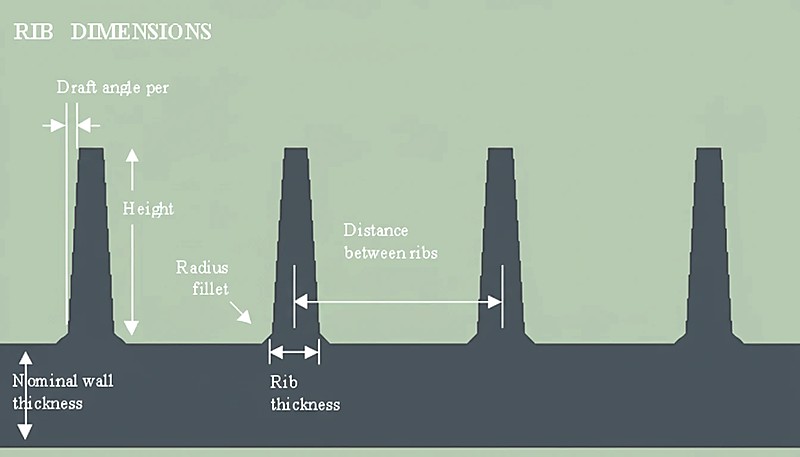
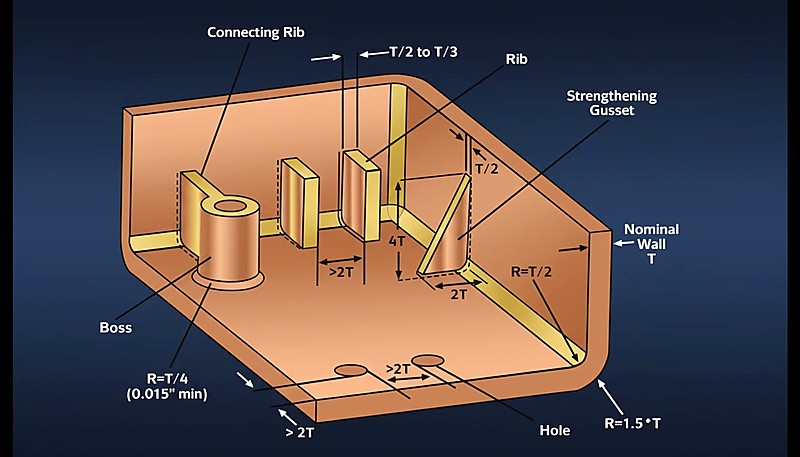
Stap 3 — Bereken de ribverhoudingen: Pas de materiaalspecifieke rib-wandverhouding uit de bovenstaande tabel toe. Als de wand 2.5mm dik is en u PP gebruikt, moet de ribbasis 1.0-1.25mm zijn (40-50%). Stel de lossingshoek in op 1.0 per zijde en de basisradius op 0.5mm.
Stap 4 — Controleer de afstand tussen de ribben: Houd tussen aangrenzende ribben minimaal 2× (bij voorkeur 3×) de wanddikte aan. Een kleinere afstand veroorzaakt vulproblemen in dunne wanden en versterkt ongelijkmatige koeling.
Stap 5 — Voer een Moldflow-simulatie uit: Simuleer vullen, nadruk en vervorming. Kijk specifiek naar de volumetrische krimp bij de rib-wandaansluiting en naar de doorbuigingsresultaten. Hier ontdekt u problemen voordat u een bedrag van vijf cijfers aan gereedschap uitgeeft.
Stap 6 — DFM-beoordeling met uw spuitgieter: Deel de simulatieresultaten met uw spuitgietpartner. Een goede spuitgieter toetst de ribindeling aan zijn procesvenster: de beschikbare nadruk, de toegankelijkheid van koelkanalen en de uitwerpstrategie bepalen allemaal of een ribontwerp in de praktijk werkt.
Welke praktijktoepassingen tonen materiaalspecifiek ribontwerp aan?
Praktijktoepassingen van ribben zijn nuttig omdat elke materiaalfamilie een ander faalmechanisme blootlegt: inval, vervorming, weerstand bij het uitwerpen of een ongelijkmatige koeling. Beugels voor auto-interieurs (PP + talk): We produceren regelmatig dashboardsteunen van met talk gevuld PP. De talk verlaagt de krimp enigszins ten opzichte van ongevuld PP, maar door het kristallijne karakter moeten de ribben nog steeds 40-45% van de wanddikte bedragen. Een gebruikelijke wand van 2.0mm krijgt ribben van 0.8-0.9mm met per zijde een lossingshoek van 1.0.
Laptopbehuizingen (PC/ABS): Consumentenelektronica vereist klasse A-oppervlakken zonder zichtbare inval. Het amorfe PC/ABS-mengsel maakt ribben mogelijk van 60% van de wand van 2.2mm (ongeveer 1.3mm aan de basis). Achter cosmetische zones gebruiken we bovendien plaatselijk dunnere wandsecties om de zichtbaarheid van inval verder te beperken.
Industriële behuizingen (PA66-GF30): Behuizingen van glasvezelversterkt nylon dragen hoge structurele belastingen. Dankzij de lage krimp kunnen de ribben 65-70% van de wanddikte bedragen, maar vervorming is de echte vijand. We gebruiken een uitgebalanceerde plaatsing van aanspuitpunten en simulatie van de vezeloriëntatie om vlakke oppervlakken vlak te houden.
Kratten voor materiaalhantering (HDPE): Diepe HDPE-kratten gebruiken uitgebreide ribnetwerken. Door de hoge krimp van HDPE (2.0-3.0%) moeten de ribben dun zijn, doorgaans 40% van de wand. Omdat deze onderdelen niet cosmetisch zijn, is matige inval echter aanvaardbaar en kunnen ontwerpers de verhouding iets verhogen.
Veelgestelde vragen
Wat is de maximaal toegestane ribhoogte bij spuitgieten?
Volledige eliminatie van inval is bij semikristallijne materialen uiterst moeilijk wanneer ribben dikker zijn dan 45 procent van de wanddikte. Bij amorfe polymeren zoals PC en ABS levert een ribdikte van maximaal 50 procent van de wanddikte doorgaans geen zichtbare inval op het cosmetische oppervlak op. Procesaanpassingen zoals hogere nadruk, langere nadruktijd en meer koeling kunnen de ernst van inval verminderen, maar kunnen een fundamenteel te grote ribgeometrie niet compenseren. De effectiefste en betrouwbaarste aanpak is de ribdikte vanaf het begin correct te ontwerpen op basis van de gebruikte materiaalfamilie.
Kunnen invalplekken bij ribben volledig worden geëlimineerd?
Glasgevulde materialen laten dikkere ribben toe van 55–75% van de wanddikte dankzij de drastisch lagere volumetrische krimp die glasvezels bieden. Ze introduceren echter aanzienlijke risico’s op anisotroop kromtrekken, omdat de vezels zich in de stroomrichting oriënteren en de krimp langs die as verminderen, maar dwars daarop weinig effect hebben. Ongevulde semikristallijne materialen vereisen dunnere ribben van 40–50% om inval te voorkomen, maar hun kromtrekgedrag is voorspelbaarder. Plaats bij glasgevulde onderdelen de aanspuiting altijd zo dat variatie in de vloeiweglengte over het ribnetwerk minimaal is en voer een specifieke kromtreksimulatie uit voordat u zich vastlegt op dure gereedschapswijzigingen.
Hoe verschilt het ribontwerp voor glasvezelgevulde en ongevulde materialen?
De basisradius in een ribontwerp heeft twee kritieke en aanvullende functies. Ten eerste vermindert deze de spanningsconcentratie bij de scherpe overgang van rib naar wand, wat de structurele prestaties en vermoeiingslevensduur van het afgewerkte onderdeel onder herhaalde belasting rechtstreeks verbetert. Ten tweede beheerst de radius de hoeveelheid massa die zich op dat kruispunt ophoopt. De standaardaanbeveling is een radius van 0,20 tot 0,25 maal de nominale wanddikte. Een grotere radius voegt te veel materiaal toe en verhoogt het risico op inval, terwijl een kleinere radius een spanningsconcentrator creëert die onder mechanische belasting kan leiden tot voortijdige scheurvorming en defecten aan het onderdeel.
Welke rol speelt de basisradius bij het ontwerpen van ribben?
In de meeste praktische toepassingen bieden loodrechte ribben de hoogste verhouding tussen stijfheid en gewicht en zijn ze de standaardkeuze voor structurele versterking. Schuine of gebogen ribben worden echter soms gebruikt voor esthetische integratie in consumentenproducten of om natuurlijke spanningsbanen te volgen in complexe dragende geometrieën zoals autosteunen. De kritieke beperking blijft ongeacht de oriëntatie hetzelfde: de doorsnededikte bij de overgang tussen rib en wand moet voldoen aan de materiaalspecifieke verhouding tussen rib- en wanddikte om inval te voorkomen en te zorgen dat het onderdeel aan zowel cosmetische als structurele eisen voldoet.
Moeten ribben altijd loodrecht op de nominale wand staan?
Uithollen en ribontwerp werken samen als één strategie om onderdeelgewicht en structurele prestaties te optimaliseren. Bij uithollen worden dikke, onnodige secties verwijderd en vervangen door een dunnere wand, die vervolgens door een netwerk van strategisch geplaatste ribben wordt versterkt. Deze combinatie vermindert het grondstofverbruik, verkort de koeltijd aanzienlijk en verbetert de algehele maatvastheid. Het kernprincipe is eerst de uitgeholde wanddikte vast te leggen en vervolgens elke rib te dimensioneren als verhouding tot die nieuwe, dunnere wandmaat in plaats van tot de oorspronkelijke, verwijderde dikke sectie.
Hoe werken kernvorming en ribontwerp samen?
Glasvezels aan en nabij het oppervlak van het gevormde onderdeel veroorzaken tijdens het uitwerpen extreem hoge wrijving tegen de gepolijste matrijswand. Vooral bij ribben wordt dit wrijvingsprobleem versterkt doordat de rib een diepe, smalle holte met beperkte lossingsruimte vormt. Zonder voldoende lossingshoeken — doorgaans 1.0 tot 2.0 graden per zijde voor glasgevulde materialen tegenover 0.5 tot 1.0 voor ongevulde kwaliteiten — kunnen de ribben tijdens het uitwerpen schuren, buigen of breken. Dit beschadigt het onderdeel niet alleen cosmetisch en structureel, maar kan ook het matrijsoppervlak gedurende duizenden productiecycli aantasten.
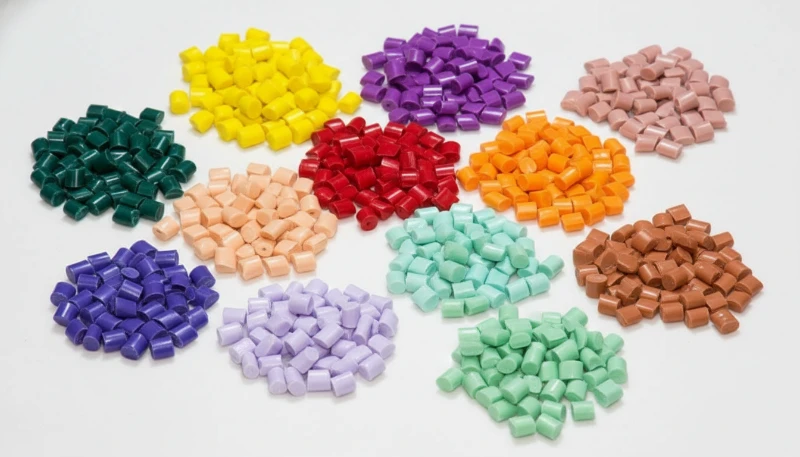
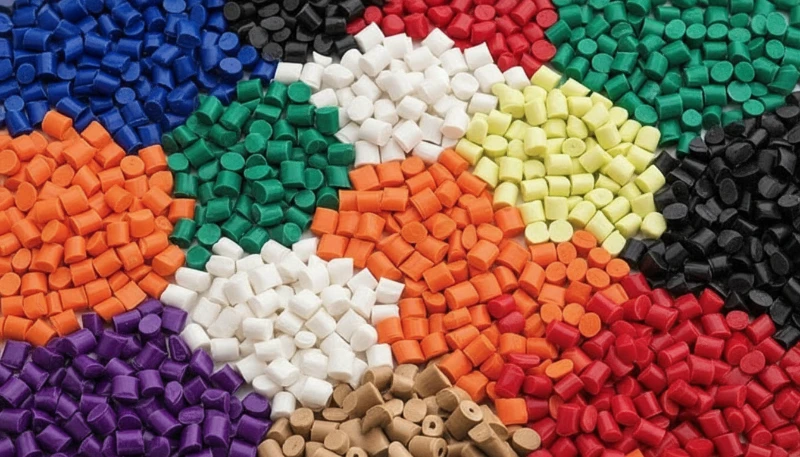
Kleurrijke plastic spuitgietstukken
Als algemene technische richtlijn mag de ribhoogte niet groter zijn dan driemaal de nominale wanddikte. Hogere ribben veroorzaken vulproblemen omdat de gesmolten kunststof in een smal, diep kanaal moet stromen dat snel afkoelt en lucht kan insluiten of onvolledige vulling kan veroorzaken. Als uit uw constructieve analyse blijkt dat u meer stijfheid nodig hebt dan een standaardrib met driemaal de wandhoogte kan bieden, is het beter om meerdere kortere ribben met voldoende onderlinge afstand te gebruiken. Zo wordt de versteviging gelijkmatiger verdeeld en blijft een betrouwbare vulling tijdens het spuitgietproces gewaarborgd.
Een deskundige DFM-beoordeling van uw ribontwerp nodig? Het engineeringteam van ZetarMold kan uw onderdeelgeometrie analyseren, materiaalspecifieke ribverhoudingen aanbevelen en Moldflow-simulaties uitvoeren voordat u in matrijzen investeert. Met ruim 20 jaar ervaring met 400+ materialen signaleren we ontwerpproblemen vroegtijdig — wat tijd en matrijskosten bespaart.
Vraag een gratis offerte en DFM-analyse aan →
DFM-richtlijnen: DFM-richtlijnen zijn uitgebreide ontwerpgidsen voor wanddikte, ribben, schroefbussen en lossingshoeken om de maakbaarheid bij het spuitgieten te waarborgen. ↩
krimpnormen: ISO 294-4 is de internationale norm die methoden voorschrijft voor het bepalen van de krimp van thermoplastische vormmaterialen. ↩
Moldflow-simulatie: Moldflow-analyse is in de industrie gangbare simulatiesoftware waarmee vóór productie vulpatronen, krimp, vervorming en mogelijke gebreken worden voorspeld. ↩