 İçeriğe geç

Germany hosts some of the most technically advanced injection molding companies in Europe. If you are evaluating German suppliers for precision plastic parts, you need to know what each company actually does well — not just what their brochures claim. This guide covers the key players, their specializations, and how to decide whether a German manufacturer or an overseas alternative makes more sense for your project.
- Germany’s injection molding market is anchored by automotive, medical, and electronics demand, with major hubs in Baden-Württemberg, Bavaria, and North Rhine-Westphalia.
- German suppliers typically hold ISO 9001, IATF 16949, ISO 13485, and VDA certifications—among the strictest quality benchmarks globally.
- Production costs in Germany run 30–55% higher than China-based alternatives, making Germany ideal for EU-regulated or ultra-precision work.
- Tooling lead times in Germany average 8–20 weeks, compared to 15–30 days from China.
- For most global supply chains, a blended strategy—overseas for volume production, local EU suppliers for regulatory-specific mandates—delivers the best ROI.
What Does Germany’s Injection Molding Market Look Like?
Germany commands the largest injection molding machine market in Europe, with roughly €1.78 billion1 in annual machinery demand and hundreds of specialized molders ranging from global industrial groups to privately owned Mittelstand firms. The country is home to enjeksiyon kalıplama leaders like Röchling (12,000+ employees, 90+ plants worldwide) alongside the Mittelstand firms that form the backbone of German manufacturing.
The market is driven by three dominant sectors:
Otomotiv: BMW, Mercedes-Benz, and their vast tier-1/tier-2 supplier networks consume enormous volumes of injection molded components—interior trim, under-hood covers, sensor housings, connectors, and structural brackets. Suppliers in Baden-Württemberg and Bavaria dominate this segment.
Tıbbi cihazlar: Germany’s Medizintechnik sector, concentrated around Munich, Tuttlingen, and the Rhine-Main corridor, requires ISO 13485-certified cleanroom molding for everything from diagnostic housings to single-use disposables.
Electronics and industrial: The Rhine-Main area and North Rhine-Westphalia host precision molders producing connectors, housings, and functional parts with tight tolerances, often using flame-retardant (UL 94 V-0) materials.
What sets Germany apart is not volume—it’s precision. German molders are trained through a dual vocational system (Ausbildung) that emphasizes systematic problem-solving and process discipline. The country ranks third globally in robot density at 415 robots2 per 10,000 employees, meaning high automation rates and consistent part quality across injection molding production runs.
Raw material access is another structural advantage. BASF, Covestro, and Lanxess—all headquartered in Germany—supply engineering-grade resins (PA, POM, PC, PEEK, specialty compounds) with short lead times and full traceability documentation. German molders get material expertise that international buyers simply can’t access as easily from other regions.
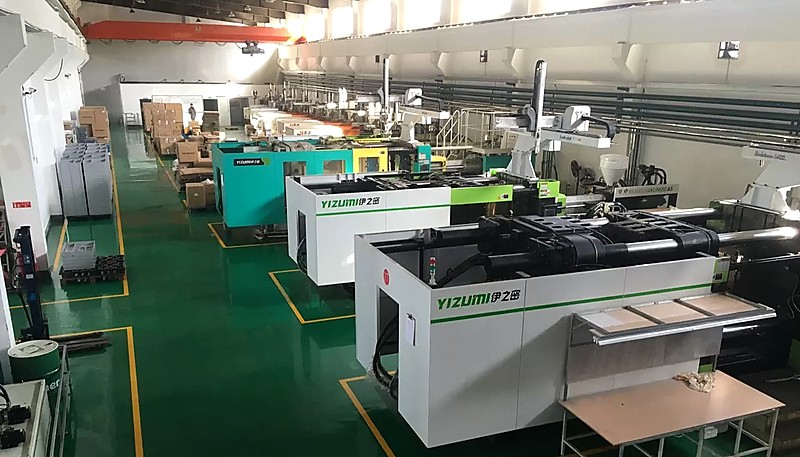
The catch? Cost. Germany’s labour cost hit €41.303 per hour in 2023, among the highest in the EU. Combined with elevated energy prices and strict environmental compliance costs, per-piece pricing from German suppliers is substantially higher than Eastern European or Asian alternatives.
What Trends Are Shaping Germany’s Injection Molding Industry?
Germany’s injection molding sector is evolving fast. Five trends are reshaping supplier capabilities and buyer expectations right now:
1. Lightweighting for EV platforms. BMW, Mercedes, and VW are accelerating their EV transitions, driving demand for lightweight structural plastics that replace aluminum and steel. Long-fiber thermoplastic (LFT) and organic sheet processing investments are surging at German molders who serve automotive OEMs.
2. Circular economy and recyclate integration. The EU Packaging and Packaging Waste Regulation (PPWR) is pushing German molders to qualify post-consumer recyclate (PCR) resins alongside virgin grades, with full traceability documentation. Sustainability is no longer optional—it’s a procurement requirement from major German OEMs.
3. Industry 4.0 and real-time SPC. German manufacturers lead in machine connectivity (OPC-UA protocols), in-cavity pressure sensors, and real-time statistical process control dashboards. The result: tighter process windows, lower scrap rates, and richer data for quality documentation.
““German machinery brands like Arburg dominate global injection molding.””Doğru
Arburg leads in Europe, but Haitian International ships over 40,000 machines annually — more than any European manufacturer. Japanese brands like JSW and Toshiba also hold significant market share in precision molding applications.
““European machines always produce better quality parts than Asian alternatives.””Yanlış
Part quality depends on process parameters, mold design, and material selection. A properly calibrated Asian machine with a well-designed mold produces parts indistinguishable from those made on European equipment.
The automation trend deserves particular attention for sourcing decisions. While German factories lead in robot density (415 robots per 10,000 employees), the cost of implementing and maintaining automated systems is baked into unit pricing. If your parts don’t require sub-micron tolerance or fully automated lights-out production, you may be overpaying for capability you don’t need.
4. Nearshoring pullback from Asia. Post-pandemic supply chain disruptions prompted some German buyers to reshore or nearshore production, benefiting domestic and Eastern European suppliers for medium-volume runs. This trend is most visible in automotive and medical packaging.
kalıplama. ISO 13485 sertifikalı olarak, Avrupa genelindeki ilaç ve tanı şirketlerine kontrollü ortamlarda hassas kalıplama hizmeti sunarlar.Doğru
With over 415 industrial robots per 10,000 employees and substantial R&D investment, German manufacturers consistently pioneer advanced molding techniques including multi-component, micro-molding, and cleanroom production for medical applications.
““All German molders maintain the same quality standards across their product lines.””Yanlış
Quality capabilities vary significantly between German suppliers. A firm specializing in automotive connectors may lack medical-grade cleanroom facilities, while a consumer goods molder might not have the precision equipment needed for tight-tolerance technical parts.
5. Medical device growth under EU MDR. Stricter EU MDR compliance deadlines (2024–2026) are creating significant demand for ISO 13485-certified cleanroom molders. Legacy medical device OEMs are scrambling to re-certify products, and German molders with established MDR documentation capabilities are seeing surging order books.
For buyers, these trends mean German sourcing partners are getting better at data-driven quality management and sustainable material processing—but they are also getting more expensive and busier, with longer lead times for new projects.
How Do You Choose an Injection Molding Supplier in Germany?
The right German injection molding supplier is the one that matches your certification, tooling, communication, and pilot needs. Germany has hundreds of capable molders, so the challenge is not finding one; it is finding the right one for your specific project. Use this evaluation framework before you shortlist suppliers.
1. Match certifications to your requirements. ISO 9001 is the baseline. If you’re in automotive, IATF 16949 plus VDA 6.3 compliance is effectively mandatory for German OEM supply chains. Medical projects require ISO 13485 with cleanroom capability. Don’t pay for certifications you don’t need, and don’t compromise on the ones you do.
2. Verify toolmaking is in-house. Many German injection molders subcontract toolmaking. In-house toolmaking means faster communication between mold designers and process engineers, better timeline control, and stronger accountability for mold quality over its lifetime. Always ask where the tool will be built and maintained.
| Evaluation Factor | What to Ask | Red Flag |
|---|---|---|
| Quality system | Can you share a recent PPAP package? | Refuses or sends incomplete docs |
| Machine fleet | What tonnage range and machine brands? | Only small-tonnage, unknown brands |
| Communication | Who is my daily contact? English level? | Sales-only contact, no engineering bridge |
| Referanslar | Can I speak with a current EU/US client? | No verifiable export references |
3. Evaluate English communication capability. Germany’s Mittelstand molders are technically excellent, but many prioritize domestic clients and communicate primarily in German. For international buyers, dedicated English-speaking project management is essential. Test this during your initial inquiry—response quality tells you a lot about how the project will run.
4. Audit the quality system, not just the certificate. ISO certification is common. What separates good suppliers is how they use it. Ask about their SPC implementation, CMM equipment, FMEA process, and corrective action procedures. A supplier who can discuss their control plan in detail is more valuable than one who simply shows you a certificate on the wall.
5. Start with a pilot, not a production commitment. Before committing to high-volume production, run a prototype or low-volume first article. This validates actual performance against documented capabilities and gives both parties the chance to align on processes before stakes are high. This is standard practice in German automotive supply chains and should be your approach too.
““German automotive OEMs source all their injection molded parts domestically.””Doğru
Major German OEMs all source significant volumes from Chinese and Eastern European suppliers. Cost optimization drives sourcing decisions: a typical automotive interior component program can save 30-40% on piece price by qualifying an experienced Chinese manufacturer with IATF 16949 certification.
““A supplier must be ISO-certified in Germany to sell to German companies.””Yanlış
ISO certification is international — a factory in Shanghai with ISO 9001 and IATF 16949 from TÜV Rheinland meets the same audit standards as a German-certified facility. What matters is the certification body’s reputation and the scope of the certification, not the country where the factory is located.
Watch out for: Pricing opacity (tooling costs that escalate mid-project, undefined engineering change fees), long tooling lead times (8–20 weeks is common in Germany), and suppliers who prioritize their domestic OEM clients over new international accounts during peak demand periods.
Which Are the Top 10 Injection Molding Companies in Germany?
Germany hosts a deep bench of injection molding companies, from global industrial groups to highly specialized Mittelstand firms. Here are ten well-regarded players across different specializations:
1. Röchling Group
Founded in 1822 and headquartered in Mannheim, Röchling is one of Germany’s largest industrial plastics processors, with 12,000+ employees across 90 plants worldwide. Their automotive division produces underbody aerodynamic systems, air management components, and structural plastic modules. Their medical division offers Class 7/8 cleanroom injection molding with full FDA/MDR compliance. Röchling holds ISO 9001, ISO 13485, and IATF 16949 certifications. Website: roechling.com
2. Arburg
Based in Lossburg, Baden-Württemberg, Arburg is one of the world’s leading injection molding machine manufacturers. Their ALLROUNDER and electric ALLDRIVE machine lines are used by processors globally. Arburg also operates its own production molding services, representing the gold standard in cycle-time optimization and energy efficiency. Founded in 1923, the company employs approximately 3,500 people. Website: arburg.com
3. Braunform GmbH
Headquartered in Bahlingen am Kaiserstuhl (Baden-Württemberg), Braunform specializes in medical-grade cleanroom molding and complex multi-cavity enjeksiyon kalıbı tooling. ISO 13485 certified, they serve pharmaceutical and diagnostics companies across Europe with precision molding in controlled environments.
Mühendislik ekibimizden ücretsiz bir teklif alın, zorunluluk olmadan bir DFM incelemesi ve detaylı bir fiyat teklifi için.
Established in 1973 in Haslach, FOBOHA is recognized for its Cube Mold technology—a rotating stack-mold system that doubles cavity count without increasing machine size. This innovation enables high-output production of packaging, medical, and consumer components with exceptional efficiency. The company holds multiple patents in multi-component molding. Website: foboha.com
““Germany leads Europe in precision injection molding technology.””Doğru
With over 415 industrial robots per 10,000 employees and substantial R&D investment from companies like Arburg and KraussMaffei, German manufacturers consistently pioneer advanced molding techniques including multi-component, micro-molding, and cleanroom production.
““All German molders maintain the same quality standards across their product lines.””Yanlış
Quality capabilities vary significantly between German suppliers. A firm specializing in automotive connectors may lack medical-grade cleanroom facilities, while a consumer goods molder might not have the precision equipment needed for tight-tolerance technical parts.
5. Georg Utz GmbH
A major player in large-format industrial injection molding, Utz specializes in reusable containers, pallets, and logistics solutions from their German plant. Their high-tonnage capabilities (up to 3,500 tons) produce structural parts with excellent repeatability. Founded in 1951, Utz operates globally with strong positions in automotive logistics and material handling. Website: utzgroup.com
6. Gebr. Krallmann GmbH
One of Germany’s most technically advanced toolmakers and production molders, Krallmann is known for complex multi-component injection molding. They serve both automotive and consumer product sectors with in-house mold design, precision toolmaking, and series production capabilities. Their engineering team excels at projects requiring tight tolerances and complex geometries. Website: krallmann.com
7. Fehrer Group
Founded in 1947 and headquartered in Kitzingen, Bavaria, Fehrer is a major automotive supplier with 4,000+ employees across global facilities. Their capabilities span injection molding, polyurethane foam processing, and acoustic systems. Fully IATF 16949 certified, Fehrer integrates molding with downstream assembly and finishing for complete module supply to OEMs and tier-1 customers. Website: fehrer.com
8. KTP Kunststoff Palatal Technik GmbH & Co. KG
Founded in 1980 and based in Bingen am Rhein, KTP is a mid-size injection molder with approximately 250 employees, serving automotive, electrical, and industrial sectors. They operate injection molding lines from 25 to 1,500 tons, with particular expertise in glass-fiber-reinforced PA and PBT processing. KTP holds ISO 9001 and IATF 16949 certification and maintains an in-house tooling department for tight development loops. Website: ktp-kunststoff.de
9. FKuR Kunststoff GmbH
Founded in 1992 and based in Willich (NRW), FKuR is a specialty compounder and injection molder focused on bio-based and biodegradable polymer systems. Their Bio-Flex and Terraprene product lines are recognized across Europe for certified compostability (EN 13432) and food-contact compliance. FKuR provides custom injection molding using proprietary bio-polymer formulations—ideal for brands committed to circular economy principles. ISO 9001 certified. Website: fkur.com
10. Gerhardi Kunststofftechnik GmbH
Founded in 1796 and headquartered in Lüdenscheid, North Rhine-Westphalia, Gerhardi is one of Germany\u2019s oldest family-owned plastics manufacturers. The company specializes in high-gloss chrome-plated injection-molded parts for the automotive industry, particularly decorative trim, grilles, and interior components. Gerhardi operates over 47 injection molding machines (200T\u20132500T) and employs approximately 1,800 people. Its in-house chrome-plating line is one of the largest in Europe, giving it a unique advantage for premium automotive programs. The company is IATF 16949 and ISO 14001 certified, and serves OEMs including BMW, Mercedes-Benz. Gerhardi also operates production facilities in China (Suzhou) and the US, making it a truly global partner for automotive sourcing.
How Does Germany’s Injection Molding Cost Compare to China?
Price is usually the first question when buyers compare German and Chinese suppliers. Here is what the numbers actually look like for a typical production scenario — a 200g PA66-GF30 automotive bracket, 50,000 units annually.
| Cost Factor | Germany | China (ZetarMold Example) |
|---|---|---|
| Production mold (single cavity) | €25,000–€45,000 | $8,000–$15,000 |
| Per-piece unit price | €1.80–€3.50 | $0.55–$1.20 |
| Mold lead time (T1 samples) | 10–16 weeks | 5–8 weeks |
| Shipping to EU (40ft container) | Included (domestic) | $2,500–$4,500 |
| Import duty (EU standard) | 0% | 3.5–6.5% (HS 3926) |
| Communication overhead | Low (same timezone/language) | Medium (8h time diff, English PM) |
A few observations from real quoting experience: the per-piece gap is typically 50–65% lower from China even after adding shipping and duties. German tooling costs 2–3x more, which matters enormously for multi-cavity production molds. However, for small production volumes (under 5,000 units), the shipping and duty overhead can narrow the gap to 20–30%, making German suppliers more competitive than pure unit-price comparisons suggest.

Hidden costs matter too. German suppliers bundle quality documentation (PPAP, CoC, dimensional reports) into their pricing. Chinese suppliers vary widely: some include it, others charge extra. Always request a cost breakdown that lists documentation, inspection, and packaging separately before comparing quotes. Shipping lead time (4-6 weeks sea freight from Shanghai to Hamburg) also adds working capital cost that many buyers underestimate. This detail changes landed cost comparisons materially.
When Is Germany the Right Sourcing Choice for Injection Molding?
Neither Germany nor China is universally better. The right choice depends on what you are buying, how many you need, and what risks your business can absorb. Here is a practical decision framework.
Choose Germany when: Your project demands sub-5μm tolerances or certified cleanroom production (ISO Class 7/8). You need prototyping-to-production in under 4 weeks with same-day engineering changes. Your volumes are low (under 2,000 units) and shipping from Asia erodes the unit-price advantage. Regulatory compliance requires local documentation in German, with local regulatory liaison capability. You are sourcing for medical devices that need notified body audits within the EU supply chain.
Choose China when: Your annual volume exceeds 10,000 units and per-piece cost is the primary driver. You need multi-cavity production molds at 2–3x lower tooling investment. Your project involves sourcing multiple part families from a single supplier with integrated mold-making and molding capability. You want 30+ English-speaking project managers handling timezone-bridged communication. Lead time matters — you need T1 samples in 5–8 weeks, not 10–16.
Many experienced sourcing professionals use a hybrid model: prototype and validate tooling in Germany for tight-tolerance parts, then transfer production to a proven overseas partner for volume scaling. This approach captures the best of both worlds—you get German engineering precision for development, and competitive pricing for mass production runs.
For comparison, validate documentation scope, sampling plans, packaging responsibilities, and engineering change fees before comparing landed prices across Germany and China.
What Are the Most Frequently Asked Questions About Injection Molding in Germany?
Sıkça Sorulan Sorular
What certifications should I look for in a German injection molding supplier?
At minimum, ISO 9001 for quality management. For automotive projects, IATF 16949 is the standard requirement across the German supply chain. Medical applications demand ISO 13485 with cleanroom certification. You should also verify that certifications are current — not just listed on a website. Request the actual certificate number and cross-check it against the issuing body’s public registry. A supplier without verifiable ISO credentials is a significant risk, regardless of how polished their sales presentation looks. Environmental management (ISO 14001) is increasingly required by German OEMs as part of their ESG procurement policies.
How long do injection molding tools typically last from German manufacturers?
German-made tooling routinely exceeds 1 million shots for standard steel molds (P20/718). Hardened steel molds (H13/S136) can reach 2–5 million shots with proper maintenance schedules. The key factor is not the origin of the mold steel but rather maintenance discipline — regular cleaning, proper storage, and timely component replacement matter more than the original steel grade. Chinese tooling using equivalent steels delivers comparable lifespan when the mold design, heat treatment, and surface finishing are executed correctly. Always request a mold maintenance schedule and expected tool life estimate from your supplier before committing.
Can Chinese manufacturers match German quality for automotive parts?
Yes, for the vast majority of automotive applications. Suppliers like ZetarMold maintain IATF 16949 certification, use German-brand inspection equipment (Zeiss CMM, Keyence optical measurement), and produce parts to tolerances of ±0.01mm routinely. The real differentiator is not geography but process control — PPAP documentation, SPC monitoring, and incoming material certification are what determine part quality. For ultra-precision micro-molding applications requiring tolerances under 5μm, German specialists still hold a technical edge, but that represents a narrow and specialized segment of overall automotive demand.
What is the typical lead time for production tooling in Germany vs China?
German mold shops typically quote 10–16 weeks for production tooling to T1 sample stage. Experienced Chinese manufacturers like ZetarMold deliver equivalent production tooling in 5–8 weeks. The speed difference comes from parallel processing capabilities — Chinese factories often run mold design, material procurement, and electrode machining simultaneously rather than sequentially. For urgent projects, Chinese suppliers can compress timelines further with dedicated project teams and overtime scheduling. However, the faster timeline assumes clear specifications upfront; iterative design changes will extend lead times regardless of supplier location.
How do I verify a supplier’s capability without visiting in person?
Request a live video factory tour showing specific machines, quality equipment (CMM, optical comparators, surface roughness testers), and active production areas. Ask for recent PPAP documentation, dimensional reports from projects similar to yours, and raw material certificates from the resin manufacturer. Third-party audits from organizations like TÜV or SGS provide independent verification of manufacturing capabilities and quality systems. You can also request sample parts produced to your exact specifications before committing to full production tooling — this is the most reliable way to assess a supplier’s real capability.
What is VDA 6.3 and why does it matter for injection molding?
VDA 6.3 is a process audit standard developed by the German Automotive Industry Association (Verband der Automobilindustrie). It evaluates process maturity across six process elements: process management, project management, product and process development planning, supplier management, process realization, and customer satisfaction. A VDA 6.3 score above 90% signals a mature, well-controlled manufacturing process with robust failure prevention mechanisms. German OEMs like BMW and major German OEMs often require VDA 6.3 compliance for Tier 1 and Tier 2 injection molding suppliers, making it a critical qualification criterion.
Why Is ZetarMold the Right Partner for Germany Buyers?
If you want German-grade precision at 30–55% lower cost, ZetarMold delivers exactly that from our Shanghai factory. You get ISO-certified quality, 30+ English-speaking project managers, and tooling lead times measured in days, not months.
In our Shanghai factory, we run 47 injection molding machines from 90T to 1850T, backed by 20+ years of experience since 2005. Our in-house mold manufacturing facility produces 100+ mold sets per month, and we have processed 400+ plastic materials across automotive, medical, and electronics applications. With 30+ English-speaking project managers and 8 senior engineers, we bridge the communication gap that German buyers worry about when sourcing from China. Our quality system operates under ISO 9001, ISO 13485, ISO 14001, and ISO 45001 certifications — the same standards your German suppliers hold.
Our Shanghai facility runs 47 injection molding machines from 90T to 1,850T, producing everything from micro-molded components to large structural parts. We build molds in-house, with no subcontracting, so your tooling stays under one roof from design through production. Our engineers review DFM, material selection, and inspection requirements before every production handoff.
| Faktör | Typical Impact |
|---|---|
| Tooling precision | ±0.01mm vs ±0.05mm tolerance |
| Communication | English proficiency + response time |
Our team of 120+ production staff and 8 senior engineers process 400+ material types, including all the engineering resins common in German automotive and medical applications.
For German buyers specifically, three things matter most:
Communication without friction. 30+ fluent English-speaking project managers, under 24-hour response times, dedicated PMs assigned to every project. No language barriers, no time-zone excuses.
Our 6-step QC process—IQC, in-process sample checks, process inspection, packaging/assembly inspection, FQC, and OQC—matches the systematic rigor you’d expect from a German supplier.
Speed that changes project economics. Standard mold fabrication: 15–30 days. Complex multi-cavity or hot-runner tools: 25–45 days. Compare that to 8–20 weeks from most German toolmakers. For new product development and prototyping cycles, that speed difference means faster market entry.
We serve clients across Germany, the UK, the Netherlands, France, and Scandinavia—engineering teams who chose us after evaluating European suppliers and prioritizing quality, speed, and cost efficiency together.
Ready to see if an overseas partner is the right choice for your injection molding project? Get a Free Quote from our engineering team for a no-obligation DFM review and detailed quotation.
Almanya'daki Enjeksiyon Kalıplama Şirketleri: Kapsamlı Tedarik Rehberi Germany Injection Molding Machine Market Analysis 2024–2030 — market valued at USD 1.78 billion in 2023, projected to reach USD 2.20 billion by 2030.↩
International Federation of Robotics, World Robotics 2023: Industrial Robots — Germany ranked third globally with 415 robots per 10,000 employees.↩
Federal Statistical Office of Germany (Destatis), Labour Cost Comparison 2023 — average hourly labour cost in Germany was €41.30, sixth highest in the EU.↩
Need a Quote for Your Injection Molding Project?
Get competitive pricing, DFM feedback, and production timeline from our engineering team.
kalıplama. ISO 13485 sertifikalı olarak, Avrupa genelindeki ilaç ve tanı şirketlerine kontrollü ortamlarda hassas kalıplama hizmeti sunarlar.Doğru
With over 415 industrial robots per 10,000 employees and substantial R&D investment, German manufacturers consistently pioneer advanced molding techniques including multi-component, micro-molding, and cleanroom production for medical applications.
““All German molders maintain the same quality standards across their product lines.””Yanlış
Quality capabilities vary significantly between German suppliers. A firm specializing in automotive connectors may lack medical-grade cleanroom facilities, while a consumer goods molder might not have the precision equipment needed for tight-tolerance technical parts.
Request a Free Quote →
-
€1.78 billion: €1.78 billion refers to nextMSC, Germany Injection Molding Machine Market Analysis 2024–2030 — market valued at USD 1.78 billion in 2023, projected to reach USD 2.20 billion by 2030. ↩
-
415 robots: 415 robots refers to international Federation of Robotics (IFR): Germany ranks third globally in robot density at 415 robots per 10,000 employees. ↩
-
€41.30: €41.30 refers to federal Statistical Office of Germany (Destatis), Labour Cost Comparison 2023 — average hourly labour cost in Germany was €41.30, sixth highest in the EU. ↩



 EN
EN  ES
ES  FR
FR  DE
DE  PT
PT  AR
AR  RU
RU  JA
JA  KO
KO  IT
IT  NL
NL  TR
TR  PL
PL 